
Succulents are some of the easiest plants to grow, but that doesn’t mean they’re completely maintenance-free. Many succulent owners accidentally overwater, provide insufficient light, or use the wrong soil, causing their plants to struggle. With a few simple care habits, you can keep your succulents healthy, colorful, and thriving throughout every season. Here are 15 essential succulent care tips every plant lover should know.
1. Give Succulents Plenty of Bright Light
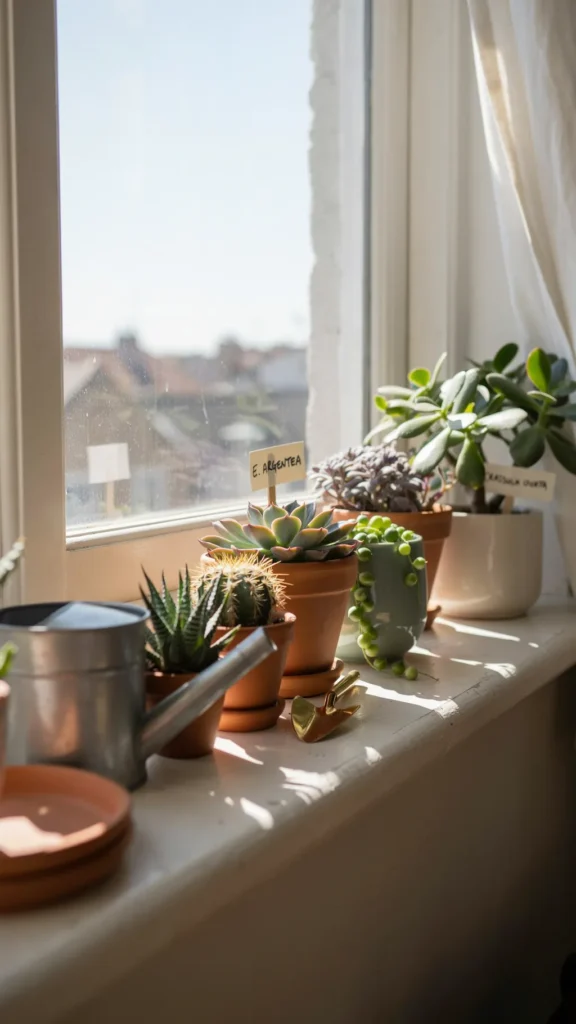
Healthy succulents placed on a sunny windowsill receiving bright natural light.
Most succulents thrive when they receive at least six hours of bright light daily. Without enough sunlight, they can become stretched, weak, and pale. Place them near a south-facing or west-facing window where they can enjoy consistent light. If natural light is limited, consider using a grow light to maintain healthy growth year-round.
Expert Tip from PlantyHome:
“Rotate your succulents every few weeks so all sides receive equal sunlight and grow evenly.”
2. Use Well-Draining Soil
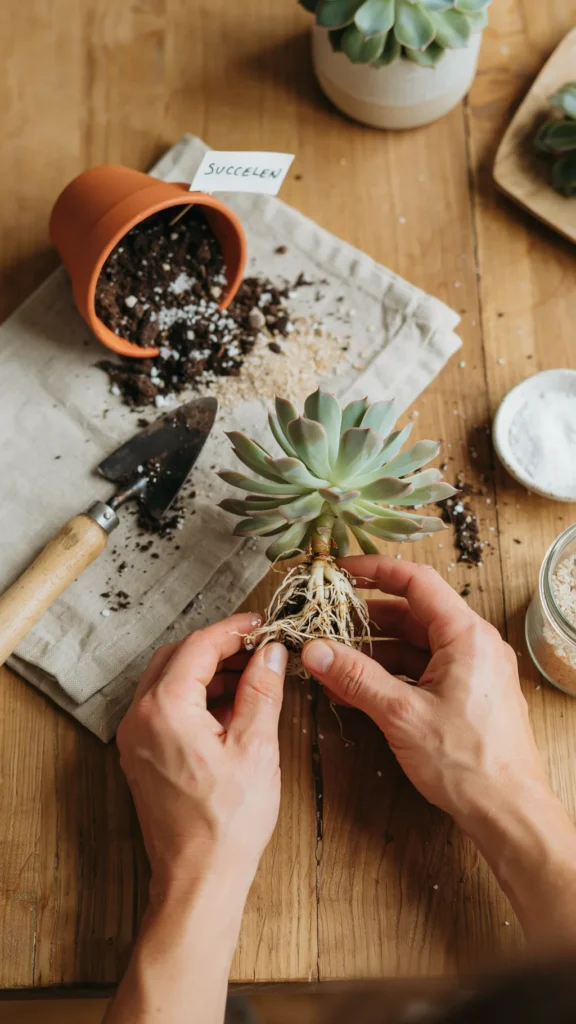
Succulents growing in gritty soil with excellent drainage.
Regular potting soil holds too much moisture for succulents. A well-draining cactus or succulent mix allows excess water to escape quickly, preventing root rot. Adding coarse sand, pumice, or perlite improves drainage even further and helps roots stay healthy.
Expert Tip from PlantyHome:
“Good drainage is often more important than frequent watering.”
3. Water Deeply But Infrequently
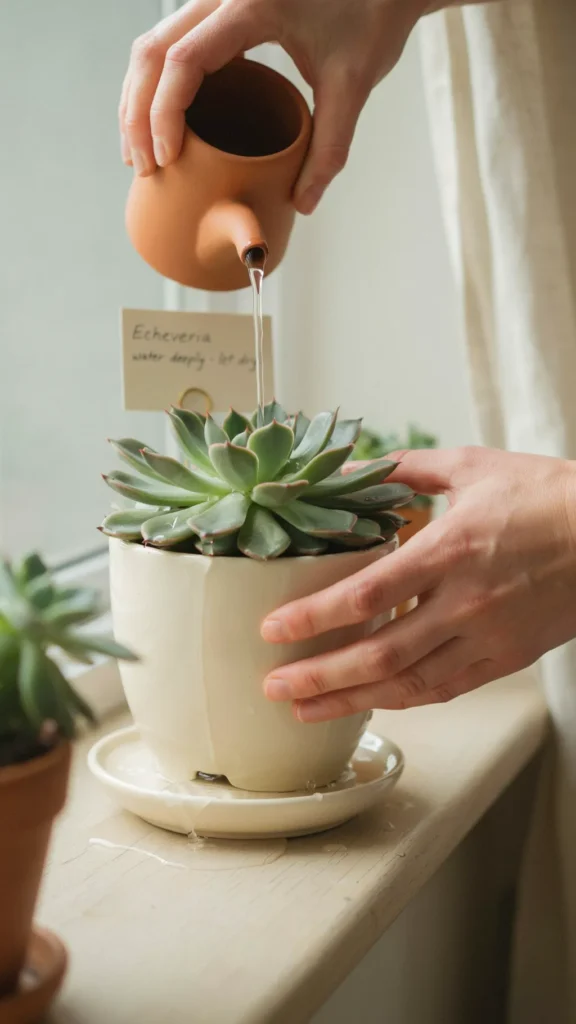
Watering a succulent thoroughly while excess water drains from the pot.
Succulents prefer the “soak and dry” method. Water thoroughly until water runs from the drainage holes, then allow the soil to dry completely before watering again. This mimics their natural desert environment and encourages strong root development.
Expert Tip from PlantyHome:
“Always check the soil first instead of watering on a fixed schedule.”
4. Always Use Pots With Drainage Holes
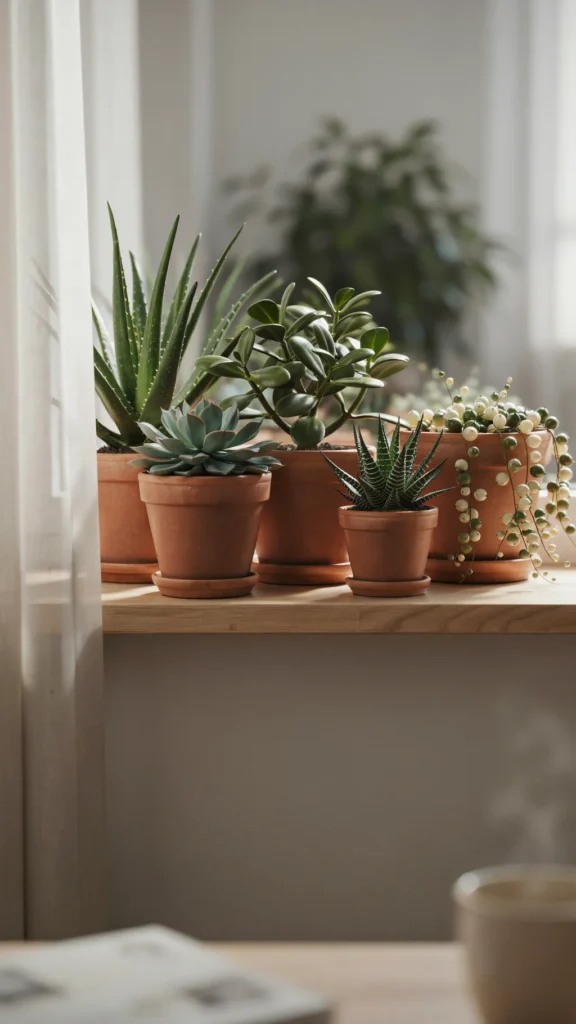
Succulent planted in a terracotta pot with visible drainage holes.
Drainage holes prevent water from sitting around the roots. Without proper drainage, even the healthiest succulent can quickly develop root rot. Terracotta pots are especially useful because they help excess moisture evaporate faster.
Expert Tip from PlantyHome:
“Terracotta pots are ideal for beginners because they reduce overwatering risks.”
5. Avoid Overwatering
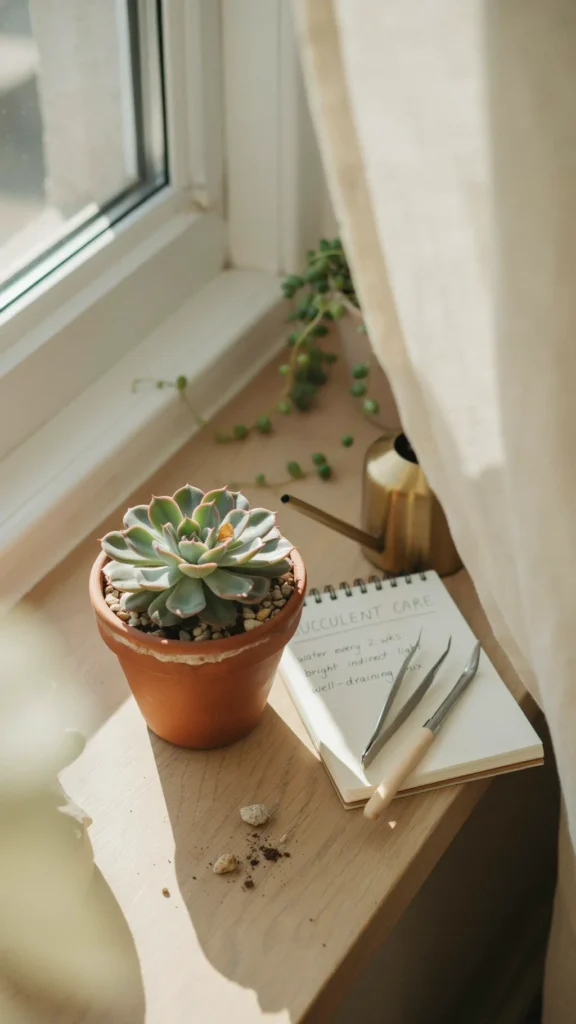
Healthy succulent next to a watering can.
Overwatering is the number one reason succulents fail. Signs include mushy leaves, yellowing foliage, and rotting stems. Succulents store water in their leaves, allowing them to survive dry periods much better than excessive moisture.
Expert Tip from PlantyHome:
“When in doubt, wait a few more days before watering.”
6. Provide Good Air Circulation
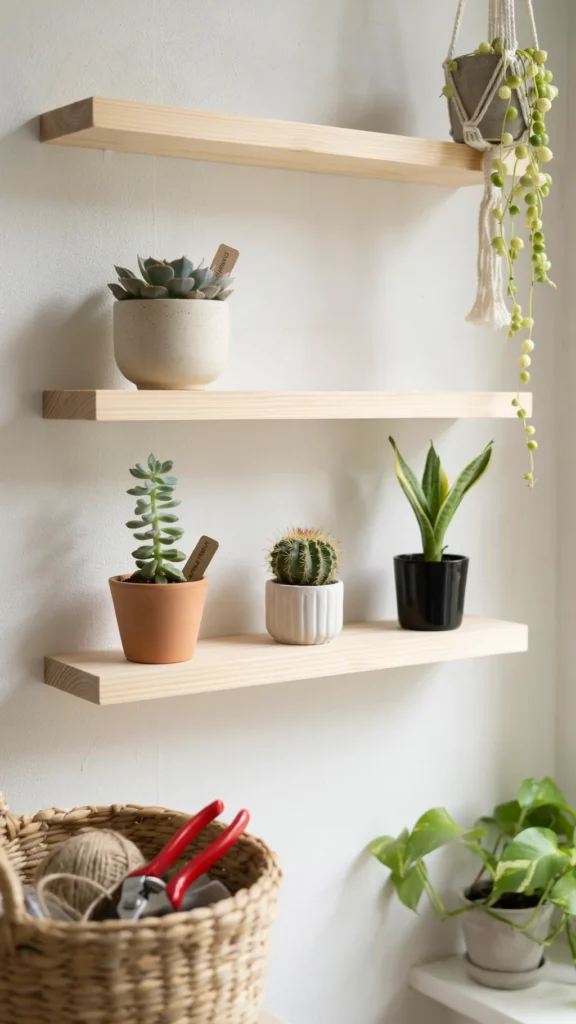
Succulents arranged with plenty of space between plants.
Proper airflow helps prevent fungal issues and keeps plants healthier overall. Avoid overcrowding containers and shelves. Good circulation is especially important for indoor succulent collections.
Expert Tip from PlantyHome:
“Leave space between plants so air can move freely around them.”
7. Clean Dust From Leaves
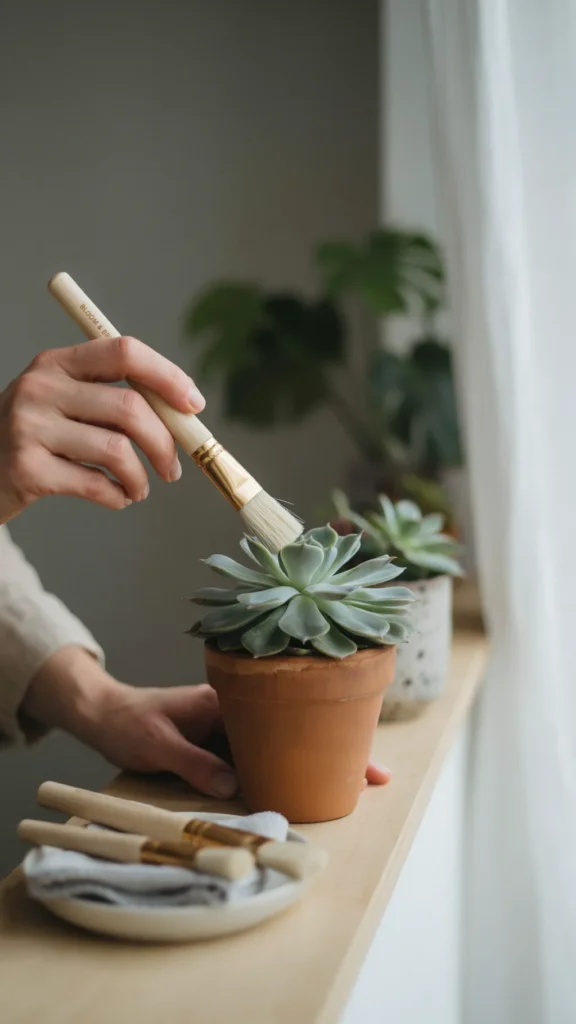
Person gently cleaning succulent leaves with a soft brush.
Dust buildup can block sunlight and reduce photosynthesis. Occasionally wipe smooth leaves or use a soft brush to remove dust from textured varieties. Clean leaves help plants absorb more light and stay healthier.
Expert Tip from PlantyHome:
“A small paintbrush works perfectly for cleaning delicate succulent leaves.”
8. Protect Succulents From Extreme Cold
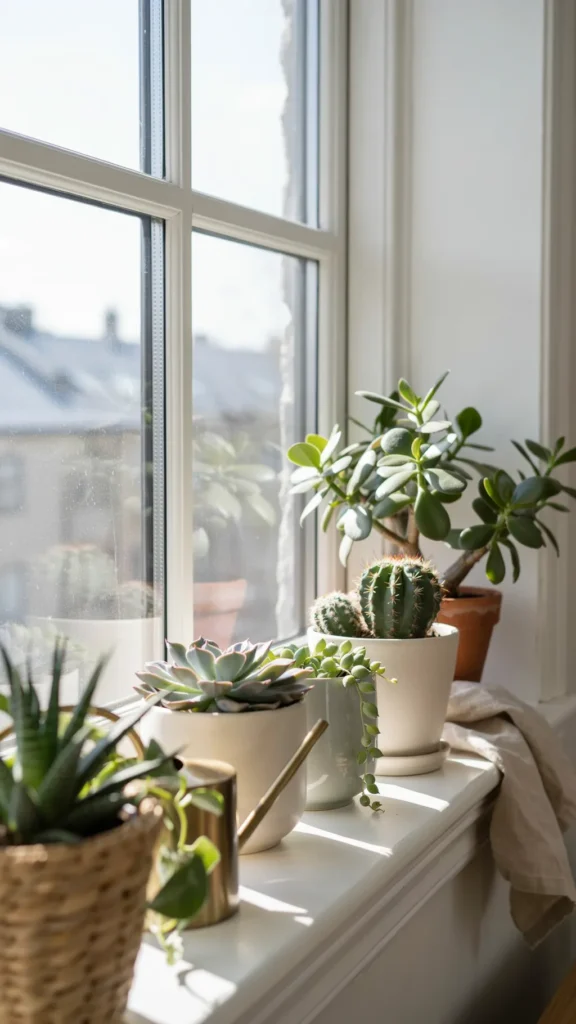
Succulents growing indoors near a bright window during winter.
Many succulents are sensitive to frost and freezing temperatures. If you grow them outdoors, move containers indoors before cold weather arrives. Indoor placement near a sunny window helps them continue growing during winter.
Expert Tip from PlantyHome:
“Bring outdoor succulents inside before nighttime temperatures drop too low.”
9. Fertilize Lightly During Growing Season
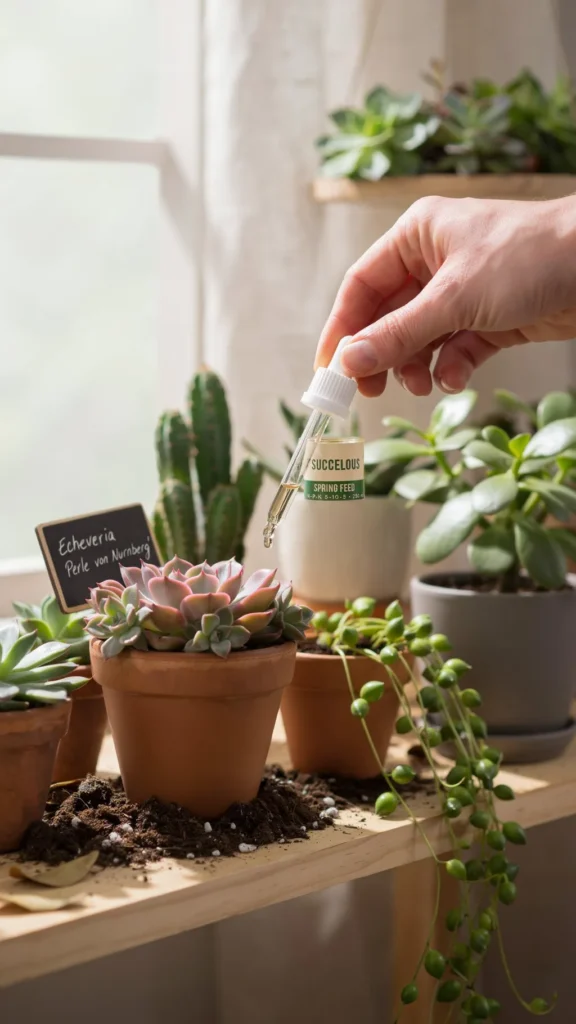
Applying diluted fertilizer to healthy succulents.
Succulents don’t require much fertilizer, but occasional feeding during spring and summer supports healthy growth. Use a diluted succulent fertilizer and avoid overfeeding, which can cause weak growth.
Expert Tip from PlantyHome:
“Less fertilizer is usually better than too much.”
10. Watch for Pests Regularly
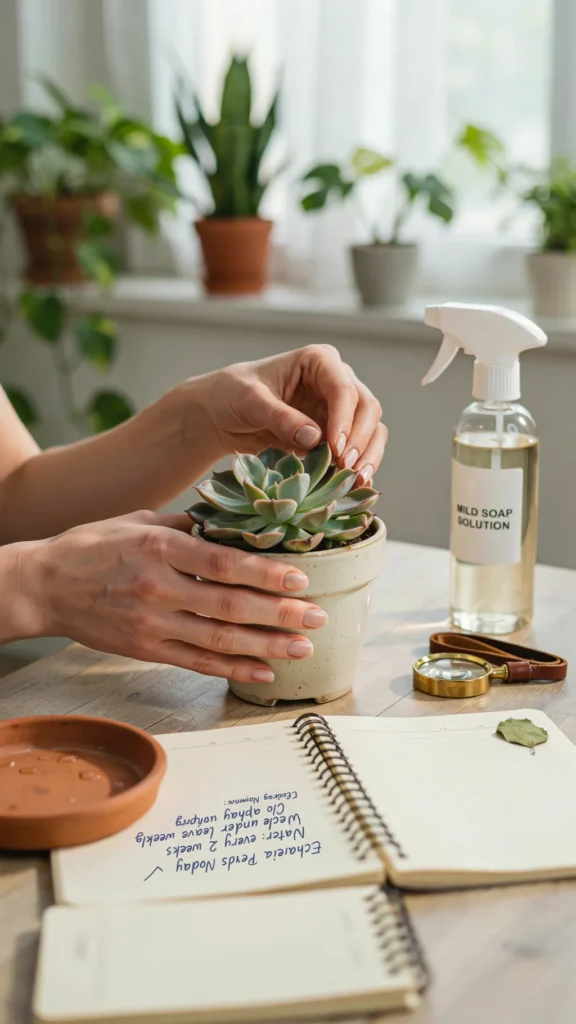
Close-up of healthy succulent leaves being inspected.
Mealybugs, aphids, and spider mites occasionally attack succulents. Regular inspections help catch problems early before infestations spread. Healthy plants are usually more resistant to pests.
Expert Tip from PlantyHome:
“Inspect leaf crevices and stems where pests often hide.”
11. Rotate Indoor Succulents Frequently
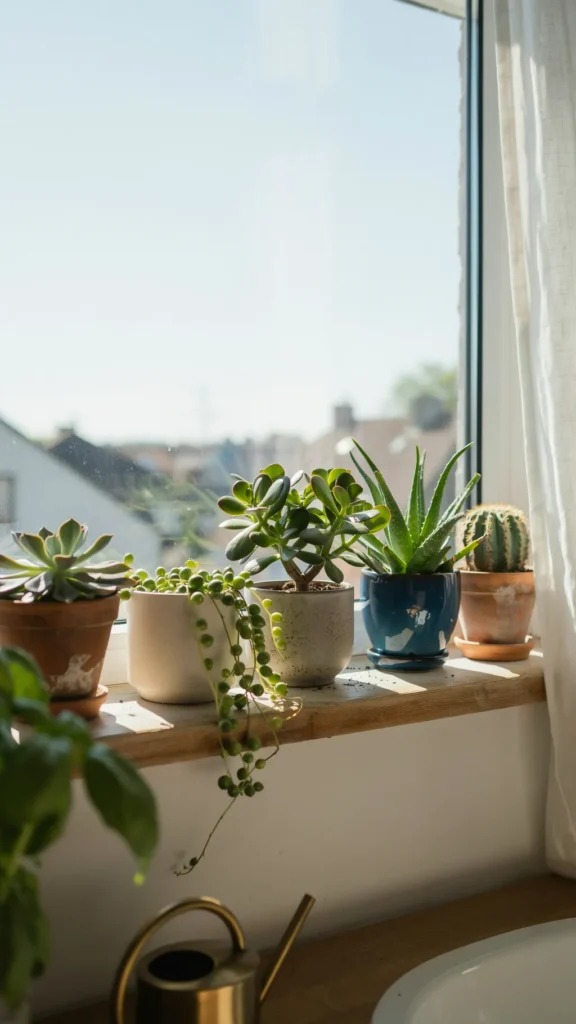
Succulents positioned on a bright windowsill.
Plants naturally grow toward light. Rotating pots every few weeks prevents leaning and promotes balanced growth. This simple habit keeps your succulents looking symmetrical and attractive.
Expert Tip from PlantyHome:
“A quarter turn every week keeps growth balanced.”
12. Remove Dead Leaves Promptly
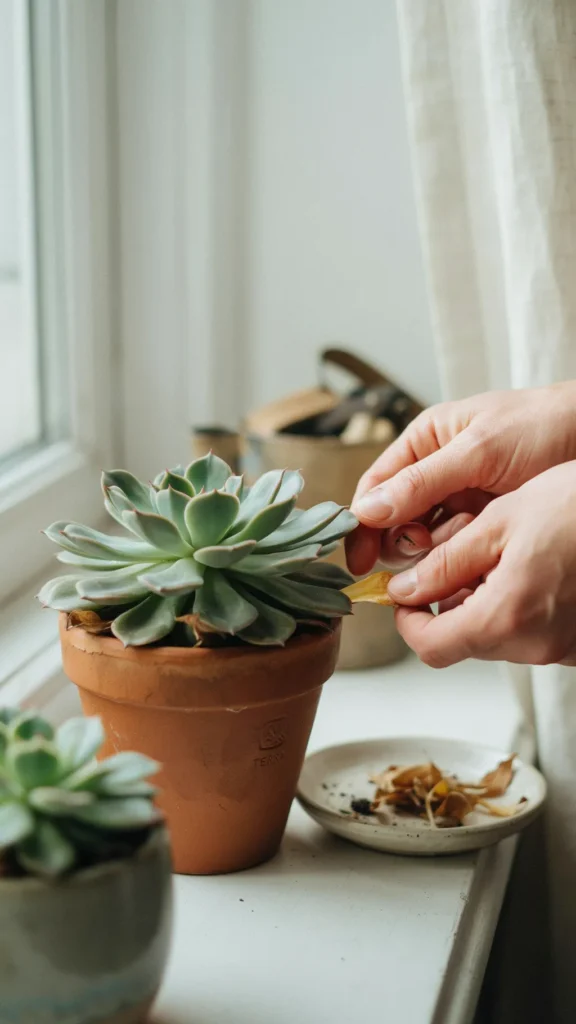
Gardener removing dried leaves from a succulent.
Dead leaves can attract pests and trap moisture around the plant. Removing them improves airflow and keeps your succulents looking neat and healthy. It’s a quick maintenance task that makes a big difference.
Expert Tip from PlantyHome:
“Regular cleanup helps prevent hidden pest problems.”
13. Repot When Plants Outgrow Containers
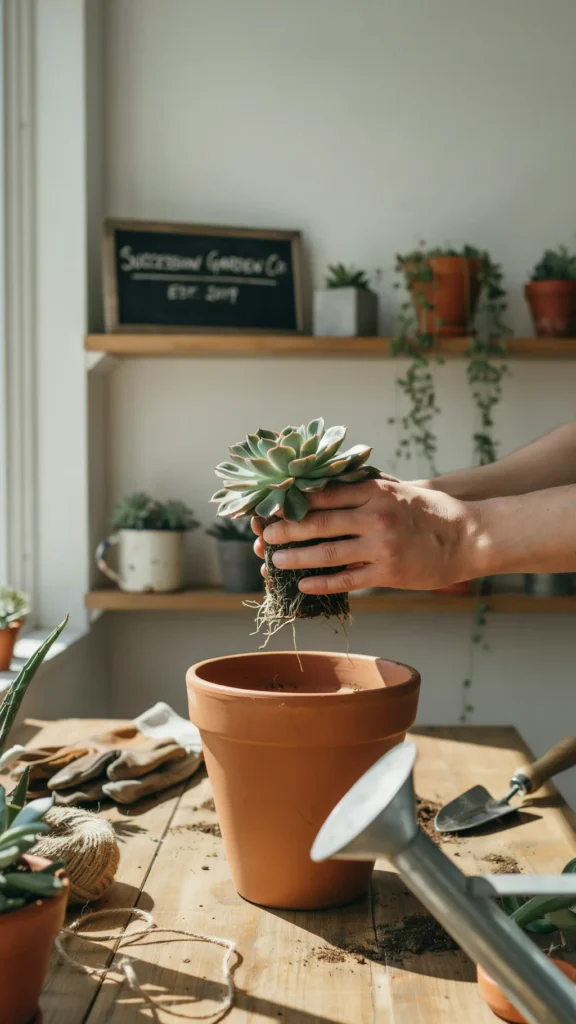
Large succulent being transferred into a larger pot.
As succulents grow, they may become root-bound. Repotting into a slightly larger container provides room for new growth and refreshes the soil. Spring is usually the best time for repotting.
Expert Tip from PlantyHome:
“Choose a pot only slightly larger than the current one.”
14. Group Succulents With Similar Needs
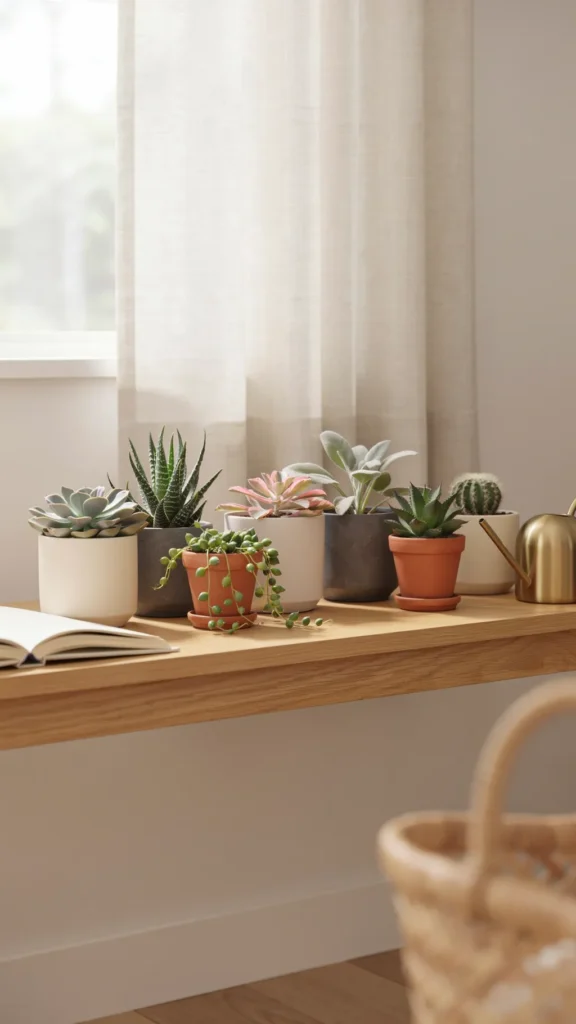
Mixed succulent arrangement in matching containers.
Grouping succulents with similar watering and lighting requirements makes care much easier. Plants with comparable needs thrive together and simplify maintenance routines.
Expert Tip from PlantyHome:
“Research each variety before combining them in one container.”
15. Learn Your Succulent’s Growth Cycle
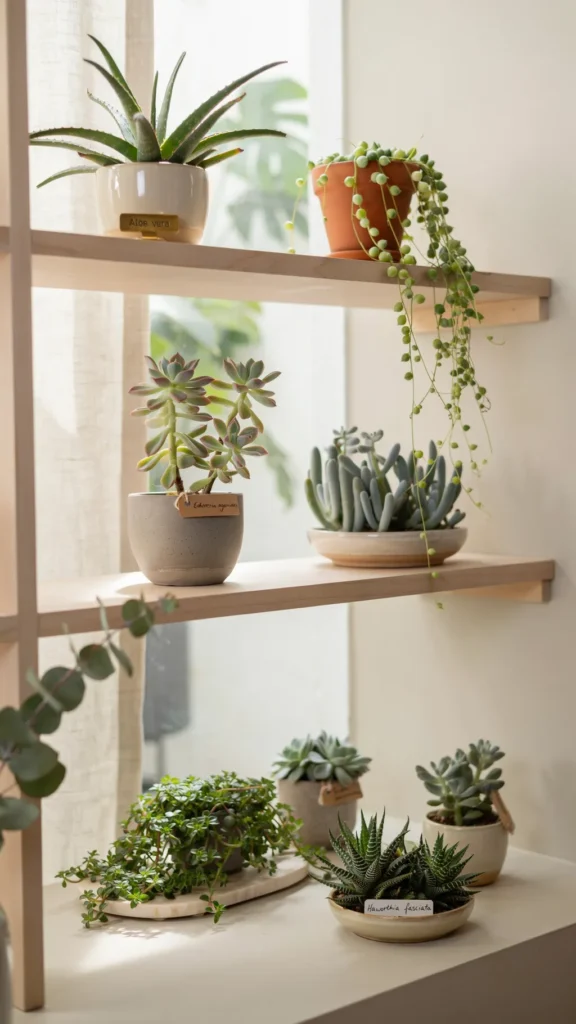
Collection of different succulent species growing actively.
Some succulents grow actively in summer, while others prefer cooler seasons. Understanding your plant’s natural growth cycle helps you adjust watering, fertilizing, and care routines appropriately throughout the year.
Expert Tip from PlantyHome:
“Knowing when your succulent is actively growing prevents many common care mistakes.”
Final Thoughts
Succulents are incredibly rewarding plants when given the right conditions. By focusing on proper light, careful watering, good drainage, and seasonal care, you can enjoy healthy, thriving succulents throughout the year. Follow these simple tips, and your collection will continue to grow stronger, more colorful, and more beautiful with every season.