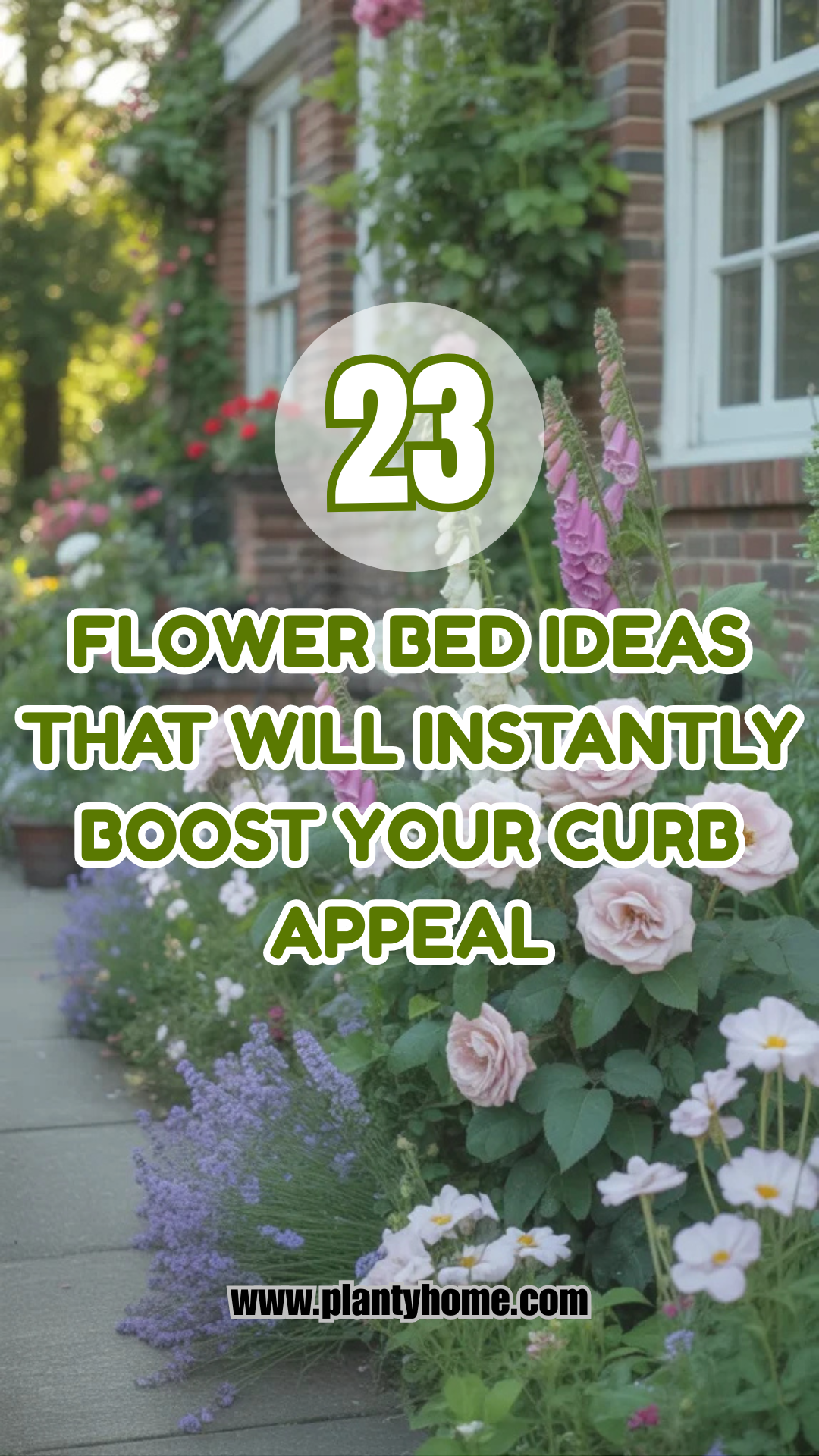
The front of your home is the first thing every visitor sees, and nothing transforms that first impression more dramatically than a beautifully designed flower bed. Flower beds turn a plain front yard into something genuinely stunning — a space that makes people slow down and feel a sense of warmth before they even reach the front door. These 23 ideas cover every style, every budget, and every skill level.
1. The Classic Symmetrical Foundation Border
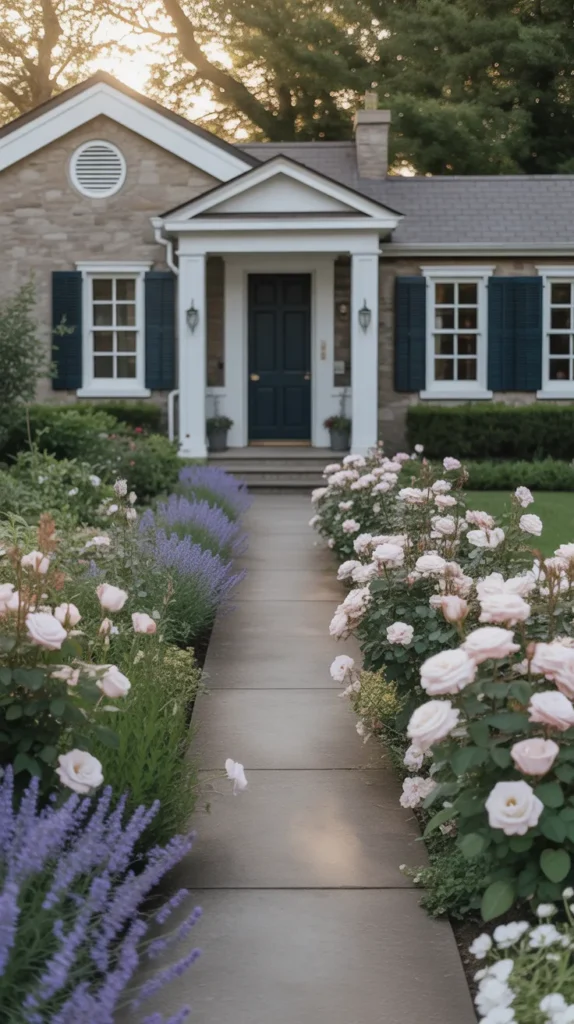
Plant identical matching flower beds on both sides of the front pathway, using the same plant species and color palette on each side to create a perfectly mirrored composition that frames the entrance beautifully. Roses, lavender, catmint, and salvia work perfectly in symmetrical borders and provide long seasons of color. Edge both beds with neat steel edging and clip any structural shrubs to matching shapes for a polished result that looks genuinely professional.
Expert Tip from PlantyHome:
Choose plants with long flowering seasons rather than short-lived spectacular bloomers so both sides remain equally attractive and balanced throughout the entire summer.
2. The Colorful Mailbox Flower Bed
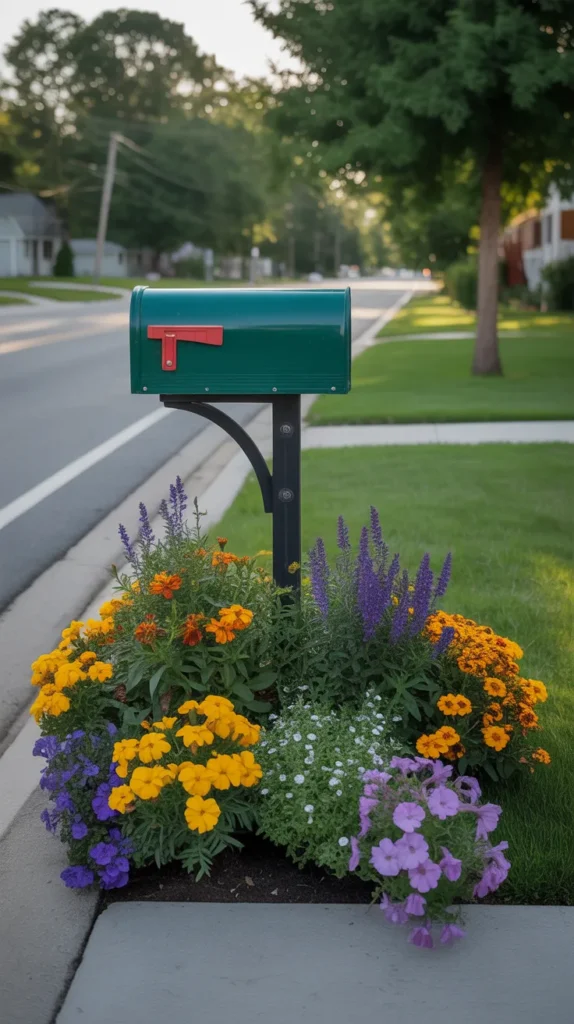
Transform the area around a mailbox post into a small but incredibly impactful flower bed that creates a cheerful focal point visible from the street. Plant a mix of low-growing annuals in a hot, vibrant color palette — bright orange marigolds, deep red salvias, sunny yellow coreopsis, and vivid purple petunias — that creates maximum visual impact from a distance and makes the mailbox area look genuinely designed rather than simply planted as an afterthought.
Expert Tip from PlantyHome:
Choose compact, wind-resistant varieties for mailbox beds as the roadside position exposes plants to significantly more wind and traffic disturbance than sheltered garden borders normally experience.
3. The Layered Tiered Border
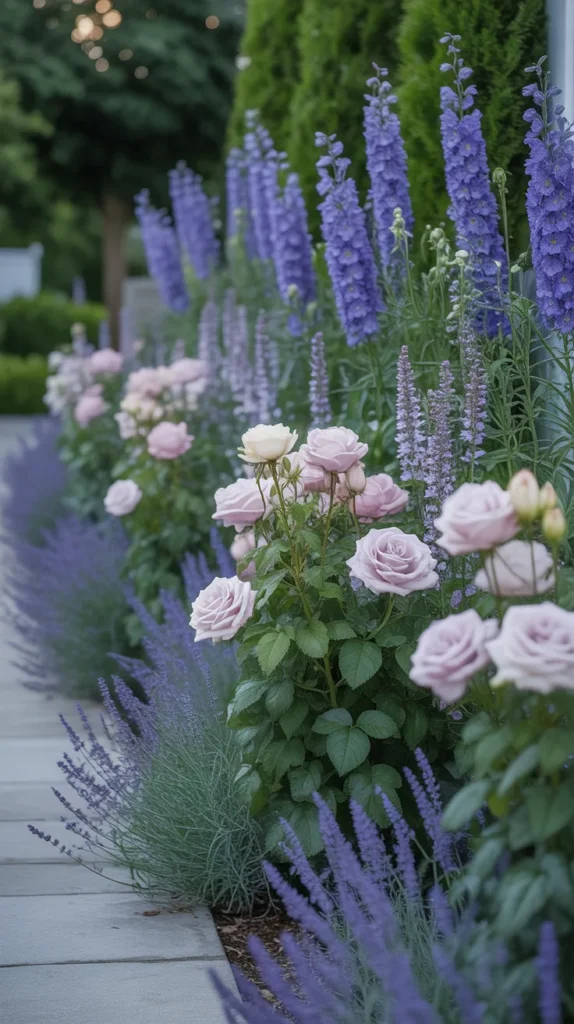
Create a flower bed where plants are arranged in distinct height tiers — tall statement plants at the back, medium flowering perennials in the middle, and low edging plants spilling softly over the front edge — producing a beautifully structured display with genuine depth and visual complexity. Every plant can be seen clearly from the street and the layered effect creates a lush, professional appearance that looks far more considered and expensive than individual scattered plantings ever achieve regardless of the plants used.
Expert Tip from PlantyHome:
Always position the tallest plants slightly off-center rather than dead center at the back of a border as asymmetric placement creates a more natural and dynamic composition than rigid central positioning.
4. The Cottage Garden Front Border
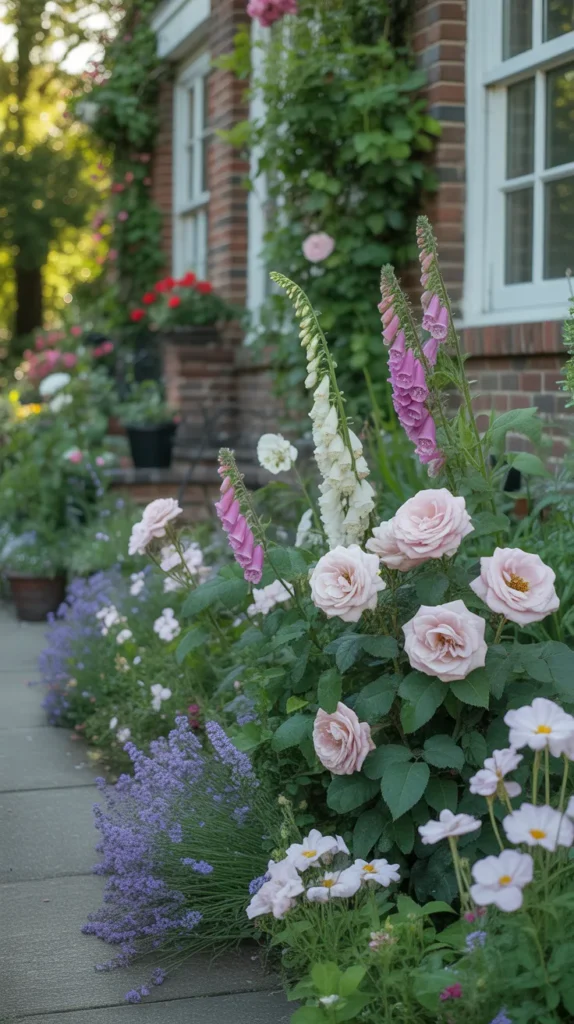
Fill the entire front garden bed with the relaxed, overflowing abundance of cottage garden planting — roses scrambling through foxgloves, aquilegias seeding between lavender clumps, sweet williams crowding against catmint edges — creating a romantic, characterful display that looks timeless, welcoming, and completely unique. The informality of cottage planting actually makes the home behind it look more charming and personal than any formal design could achieve, giving the entire property a warmth and character that neighbors genuinely envy.
Expert Tip from PlantyHome:
Allow cottage garden plants to self-seed freely between existing clumps as self-seeded plants always look more naturally placed and convincing than deliberately positioned transplants.
5. The Ornamental Grass And Perennial Mix
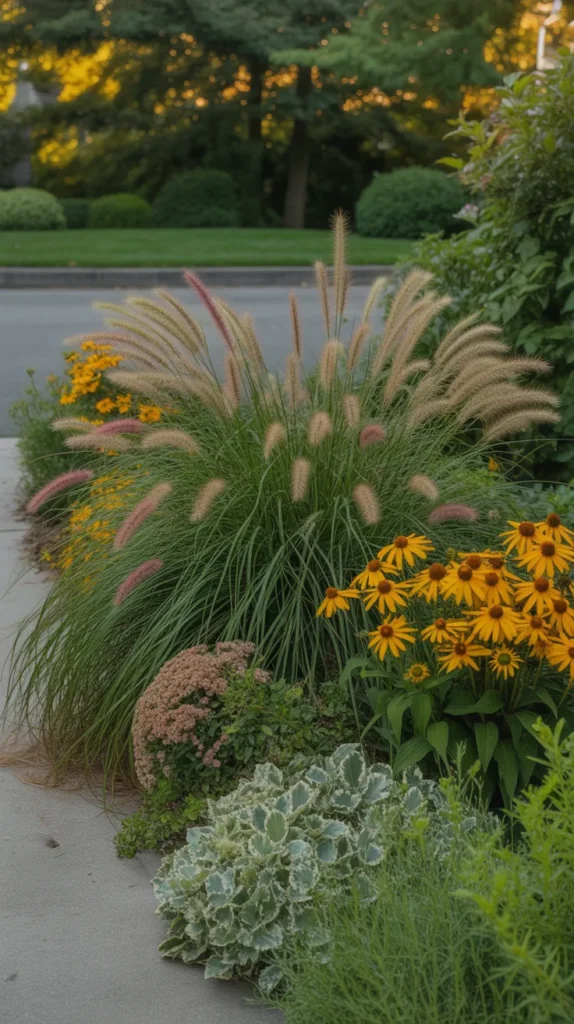
Combine ornamental grasses with bold flowering perennials to create a front flower bed of genuine architectural drama and year-round interest that looks stunning in every season. The movement and texture of grasses like Karl Foerster, blue oat grass, and Mexican feather grass create a dynamic, ever-changing quality that static flowering plants alone cannot deliver. Mix with rudbeckias, echinaceas, and sedums for a naturalistic planting that looks spectacular from late summer right through to the first hard frosts.
Expert Tip from PlantyHome:
Leave ornamental grass and perennial seed heads standing through winter as the dried structures create genuine beauty and wildlife value throughout the coldest months before cutting back in early spring.
6. The Single Color Theme Bed
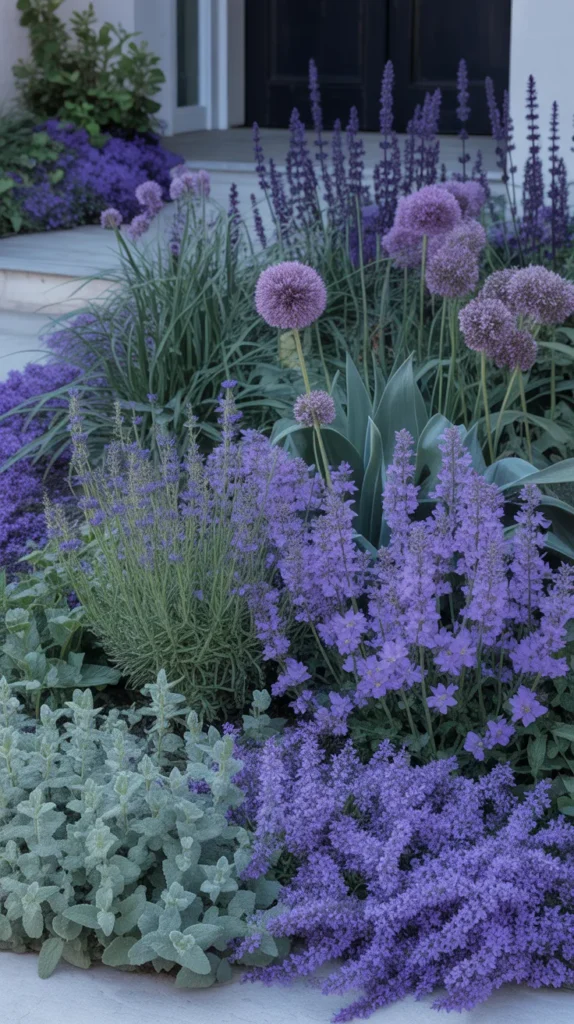
Choose one single flower color and plant the entire bed exclusively in different varieties, heights, and textures of that one color to create a front garden bed of extraordinary sophistication and visual impact. An all-white bed filled with white roses, white agapanthus, white gaura, and silver artemisia looks genuinely luxurious. An all-purple bed combining lavender, salvia, allium, and catmint creates a bold, dramatic statement. A single-color bed always looks more intentional and designed than a mixed color approach.
Expert Tip from PlantyHome:
Vary the textures and forms of plants within a single-color bed as dramatically as possible since without color contrast, differences in leaf shape and flower structure become the primary source of visual interest throughout the display.
7. The Curved Edge Flower Bed
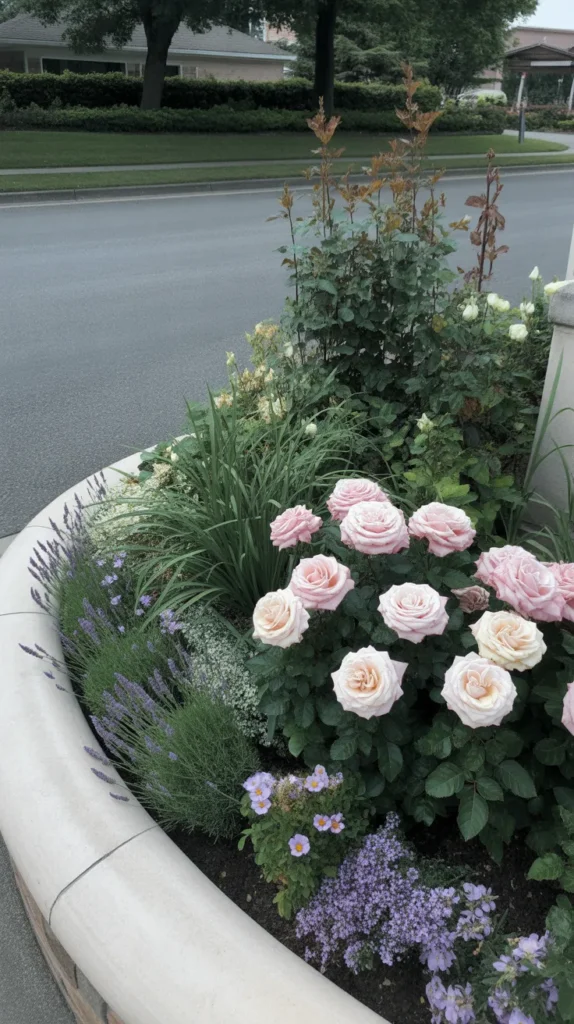
Replace straight-edged rectangular flower beds with gently curving borders that follow the natural flow of the lawn and driveway, creating a front garden layout that feels organic, considered, and professionally designed. Curved edges soften the overall appearance of the property and make the planting look more generous and abundant than the same plants in a rigid straight-edged bed would ever achieve. The curves themselves do much of the design work, giving the front yard a relaxed elegance that is immediately visible from the street.
Expert Tip from PlantyHome:
Use a garden hose laid on the ground to experiment with different curve shapes before cutting the bed edge as this allows easy adjustments without committing to a line that looks wrong once cut.
8. The Evergreen Structure Bed With Seasonal Color
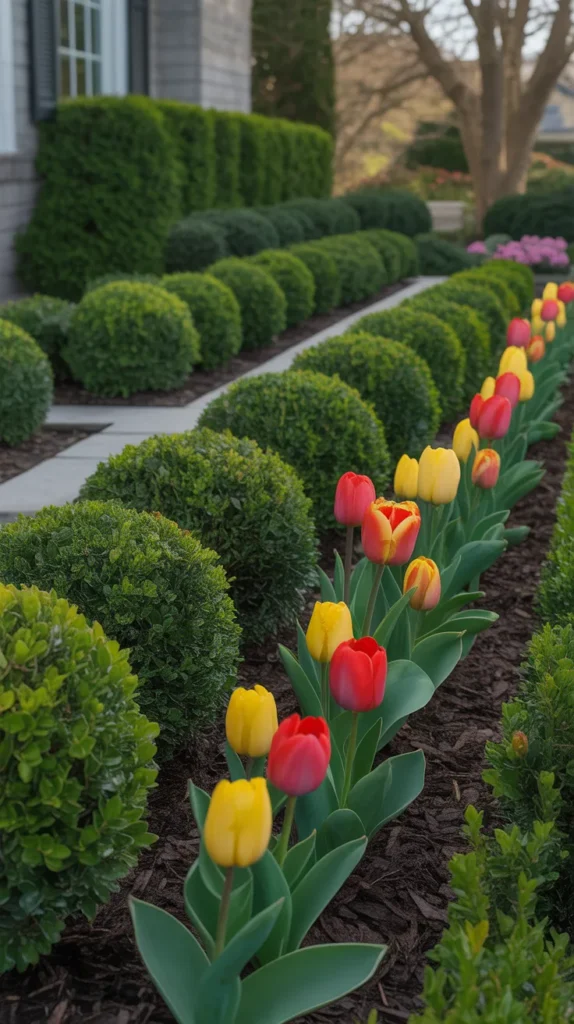
Build the flower bed around a permanent framework of clipped evergreen shrubs — box balls, trimmed pittosporum, shaped euonymus — that provide year-round structure and green presence, then fill the gaps between them with seasonal flowering plants that change with each season to provide continuous color and variety throughout the entire year. The evergreen structure means the bed always looks respectable and maintained even in winter when the seasonal plants have died back, giving the front garden a professional, well-managed appearance in every month of the year.
Expert Tip from PlantyHome:
Choose evergreen structural plants that require clipping only once or twice a year rather than fast-growing varieties that need constant trimming to maintain their shapes neatly throughout the growing season.
9. The Driveway Edge Flower Bed
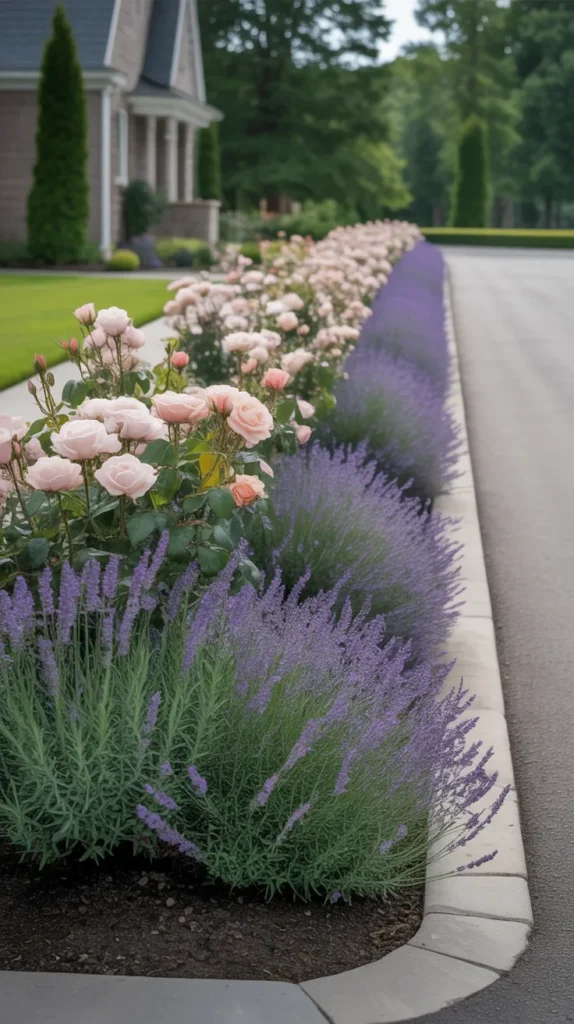
Line the entire length of the driveway with a continuous flower bed that transforms the approach to the home from a purely functional strip of tarmac into a beautiful garden journey that welcomes every arriving visitor with color, fragrance, and lush planting on both sides. Use plants of consistent height along the driveway edge for a clean, organized appearance — lavender, nepeta, dwarf roses, or ornamental grasses all work beautifully and provide a long season of interest while remaining compact enough not to encroach onto the driveway surface.
Expert Tip from PlantyHome:
Avoid tall or floppy plants along driveway edges as opening car doors and reversing vehicles will repeatedly damage any planting that extends more than thirty centimeters above the driveway surface level.
10. The Raised Flower Bed Border
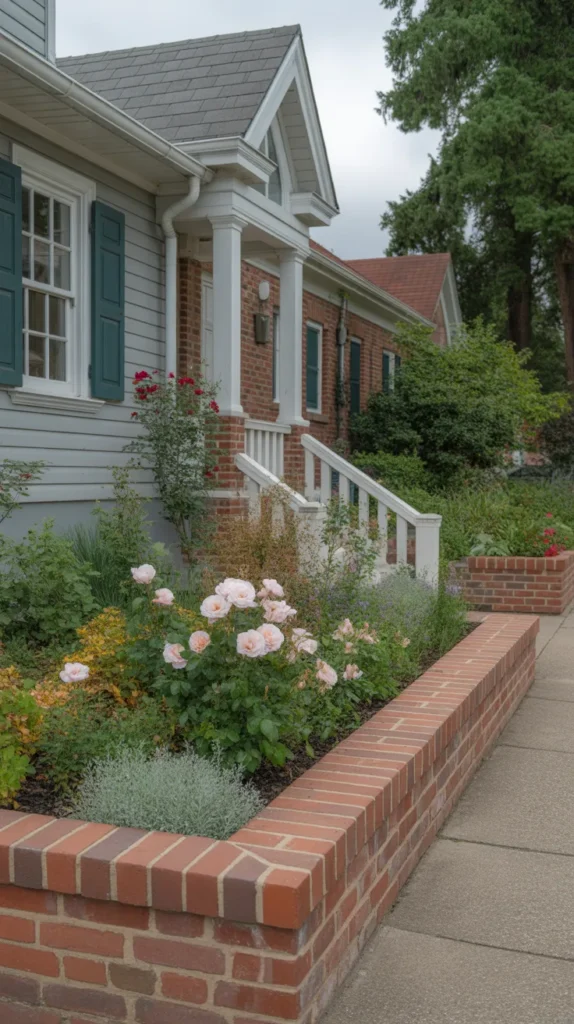
Build a low raised flower bed along the front of the property using brick, natural stone, or sleeper timber to lift the planting above ground level and create a defined, architectural border that adds genuine three-dimensional structure to the front garden. The raised format makes plants more visible from the street, improves drainage dramatically, and gives the bed a permanent, built quality that looks significantly more expensive and considered than a simple ground-level planting. Fill with a generous mix of perennials and annuals for maximum seasonal color and impact.
Expert Tip from PlantyHome:
Build raised front garden beds to a maximum of forty-five centimeters in height as anything taller begins to visually compete with the house itself and reduces rather than enhances the overall proportional balance of the property frontage.
11. The Pollinator Paradise Front Bed
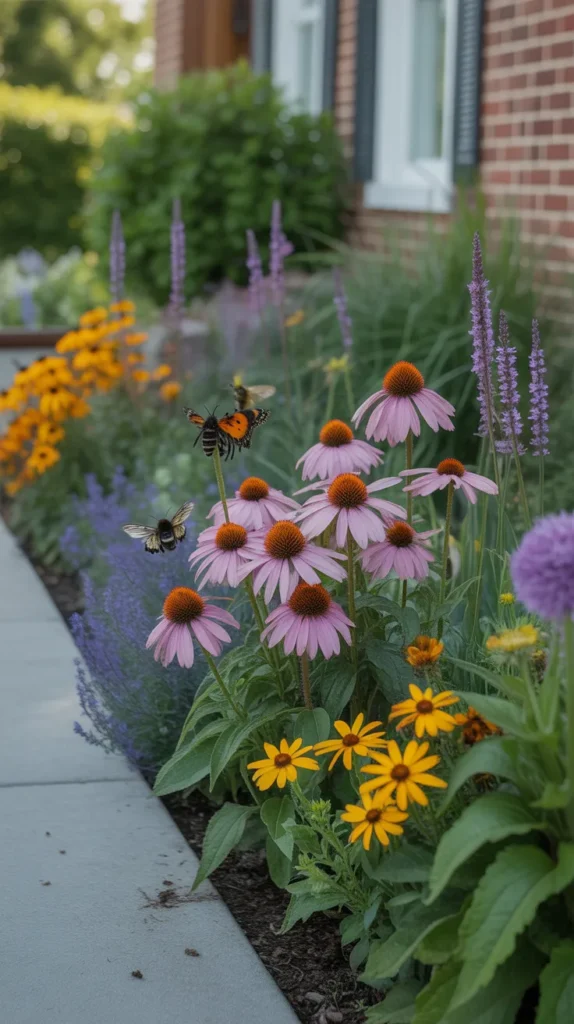
Design the front flower bed entirely around plants that attract and support bees, butterflies, and beneficial insects, creating a bed that buzzes and flutters with wildlife activity throughout the entire summer while simultaneously producing one of the most colorful and dynamic flower displays possible. Echinacea, rudbeckia, salvia, verbena bonariensis, agastache, and alliums all attract enormous numbers of pollinators and together create a front garden of genuine ecological value that also happens to look absolutely stunning from the street.
Expert Tip from PlantyHome:
Include plants that flower at different times throughout the season so the pollinator bed provides a continuous nectar source from early spring right through to late autumn when other food sources become increasingly scarce.
12. The Formal Clipped Hedge And Flower Bed Combination
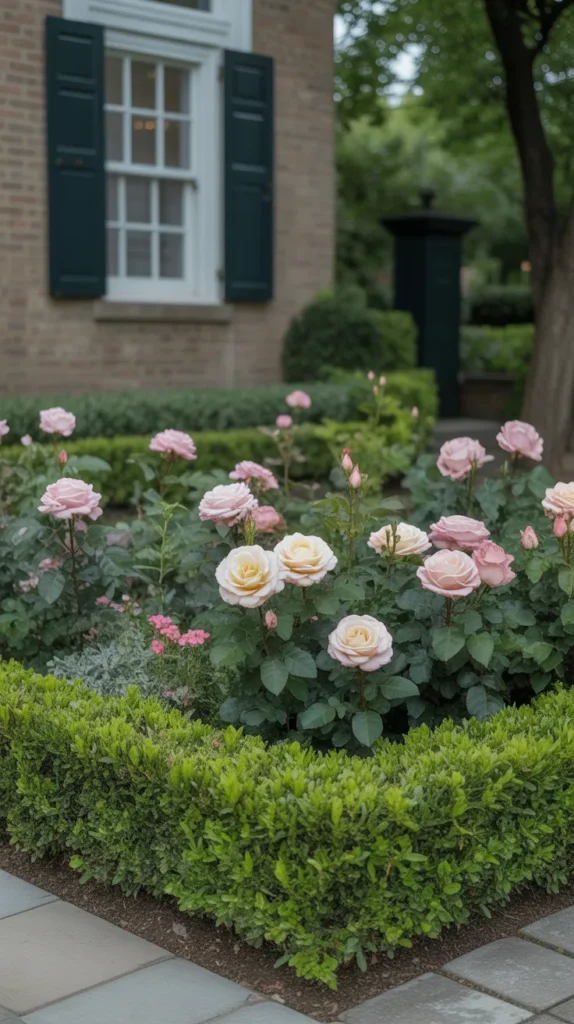
Frame the front flower bed with a neatly clipped low hedge of box, lavender, or rosemary that creates a formal defined edge and contains the planting within a structured boundary that gives the entire front garden a sense of order, permanence, and classical elegance. The contrast between the crisp geometric line of the clipped hedge and the soft, colorful abundance of the flowers inside the frame creates a beautifully balanced composition that looks simultaneously disciplined and generous, structured and romantic.
Expert Tip from PlantyHome:
Use lavender as a low hedge alternative to box in areas where box blight is a problem as lavender creates an equally beautiful formal edge while also providing fragrance and long-lasting summer flowers as an additional seasonal bonus.
13. The Spring Bulb Spectacular Border
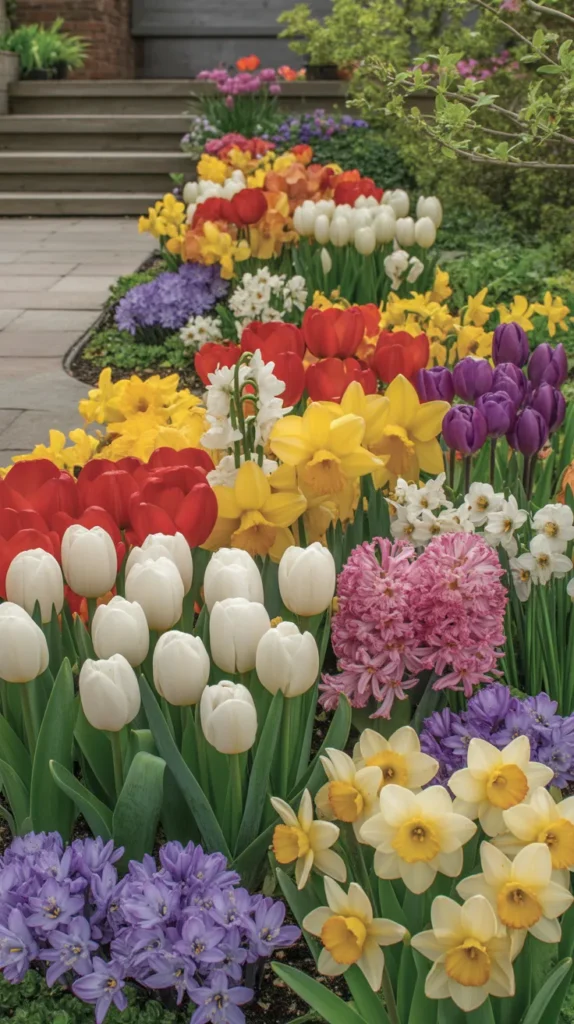
Plant the front flower bed exclusively with spring-flowering bulbs in generous, overlapping layers — tulips above daffodils above crocuses above snowdrops — that create a spectacular succession of color beginning in late winter and building to a crescendo of tulip glory in mid-spring that stops passersby in their tracks. A well-planted spring bulb border at the front of the house creates the single most impactful and talked-about curb appeal display of the entire gardening year at a fraction of the cost of any other approach.
Expert Tip from PlantyHome:
Plant tulip bulbs in bold single-color groups of at least seven to ten bulbs rather than scattered individually as massed single-color blocks always read far more powerfully and intentionally from the street than mixed plantings.
14. The Modern Minimalist Flower Bed
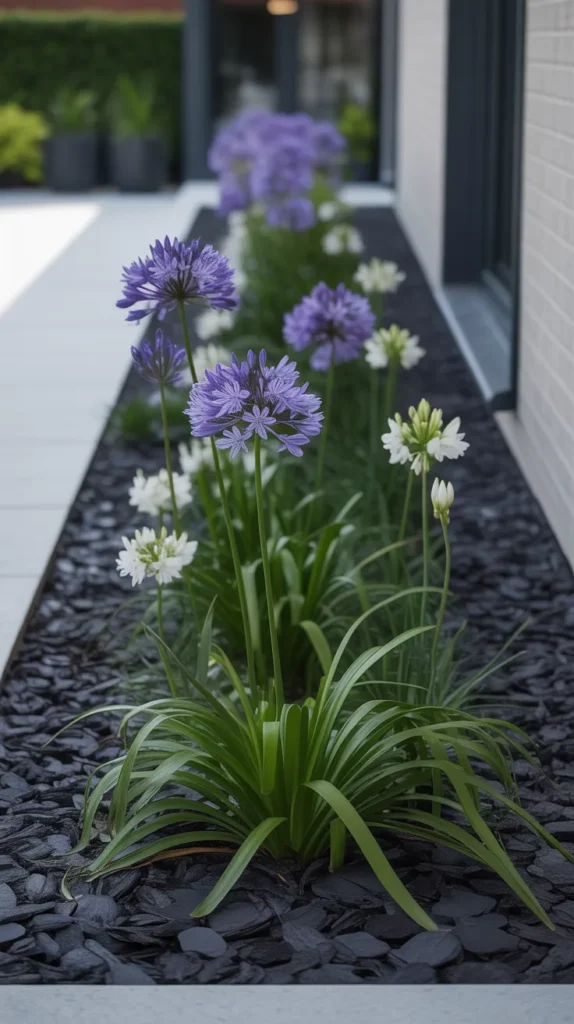
Design a front flower bed using a very limited plant palette — perhaps just two or three species repeated rhythmically along the entire length of the bed — to create a contemporary, design-led planting that feels confident, intentional, and genuinely sophisticated. Architectural plants like agapanthus, ornamental alliums, and white gaura planted in bold rhythmic repetition against a dark mulch background create a front garden of striking modern elegance that looks completely different from every other garden on the street.
Expert Tip from PlantyHome:
Use a dark slate or black rubber mulch between plants in a minimalist bed as dark backgrounds make architectural plants stand out dramatically and eliminate the visual noise of bare soil between widely-spaced specimens.
15. The Fragrant Front Garden Bed
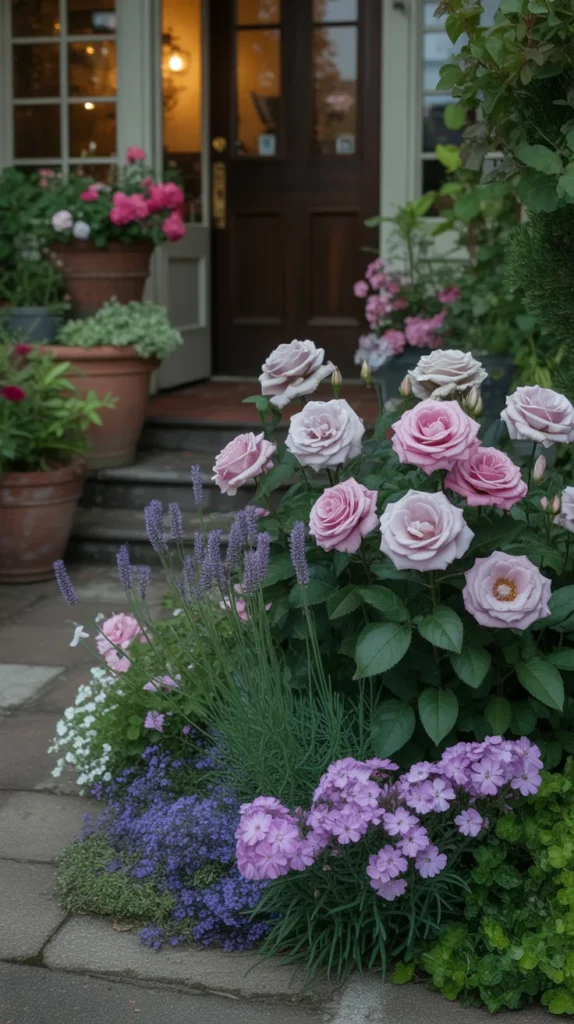
Design the front flower bed entirely around fragrant plants so that every person who approaches the front door is enveloped in a welcoming cloud of scent that makes the home feel instantly warm, beautiful, and utterly inviting. Roses, lavender, sweet Williams, phlox, stocks, and dianthus all produce powerful fragrances that carry beautifully across a front garden on warm summer evenings, creating an olfactory welcome that is as powerful and memorable as any visual display could ever be.
Expert Tip from PlantyHome:
Position the most powerfully fragrant plants — stocks, phlox, and sweet Williams — closest to the front door and pathway so visitors receive the full impact of the fragrance as they approach and enter the property.
16. The Hot Color Tropical Flower Bed
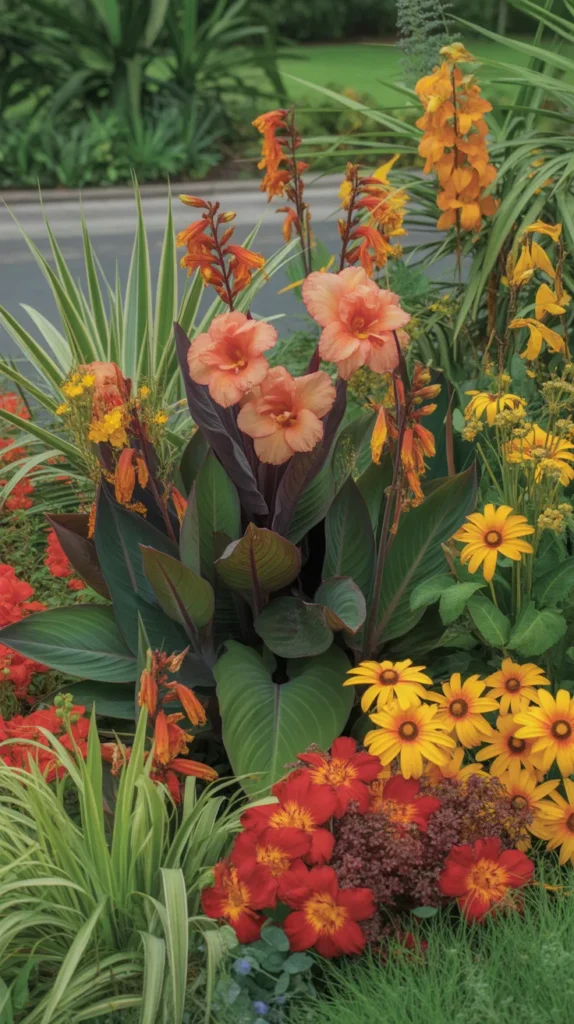
Create a bold, energetic front flower bed using the hottest, most vibrant colors available — burning oranges, deep scarlets, vivid yellows, and electric purples — combined with large-leaved tropical-looking plants that create a front garden of extraordinary visual intensity and excitement. Cannas, dahlias, crocosmia, rudbeckias, and bold salvias all contribute to a display that is impossible to ignore from the street and gives the home an immediate personality and confidence that makes it genuinely memorable.
Expert Tip from PlantyHome:
Anchor a hot-colored tropical bed with at least one genuinely large specimen plant — a tall canna or architectural dahlia variety — as a focal point that gives the entire vibrant composition a clear visual center.
17. The White Picket Fence Flower Bed
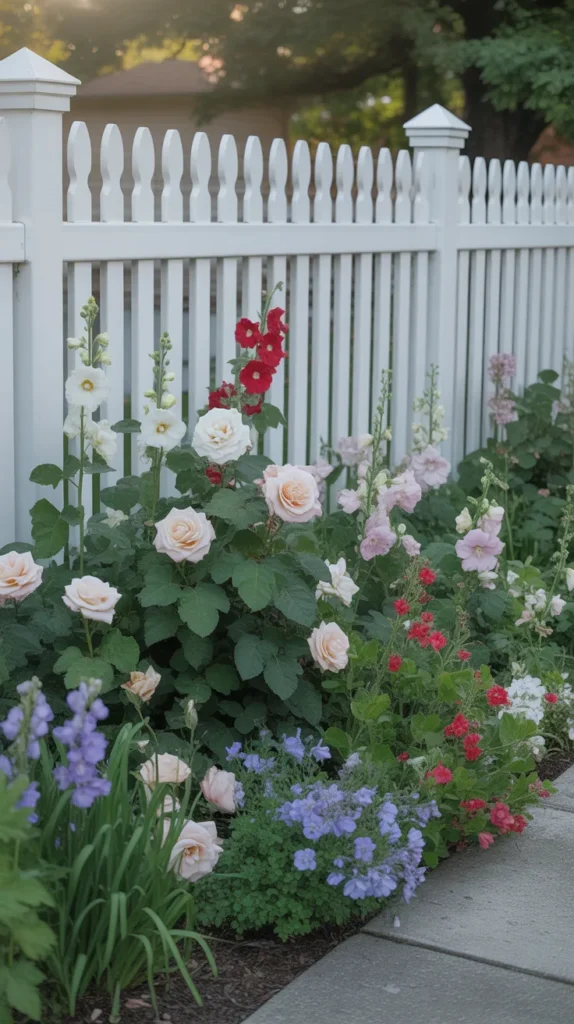
Plant a generous, abundantly filled flower bed directly against a white picket fence to create one of the most classically beautiful and universally admired front garden combinations in all of domestic gardening. The contrast between the crisp white painted fence and the soft, colorful abundance of cottage flowers growing against it creates a front garden image of such warmth, charm, and timeless beauty that it is almost impossible to walk past without smiling. Roses, hollyhocks, delphiniums, and sweet peas all look magnificent against white fencing.
Expert Tip from PlantyHome:
Paint the picket fence in a brilliant pure white rather than a creamy or off-white tone as the strongest contrast between bright white and colorful flowers creates the most visually impactful and photogenic curb appeal result.
18. The Drought-Tolerant Mediterranean Bed
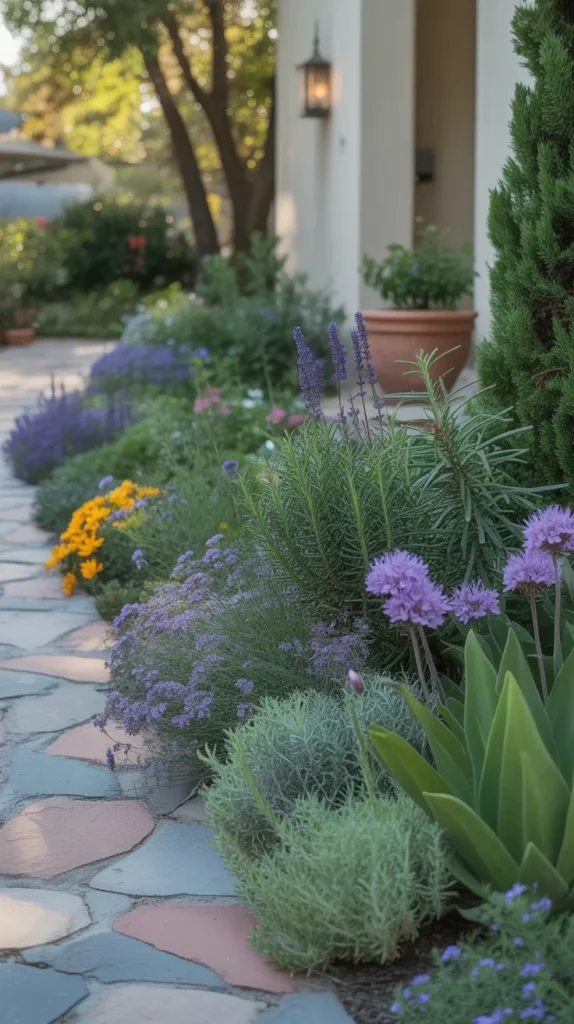
Design a front flower bed using drought-tolerant Mediterranean plants that look spectacular, require minimal watering, and thrive in hot sunny positions where traditional flower beds struggle. Lavender, rosemary, cistus, salvia, verbascum, and ornamental alliums create a planting of genuine beauty and architectural confidence that looks better as summer progresses and temperatures rise, rather than wilting and struggling the way moisture-hungry annuals do in dry exposed front garden positions.
Expert Tip from PlantyHome:
Replace all the soil in a Mediterranean front bed with a free-draining mix containing at least thirty percent horticultural grit before planting as most front gardens have heavy compacted soil that causes fatal root rot in drought-tolerant species.
19. The Edging Plant Statement Border
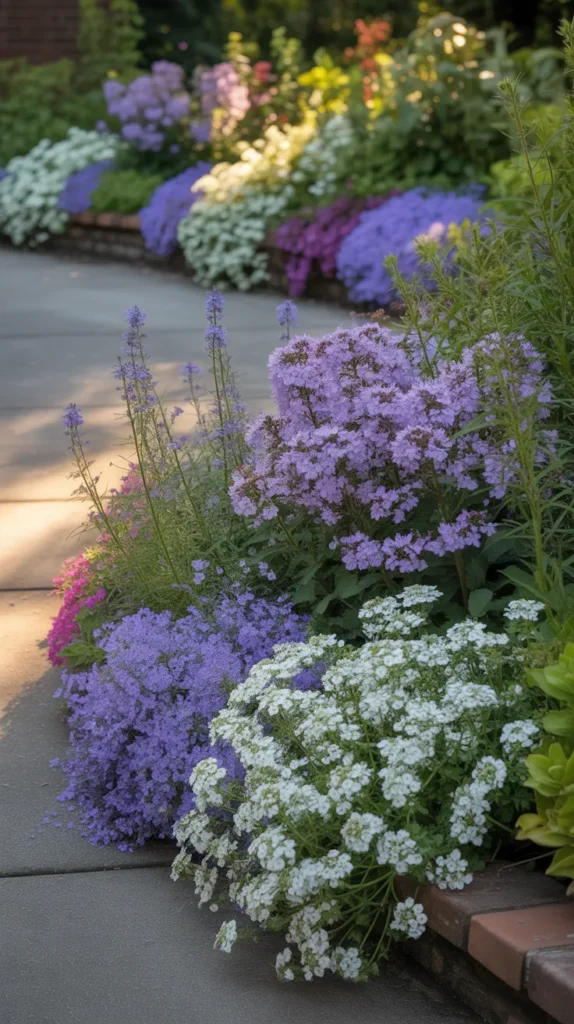
Focus the entire curb appeal impact of the front flower bed on the edging plants rather than the back-of-border specimens, using dramatically beautiful, low-growing edging varieties that spill generously over the bed edge and create an impression of lush abundance visible from the street even when the taller plants behind them are between flowering flushes. Nepeta, diascia, aubrieta, alyssum, and trailing lobelia all create stunning soft edges that blur the line between bed and pathway in the most beautiful way.
Expert Tip from PlantyHome:
Plant edging varieties in a continuous unbroken line rather than in spaced individual clumps as a seamless flowing edge always looks more generous and abundantly planted than a series of isolated individual specimens.
20. The Four Season Flower Bed
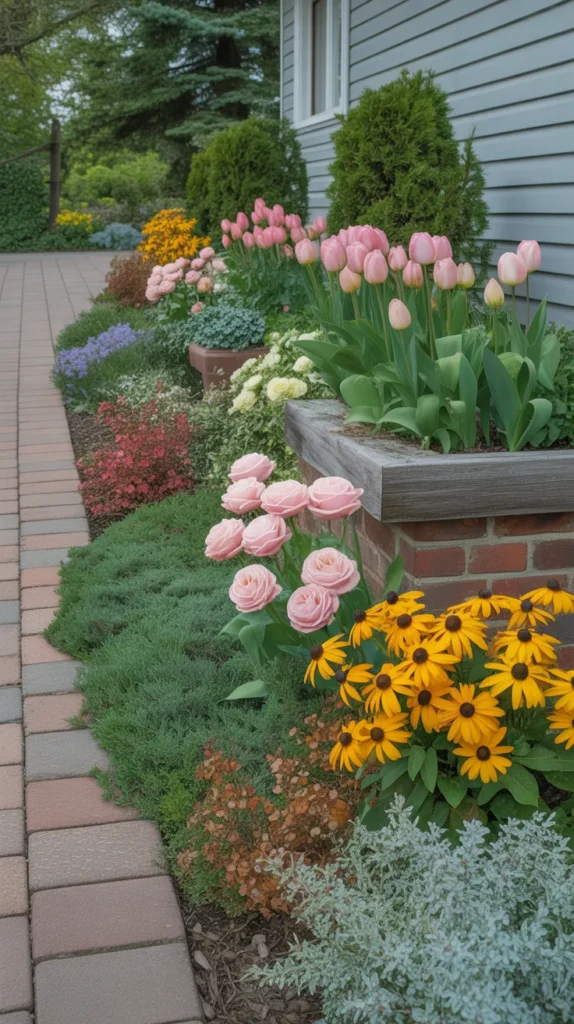
Design the front flower bed to provide genuine color and interest throughout all four seasons by layering plants with different peak seasons of performance — spring bulbs, summer perennials, autumn sedums and rudbeckias, and winter evergreens with berries and colored stems — so the bed always offers something beautiful to see from the street regardless of the time of year. A four-season bed makes the home look well-maintained and thoughtfully gardened in every month of the year.
Expert Tip from PlantyHome:
Photograph the front flower bed at the same time each month for a full year to clearly identify any seasonal gaps in color or interest that need to be filled with additional plant selections.
21. The Flowering Shrub Anchor Bed
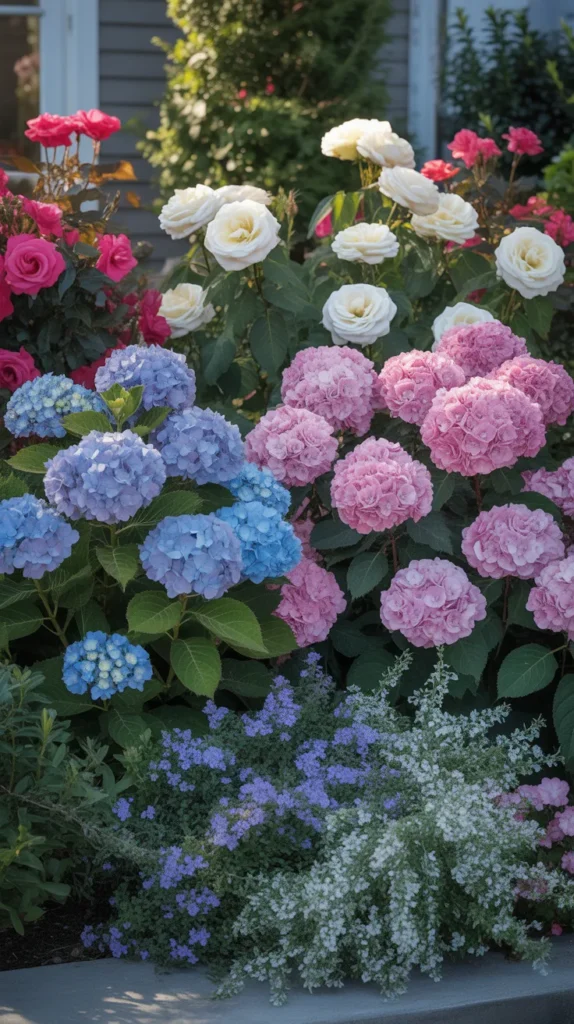
Build the front flower bed around one or two genuinely impressive flowering shrubs — a large rose, a spectacular hydrangea, a vibrant weigela — that provide permanent structure and dramatic seasonal flower displays, then fill the spaces between them with lower perennials and ground covers that complement and extend the overall color scheme throughout the season. Flowering shrub anchor beds require far less annual replanting than purely herbaceous borders and improve in beauty and impact with every passing year.
Expert Tip from PlantyHome:
Choose anchor shrubs that have at least two distinct seasons of interest — flowers in summer and attractive berries or foliage color in autumn — to ensure the bed remains visually rewarding for as long as possible each year.
22. The Vertical Flower Bed With Climbing Plants
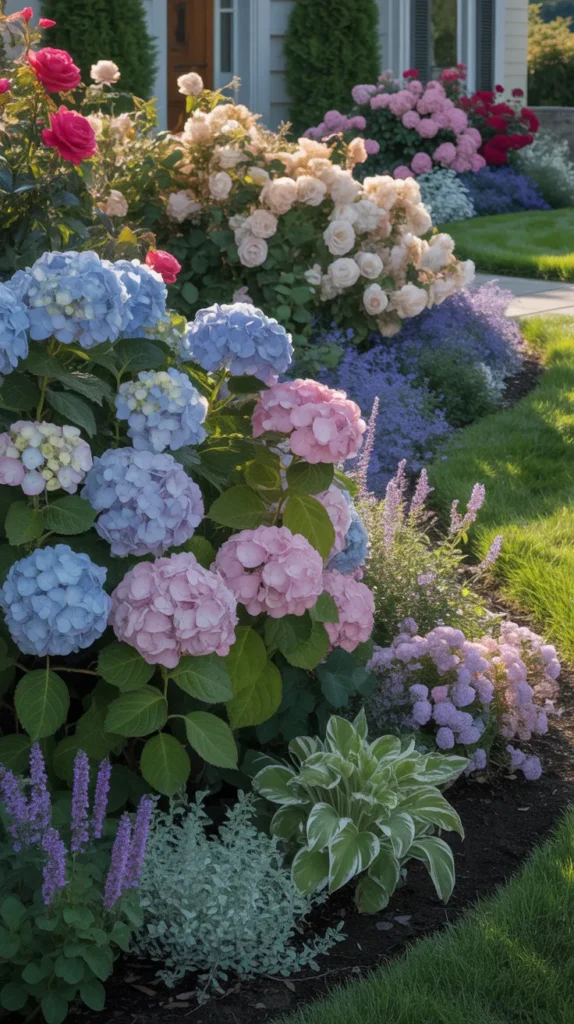
Extend the front flower bed into the vertical plane by adding a low obelisk, trellis panel, or simple post-and-wire frame that supports climbing plants rising from the bed to create height, drama, and a genuine sense of architectural presence that ground-level planting alone can never deliver. Climbing roses, sweet peas, clematis, and annual climbers like black-eyed Susan vine all create spectacular vertical displays when trained up simple structures positioned within front garden flower beds.
Expert Tip from PlantyHome:
Paint any trellis or obelisk structures in the front flower bed in a color that complements the front door and window frames of the house as coordinated colors throughout the frontage create a much more cohesive and designed overall appearance.
23. The Nighttime Glow Flower Bed
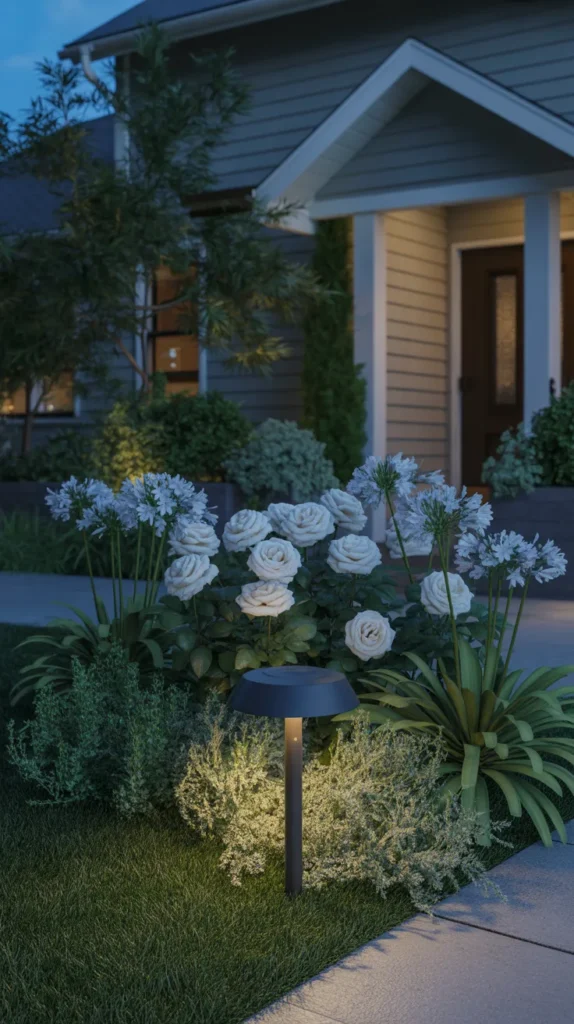
Design the front flower bed specifically for maximum impact during evening hours by combining white and pale-flowered plants that glow beautifully in low light with simple solar-powered pathway lighting that illuminates the bed from below after dark. White roses, pale agapanthus, white gaura, and silver artemisia all reflect available light with a luminous quality that makes the front of the home look warm, welcoming, and genuinely beautiful during the evening hours when residents and guests most often arrive and depart.
Expert Tip from PlantyHome:
Add a timer-controlled uplighter directed at any flowering shrub used as the bed’s anchor plant as a single well-positioned uplighter creates more dramatic evening curb appeal impact than an entire row of pathway lights.