
Low light gardening is one of the most rewarding and misunderstood disciplines in horticulture. Most gardeners see a shaded corner and struggle against it. But gardeners who truly understand shade know it unlocks an entirely different plant palette — filled with more interesting textures, more sophisticated color combinations, and more quietly beautiful moments than any sun-soaked border could ever produce. These 13 ideas will completely transform how you think about every shaded space in your backyard.
1. The Woodland Drift Garden
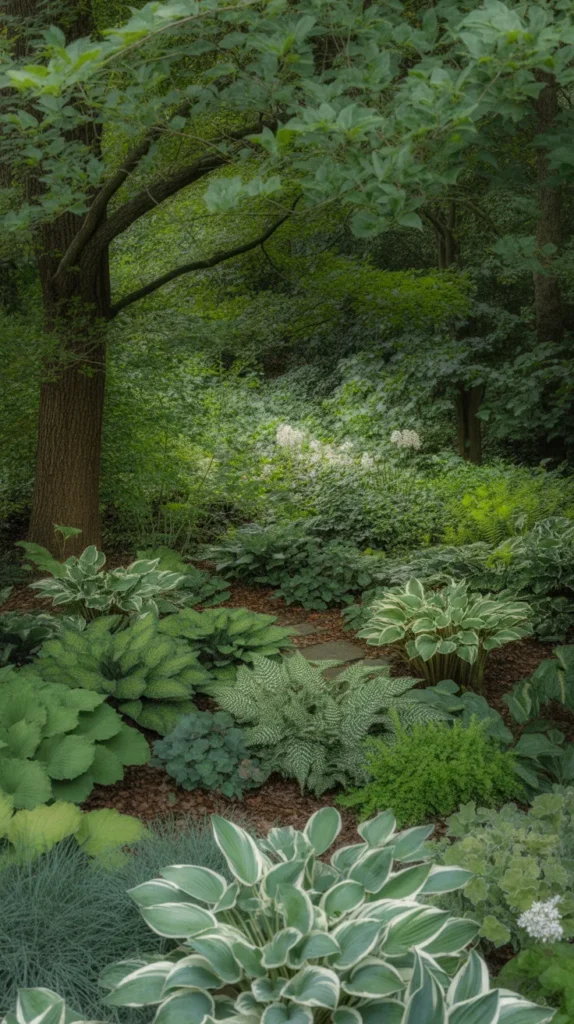
Design the layout around naturalistic drifts — long, flowing sweeps of a single plant species that weave between each other like streams finding their way through a forest floor. Use large drifts of hostas beneath a deciduous tree, with rivers of ferns threading between them and pools of epimedium filling the driest areas. The result feels genuinely wild, beautifully composed, and completely unlike anything a formal garden layout can achieve.
Expert Tip: Always plant drifts in odd numbers as groups of three, five, and seven always look more naturally convincing than even-numbered groupings.
2. The Stacked Stone Terrace Shade Garden
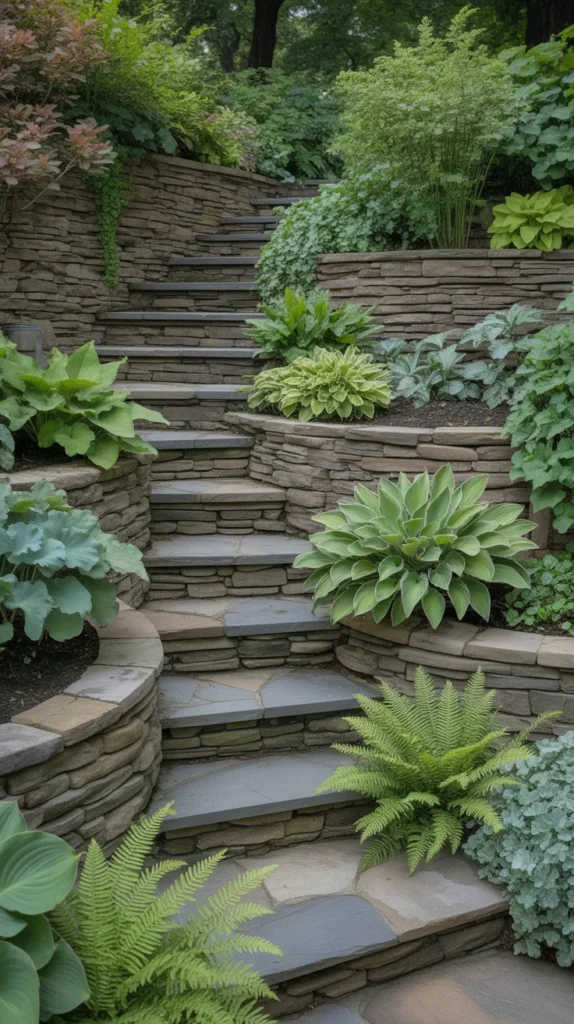
Transform a sloping shaded area into a series of dry stone retaining walls creating flat planting terraces stepping up the slope, each filled with plants suited to its specific moisture and light conditions. The lowest terrace suits ferns and astilbes. Middle terraces support hostas and hellebores. The uppermost level suits drought-tolerant woodland perennials. The walls themselves become additional growing surfaces when planted with creeping ferns and shade-tolerant wall plants that soften every edge beautifully.
Expert Tip: Leave deliberate planting gaps when building dry stone walls and fill them with gritty compost before inserting plants so wall plants establish into proper growing medium rather than bare stone.
3. The Mirror And Light Shade Garden
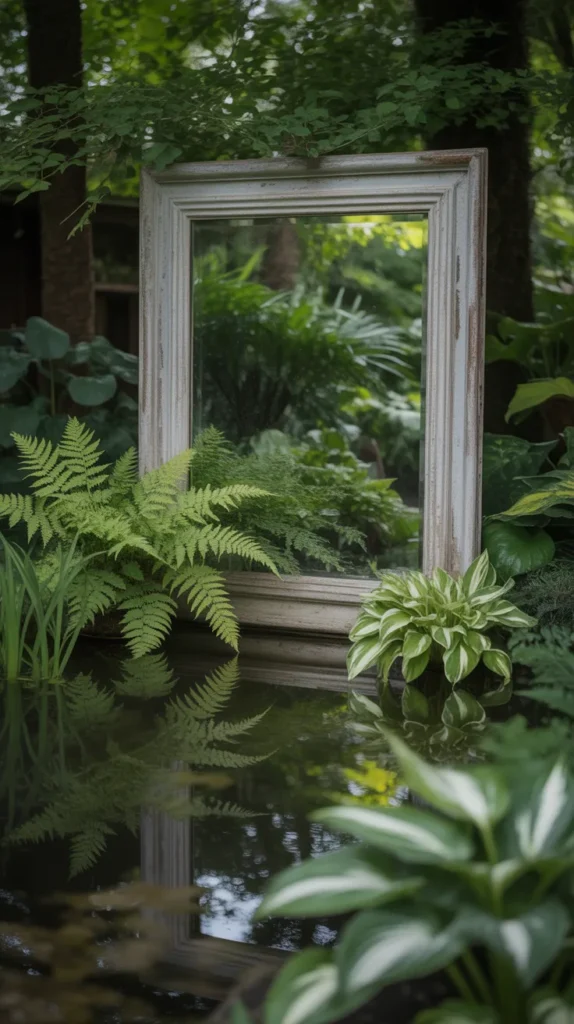
Position large outdoor mirrors on shaded walls to reflect and multiply available light, creating illusions of depth and brightness while doubling the visual impact of every plant in front of them. A single beautiful fern becomes an apparently endless drift of lush planting. Place a still water feature in front of the mirror so water reflection and mirror reflection layer together, creating a garden of multiple depths that feels genuinely magical and endlessly interesting to stand and contemplate.
Expert Tip: Use only mirrors specifically manufactured for outdoor use as standard interior mirrors deteriorate rapidly when exposed to moisture, frost, and temperature fluctuation outdoors.
4. The Heuchera Rainbow Border
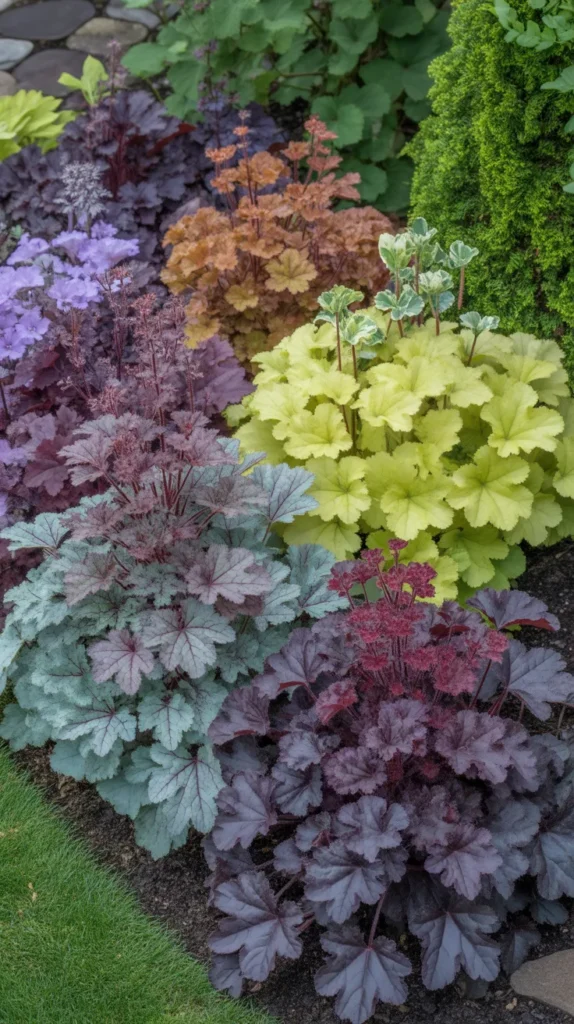
Design a long flowing shade border using the extraordinary foliage color variety across the heuchera genus — from deep purple and burnt copper through warm caramel and bright lime to fresh silver and pure white — creating a rainbow of permanent color that provides consistent visual impact throughout all twelve months without relying on flowers at any point. Arrange varieties in a carefully considered color gradient from dark to light, or compose deliberate contrasts — deep purple beside lime green, copper beside silver — for maximum visual impact.
Expert Tip: Divide heuchera clumps every three to four years and replant the outer sections as the center gradually becomes woody while the edges continue producing the best new foliage growth.
5. The Canopy Garden With Hanging Elements
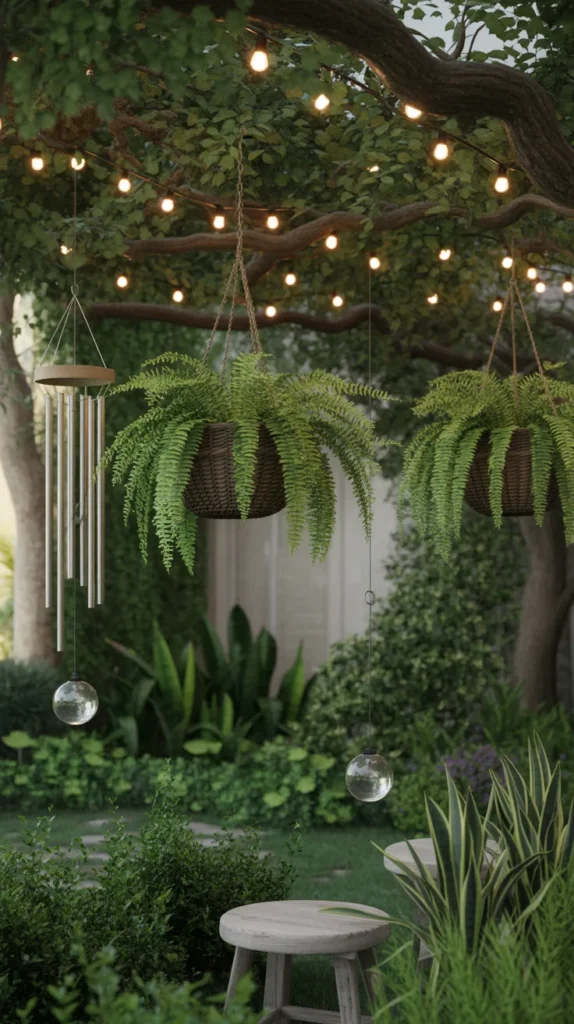
Make full use of the vertical space between the ground plane and tree canopy above by introducing hanging elements — suspended glass orbs, trailing fern baskets, wind chimes, and weatherproof fairy lights woven through lower branches — that populate the middle air and create a genuinely three-dimensional garden experience. On breezy days the gentle swaying and tinkling of suspended objects creates an animated, living quality that transforms the space into something genuinely immersive and unlike any ordinary garden.
Expert Tip: Use fishing line rather than visible cord to suspend delicate hanging glass elements as the near-invisible line creates the magical illusion that objects are floating freely in the air.
6. The Shade Cutting Garden
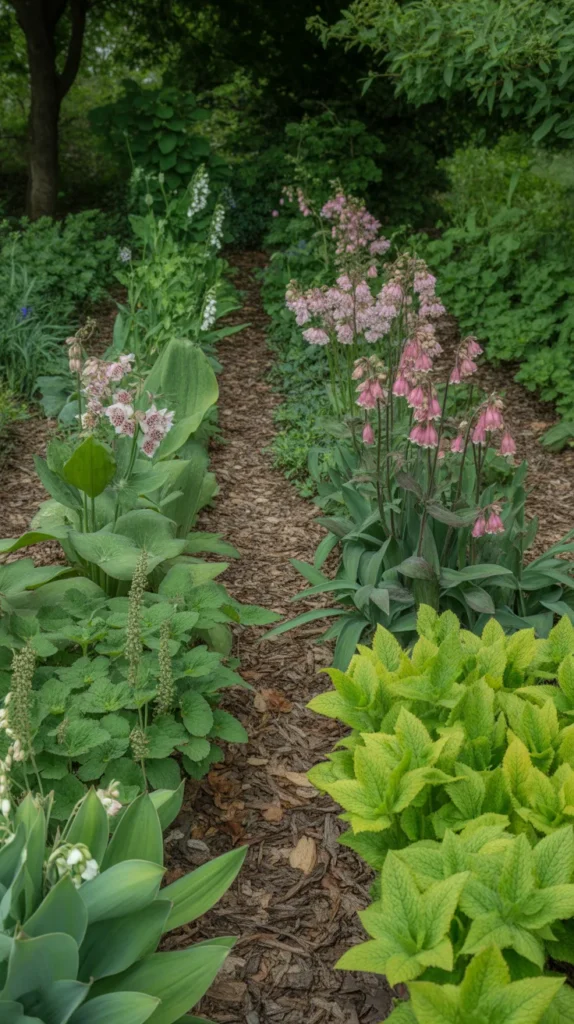
Dedicate a shaded area entirely to growing shade-tolerant flowers for cutting and bringing indoors, creating a supply of genuinely beautiful flowers that most florists never stock. Astrantias produce intricate long-lasting flowers in whites, pinks, and deep burgundies. Foxgloves provide dramatic tall spikes in an extraordinary color range. Solomon’s seal, lily of the valley, and bleeding heart all produce exquisite cut flowers of delicate beauty completely unlike anything available in a typical florist or garden center.
Expert Tip: Cut shade garden flowers early in the morning and immediately plunge stems into deep cold water as shade-grown flowers have naturally softer stems that wilt more quickly than sun-grown varieties if not conditioned promptly.
7. The Shade Succulent Rock Garden
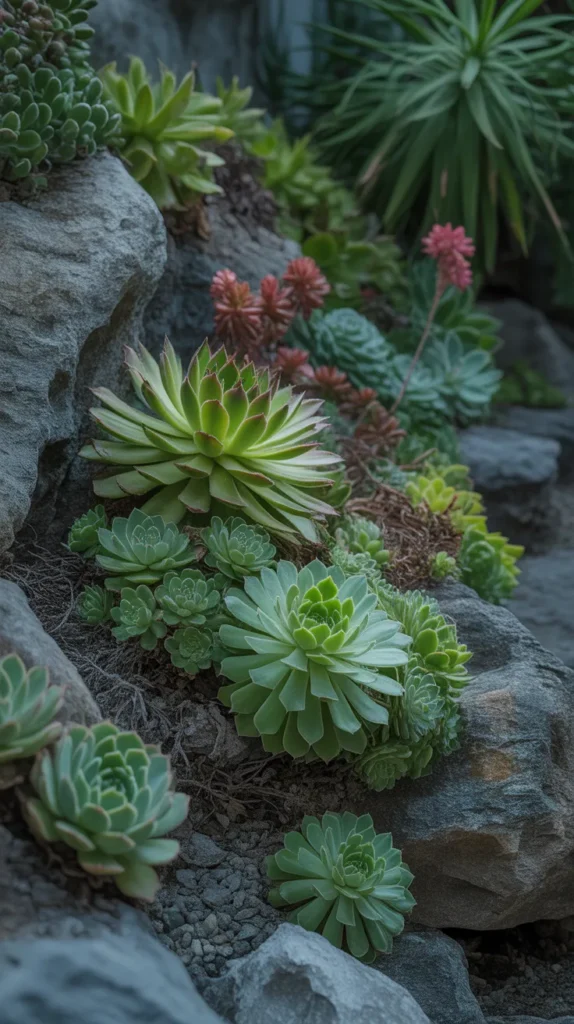
Combine shade-tolerant succulent varieties with carefully positioned rocks and gritty well-draining soil to create a miniature rocky landscape that thrives beautifully without direct sun. Sempervivums, shade-tolerant sedums, and Saxifraga varieties all grow enthusiastically in bright indirect light and together produce a densely planted rock garden of rich texture and color. Tuck plants into every crevice and gap between rocks for a composition that looks completely natural, ancient, and utterly unlike any typical shade garden planting.
Expert Tip: Use a minimum fifty percent grit mixed into the compost for all shade succulent rock garden plantings as good drainage is even more critical than light levels for preventing root rot in low-light conditions.
8. The Illuminated Fern Grotto
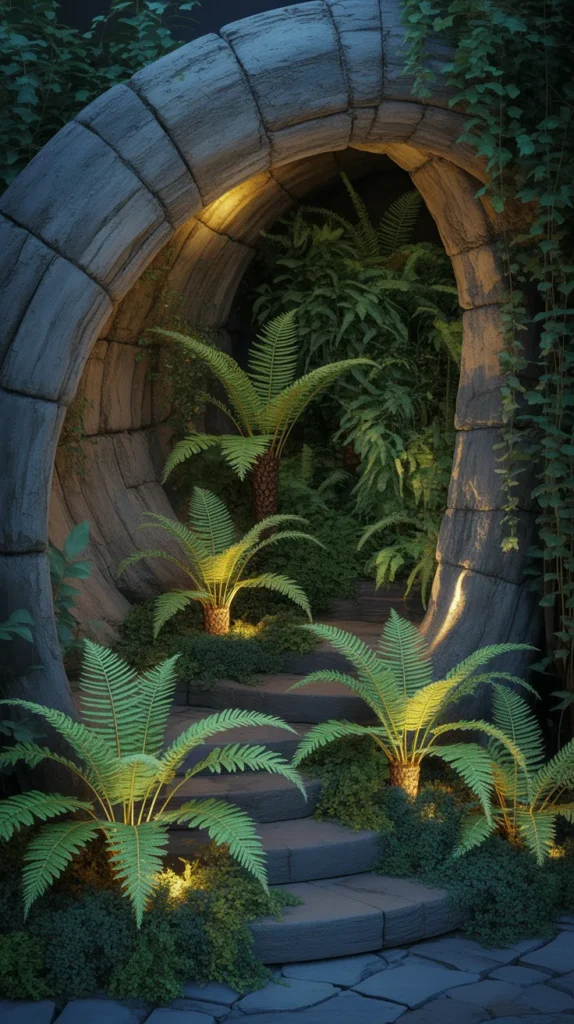
Create a deeply atmospheric shade garden feature by building a low curved stone or brick wall enclosing a sheltered planting area filled entirely with different fern species, then installing soft warm uplighting directed upward through the fern fronds from ground level to create a glowing, theatrical nighttime display of extraordinary beauty. During daylight hours it functions as a cool, lush green sanctuary. After dark the uplighting transforms every arching frond into a glowing architectural sculpture that looks genuinely otherworldly and breathtaking.
Expert Tip: Choose LED uplights with a warm three-thousand Kelvin color temperature rather than cool daylight bulbs as warm light enhances the rich green of fern foliage dramatically more effectively than cold white light.
9. The Shade Cottage Garden
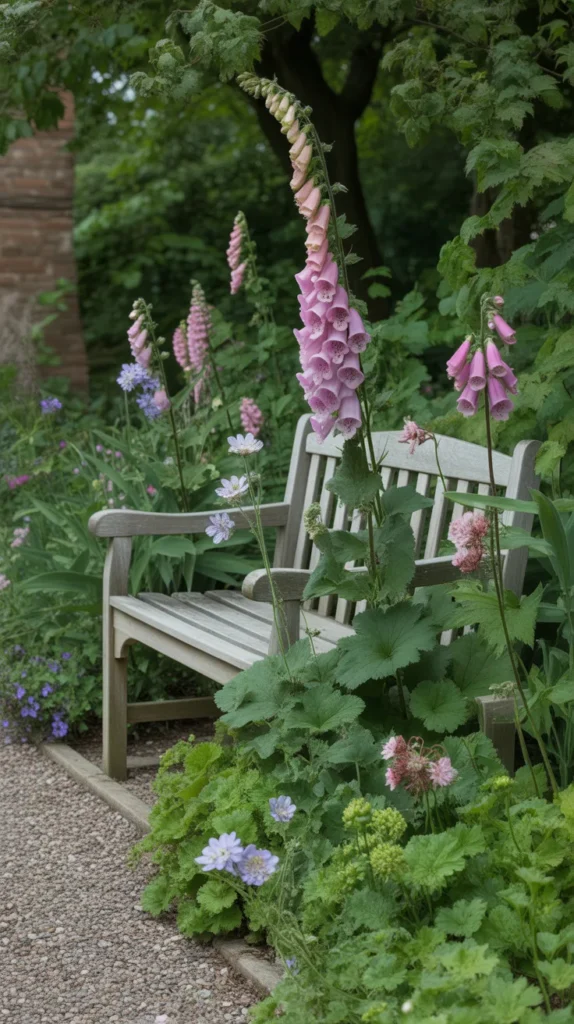
Recreate the romantic, overflowing abundance of a traditional cottage garden entirely using shade-tolerant plants that thrive in low light conditions, creating a border filled with foxgloves, astrantias, aquilegias, campanulas, and hardy geraniums that produces the same lush, colorful, old-fashioned charm as a sunny cottage border but in a cool, sheltered, deeply atmospheric setting. Combine informal planting with simple gravel paths and a weathered timber bench and the shade cottage garden becomes the most romantically beautiful corner of the entire backyard.
Expert Tip: Allow shade cottage garden plants to self-seed freely between existing clumps as self-seeded plants always look more naturally placed and convincing than deliberately positioned transplants ever achieve.
10. The Symmetrical Shade Garden With Central Urn
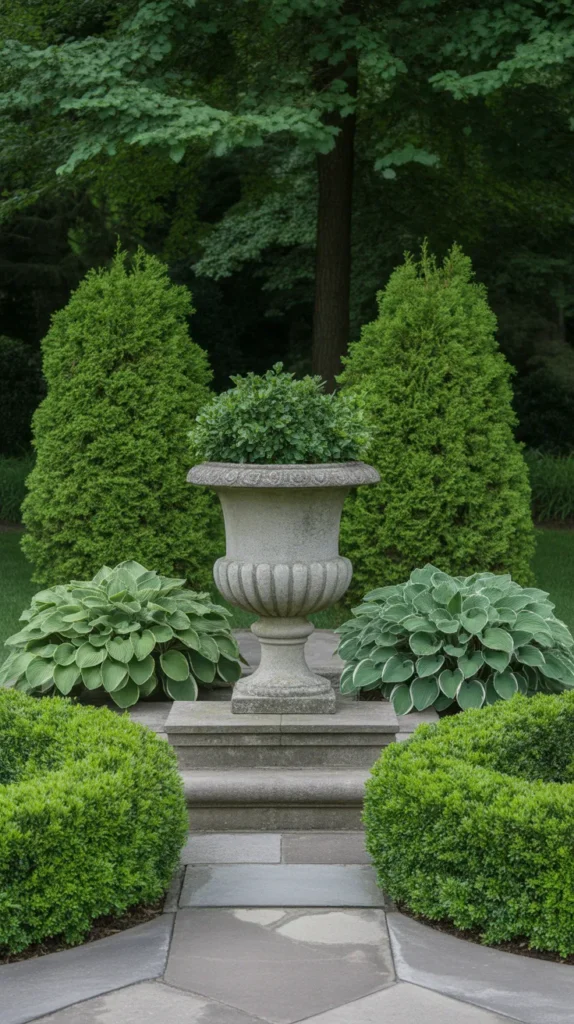
Apply formal symmetry to a shaded garden by designing the entire layout around a central focal point — a large stone urn, an antique lead planter, or a mossy stone sphere — flanked by perfectly matching pairs of clipped evergreen shrubs, identical hosta groupings, and symmetrical stone pathway edging that creates a sense of architectural order and classical elegance entirely without the need for a single sun-loving plant. Formal symmetry brings discipline and grandeur to shade that informal planting can never quite achieve.
Expert Tip: Use a single large, genuinely impressive central urn rather than a small one as the focal point needs to be substantial enough to anchor the entire symmetrical composition visually from every viewing distance.
11. The Shade Zen Pebble Garden
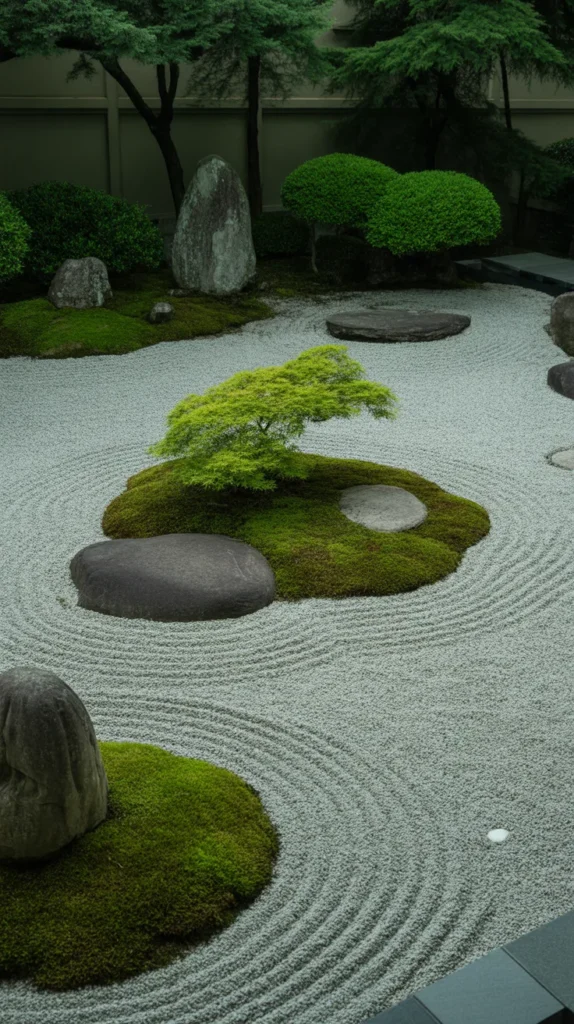
Create a deeply serene minimalist shade garden using the core principles of Zen design — carefully raked gravel or fine pebbles as the ground plane, three to five large anchor stones positioned with asymmetric precision, clipped moss cushions between the stones, and a single specimen Japanese maple or cloud-pruned pine as the sole living focal point. The quietness and restraint of the Zen composition feels perfectly suited to a shaded setting where the reduced light naturally encourages slower, more contemplative observation and appreciation.
Expert Tip: Rake gravel lines in gentle curves that flow around the anchor stones rather than in straight parallel lines as curved raking patterns look more organic and naturally harmonious in a garden setting.
12. The Shade Fernery With Vintage Staging
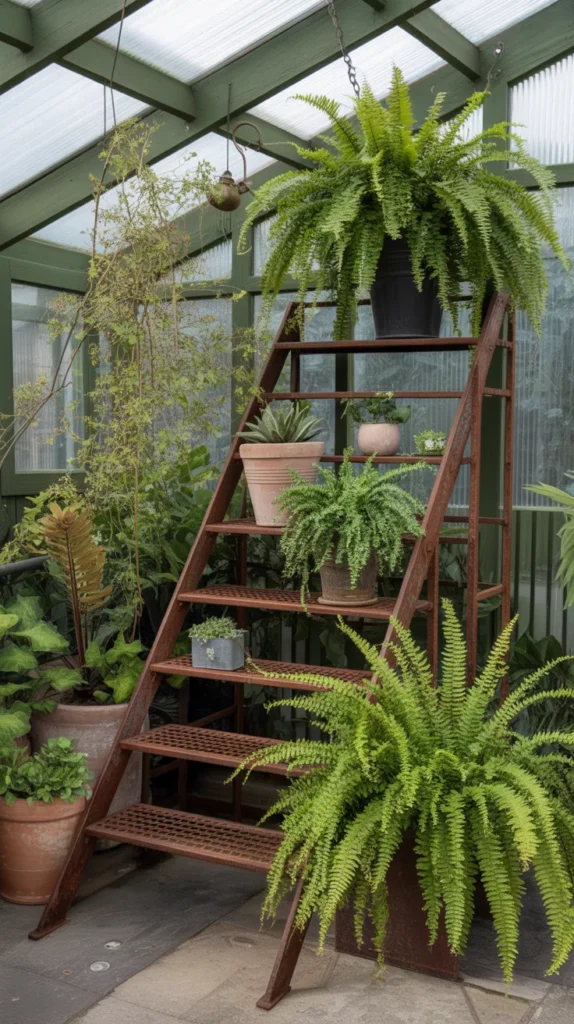
Recreate the atmosphere of a Victorian fernery by filling a sheltered shaded corner with an extraordinary collection of different fern species displayed on tiered vintage staging, weathered wooden shelving, and rusted metal plant stands at different heights to create a richly layered, museum-quality display of botanical beauty. Combine hardy outdoor ferns with more tender varieties kept in terracotta pots that can be moved indoors during the coldest months. The combination of beautiful plants and vintage display furniture creates a shade garden of genuinely unique character.
Expert Tip: Mist fern collections regularly in dry weather as high humidity is as important as shade for keeping fern fronds looking lush, healthy, and deeply green throughout the entire growing season.
13. The Night Blooming Shade Garden
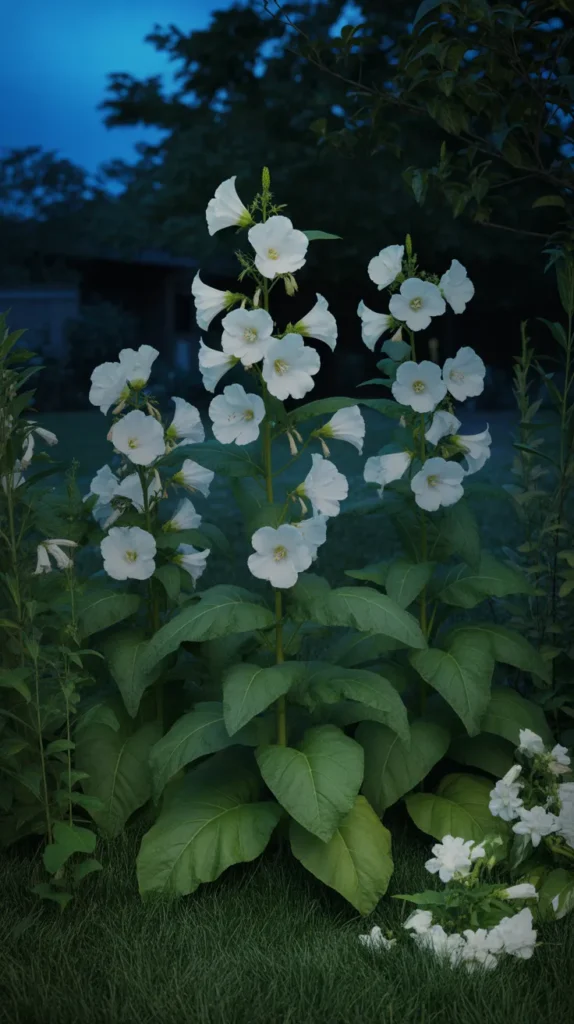
Design the shade garden specifically around plants that open their flowers in the evening and release their strongest fragrance after dark, creating a garden that is at its absolute most beautiful and atmospheric during the hours when most people are actually outside relaxing in it. Night-scented stocks, evening primrose, white tobacco plants, moonflowers, and night-blooming jasmine all perform magnificently in shade and together create an evening garden of intoxicating fragrance, glowing white flowers, and deeply magical atmosphere that makes every other garden seem ordinary by comparison.
Expert Tip: Plant night-blooming varieties in generous clusters rather than as single specimens as the fragrance of massed planting carries significantly further across the garden on warm still evenings than isolated individual plants.