
The Pothos (Epipremnum aureum), often called “Devil’s Ivy,” is celebrated as one of the most resilient indoor plants. While it is famously difficult to kill, there is a vast difference between a Pothos that is merely surviving and one that is thriving with explosive, lush growth. Many indoor gardeners unknowingly hinder their plant’s progress through subtle maintenance errors. To transform your Pothos into a rapid-growing specimen with giant leaves and thick vines, you must avoid these 26 common pitfalls.
1. Overwatering
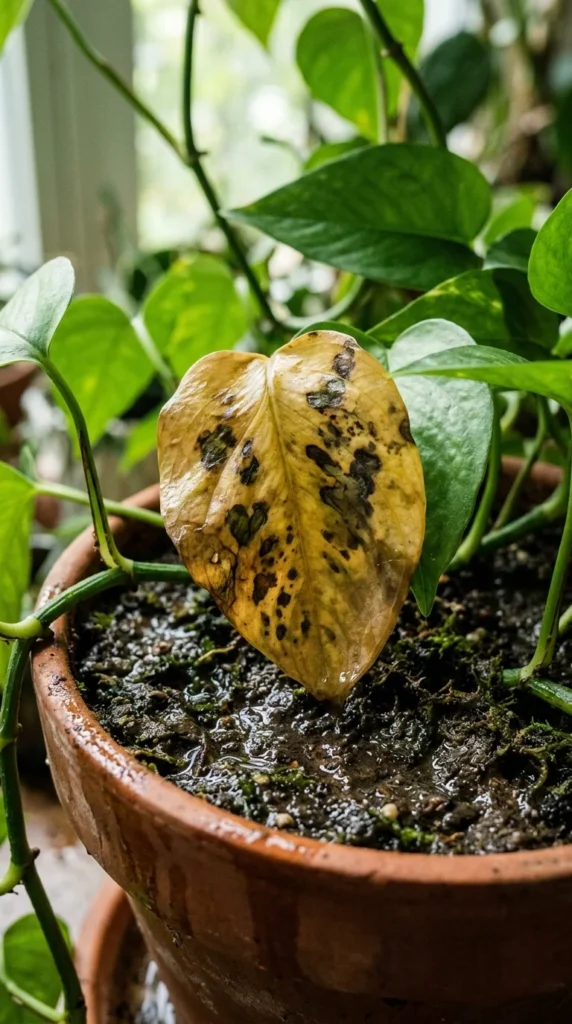
Overwatering is the primary cause of Pothos death. These plants are aroids and prefer their soil to dry out significantly between waterings. When the soil remains perpetually wet, oxygen cannot reach the roots, leading to root rot. To ensure faster growth, wait until the top two inches of soil are dry to the touch or until the leaves start to slightly wilt before giving it a drink.
2. Poor Drainage
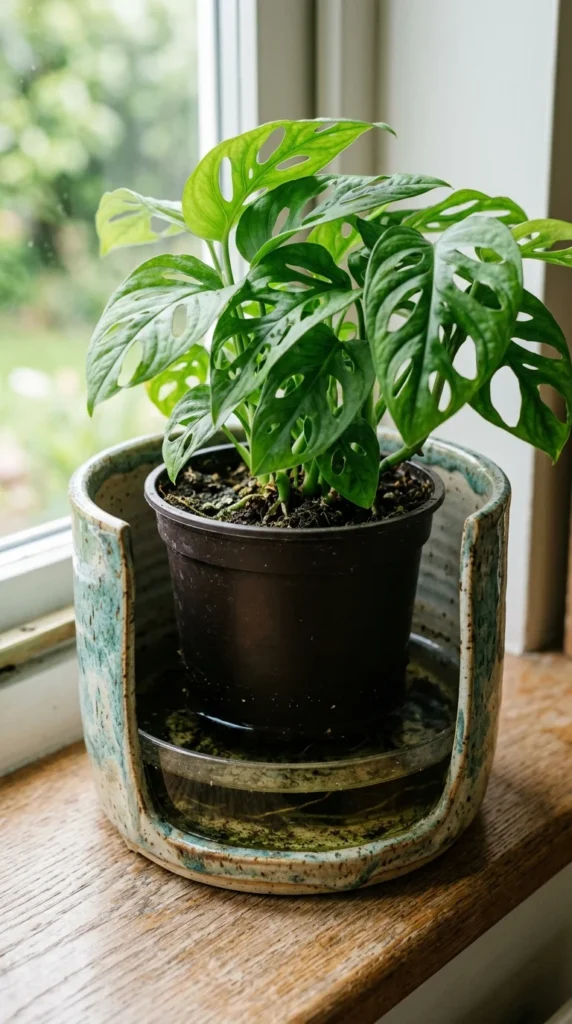
Even if you water sparingly, a pot without drainage holes will trap moisture at the bottom. This creates a “dead zone” where roots will suffocate and rot. Always use a pot with at least one drainage hole at the base to allow excess water to escape. If you love a decorative cachepot without holes, keep the Pothos in a plastic nursery liner inside it and remove it when watering.
3. Low Light
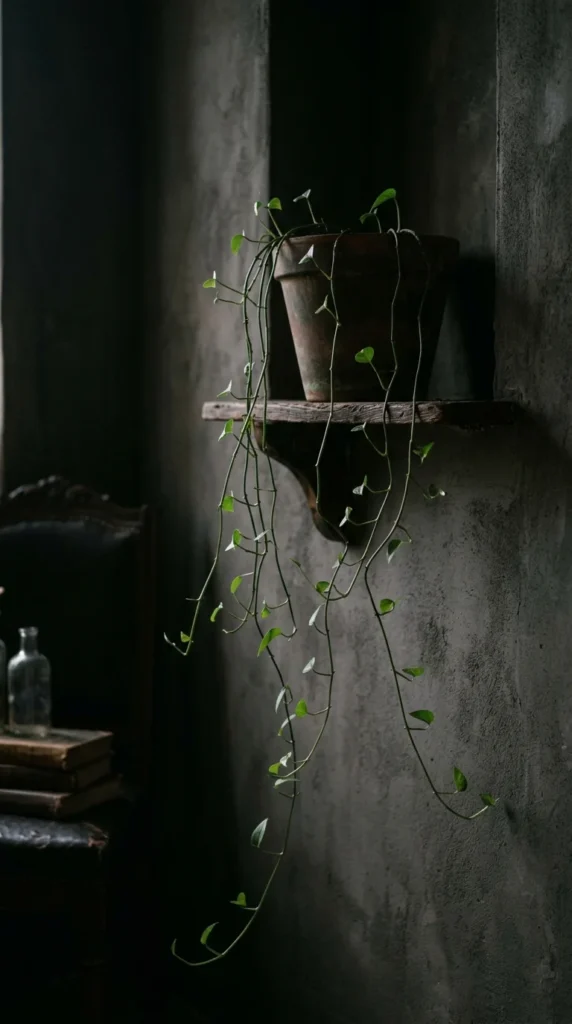
While Pothos can survive in low light, they will not grow quickly. In dim conditions, the plant enters a survival mode, producing small leaves and “leggy” vines with large gaps between the nodes. For rapid growth and vibrant variegation, place your plant in bright, indirect light. The more light it receives (without being scorched), the faster it will produce new foliage.
4. Direct Sun
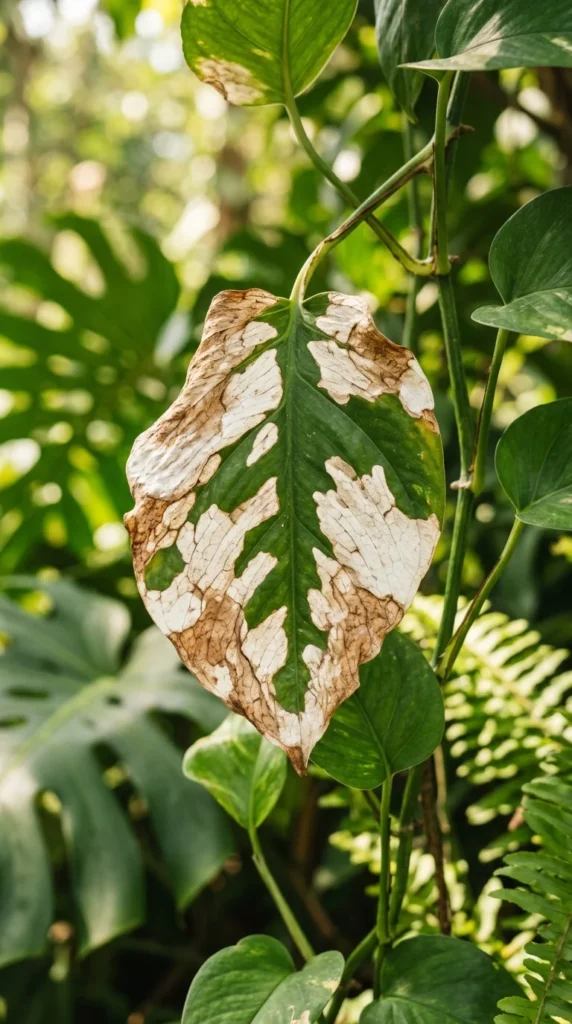
While light is essential, harsh, direct afternoon sunlight can be devastating. Pothos leaves are thin and susceptible to sunburn. If placed on a south-facing windowsill without a sheer curtain, the UV rays will scorch the chlorophyll, leading to permanent leaf damage and stunted growth as the plant struggles to recover from the stress.
5. Wrong Pot Size
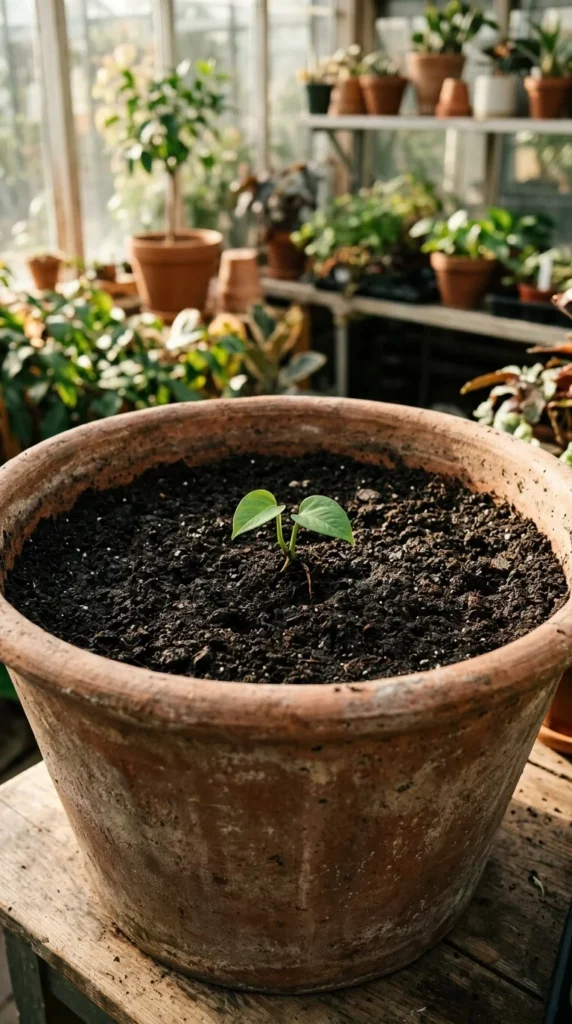
Putting a small Pothos in a massive pot is a recipe for disaster. A large volume of soil holds more water than a small root system can drink, leading to “wet feet” and rot. Conversely, if the pot is too small, the plant becomes root-bound and stops growing. Choose a pot that is only 1–2 inches wider than the current root ball to encourage steady upward and outward growth.
6. Ignoring Pests
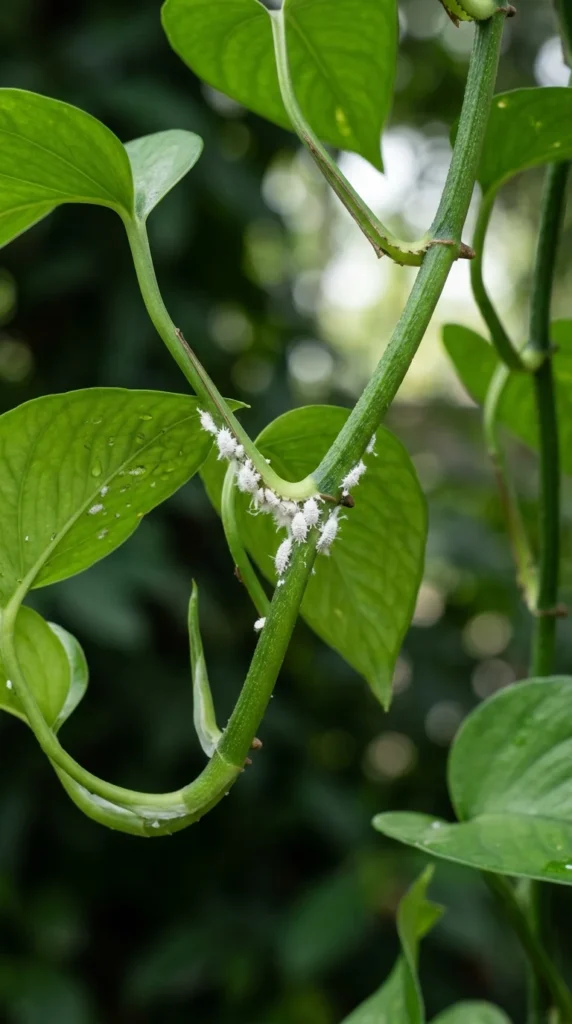
Pests like mealybugs, spider mites, and scale can sap the energy from your Pothos, causing growth to grind to a halt. Frequently inspect the undersides of leaves and the nodes (where the leaf meets the stem). If you spot tiny webs or sticky residue, treat the plant immediately with neem oil or insecticidal soap to prevent an infestation from stealing the plant’s nutrients.
7. No Fertilization
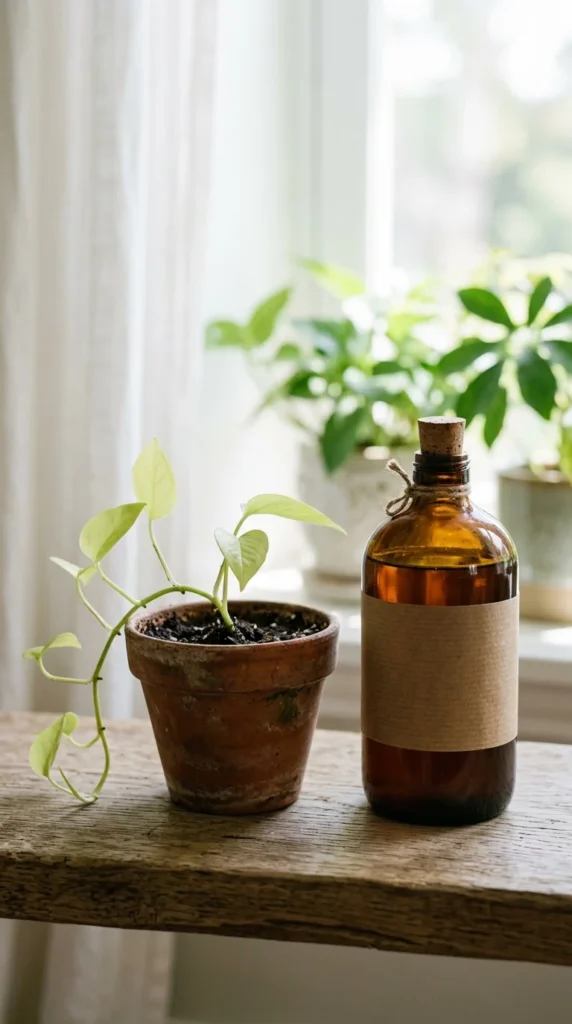
Pothos are not heavy feeders, but they cannot grow indefinitely on soil nutrients alone. After about six months, the nutrients in commercial potting soil are usually depleted. To encourage faster growth, use a balanced, water-soluble fertilizer once a month during the spring and summer. Without these extra minerals, the leaves will remain small and the growth rate will remain sluggish.
8. Over-fertilizing
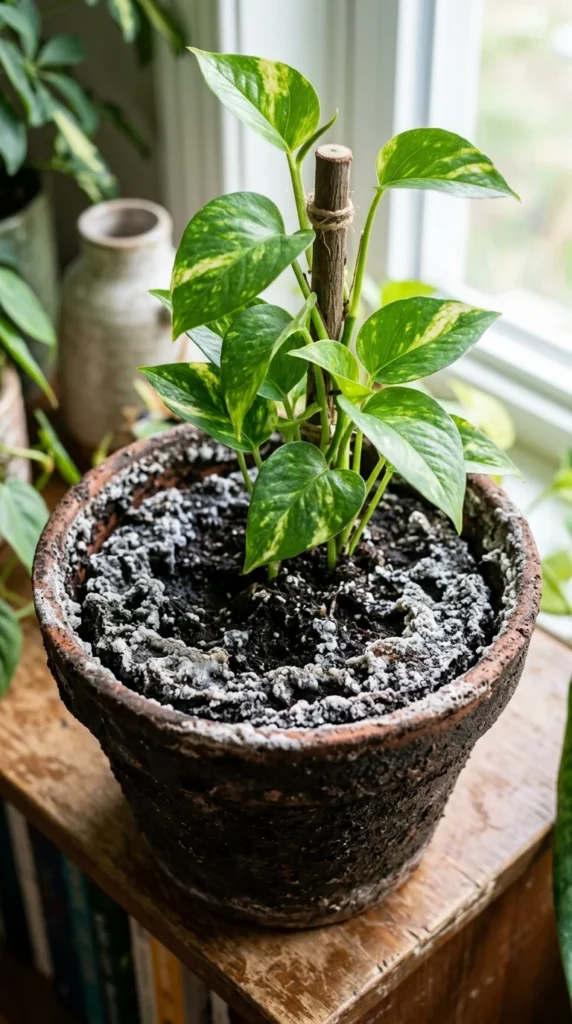
While some fertilizer is good, too much is toxic. Over-fertilizing leads to a buildup of salts in the soil, which can burn the roots and cause the leaf tips to turn brown and crispy. If you notice a white crust on the soil surface, flush the pot with plenty of distilled water to wash away the excess minerals and pause feeding for several months.
9. Drafty Locations
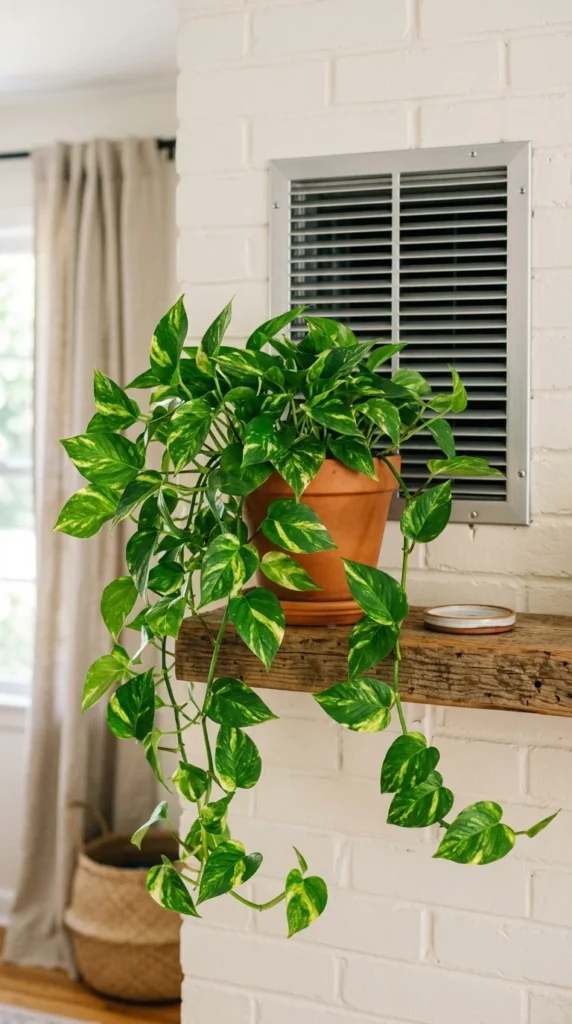
Pothos are tropical plants that thrive in stable temperatures. Placing them near air conditioning vents, drafty windows in winter, or heating radiators can shock the plant. Sudden temperature swings cause the plant to drop leaves or stop producing new ones as it tries to regulate its internal temperature. Keep them in a spot with consistent warmth.
10. Tap Water Issues
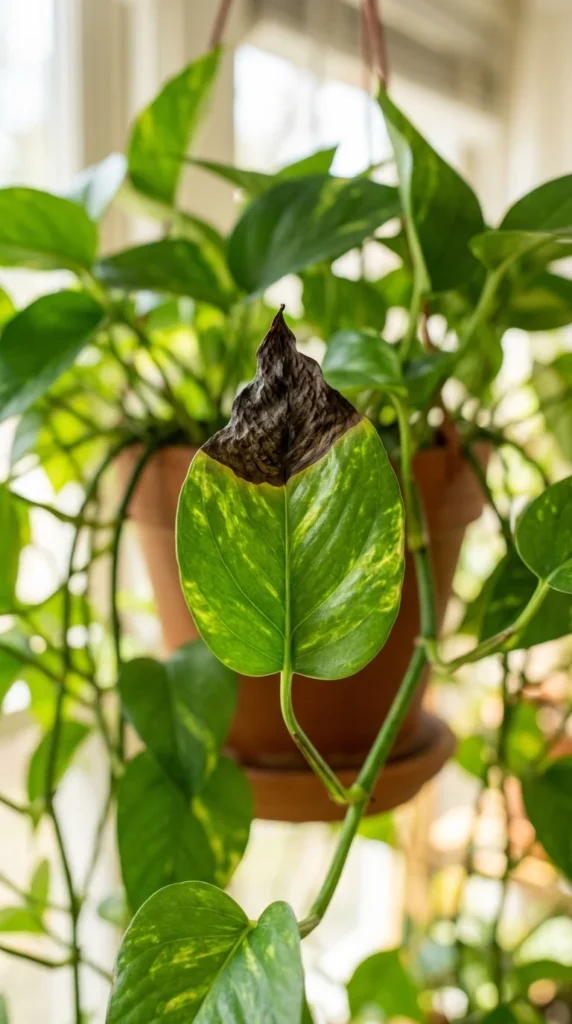
In many areas, tap water contains high levels of chlorine, fluoride, and heavy metals. Pothos can be sensitive to these chemicals over time. If you notice the tips of your leaves turning brown despite proper watering, try using filtered water, rainwater, or let tap water sit out for 24 hours before watering to allow the chlorine to dissipate.
11. Low Humidity
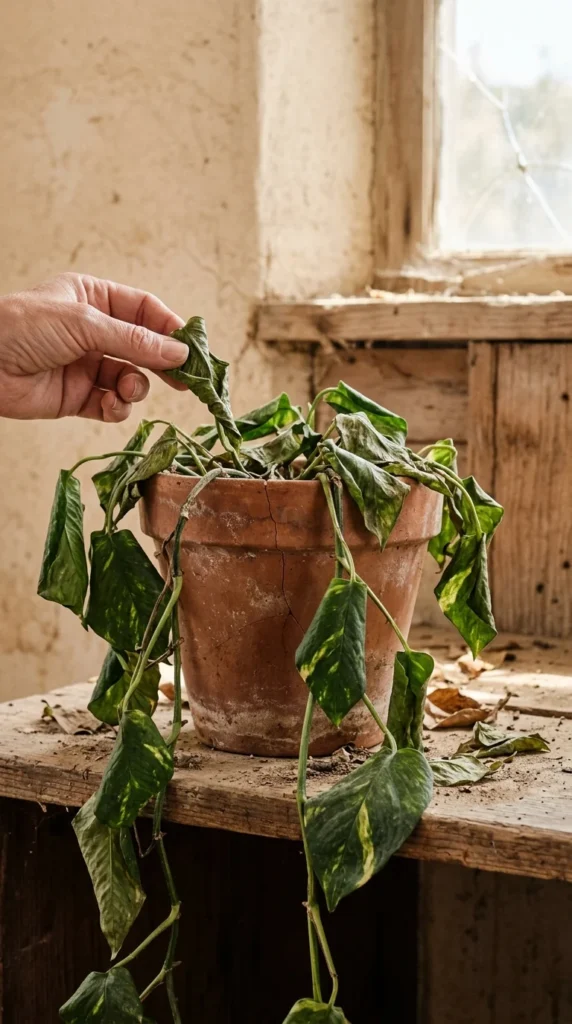
While they tolerate average home humidity, Pothos are native to jungles. If the air is too dry—especially during winter when heaters are on—the plant’s growth will slow down. To see faster, larger leaf growth, aim for humidity levels between 50% and 70%. You can achieve this with a humidifier or by grouping plants together to create a microclimate.
12. Root Bound
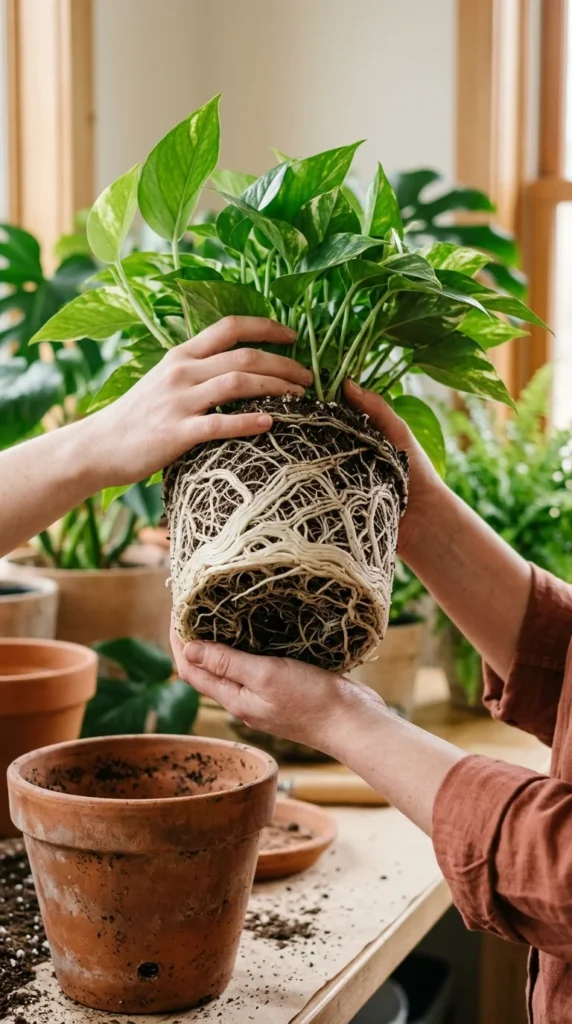
If you notice water running straight through the pot without soaking in, or roots growing out of the drainage holes, your Pothos is likely root-bound. When roots have no room to expand, the plant cannot take in enough water or nutrients to support new foliage. Repotting into a slightly larger container with fresh soil will usually trigger a massive growth spurt.
13. Neglecting Pruning
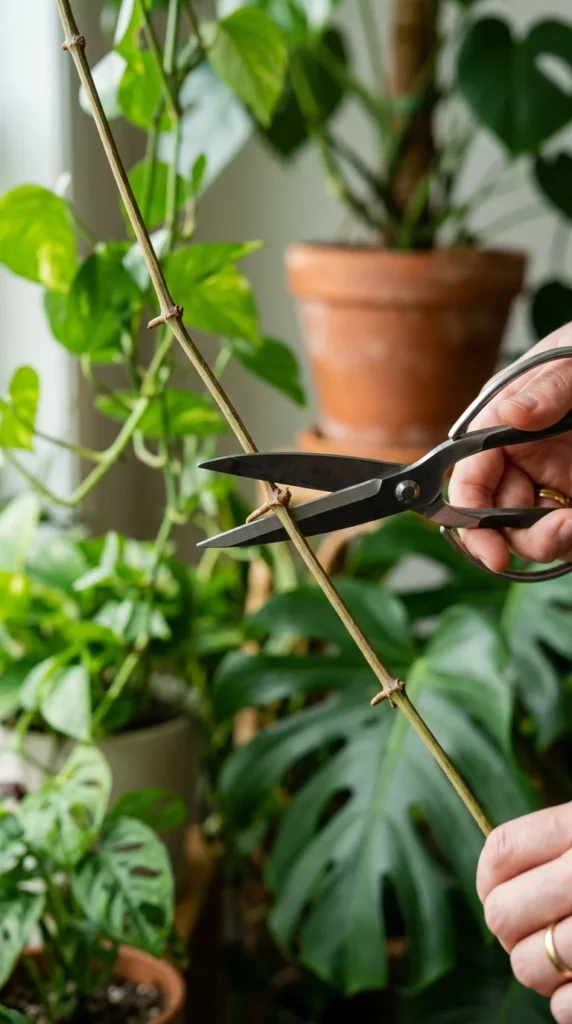
It may seem counterintuitive, but cutting your plant helps it grow faster and fuller. Long, trailing vines take a lot of energy to maintain. By pruning back leggy stems, you encourage the plant to send out new growth from the top, resulting in a bushier appearance. You can also propagate the cuttings to add back into the pot for more volume.
14. Dirty Leaves
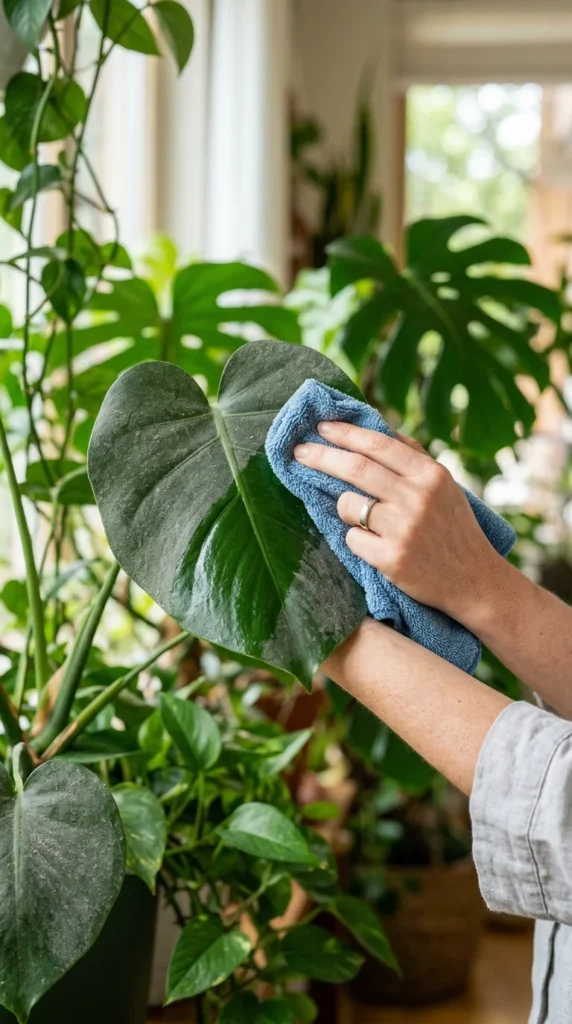
Dust acts as a barrier between light and the leaf’s surface, significantly reducing the plant’s ability to photosynthesize. If the leaves can’t “breathe” or absorb light efficiently, growth will be slow. Make it a habit to wipe the leaves with a damp cloth every few weeks to keep them shiny and functioning at their maximum capacity.
15. Cold Temps
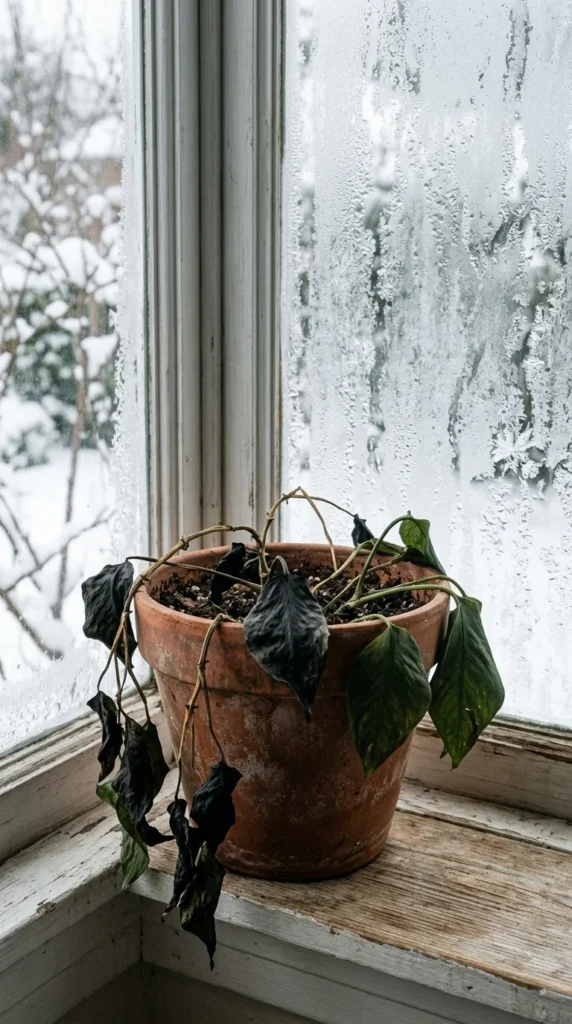
Pothos prefer temperatures between 65°F and 85°F (18°C–29°C). If the temperature drops below 50°F (10°C), the plant’s metabolism slows down significantly, and it may even suffer permanent tissue damage. Ensure your plant is kept away from cold glass or unheated porches during the winter months.
16. Wrong Soil
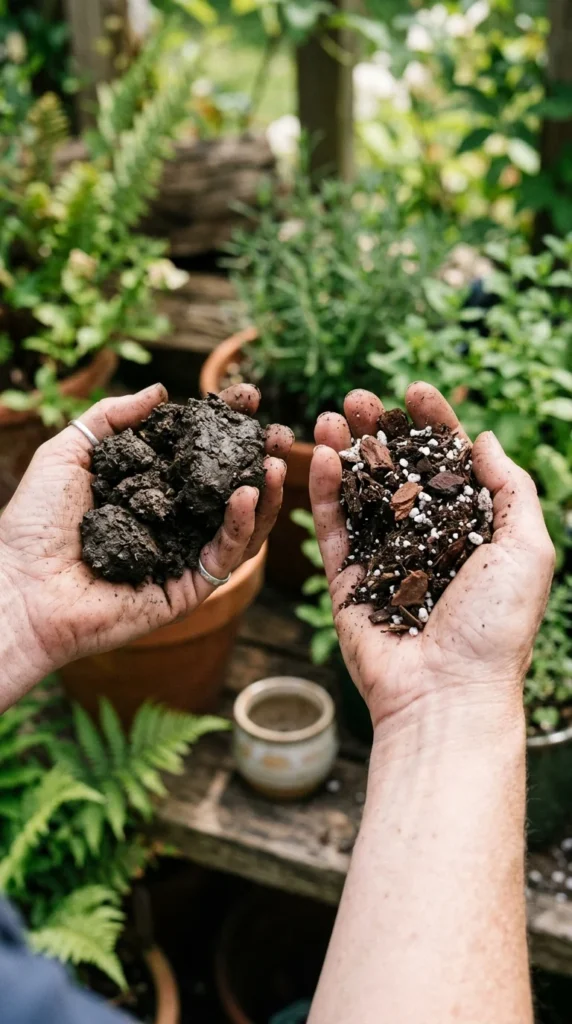
Using standard garden soil or heavy, peat-only mixes can be fatal for Pothos. These soils pack down too tightly, preventing airflow to the roots. For the fastest growth, use a well-draining potting mix. A blend of high-quality potting soil, perlite, and a bit of orchid bark provides the perfect balance of moisture retention and aeration.
17. Not Rotating
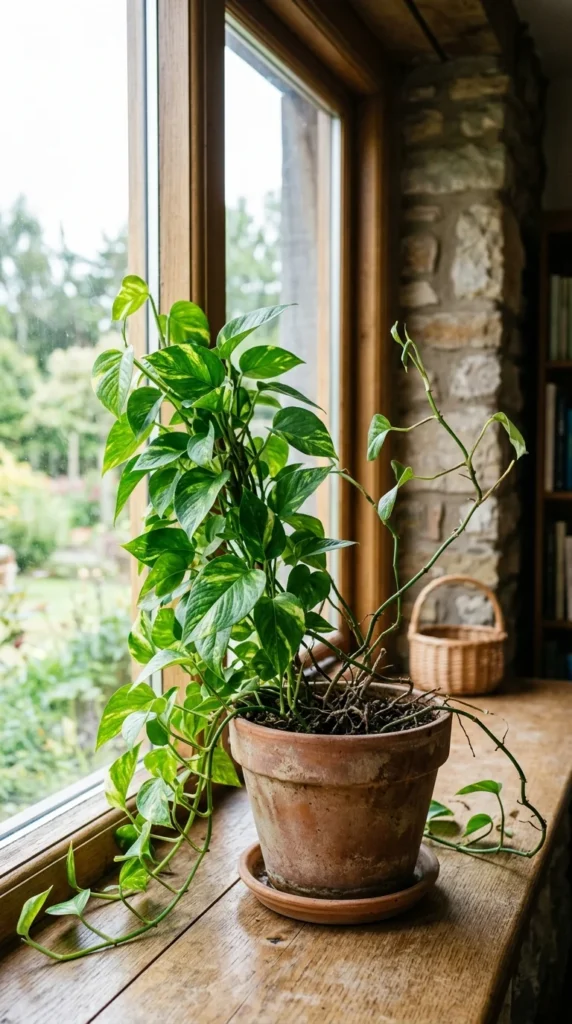
Plants naturally grow toward the light source—a process called phototropism. If you never rotate your Pothos, it will become lopsided, with all the growth concentrated on one side. Turn the pot a quarter-turn every time you water to ensure all sides of the plant receive equal light, promoting even, 360-degree growth.
18. Planting Deeply
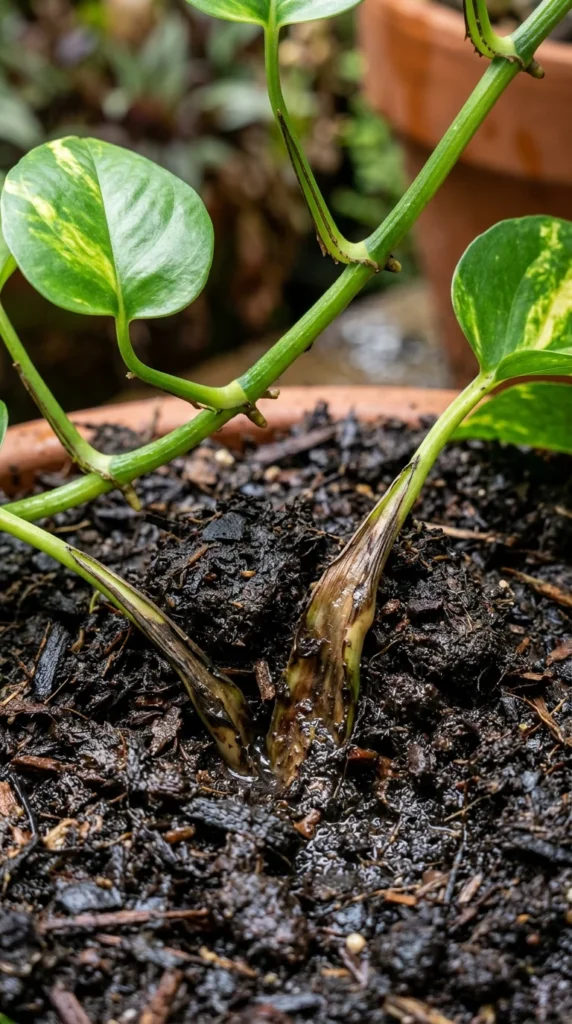
When repotting or planting cuttings, many people bury the stems too deep in the soil. If the leaf stems (petioles) are submerged in dirt, they will eventually rot. Ensure that only the root system and the main vine are under the soil, while the base of the leaves remains above the surface to prevent fungal issues.
19. Ignoring Yellowing
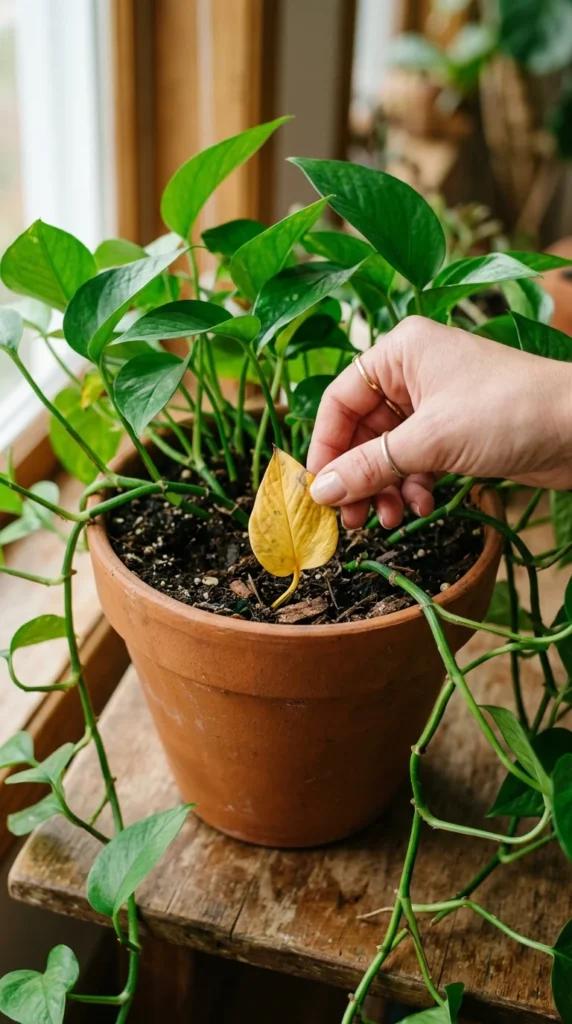
While an occasional yellow leaf at the base of the plant is a natural part of aging, multiple yellow leaves are a signal that something is wrong. Ignoring this sign prevents you from fixing issues like overwatering or nutrient deficiency early. When you see yellowing, check the soil moisture and root health immediately to prevent a total growth shutdown.
20. Over-propagation
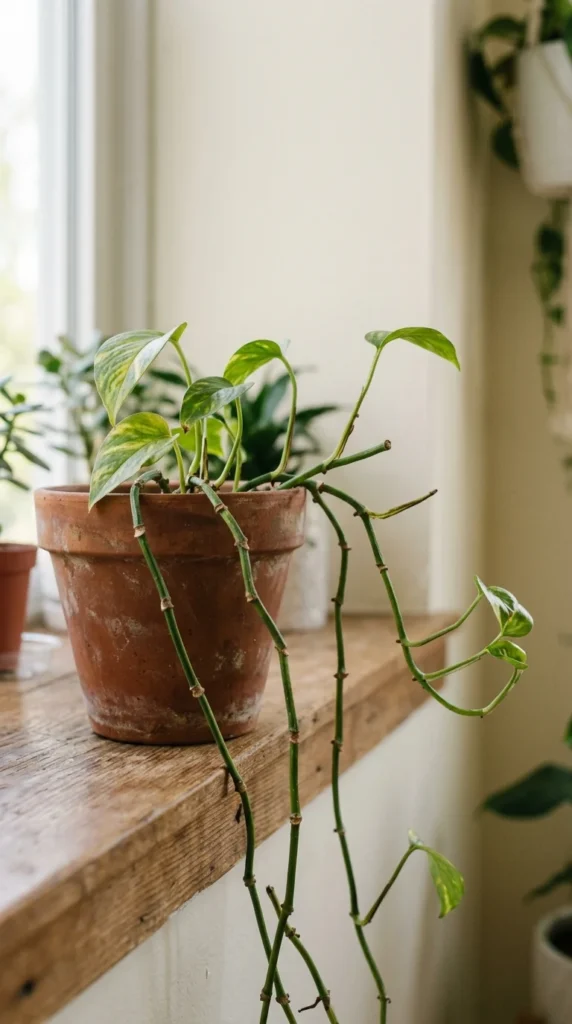
If you constantly take cuttings from your Pothos to start new plants, the mother plant will struggle to grow. Every leaf removed is a source of energy for the plant. Give your main plant time to establish a strong, leafy canopy before taking more cuttings, ensuring it has enough photosynthetic “machinery” to support rapid recovery.
21. Crowded Pots
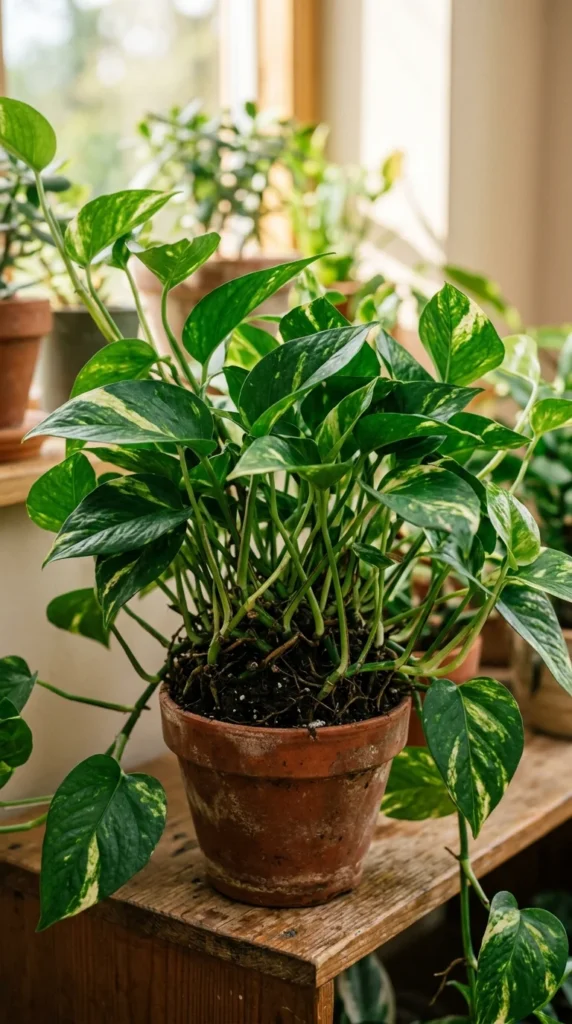
While putting many cuttings in one pot makes it look full instantly, overcrowding leads to competition for nutrients and water. Eventually, the growth of all the plants in the pot will stall. Aim for 3 to 5 cuttings per 6-inch pot to give each plant enough “elbow room” to develop a robust root system.
22. Moss Poles
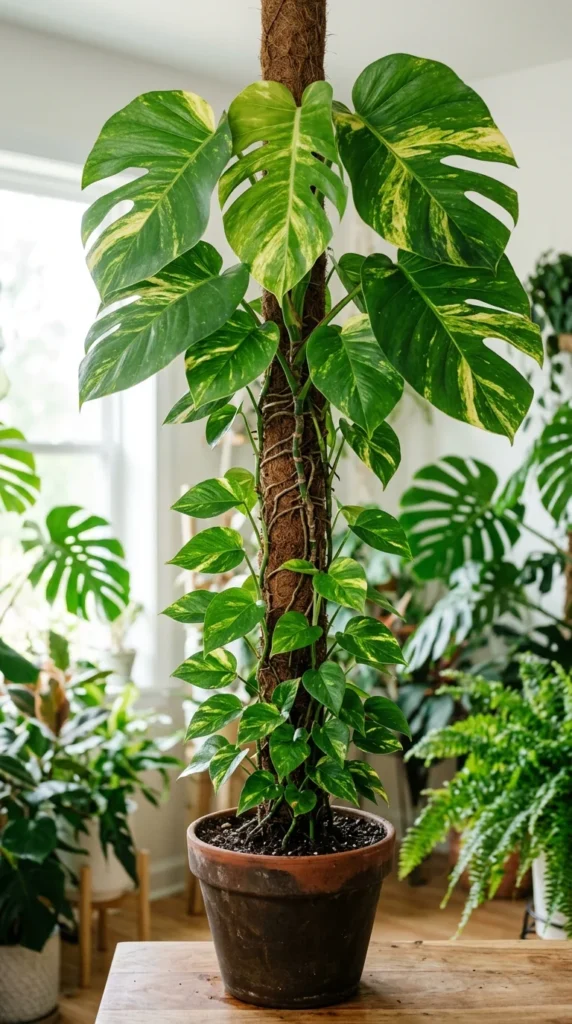
One of the biggest mistakes for those wanting large leaves is letting the Pothos hang downward. In the wild, Pothos are climbers. When they grow upward, their leaves naturally become larger and may even develop fenestrations (holes). Neglecting to provide a moss pole or trellis limits the plant to producing smaller, juvenile foliage.
23. Watering Foliage
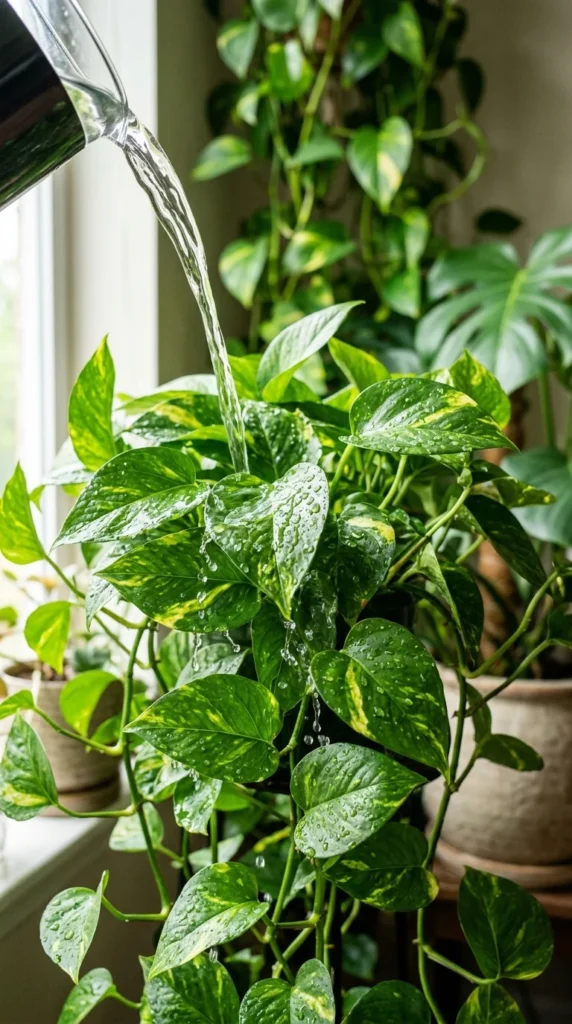
Watering from the top and getting the leaves wet can lead to bacterial and fungal infections, especially if there isn’t enough airflow to dry the leaves quickly. Always aim the spout of your watering can at the soil, not the leaves. This keeps the foliage dry and healthy, preventing diseases that could stunt growth.
24. Sudden Changes
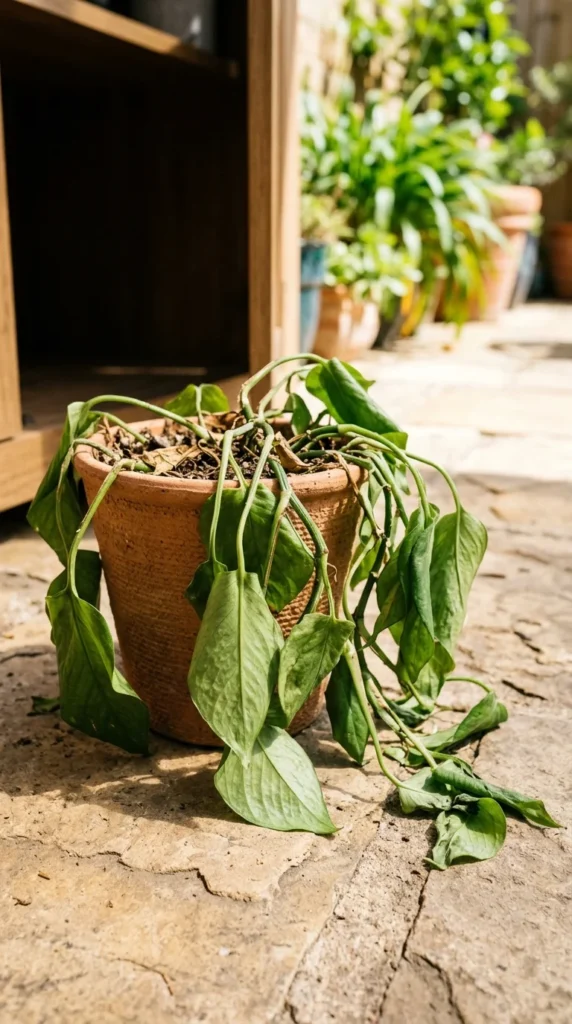
Pothos are adaptable, but they hate sudden shocks. Moving a plant from a dark room to a bright balcony instantly will cause it to drop leaves or burn. If you want to move your plant to a higher-light area for faster growth, do it gradually over 7 to 10 days to allow the plant to acclimate to the new intensity.
25. Cheap Soil
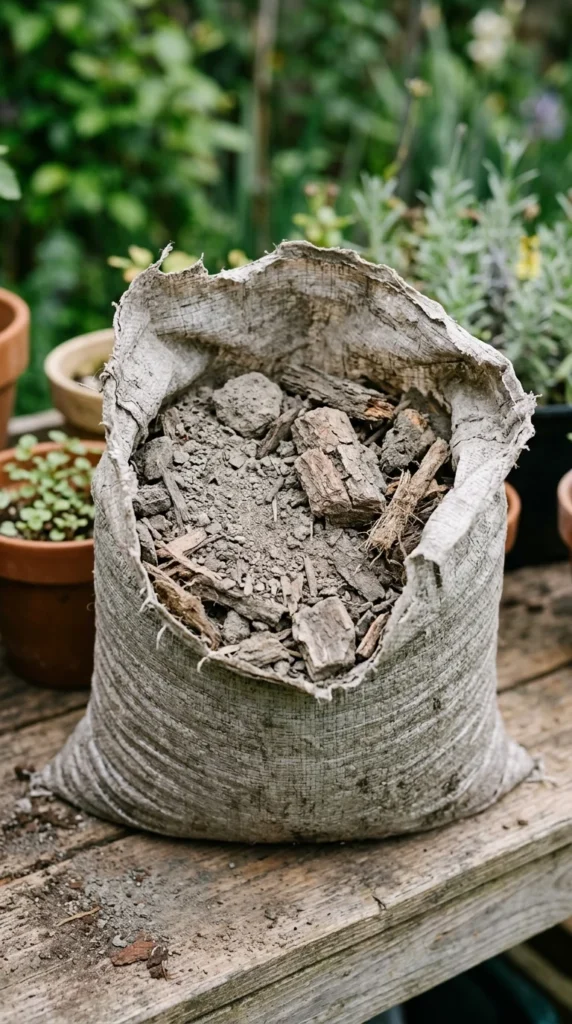
Not all potting soils are created equal. Cheap, low-quality soils often contain pests like fungus gnats or lack the necessary structure to support healthy roots. Investing in a premium, name-brand potting mix specifically designed for indoor plants will provide a cleaner, more nutrient-rich environment for your Pothos to thrive.
26. Ignoring Dormancy
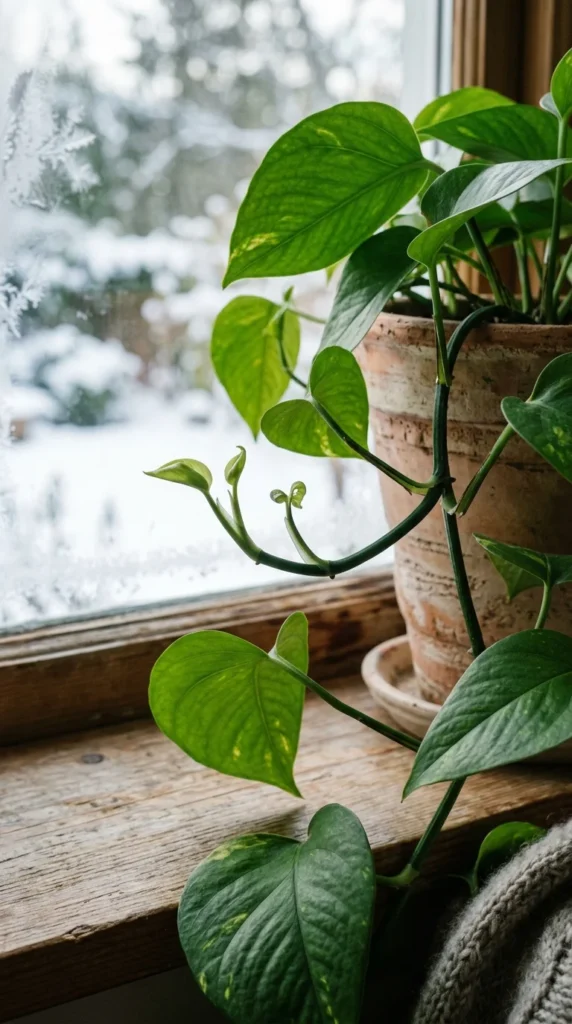
During the winter, Pothos naturally slow their growth due to shorter days. A common mistake is trying to “force” growth during this time by adding more water or fertilizer. This usually leads to root rot or fertilizer burn because the plant isn’t active enough to use the resources. Respect the natural cycle; reduce watering and stop fertilizing in winter, and your plant will reward you with a massive burst of growth come spring.