
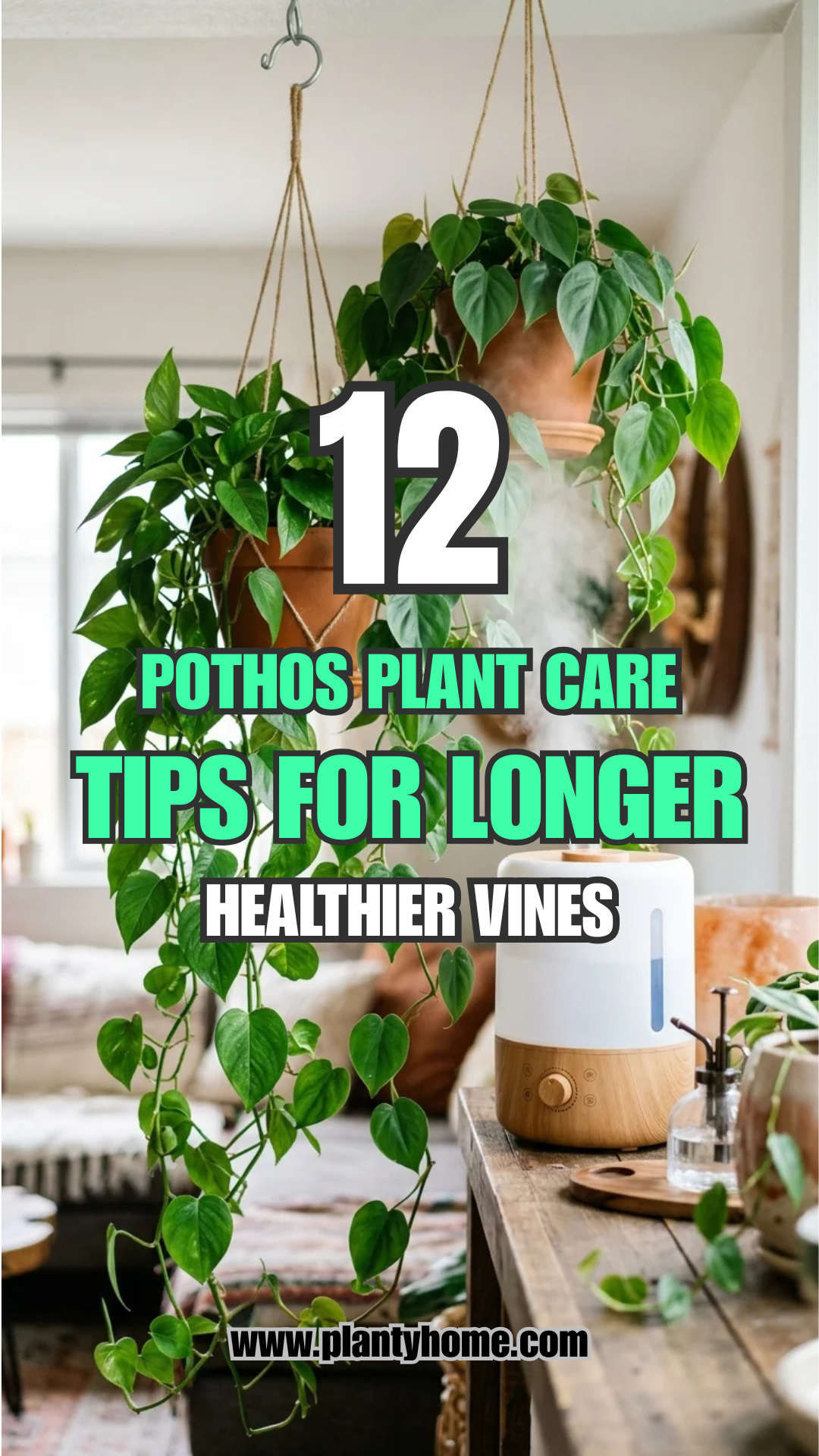
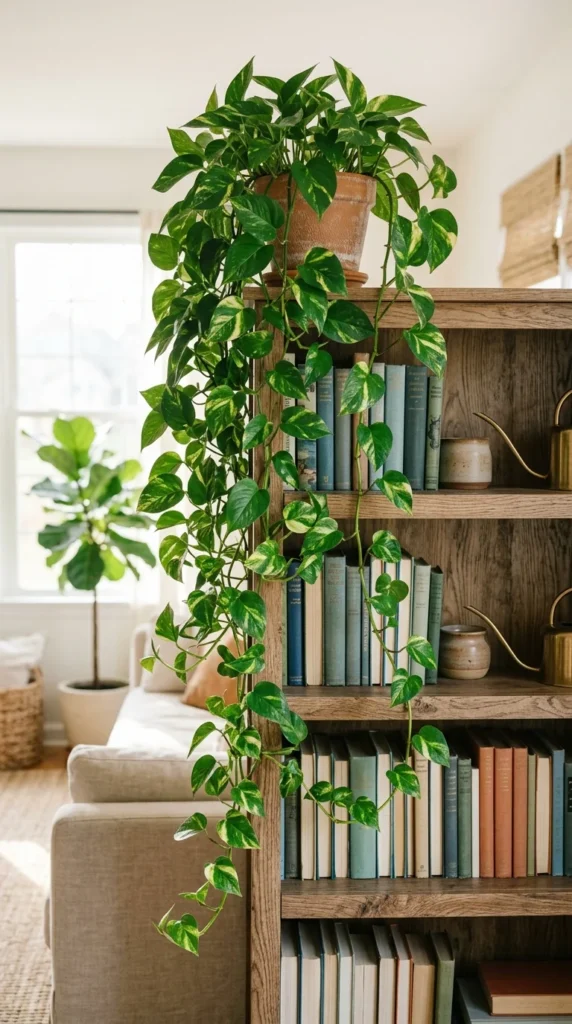
The Pothos (Epipremnum aureum), often referred to as “Devil’s Ivy,” is perhaps the most iconic houseplant in the world. Known for its nearly indestructible nature and its ability to thrive in a variety of indoor conditions, it is the go-to choice for both novice gardeners and seasoned plant enthusiasts. However, there is a significant difference between a Pothos that is merely surviving and one that is thriving with thick, lush foliage and vines that stretch across a room.
To achieve those impressive, floor-length trailers, you need to understand the specific biological needs of this tropical climber. While they are resilient, fine-tuning your care routine will accelerate growth and prevent the common “leggy” look that plagues many indoor specimens. Here are 12 essential tips to ensure your Pothos remains a stunning focal point in your home.
1. Indirect Light
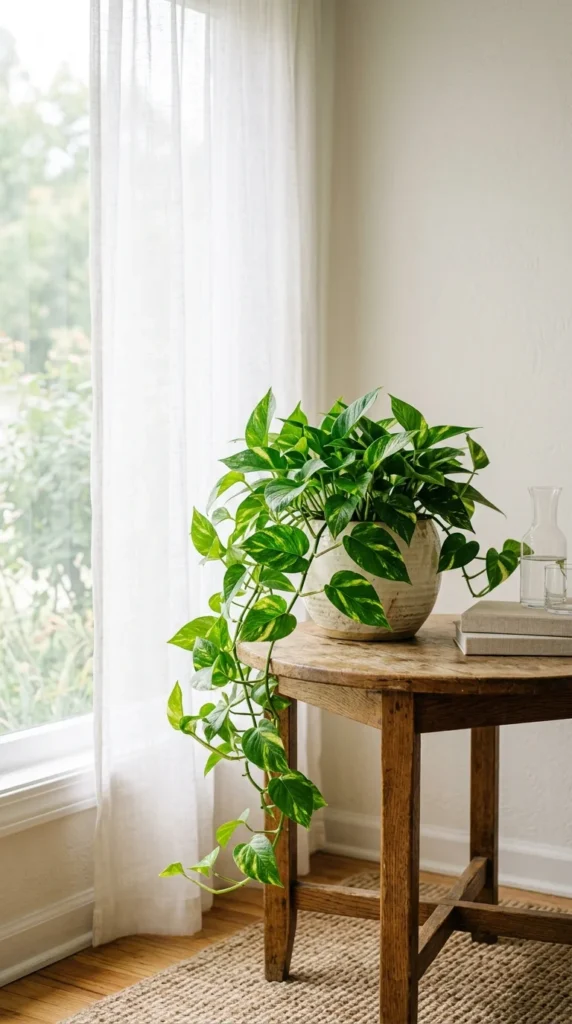
Light is the primary fuel for Pothos growth. While these plants are famous for tolerating low-light environments, “tolerating” is not the same as “thriving.” If a Pothos is kept in a dark corner for too long, its growth will slow to a crawl, and it may lose its beautiful variegation, turning solid green to maximize chlorophyll production.
For the fastest growth and the most vibrant colors, place your Pothos in bright, indirect light. An east-facing window or a spot a few feet back from a south-facing window is ideal. Avoid direct, harsh sunlight, which can scorch the delicate leaves, leading to unsightly brown patches.
2. Proper Watering
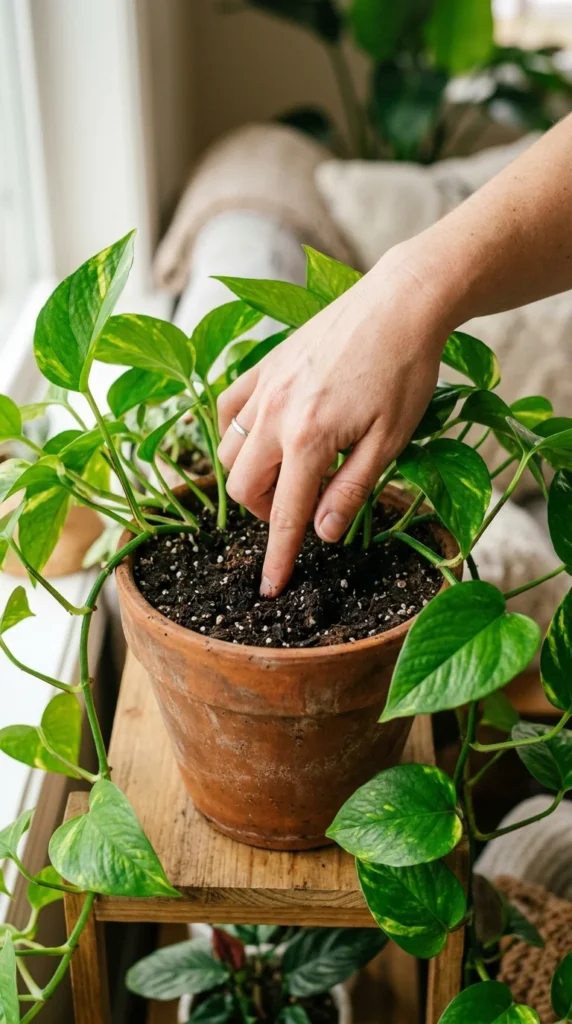
Overwatering is the number one killer of Pothos plants. These plants prefer their soil to dry out significantly between watering sessions. When the top 2 to 3 inches of soil feel dry to the touch, it is time to give them a deep soak.
When you water, ensure the moisture reaches the root ball and exits through the drainage holes at the bottom of the pot. If the leaves begin to wilt or droop slightly, the plant is likely thirsty. Conversely, yellowing leaves often signal that the roots are sitting in too much water, which can lead to lethal root rot.
3. Well-Draining Soil
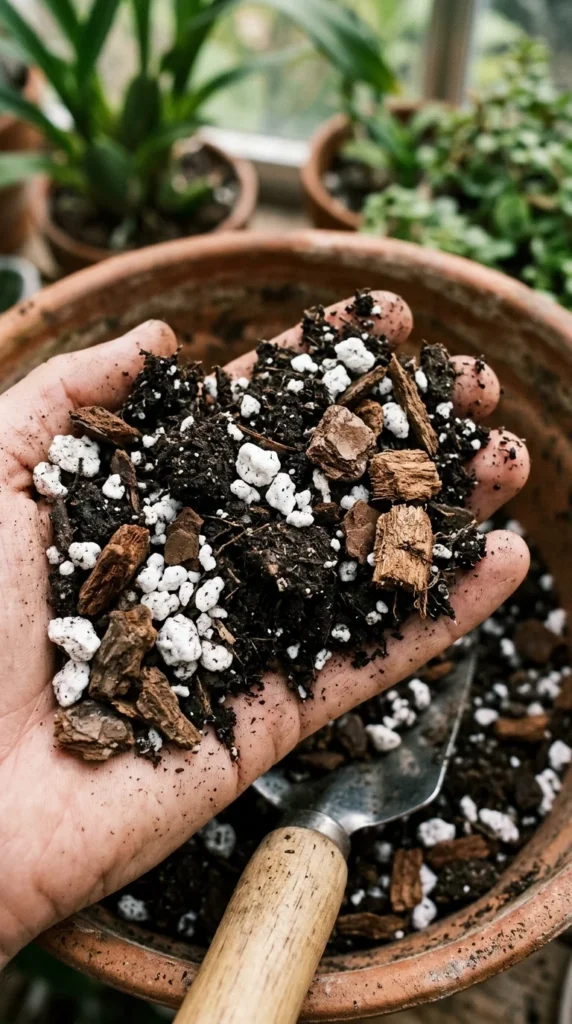
The foundation of a healthy Pothos is the medium in which it grows. Standard garden soil is too heavy and will compact over time, suffocating the roots. Instead, use a high-quality indoor potting mix amended with perlite or orchid bark.
This creates “air pockets” within the soil, allowing oxygen to reach the roots and ensuring that excess water drains away quickly. A ratio of two parts potting soil to one part perlite is a reliable recipe for Pothos success.
4. Occasional Fertilizing
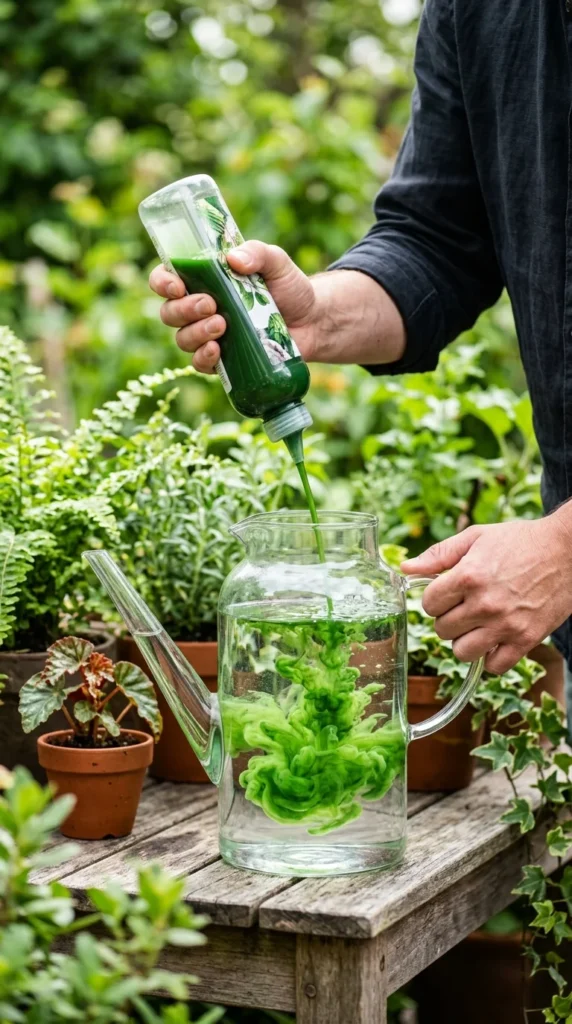
While Pothos aren’t heavy feeders, they do benefit from a nutritional boost during their active growing season (Spring and Summer). A balanced, water-soluble fertilizer applied once a month will provide the nitrogen, phosphorus, and potassium necessary for producing large leaves and strong stems.
During the dormant winter months, it is best to stop fertilizing entirely. The plant’s metabolism slows down, and excess salts from the fertilizer can build up in the soil, potentially burning the roots.
5. Humidity Boost
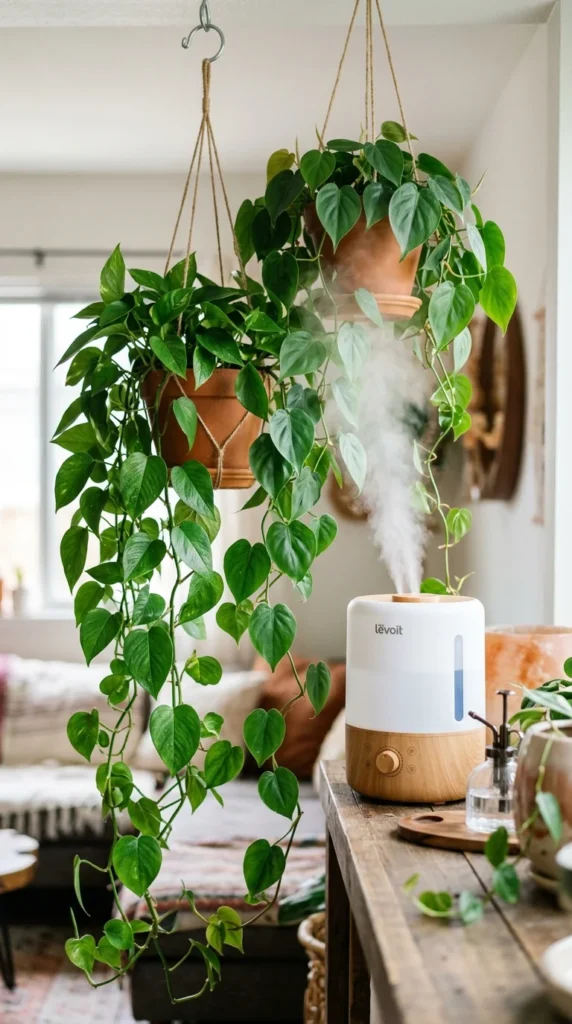
Pothos are native to the tropical rainforests of French Polynesia, where the air is thick with moisture. While they can adapt to the dry air of most modern homes, they will grow much faster and produce larger leaves if the humidity is kept between 50% and 70%.
You can increase humidity by grouping plants together, placing the pot on a tray filled with pebbles and water, or using a dedicated room humidifier. Avoid misting the leaves too frequently, as standing water can sometimes encourage fungal growth in stagnant air.
6. Strategic Pruning
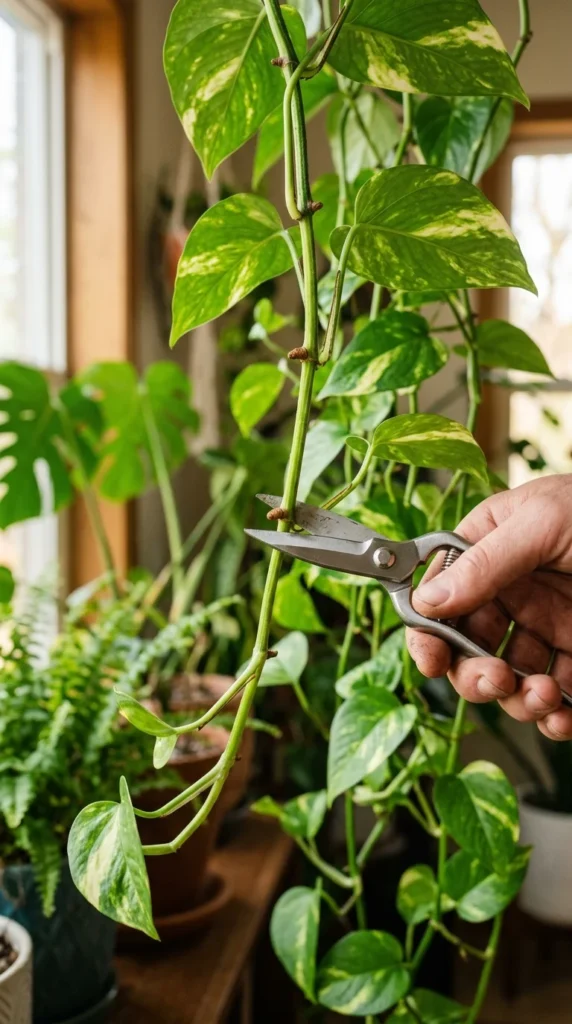
It may seem counterintuitive to cut a plant you want to grow longer, but pruning is the secret to a bushy, full appearance. When a vine grows too long, it often becomes “leggy,” with large gaps between the leaves.
By snipping off the ends of the vines, you stimulate the plant to branch out from the base. Always cut just below a node (the little bump where a leaf meets the stem), as this is where new growth hormones are concentrated.
7. Vertical Support
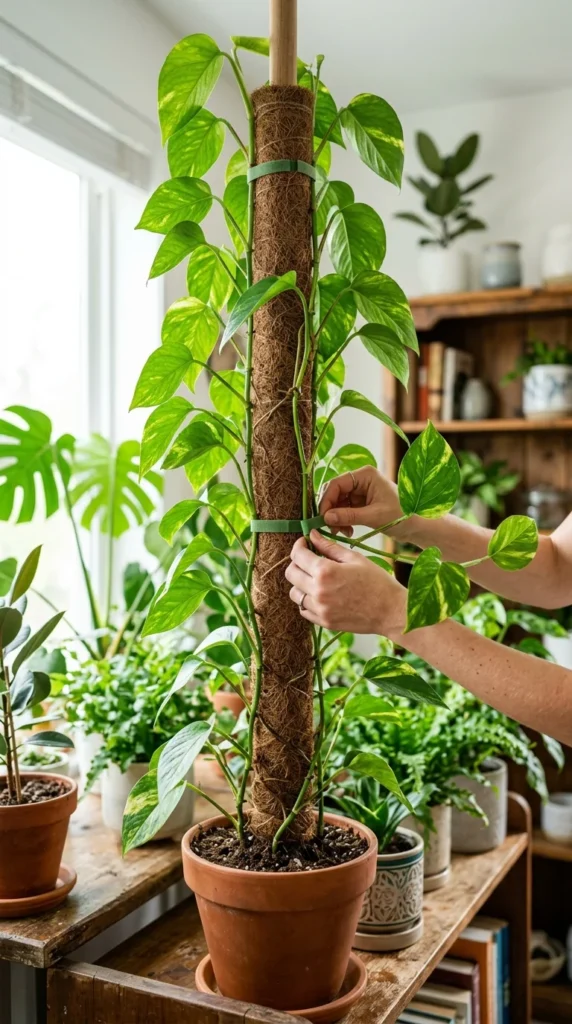
In their natural habitat, Pothos are epiphytic climbers that scale trees to reach the canopy. You can mimic this behavior by providing a moss pole or a trellis. When a Pothos is allowed to climb upward, its biology shifts; it begins to produce much larger leaves, and the stems become thicker and sturdier.
Use soft plant ties to secure the vines to the pole. Over time, the plant’s aerial roots will latch onto the moss or coco-coir, drawing in extra moisture and stability.
8. Pest Management
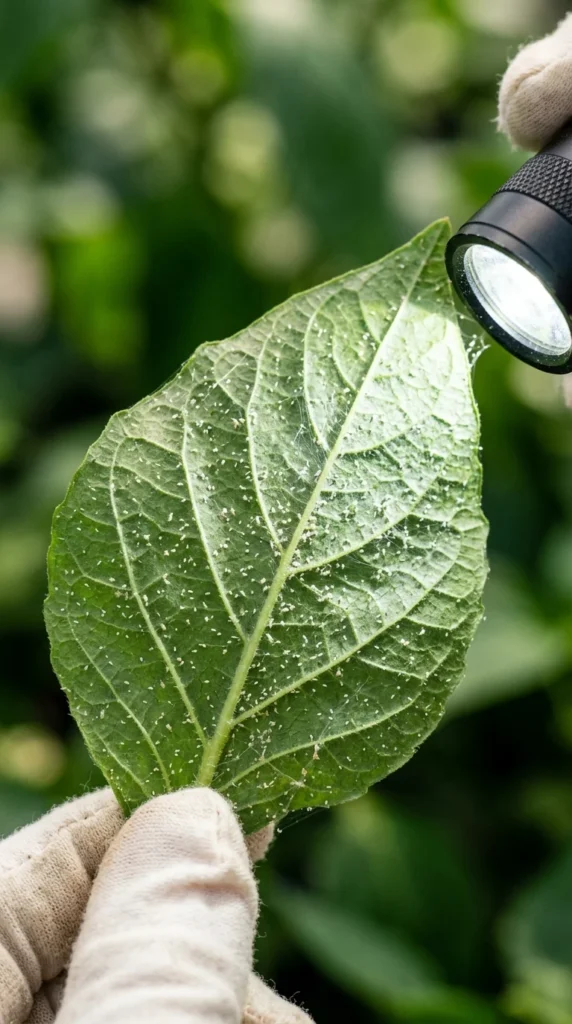
Even the hardiest Pothos can fall victim to common houseplant pests like mealybugs, spider mites, and scale. Regularly inspect the undersides of the leaves and the junctions where the leaves meet the stems.
If you spot tiny white cottony tufts or fine webs, treat the plant immediately with neem oil or an insecticidal soap. Catching an infestation early is key to preventing the pests from draining the plant’s energy and stunted its growth.
9. Leaf Cleaning
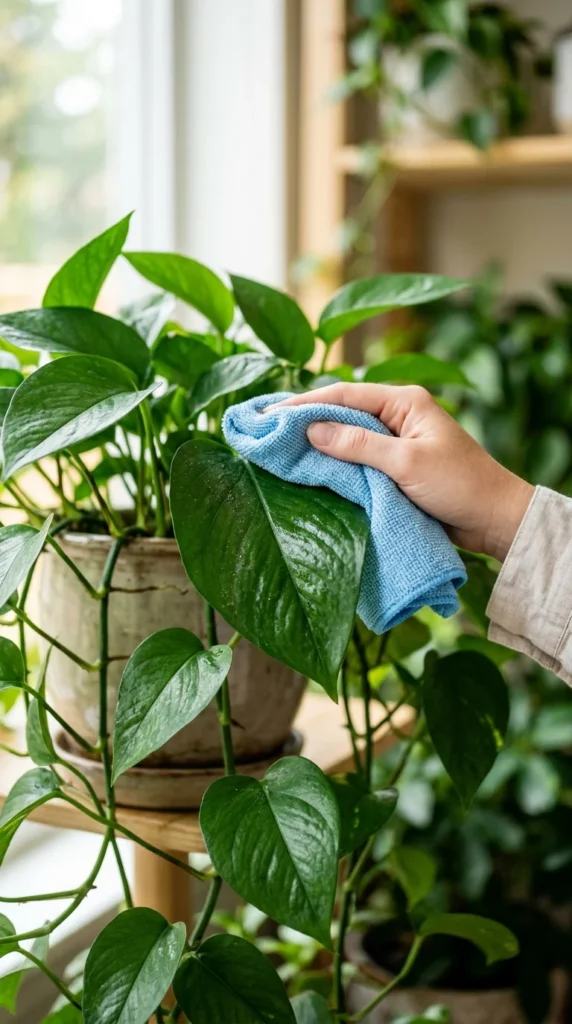
In an indoor environment, dust quickly accumulates on the broad leaves of a Pothos. This dust acts as a barrier, blocking sunlight and reducing the plant’s ability to photosynthesize efficiently.
Once every few weeks, take a damp cloth and gently wipe down each leaf. Not only does this keep the plant healthy and growing fast, but it also gives the foliage a beautiful, natural shine that makes the variegation pop.
10. Correct Potting
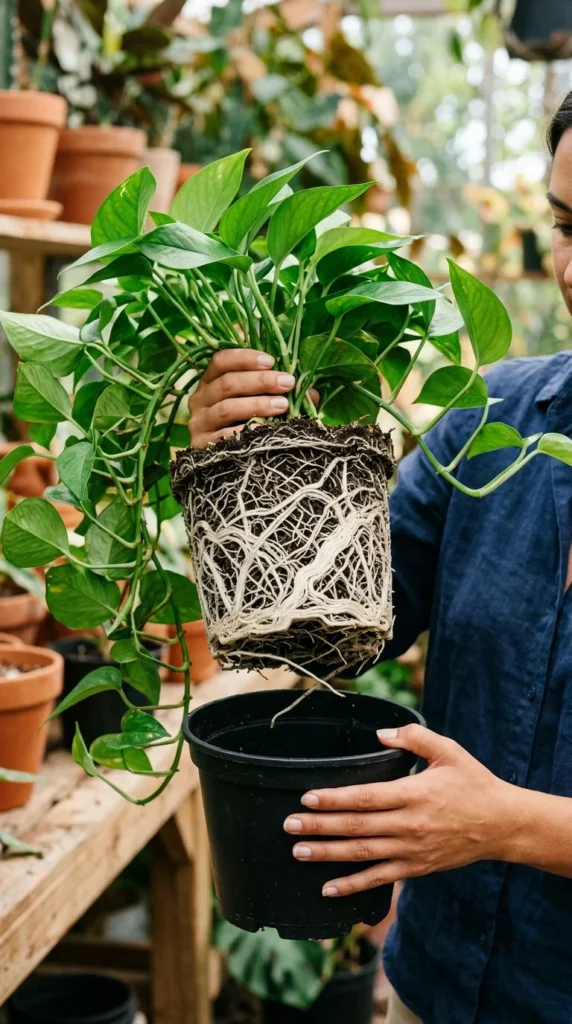
Pothos don’t mind being slightly root-bound, but there is a limit. If you notice roots growing out of the drainage holes or if the plant requires watering every couple of days, it is likely time for a larger home.
When repotting, choose a container that is only 1 to 2 inches wider than the current one. Moving a plant into a massive pot can lead to “over-potting,” where the excess soil stays wet for too long, causing the roots to rot before they can occupy the space.
11. Propagation
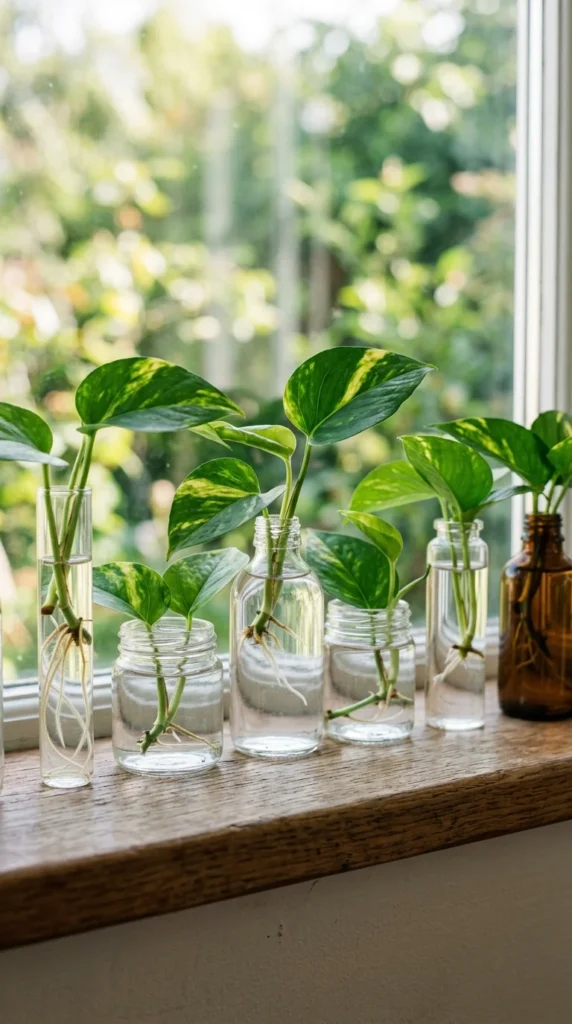
One of the best ways to ensure a full, healthy-looking Pothos is through propagation. If your plant is looking thin at the top, take cuttings from the long vines, root them in water, and then plant them back into the top of the original pot.
To propagate, cut a section of the vine that has at least two nodes. Remove the bottom leaf and place the node in water. Within a few weeks, white roots will emerge. This is the easiest way to multiply your collection or “fill in” a sparse-looking mother plant.
12. Optimal Temperature
Pothos thrive in temperatures between 65°F and 85°F (18°C–29°C). They are very sensitive to cold drafts and sudden temperature fluctuations. Avoid placing your plant near air conditioning vents, drafty windows in the winter, or exterior doors.
If the temperature drops below 50°F, the plant’s growth will stop entirely, and the leaves may turn black and drop. Keeping the environment consistent and warm will ensure the plant stays in a perpetual state of “active growth,” leading to those long, impressive vines everyone