

The Peace Lily (Spathiphyllum) is a staple of indoor gardening, prized not only for its elegant white blooms—which are actually modified leaves called spathes—but also for its ability to thrive in low-light environments. However, there is a significant difference between a Peace Lily that is simply “surviving” and one that is “thriving.” To achieve those iconic, oversized white flowers and waxy, deep green leaves, a specific approach to care is required. By mimicking its native tropical environment and fine-tuning your maintenance routine, you can transform a stagnant plant into a breathtaking centerpiece.
1. Light
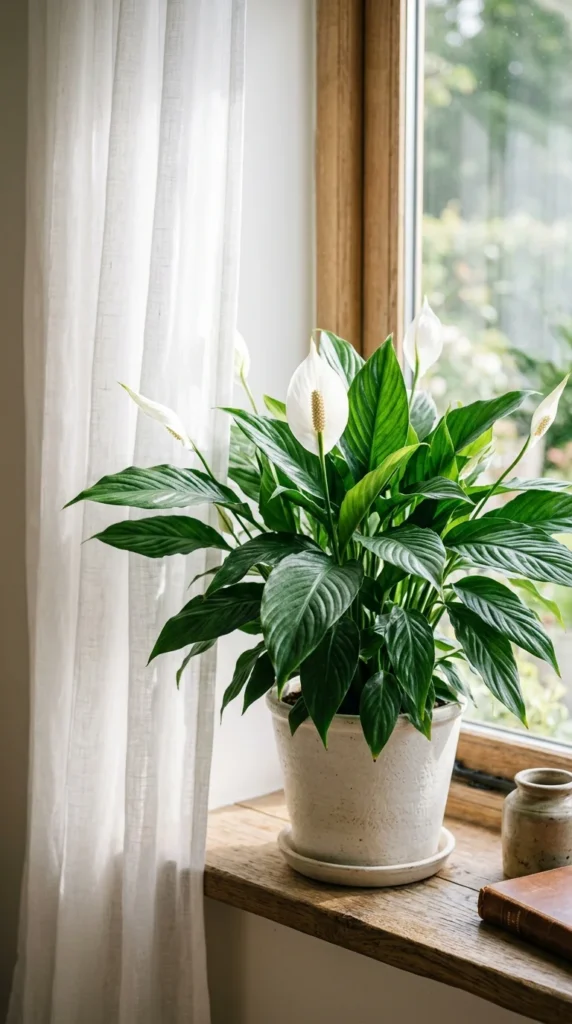
While Peace Lilies are often marketed as low-light plants, they will rarely produce blooms in dark corners. To encourage flowering, provide bright, indirect sunlight. The key is “indirect”; direct midday sun will scorch the delicate leaves, causing brown streaks and yellowing. An east-facing window is often the “Goldilocks” zone—offering gentle morning sun and bright light for the rest of the day. If your plant is only producing green foliage without any white spathes, it is likely asking for more light.
2. Hydration
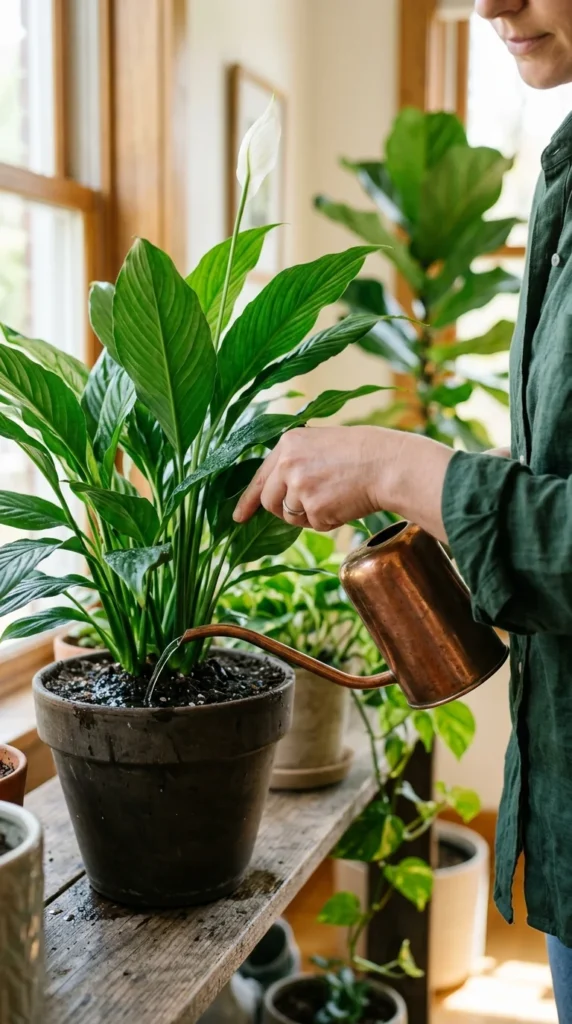
The Peace Lily is famous for being a “drama queen.” When it is thirsty, the entire plant will wilt dramatically, drooping its leaves over the side of the pot. While this is a helpful signal, frequent extreme wilting stresses the plant and can lead to brown leaf tips. The goal is to keep the soil consistently moist but never soggy. Generally, watering once a week is sufficient, but you should always check the top inch of soil; if it feels dry to the touch, it’s time for a drink.
3. Humidity
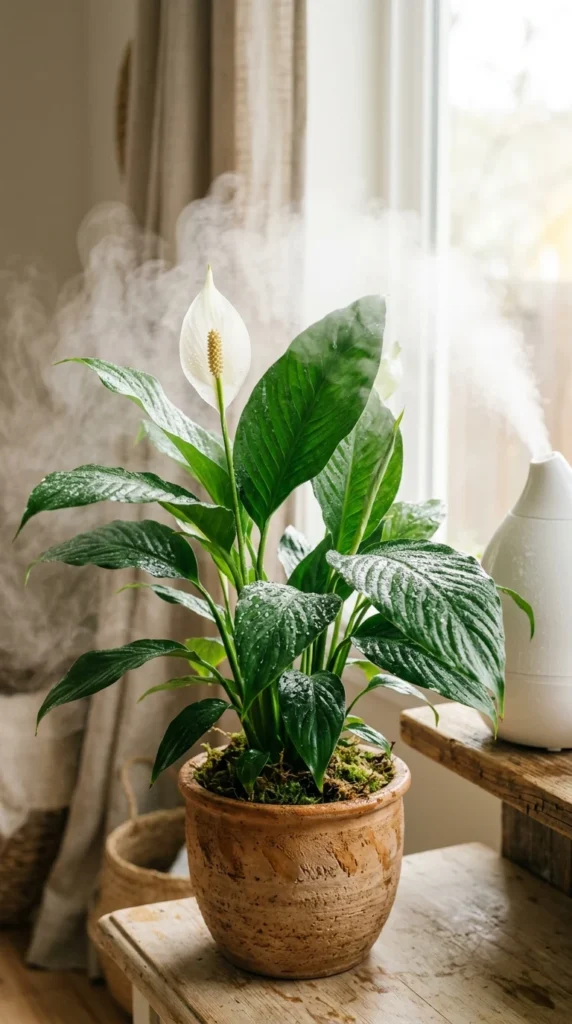
Originating from the tropical rainforests of Central and South America, Peace Lilies crave high humidity. Standard indoor air, especially during winter when heaters are running, is often too dry. Low humidity causes the edges of the leaves to turn crisp and brown. To boost moisture, you can mist the leaves daily, place the pot on a tray filled with pebbles and water (ensuring the pot sits on the stones, not in the water), or use a dedicated room humidifier.
4. Soil
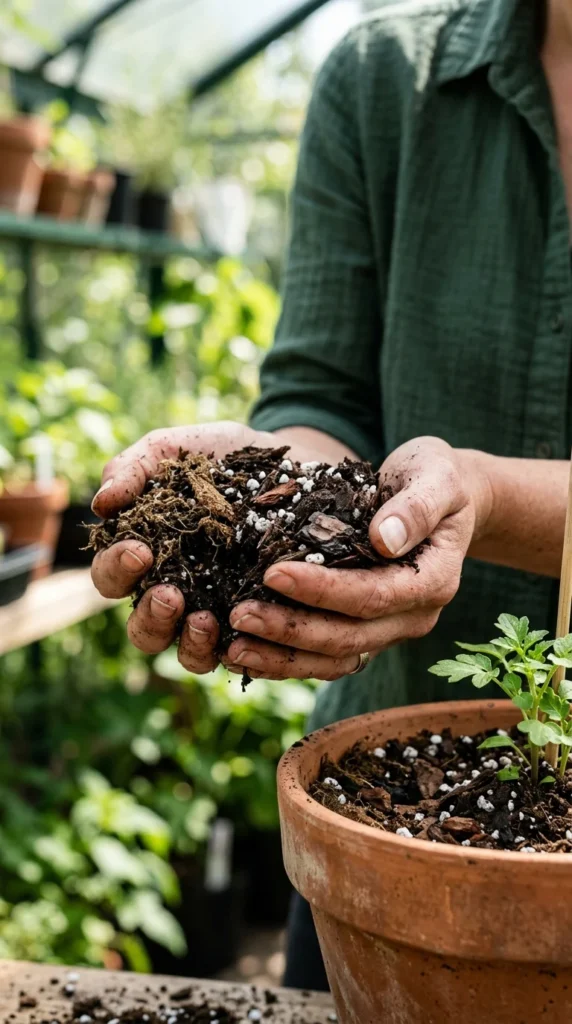
The foundation of a healthy Peace Lily is its growing medium. These plants require soil that retains moisture but allows excess water to drain away quickly to prevent root rot. A high-quality peat-based potting mix is ideal. Many experts recommend adding a handful of perlite or orchid bark to a standard indoor potting soil to increase aeration. This ensures that the roots can “breathe” even when the soil is damp.
5. Temperature
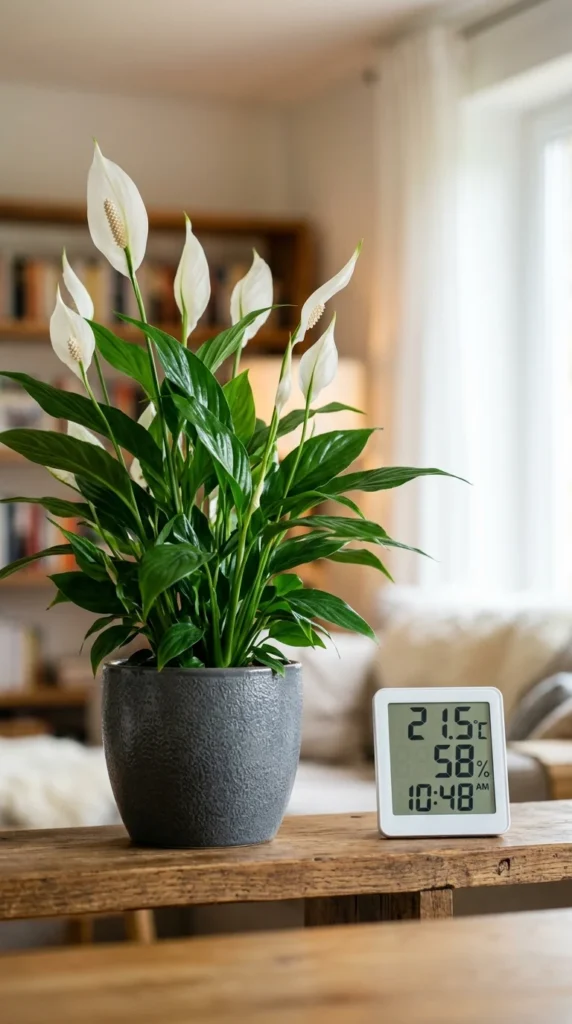
Peace Lilies prefer the same temperatures that humans do. They thrive in a range between 65°F and 85°F (18°C – 29°C). Because they are tropical, they are extremely sensitive to cold. Keep your plant away from drafty windows, air conditioning vents, or entryways where cold winter air can blast the foliage. If the temperature drops below 55°F, the plant’s growth will stall, and it may suffer permanent damage.
6. Fertilizer
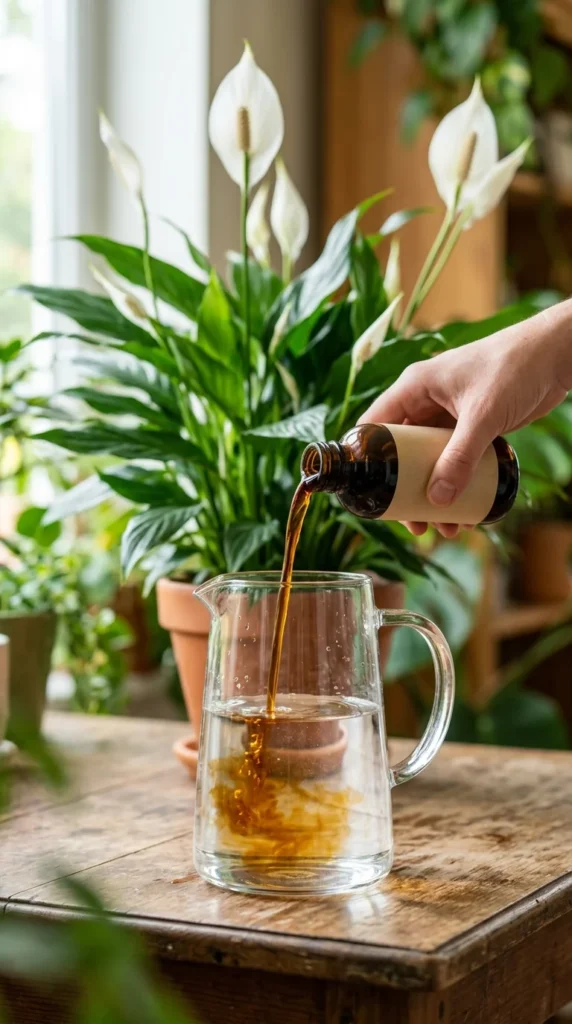
To produce those large, striking white blooms, the Peace Lily needs a boost of nutrients. During the growing season (spring and summer), use a balanced, water-soluble houseplant fertilizer every six weeks. Look for a formula with a slightly higher phosphorus content if you want to prioritize flowering. Be cautious: over-fertilizing can lead to salt buildup in the soil, which burns the roots. Always apply fertilizer to moist soil, never to a bone-dry plant.
7. Potting
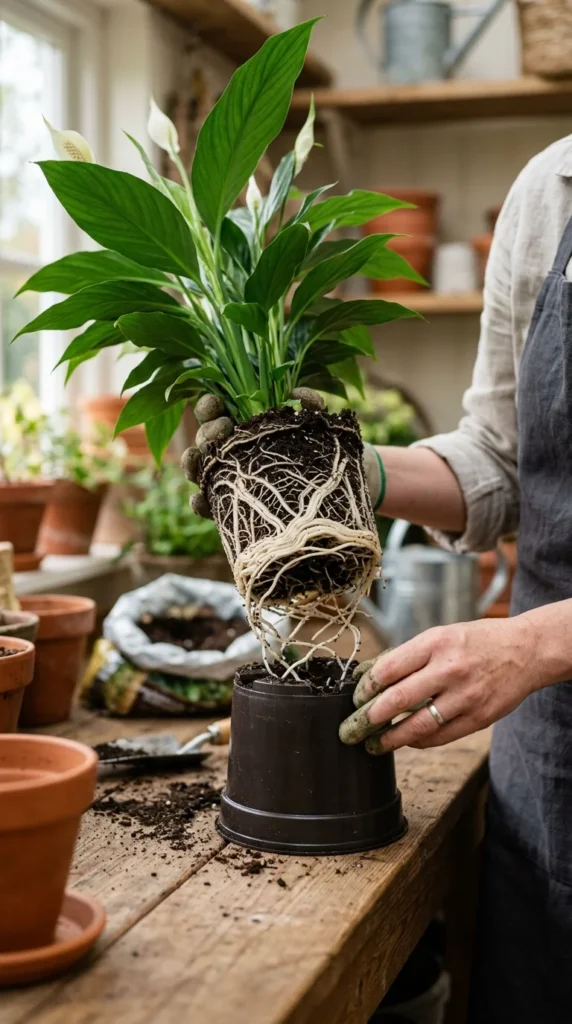
Interestingly, Peace Lilies tend to bloom more reliably when they are slightly root-bound. If the roots are somewhat snug in the pot, the plant focuses its energy on reproduction (flowers) rather than expanding its root system. However, there is a limit. If you see roots crawling out of the drainage holes or if the plant requires water every two days, it has outgrown its home. When repotting, only go up one size (about 2 inches wider in diameter).
8. Water Quality
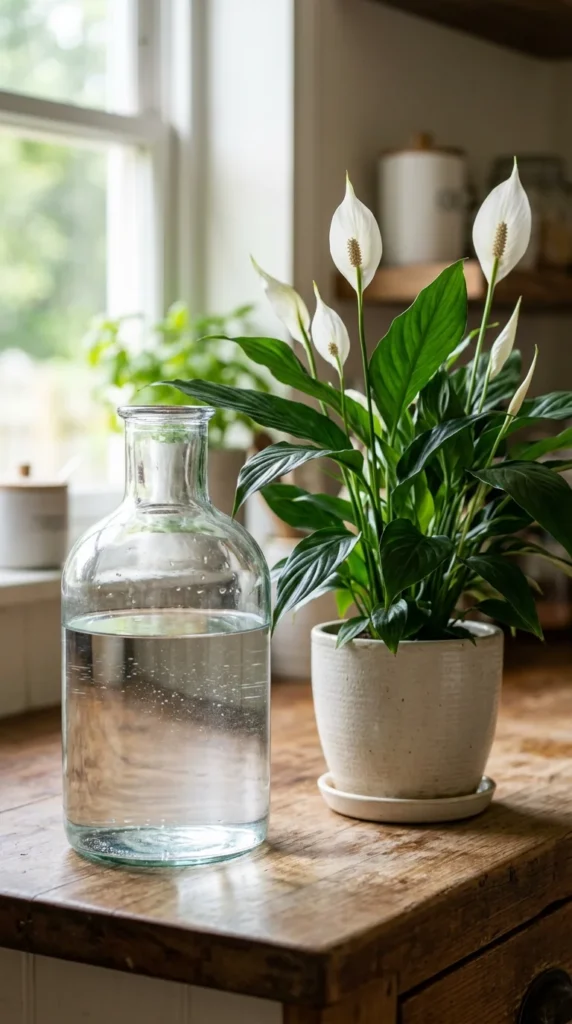
Peace Lilies are sensitive to the chemicals found in tap water, specifically fluoride and chlorine. If you notice persistent brown tips despite proper watering, your water quality might be the culprit. Use filtered water, rainwater, or distilled water. Alternatively, fill a watering can with tap water and let it sit out overnight; this allows the chlorine to dissipate before you use it on your plant.
9. Cleaning
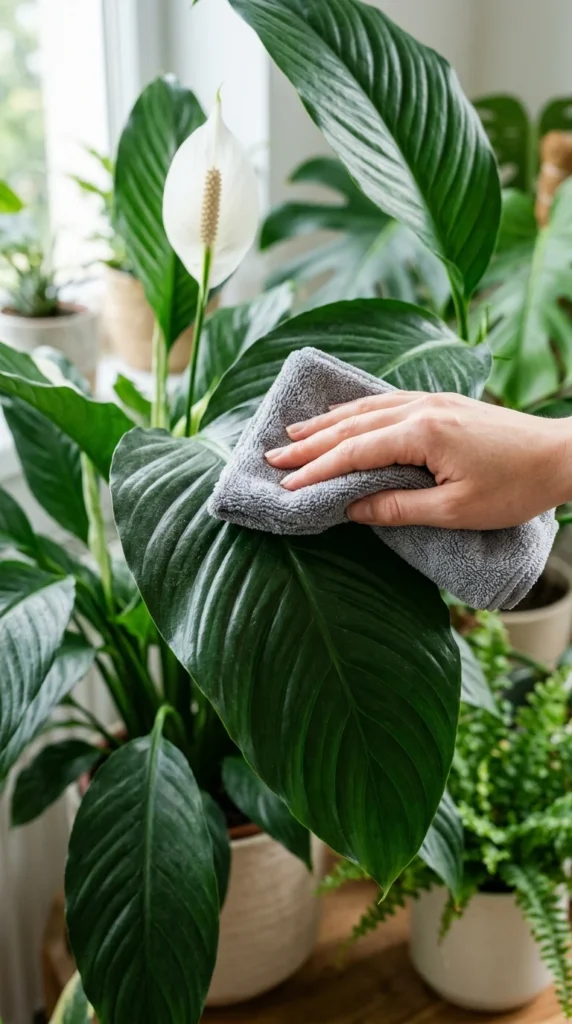
The broad, flat leaves of a Peace Lily are notorious dust magnets. Dust buildup doesn’t just look unsightly; it physically blocks the stomata (pores) of the leaves, hindering photosynthesis and respiration. Once a month, take a damp cloth and gently wipe each leaf. This not only keeps the plant looking shiny and green but also allows it to process light more efficiently, leading to faster growth.
10. Pruning
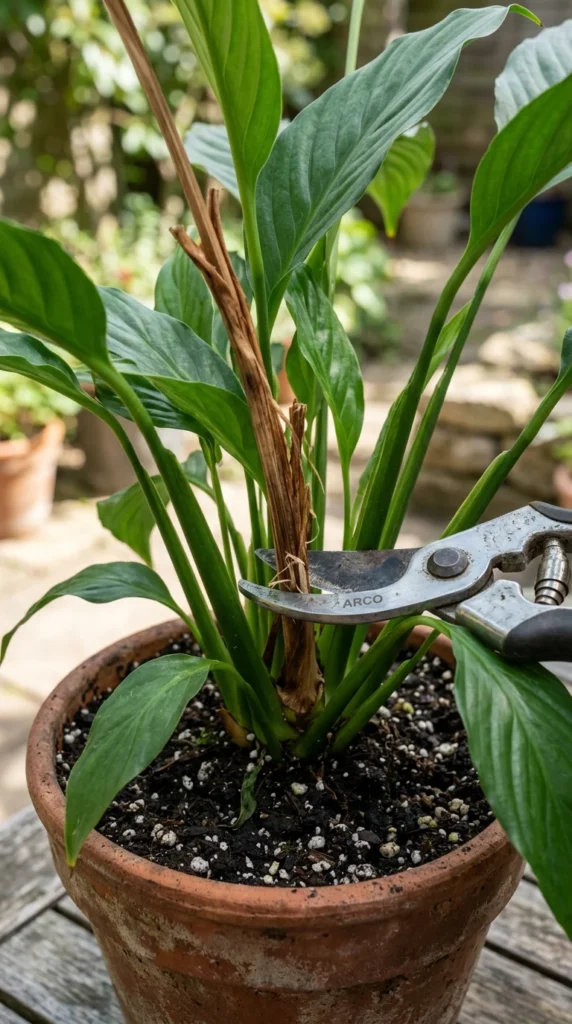
Regular pruning is essential for maintaining the plant’s energy. When a bloom begins to turn green or brown and look “spent,” cut the stalk as far down toward the base of the plant as possible. This prevents the plant from wasting energy on a dying flower or seed production. Similarly, remove any yellow or brown leaves at the base to improve airflow and keep the plant looking its best.
11. Drainage
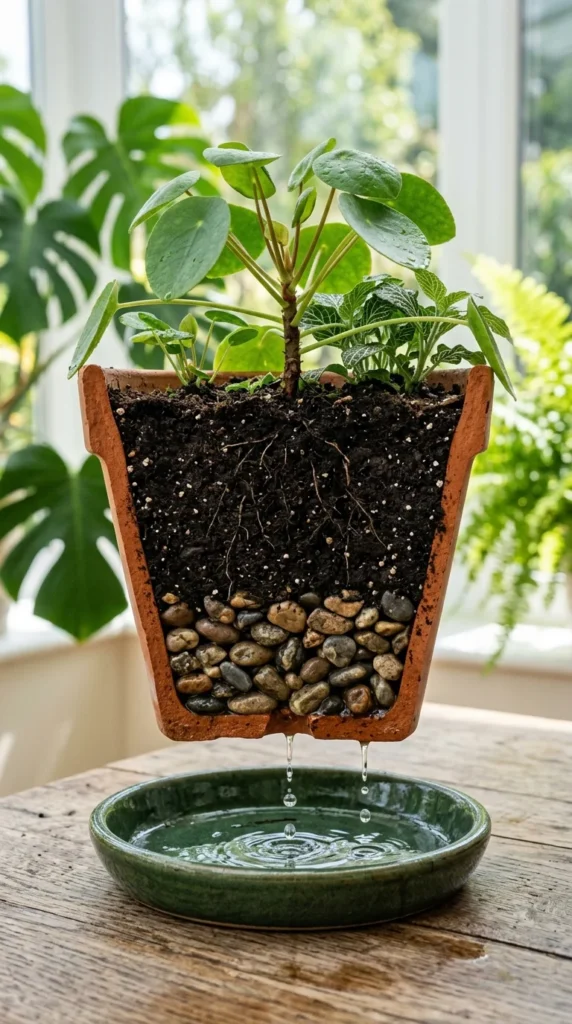
“Wet feet” is the leading cause of death for Peace Lilies. While they love moisture, they cannot sit in standing water. Ensure your pot has at least one large drainage hole at the bottom. If you have your lily in a decorative “cachepot” (a pot without holes), keep the plant in its plastic nursery liner and lift it out to water it in the sink, allowing it to drain completely before putting it back.
12. Pests
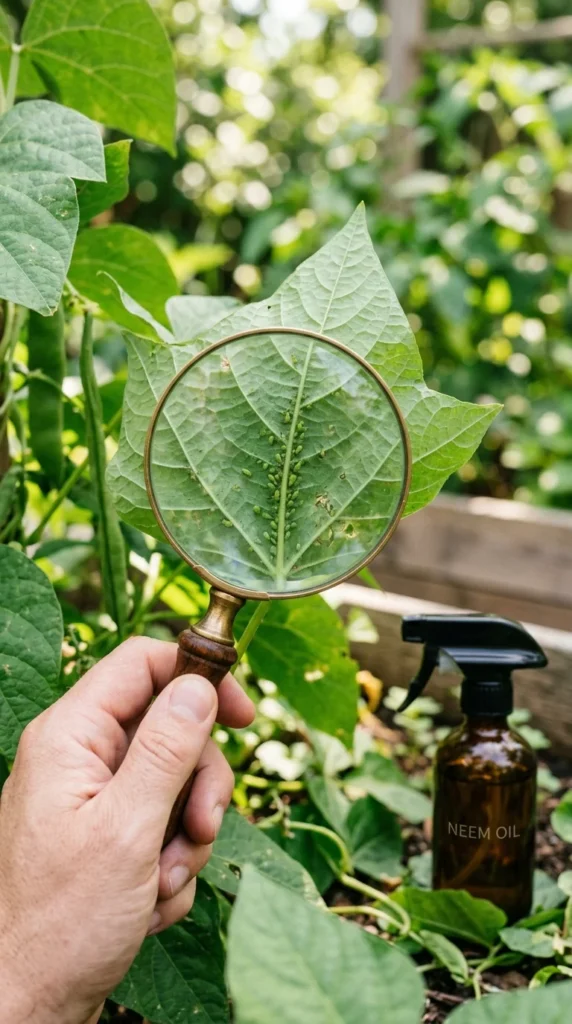
Peace Lilies are relatively pest-resistant, but they can occasionally fall prey to spider mites, aphids, or mealybugs. These pests suck the sap from the leaves, causing yellow spots and deformed growth. Check the undersides of the leaves and the “joints” where the stems meet. If you spot any hitchhikers, treat the plant with insecticidal soap or neem oil immediately. Fungus gnats can also appear if the soil is kept too wet.
13. Repotting
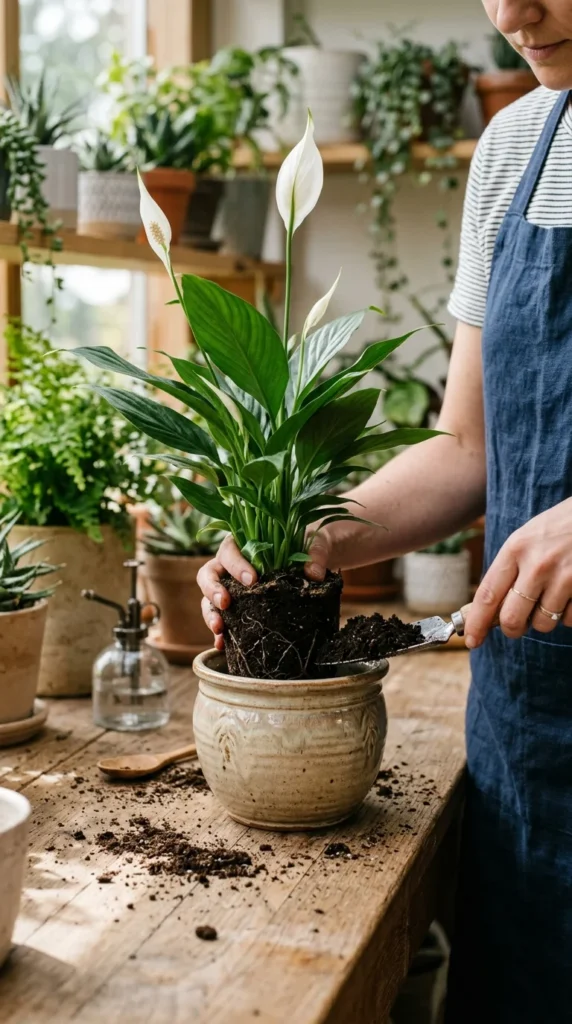
Every 2 to 3 years, the soil in your pot will become depleted of nutrients and may become compacted. Spring is the best time for repotting. When you move the plant, gently tease the roots apart if they are circling the ball. This is also the perfect time to “divide” the plant. If your Peace Lily has become massive, you can pull the root ball apart into two or three smaller sections to create entirely new plants.
14. Airflow
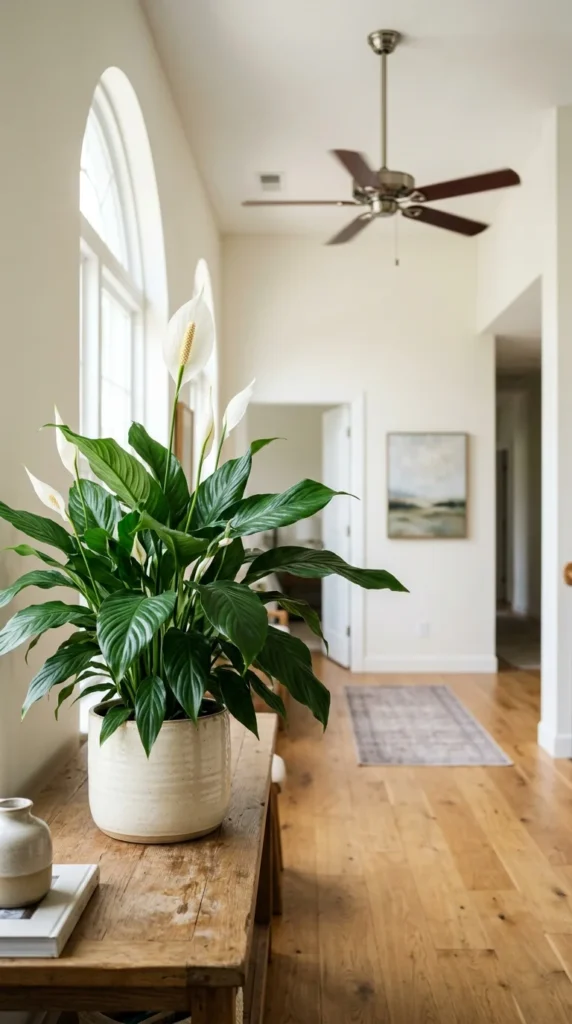
Good air circulation is vital for preventing fungal diseases like powdery mildew. While Peace Lilies don’t like cold drafts, they do appreciate “fresh” air. Ensure the plant isn’t shoved into a tight, stagnant corner. Giving the plant enough space for air to move around its foliage will keep the leaves dry and healthy, reducing the risk of rot or mold on the soil surface.
15. Dormancy
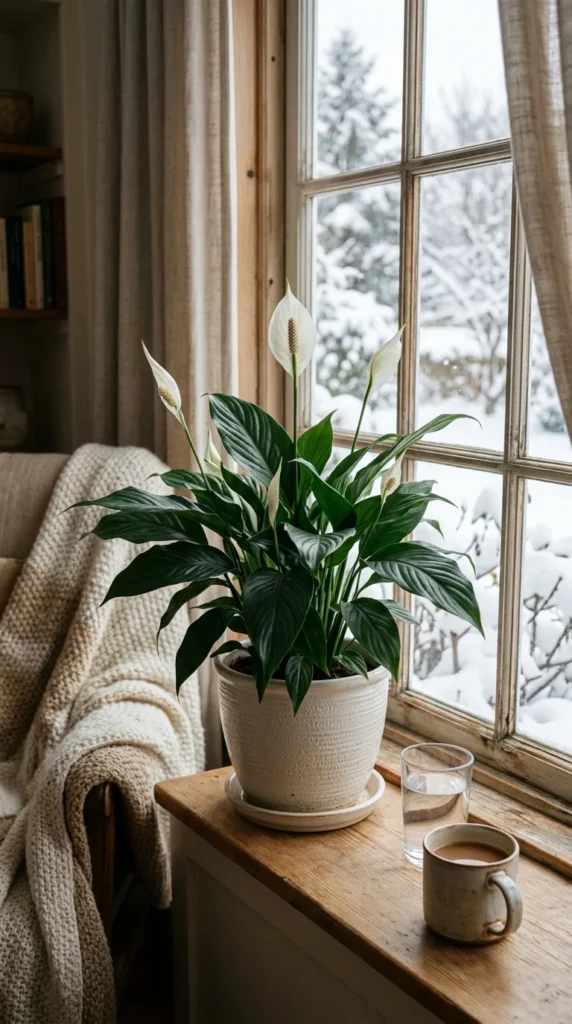
During the winter months, Peace Lilies naturally enter a period of slower growth due to reduced light levels. During this time, you should scale back your care. Water less frequently, as the soil will take longer to dry out, and stop fertilizing entirely until the first signs of new growth appear in the spring. Respecting this natural cycle allows the plant to rest, ensuring a spectacular “rebound” of big blooms once the growing season returns.