
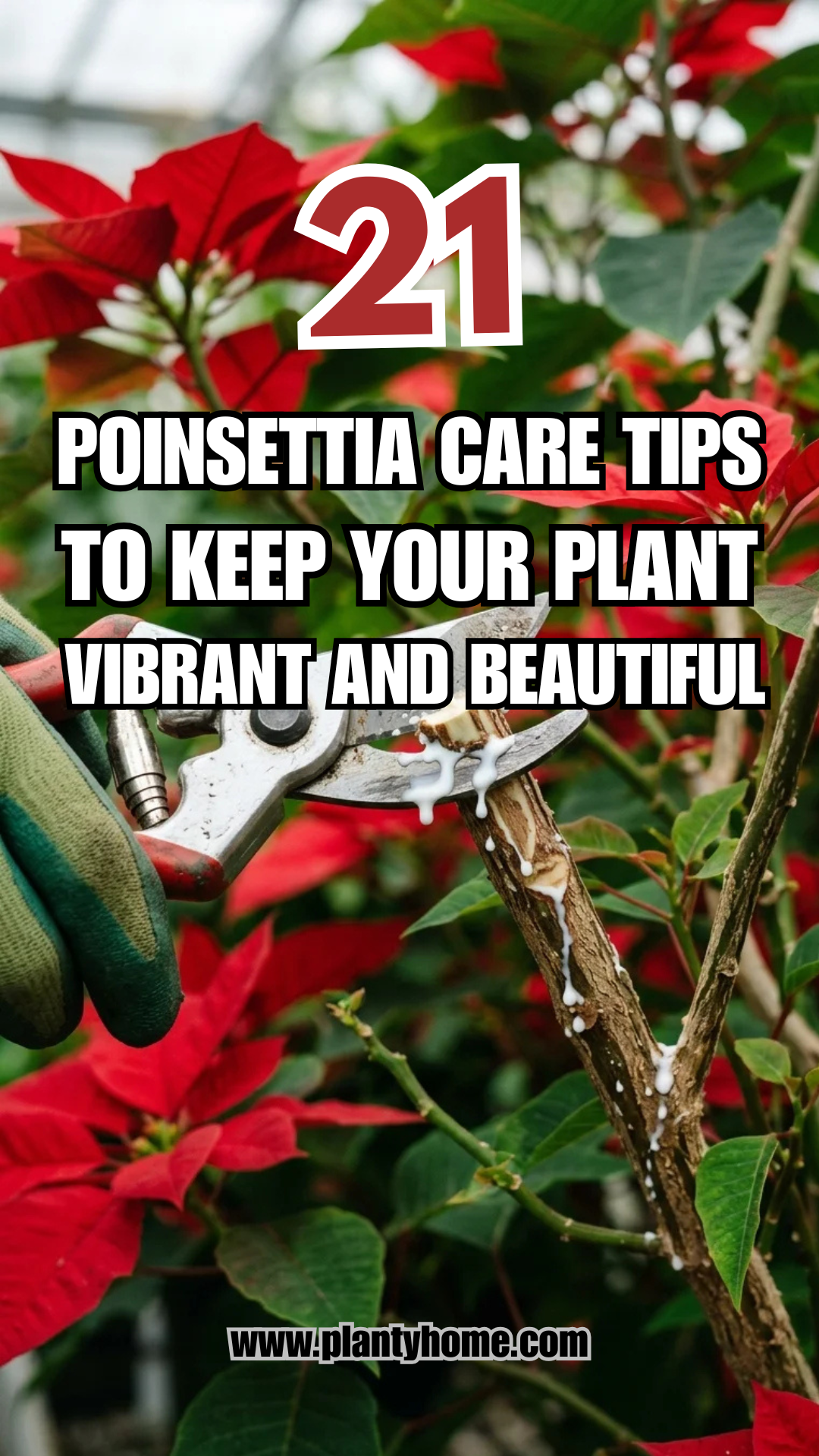
The Poinsettia (Euphorbia pulcherrima) is the undisputed queen of holiday flora. Known for its brilliant “flowers”—which are actually modified leaves called bracts—this Mexican native has become a global symbol of winter cheer. However, despite their ubiquity, many people struggle to keep them alive past New Year’s Day. Poinsettias are notoriously finicky, reacting poorly to sudden changes in temperature, light, and moisture.
To help you transform your Poinsettia from a temporary decoration into a thriving, long-lasting houseplant, we have compiled the ultimate guide. Here are 21 essential care tips to keep your plant vibrant and beautiful.
1. Selection
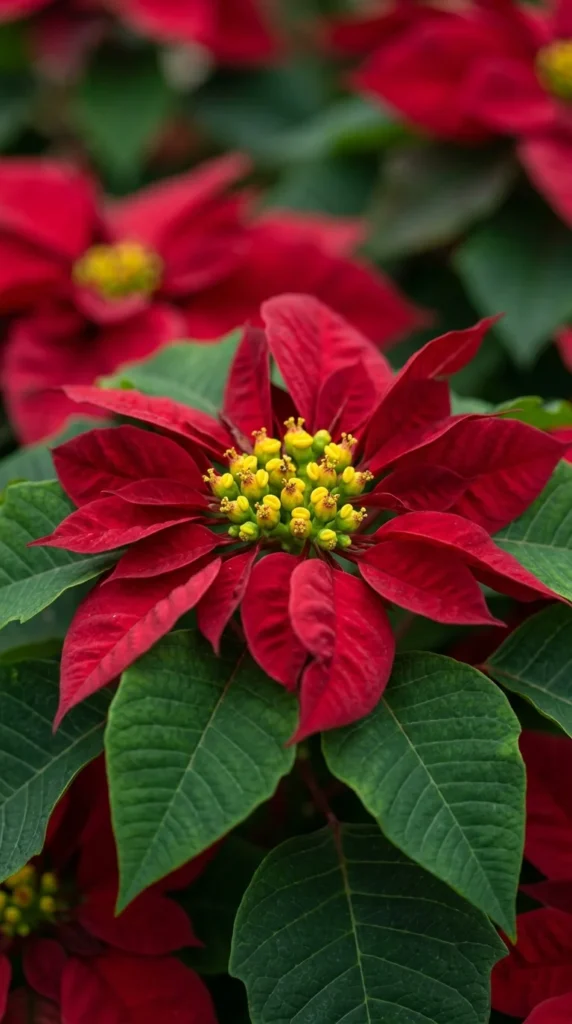
Success begins at the garden center. When choosing a Poinsettia, look for plants with dark green foliage all the way down to the soil line. Avoid plants that are dropping leaves or looking wilted. Most importantly, check the “true” flowers—the tiny yellow buds in the center of the colorful bracts. If these buds are still closed and tight, the plant will stay vibrant for much longer. If they are covered in yellow pollen or have fallen off, the plant is past its prime.
2. Transport

Poinsettias are tropical plants and are extremely sensitive to cold. Even a few minutes in freezing temperatures while walking to your car can damage the cells in the leaves, leading to wilting and blackening within days. When purchasing your plant, ensure the shop wraps it in a paper sleeve or a plastic bag. Bring it directly home; do not leave it in a cold car while you finish your shopping.
3. Sleeves
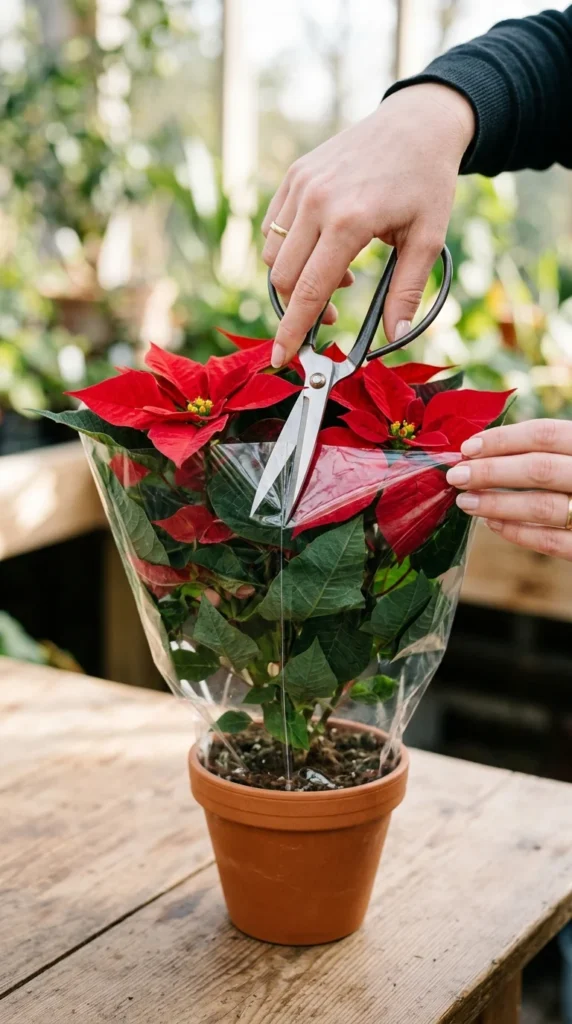
Once you get your plant home, remove the decorative plastic or paper sleeve immediately. While these sleeves are great for transport, they trap ethylene gas and moisture around the foliage. This can cause “epinasty” (drooping of the leaves) and may lead to root rot if the sleeve is sealed at the bottom, preventing proper drainage.
4. Sunlight
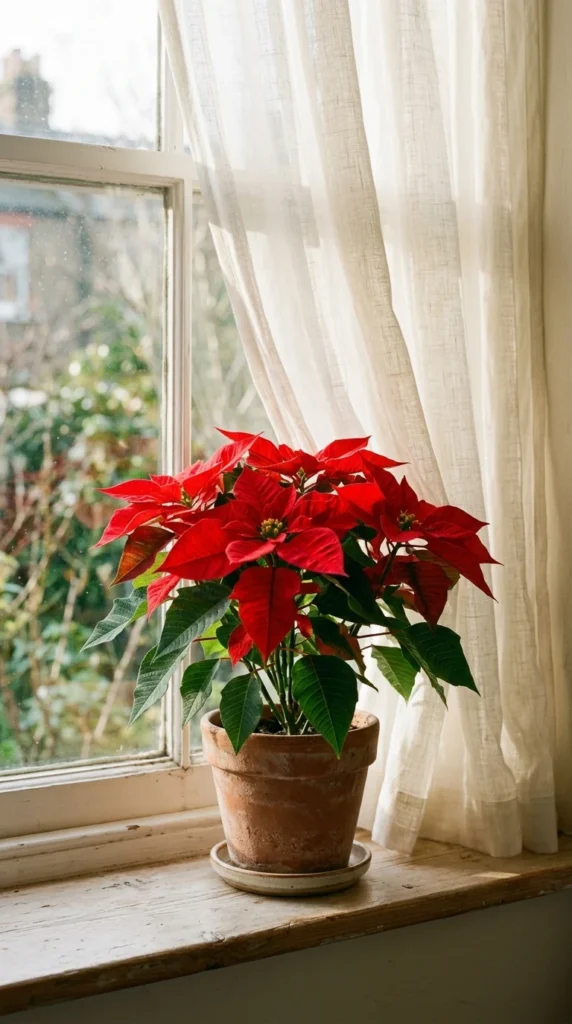
Poinsettias love light. To maintain their brilliant colors, place them in a spot that receives at least six hours of bright, indirect sunlight daily. A south, east, or west-facing window is ideal. However, avoid direct, harsh midday sun, which can scorch the bracts. If you don’t have enough natural light, a full-spectrum LED grow light can serve as a great supplement.
5. Warmth
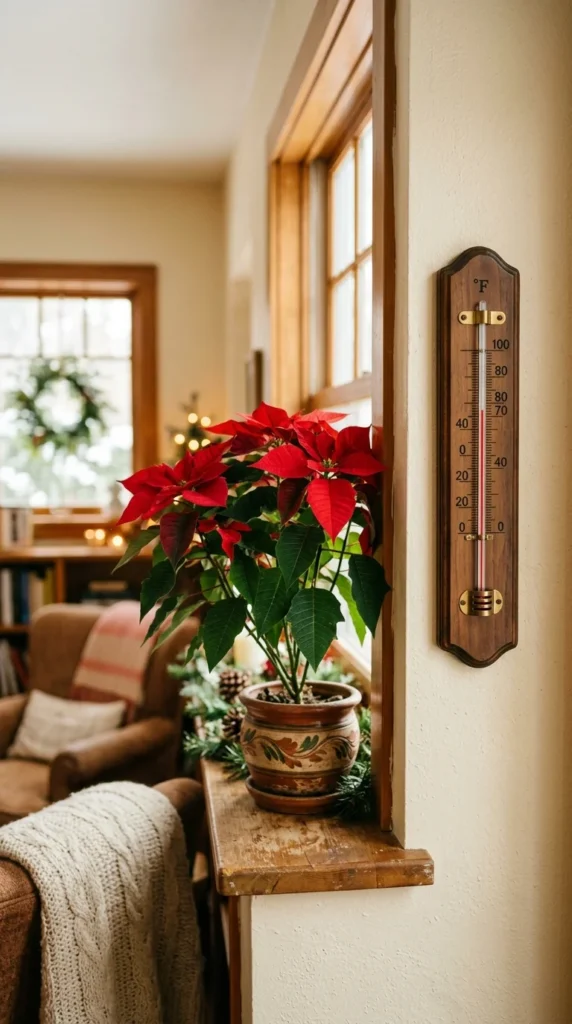
These plants thrive in temperatures that humans find comfortable. Aim for a daytime temperature between 65°F and 75°F (18°C to 24°C). At night, they prefer it slightly cooler, around 60°F to 65°F. Keeping the plant in this range prevents premature leaf drop and keeps the bracts looking fresh for months.
6. Drafts
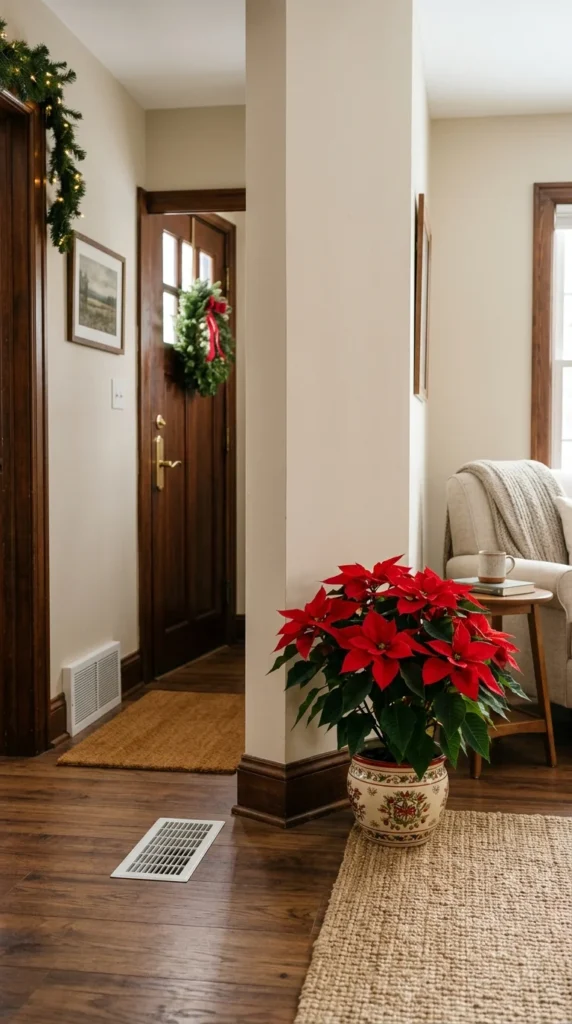
One of the quickest ways to kill a Poinsettia is by placing it in a drafty area. Keep your plant away from frequently opened doors, leaky windows, and heat vents. Rapid fluctuations in temperature or dry blasts of hot air will cause the plant to go into shock, resulting in the sudden loss of its lower leaves.
7. Soil
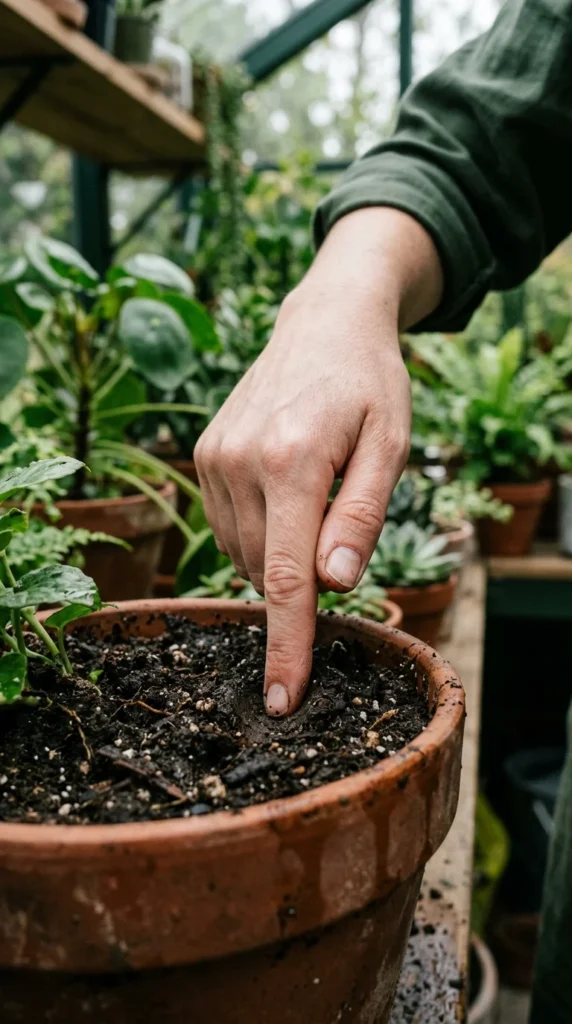
Watering is the most critical aspect of Poinsettia care. You should only water the plant when the surface of the soil feels dry to the touch. Stick your finger about an inch into the soil; if it feels dry, it’s time to water. If the soil is still moist, wait another day. Overwatering is the leading cause of death for these plants, as it leads to root rot.
8. Drainage
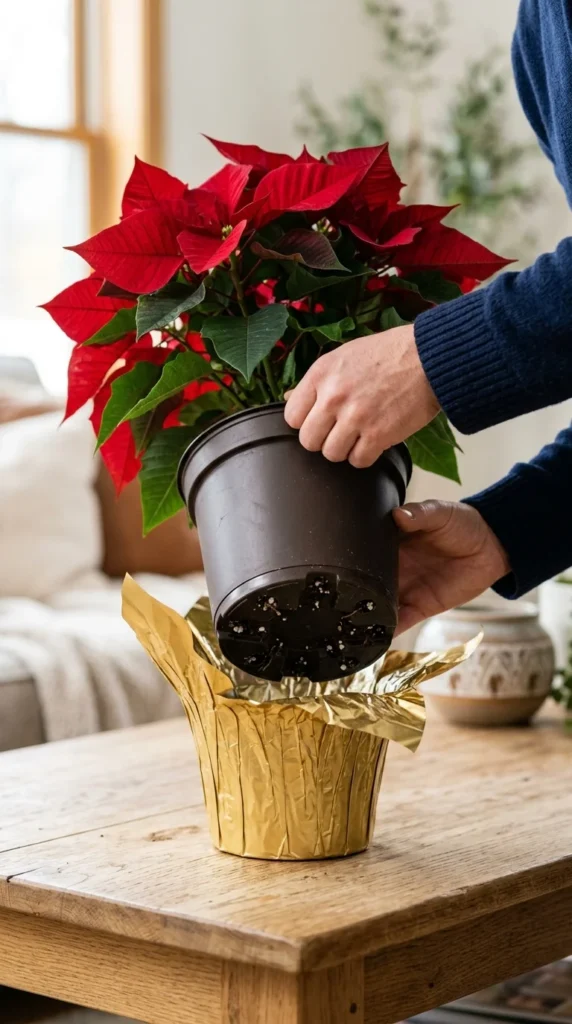
Many Poinsettias come wrapped in colorful decorative foil. This foil is a death trap if it doesn’t have holes. Water collects at the bottom, drowning the roots. Either punch holes in the bottom of the foil and place it on a saucer, or remove the foil entirely when watering. Always discard any excess water that collects in the saucer after ten minutes.
9. Humidity
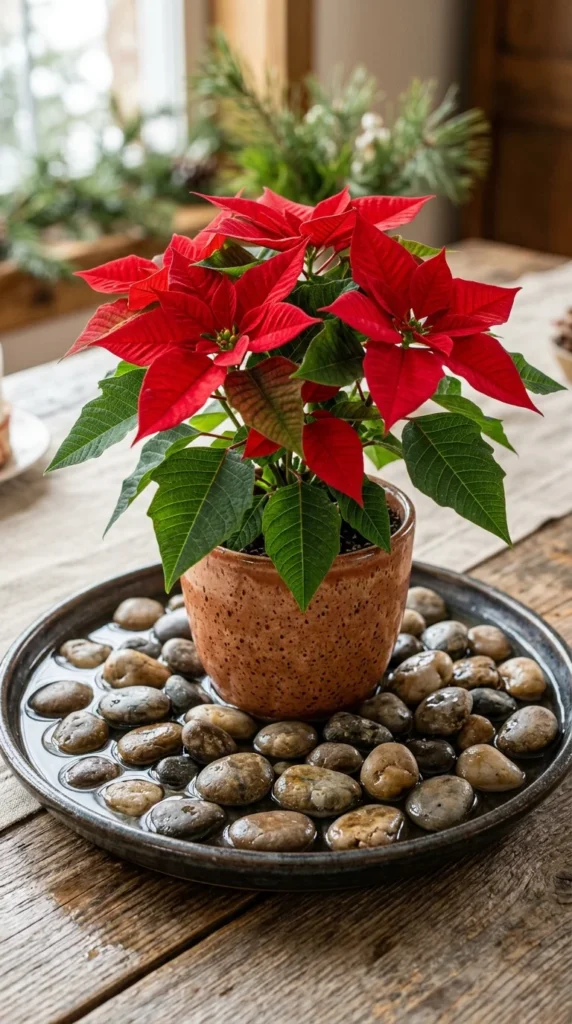
Winter air in most homes is incredibly dry due to heating systems. Poinsettias prefer a more humid environment. To boost humidity, you can group several plants together, use a room humidifier, or place the pot on a “pebble tray”—a tray filled with stones and water. The water evaporates around the plant without the roots sitting directly in it.
10. Fertilizer
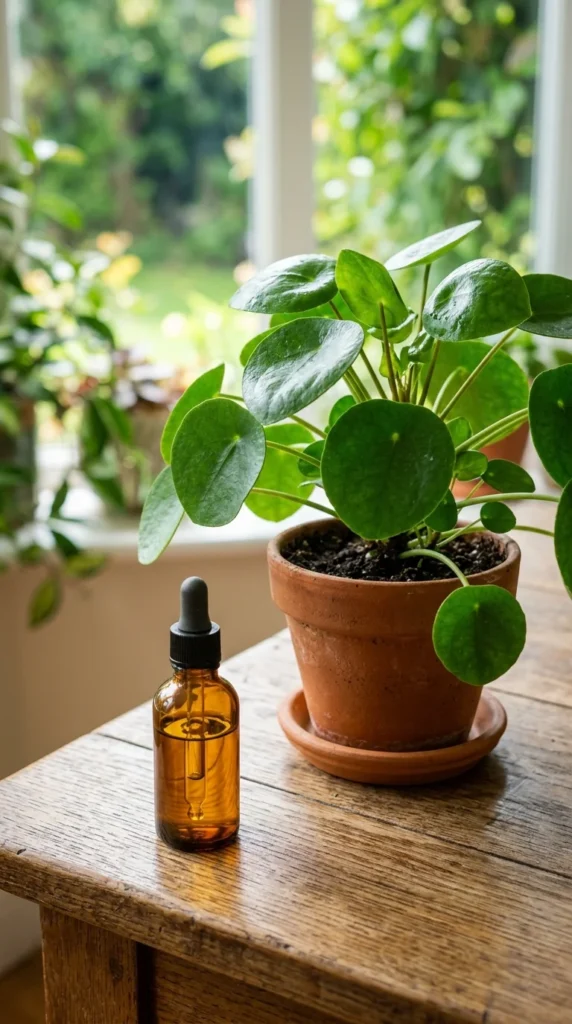
While your Poinsettia is in full bloom during the holiday season, you do not need to fertilize it. The plant is in a stationary phase. You should only begin fertilizing once the blooming season is over and you see new green growth appearing, usually in late spring or early summer. At that point, a balanced, all-purpose liquid fertilizer every 3–4 weeks is sufficient.
11. Cleaning
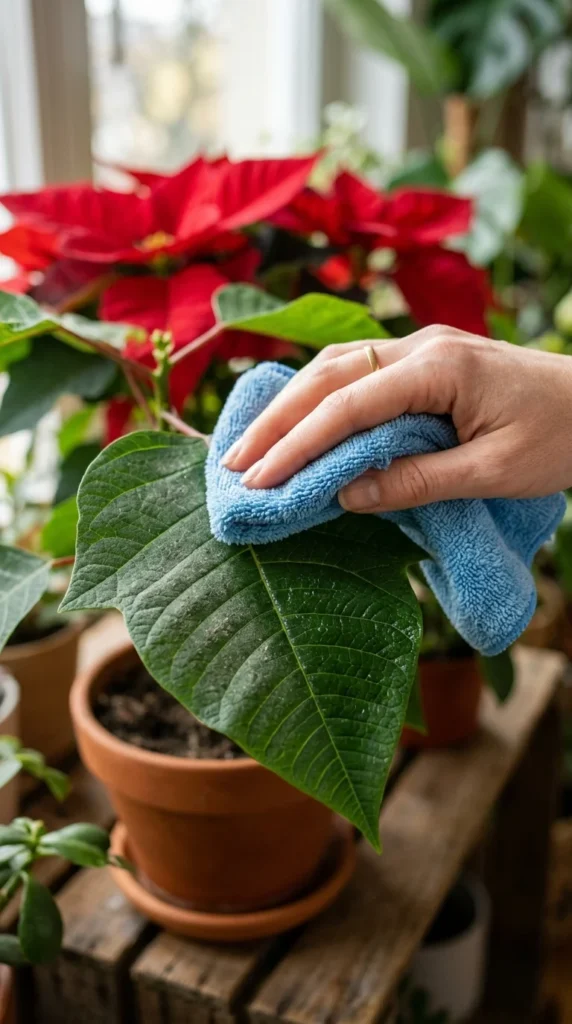
Dust can accumulate on the large leaves and bracts of the Poinsettia, blocking light and reducing the plant’s ability to photosynthesize. Once every two weeks, gently wipe the leaves with a damp cloth or give the plant a very light misting to keep it clean. This also helps you spot any potential pests early on.
12. Pruning
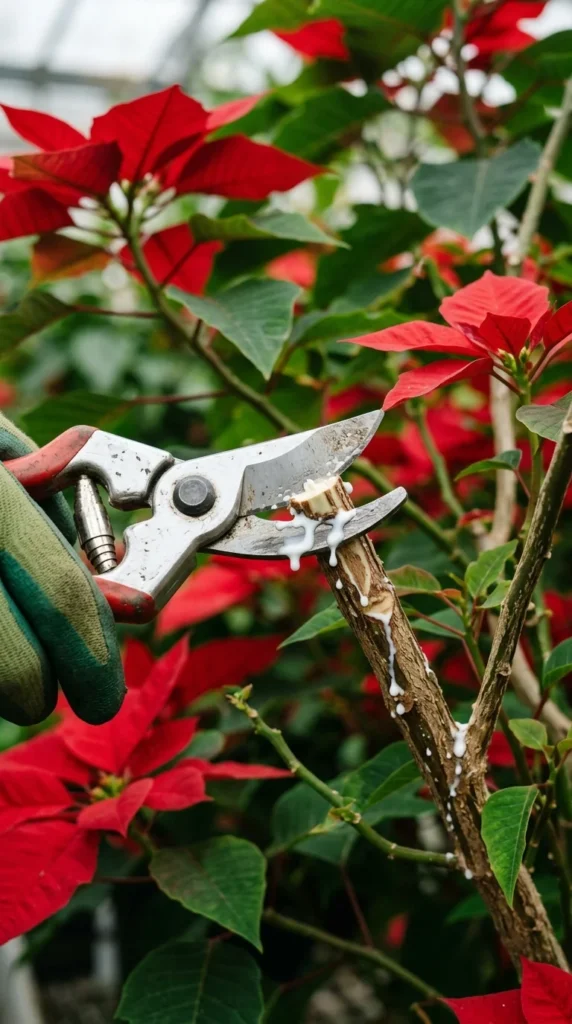
If you intend to keep your plant for the next year, you’ll need to prune it. In late March or early April, once the bracts begin to fade or fall off, cut the stems back to about 4 to 6 inches in height. This encourages new, bushier growth. Be careful when pruning; the white sap (latex) can be irritating to the skin, so wearing gloves is recommended.
13. Dormancy
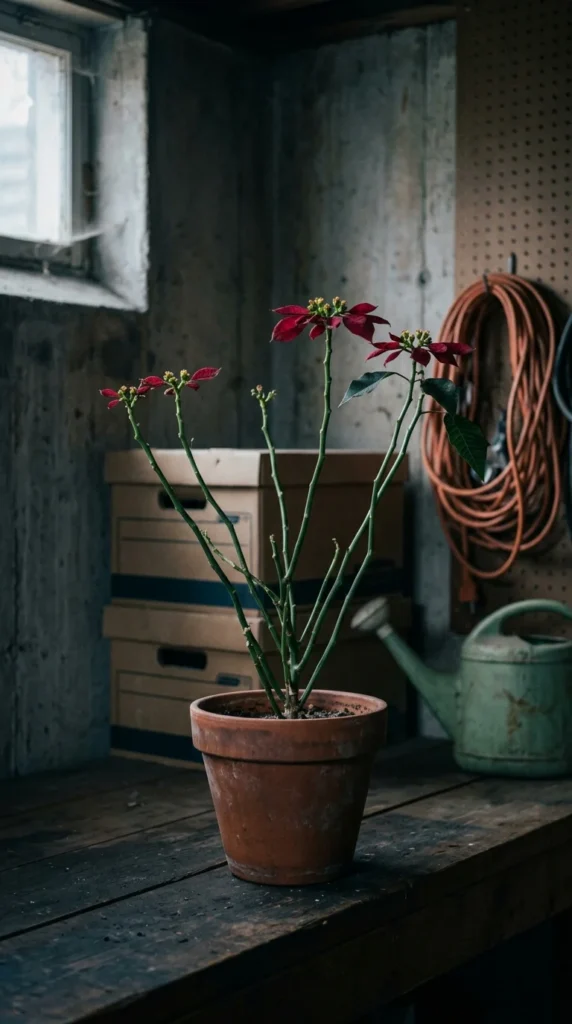
After pruning in the spring, the plant enters a brief resting phase. Reduce watering, allowing the soil to dry out significantly between waterings, and keep it in a slightly cooler spot. By May, you should see new green shoots, signaling that it’s time to move it back into a bright window and resume regular care.
14. Repotting
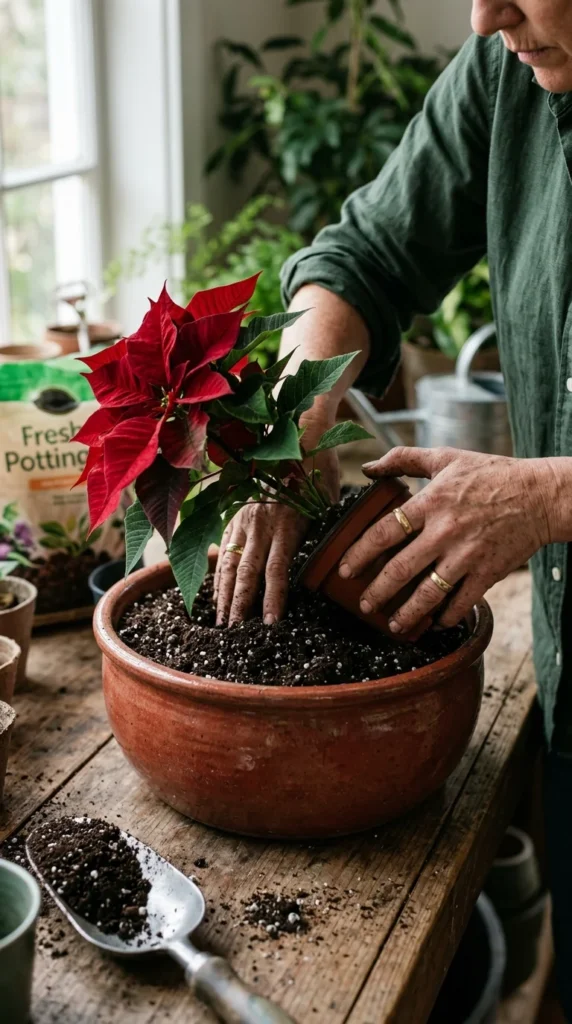
Late spring is the perfect time to repot your Poinsettia. Choose a pot that is one size larger than the current one and has excellent drainage. Use a high-quality, well-draining potting mix. This provides the roots with fresh nutrients and more space to expand during the vigorous summer growing season.
15. Summering
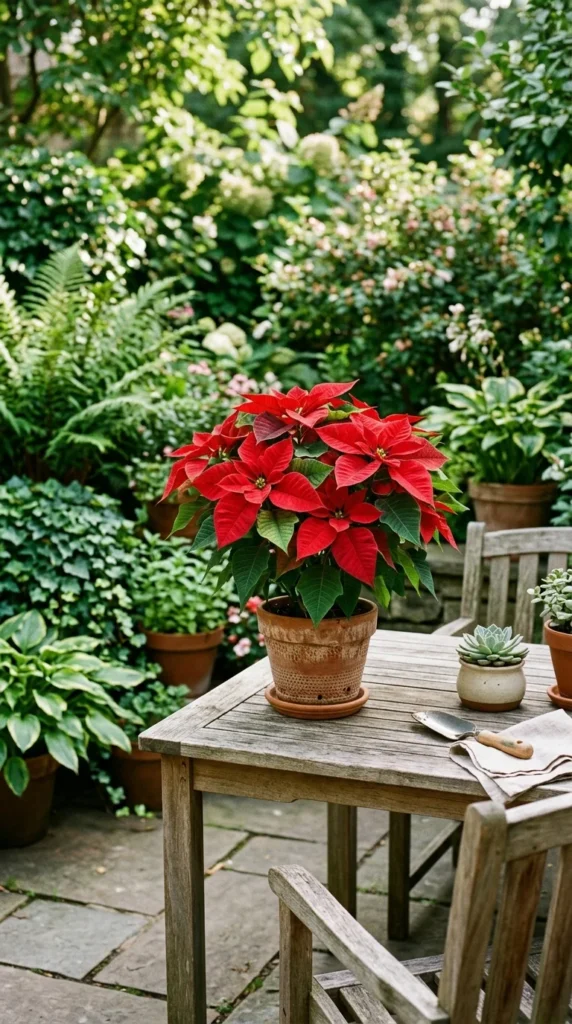
Once the danger of frost has passed, Poinsettias love to go outdoors for the summer. Place the pot in a location that receives filtered sunlight—too much direct sun can burn the leaves. Being outdoors provides the plant with natural humidity and airflow, which promotes strong, healthy growth. Bring it back inside before the nighttime temperatures drop below 50°F (10°C).
16. Pinching
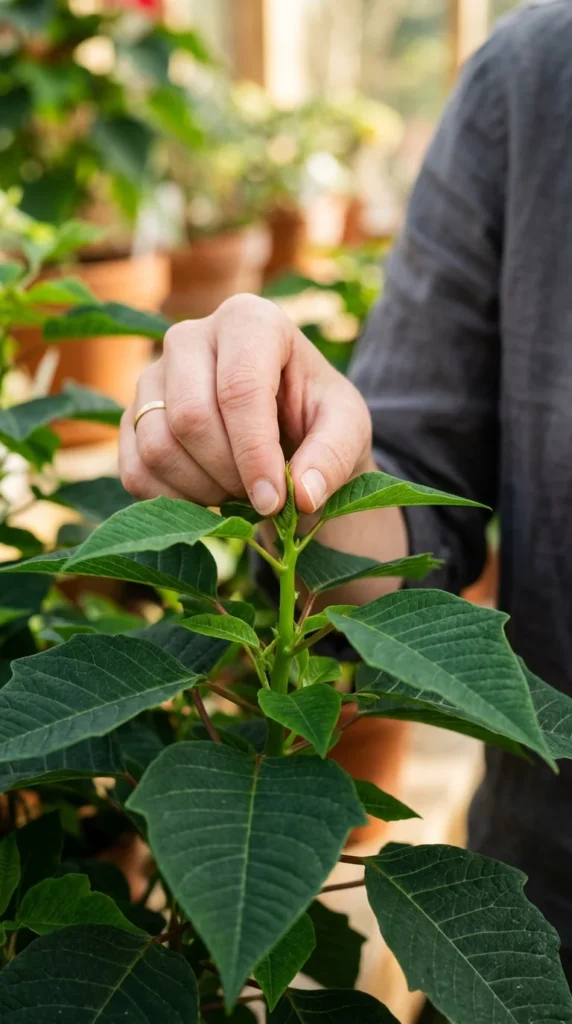
To prevent your Poinsettia from becoming “leggy” or tall and thin, you should “pinch” the stems throughout the summer. Simply snap off the tip of each new growing shoot once it reaches 6 inches in length. This forces the plant to branch out, creating a fuller, more rounded specimen for the winter. Stop pinching by early September.
17. Darkness
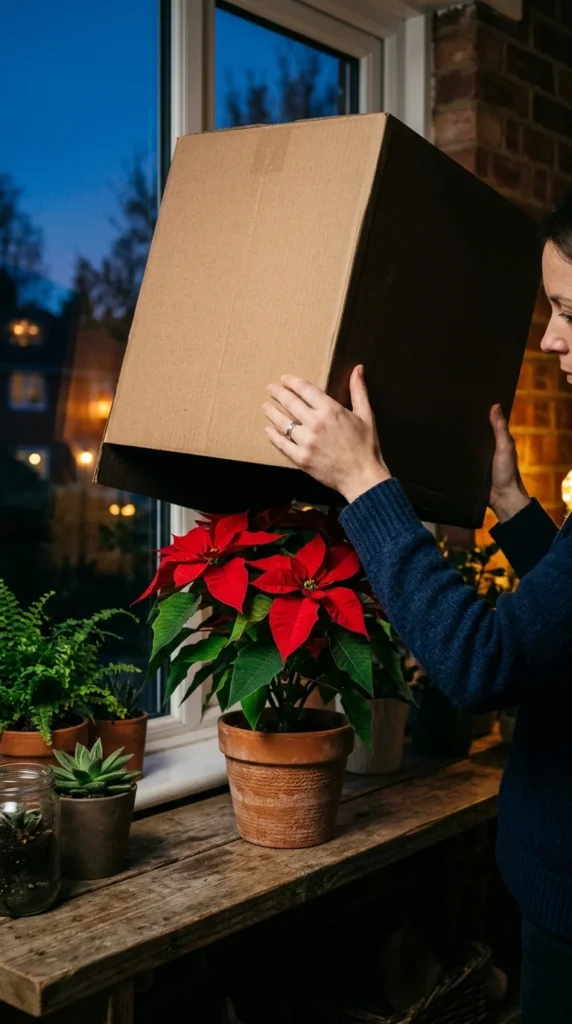
This is the secret to getting a Poinsettia to re-bloom. To change color, Poinsettias require “short day” conditions. Starting in early October, the plant needs 14 hours of uninterrupted, pitch-black darkness every single night for about 8 to 10 weeks. You can achieve this by placing the plant in a dark closet or covering it with a box from 5 PM to 8 AM. Even a sliver of light from a streetlamp or a hallway can disrupt this process.
18. Pests
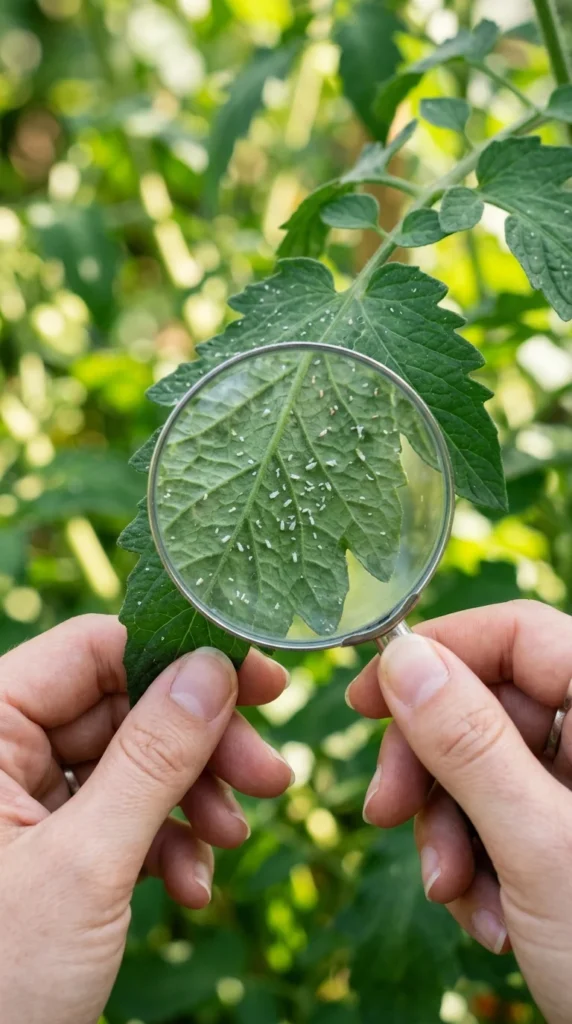
Poinsettias are susceptible to common indoor pests like whiteflies, fungus gnats, and spider mites. Check the undersides of the leaves regularly. If you see tiny white flies or fine webbing, treat the plant with insecticidal soap or neem oil. Catching an infestation early is key to saving the plant.
19. Fungus
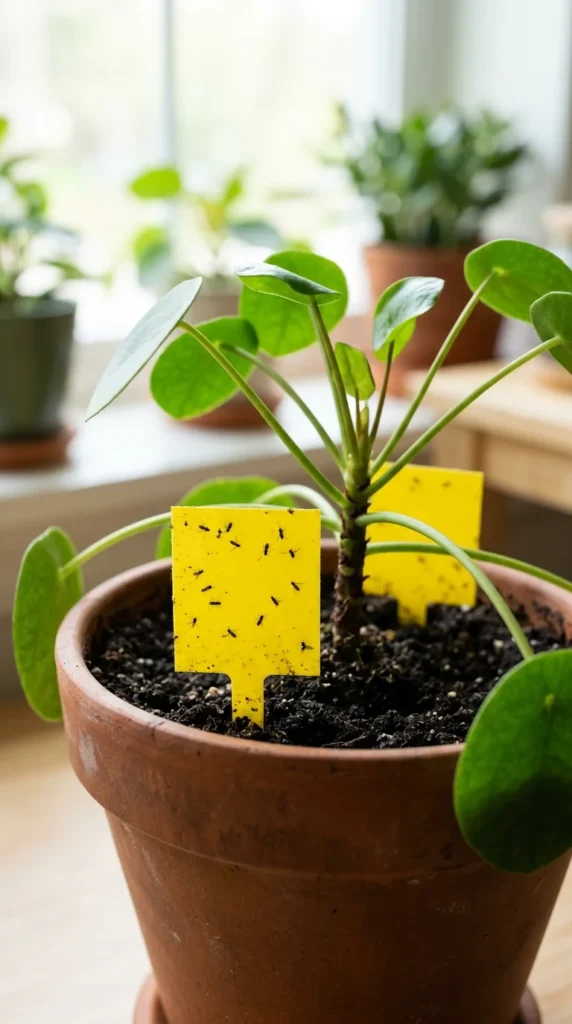
If you notice tiny black gnats flying around the base of your plant, you likely have fungus gnats. These are usually a sign that the soil is staying too wet. Allow the soil to dry out more between waterings and use yellow sticky traps to catch the adults. Ensuring good air circulation also helps prevent fungal issues like powdery mildew.
20. Toxicity
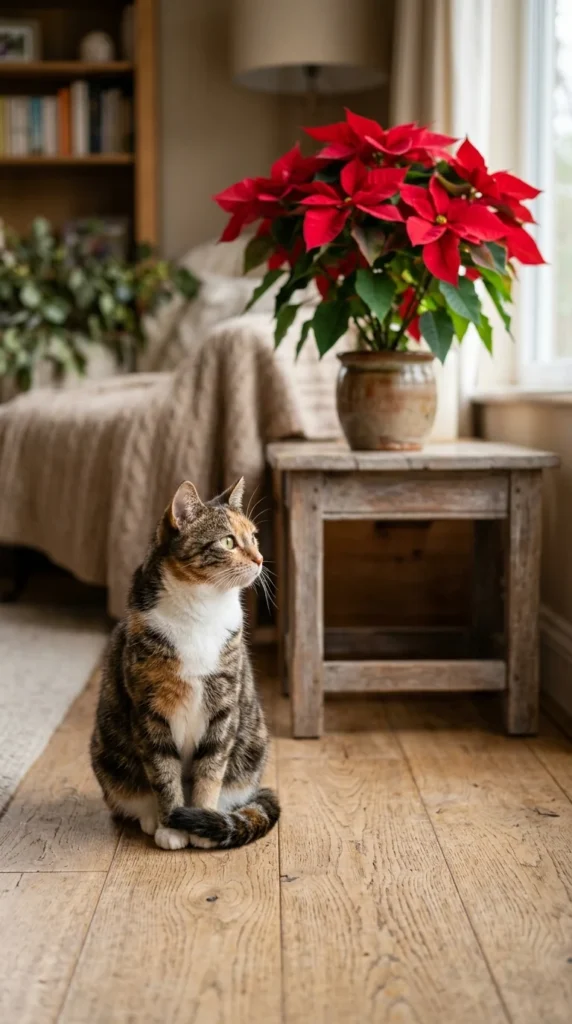
Contrary to popular belief, Poinsettias are not deadly, but they are mildly toxic. The milky sap contains chemicals similar to those found in latex. If a pet or child eats the leaves, it can cause mouth irritation, drooling, or vomiting. To be safe, always keep the plant on a high shelf or in an area where pets and small children cannot reach it.
21. Longevity

With proper care, a Poinsettia can live for many years and even grow into a large shrub. While the process of getting them to turn red again is labor-intensive, the reward of seeing those vibrant bracts emerge in December is well worth the effort. Treat your Poinsettia as a living investment rather than a disposable decoration, and it will reward you with beauty season after season.