
The poinsettia is the undisputed royalty of the holiday season. With their striking bracts—which many mistake for flower petals—these Mexican natives bring an unparalleled splash of crimson, cream, and pink to our homes during the darkest months of the year. However, many people treat them as disposable decor because they often begin to wilt or drop leaves within weeks of purchase. The truth is that with the right approach, your poinsettia can remain vibrant well into spring and even bloom again next year. Here are 14 professional care secrets to keep your poinsettias looking spectacular for months.
1. Lighting

Poinsettias are tropical plants that crave light, but they are surprisingly picky about the type of light they receive. To maintain those brilliant colors, place your plant in a spot that receives at least six hours of bright, indirect sunlight daily. A south, east, or west-facing window is ideal. However, avoid direct, harsh sunlight, which can scorch the delicate bracts and lead to fading. If your home is particularly dark during the winter, you can supplement with a full-spectrum grow light to keep the plant from becoming “leggy” and losing its lower foliage.
2. Temperature
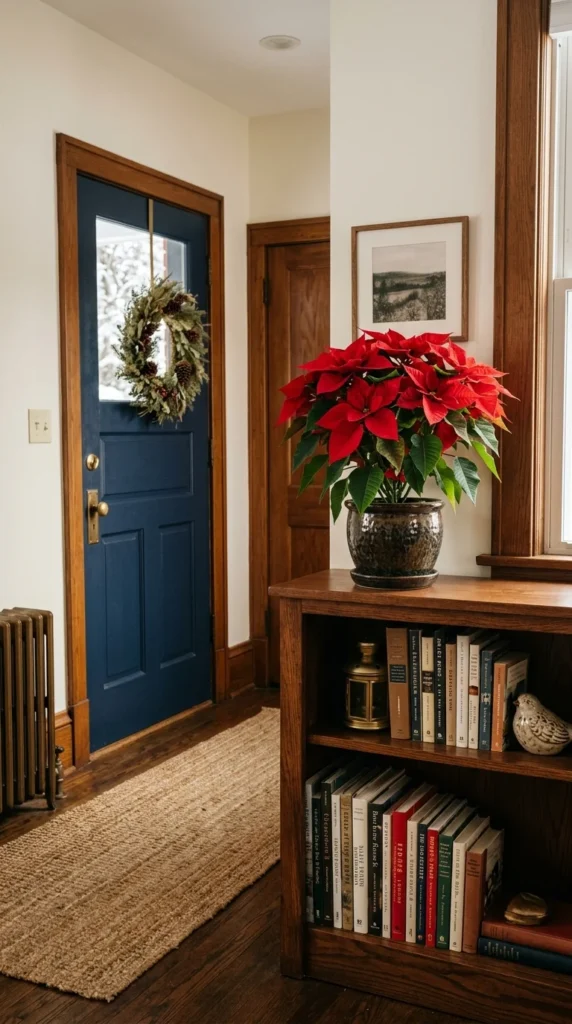
The fastest way to kill a poinsettia is a sudden temperature swing. These plants thrive in temperatures between 65°F and 75°F (18°C–24°C) during the day. At night, they prefer it slightly cooler, but never below 60°F. The “secret” here is consistency. Keep your plants away from drafts, such as those from frequently opened doors or leaky windows, and keep them far away from heat sources like radiators, fireplaces, or forced-air vents. Hot, dry air will cause the leaves to shrivel and drop almost overnight.
3. Watering
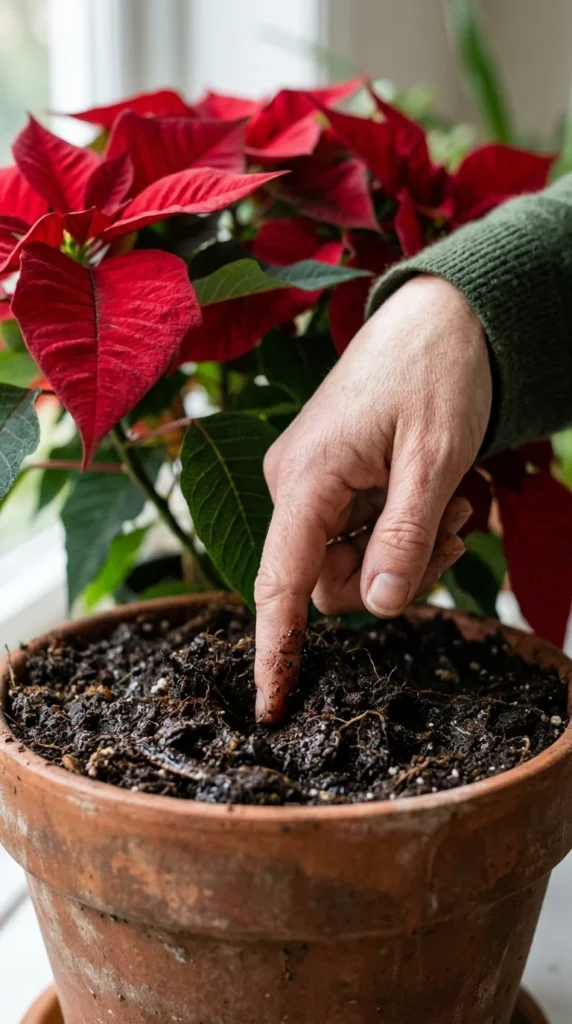
Watering is where most enthusiasts go wrong. Poinsettias should only be watered when the soil surface feels dry to the touch. When you do water, do so thoroughly until water runs out of the drainage holes at the bottom of the pot. Many people make the mistake of watering on a schedule (e.g., “every Monday”), but the plant’s needs change based on the humidity and light in your home. Always check the soil first. If the plant feels light when you lift the pot, it’s likely thirsty.
4. Drainage
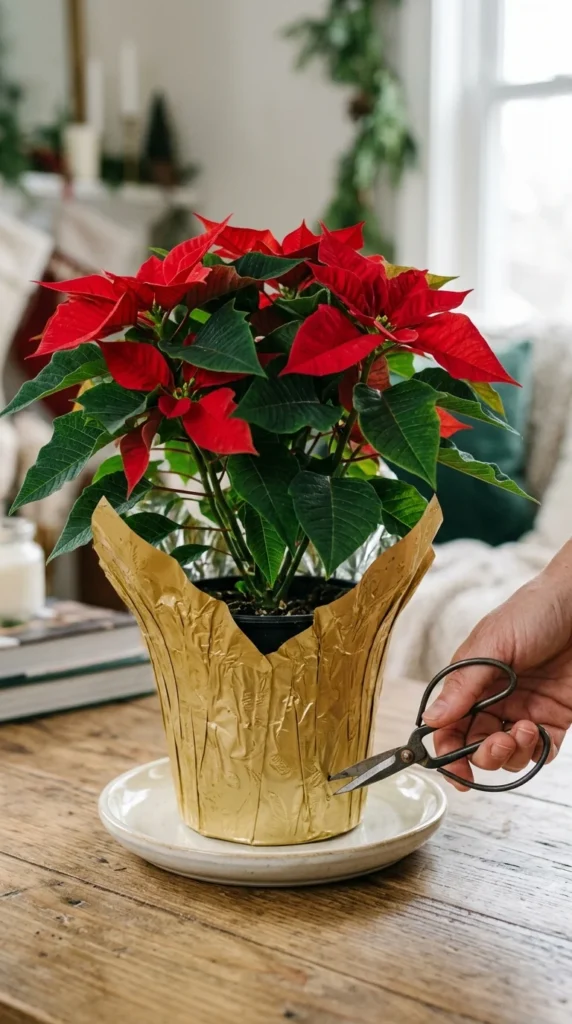
Most poinsettias are sold in plastic pots wrapped in decorative colorful foil. While beautiful, this foil is a death trap for the plant. It traps water at the bottom, leading to “wet feet” and root rot—the number one cause of poinsettia death. To fix this, you don’t have to remove the foil; simply poke several holes in the bottom of the foil wrap and place the pot on a saucer. This allows excess water to escape while keeping your furniture dry. Always discard any water that collects in the saucer after 15 minutes.
5. Unwrapping
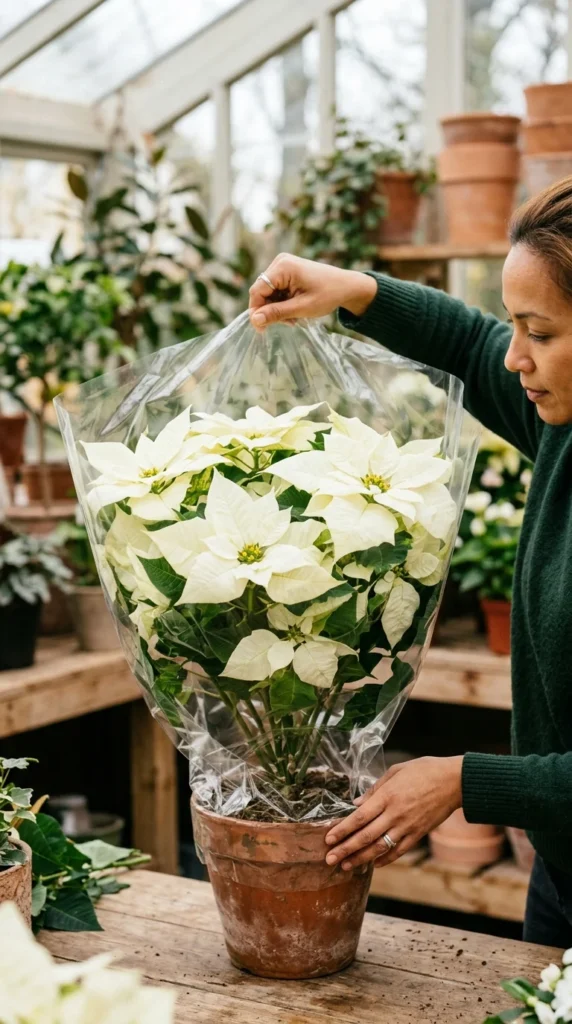
When you buy a poinsettia, it often comes in a plastic or paper sleeve for protection during transport. One of the best-kept secrets for long-term health is to remove this sleeve as soon as you get home. These sleeves are designed for shipping and prevent air circulation. If left on, they can cause the plant to produce ethylene gas, which leads to premature leaf drop and wilting. Let those branches breathe!
6. Placement
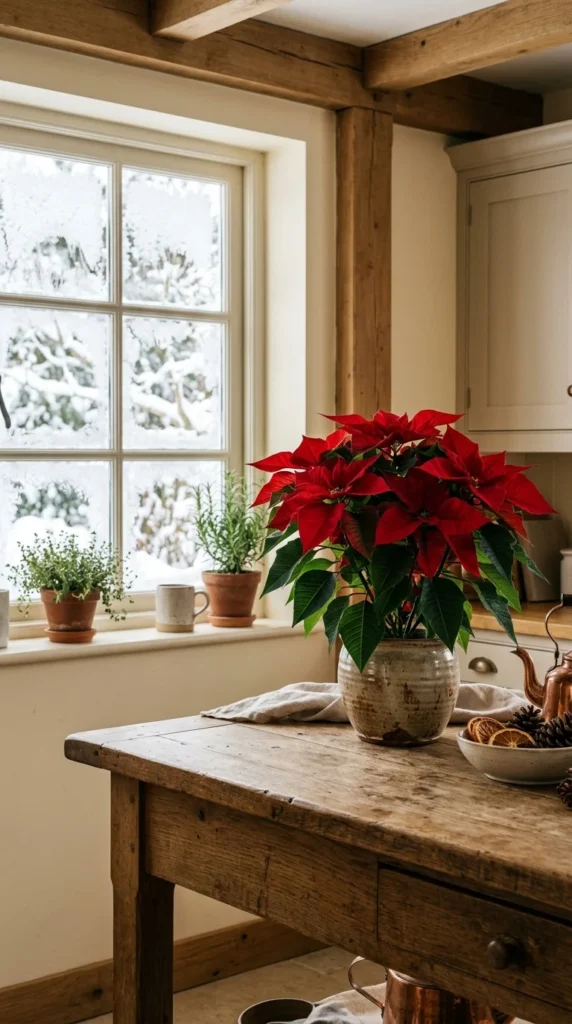
While they love light, you should never let a poinsettia’s leaves touch a cold windowpane. In the winter, the glass can get incredibly cold, and any leaf touching it will likely freeze and turn black. Furthermore, if you place your plant on a windowsill, remember to move it further into the room at night when temperatures drop significantly near the glass. Maintaining a “buffer zone” of air between the plant and the window is crucial for survival.
7. Humidity
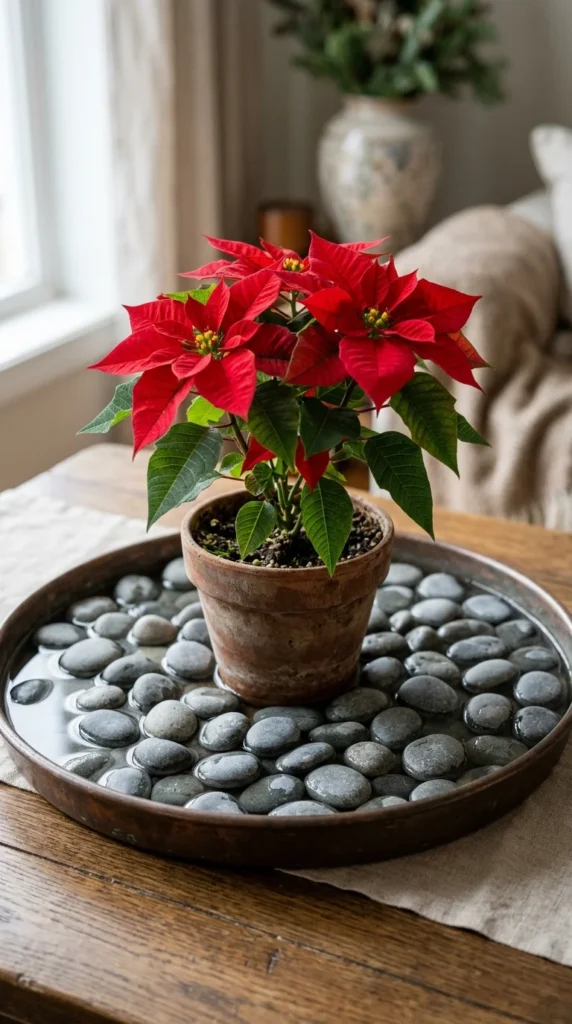
Modern homes are notoriously dry in the winter due to heating systems. Poinsettias, being tropical, prefer a humidity level around 50%. You can increase the local humidity around your plant by using a “pebble tray.” Fill a shallow tray with pebbles and water, then place the pot on top of the pebbles (ensuring the bottom of the pot doesn’t touch the water). As the water evaporates, it creates a humid microclimate around the foliage, preventing the bracts from becoming crisp and brown at the edges.
8. Darkness
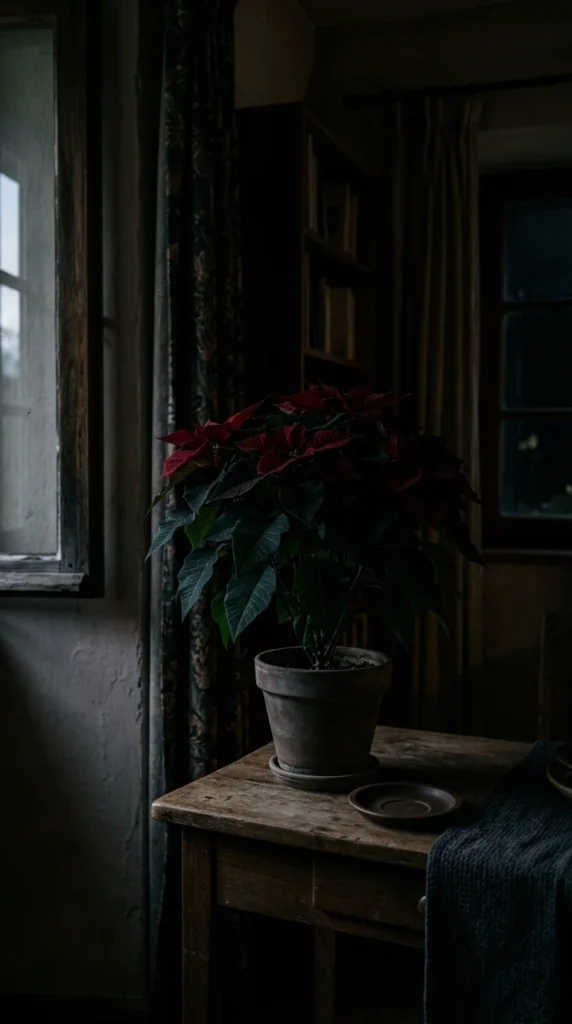
If you are trying to maintain the color of your plant, it needs a natural light-dark cycle. While the “14 hours of total darkness” rule is famous for getting a green plant to turn red in the fall, it is also helpful for maintaining the longevity of the current blooms. Avoid placing your poinsettia in a room where artificial lights are left on 24/7. Let the plant experience the natural rhythm of the short winter days and long nights to keep its metabolic processes in check.
9. Transport

The damage often starts before the plant even enters your home. If the temperature outside is below 50°F, even a two-minute walk to your car can shock the plant. When buying a poinsettia, always ask the shop to wrap it in a paper bag or a sleeve that covers the top. Keep the heater on in your car, but don’t blast it directly at the plant. Get it inside as quickly as possible. If the plant is exposed to a “cold snap” during transport, it may look fine for a day or two and then suddenly drop all its leaves.
10. Soil
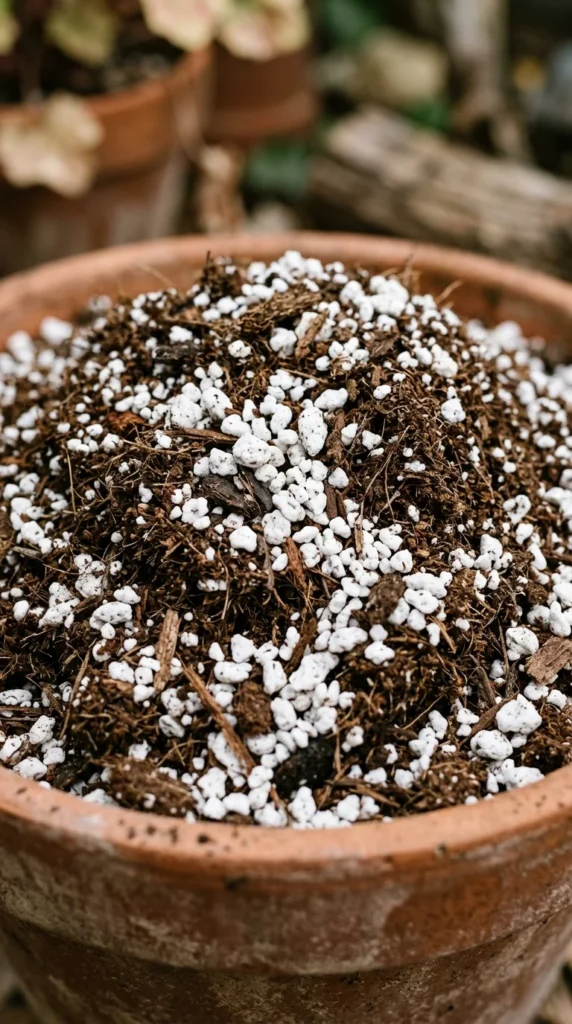
Poinsettias require a well-draining, peat-based potting soil. If you find that your plant’s soil stays soggy for a week after watering, the mix may be too heavy. Professional growers use a mix that is high in perlite or vermiculite to ensure oxygen reaches the roots. If you decide to repot your plant in the spring, choose a high-quality “soilless” potting mix designed for indoor plants to prevent compaction and fungal issues.
11. Feeding
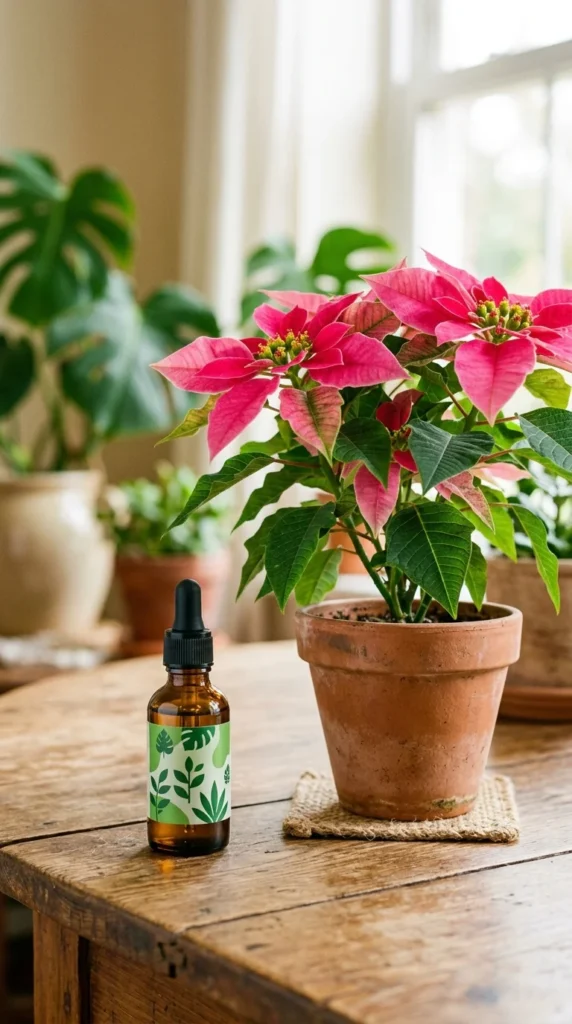
Here is a secret that saves many plants: do not fertilize your poinsettia while it is in bloom (or while the bracts are colored). The plant is not in an active growth phase during this time, and adding fertilizer can actually burn the roots or cause the plant to drop its leaves. Wait until the holiday season is over and you see new green growth appearing in the spring before you begin a monthly feeding regimen with a balanced, all-purpose liquid fertilizer.
12. Pruning
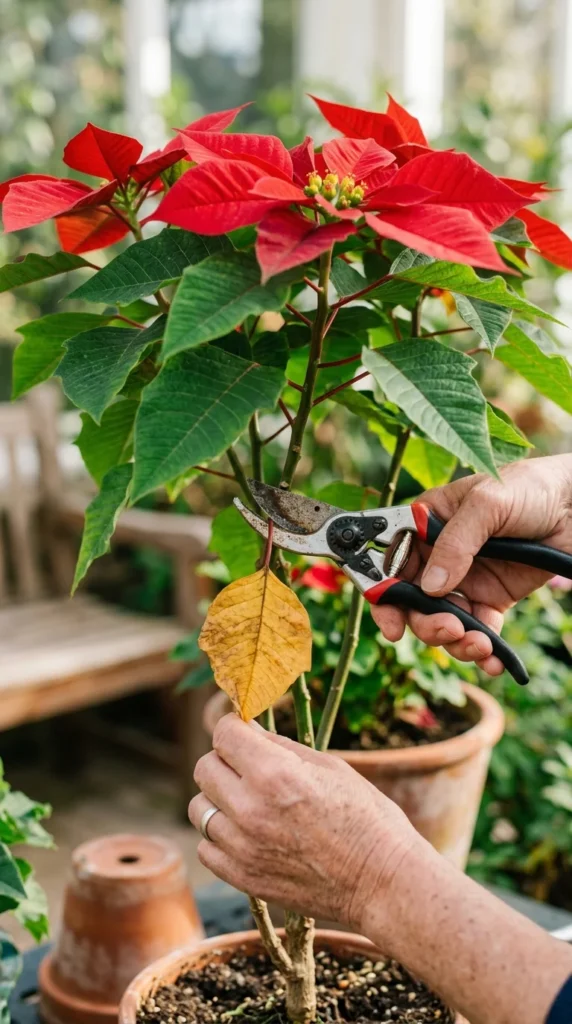
To keep the plant looking its best, be proactive with pruning. If you notice yellowing leaves or a bract that is starting to wither, snip it off immediately with clean scissors. This isn’t just for aesthetics; it improves airflow through the center of the plant and prevents the spread of gray mold (Botrytis), which can thrive on decaying plant matter in humid environments. Just be careful—poinsettias produce a milky white sap (latex) that can be irritating to the skin, so wash your hands after pruning.
13. Pests
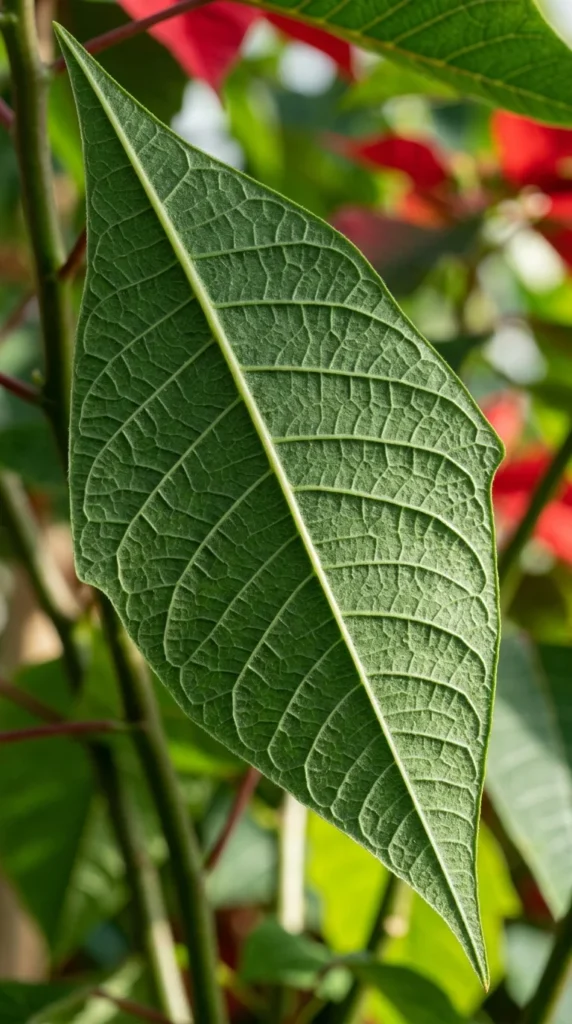
Poinsettias are unfortunately magnets for whiteflies. These tiny, moth-like insects hide on the undersides of leaves and suck the sap, weakening the plant. When buying a plant, gently shake it; if a cloud of tiny white specks flies up, put it back. Once home, check the undersides of the leaves once a week. If you spot pests, treat the plant with a mild insecticidal soap or neem oil spray. Catching an infestation early is the only way to ensure the plant survives to see the new year.
14. Dormancy
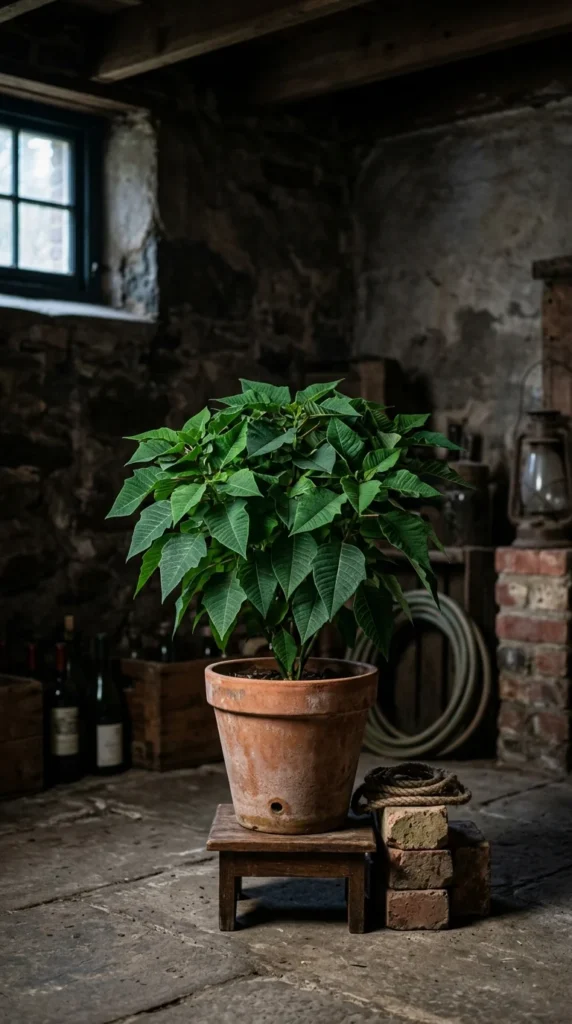
The final secret to long-lasting poinsettias is understanding their life cycle. Around March or April, the plant will naturally begin to lose its color and some leaves. This is not a sign of death; it is the beginning of dormancy. To keep the plant for next year, cut it back to about six inches in height, reduce watering, and move it to a cool, dark place. In May, you can bring it back into the light, repot it, and start the cycle all over again. Treating the plant as a living organism rather than a decoration is the ultimate key to success.