
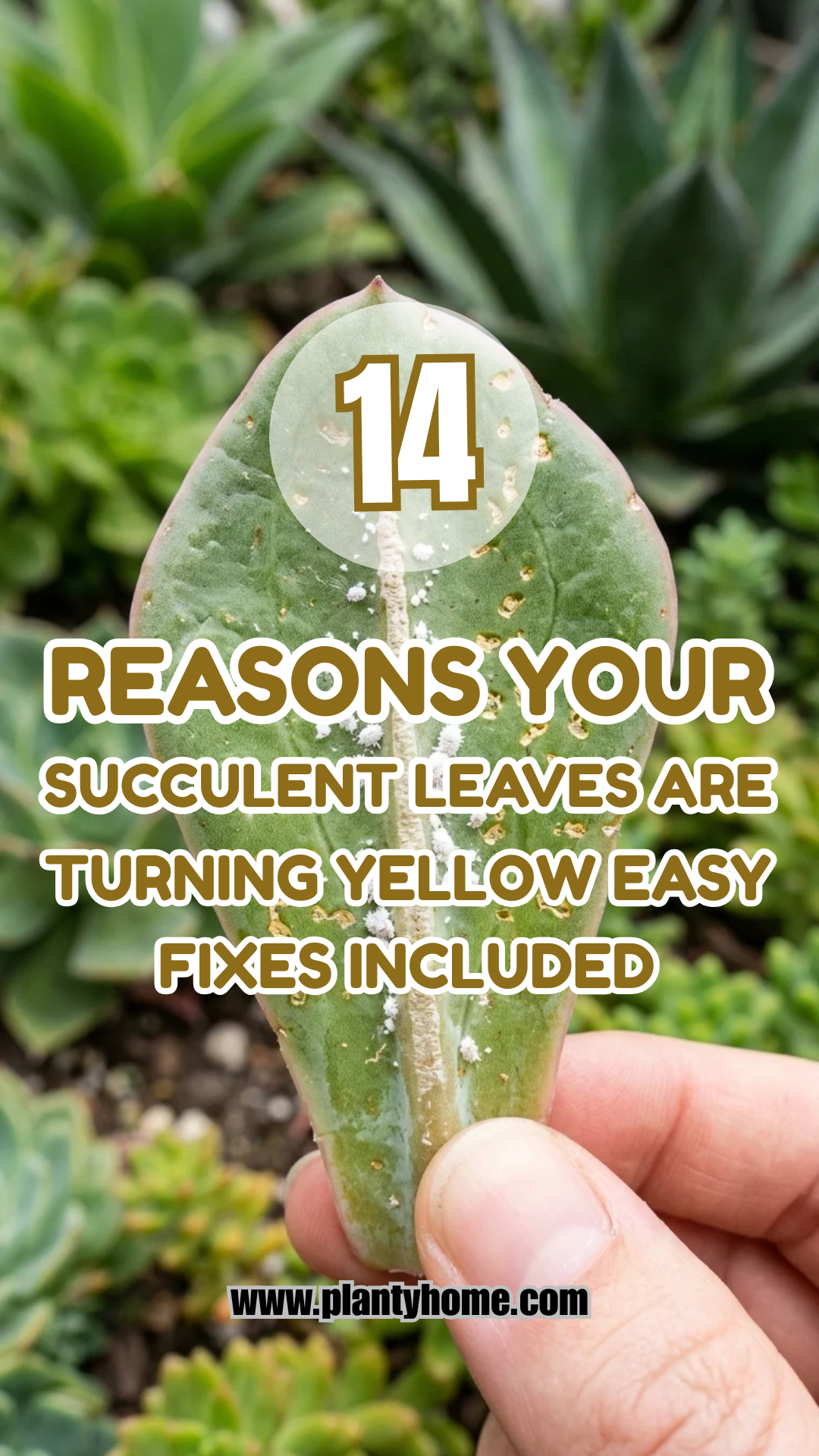
Succulents are often lauded as the ultimate low-maintenance plants, perfect for novice gardeners and busy urban dwellers alike. However, even these resilient desert natives can encounter health issues. One of the most common—and often most alarming—symptoms is the yellowing of leaves. While a yellow leaf can be a sign of natural aging, it is frequently a “distress signal” indicating that something in the plant’s environment is out of balance.
Understanding the nuance behind yellowing leaves is critical for any plant parent. Is the leaf mushy or crispy? Is the yellowing happening at the top or the bottom? By diagnosing the specific cause, you can implement a targeted fix and restore your succulent to its vibrant, fleshy glory. Here are 14 reasons why your succulent leaves are turning yellow and the expert-recommended solutions to fix them.
1. Overwatering
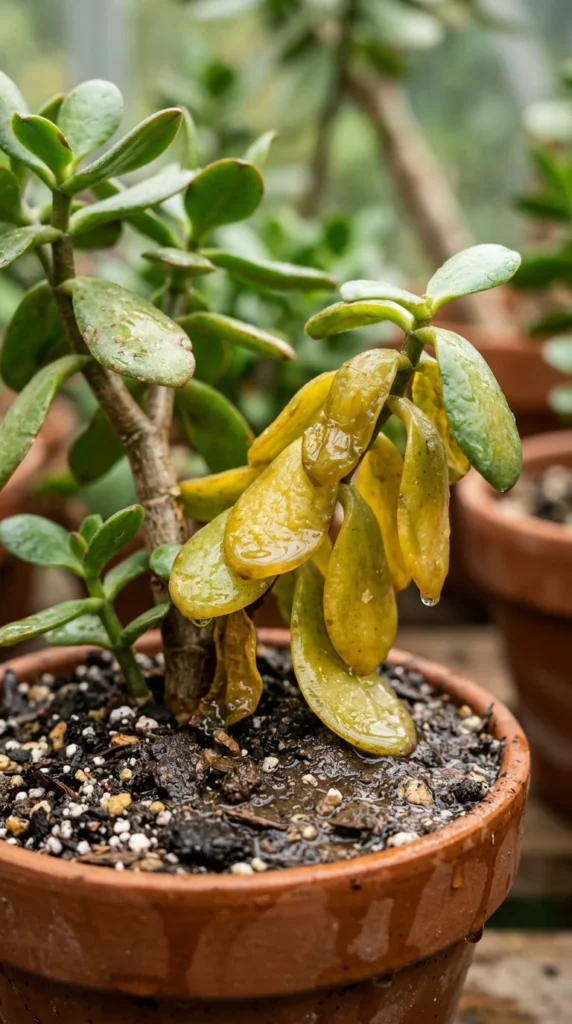
Overwatering is the leading cause of death for indoor succulents. When a succulent receives more water than it can process, its cell walls begin to rupture, leading to leaves that look translucent, mushy, and yellow. Unlike underwatered leaves, which turn yellow and dry out, overwatered leaves feel soft to the touch and may even fall off with the slightest bump.
The Fix: Immediately stop watering. Remove the plant from its pot and inspect the roots. If they are black or slimy, you are dealing with root rot. Trim away the damaged roots and let the plant air-dry for 24 hours before repotting in fresh, dry soil. Moving forward, use the “soak and dry” method: only water when the soil is completely dry from top to bottom.
2. Drainage
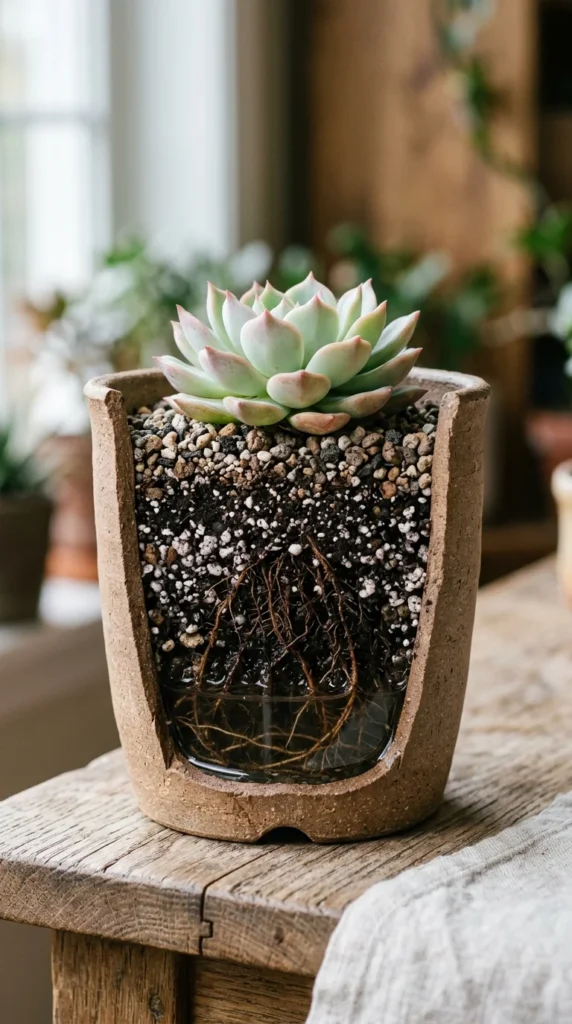
Even if you water sparingly, a lack of proper drainage can lead to yellowing. If the pot does not have a hole at the bottom, water collects at the base, creating a “death pool” that suffocates the roots. This lack of oxygen prevents the plant from transporting nutrients, leading to a sickly yellow hue across the foliage.
The Fix: Always use pots with drainage holes. If you have a decorative “cachepot” without holes, keep the succulent in a plastic nursery liner inside the decorative pot. When watering, remove the liner, let the water drain out completely, and then place it back. Alternatively, use a diamond-tipped drill bit to carefully add drainage holes to ceramic or terra cotta containers.
3. Underwatering
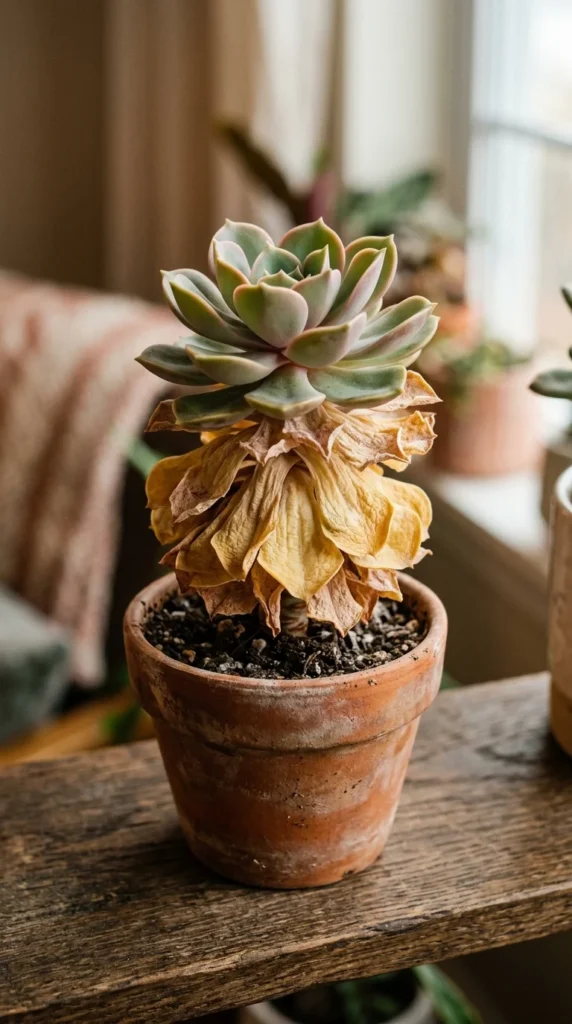
While succulents are drought-tolerant, they are not immortal. If a succulent is left without water for an extended period, it will begin to consume the water stored in its lower leaves to keep the central growth point alive. These leaves will turn yellow, then brown, and eventually shrivel up into a paper-like consistency.
The Fix: Check the soil. If it is pulling away from the sides of the pot and feels bone-dry, your plant needs a deep soak. Place the pot in a tray of water for 30 minutes to allow the soil to absorb moisture from the bottom (bottom-watering), or water thoroughly from the top until water runs out of the drainage holes. The leaves should plump back up within a few days.
4. Sunburn
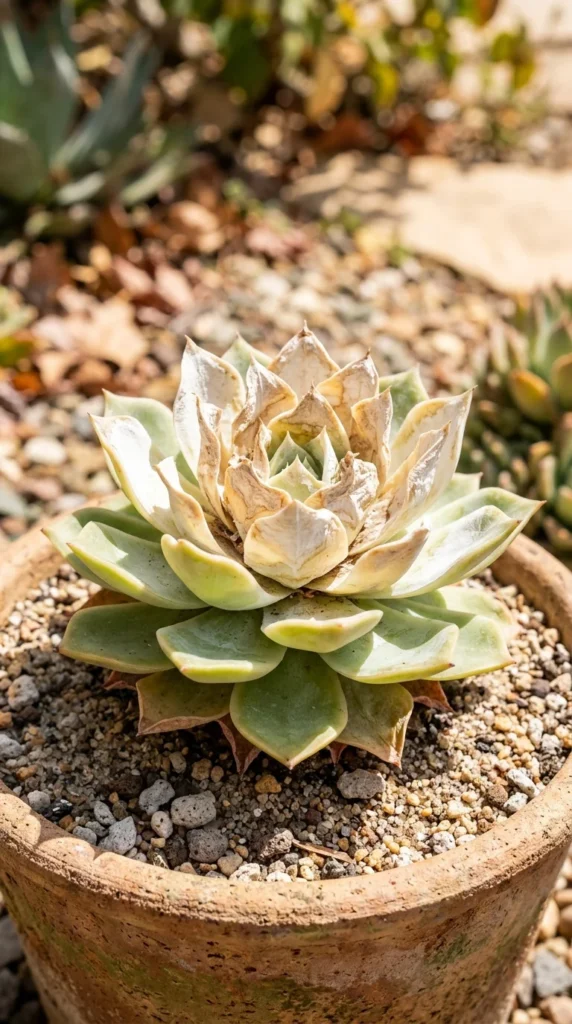
Succulents love light, but sudden exposure to intense, direct sunlight can bleach the leaves. Sunburn usually manifests as pale yellow or white patches on the parts of the plant most exposed to the sun. In severe cases, these patches turn brown and crispy, creating permanent scars on the foliage.
The Fix: Gradually acclimate your plants to higher light levels. If you move a succulent from a dark corner to a sunny south-facing windowsill, do it over the course of a week. If you notice sunburn, move the plant to a spot with bright, indirect light or use a sheer curtain to filter the sun’s rays. The yellowed, burnt spots won’t turn green again, but new growth will be healthy.
5. Etiolation
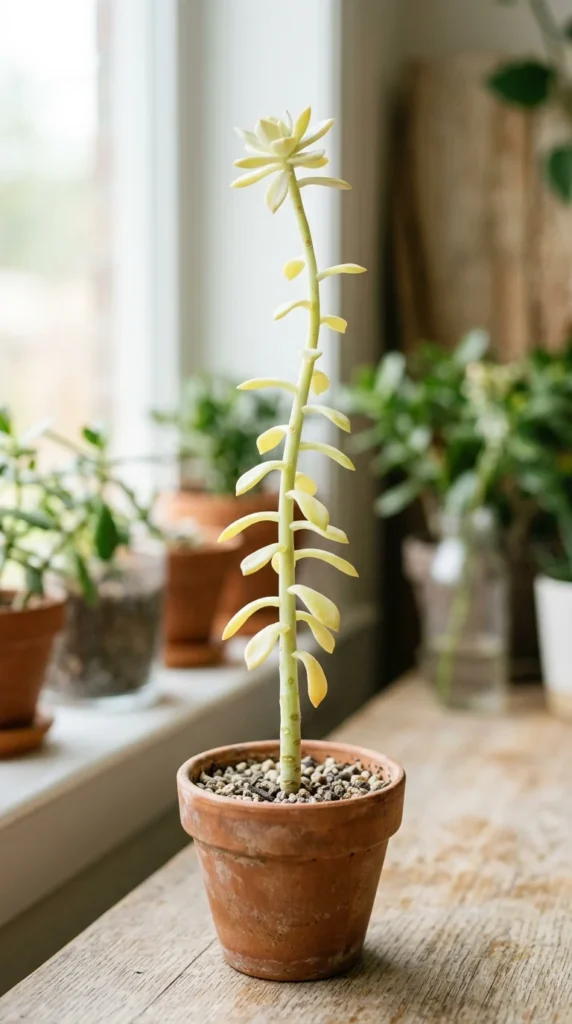
Etiolation, or “stretching,” occurs when a succulent isn’t getting enough light. The plant begins to grow rapidly toward the nearest light source, resulting in a weak, leggy appearance. During this process, the plant may lose its vibrant pigments and turn a pale, sickly yellow as it struggles to produce enough chlorophyll.
The Fix: Move your succulent to a brighter location. A south- or west-facing window is usually best. If your home lacks natural light, consider using a dedicated LED grow light for 8–12 hours a day. While you can’t “un-stretch” a plant, you can take a “beheading” cutting: snip off the healthy top, let it callous, and replant it to start a new, compact succulent.
6. Nutrients
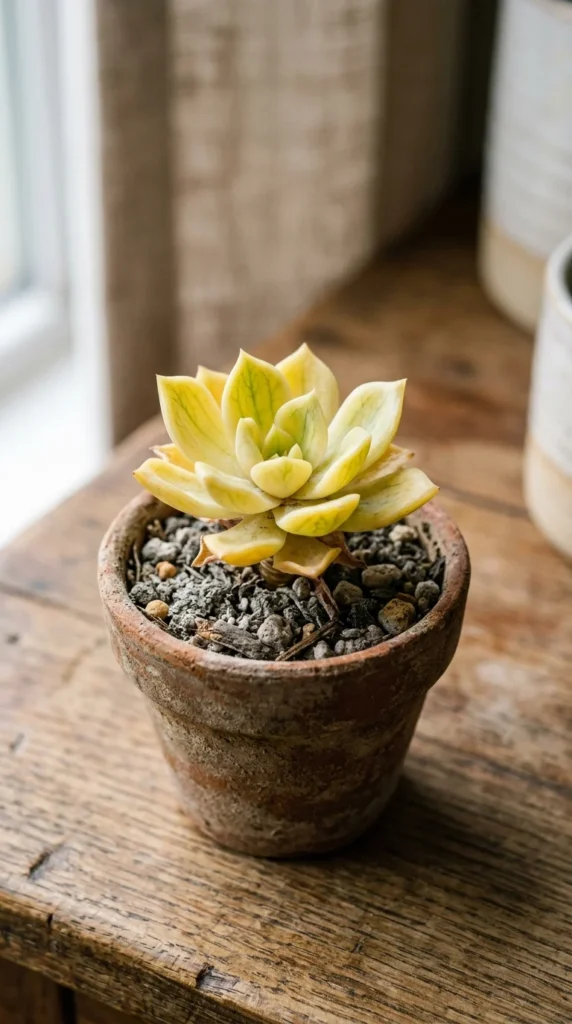
Succulents aren’t heavy feeders, but they do require basic nutrients like nitrogen, phosphorus, and potassium. If a succulent has been in the same soil for years, the nutrients may be entirely depleted. This results in “chlorosis,” where the leaves turn a uniform pale yellow and growth becomes stunted.
The Fix: Repot your succulent in fresh cactus/succulent soil mix every two years. During the active growing season (spring and summer), use a balanced, water-soluble fertilizer diluted to half-strength once a month. Avoid over-fertilizing, as this can cause salt buildup and leaf burn.
7. Soil
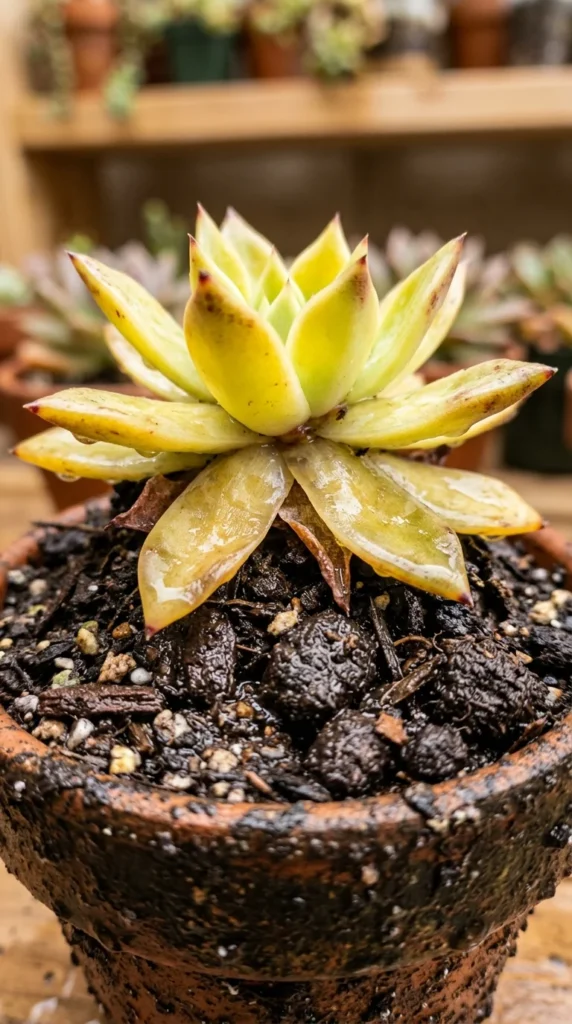
The type of soil you use is just as important as how much you water. Standard potting soil is designed to retain moisture, which is the opposite of what a succulent needs. Heavy soil stays wet for too long, depriving the roots of oxygen and leading to the dreaded yellowing associated with root stress.
The Fix: Switch to a well-draining succulent or cactus mix. A good DIY recipe is one part potting soil, one part coarse sand, and one part perlite or pumice. This mixture allows water to pass through quickly and ensures that the roots have plenty of air pockets to breathe.
8. Temperature
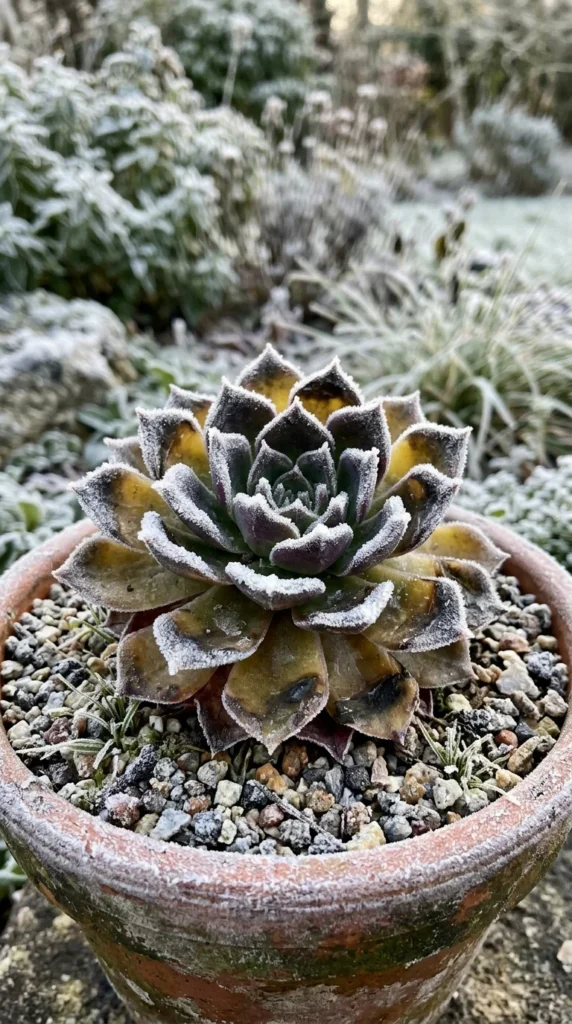
Most succulents are native to warm climates and cannot tolerate frost. When temperatures drop below 40°F (4°C), the water inside the succulent’s cells can freeze and expand, causing the cell walls to burst. This results in yellow, water-soaked leaves that quickly turn black and rot. Conversely, extreme heatwaves can also cause “heat stress” yellowing.
The Fix: Monitor the weather. If frost is predicted, bring your outdoor succulents inside or cover them with a frost cloth. If you live in a region with extreme summer heat, provide your plants with some afternoon shade to prevent them from overheating and yellowing.
9. Aging
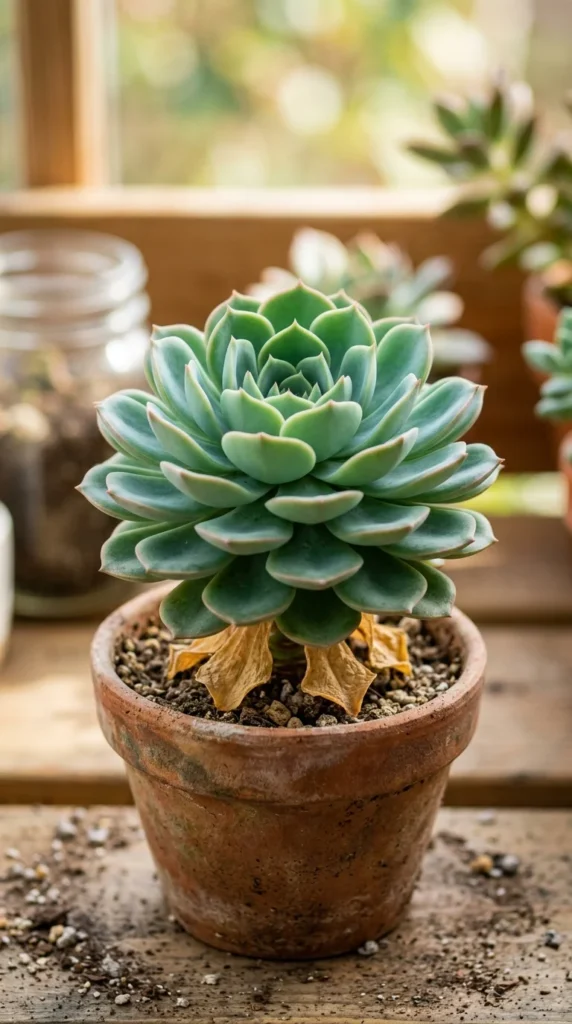
Before you panic, check where the yellowing is occurring. If it is only the very bottom leaves—the ones closest to the soil—and the rest of the plant looks healthy, you are likely witnessing the natural life cycle of the plant. Succulents shed their oldest leaves to redirect energy to new growth at the top.
The Fix: There is no fix needed for natural aging. Once the yellow leaf has completely dried up and become crispy, you can gently tug it off the stem and discard it. This keeps the plant looking tidy and prevents pests from hiding in the dead foliage.
10. Pests
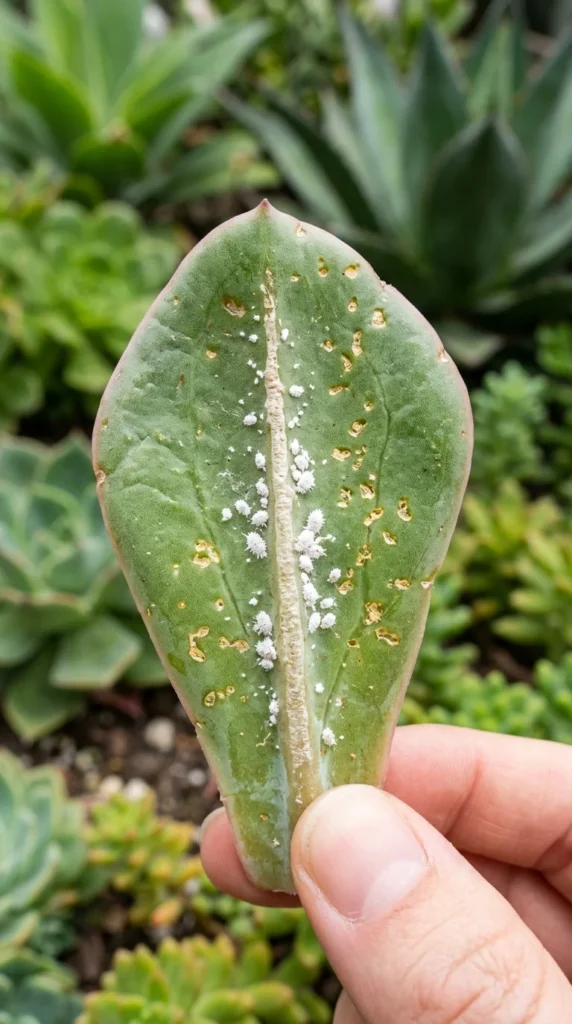
Pests like mealybugs, spider mites, and aphids feed on the sap of succulent leaves. As they drain the plant’s fluids, the affected areas turn yellow or develop yellow stippling (tiny dots). Mealybugs are particularly common and look like tiny bits of white cotton hidden in the crevices of the leaves.
The Fix: Isolate the infected plant immediately to prevent the pests from spreading. For mealybugs, use a cotton swab dipped in 70% isopropyl alcohol to dab the insects directly. For larger infestations, spray the plant with neem oil or insecticidal soap, making sure to reach the undersides of the leaves.
11. Disease
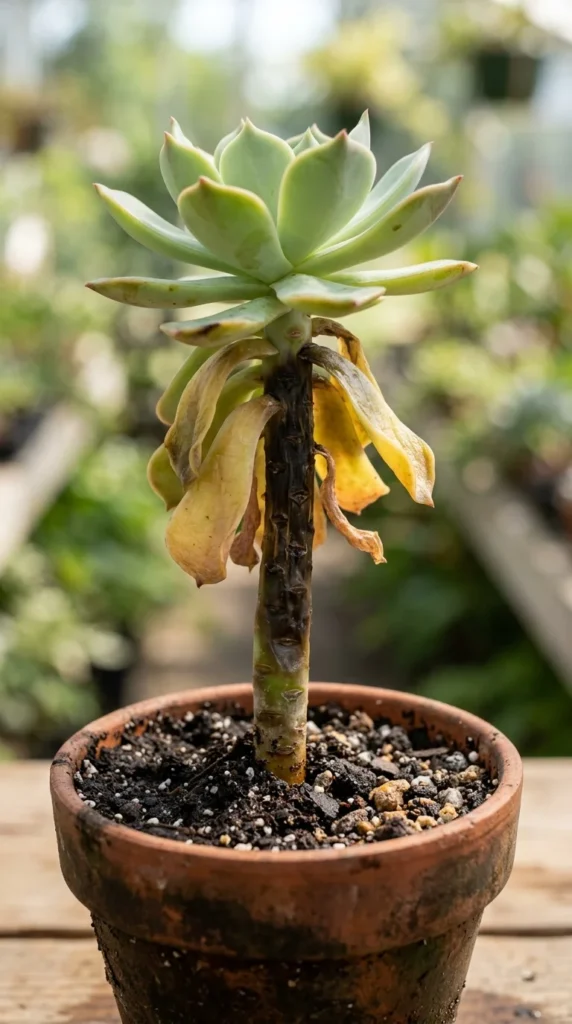
Fungal and bacterial infections often follow overwatering or pest damage. If you see yellowing accompanied by black spots, fuzzy mold, or a foul smell, your succulent may have a disease. Pathogens can spread quickly through the plant’s vascular system, causing rapid yellowing and collapse.
The Fix: Cut away any infected parts using sterilized shears. If the rot is at the base, try to take “leaf pulls” or “head cuttings” from the healthy top portion of the plant to propagate new, clean plants. Dispose of the infected soil and sanitize the pot before reusing it.
12. Shock
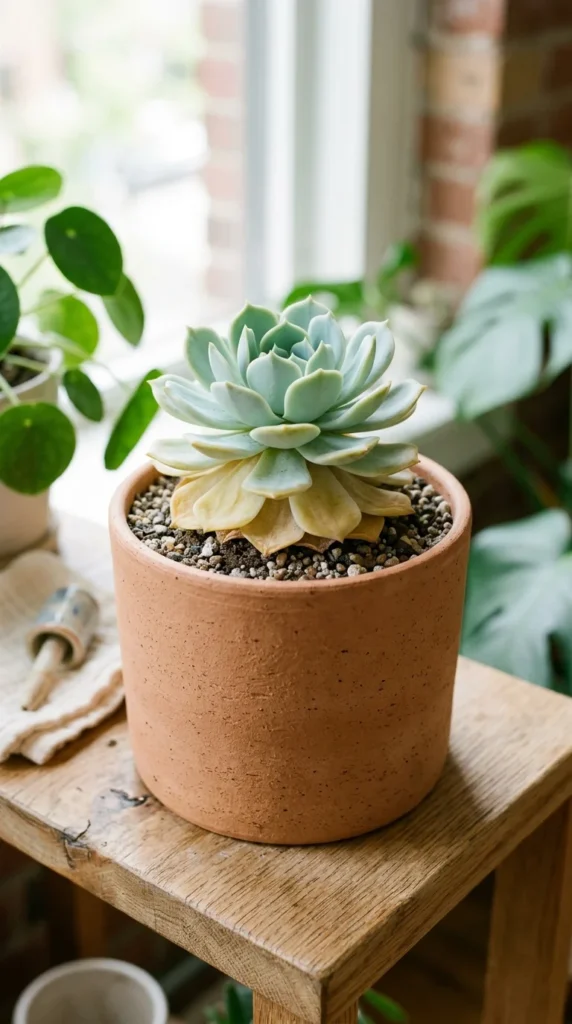
Succulents are creatures of habit. Moving a plant from a greenhouse to a dark apartment, or repotting it into a completely different soil medium, can cause “transplant shock.” The plant reacts to the stress by dropping its older leaves or turning them yellow as it tries to settle into its new home.
The Fix: Give the plant time to adjust. Ensure its basic needs (light and temperature) are met, but avoid fertilizing or overwatering during this period. Usually, the plant will stabilize within two to three weeks and resume normal growth.
13. Water Quality
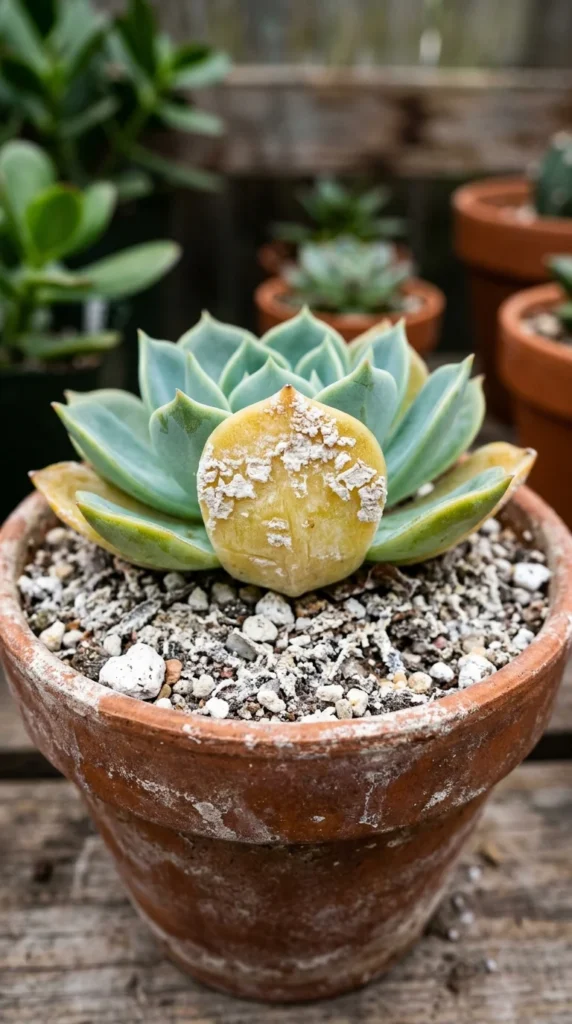
If you live in an area with “hard water,” your tap water may contain high levels of minerals like calcium and magnesium. Over time, these minerals can build up in the soil and on the leaves, interfering with the plant’s ability to absorb water and nutrients. This can lead to a dull, yellowed appearance and white crusty spots on the foliage.
The Fix: If possible, use rainwater or distilled water for your succulents. If tap water is your only option, let it sit out overnight in an open container to allow some of the chemicals (like chlorine) to dissipate, and flush the soil with distilled water once every few months to wash away mineral salts.
14. Chemicals
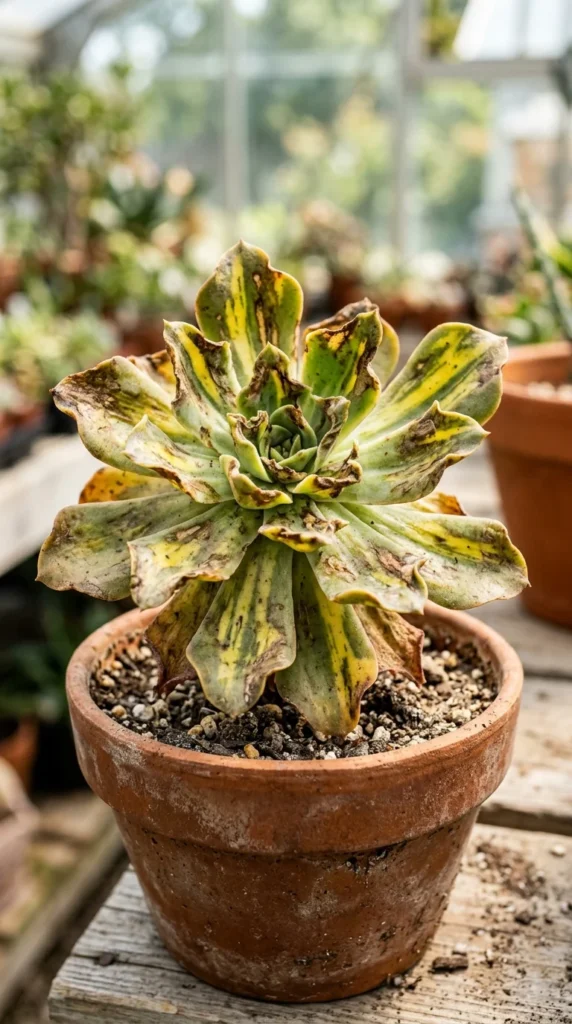
Succulents have a protective waxy coating called “epicuticular wax” or “farina.” If you use harsh household cleaners, oil-based sprays in direct sun, or high-concentration fertilizers, you can strip this wax and chemically burn the leaves. This results in yellowing, spotting, or a “melted” appearance.
The Fix: Only use products specifically designed for plants. When applying treatments like neem oil, do so in the evening when the sun is down to avoid “frying” the leaves. Always follow the dilution instructions on fertilizer and pesticide labels strictly to avoid chemical toxicity.