
Succulents are often touted as the “un-killable” gems of the botanical world, yet they communicate their distress through a specific color palette. When a succulent’s leaves begin to transition from vibrant greens and purples to sickly yellows, it is a clarion call for intervention. Identifying the specific cause is the first step toward restoration.
1. Overwatering
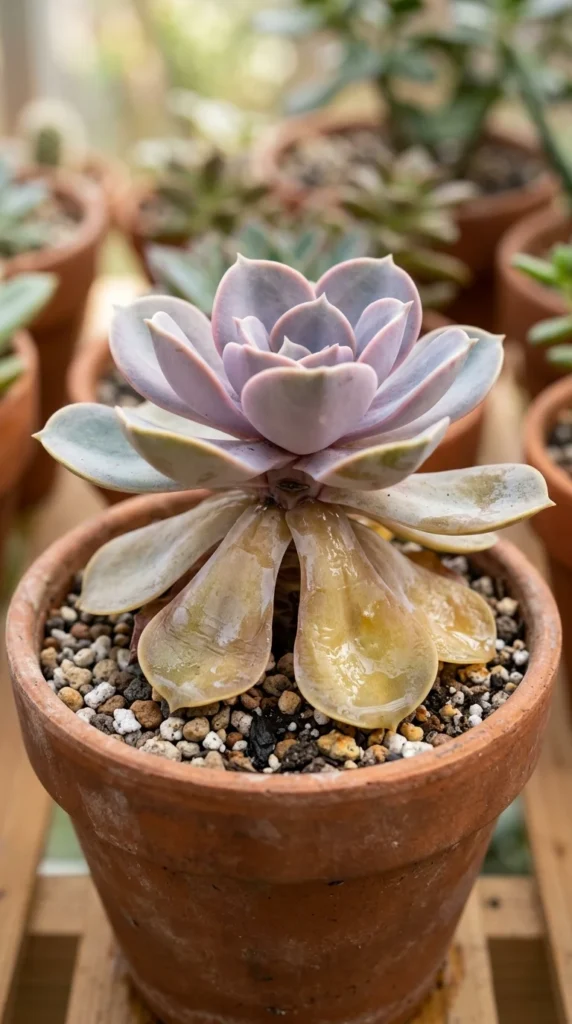
Overwatering is the most frequent culprit behind yellowing leaves. When a succulent receives more water than it can process, its cells become engorged and eventually rupture. This leads to leaves that look bloated, translucent, and soft to the touch.
The Solution: Immediately stop watering. Remove the plant from its pot and inspect the roots. If they are white and firm, let the root ball dry out completely before repotting in dry, well-draining soil. Establish a “soak and dry” routine where you only water when the soil is bone-dry.
2. Drainage
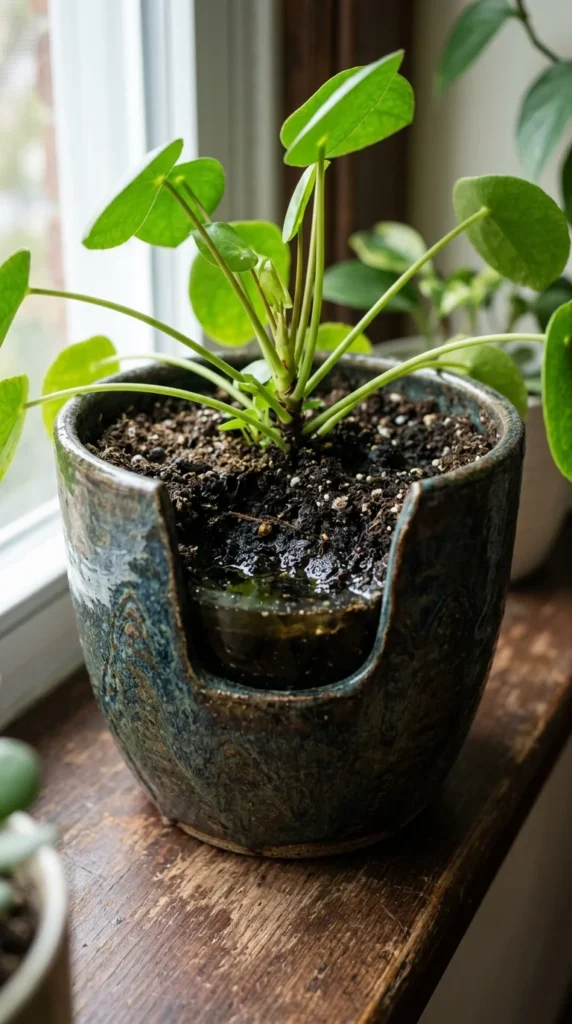
Even if you water infrequently, a pot without drainage holes traps moisture at the bottom. This creates a “swamp effect” where the bottom roots sit in stagnant water, leading to anaerobic conditions and yellowing foliage starting from the base.
The Solution: Always use containers with at least one drainage hole. If you must use a decorative “cachepot” without holes, keep the succulent in a plastic nursery liner inside the decorative pot and remove it when watering to allow excess liquid to drain away.
3. Underwatering
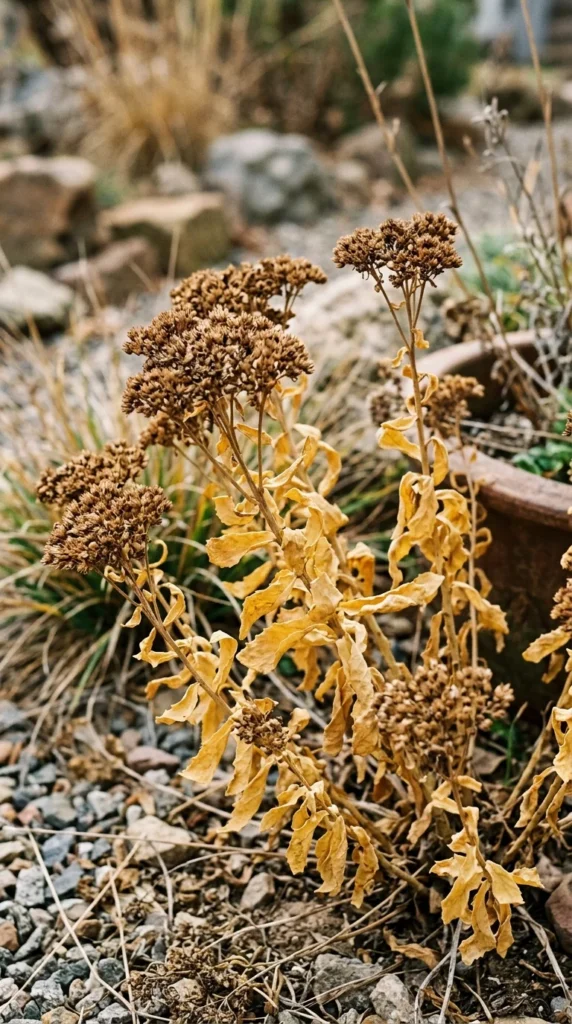
While succulents are drought-tolerant, they are not immortal. If left dry for too long, the plant will begin to consume the water stored in its lower leaves to survive. These leaves will turn yellow, but unlike overwatered leaves, they will feel thin, crispy, and wrinkled.
The Solution: Give the plant a deep, thorough watering until liquid runs out of the drainage holes. The leaves should plump up within a day or two. Adjust your schedule to water slightly more frequently during the active growing season.
4. Soil Mix
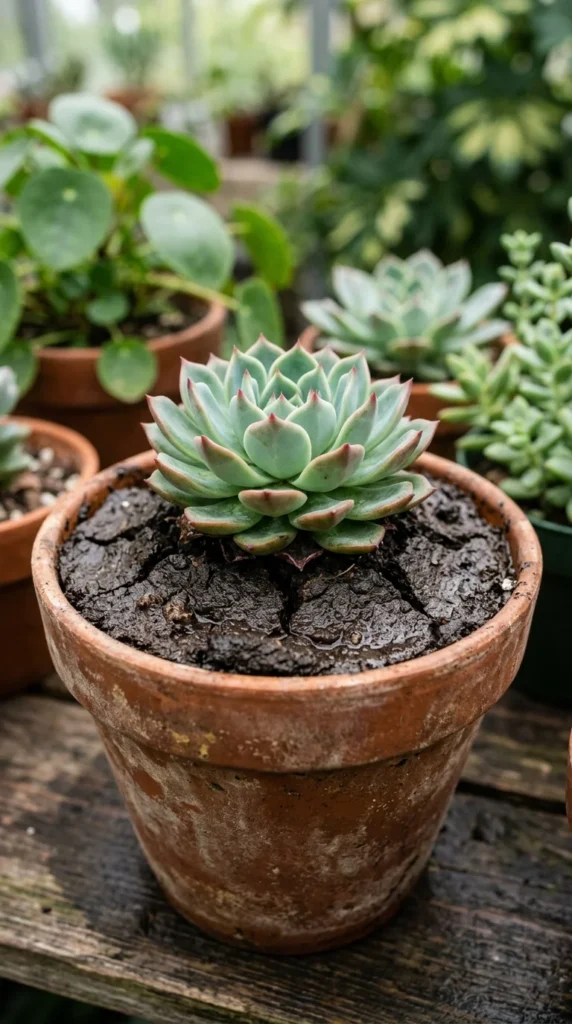
Standard potting soil is designed to retain moisture, which is the opposite of what a succulent needs. Heavy soil prevents oxygen from reaching the roots and holds onto water for too long, causing the plant to signal distress through yellowing.
The Solution: Repot your plant in a specialized cactus and succulent mix. You can create your own by mixing 50% regular potting soil with 50% inorganic grit like perlite, pumice, or coarse sand to ensure rapid drainage.
5. Aging
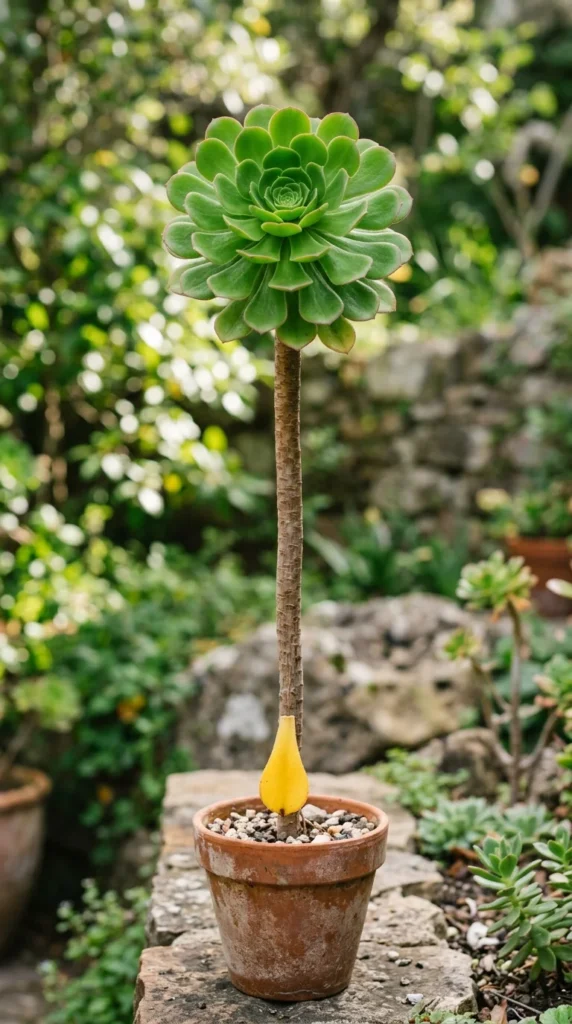
Sometimes, yellow leaves are not a sign of illness but a natural part of the plant’s lifecycle. Succulents frequently shed their oldest, lowest leaves to redirect energy toward new growth at the top or center.
The Solution: If only the bottom-most leaves are turning yellow and the rest of the plant looks healthy, do nothing. Once the leaf is completely dry and crispy, gently tug it off to keep the plant tidy and prevent pests from hiding in the debris.
6. Light Scarcity
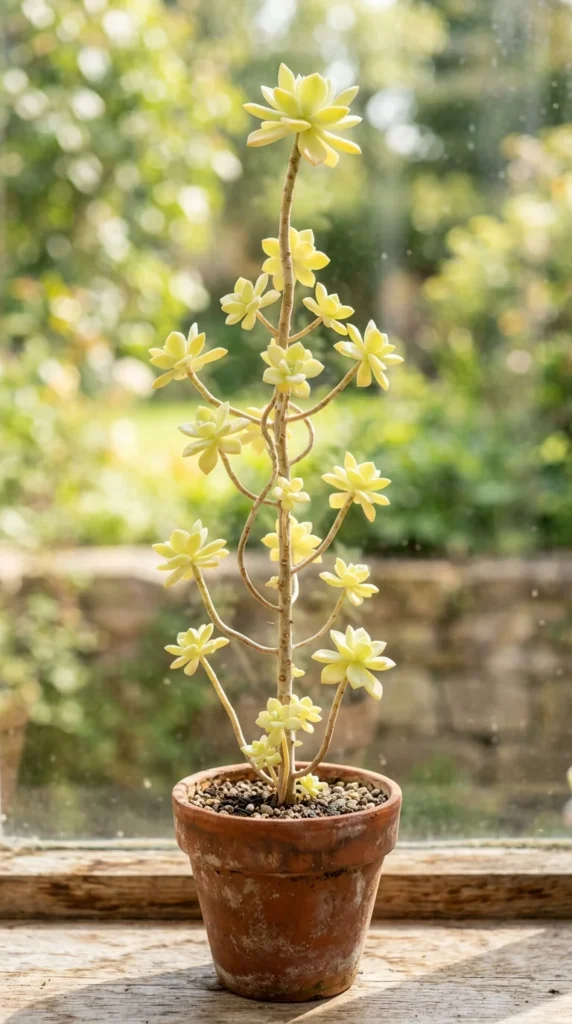
Succulents require significant sunlight to produce chlorophyll. In low-light environments, they undergo “etiolation,” stretching toward the light source. During this process, the leaves often lose their deep green pigment and turn a pale, sickly yellow.
The Solution: Gradually move your succulent to a brighter location, such as a south-facing window. If natural light is unavailable, utilize a full-spectrum LED grow light for 12–14 hours a day to restore health.
7. Sun Scorch
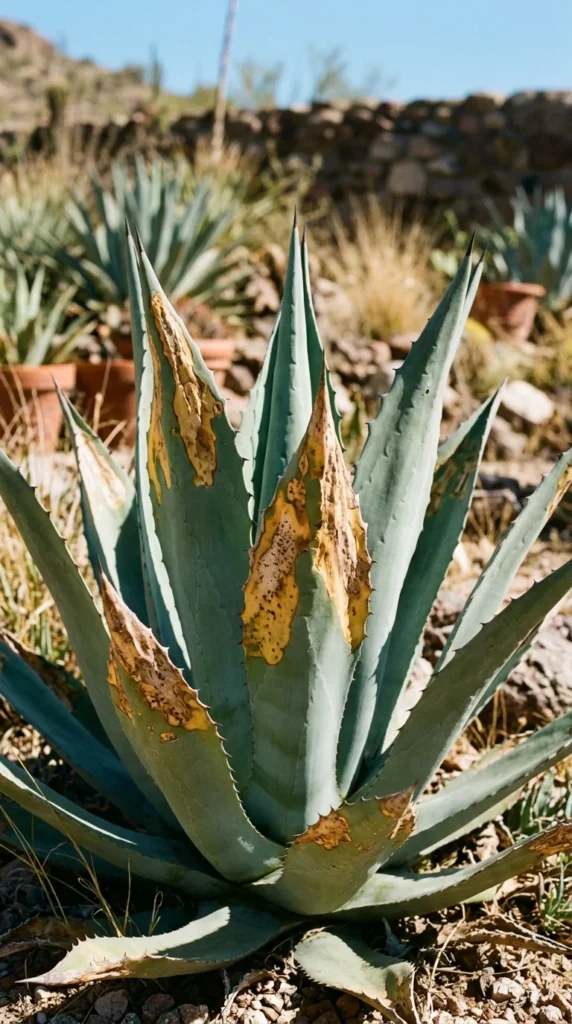
While they love light, a sudden move from a dark corner to intense, direct afternoon sun can burn the leaves. Sunburn often manifests as yellowish-white patches that eventually turn brown and calloused.
The Solution: Acclimatize plants slowly to higher light levels over two weeks. If the leaves are already yellow from heat/sun stress, move the plant to a spot with bright, indirect light or use a sheer curtain to filter the rays.
8. Mealybugs
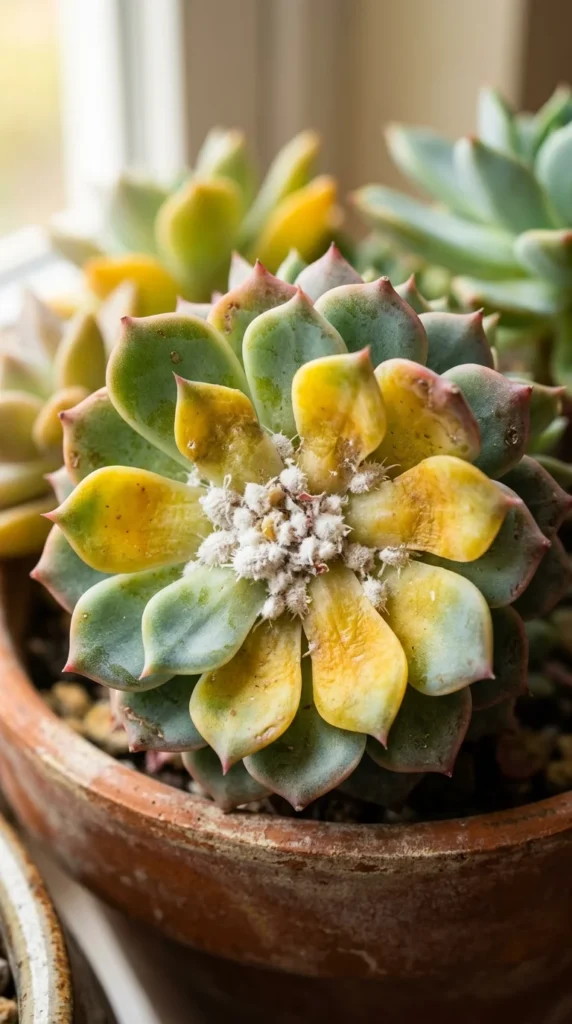
These tiny, sap-sucking insects hide in the nooks and crannies of the plant. As they feed on the plant’s juices, the affected areas turn yellow and the plant loses vigor.
The Solution: Dip a cotton swab in 70% isopropyl alcohol and dab it directly onto the white pests. For larger infestations, spray the entire plant with a mixture of water and neem oil, ensuring you reach the undersides of the leaves.
9. Aphids
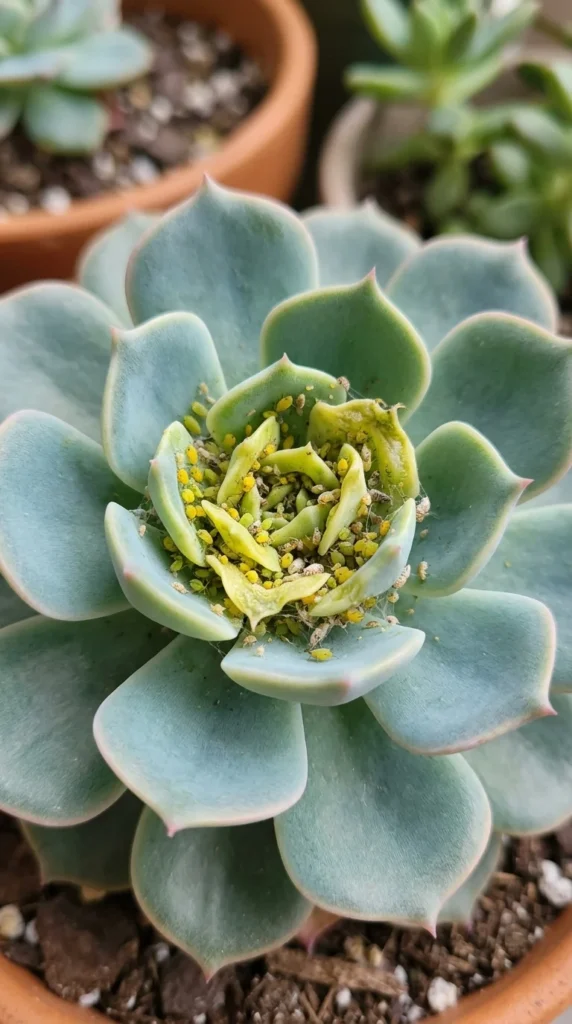
Aphids gravitate toward the soft, new growth of succulents. By draining the nutrients from the plant’s “heart,” they cause the central leaves to turn yellow and eventually drop.
The Solution: Rinse the aphids off with a strong stream of water. If they persist, apply insecticidal soap. Encourage natural predators like ladybugs if the succulents are kept outdoors.
10. Root Rot
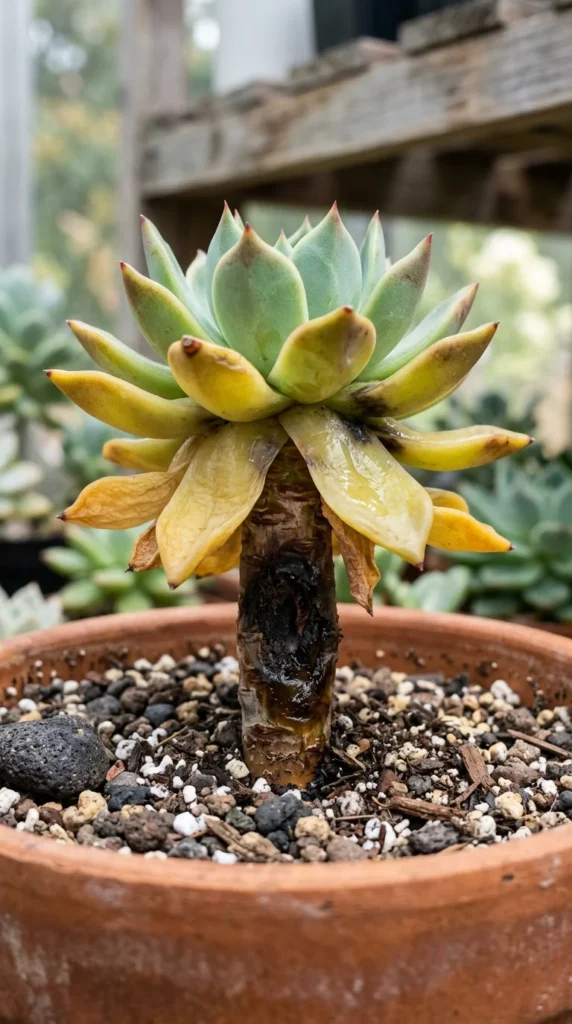
Root rot is the advanced stage of overwatering. Fungal pathogens attack the weakened root system, causing it to decay. The plant can no longer take up nutrients, resulting in a rapid yellowing of the entire specimen.
The Solution: Unpot the plant and cut away any black, slimy roots with sterilized shears. Let the plant air-dry for several days until the wounds callus over, then replant in fresh, sterile soil. If the rot has reached the stem, you may need to take a cutting from the healthy top part to propagate.
11. Cold Temperatures
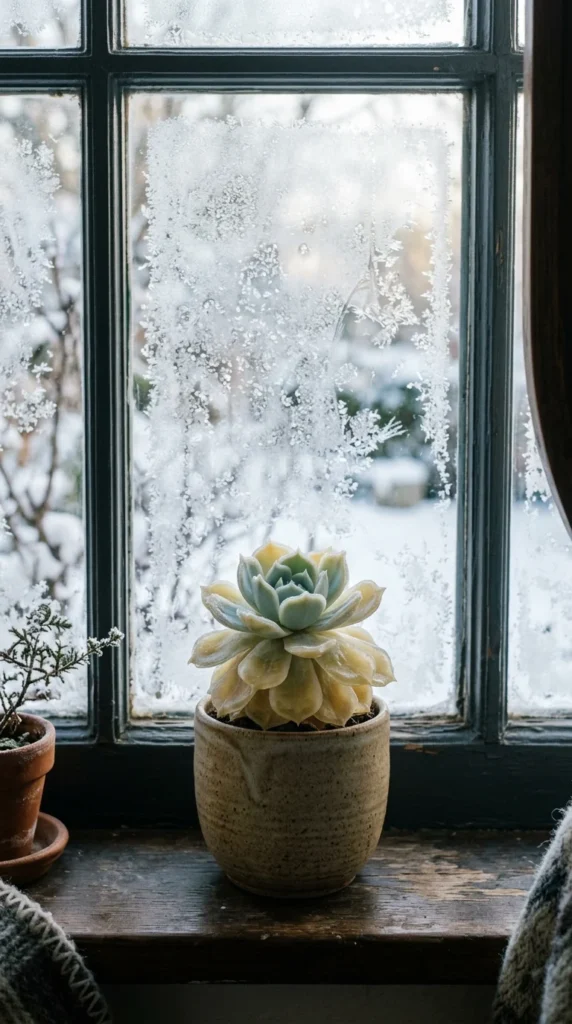
Most succulents are subtropical or tropical and cannot tolerate freezing temperatures. Cold shock causes the water inside the cells to freeze and expand, leading to yellow, mushy tissue once the plant thaws.
The Solution: Keep succulents in environments above 50°F (10°C). During winter, move plants away from drafty windows or unheated garages. If a plant is frost-damaged, wait for the damage to dry out before pruning.
12. Excessive Heat
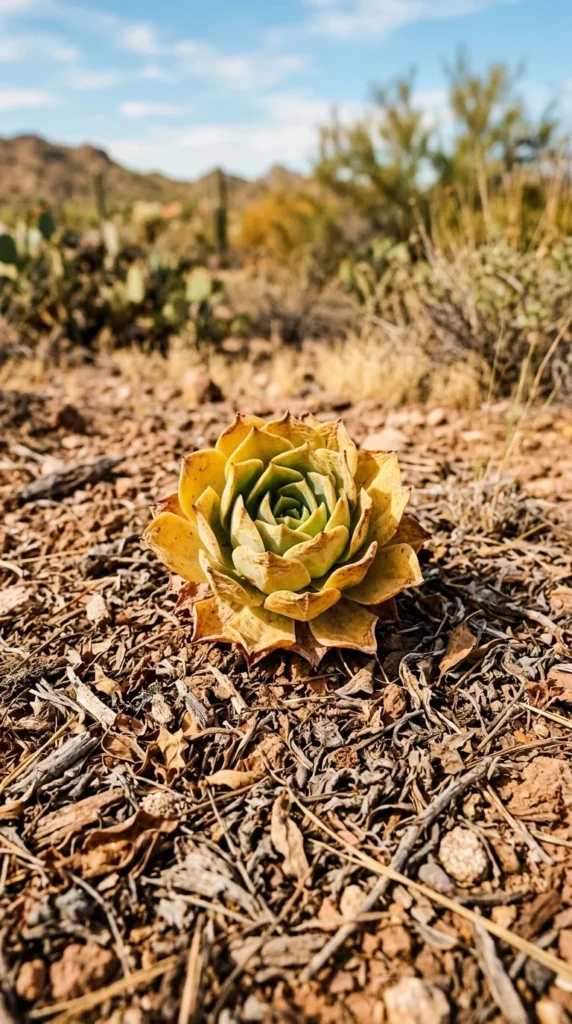
While succulents are heat-hardy, extreme heat waves (above 90°F) can cause them to go into a protective “shut down” mode. The leaves may turn yellow as the plant struggles to regulate its temperature and minimize moisture loss.
The Solution: Provide shade during the hottest part of the day (noon to 4 PM). Increase airflow around the plant and ensure it has enough hydration to survive the heat spike, but avoid watering in the heat of the day to prevent “steaming” the roots.
13. Nitrogen Deficiency
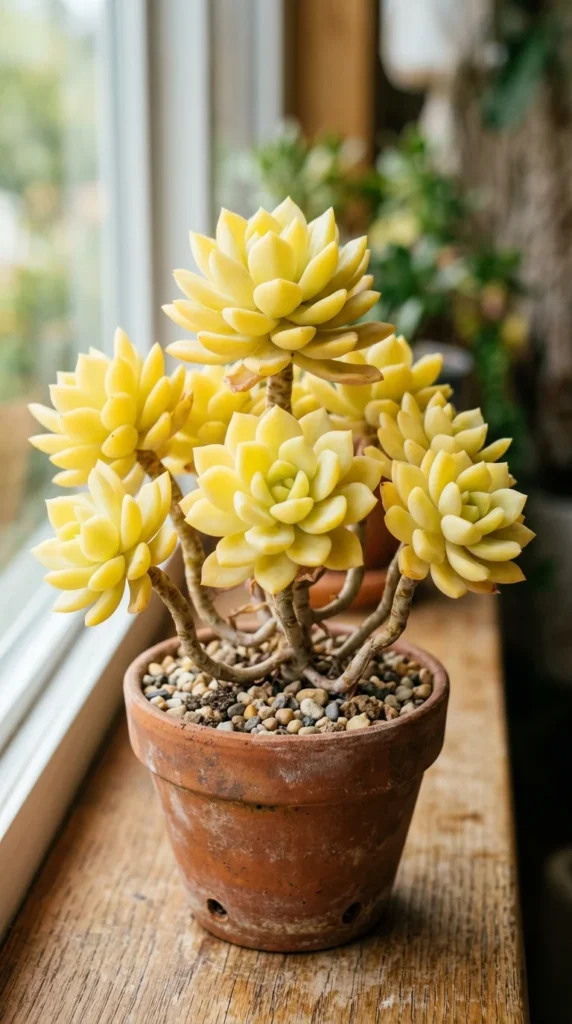
Succulents don’t need much food, but they do need some. Nitrogen is essential for chlorophyll production. If the soil is completely depleted, the plant will turn a uniform pale yellow.
The Solution: Apply a balanced, water-soluble fertilizer diluted to half or quarter strength during the growing season (spring and summer). Avoid fertilizing in winter when the plant is dormant.
14. Fertilizer Salt Buildup
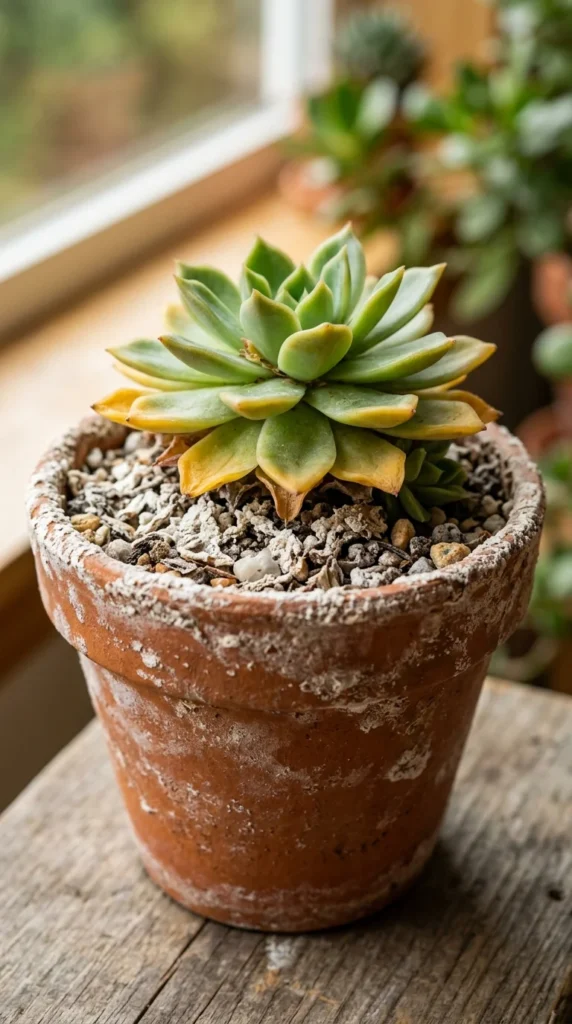
If you fertilize too often or use heavy-handed doses, salts accumulate in the soil. These salts draw moisture away from the roots and “burn” the plant, leading to yellowing and brown tips.
The Solution: Flush the soil with a large amount of distilled water to wash away the salts. In the future, fertilize less frequently and always ensure the soil is moist before applying fertilizer.
15. Hard Water
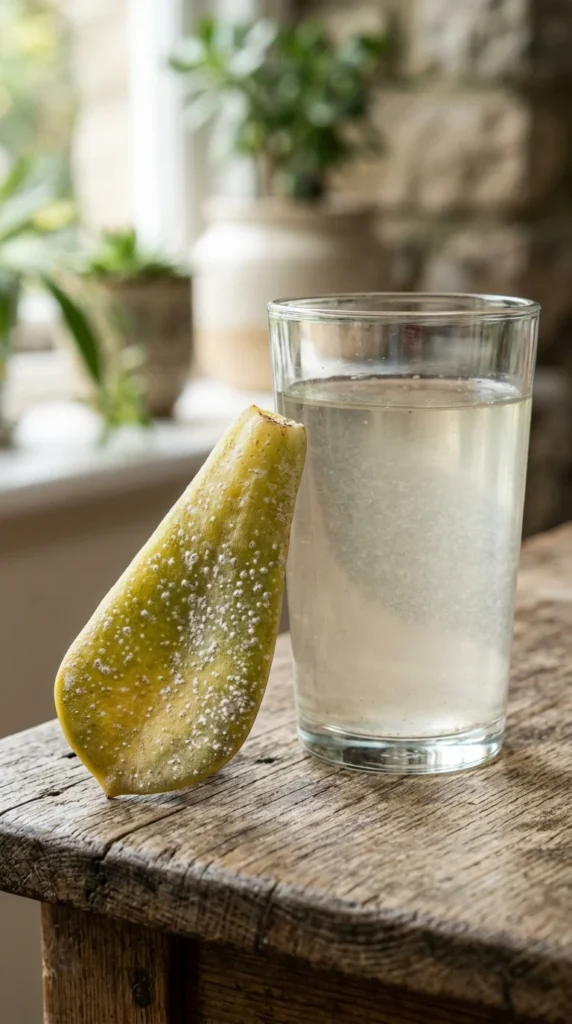
High mineral content (calcium and magnesium) in tap water can build up in succulent tissues. Over time, this can interfere with nutrient uptake, leading to chlorosis (yellowing of the leaves).
The Solution: Use rainwater or filtered water for your succulents. If using tap water, let it sit out for 24 hours to allow some chemicals to dissipate, though this won’t remove minerals. Periodically repotting with fresh soil also helps.
16. High Humidity
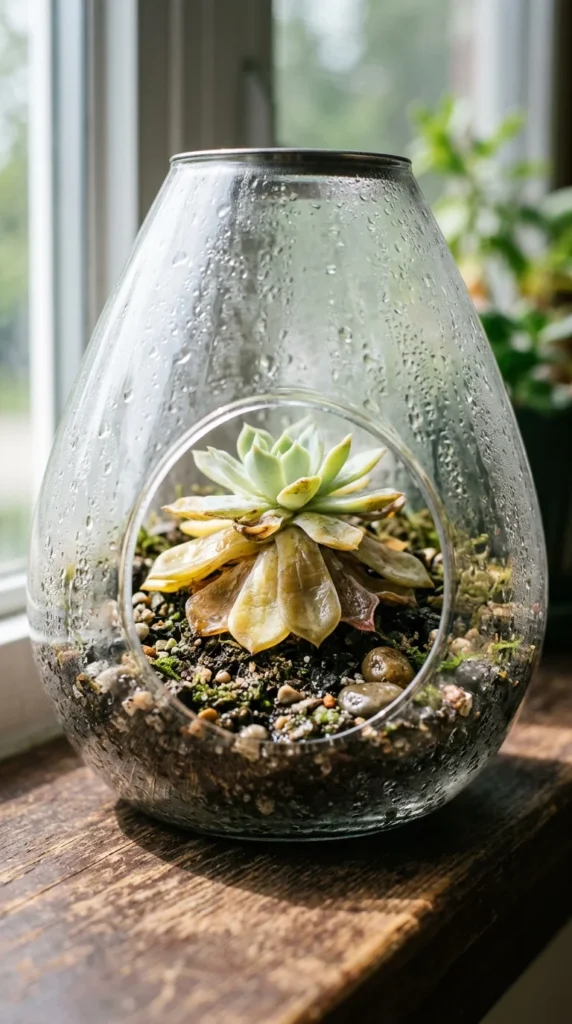
Succulents thrive in arid conditions. High humidity prevents the soil from drying out and can lead to fungal growth on the leaves, manifesting as yellow spots or a general yellowing of the foliage.
The Solution: Remove succulents from high-humidity areas like bathrooms or closed terrariums. Use a small fan to increase air circulation and consider using a dehumidifier if you live in a very humid climate.
17. Pot Size
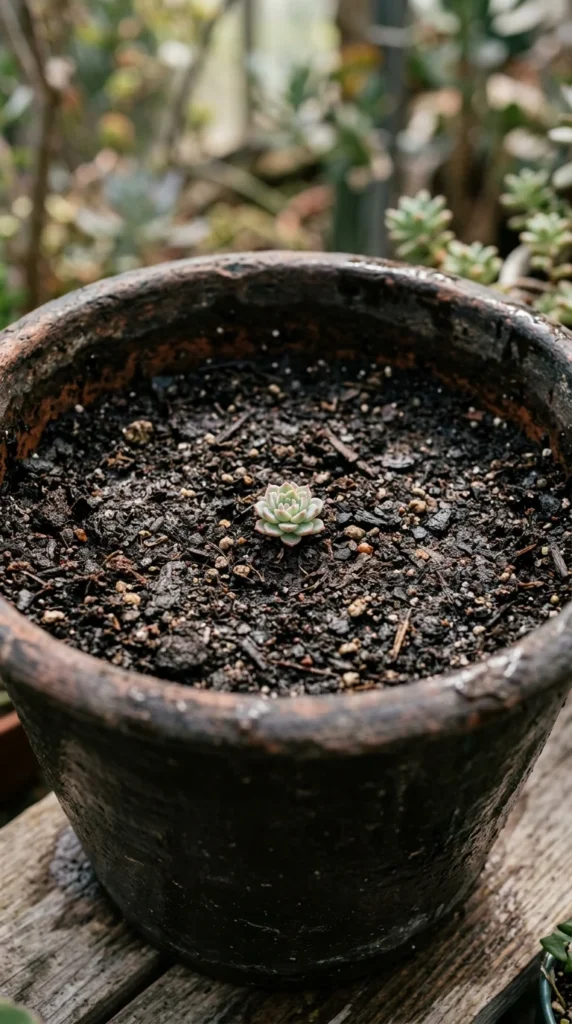
A pot that is too large for the succulent holds a volume of water that the small root system cannot possibly absorb. This keeps the soil wet for weeks, leading to the same yellowing symptoms as overwatering.
The Solution: Choose a pot that is only about 1–2 inches wider than the diameter of the plant. This ensures the soil dries out in a timeframe that is healthy for the succulent.
18. Airflow
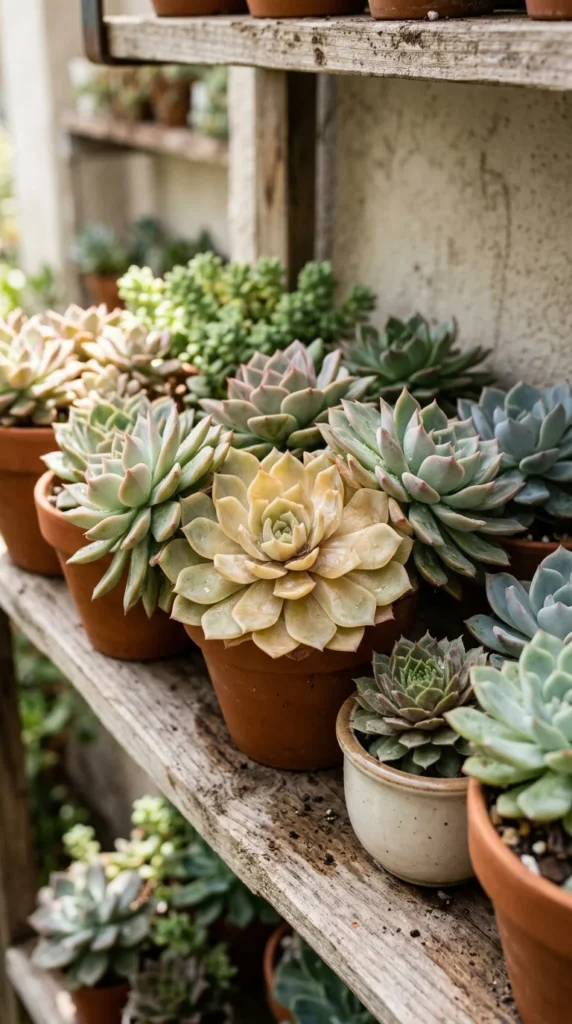
When plants are packed too closely, air cannot circulate. This creates micro-climates of moisture between leaves, which encourages rot and yellowing.
The Solution: Space your plants out so that their leaves are not touching. This allows the soil and the plant’s surface to dry properly after watering.
19. Acclimatization
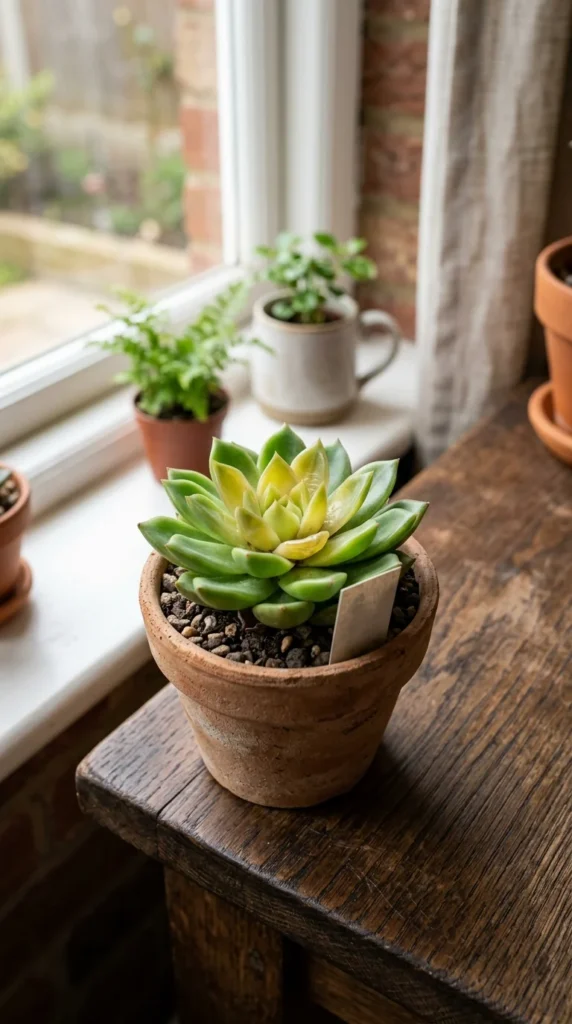
Moving a plant from a greenhouse to a home environment is stressful. The change in humidity, light, and temperature can cause the plant to drop some leaves or turn yellow as it adjusts.
The Solution: Be patient. Give the plant consistent care in its new spot and avoid fertilizing or repotting for at least two weeks while it settles in.
20. Scale Insects
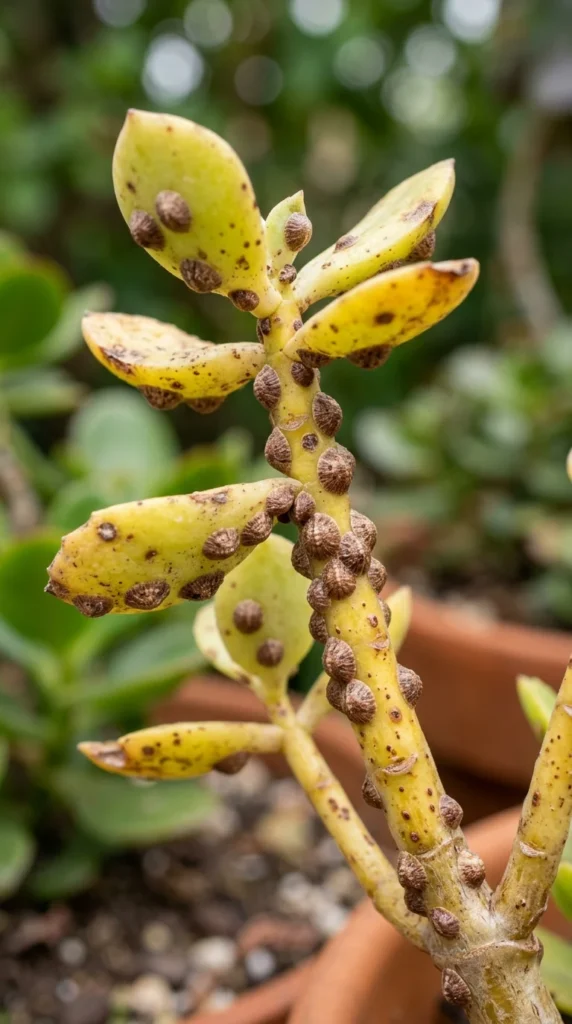
Scale insects look like small bumps rather than bugs. They latch onto the plant and suck the sap, causing yellowing and a sticky residue known as “honeydew.”
The Solution: Scrape them off gently with a fingernail or a soft toothbrush dipped in soapy water. For heavy cases, use a systemic insecticide that the plant absorbs through its roots.
21. Spider Mites
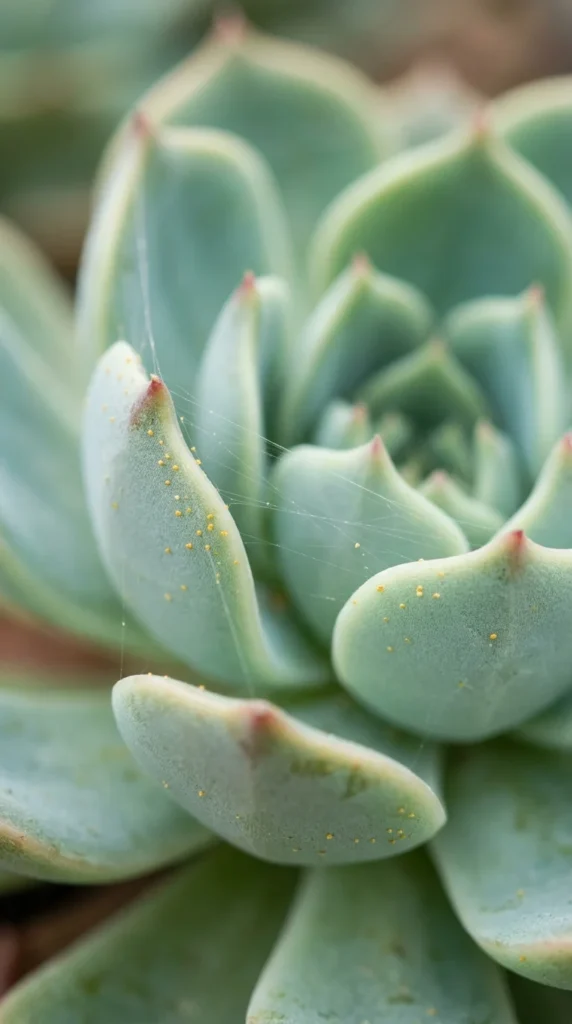
These microscopic pests thrive in dry, dusty conditions. Their feeding creates tiny yellow dots on the leaves, which can eventually merge until the whole leaf is yellow and falls off.
The Solution: Increase the humidity slightly around the plant and wipe the leaves with a damp cloth. Spray with a mixture of water and rosemary oil or a dedicated miticide.
22. Soil Depletion
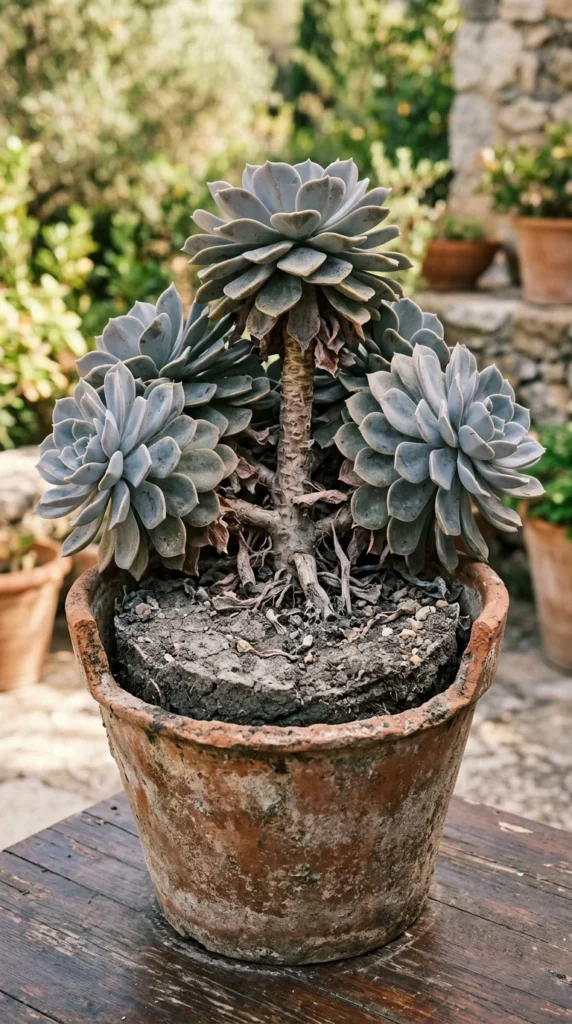
Over several years, a succulent will use up all the organic matter in its potting mix. Without these trace minerals, the plant cannot maintain its green color.
The Solution: Repot the succulent every 2 years. Even if it hasn’t outgrown the pot, fresh soil provides a “recharge” of nutrients and improves soil structure for better aeration.
23. Pot Material
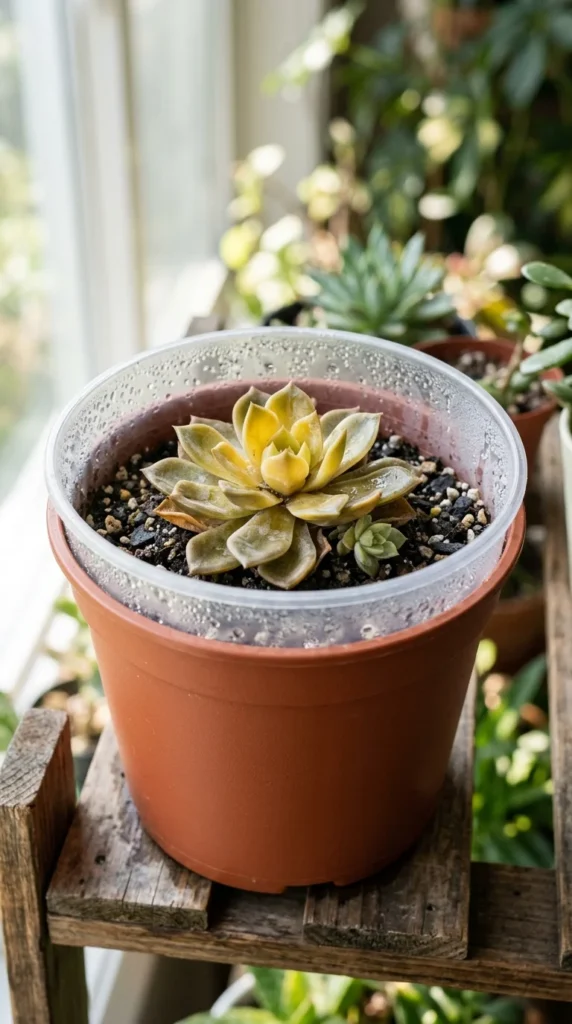
Plastic and glazed ceramic pots retain moisture much longer than porous materials. If you are a “heavy-handed” waterer, these materials can contribute to yellowing.
The Solution: Switch to terracotta or unglazed clay pots. These materials are “breathable” and allow water to evaporate through the walls of the pot, helping the soil dry faster.
24. Transplant Shock
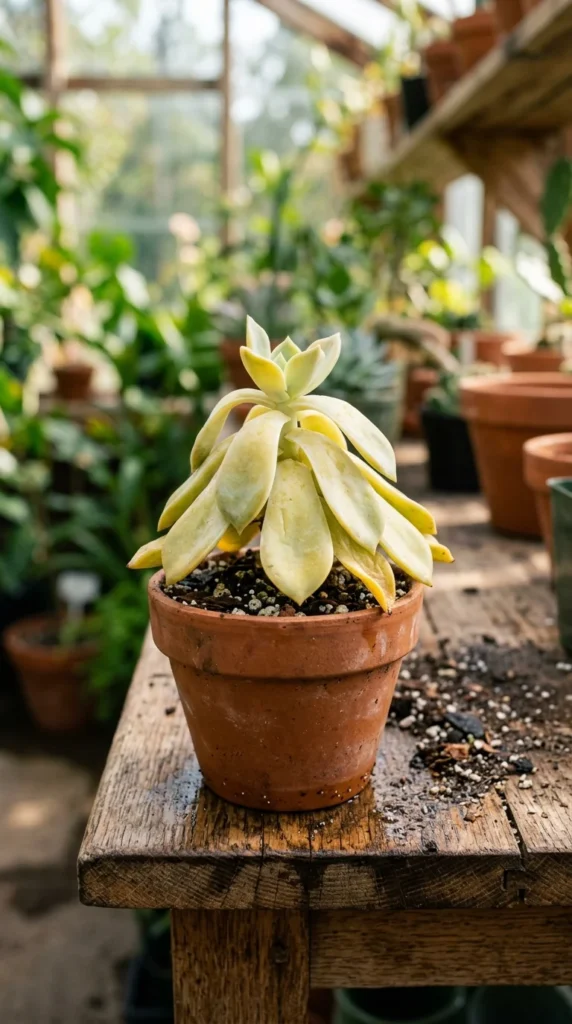
The process of repotting can damage delicate “feeder” roots. If the plant is watered immediately after repotting, these damaged roots can rot, causing yellowing.
The Solution: When repotting, wait 3 to 7 days before watering. This allows any roots that were snapped or damaged during the move to callus over and heal before they are exposed to moisture.
25. Physical Bruising
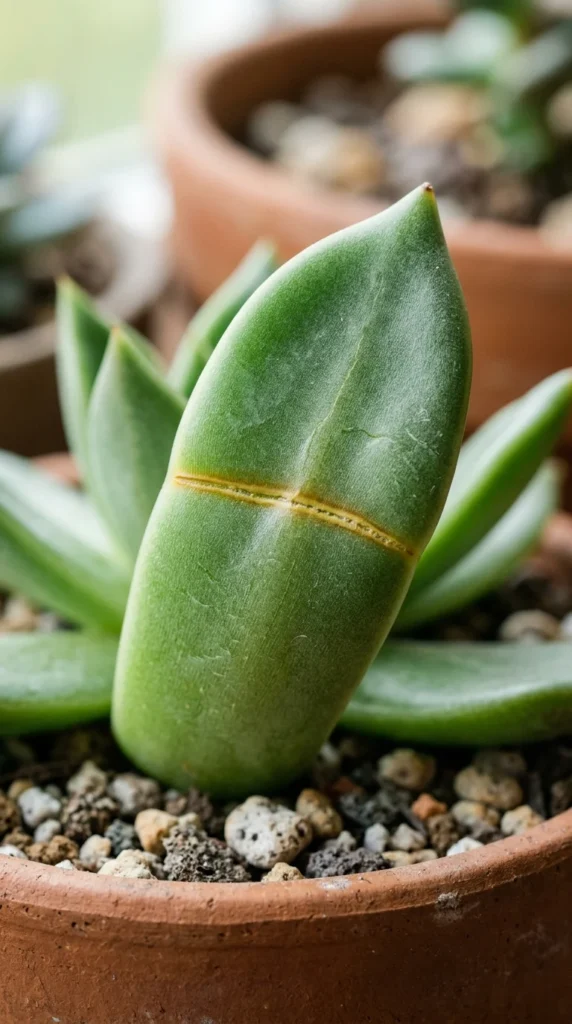
If a leaf is crushed or bent, the vascular system in that specific area is destroyed. The leaf will often turn yellow from the point of injury to the tip.
The Solution: Avoid placing succulents in high-traffic areas where pets or people might bump into them. If a leaf is badly damaged, it is best to remove it to prevent it from attracting pests.
26. Water pH
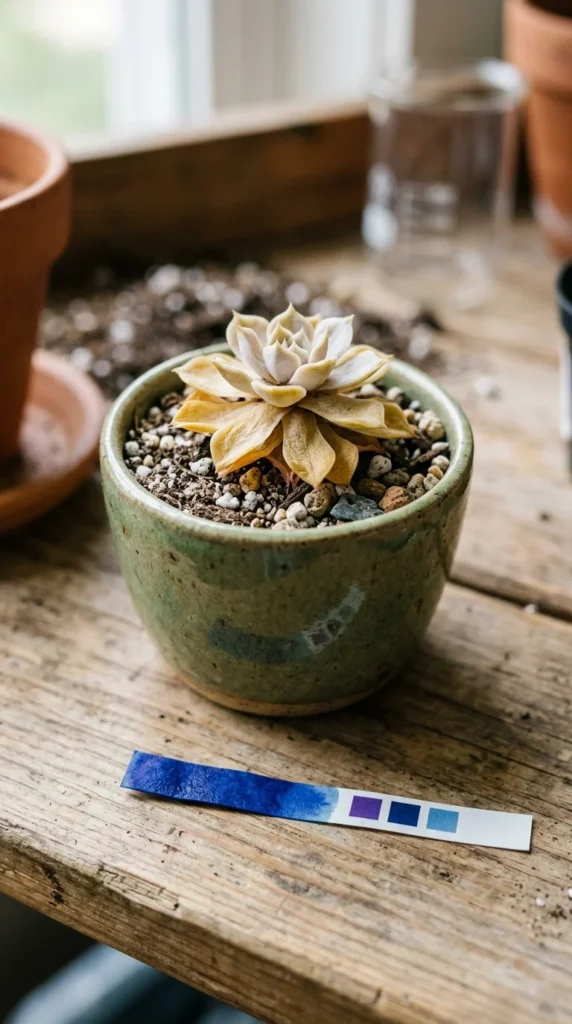
Succulents generally prefer slightly acidic water (pH 5.5 to 6.5). If your water is highly alkaline, it can lock out certain nutrients like iron, causing the leaves to turn yellow while the veins stay green.
The Solution: Test your water. If it is too alkaline, you can add a few drops of white vinegar to your watering can to lower the pH, or use collected rainwater which is naturally slightly acidic.
27. Dormancy
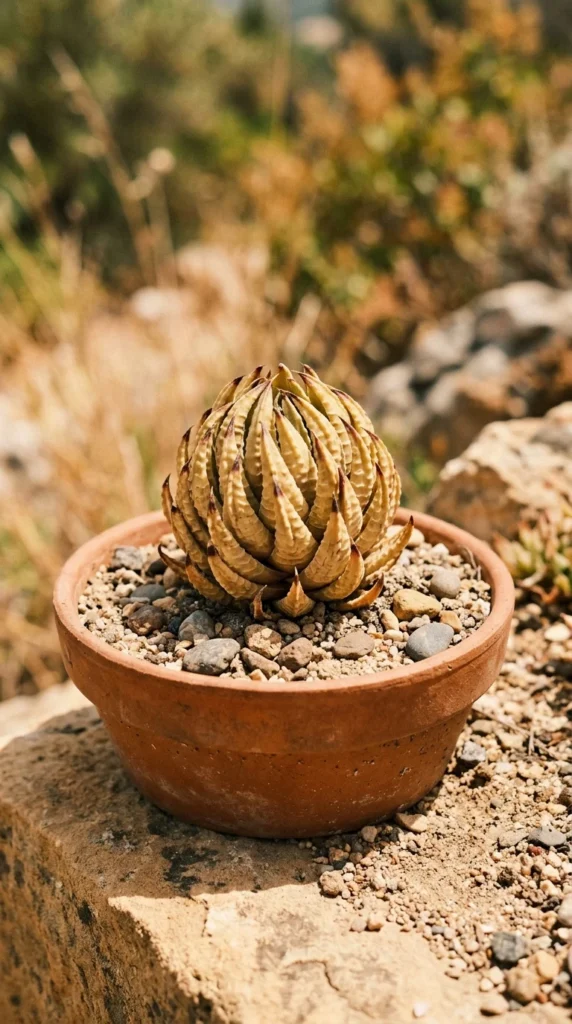
Some succulents go dormant in the summer (like Haworthia and Aeonium), while others go dormant in the winter. During dormancy, the plant stops growing and may change color to a pale yellow or brown.
The Solution: Research your specific succulent’s dormancy period. During this time, significantly reduce watering and stop fertilizing. The plant is not dying; it is simply resting.
28. Ethylene Gas
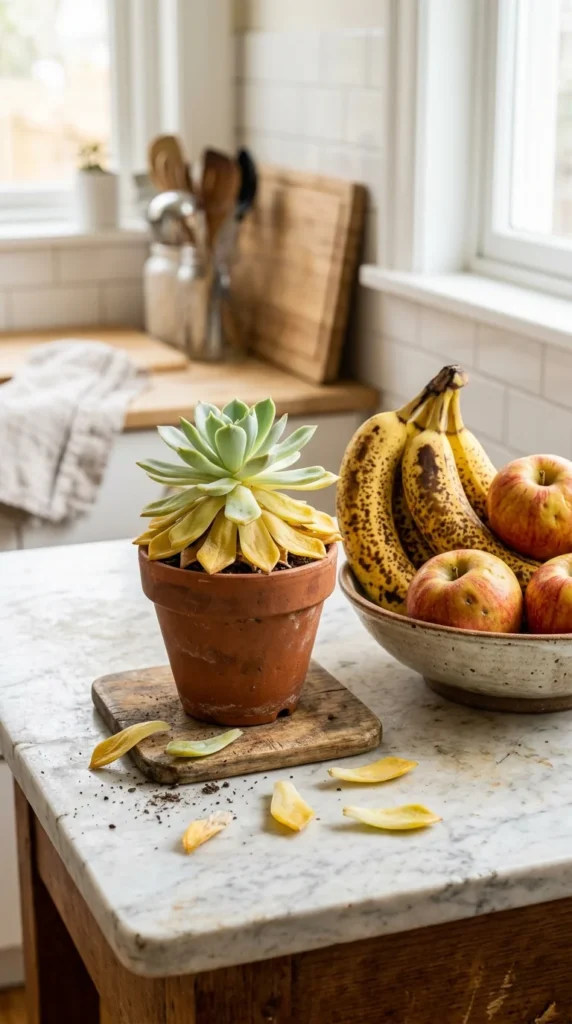
Ethylene is a gas produced by ripening fruit. If succulents are kept in a kitchen near fruit bowls, the gas can cause “senescence,” leading to rapid yellowing and leaf drop.
The Solution: Move succulents away from the kitchen or areas where fruit is stored. Ensure good ventilation to disperse any lingering gases that might affect plant health.