
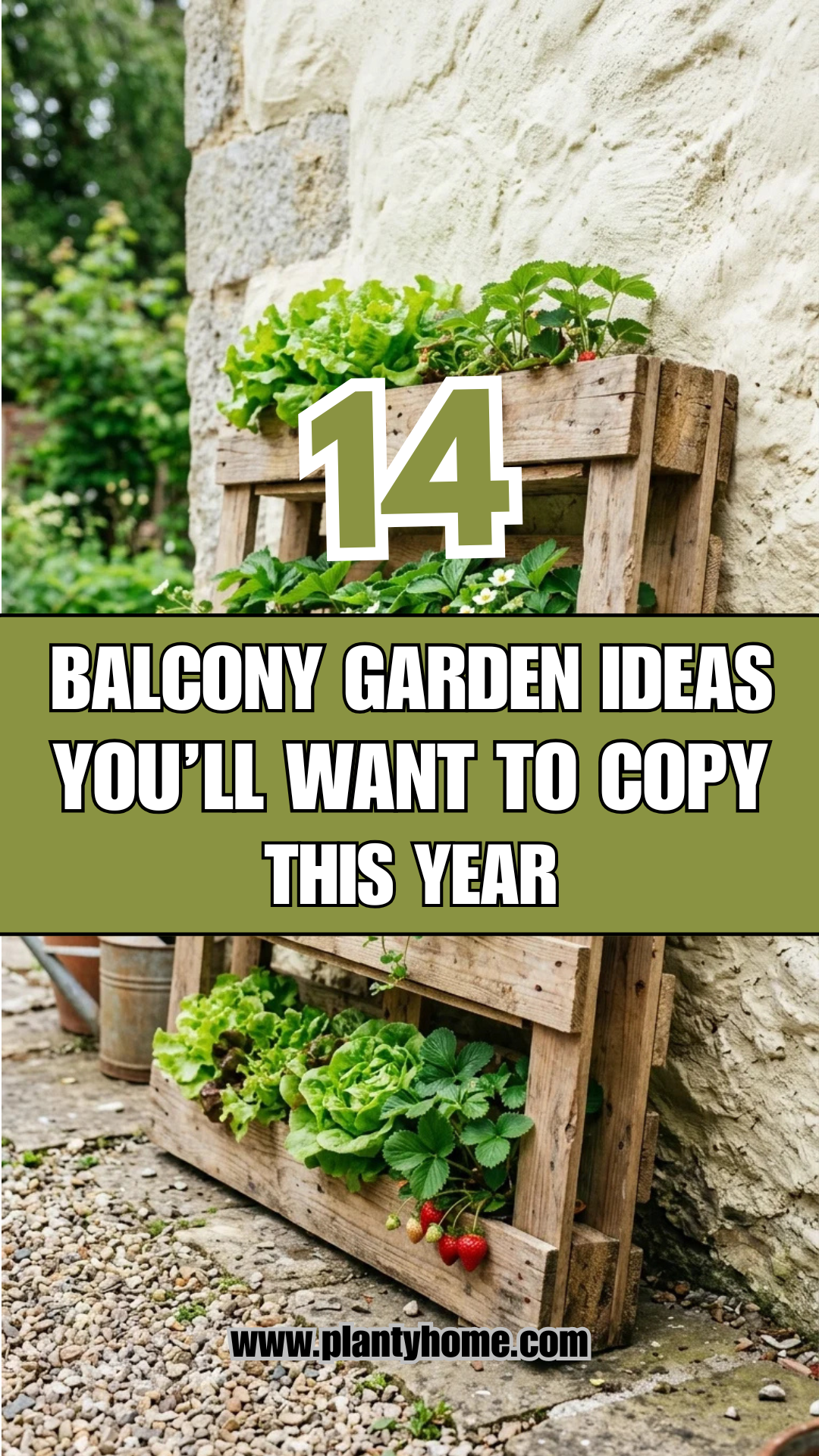
Transforming a small outdoor space into a personal sanctuary is one of the most rewarding home improvement projects you can undertake. Whether you have a tiny Juliet balcony or a spacious terrace, the right combination of greenery, furniture, and lighting can turn a concrete slab into a thriving ecosystem. As urban living continues to rise, the balcony garden has evolved from a simple hobby into a sophisticated extension of the home. Here are 14 innovative and stylish balcony garden ideas to inspire your transformation this year.
1. Vertical Trellises
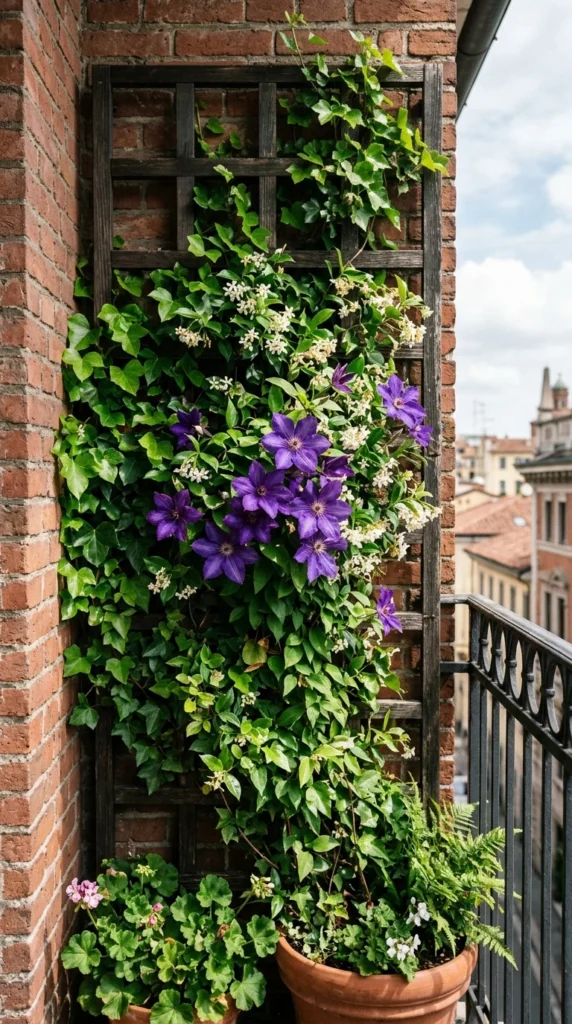
When floor space is at a premium, the only way to go is up. Vertical trellises are the backbone of a successful small-scale garden. By utilizing your walls, you create a “living wallpaper” that provides both aesthetic beauty and natural insulation. Climbing plants such as jasmine, honeysuckle, or even runner beans thrive in these structures.
Beyond the plants themselves, trellises add architectural interest to a flat wall. You can choose from classic wooden lattices, modern metal grids, or even minimalist wire systems. To make the most of this setup, choose a perennial climber that stays green year-round, ensuring your balcony doesn’t look bare during the winter months.
2. Herb Towers
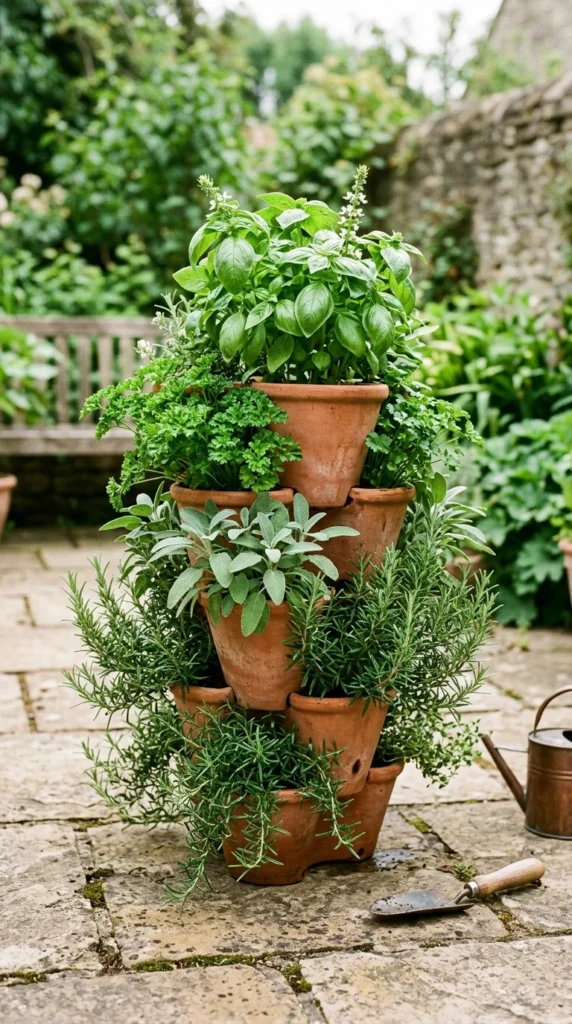
A herb tower is the ultimate functional garden feature for those who love to cook. These stacking planters allow you to grow a vast variety of culinary delights—basil, thyme, oregano, mint, and chives—in a footprint no larger than a single large pot.
The key to a successful herb tower is grouping plants with similar sunlight and water requirements. Most Mediterranean herbs, like rosemary and thyme, enjoy full sun and slightly drier soil, while mint and parsley prefer a bit more moisture and can tolerate partial shade. Placing your herb tower near the kitchen door ensures that fresh seasoning is always just a few steps away.
3. Railing Planters
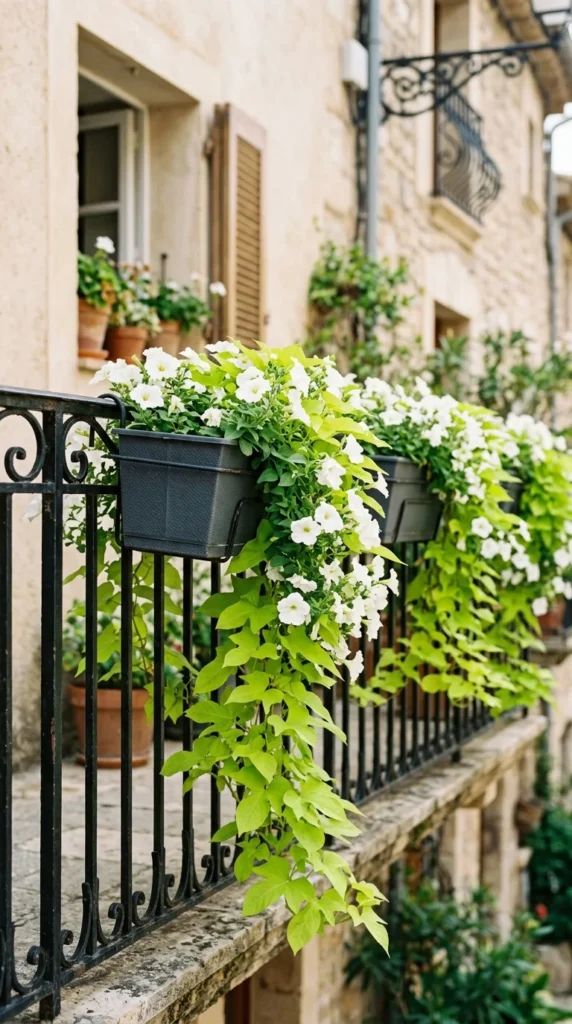
Railing planters are essential for maximizing the perimeter of your balcony. These containers sit directly on the balustrade, drawing the eye outward and making the space feel significantly larger. They come in various styles, from traditional “saddle” bags that straddle the rail to modern metal boxes that hook onto the top.
When selecting plants for railing containers, consider the wind. Balconies can be quite breezy, so hardy, low-trailing plants like lobelia, petunias, or silver falls dichondra are excellent choices. They provide a beautiful “spill” effect that masks the plastic or metal of the planter while adding a soft, organic edge to the balcony’s structure.
4. Floor Cushions
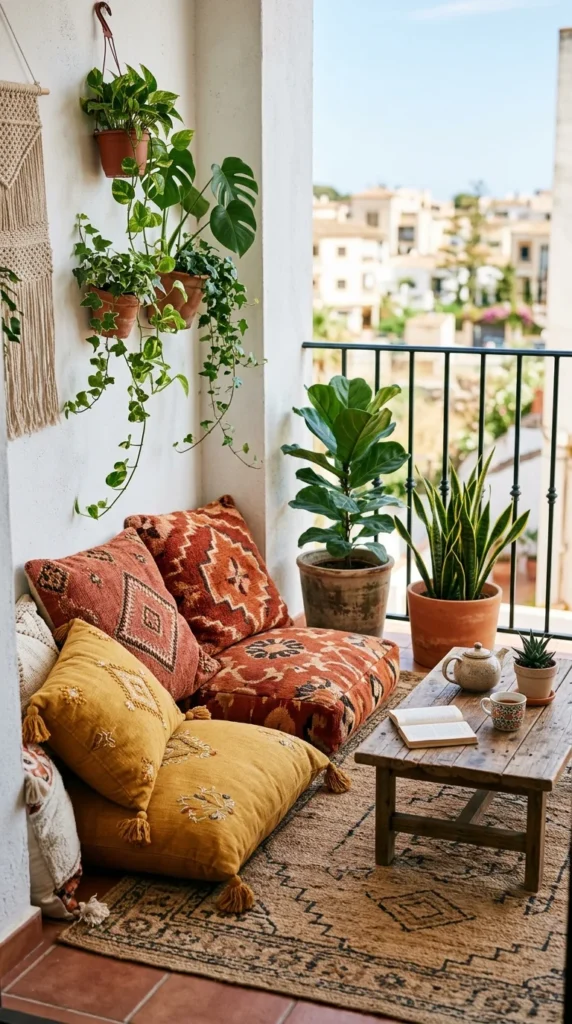
Gardening isn’t just about the plants; it’s about how you inhabit the space. Replacing bulky traditional furniture with oversized, weather-resistant floor cushions creates an intimate, relaxed atmosphere. This “low-profile” seating arrangement makes a small balcony feel more open and less cluttered.
To keep the look cohesive, choose cushions with UV-resistant fabrics that can withstand the sun without fading. Pairing these with a low-to-the-ground outdoor rug helps define the “living room” area of your garden. It invites you to sit down at eye level with your plants, providing a completely different perspective on your urban oasis.
5. Hanging Baskets
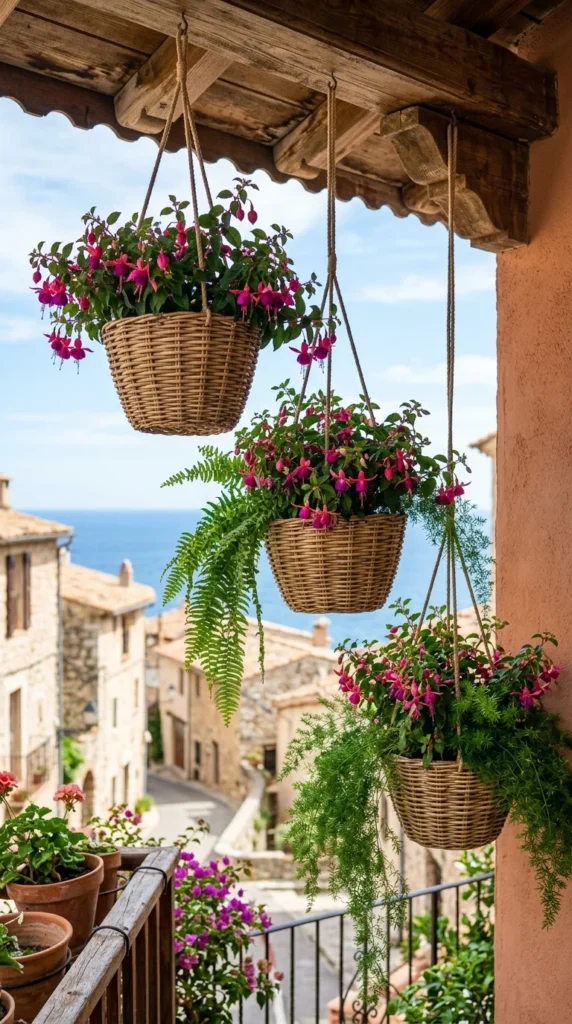
Hanging baskets utilize the often-ignored ceiling space of a balcony. By staggering baskets at different heights, you create a sense of depth and enclosure, making the balcony feel like a lush, three-dimensional canopy. This is particularly effective for trailing plants that can grow several feet long.
For high-maintenance baskets, consider installing a simple pulley system or using long-necked watering cans to make care easier. Ferns are a classic choice for shaded balconies, while trailing geraniums or fuchsias provide a pop of color for sunnier spots. Ensure the hooks are securely anchored into the ceiling or the building’s structural beams to handle the weight of wet soil.
6. Tiered Shelving
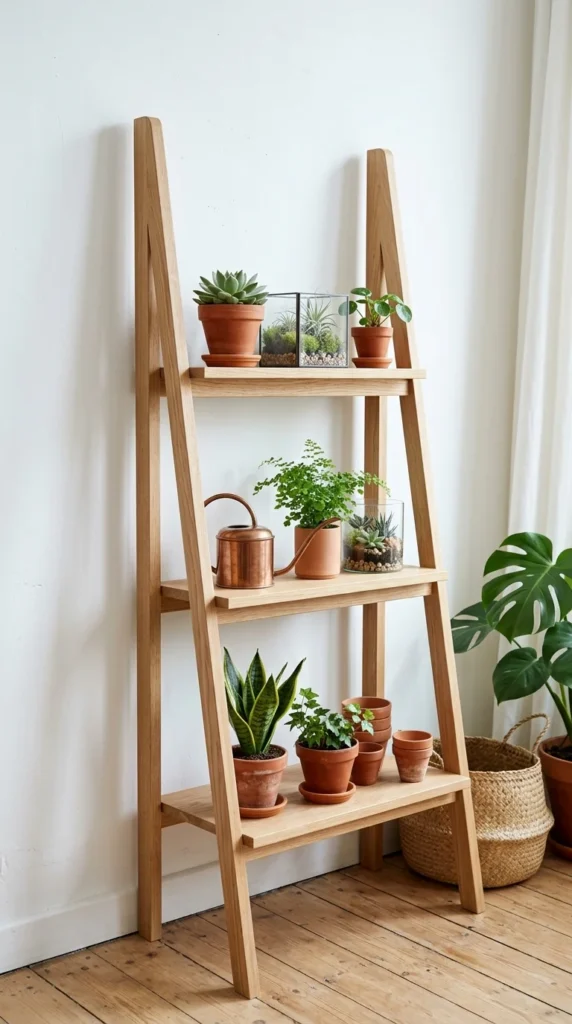
Tiered shelving, such as a ladder shelf or a tiered plant stand, is a game-changer for organizing a diverse collection of small plants. It allows you to display succulents, cacti, and smaller flowering pots in a neat, curated fashion without taking up much floor area.
This setup is perfect for “micro-gardening,” where you can focus on the unique textures and colors of individual plants. You can also use the lower shelves for heavier pots and the higher shelves for lighter ones or trailing varieties. It’s an excellent way to create a focal point and keep your gardening tools, like shears and misters, tucked away but accessible.
7. Privacy Screens
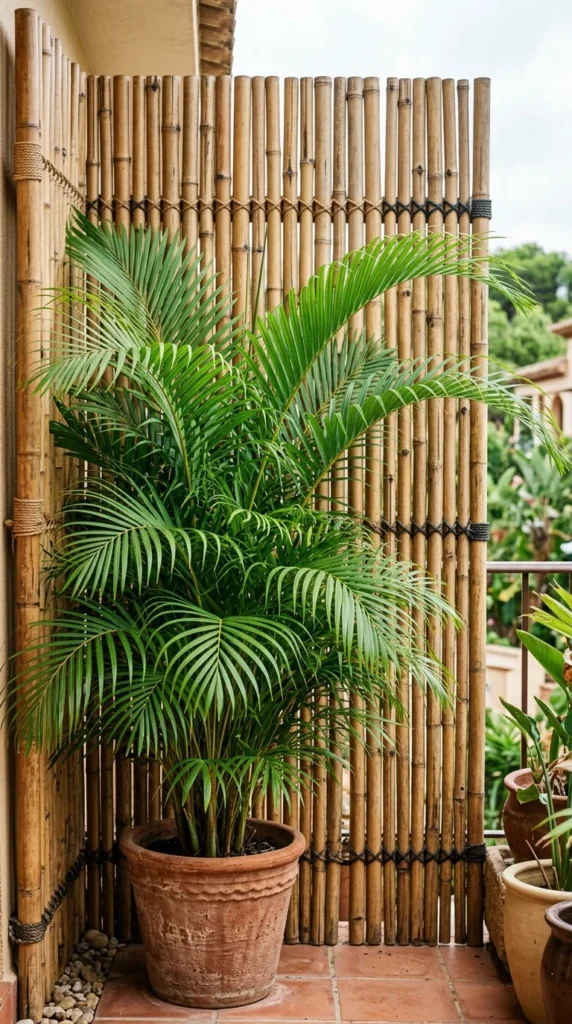
Privacy is often a concern in urban environments. Instead of a sterile plastic screen, use nature to create a barrier. Tall, slender plants like bamboo (in deep containers to prevent spreading) or dense evergreens like arborvitae can act as a living fence.
If you prefer a structured look, a wooden slat screen or a bamboo roll-up can be used as a backdrop for climbing vines. This not only blocks the view from neighbors but also acts as a windbreak and muffles city noise. Adding a privacy screen instantly makes the balcony feel like a private room rather than a public-facing platform.
8. String Lighting
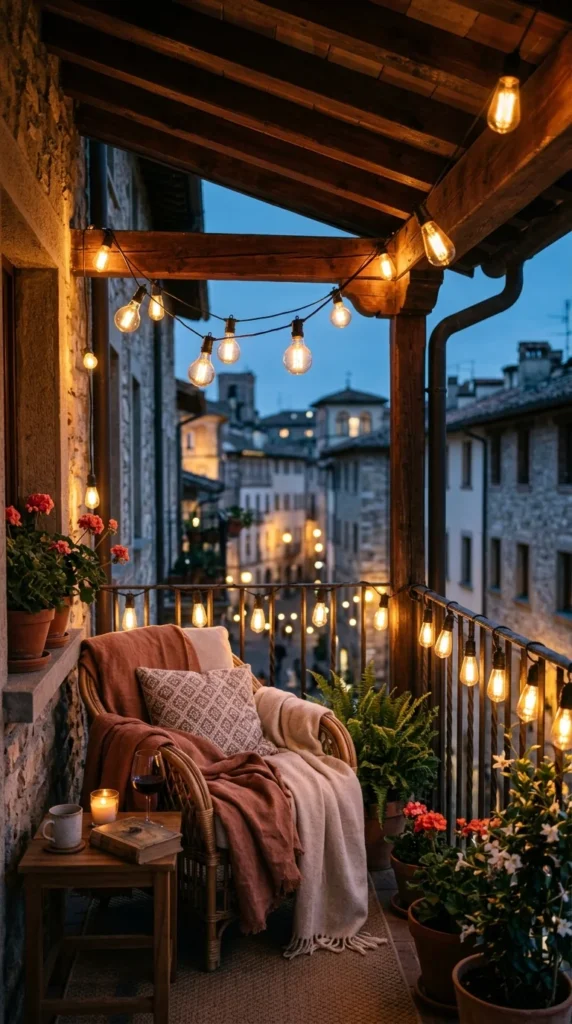
The magic of a balcony garden shouldn’t disappear when the sun goes down. String lighting—whether it’s vintage-style Edison bulbs or delicate fairy lights—adds a warm, inviting glow that transforms the space for evening use.
Solar-powered string lights are particularly effective for balconies, as they don’t require an outdoor electrical outlet and will automatically turn on at dusk. Drape them along the railing, weave them through a trellis, or hang them in a zigzag pattern across the ceiling to create a “starry night” effect. This ambient lighting highlights the silhouettes of your plants, creating a dramatic and cozy environment.
9. Water Features
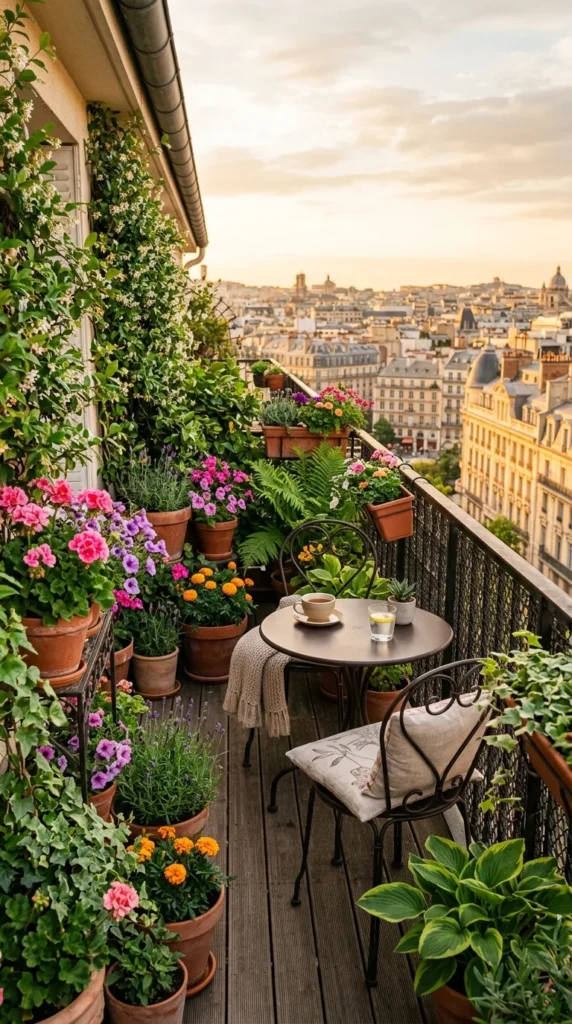
Even a very small balcony can accommodate the soothing sound of water. A tabletop fountain or a wall-mounted water feature can mask the hum of traffic and provide a sense of tranquility. Water features also help increase humidity, which many tropical balcony plants crave.
For a low-maintenance option, a simple birdbath or a “still water” bowl with floating lilies can attract local wildlife and add a reflective element to the garden. The key is to keep the scale appropriate; a small, circulating pump is usually enough to create that gentle trickling sound without splashing or requiring a complex setup.
10. Succulent Walls
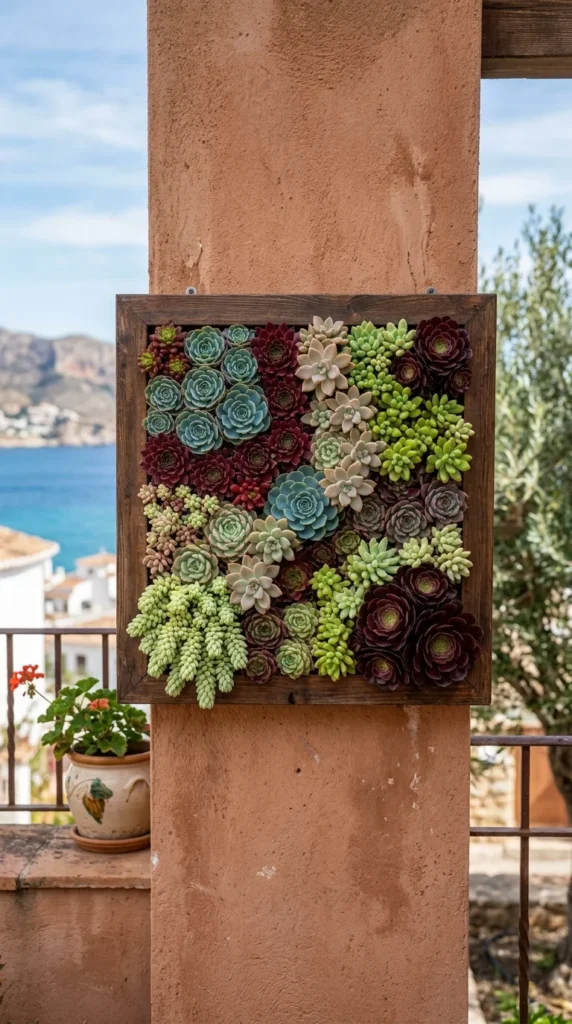
Succulent walls are living pieces of art. Because succulents have shallow root systems and require very little water, they are the perfect candidates for vertical frames. You can create a mosaic of different shapes, sizes, and colors—from the rosette-shaped Echeveria to the trailing String of Pearls.
This idea is particularly suited for busy city dwellers or those in drier climates. A succulent wall requires minimal maintenance—just a light misting or occasional watering—and stays looking pristine for months. It provides a modern, sculptural look that works well with minimalist or contemporary balcony designs.
11. Pallet Gardens
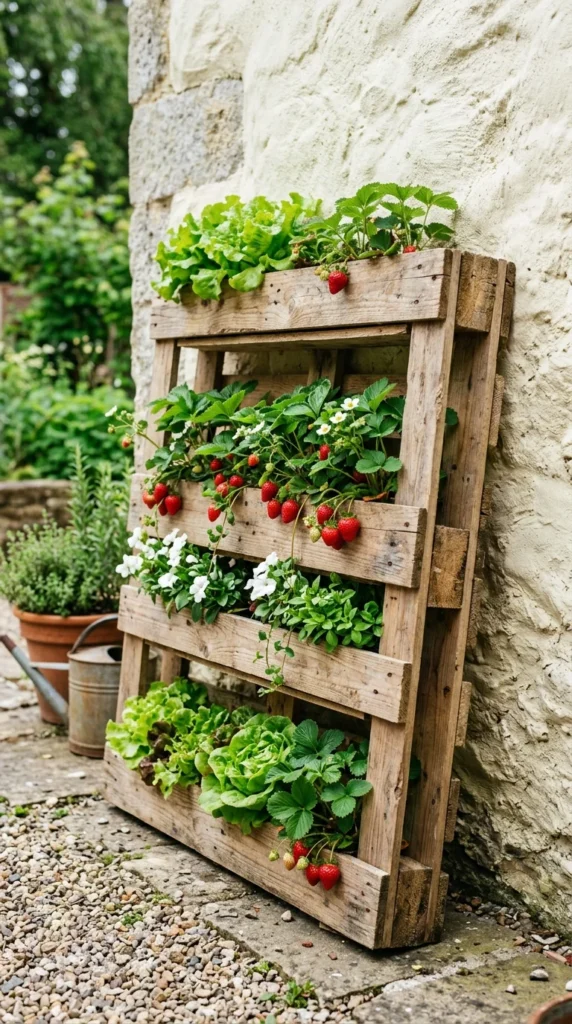
For a budget-friendly and rustic DIY project, the pallet garden remains a top choice. By sealing the back and bottom of the slats with landscaping fabric, you can turn an old wooden pallet into a multi-level planter. It’s an excellent way to grow “kitchen garden” staples like lettuce, radishes, and strawberries.
To elevate the look, sand and stain the pallet to match your balcony furniture or paint it a bold color to make it a statement piece. It’s a sustainable way to garden, repurposing materials that might otherwise go to waste, while providing plenty of room for a diverse range of edible plants.
12. Synthetic Grass
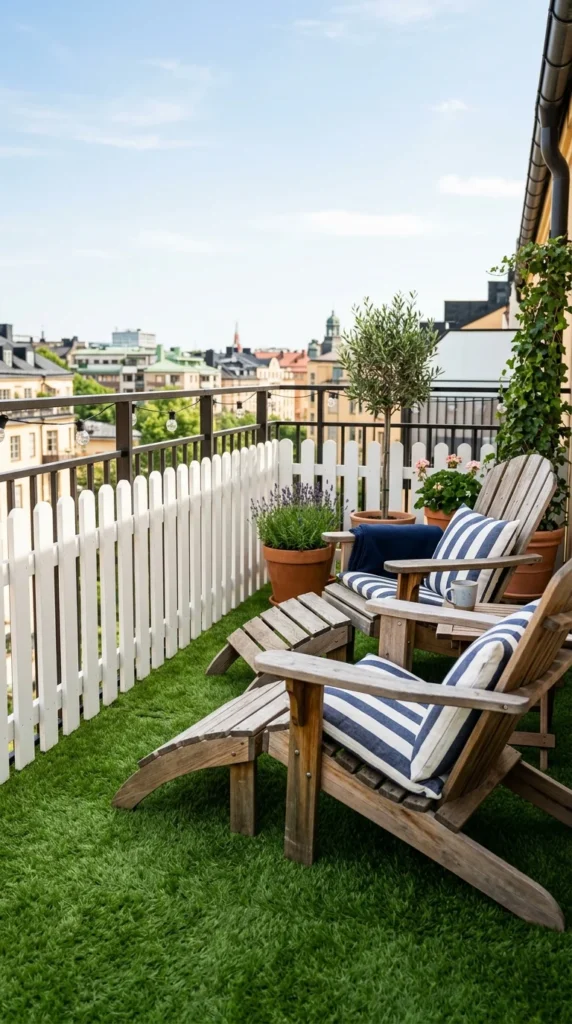
If you miss the feeling of grass under your feet, high-quality synthetic turf can be installed directly over your balcony’s concrete or tile floor. Modern artificial grass is incredibly realistic, soft to the touch, and features drainage holes to prevent water from pooling during rain.
Covering the floor with green instantly softens the space and makes it feel like a true garden. It’s a great surface for children or pets to play on, and it requires zero mowing or watering. Pair the “lawn” with a few large potted trees to complete the illusion of a backyard in the sky.
13. Compact Trees
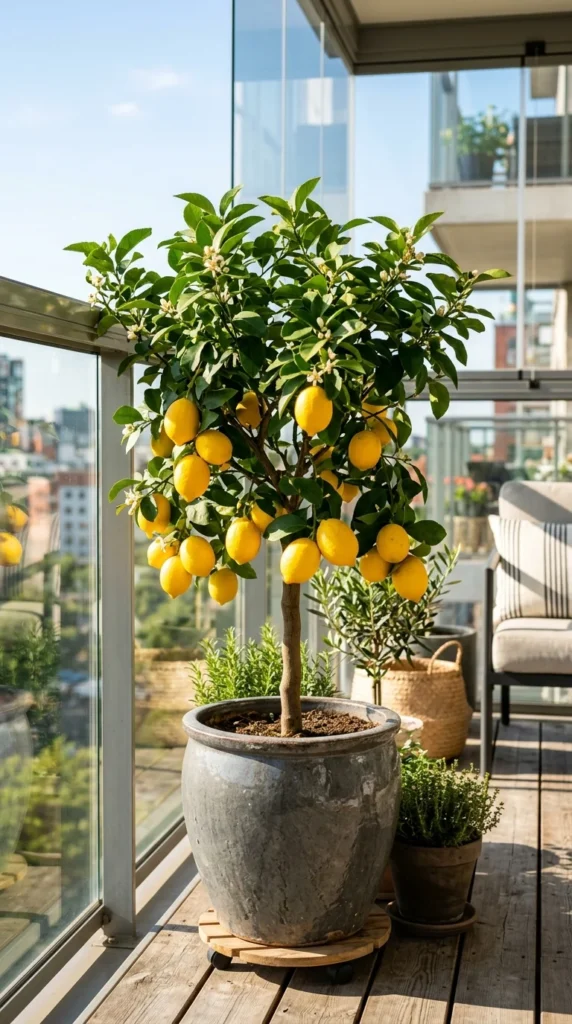
You don’t need a backyard to grow a tree. Many species are now available in dwarf or “patio” varieties that are specifically bred to thrive in containers. A dwarf citrus tree, such as a Meyer lemon or a Calamondin orange, provides glossy green leaves, fragrant white blossoms, and edible fruit.
Other great options for balconies include Japanese Maples for their stunning autumn color, or olive trees for a Mediterranean vibe. Trees provide much-needed height and structure to a balcony garden, acting as a focal point that anchors the rest of your plant collection. Ensure you use a heavy, stable pot to prevent the tree from tipping over in high winds.
14. Corner Nooks
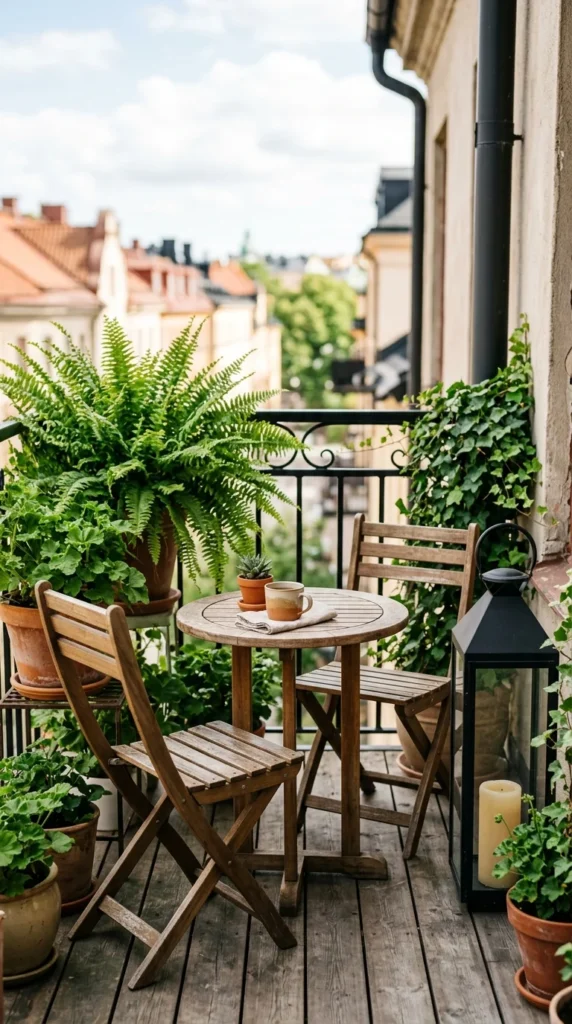
Maximizing the corners of your balcony is essential for creating a functional layout. A corner nook, often consisting of a small bistro set or a custom-built L-shaped bench, creates a dedicated spot for morning coffee or outdoor reading.
By placing your seating in the corner, you open up the central area of the balcony, making it easier to move around. Surround the seating area with your tallest plants to create a “cocoon” effect. This makes the nook feel like a secret hideaway, shielded from the wind and the noise of the city, and allows you to fully immerse yourself in your urban garden.