
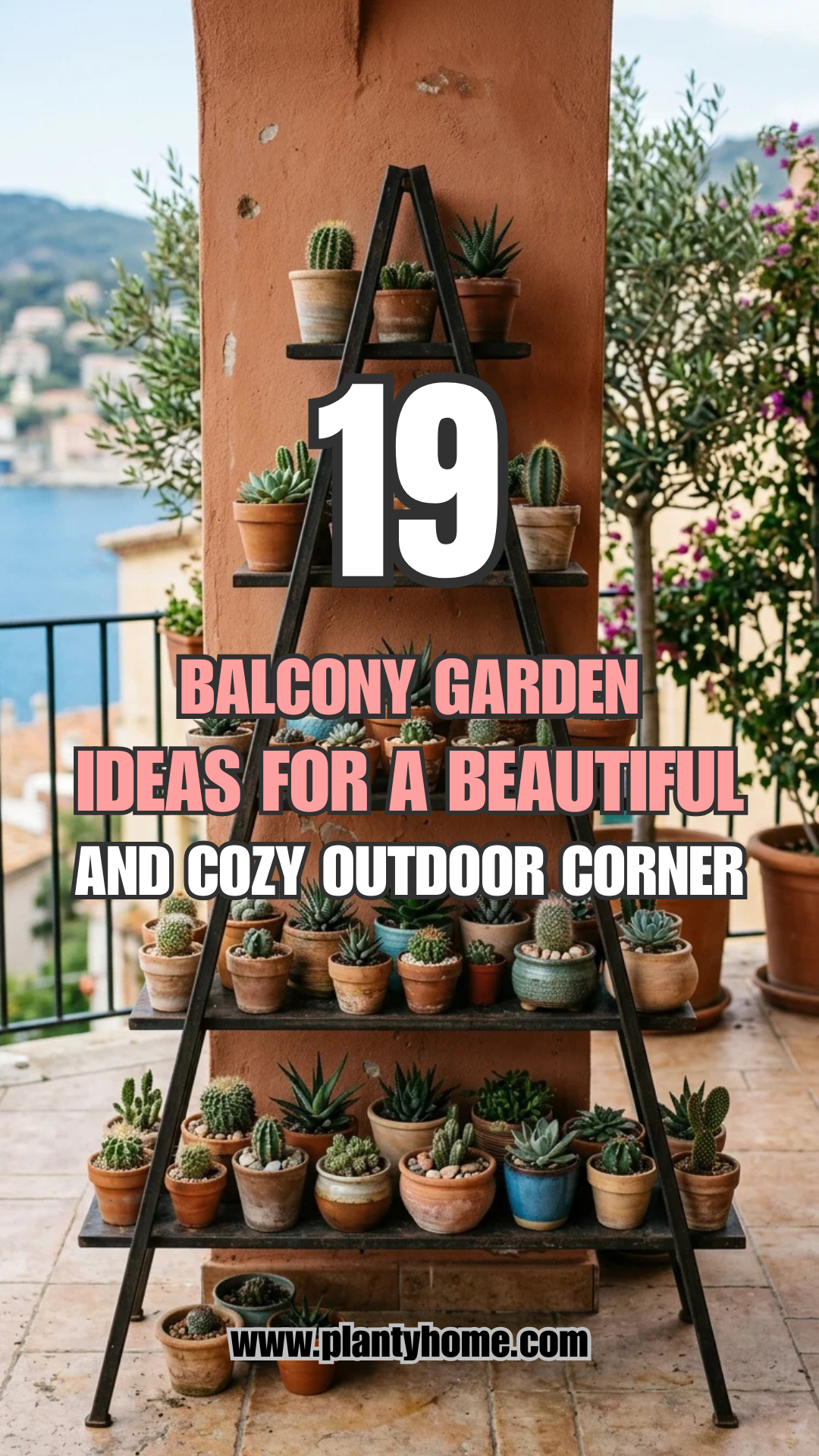
Transforming a small balcony into a lush, inviting sanctuary is one of the most rewarding home improvement projects an urban dweller can undertake. Regardless of square footage, a well-designed balcony garden serves as a bridge between the indoor living space and the natural world, offering a private retreat for morning coffees, evening reading, or simply a breath of fresh air.
To achieve a professional-grade aesthetic, one must balance horticultural needs with interior design principles. From vertical optimization to sensory-focused plant selections, here are 19 comprehensive ideas to turn your balcony into a breathtaking outdoor corner.
1. Vertical Planters
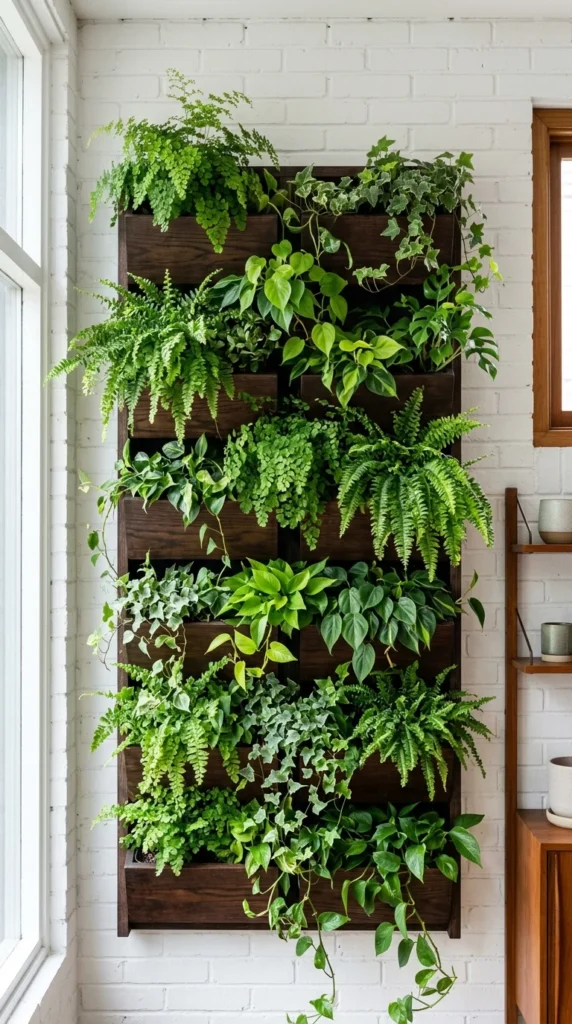
When floor space is at a premium, the only way to go is up. Vertical planters allow you to create a “living wall” that provides maximum greenery without obstructing your walking path. You can utilize modular pocket systems, repurposed wooden pallets, or wall-mounted felt bags. This approach is particularly effective for creating a lush backdrop that masks plain exterior walls, turning a sterile concrete area into a verdant jungle.
2. Hanging Baskets
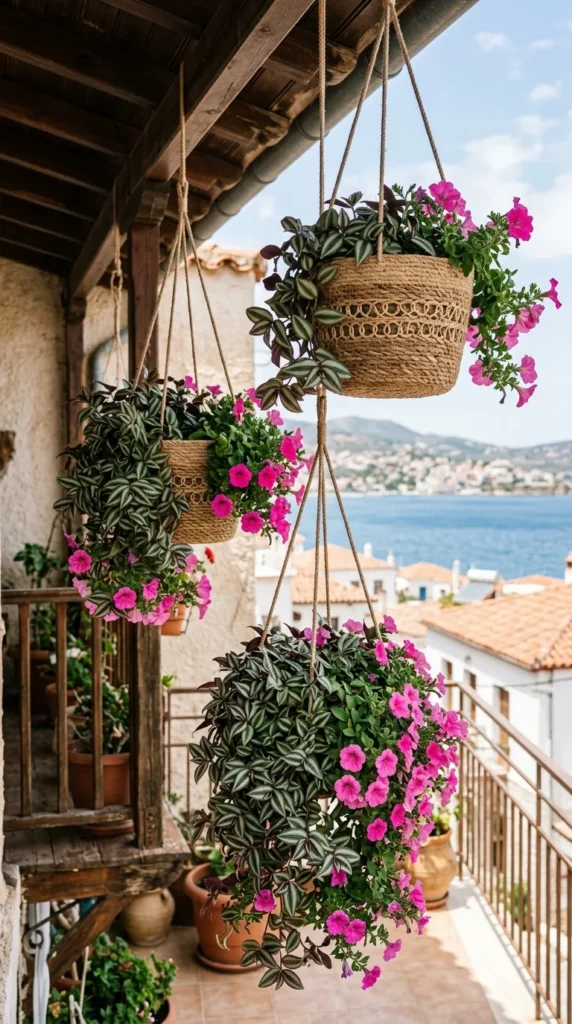
Layering your garden is essential for a professional look. Hanging baskets draw the eye upward and utilize the often-ignored “ceiling” of the balcony. By selecting trailing species such as Lobelia, Fuchsia, or String of Pearls, you create a canopy of color and texture. Ensure you use high-quality ceiling hooks and consider self-watering inserts to prevent the soil from drying out too quickly in elevated, windy positions.
3. Herb Kitchen
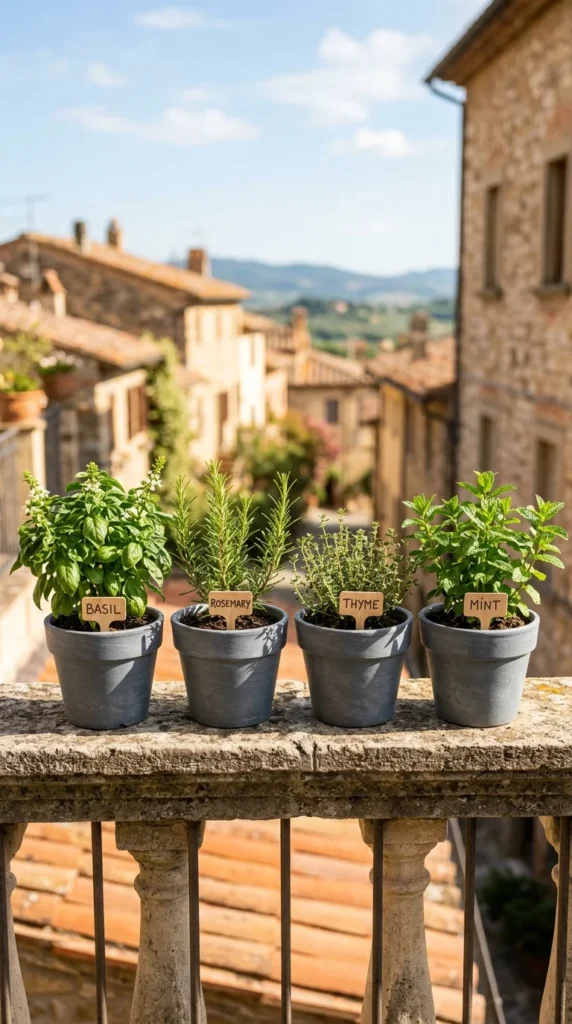
A functional garden is a sustainable garden. Dedicating a corner of your balcony to culinary herbs provides both aesthetic beauty and practical utility. Herbs like rosemary and lavender provide structural height and pleasant aromas, while basil, cilantro, and mint offer soft, leafy textures. Position these closest to your balcony door for easy access while cooking.
4. Railing Boxes
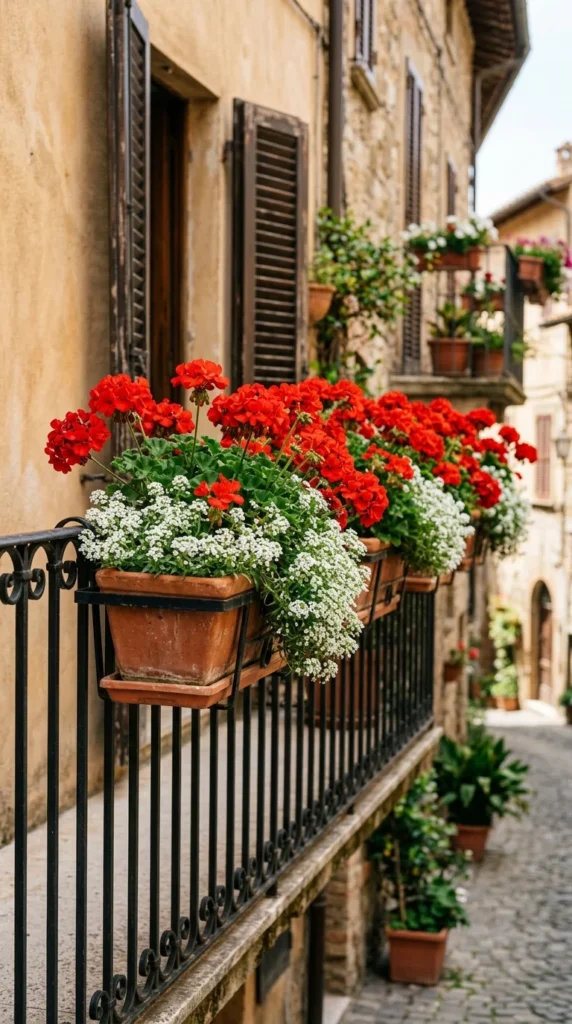
Railing boxes are the quintessential balcony garden staple for a reason. They maximize the perimeter and provide a “window box” effect that can be enjoyed from both inside the apartment and from the street below. To keep them looking tidy, choose “spiller” plants that cascade over the edge and “filler” plants that provide a dense, upright mound of color.
5. Cozy Seating
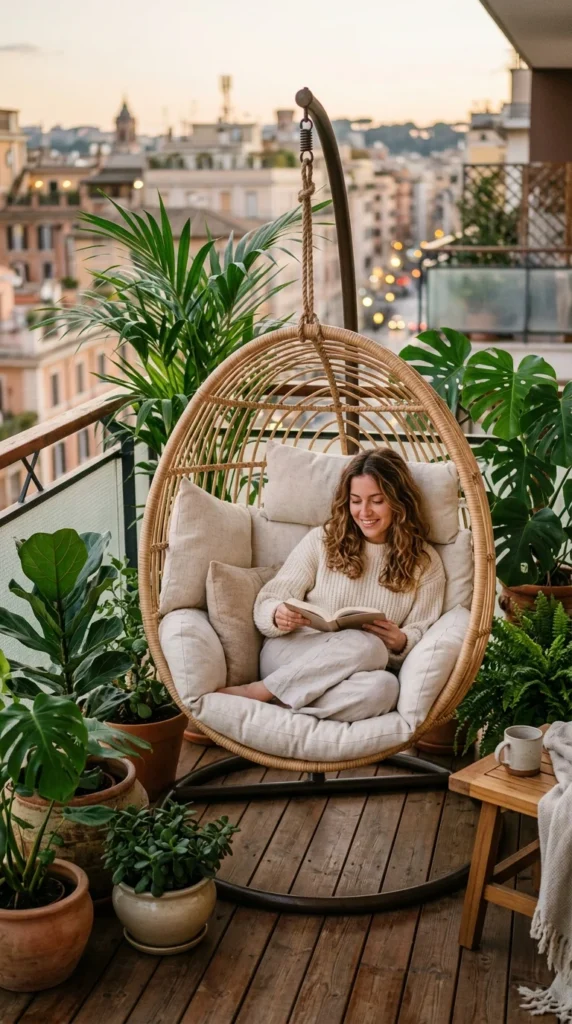
A garden is meant to be lived in, not just looked at. Integrating furniture that fits the scale of your balcony is crucial. For very small spaces, consider a bistro set or a foldable wooden bench. For larger corners, an outdoor-rated bean bag or a small loveseat with weather-resistant cushions creates a focal point that invites you to spend more time outdoors.
6. String Lights
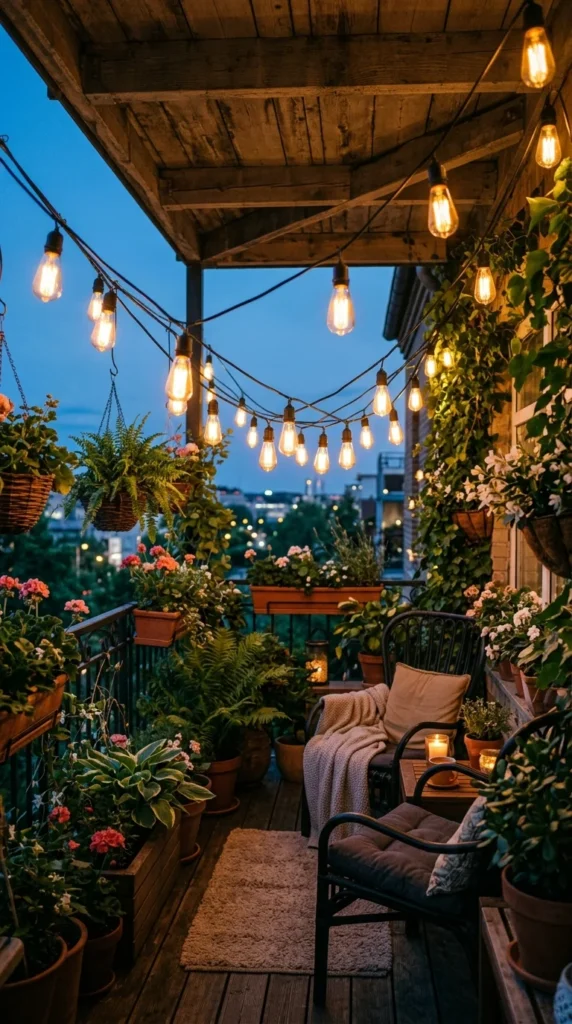
Ambiance is heavily dependent on lighting. Standard overhead apartment lights are often too harsh for a cozy retreat. String lights—whether fairy lights, globe bulbs, or solar-powered lanterns—create a soft, golden glow that transforms the space at night. Weaving these lights through trellises or wrapping them around railings adds a magical, whimsical dimension to the greenery.
7. Artificial Turf
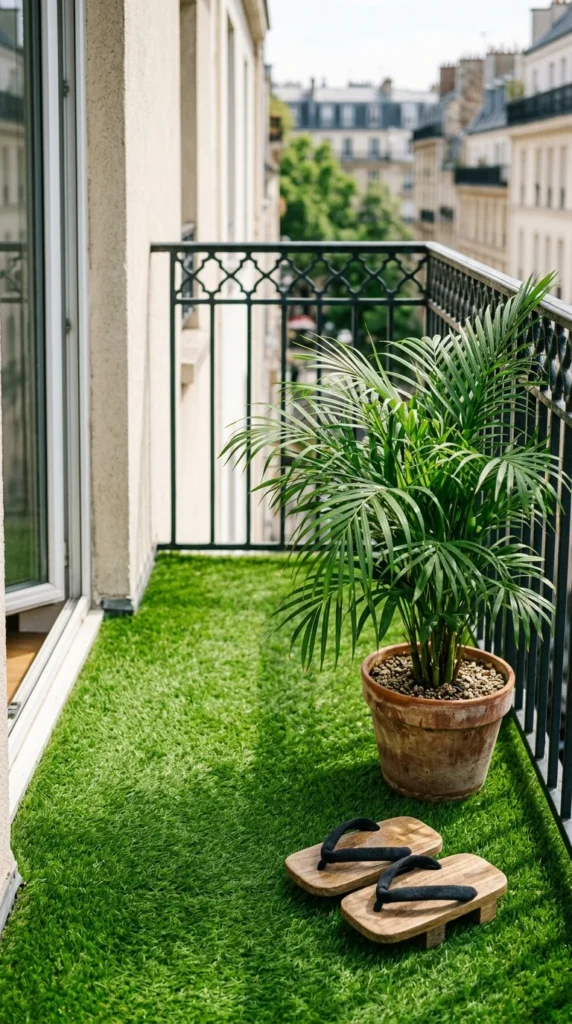
To truly escape the “urban” feel, consider covering the cold concrete or tile floor with artificial turf. Modern synthetic grass is incredibly realistic and soft underfoot, providing an instant “backyard” sensation. It is low-maintenance, drains well, and provides a cohesive green base that makes your colorful pots pop.
8. Water Features
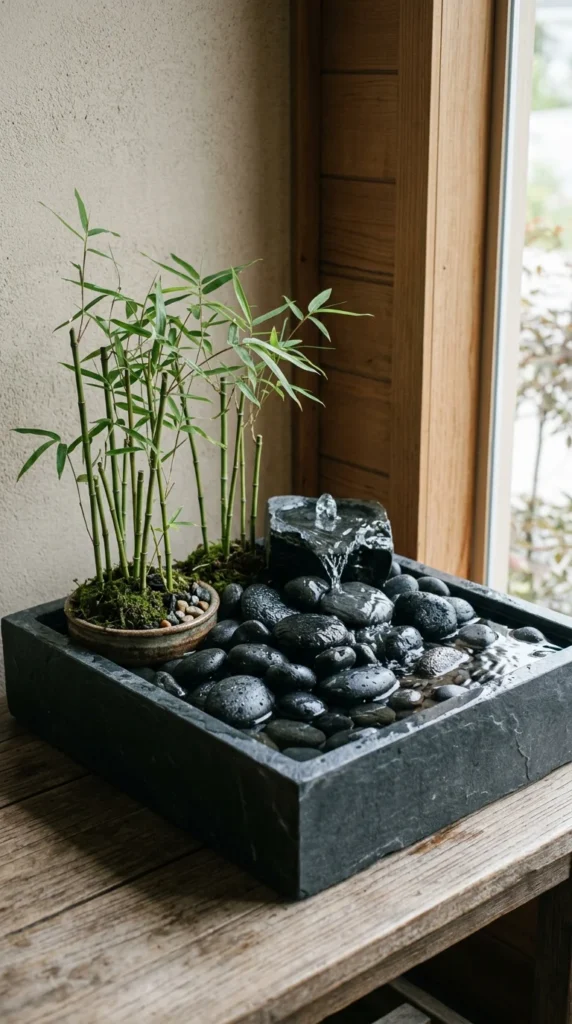
The sound of trickling water is a powerful tool for masking city noise and inducing relaxation. A small, plug-in tabletop fountain or a solar-powered birdbath can serve as a serene focal point. Beyond the auditory benefits, a water feature adds movement to the garden and can attract local birds and butterflies.
9. Privacy Screens
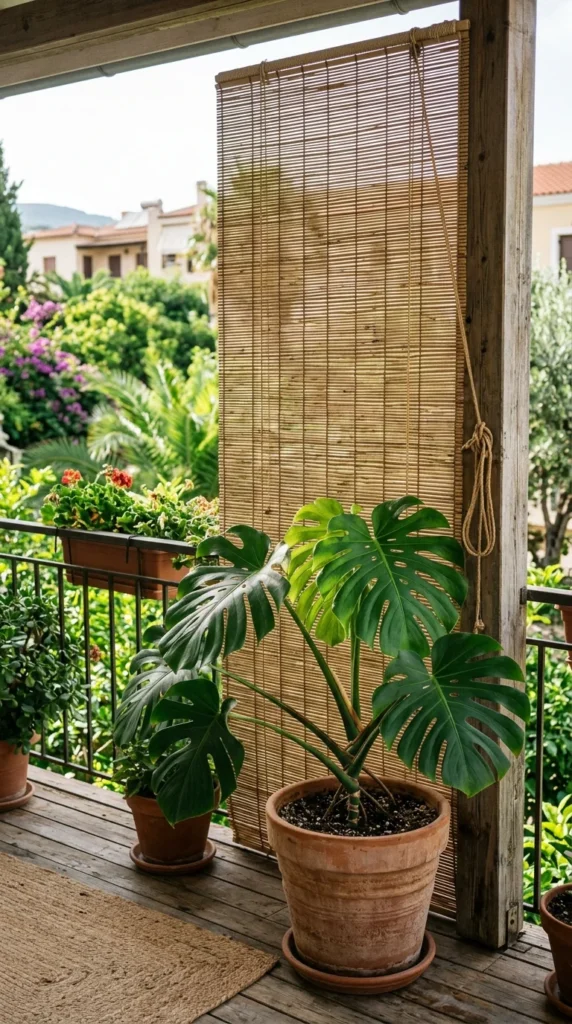
Privacy is a common concern in high-density living. Rather than using plastic barriers, utilize natural screens. Bamboo mats, wooden trellises covered in climbing vines like jasmine or clematis, or a row of tall ornamental grasses can create a secluded sanctuary. This “green curtain” provides intimacy while still allowing light and air to filter through.
10. Potted Trees
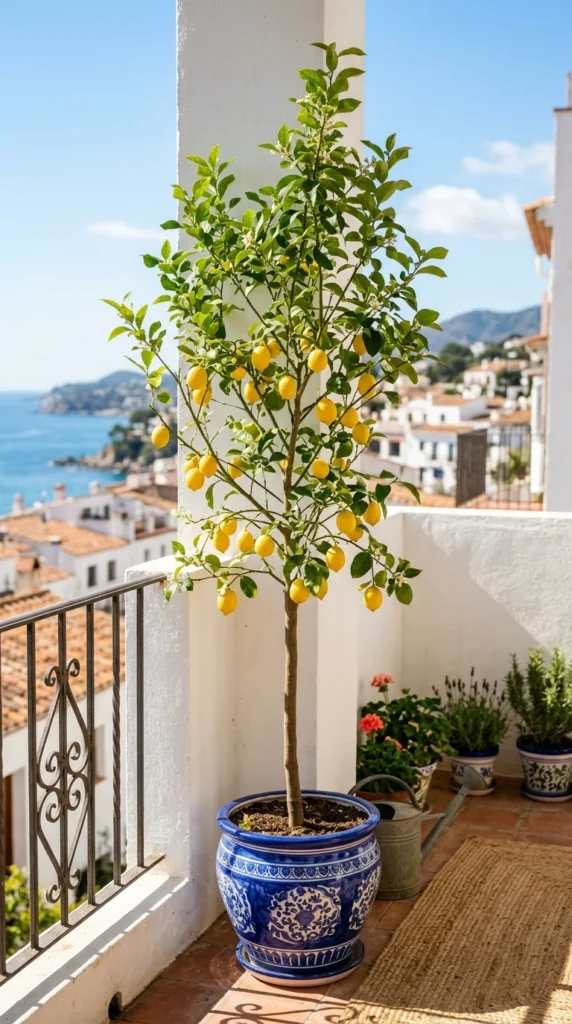
Height adds drama and structure. Even a small balcony can accommodate a dwarf fruit tree, a Japanese maple, or a slender olive tree. Large pots provide a sense of permanence and architectural interest. When choosing a tree, ensure the pot is heavy enough to withstand wind and that the species is suitable for the specific light conditions of your balcony.
11. Succulent Displays
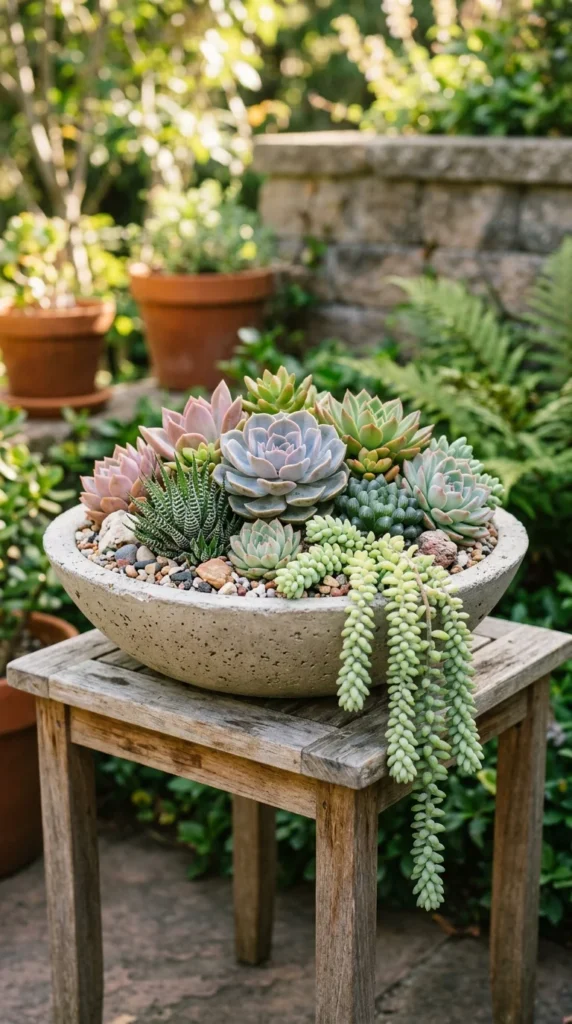
For those with busy schedules or balconies that receive intense, direct sunlight, succulents are the perfect solution. These drought-tolerant plants come in an incredible array of geometric shapes and colors. Grouping them in a “succulent bowl” or a dedicated shelving unit creates a low-maintenance gallery of natural art.
12. Wood Decking
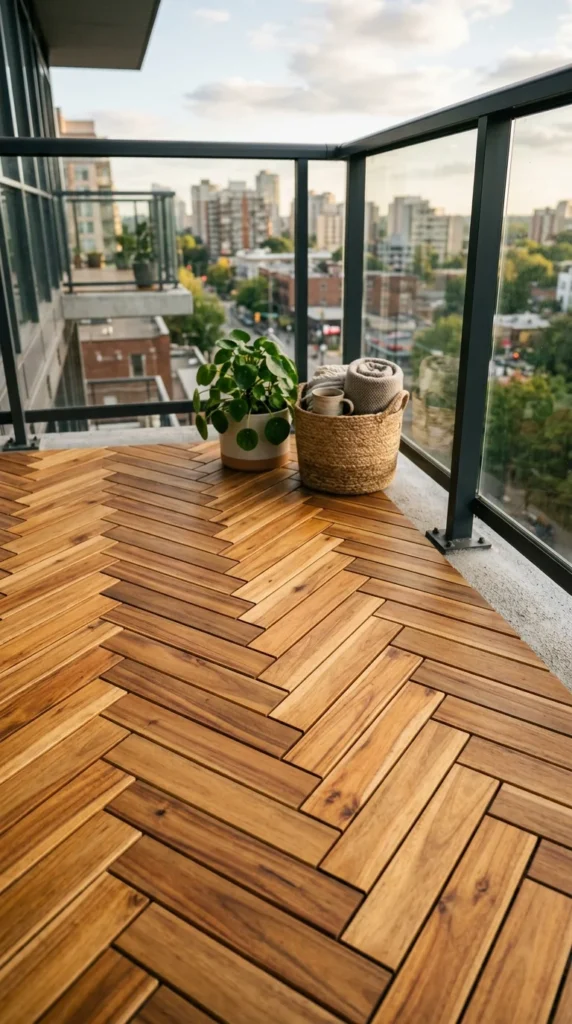
Standard balcony flooring is often uninspiring. Interlocking wooden deck tiles are a popular DIY solution that provides an instant luxury upgrade. They are easy to install, provide excellent drainage, and bring a warm, organic texture to the space. The wood grain complements the green foliage perfectly, creating a high-end “outdoor room” feel.
13. Mirror Accents
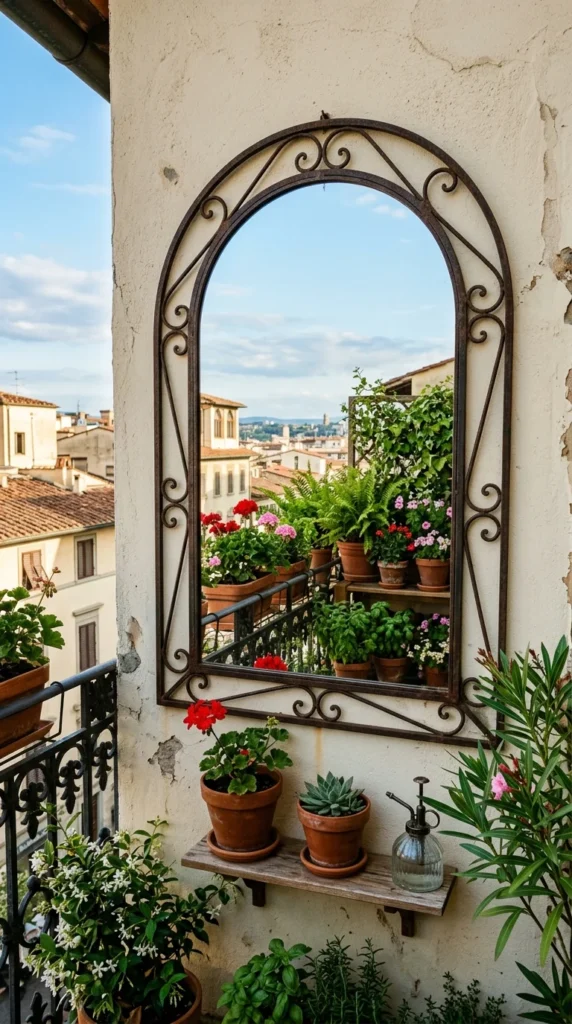
Interior designers frequently use mirrors to make rooms feel larger, and the same principle applies outdoors. Placing a weather-resistant mirror on a balcony wall reflects the light and the greenery, creating an illusion of depth. It can make a cramped corner feel twice as large while doubling the visual impact of your plant collection.
14. Seasonal Blooms
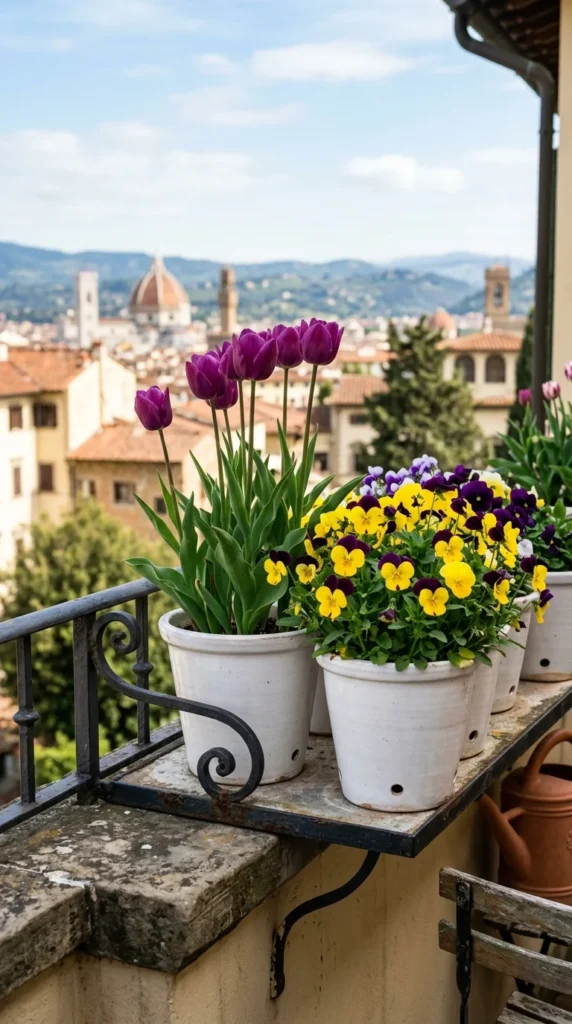
To keep your balcony garden engaging throughout the year, rotate seasonal flowers. Spring bulbs, summer petunias, autumn chrysanthemums, and winter pansies ensure there is always a splash of color. Using a consistent color palette—such as all white and silver, or a riot of tropical oranges and purples—helps maintain a professional, curated look.
15. Outdoor Rugs
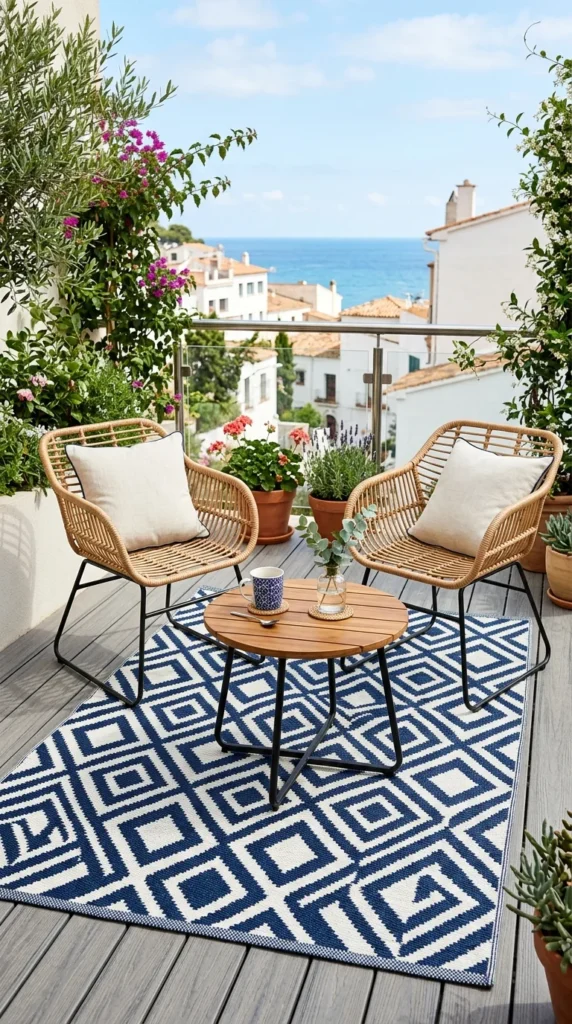
An outdoor rug is the most effective way to “zone” your balcony. It grounds the furniture and adds a layer of comfort and style. Look for rugs made of polypropylene or recycled plastic, as these are mold-resistant and easy to clean with a quick hose-down. A rug also provides an opportunity to introduce patterns that reflect your personal interior style.
16. Tiered Shelving
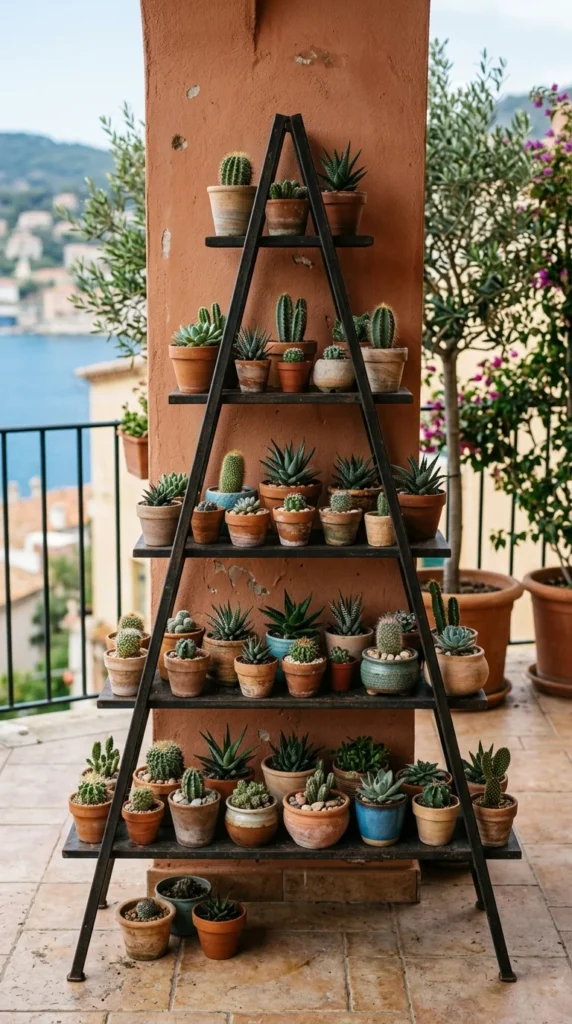
If you are a plant collector, tiered shelving is essential. Using a ladder-style shelf or a stepped plant stand allows you to display dozens of smaller specimens in a very small footprint. This organization prevents the balcony from looking cluttered and ensures that plants in the back still receive adequate sunlight.
17. Native Species
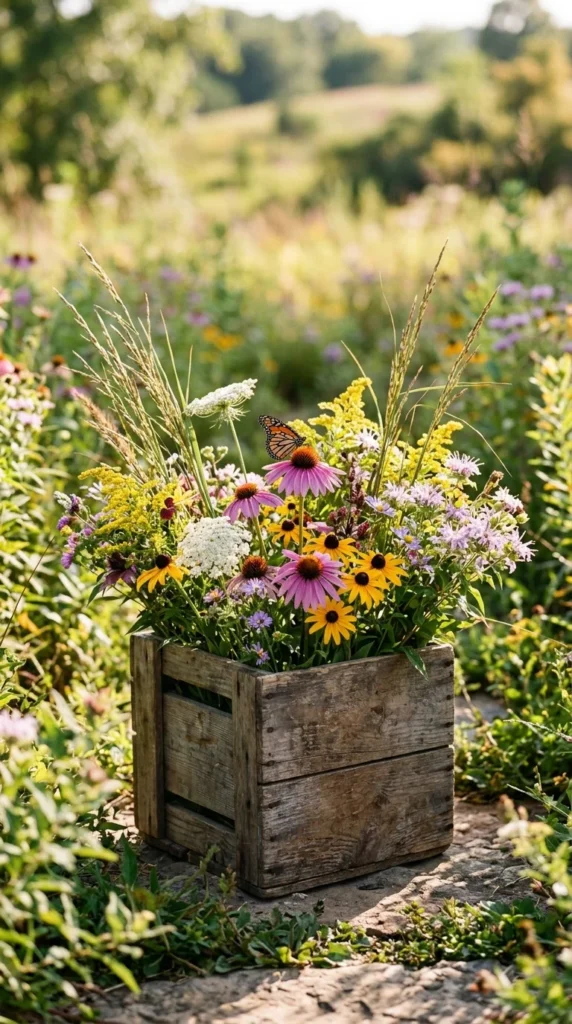
Sustainable gardening involves choosing plants that are adapted to your local climate. Native species require less water, fewer fertilizers, and are more resilient to local pests. Furthermore, they provide essential habitats for local pollinators. Incorporating native wildflowers or hardy shrubs gives your balcony a sense of place and supports the local ecosystem.
18. Fragrant Plants
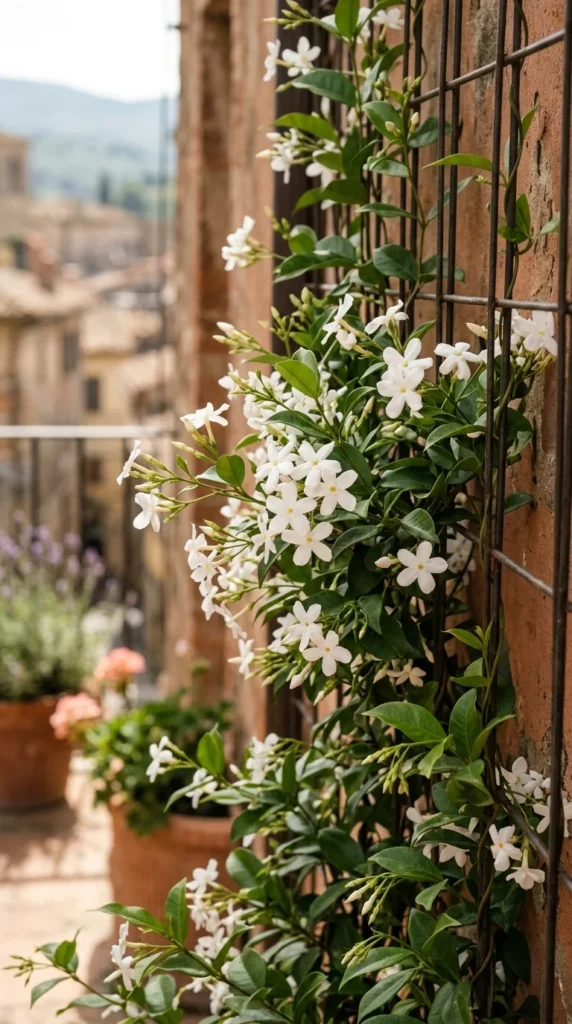
A truly immersive garden engages all the senses. By selecting plants with strong fragrances, you create an olfactory experience that enhances relaxation. Lavender, jasmine, honeysuckle, and scented geraniums are excellent choices for balconies. Place these near seating areas or windows so their scent can waft into your living space on a breeze.
19. Zen Garden
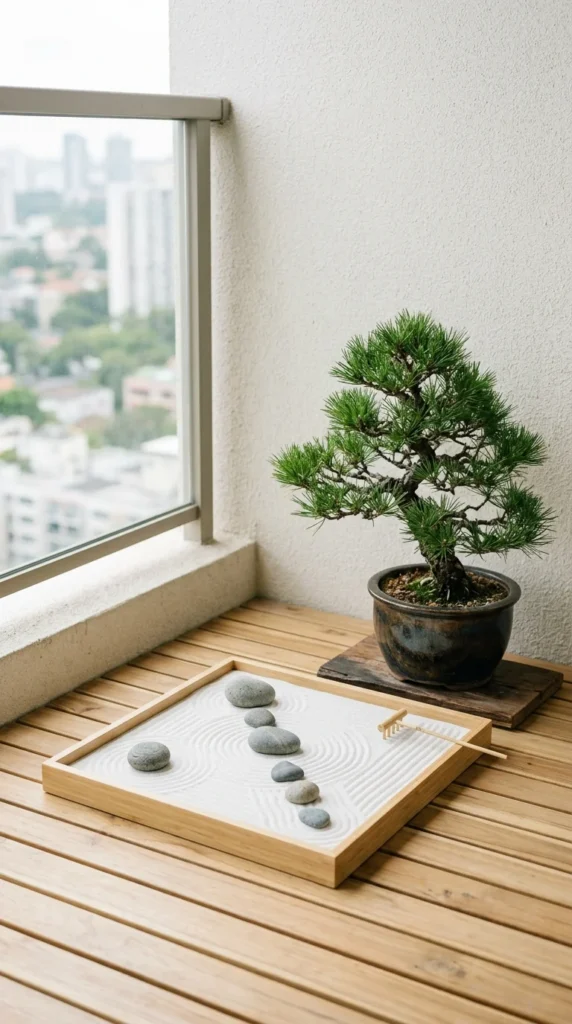
If your goal is pure tranquility, a Zen-inspired balcony garden might be the answer. This style focuses on minimalism, balance, and natural materials. Use a palette of greens, greys, and browns. Incorporate elements like smooth river stones, a single architectural plant (like a bonsai or a snake plant), and clean-lined furniture to create a space that encourages mindfulness and quiet reflection.