
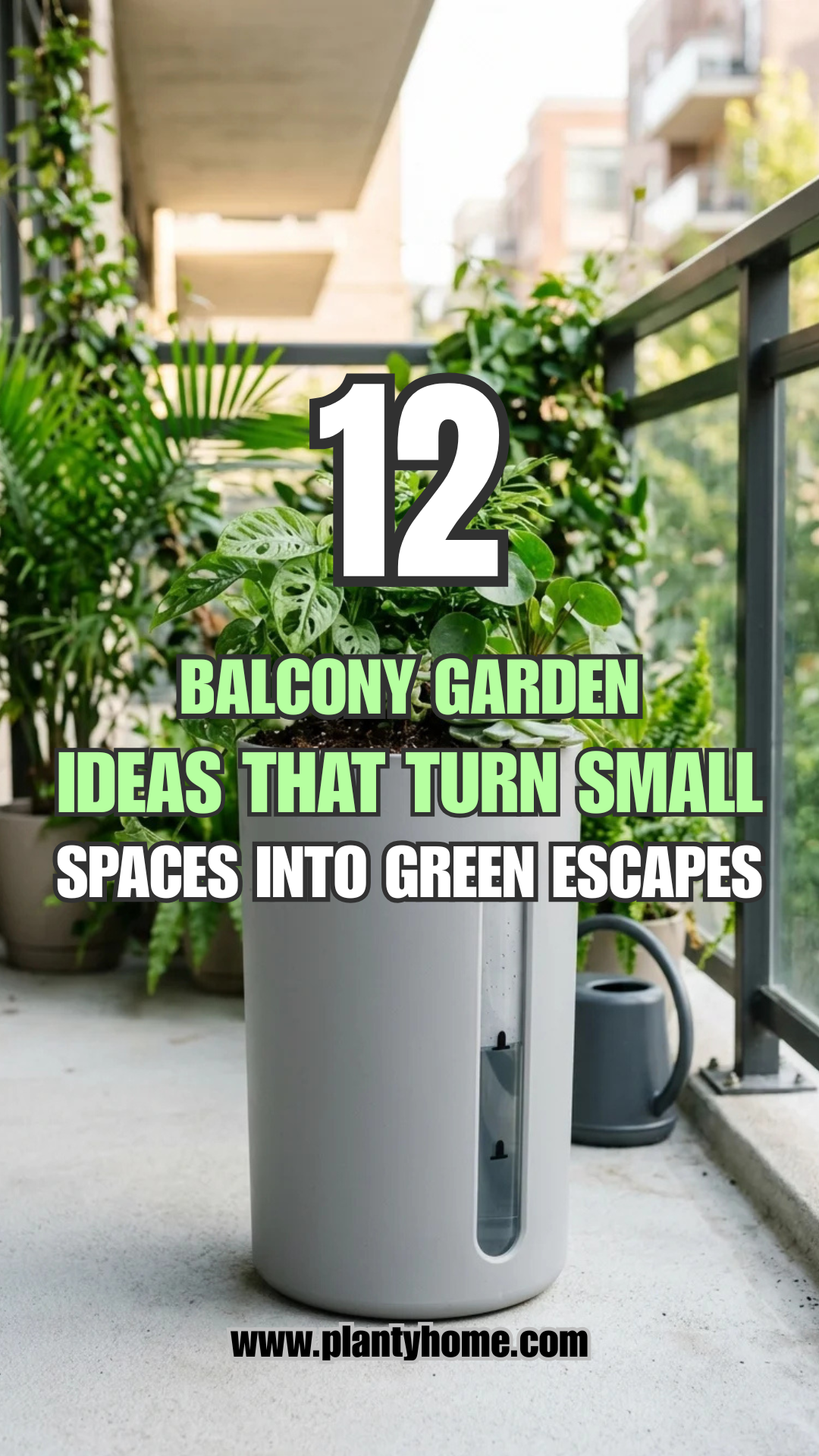
In the modern urban landscape, the balcony is often the only connection a city dweller has to the natural world. While these spaces are frequently relegated to storage or laundry drying, they possess the potential to become vibrant, oxygen-rich sanctuaries. Transforming a few square feet of concrete into a flourishing garden requires strategic planning and creative design. By utilizing vertical space, choosing the right species, and incorporating aesthetic elements, you can create a private oasis that provides both mental clarity and environmental beauty.
1. Vertical Trellises
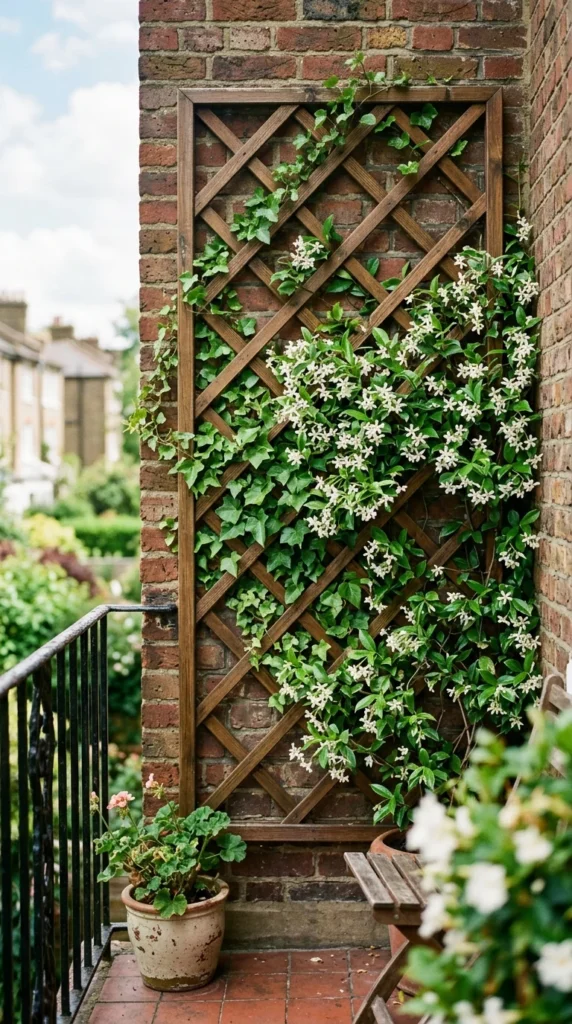
When floor space is at a premium, the only way to grow is up. Vertical trellises are the backbone of any sophisticated small-scale garden. By installing a trellis against a wall or as a freestanding divider, you create a structure for climbing plants like clematis, jasmine, or ivy. This not only maximizes your planting area but also provides a natural cooling effect for your home. Trellises can be made from cedar, bamboo, or even repurposed metal grids, allowing you to match the aesthetic to your home’s architecture.
2. Railing Planters
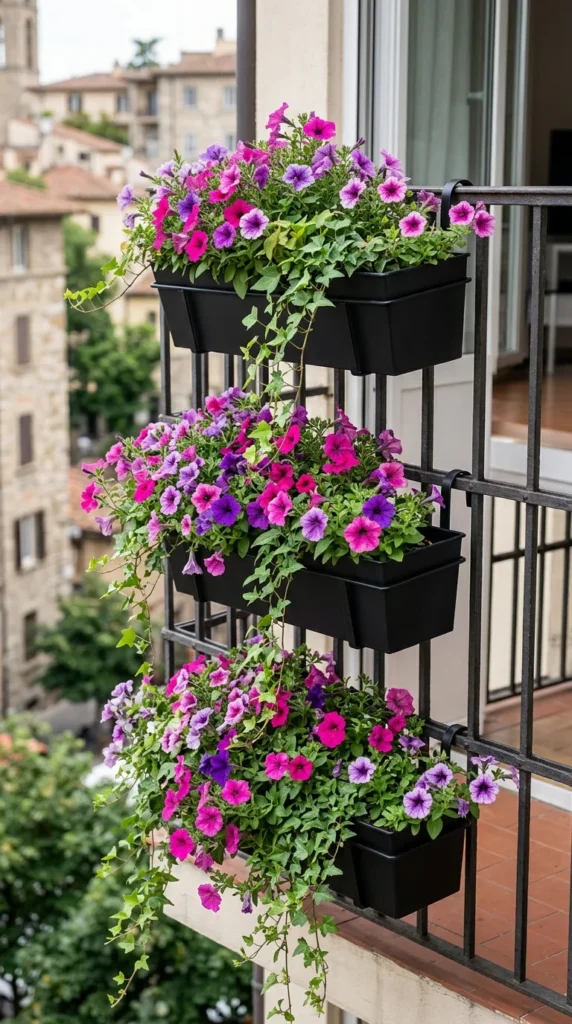
The perimeter of your balcony is prime real estate. Railing planters, also known as saddle planters or window boxes, allow you to garden beyond the floor’s boundaries. These containers are designed to sit securely on top of or hang from the railing, bringing color and life to eye level. To ensure success, choose lightweight potting soil and drought-resistant varieties like geraniums or verbena, as these elevated positions often experience more wind and sun exposure than the balcony floor.
3. Tiered Shelving
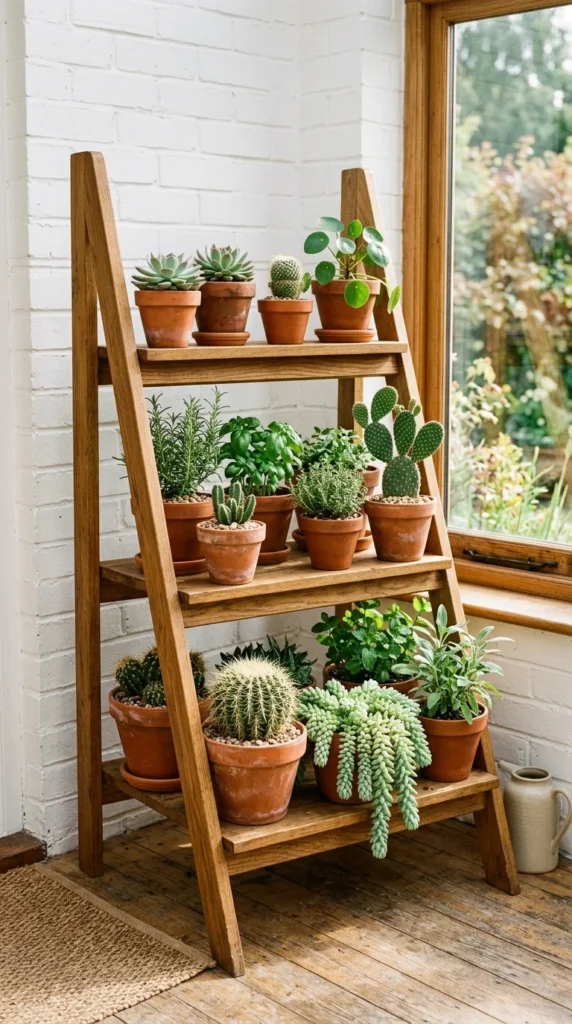
Tiered shelving units or “plant ladders” are essential for collectors who want a diverse array of species in a compact footprint. By stacking plants vertically, you create a “stadium seating” effect where every plant receives adequate sunlight. This setup is particularly effective for succulent collections or a variety of small flowering annuals. Using a ladder shelf also allows for easy organization, where sun-loving plants occupy the top tiers while shade-tolerant species thrive in the shadows of the lower levels.
4. Hanging Baskets
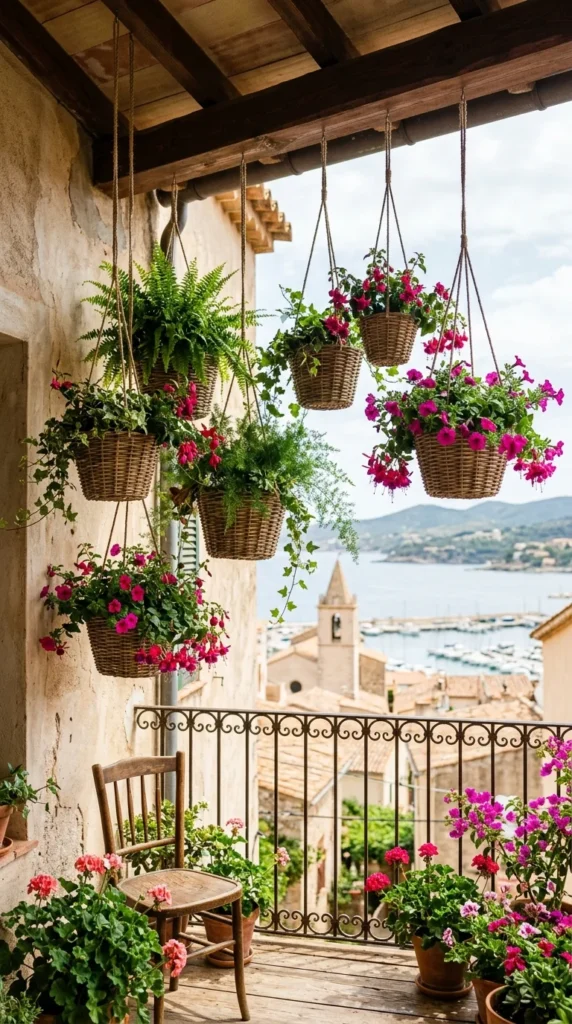
To truly immerse yourself in greenery, utilize the “ceiling” of your balcony. Hanging baskets break up the horizontal lines of a building and add a sense of depth and volume. Plants with a trailing habit, such as “Creeping Jenny,” spider plants, or trailing lobelia, are ideal candidates. When installing hooks, ensure they are anchored into the structural elements of the balcony above. Using coco-fiber liners in your baskets can help with aeration and drainage, fostering healthier root systems for your hanging displays.
5. Herb Pockets
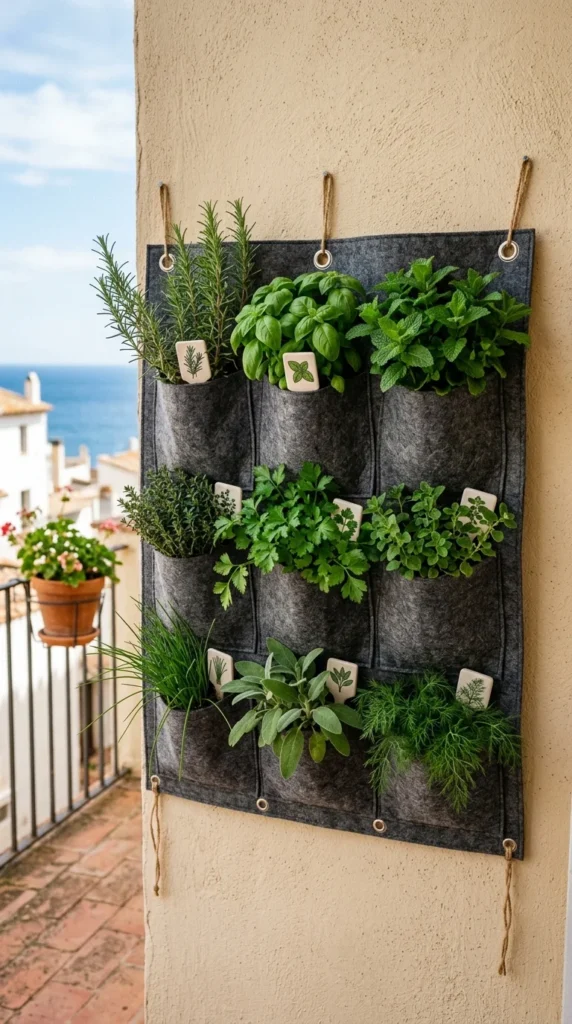
For the urban chef, a balcony garden is as much about utility as it is about beauty. Herb pockets—often made from breathable felt or canvas—can be mounted directly to the wall. This “living wall” approach keeps fresh ingredients like basil, mint, thyme, and cilantro within arm’s reach of the kitchen. The fabric construction of these pockets promotes “air pruning” of the roots, preventing the plants from becoming root-bound and ensuring a more robust harvest throughout the growing season.
6. Succulent Walls
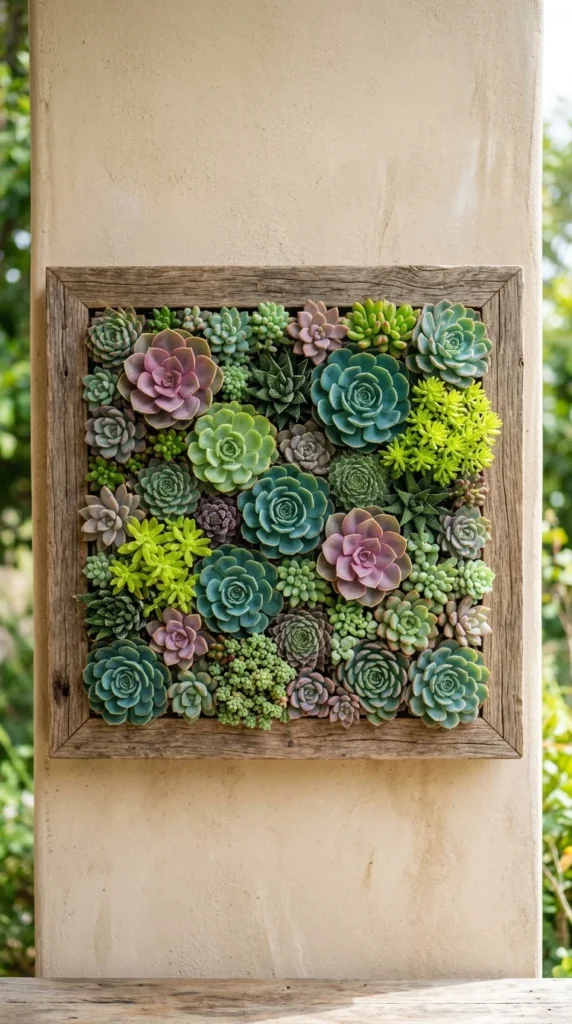
Succulent walls are living pieces of art. Because succulents have shallow root systems and low water requirements, they are perfectly suited for vertical frames. A succulent wall can serve as a focal point, offering intricate textures and a palette of muted greens, purples, and blues. These installations are relatively low-maintenance, requiring only occasional misting or a light soak. They are an excellent choice for balconies that receive intense afternoon sun where more delicate foliage might wilt.
7. Privacy Screens
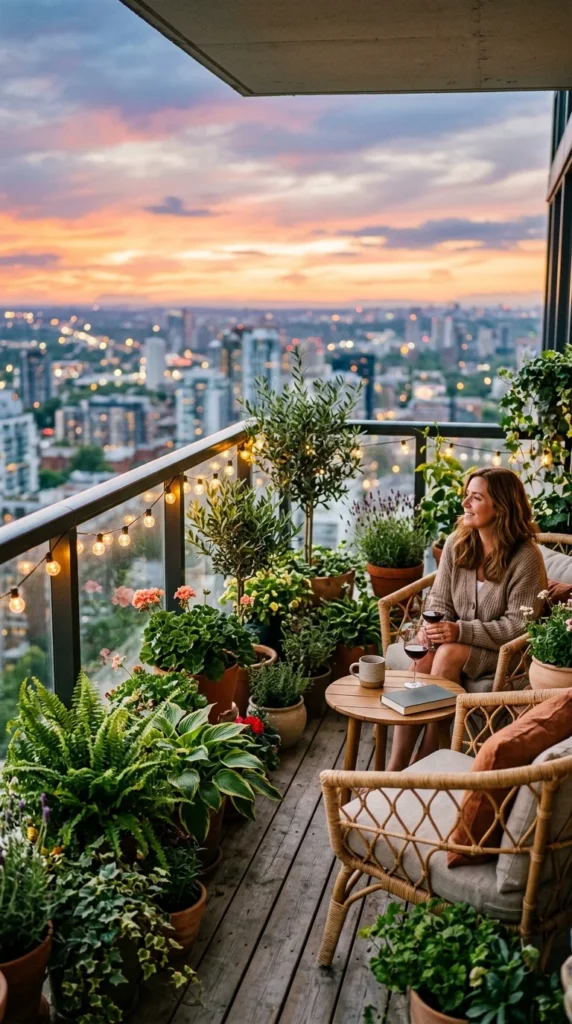
In densely populated areas, privacy is a luxury. You can use your garden to create a natural “green curtain” that shields you from neighbors’ views and muffles street noise. Tall, narrow plants like bamboo (contained in sturdy pots to prevent spreading), ornamental grasses, or columnar evergreens provide year-round screening. Integrating these plants into your design turns a functional necessity into a lush, architectural feature that enhances the feeling of a secluded retreat.
8. Floor Seating
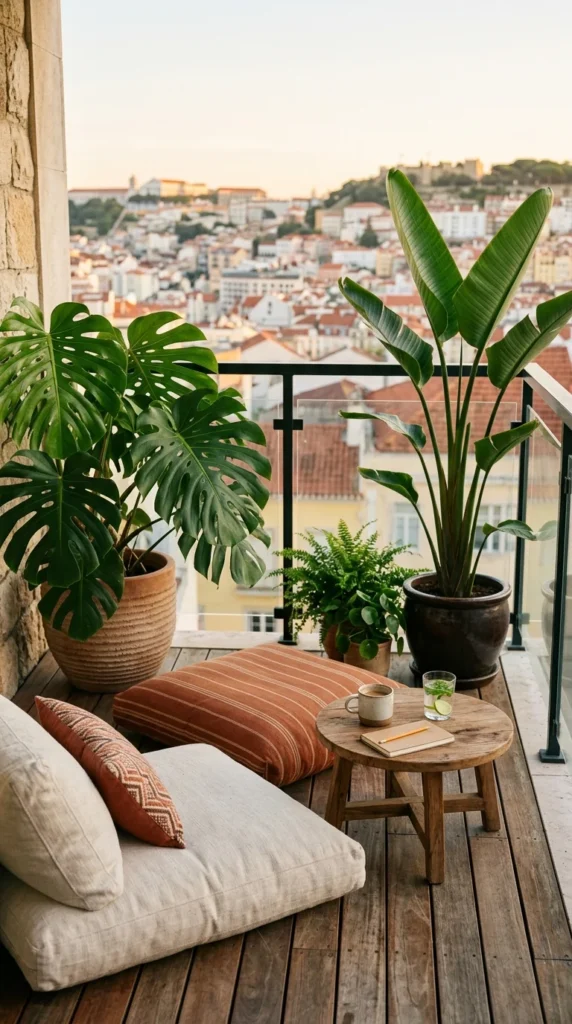
A garden is meant to be enjoyed, not just looked at. By incorporating low-profile floor seating, such as outdoor cushions or a Japanese-style tatami mat, you change your perspective and make the space feel larger. Surrounding your seating area with medium-sized floor plants like Monstera Deliciosa or Bird of Paradise creates an “urban jungle” vibe. This setup encourages you to spend more time outdoors, whether you are reading a book, meditating, or enjoying a morning coffee amidst your plants.
9. Fairy Lighting
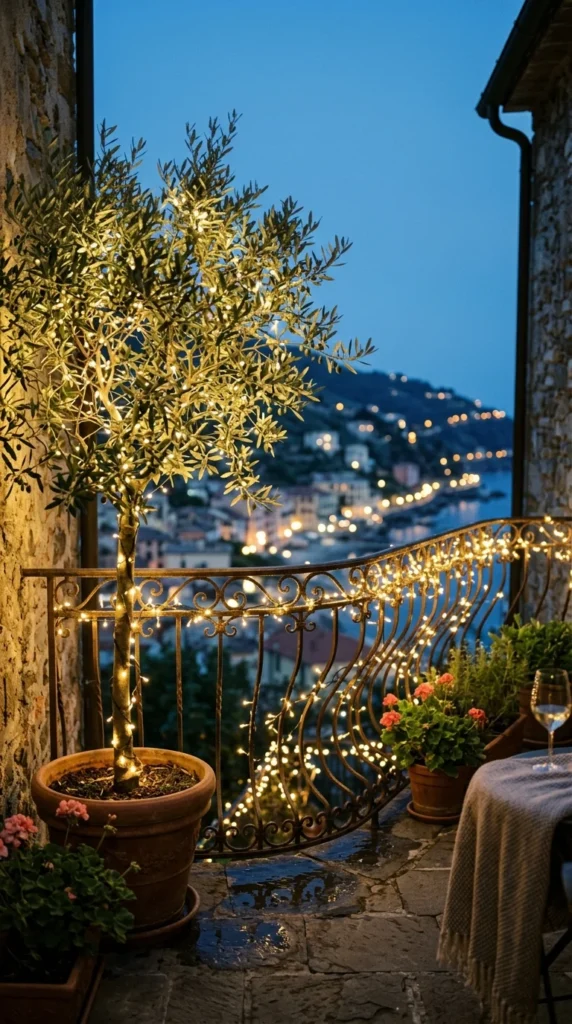
The magic of a balcony garden shouldn’t disappear when the sun goes down. Strategic lighting transforms the space into an enchanting evening escape. Fairy lights, or micro-LED strings, can be woven through the foliage of larger plants or draped along the railing. Solar-powered options are ideal for balconies, as they eliminate the need for outdoor power outlets. The soft glow highlights the textures of the leaves and creates a sophisticated ambiance for evening relaxation or entertaining.
10. Self-Watering Systems
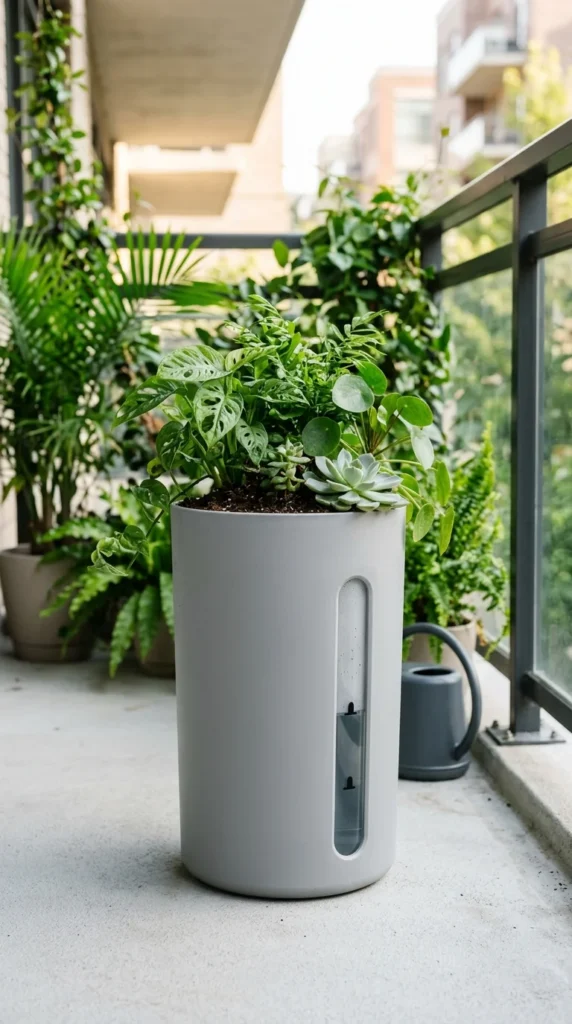
Consistent hydration is the biggest challenge for small-space gardeners, as pots dry out much faster than ground soil. Self-watering planters or simple drip irrigation kits can be life-savers. These systems utilize a reservoir at the base of the pot, allowing plants to draw up moisture as needed through capillary action. This not only ensures your garden thrives while you are away but also prevents the common mistake of overwatering, which can lead to root rot in confined containers.
11. Tropical Palms
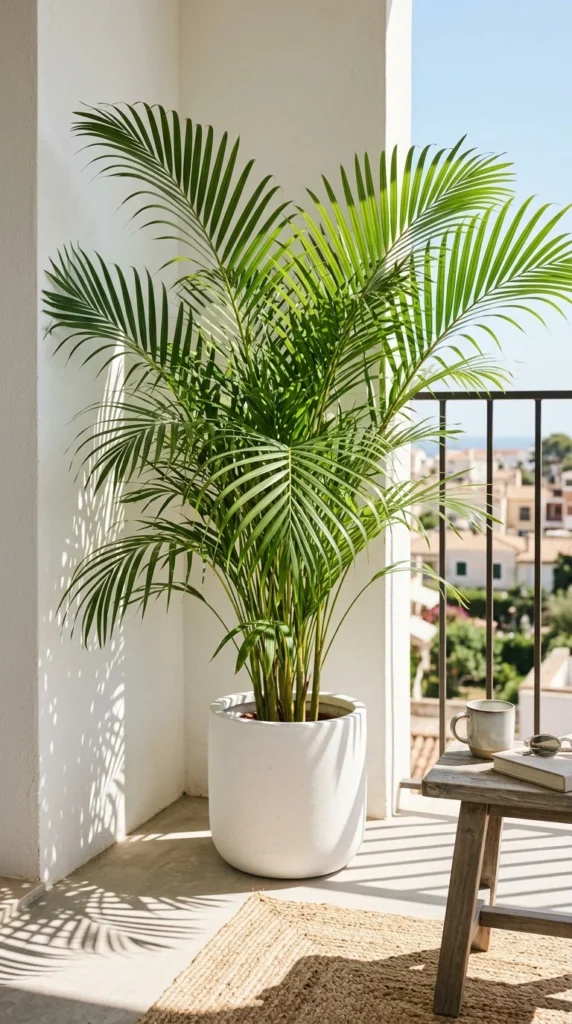
To evoke the feeling of a vacation, incorporate tropical palms. Species like the Majesty Palm, Areca Palm, or the hardier Kentia Palm add significant height and a soft, feathery texture to your garden. Palms are excellent at filtering air and can withstand the heat often reflected off apartment walls. Their large fronds create a sense of enclosure and movement, swaying gently with the breeze and providing a rhythmic, calming presence in an otherwise static urban environment.
12. Edible Mini-Orchards
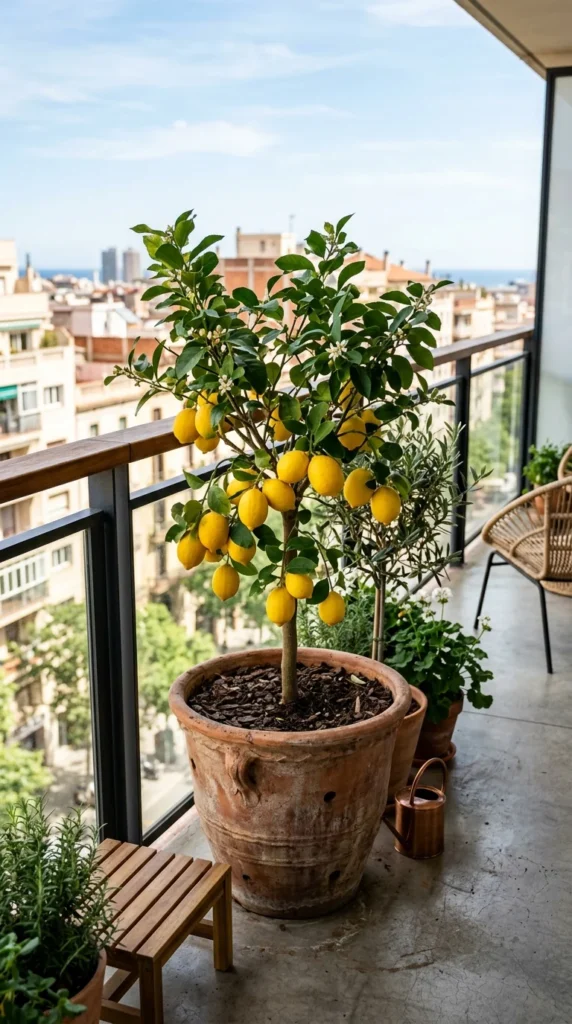
You don’t need an acre of land to grow fruit. Dwarf varieties of citrus, apples, and figs are specifically bred to thrive in containers. An edible mini-orchard adds a layer of sensory delight to your balcony—from the fragrant blossoms of a lemon tree to the visual appeal of ripening fruit. Ensure these trees are placed in the sunniest spot available and use a high-quality organic fertilizer to support fruit production. Growing your own food, even on a small scale, provides a rewarding connection to the cycles of nature.