
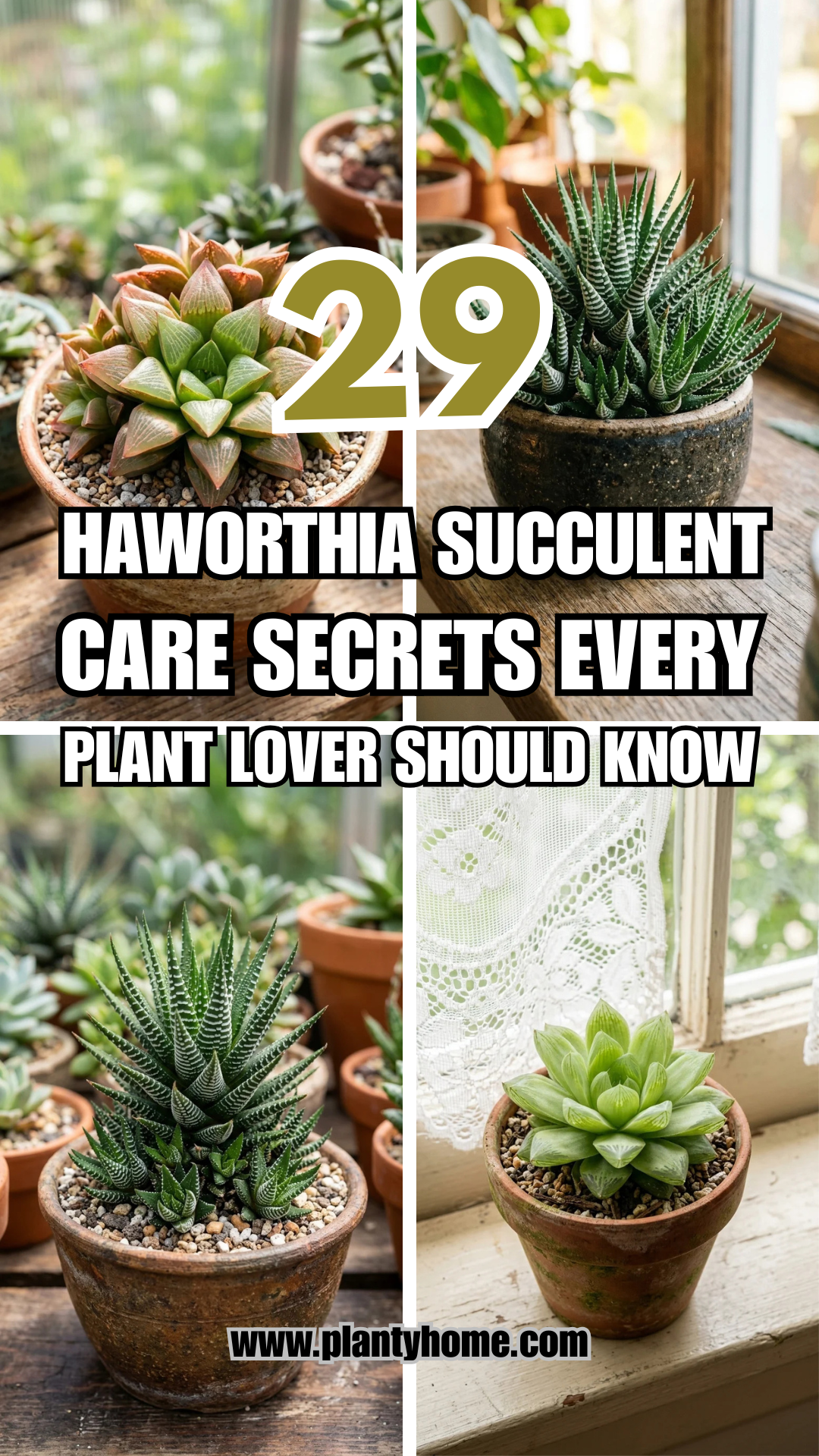
Haworthias are the “jewels” of the succulent world. Known for their architectural shapes, translucent “windows,” and resilience, these small South African natives are perfect for indoor gardeners. Unlike many other succulents that demand scorching desert sun, Haworthias are surprisingly shade-tolerant, making them ideal for windowsill life. However, mastering their care requires understanding their unique biological quirks.
1. Indirect Light
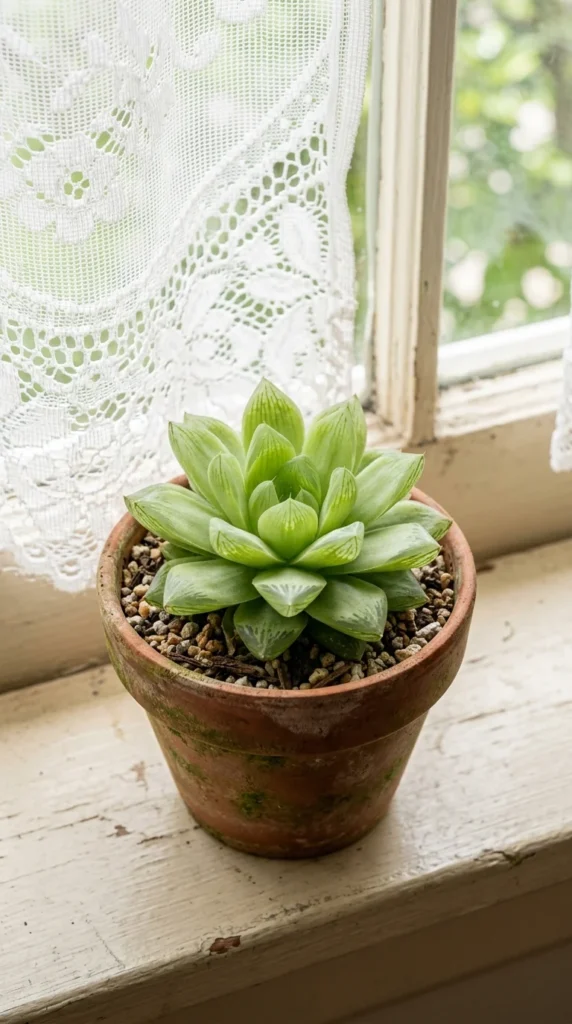
The biggest secret to a thriving Haworthia is avoiding direct, mid-day sun. In their natural habitat, they often grow tucked under the shade of bushes or rock crevices. If your plant turns deep red, purple, or brown, it is likely getting too much UV exposure. Aim for bright, filtered light to maintain their lush green or translucent appearance.
2. Gritty Soil
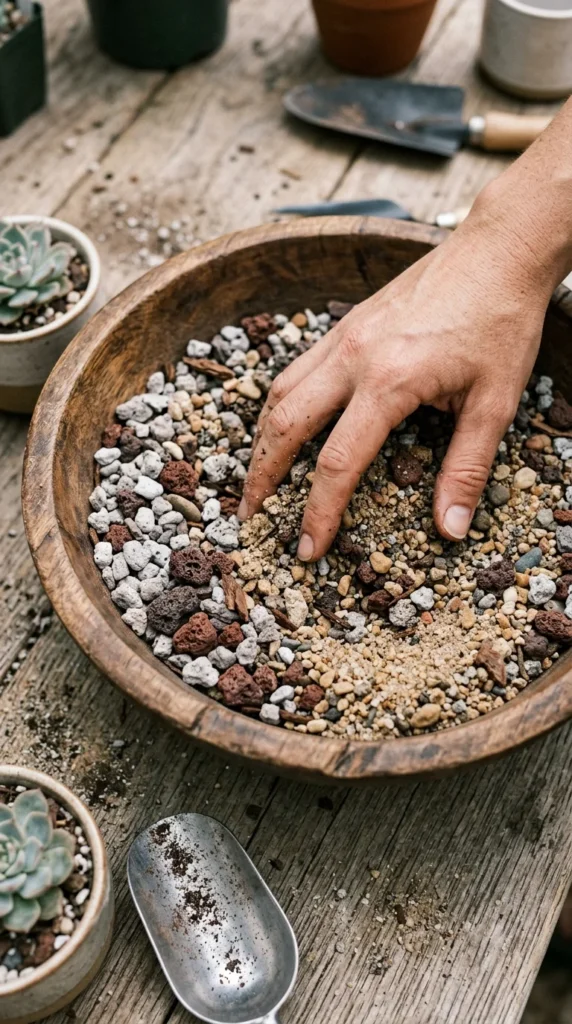
Standard potting soil is the enemy of the Haworthia. These plants require an incredibly porous medium. A “gritty mix” consisting of 50-70% inorganic material like pumice, perlite, or crushed granite is essential. This allows the thick, fleshy roots to breathe and prevents the stagnant moisture that leads to rapid root rot.
3. Drainage Holes
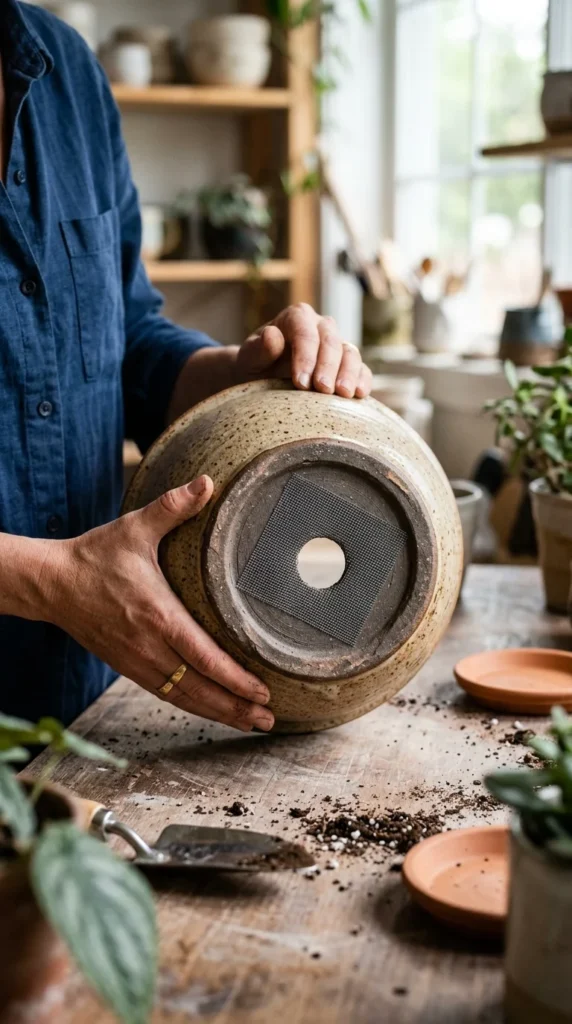
Never plant a Haworthia in a container without drainage. Because their roots are prone to suffocation, any standing water at the bottom of a pot will kill the plant within weeks. If you love a decorative cachepot that lacks a hole, keep the plant in a plastic nursery liner inside the decorative one so you can remove it for watering.
4. Deep Roots
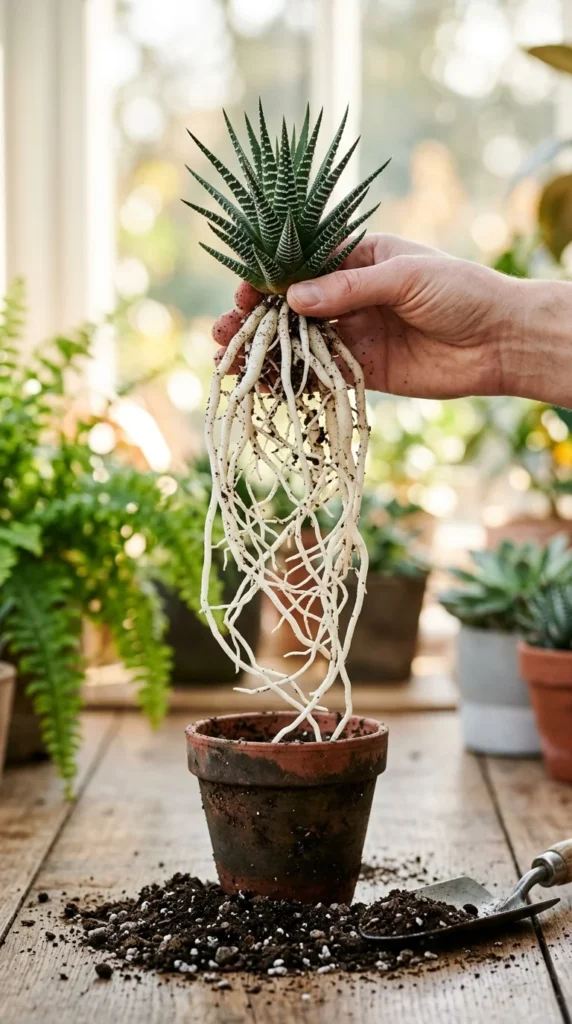
Unlike many succulents that have shallow, fibrous roots, Haworthias develop thick, carrot-like tuberous roots. These roots need vertical space. When choosing a pot, prioritize depth over width. A deeper pot allows the root system to establish itself properly, which in turn leads to a much larger and more stable rosette above ground.
5. Growth Cycles
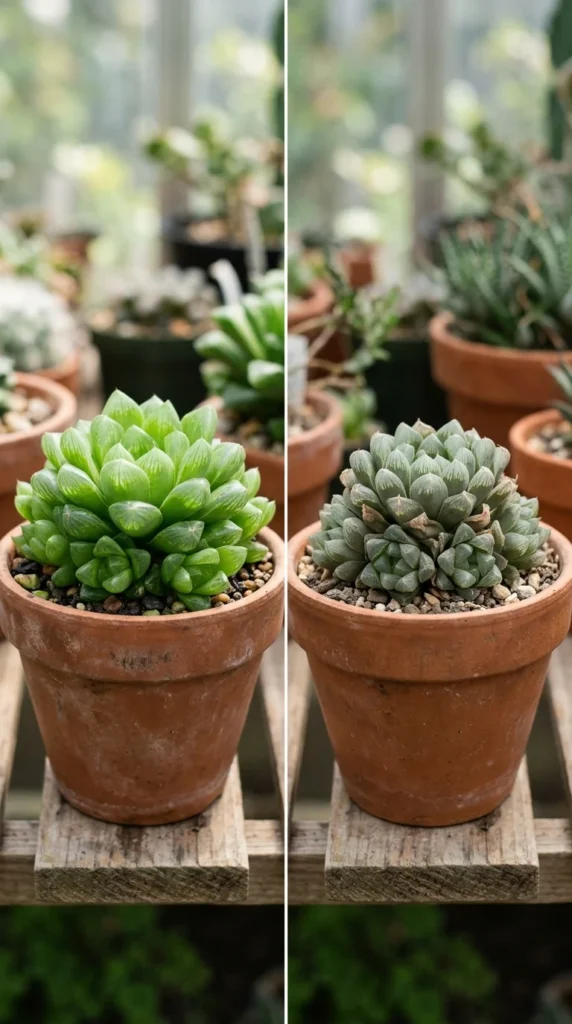
Haworthias are opportunistic growers but typically have a semi-dormant period during the hottest months of summer. During this time, they may stop growing entirely to conserve moisture. If you notice your plant looks “stalled” in July or August, don’t increase water; instead, respect its rest period and wait for the cooler temperatures of autumn to resume regular care.
6. Soak-and-Dry
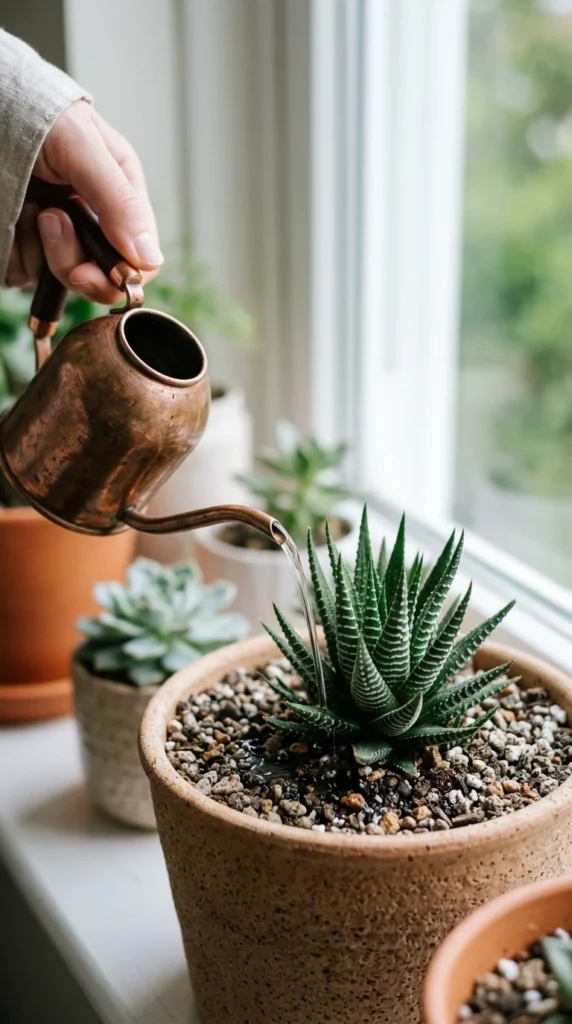
The golden rule of watering is the “soak and dry” method. Drench the soil until water runs out of the drainage holes, then wait until the potting medium is bone dry all the way to the bottom before watering again. Using a wooden skewer to check the moisture levels deep in the pot is a pro secret for preventing overwatering.
7. Leaf Puddles
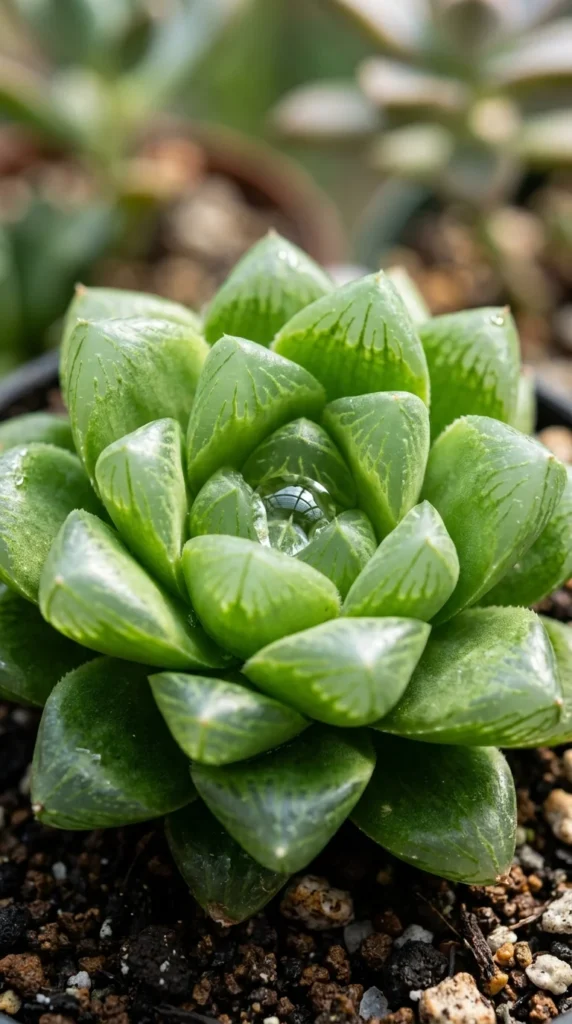
When watering, never pour water into the center of the rosette. Water trapped between the tightly packed leaves cannot evaporate easily and will lead to crown rot. Always water at the base of the plant, near the soil line. If you accidentally get water in the crown, use a straw to blow it out or a paper towel to dab it dry.
8. Humidity Control
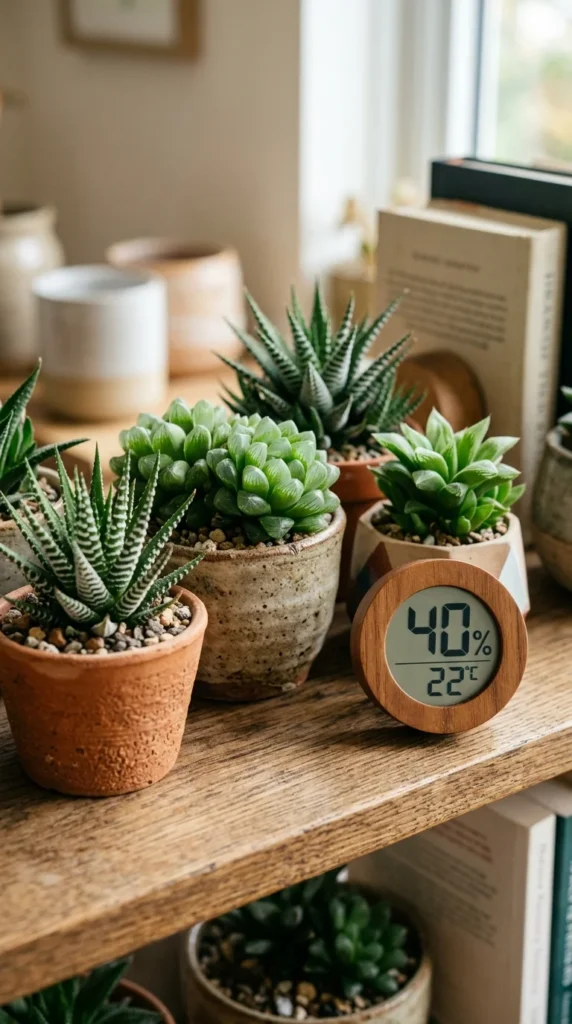
Haworthias prefer low to moderate humidity. While they can tolerate typical household humidity, they struggle in steamy bathrooms or kitchens with poor ventilation. High humidity combined with low light is a recipe for fungal infections. Keep them in a room with good air circulation to ensure the soil dries out efficiently.
9. Offsets
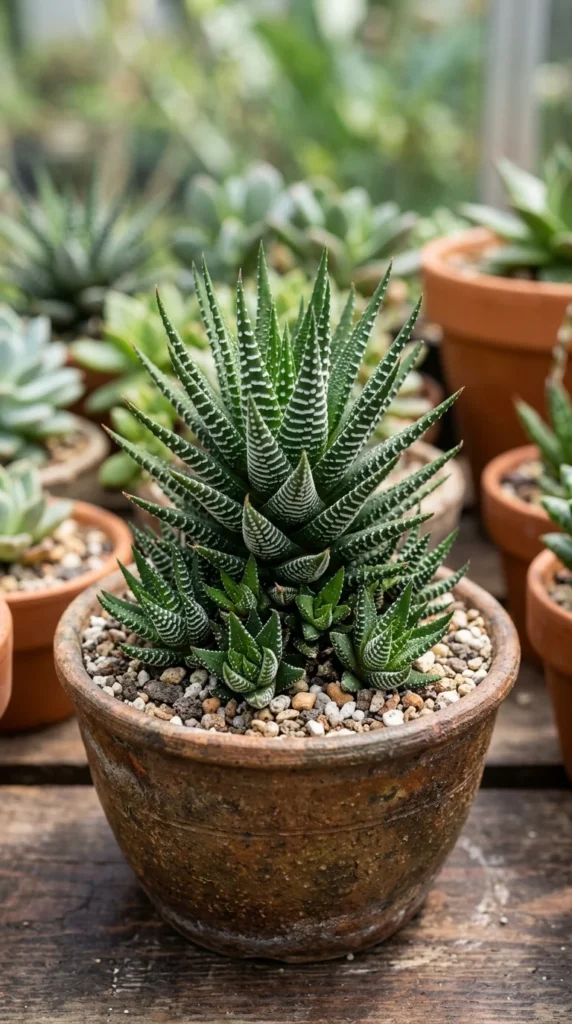
Haworthias are generous clumping plants. They produce “pups” or offsets around the base. The secret to a beautiful specimen is knowing when to leave them and when to take them. A large, crowded clump looks natural and impressive, but if you want to propagate, wait until the pup is at least one-third the size of the mother plant before detaching it with a sterile blade.
10. Leaf Cuttings
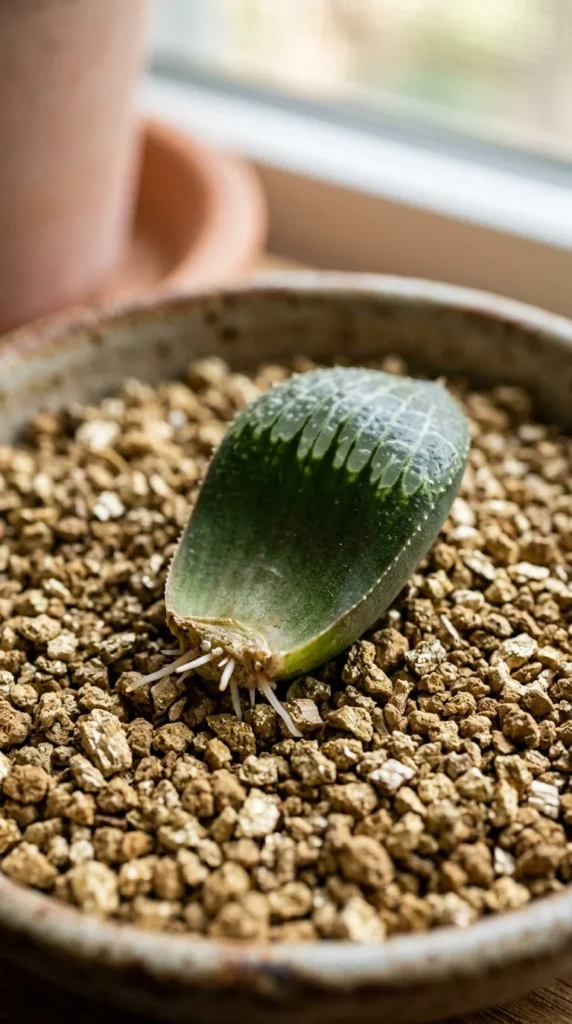
While harder than other succulents, you can grow Haworthias from leaf cuttings. The secret is ensuring you get a piece of the “stem tissue” with the leaf. A clean break at the very base is required. Place the leaf on dry soil in a shaded spot and be patient—it can take months for a Haworthia leaf to produce a miniature plantlet.
11. Terracotta Pots
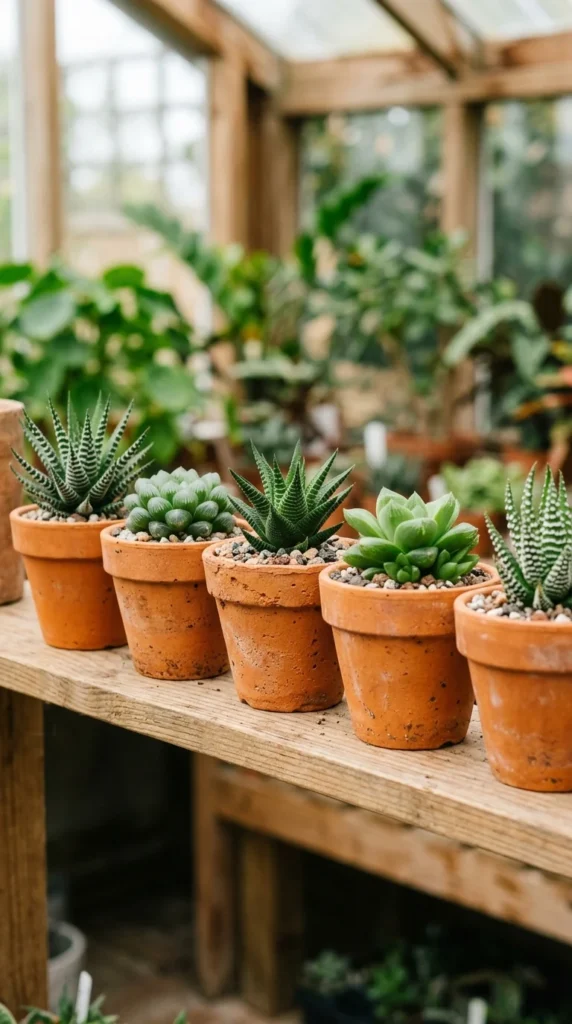
If you are a “chronic overwaterer,” terracotta is your best friend. The porous nature of unglazed clay allows moisture to evaporate through the walls of the pot, not just the top of the soil. This provides an extra layer of protection against root rot, though you may find you need to water slightly more frequently than if you used plastic or ceramic.
12. Pot Tightness
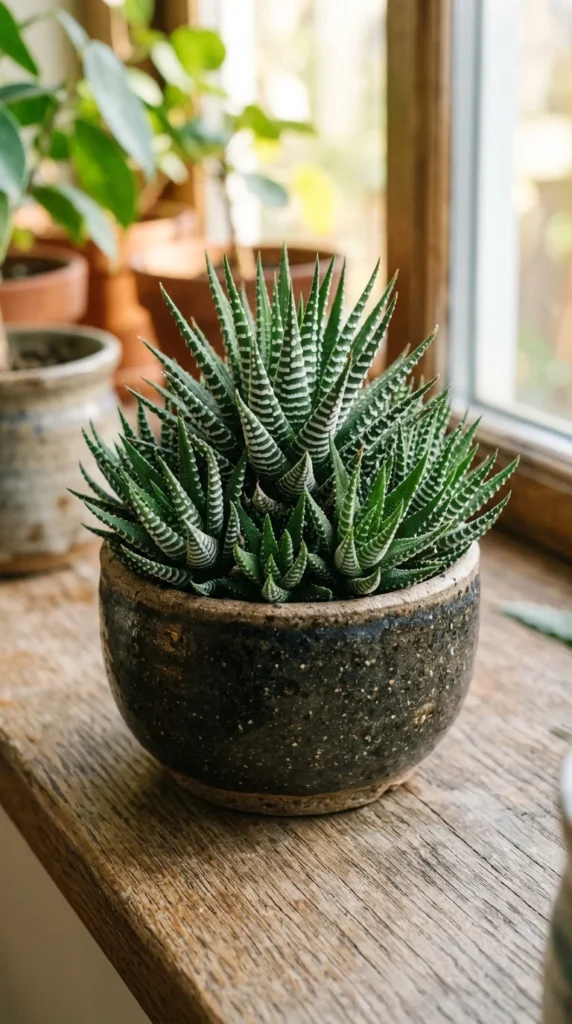
Haworthias actually enjoy being slightly root-bound. They don’t mind a “snug” pot. Moving a small Haworthia into a giant pot is a common mistake; the excess soil holds onto too much water for the small root system to handle. Only upgrade the pot size when the plant’s roots are literally pushing it out of the container.
13. Fertilizing
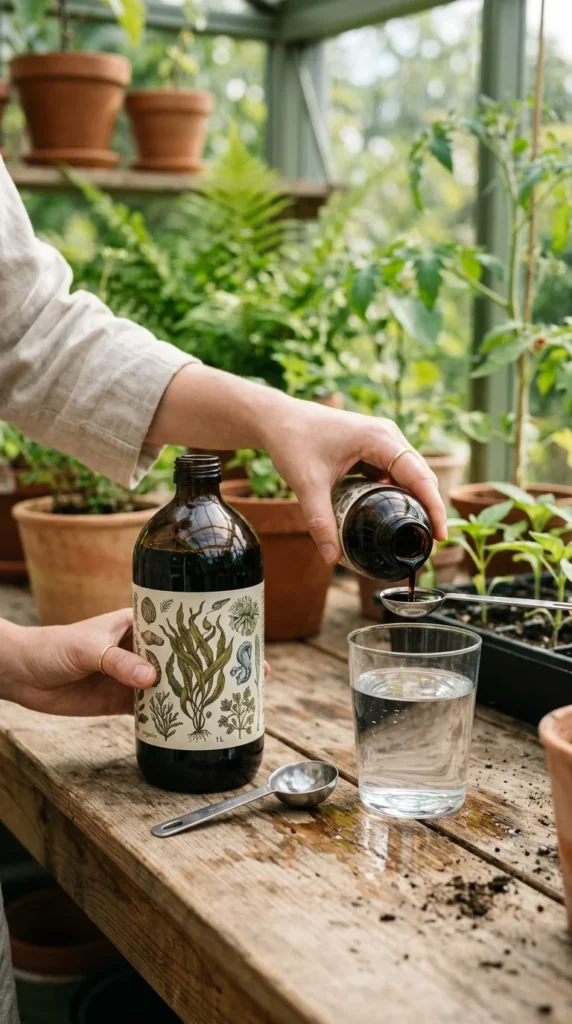
Haworthias are slow growers and do not require heavy feeding. The secret is to use a balanced, water-soluble fertilizer diluted to 1/4th the recommended strength. Only fertilize during the active growing seasons (Spring and Autumn). Over-fertilizing can lead to “leggy” growth and can actually burn the sensitive tuberous roots.
14. Color Stress
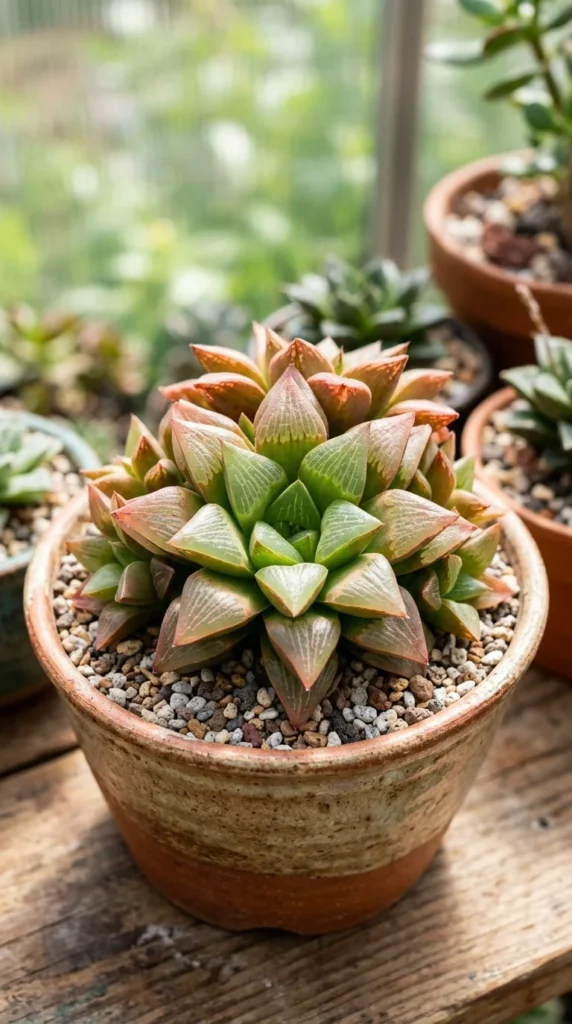
Not all color changes are bad. “Stress colors” are a natural reaction to bright light or cool temperatures. If your plant turns a beautiful shade of bronze or red but the leaves remain firm and plump, it’s perfectly healthy. This is a sign that the plant is producing anthocyanins to protect itself from light, much like a human tan.
15. Window Leaves
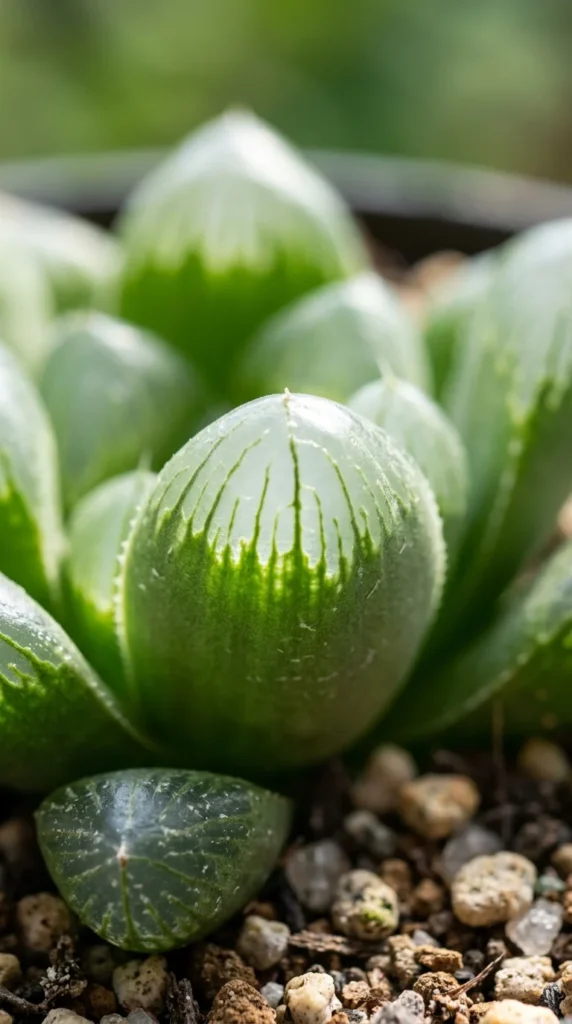
Many Haworthias, like H. cooperi or H. retusa, have transparent tips. These are called “epidermal windows.” In the wild, the plant may grow almost entirely buried in sand, with only these windows exposed to the light. This allows the plant to photosynthesize internally while staying protected from the harsh sun and wind. Keep these windows clean for maximum health!
16. Dusting
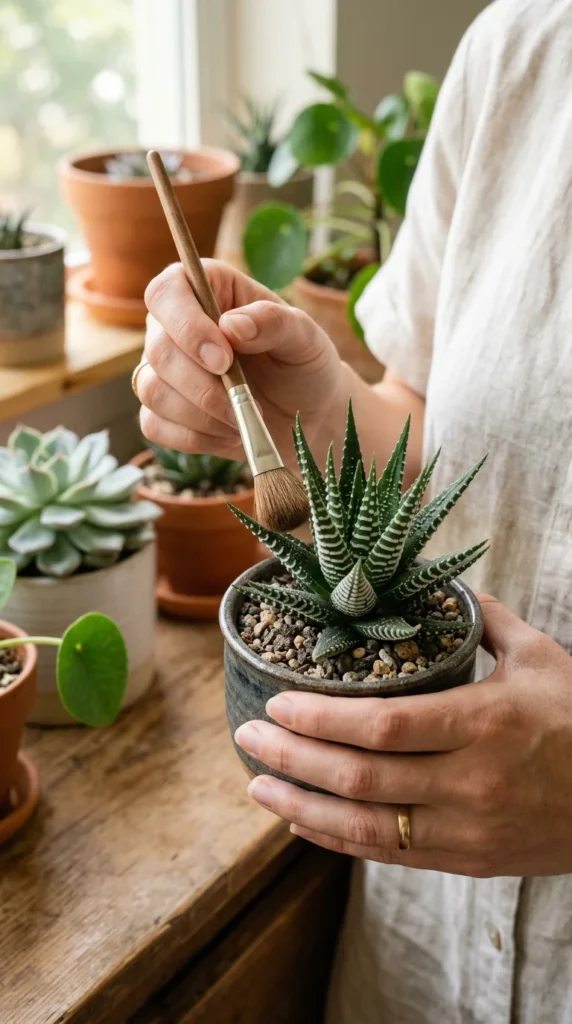
Dust accumulation on the leaves can block sunlight and hinder photosynthesis. Because Haworthias have intricate textures (like the white tubercles on a Zebra Plant), they trap dust easily. Periodically use a soft, dry paintbrush or a damp cloth to clean the leaves. This keeps the plant looking vibrant and ensures it’s getting all the light it needs.
17. Pests
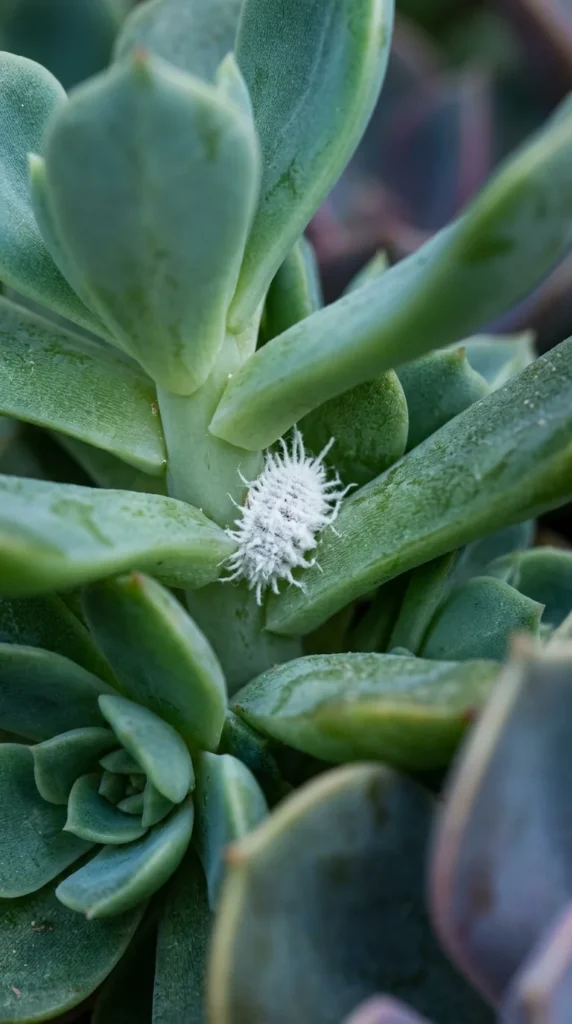
The most common enemy of the Haworthia is the mealybug. These tiny, white, cottony pests love to hide in the tight crevices at the base of the leaves. The secret to eradication is a cotton swab dipped in 70% isopropyl alcohol. Dab the bugs directly to kill them. Check your plants weekly to catch an infestation before it spreads.
18. Airflow
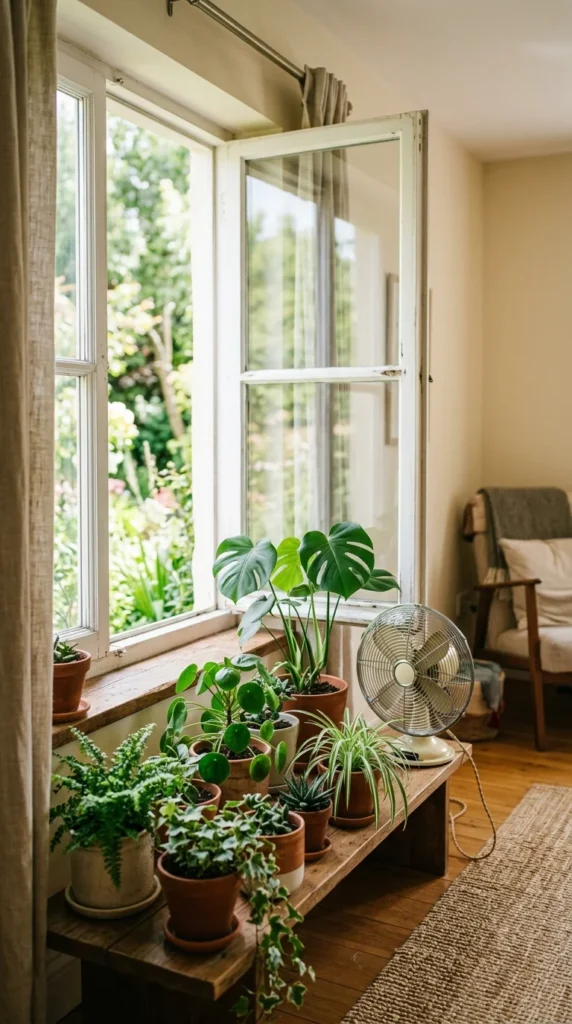
Stagnant air is a silent killer. Haworthias thrive when there is a gentle breeze or consistent air movement. This helps the soil dry out after watering and prevents the growth of fungal pathogens. If you keep your plants in a corner or a closet-like shelf, consider adding a small USB fan to keep the air moving.
19. Repotting
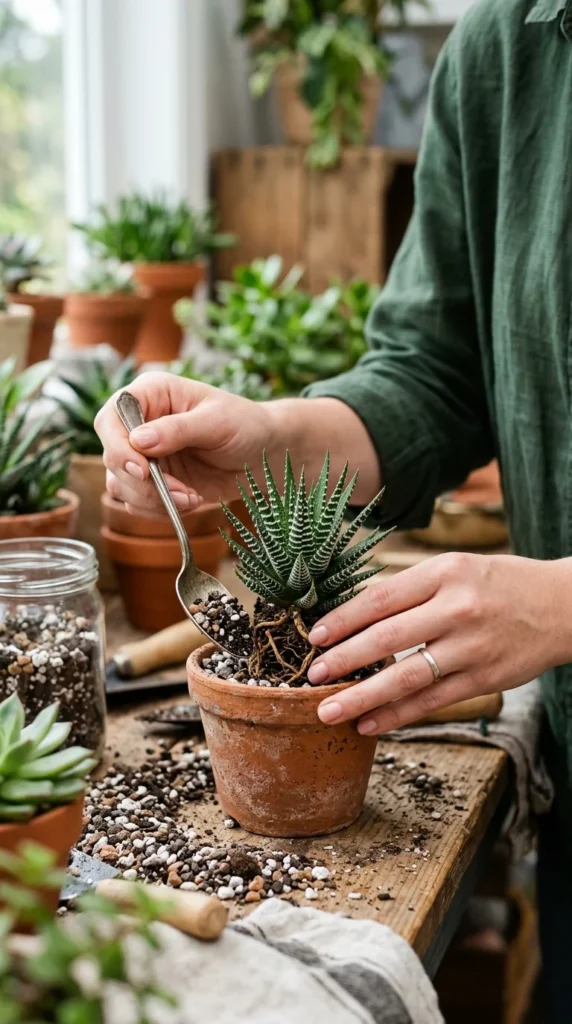
Repotting should generally happen every 2 to 3 years. Over time, the inorganic components of the soil can break down, or the “fines” (tiny particles) can settle at the bottom, clogging drainage. When repotting, gently shake off the old soil and inspect the roots. Snip off any dead, shriveled, or black roots with sterilized scissors before placing the plant in fresh mix.
20. Stem Rot
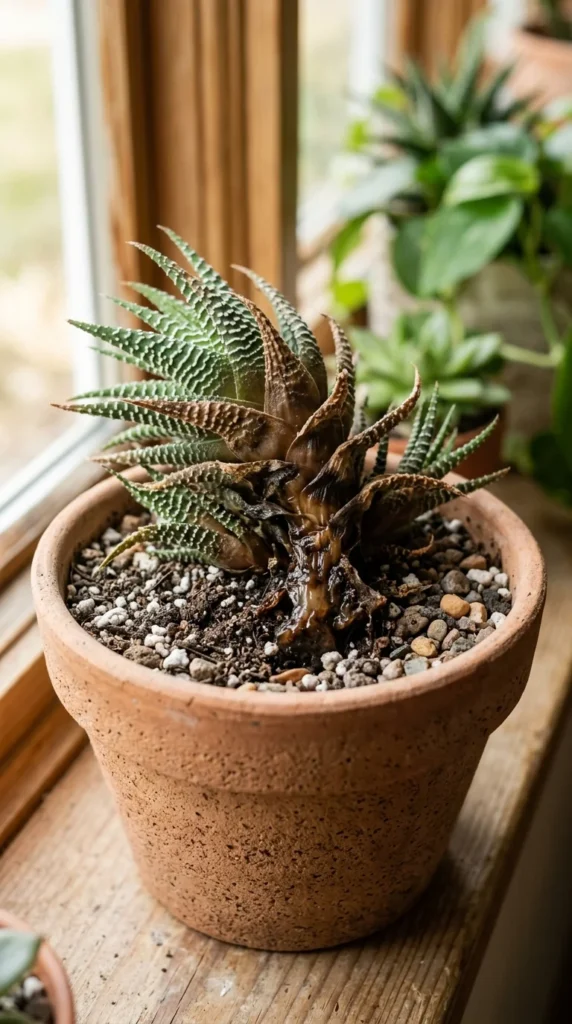
If the leaves at the bottom of your Haworthia start turning yellow and mushy, you are likely facing stem rot. This is almost always caused by overwatering. The secret to saving a plant with early rot is to act fast: pull it out of the soil, cut away the rotted tissue until you see healthy green/white flesh, let it callous for a week, and then try to re-root it in dry pumice.
21. Sunburn
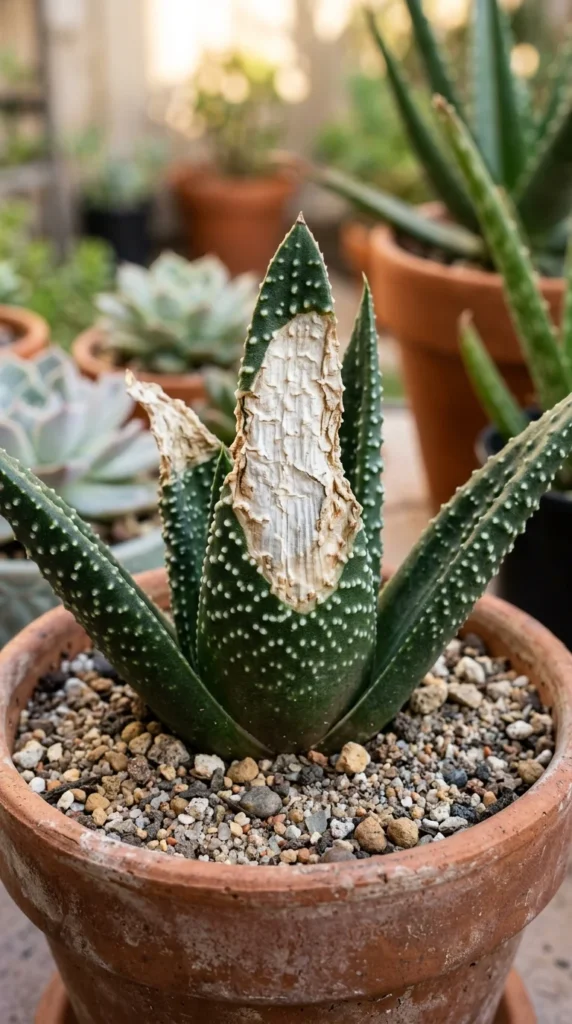
Unlike stress coloring, sunburn is permanent damage. It appears as white or tan “bleached” spots on the leaves. This usually happens when a plant is moved from a dark store to a bright window too quickly. The secret is “acclimation”—slowly move the plant into brighter light over the course of two weeks to let it build up its defenses.
22. Ethylene Sensitivity
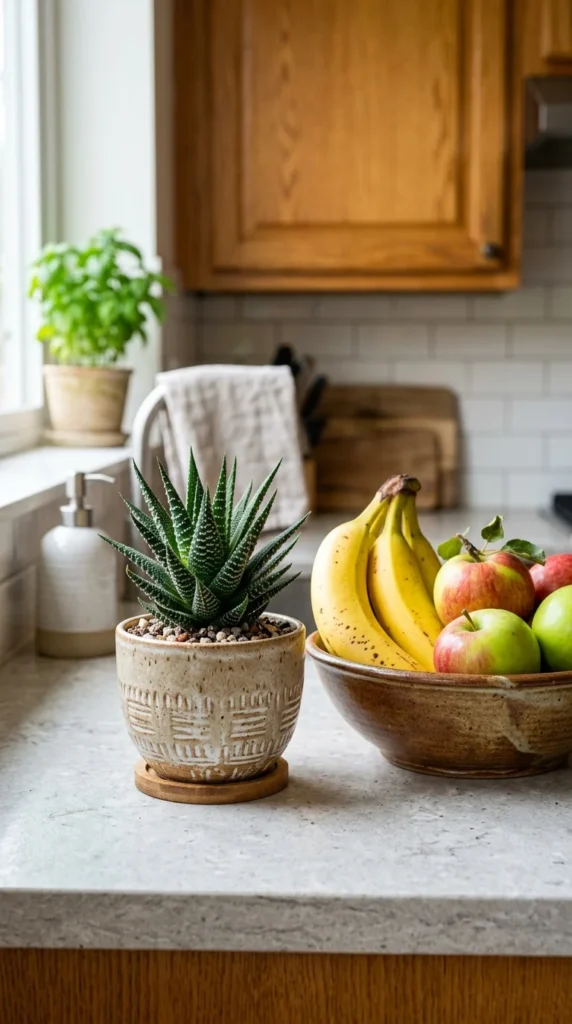
A little-known secret is that Haworthias can be sensitive to ethylene gas, which is produced by ripening fruit like bananas and apples. Exposure to high levels of ethylene can cause the plant to drop its flowers prematurely or lead to stunted growth. Keep your succulent shelf away from your fruit bowl for the best results.
23. Water Quality
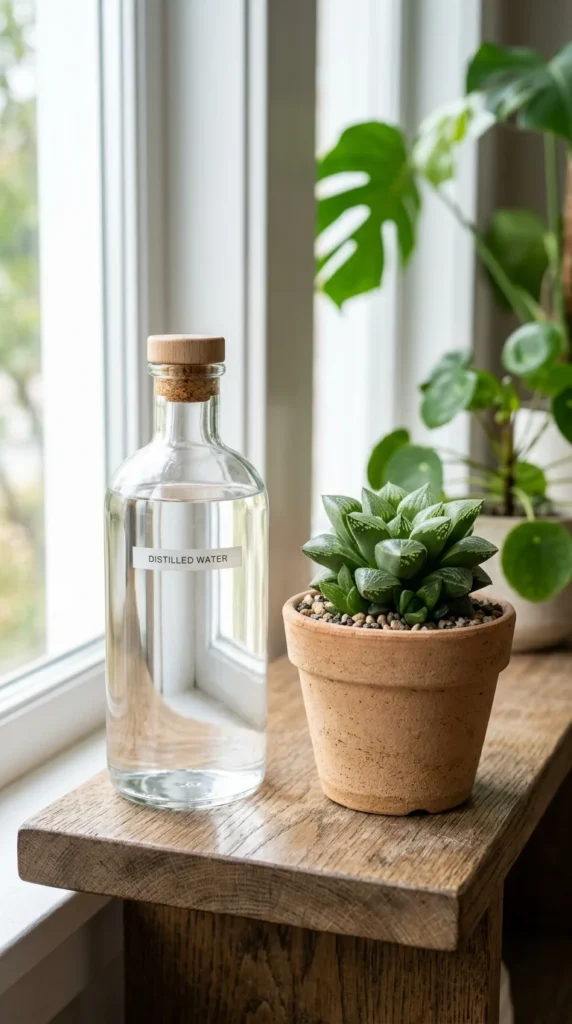
If you notice white, crusty buildup on the leaves or the rim of the pot, your tap water might be too “hard” (full of minerals). While Haworthias aren’t as sensitive as ferns, using filtered water or rainwater can prevent mineral burn on the roots and keep the leaves looking pristine.
24. Root Health
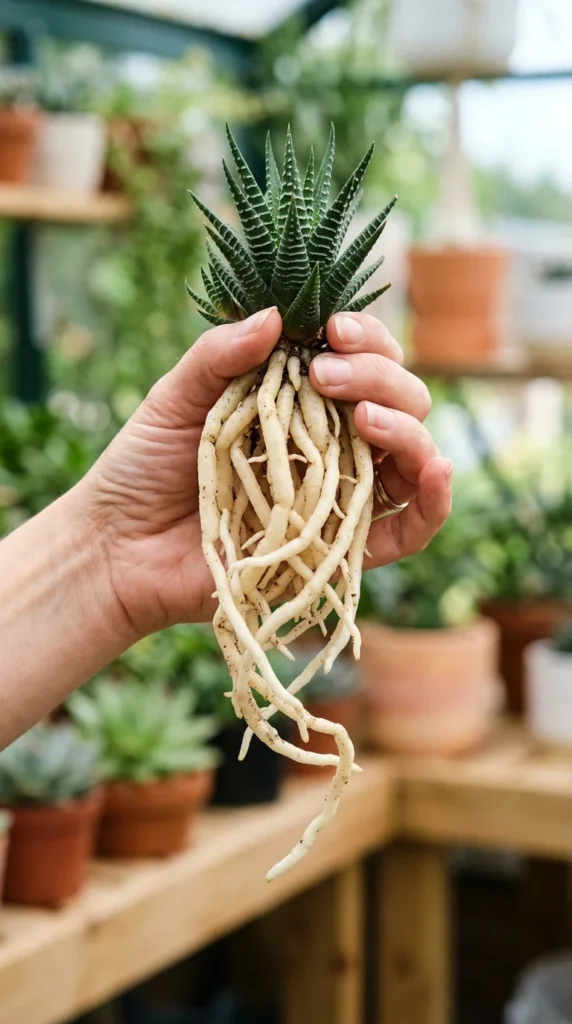
Healthy Haworthia roots should be firm and white or light tan. If you pull a plant up and the roots are hollow, papery, or black, the plant has “dropped” its roots. This often happens during extreme heat or extreme dryness. Don’t panic; Haworthias are experts at regrowing roots. Just clean the base and set it on top of slightly damp (not wet) gritty mix.
25. Dormancy Signs
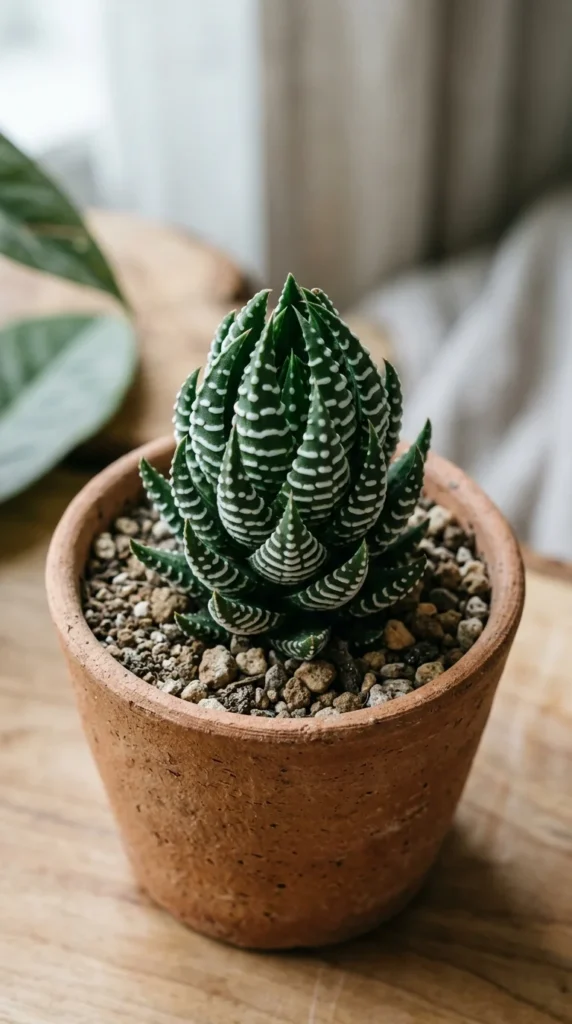
When a Haworthia goes dormant, it will often “hunker down.” The leaves may curve inward, protecting the center of the rosette. This is a survival mechanism. When you see this, it is a signal to reduce watering significantly. Forcing a dormant plant to grow by overwatering it will usually lead to rot rather than new leaves.
26. Flowering
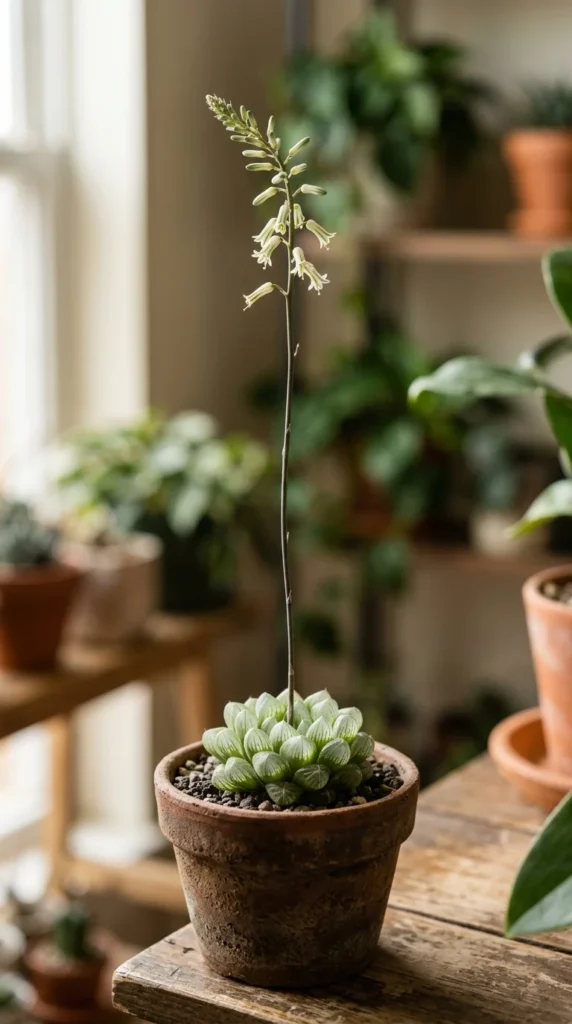
Haworthia flowers are not particularly showy—they are usually small, white, and grow on very long, thin stalks. However, flowering takes a lot of energy. If your plant is young or struggling, the secret to helping it grow faster is to snip off the flower stalk as soon as it appears. This redirects energy back into leaf and root development.
27. Variegation
Variegated Haworthias (those with yellow or white stripes) are highly prized but more delicate. Because the yellow parts lack chlorophyll, these plants grow slower and are more prone to sunburn. They require slightly more light than their all-green counterparts to maintain their color, but they are also more sensitive to heat.
28. Grouping
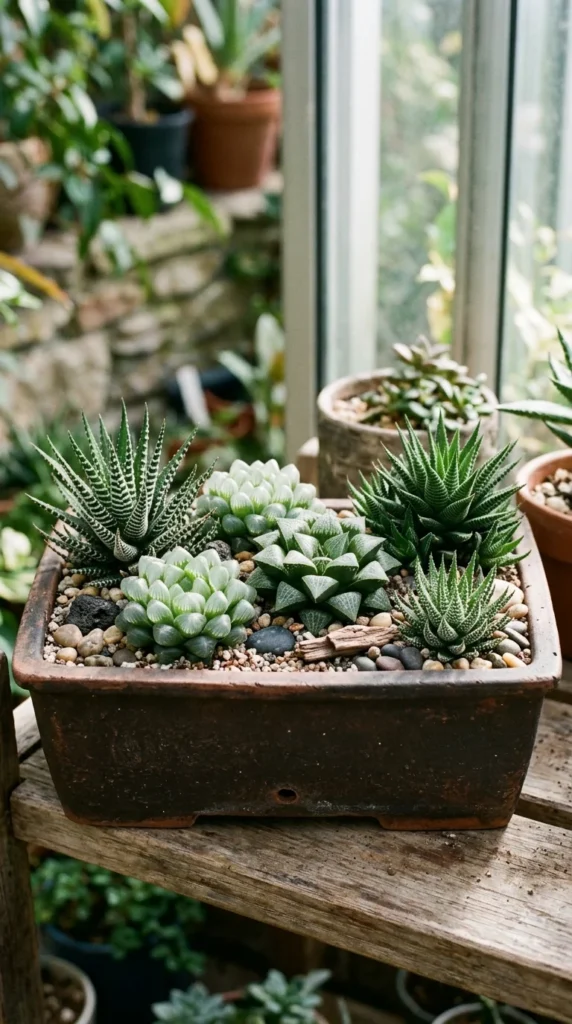
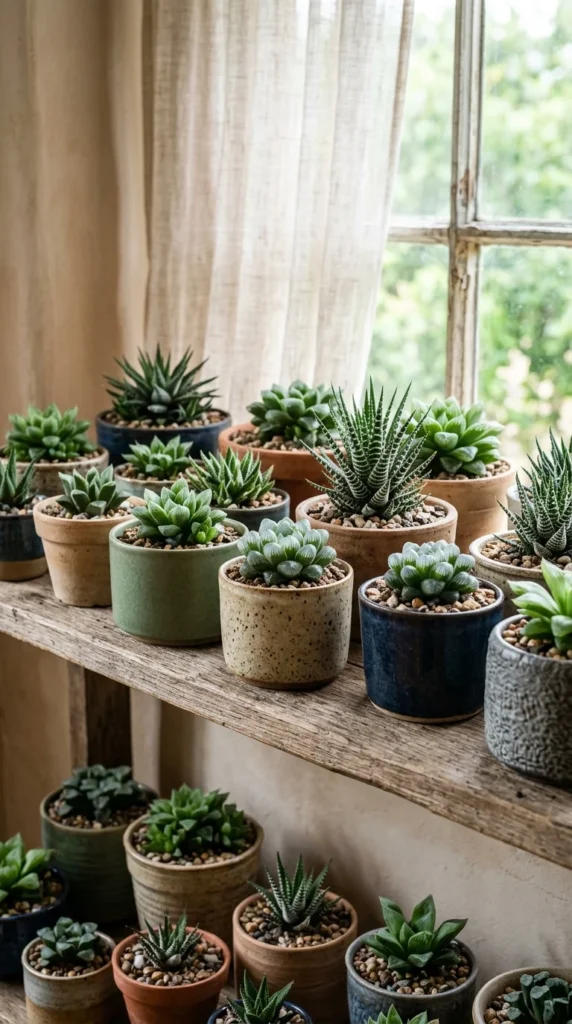
Haworthias love company. Grouping several plants together in a large, shallow bowl can create a micro-environment that stabilizes temperature and humidity. Since most Haworthias have similar light and water requirements, they make excellent companions for “community pots,” provided you give each plant enough room for its roots to expand.
29. Observation
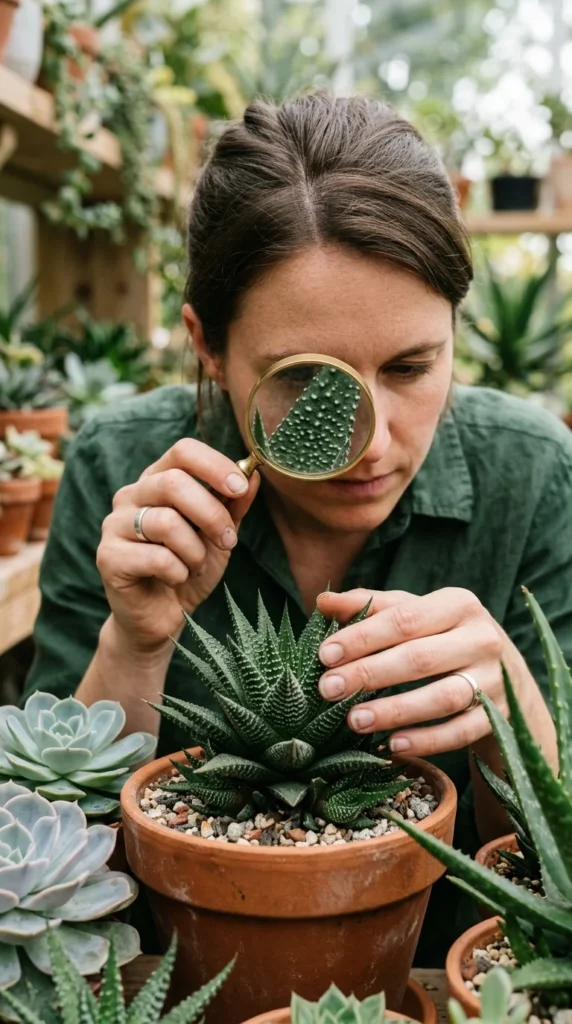
The ultimate secret to Haworthia care is simple observation. These plants “talk” to you. If the leaves are shriveled, it needs more water. If the leaves are translucent and mushy, it has too much. If it’s stretching (etiolating) and losing its compact shape, it’s begging for more light. Spend a few minutes each week really looking at your plant, and it will reward you with years of slow, steady beauty.