
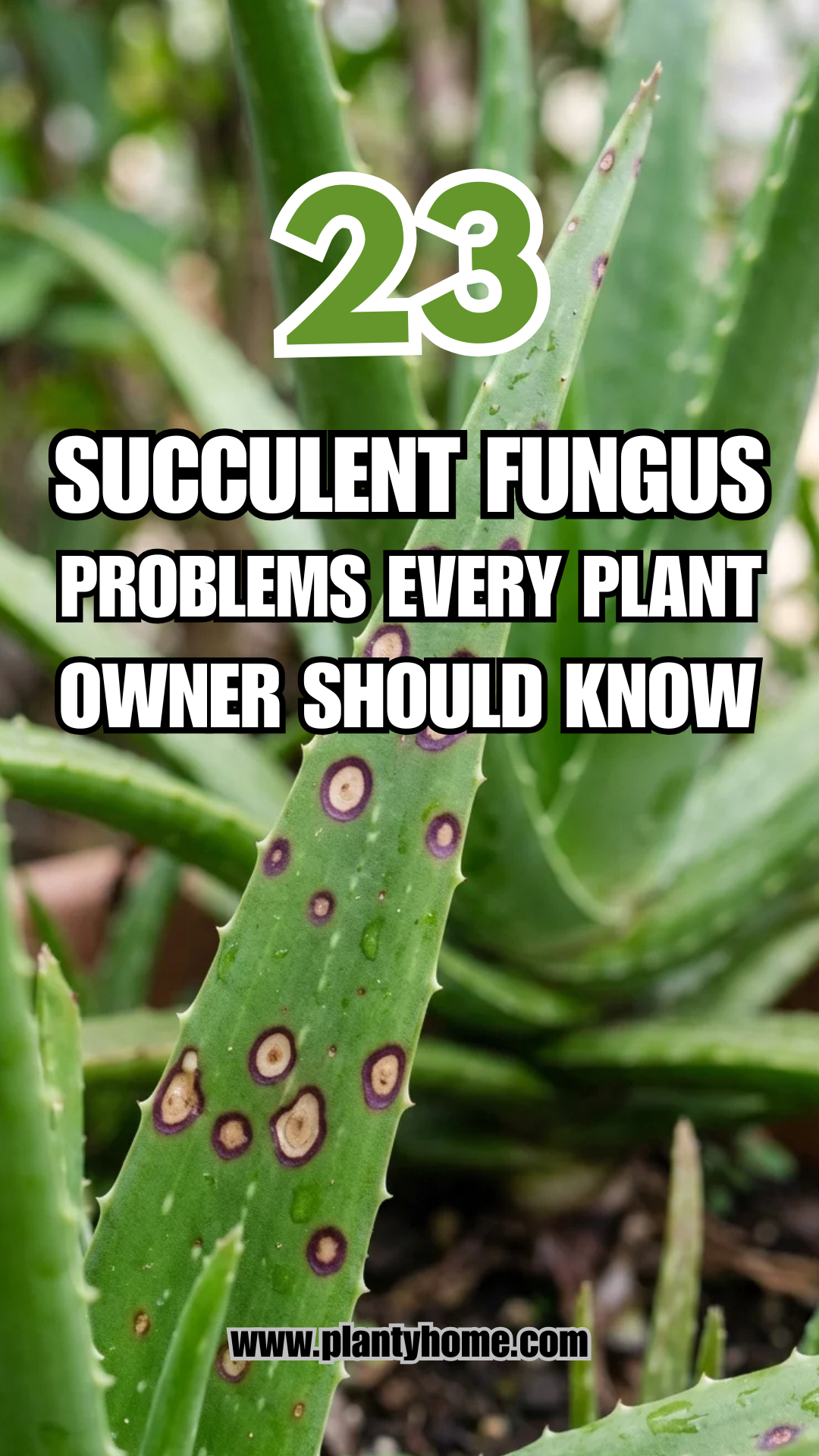
Succulents are often touted as the “un-killable” plants of the botanical world. Their fleshy leaves, structural beauty, and low-maintenance reputation make them favorites for both novice and expert gardeners. However, succulents possess a secret vulnerability: they are highly susceptible to fungal infections. Because these plants store massive amounts of water in their tissues, any lapse in drainage or ventilation creates a literal breeding ground for microscopic spores.
Fungal issues can range from aesthetic blemishes to fatal systemic infections. Recognizing the signs early is the difference between a thriving desert garden and a pot full of mush. Here are 23 succulent fungus problems every owner should understand.
1. Root Rot
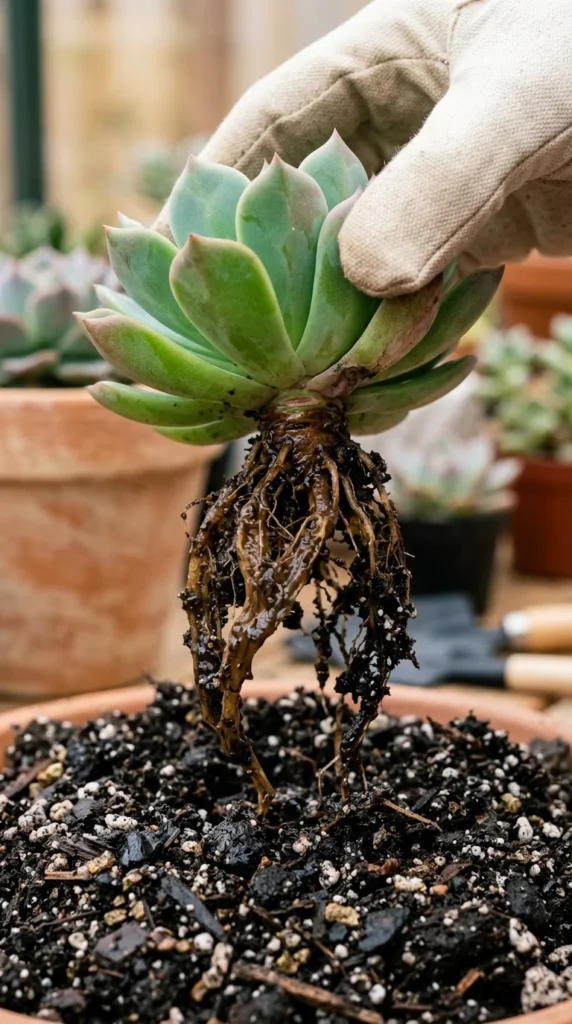
Root rot is the “silent killer” of the succulent world. Usually caused by Phytophthora or Pythium fungi, it occurs when the soil remains saturated for too long. The fungi attack the root system, causing it to turn black and slimy. By the time the upper leaves show signs of wilting or yellowing, the damage is often irreversible. Prevention requires well-draining soil and a pot with drainage holes.
2. Powdery Mildew
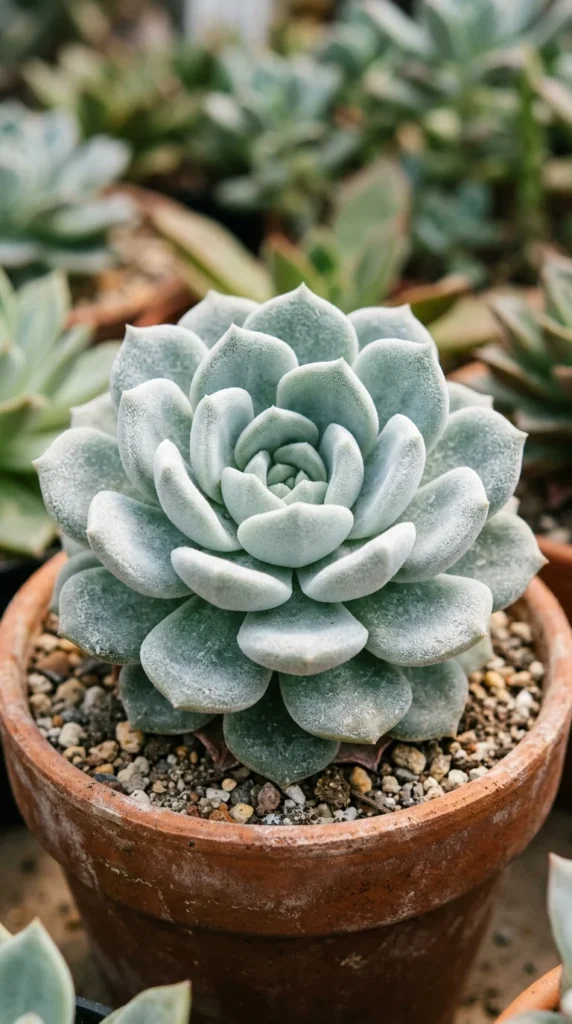
Powdery mildew looks exactly like it sounds: a fine, white, dusty coating on the leaves. It thrives in high humidity with poor air circulation. While it rarely kills the plant immediately, it saps nutrients and interferes with photosynthesis. If left unchecked, the leaves will distort, turn yellow, and eventually drop off.
3. Gray Mold
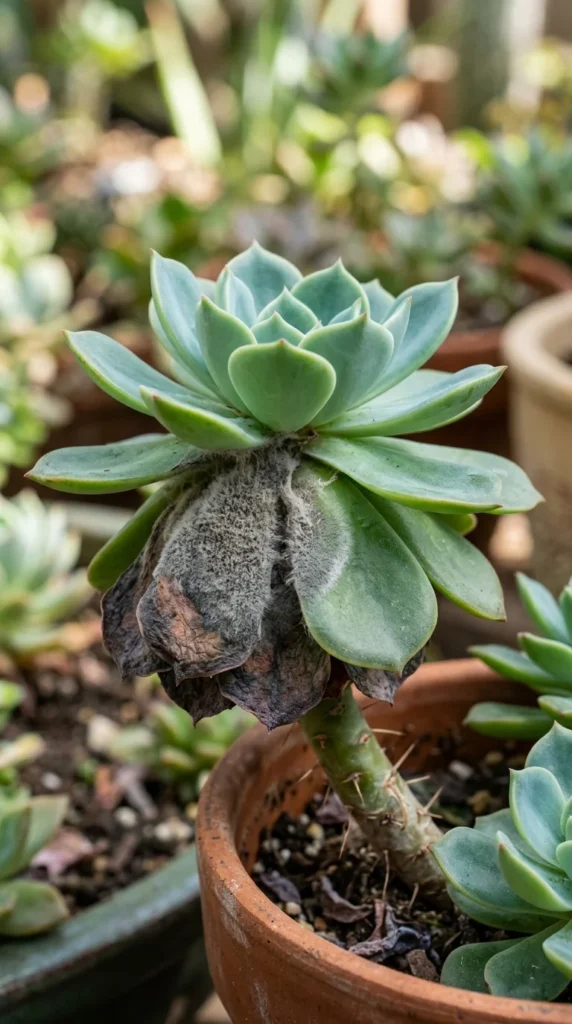
Also known as Botrytis cinerea, gray mold is a common opportunistic fungus. It typically enters through a wound—such as a broken leaf or a pruning cut—and spreads quickly in cool, damp conditions. You will notice a fuzzy, silver-gray growth that resembles a miniature forest of mold. It is highly contagious and can jump to neighboring plants through airborne spores.
4. Sooty Mold
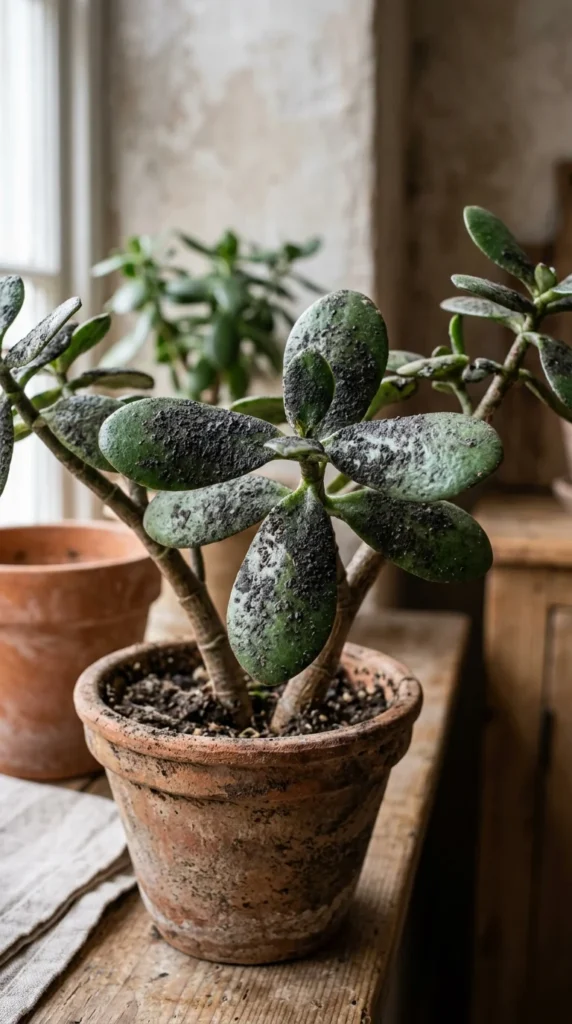
Sooty mold doesn’t actually feed on the succulent; it feeds on “honeydew,” the sticky excretion left behind by pests like aphids or mealybugs. The mold forms a black, crusty layer that blocks sunlight. To get rid of it, you must first treat the pest infestation and then gently wipe the leaves clean.
5. Fusarium Wilt
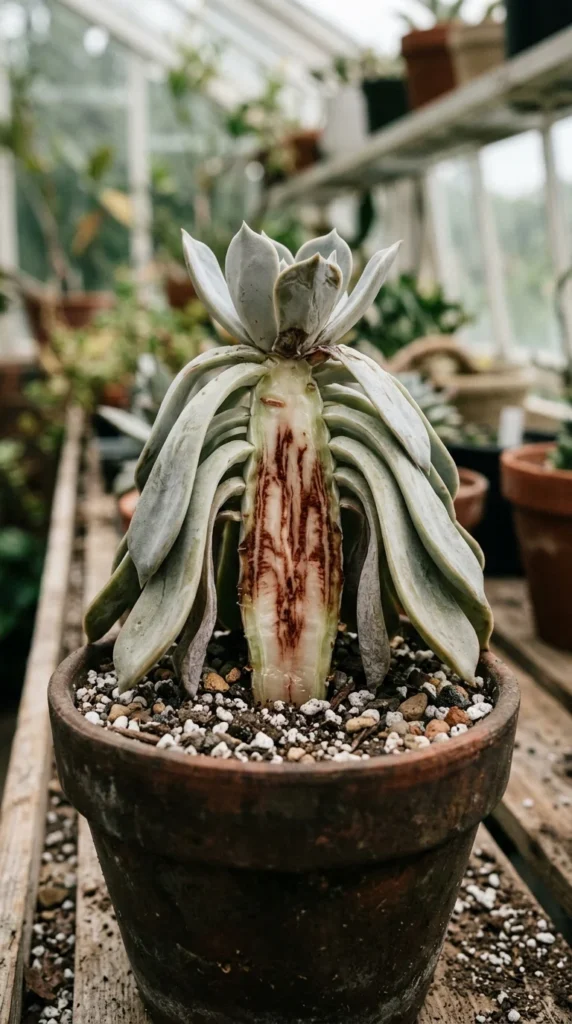
Fusarium is a soil-borne fungus that enters through the roots and blocks the plant’s vascular system (the plumbing). This prevents water from reaching the leaves, causing the plant to wilt even if the soil is wet. A tell-tale sign is a reddish-brown discoloration inside the stem if you were to take a cross-section.
6. Leaf Spot
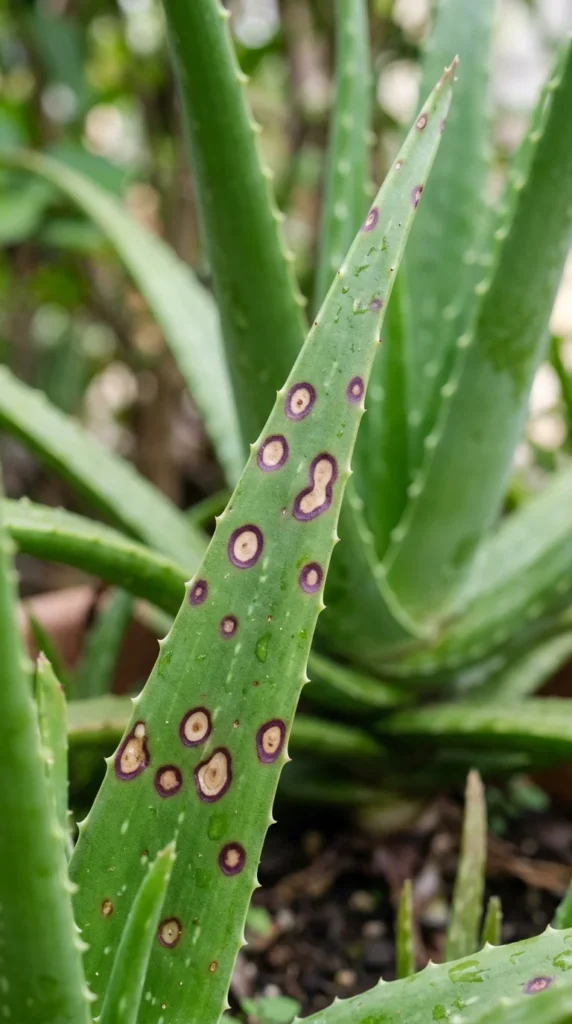
Leaf spot is a general term for various fungal pathogens like Anthracnose. It manifests as localized, circular lesions on the leaves. These spots often have a raised border and a sunken center. While often cosmetic, a severe case can cause the entire leaf to collapse and rot.
7. Damping Off
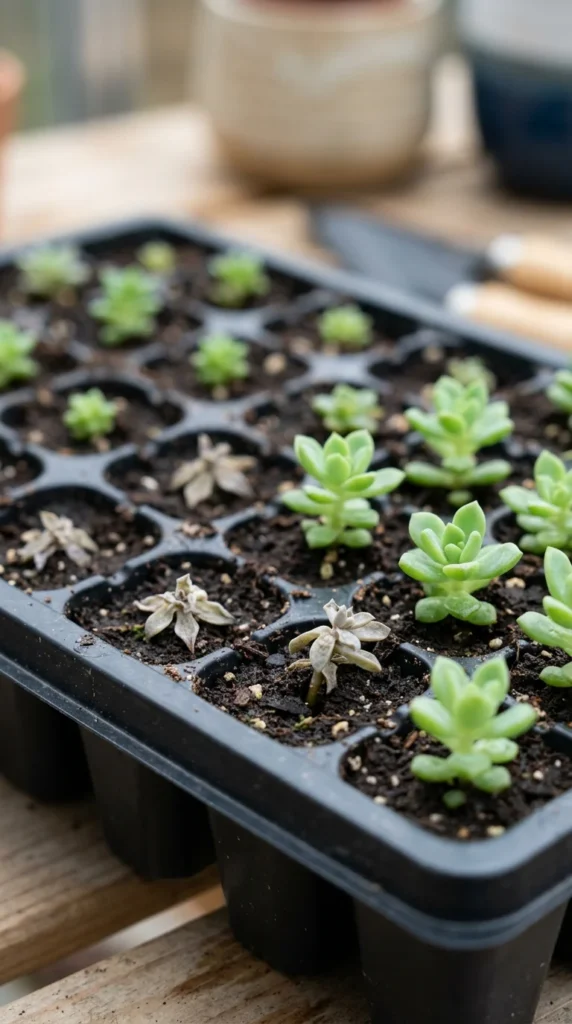
This is the bane of anyone growing succulents from seeds. Damping off is caused by various fungi that attack vulnerable young seedlings. The stem turns mushy at the soil line, and the seedling tips over and dies within hours. Sterilizing your seed-starting mix is the best way to prevent this tragedy.
8. Rust
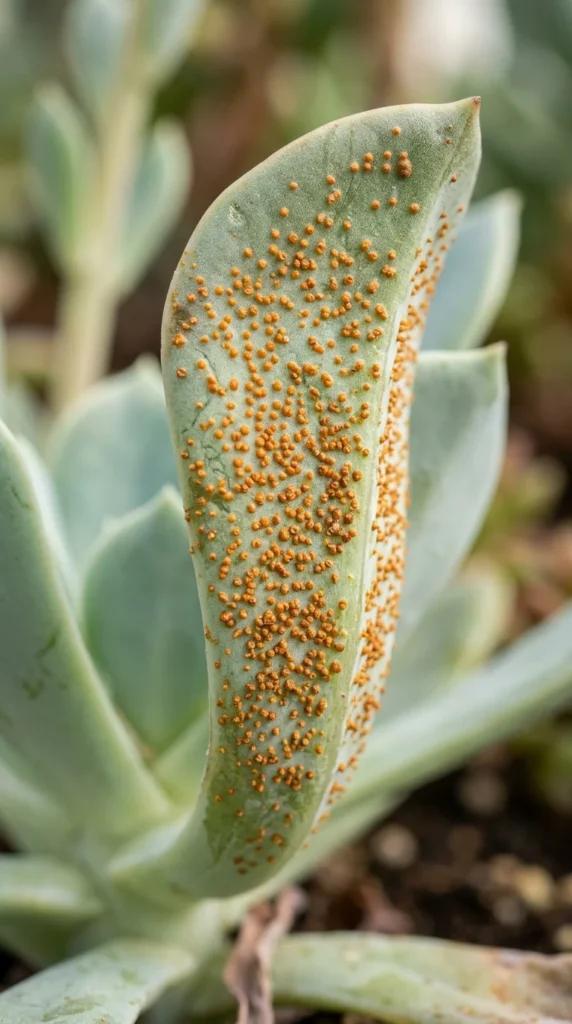
Rust fungus is easy to identify by its bright orange or reddish-brown pustules. These spores usually appear on the undersides of leaves first. It is common in areas with high humidity and stagnant air. If you see “rusty” dust on your fingers after touching a leaf, you have a rust problem.
9. Crown Rot
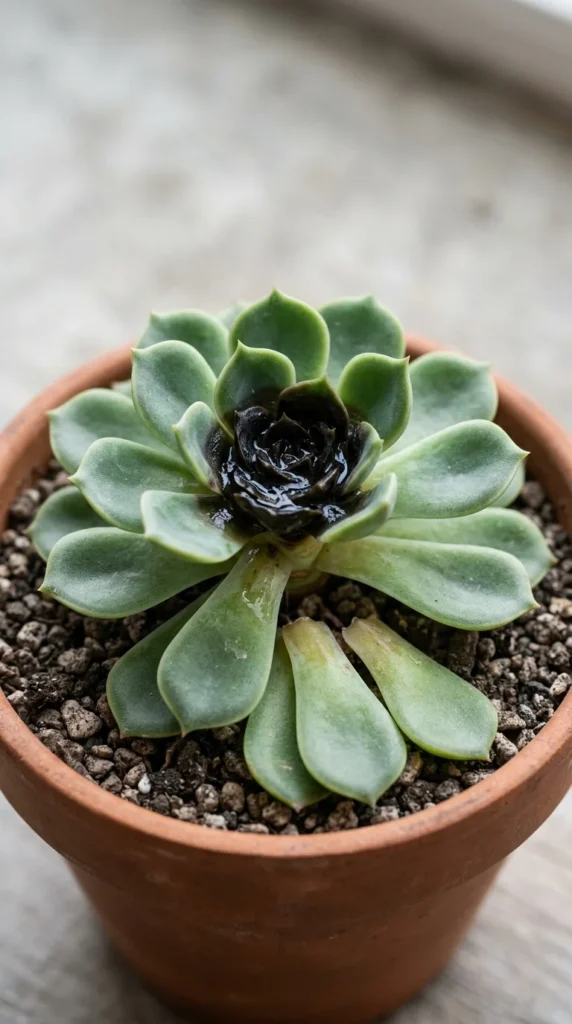
Crown rot occurs when water is trapped in the center of a rosette (the “crown”) for too long. Fungi like Rhizoctonia take hold, rotting the plant from the inside out. Once the crown is black and mushy, the plant is usually a total loss, though you might be able to salvage healthy outer leaves for propagation.
10. Cercospora
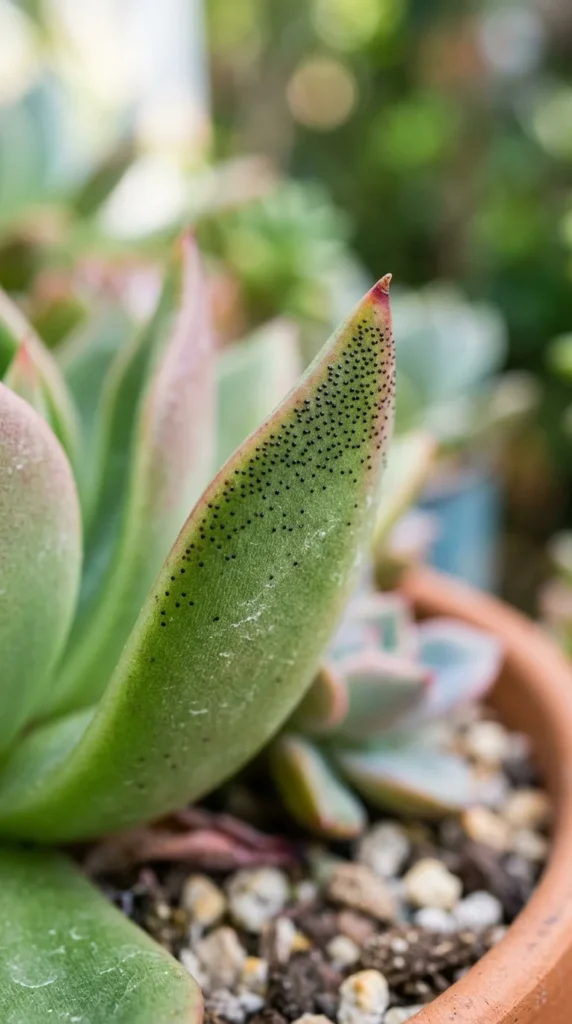
Cercospora leaf spot appears as small, dark dots that eventually merge into larger, irregular blotches. It is particularly common on Crassula and Aloe species. Unlike some other fungi, Cercospora thrives in warm, wet weather and can cause significant leaf drop if not treated with a fungicide.
11. Rhizoctonia
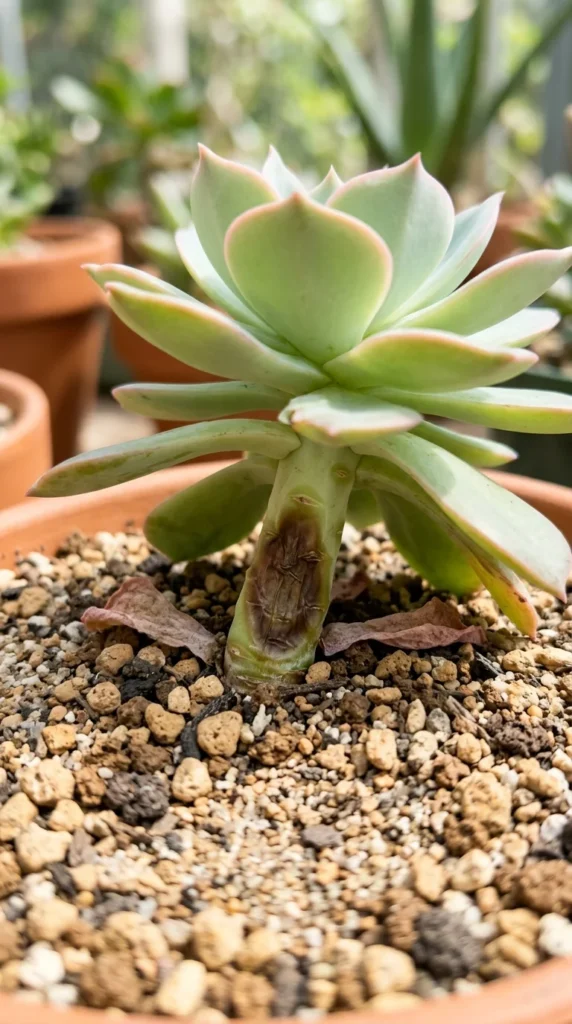
Rhizoctonia is a soil fungus that causes “wire stem” or bottom rot. It attacks the plant at the soil line, causing a dry, brown, shrunken area. Unlike wet rots, this can feel somewhat firm at first, but it eventually chokes off the plant’s ability to take up nutrients.
12. Southern Blight
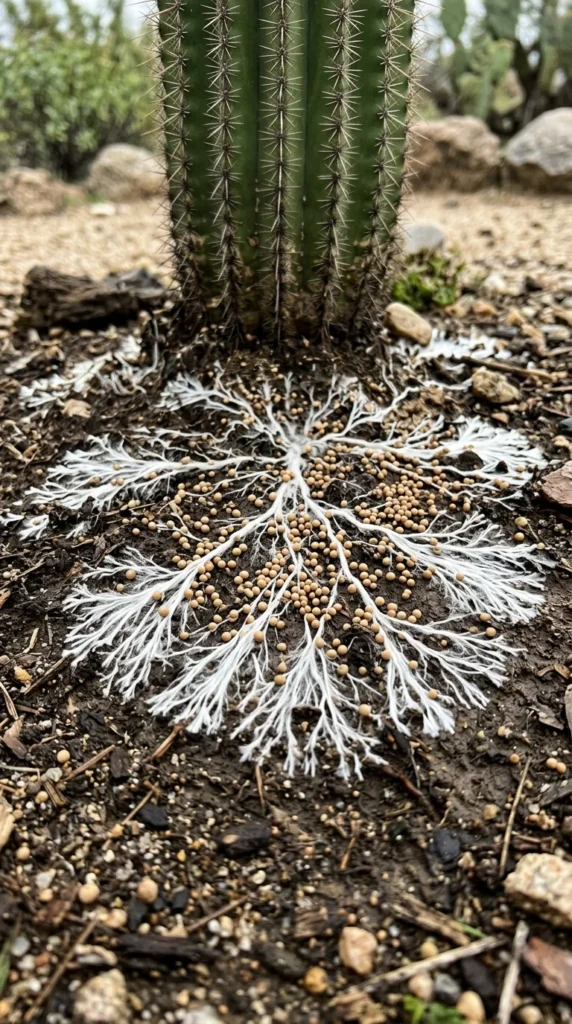
Sclerotium rolfsii, or Southern Blight, is a devastating fungus that thrives in hot, humid climates. It produces a white, web-like mycelium on the soil surface and small, round structures called sclerotia that look like tiny mustard seeds. This fungus can kill a succulent in a matter of days by girdling the stem.
13. Black Spot
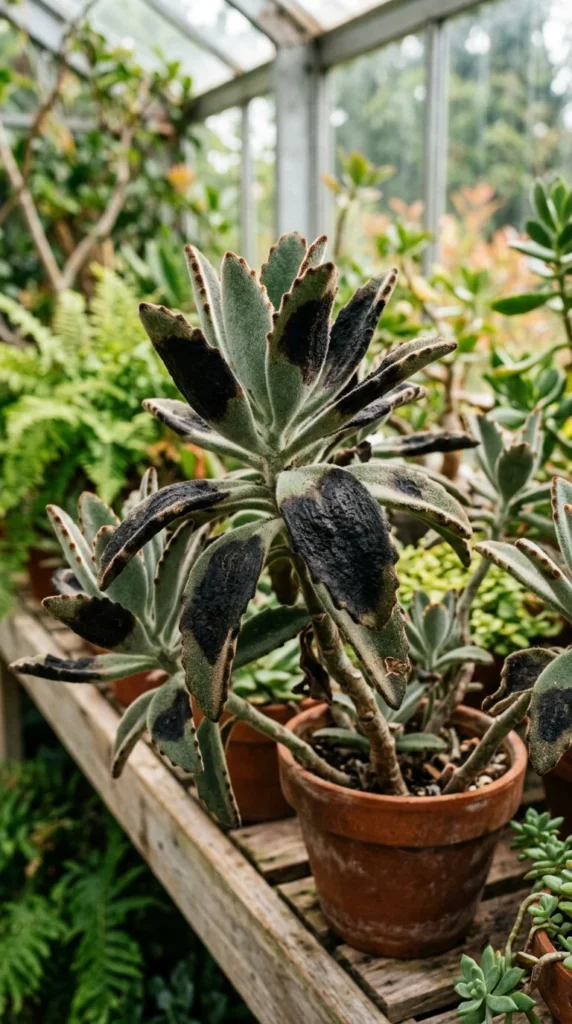
Different from the tiny dots of other fungi, Black Spot creates large, weeping, or inky black patches. It is often caused by a combination of high humidity and overwatering. The tissue becomes soft and eventually liquefies, spreading the infection to any part of the plant it touches.
14. Alternaria
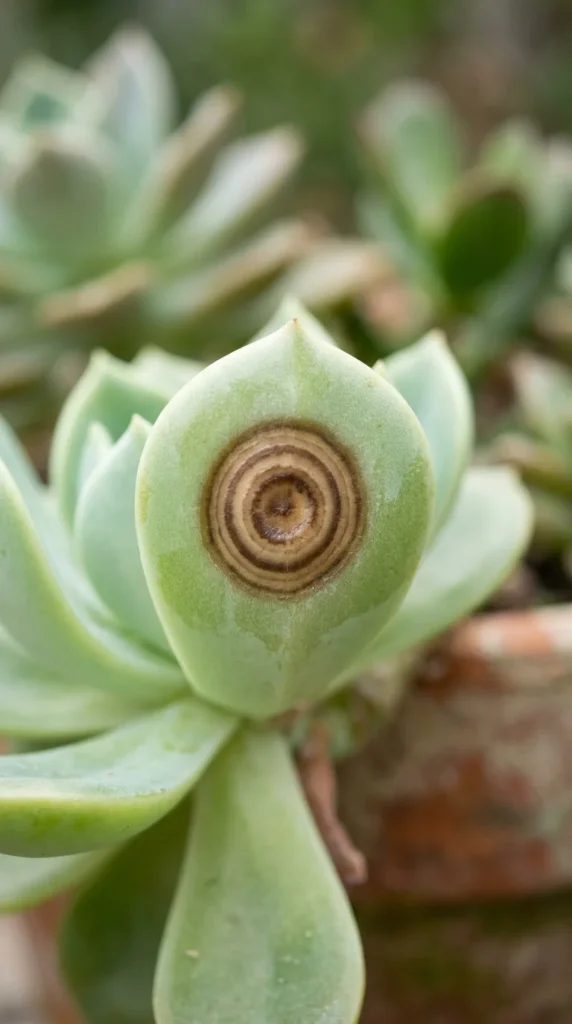
Alternaria is characterized by “target spots”—circular lesions with concentric rings. These spots can grow quite large and are often found on older leaves first. While it moves slower than some other rots, it can eventually defoliate a plant if the environment remains moist.
15. Downy Mildew
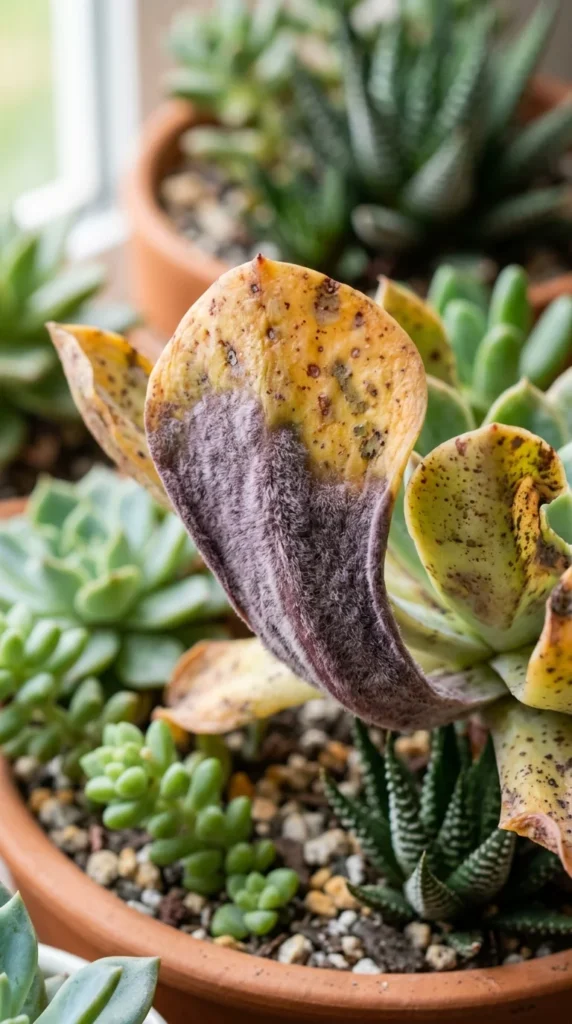
Often confused with powdery mildew, downy mildew is actually caused by oomycetes. It typically appears as a fuzzy, purplish-gray growth on the underside of leaves, while the top of the leaf turns yellow or pale. It thrives in cool, very wet conditions.
16. Septoria
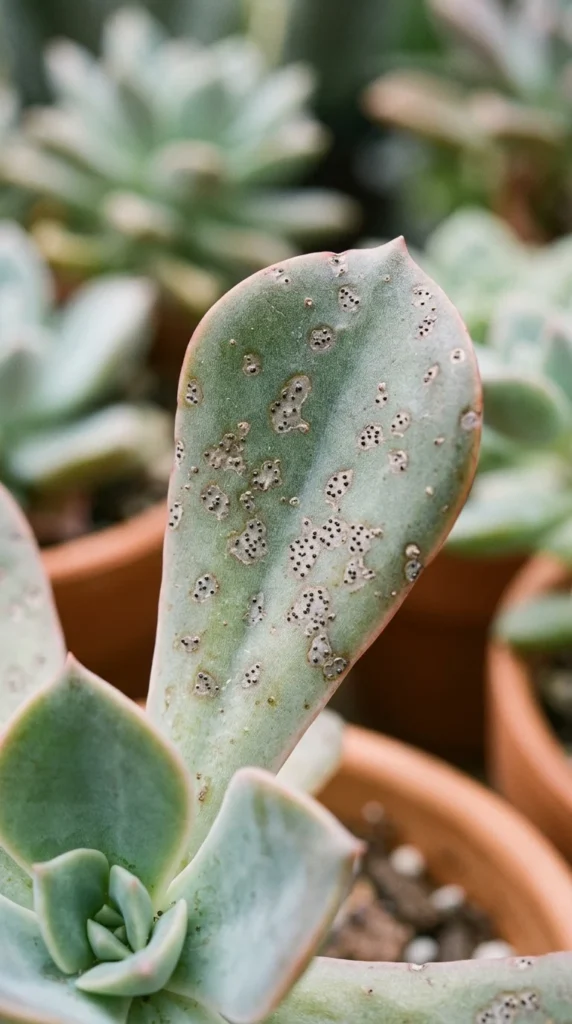
Septoria leaf spot presents as grayish-brown spots that contain tiny black dots (fruiting bodies) within the lesion. It is a persistent fungus that survives on fallen plant debris. Cleaning up dead leaves from the top of your soil is the best way to keep this fungus at bay.
17. Verticillium
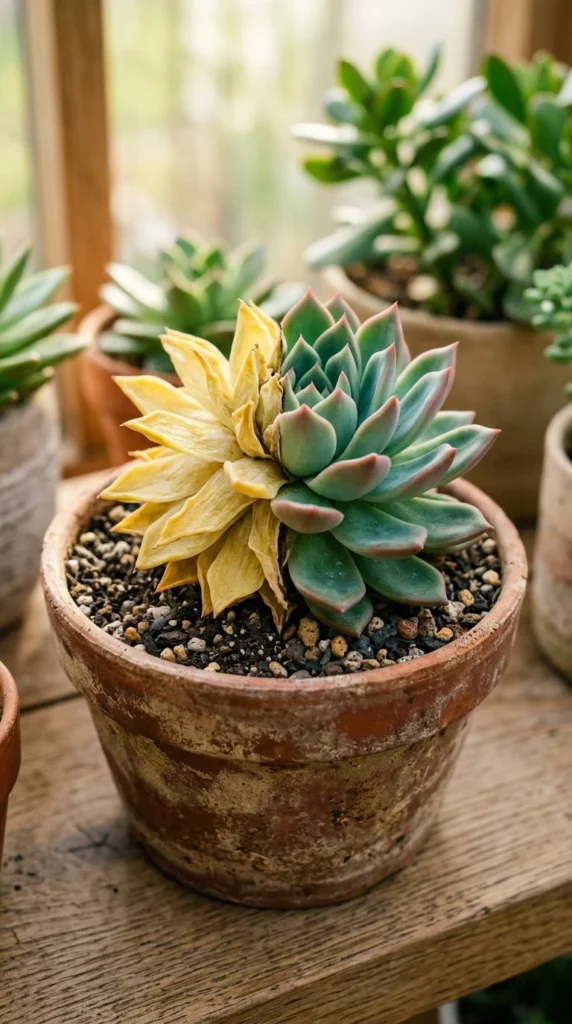
Like Fusarium, Verticillium is a vascular wilt fungus. It often causes “one-sided” wilting, where half of a branch or one side of a rosette dies while the rest looks fine. This is because the fungus clogs specific water-conducting tissues in the stem.
18. Stem Canker
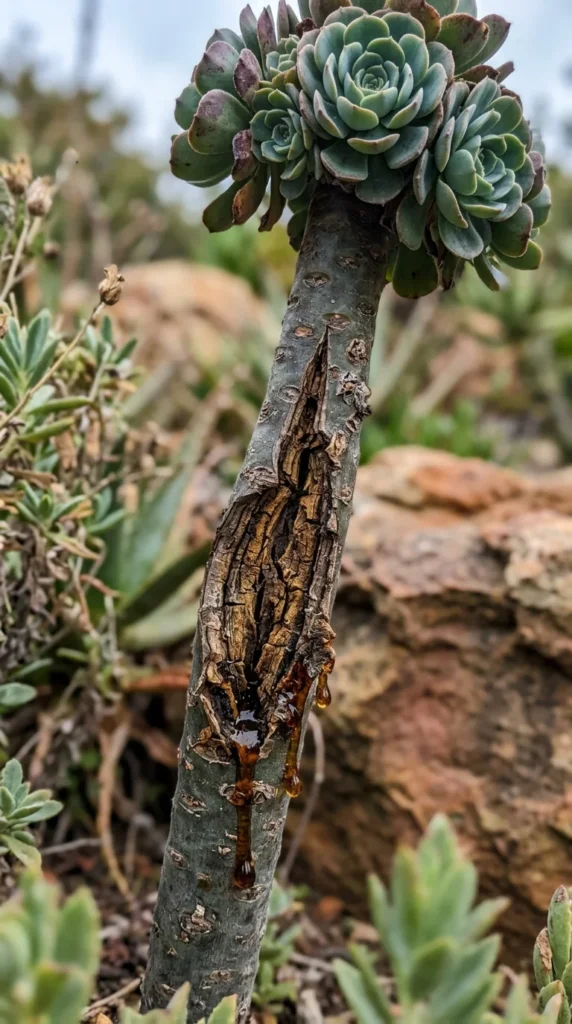
Fungal cankers are localized “sores” on the stems of succulents and cacti. They often appear as sunken, cracked, or discolored areas that slowly expand. If a canker completely encircles a stem, everything above that point will die. Cankers are usually the result of Coniothyrium or similar fungi.
19. Surface Fungi
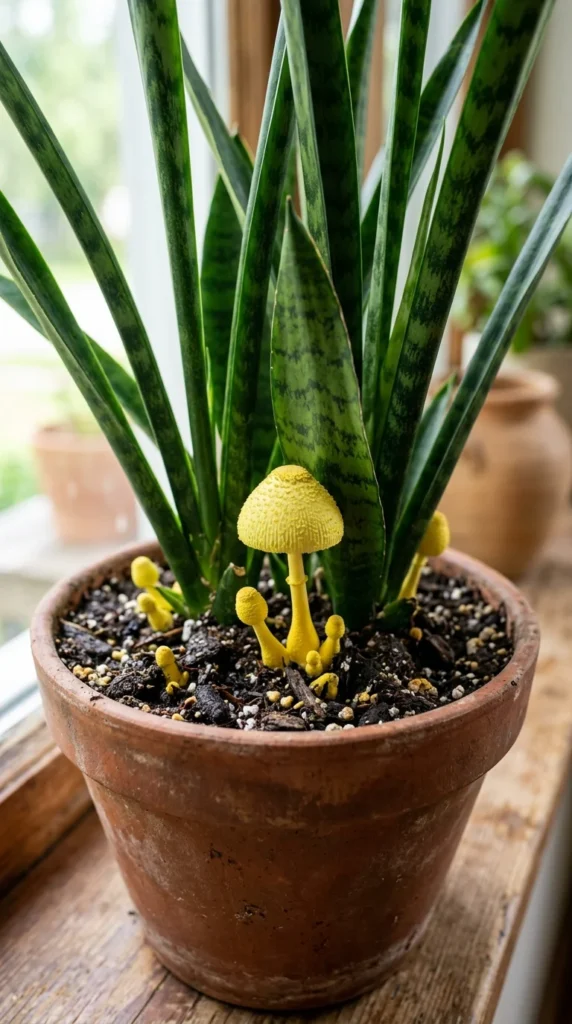
Sometimes the fungus isn’t on the plant but in the soil. Leucocoprinus birnbaumii is a bright yellow mushroom that often pops up in succulent pots. While the mushroom itself doesn’t hurt the plant, its presence is a major warning sign that your soil is too wet and contains too much organic matter for a succulent.
20. White Mold
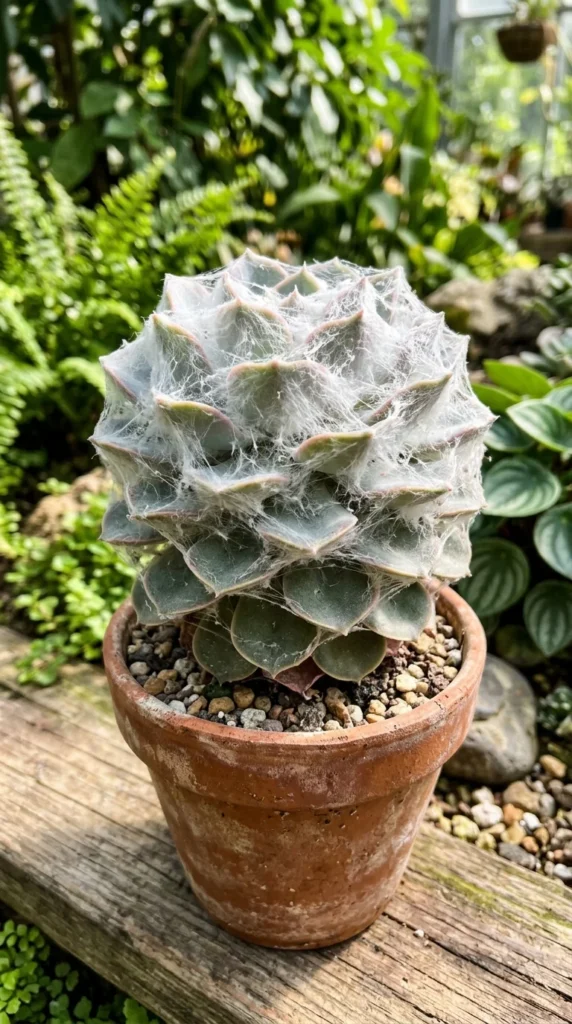
Sclerotinia, or white mold, produces a cottony growth that can quickly envelop a small succulent. It thrives in humid greenhouses. Inside the cottony mass, the fungus produces black, hard structures that allow it to survive in the soil for years, making it very difficult to eradicate without changing the soil.
21. Mycelium
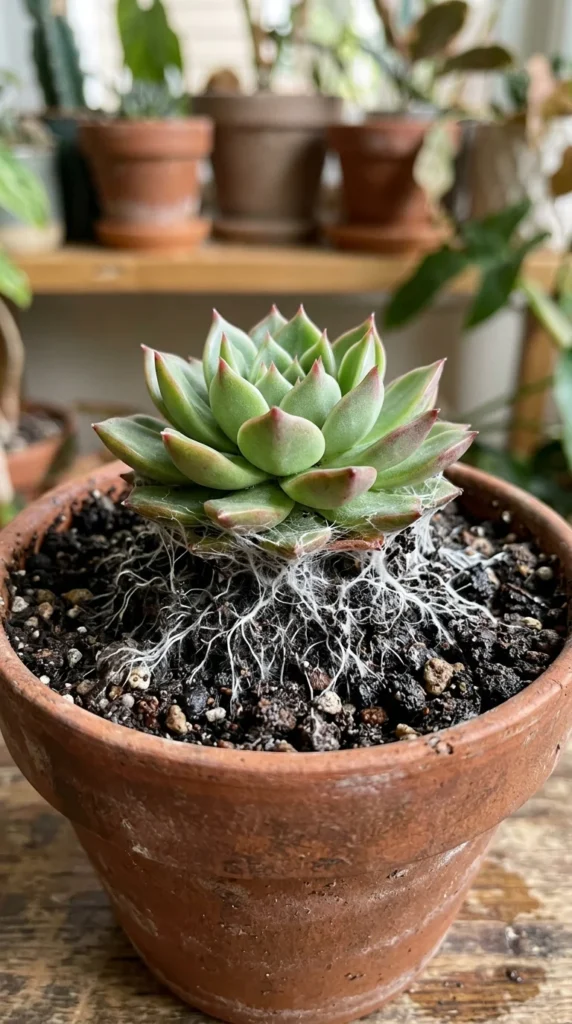
Mycelium is the “root system” of fungi. When you see white threads running through your succulent’s soil, it means the environment is rich in organic decay and moisture. While some mycelia are harmless, an overgrowth can compete with succulent roots for oxygen or indicate that the soil is staying damp for dangerously long periods.
22. Soft Rot
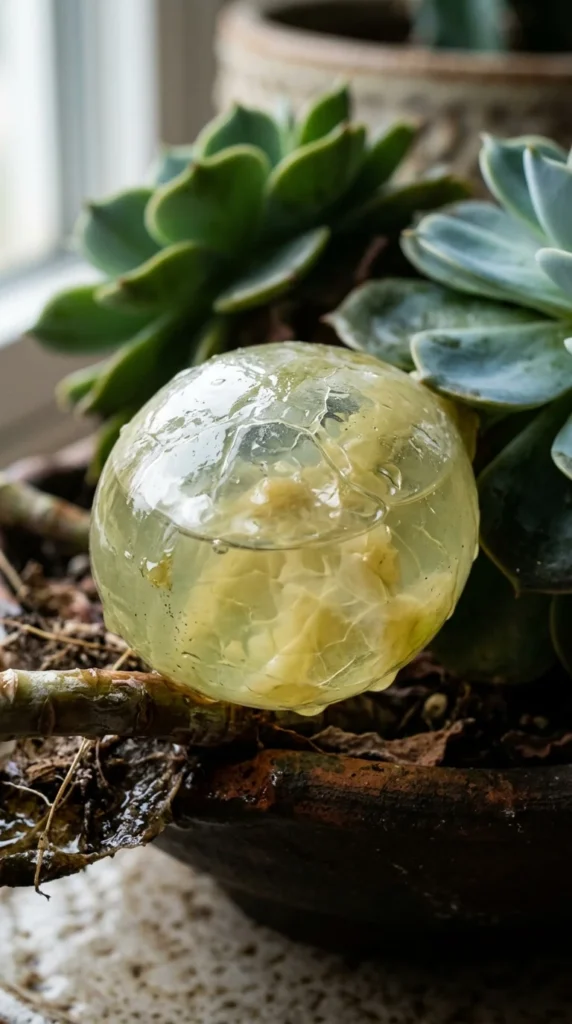
While often bacterial, soft rot can be triggered by fungal infections that weaken the cell walls. The plant tissue turns into a watery, foul-smelling mush. This usually happens very rapidly, often following a period of extreme overwatering or a sudden drop in temperature.
23. Collar Rot
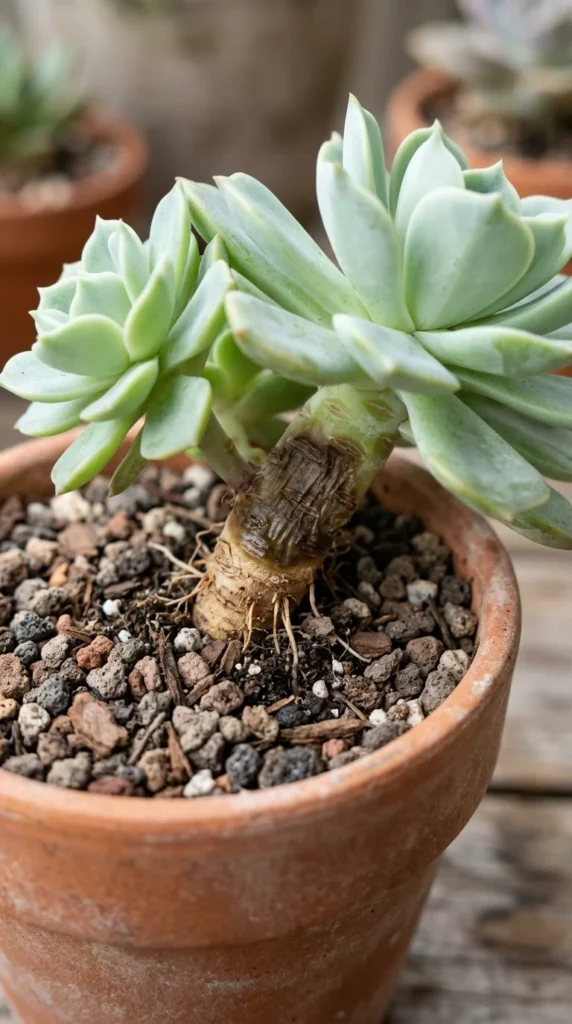
Collar rot specifically targets the “collar” of the plant—the transition zone between the roots and the stem. This is often caused by planting the succulent too deep in the soil or using a mulch that holds moisture against the stem. The fungus eats through the outer “skin” of the plant, effectively girdling it.
Prevention and Treatment
Knowing the problems is only half the battle. To keep your succulents fungus-free, follow these expert tips:
- Airflow is King: Use a small fan or keep windows open. Fungi hate moving air.
- Water the Soil, Not the Leaves: Avoid getting water in the center of rosettes. Use a long-necked watering can.
- The Right Mix: Use a gritty, inorganic mix (pumice, perlite, coarse sand) with very little peat moss.
- Quarantine Newcomers: Always keep new plants away from your collection for two weeks to ensure they aren’t carrying hidden spores.
- Surgical Intervention: If you see rot, use a sterilized blade to cut away the infected tissue until you reach healthy, green growth. Apply cinnamon (a natural antifungal) to the wound.