
Succulents are often celebrated for their resilience and “set it and forget it” nature. However, even these desert-dwelling survivors have an Achilles’ heel: fungus. Because succulents store water in their leaves and stems, they are particularly susceptible to rot and fungal pathogens when environmental conditions shift. If you notice black spots, white fuzzy patches, or mushy stems, your plant is sending out an SOS.
Acting quickly is the difference between saving a prized Echeveria and watching your entire collection succumb to a “green plague.” Here are 16 effective ways to treat and eradicate fungus on succulents before it spreads.
1. Isolation
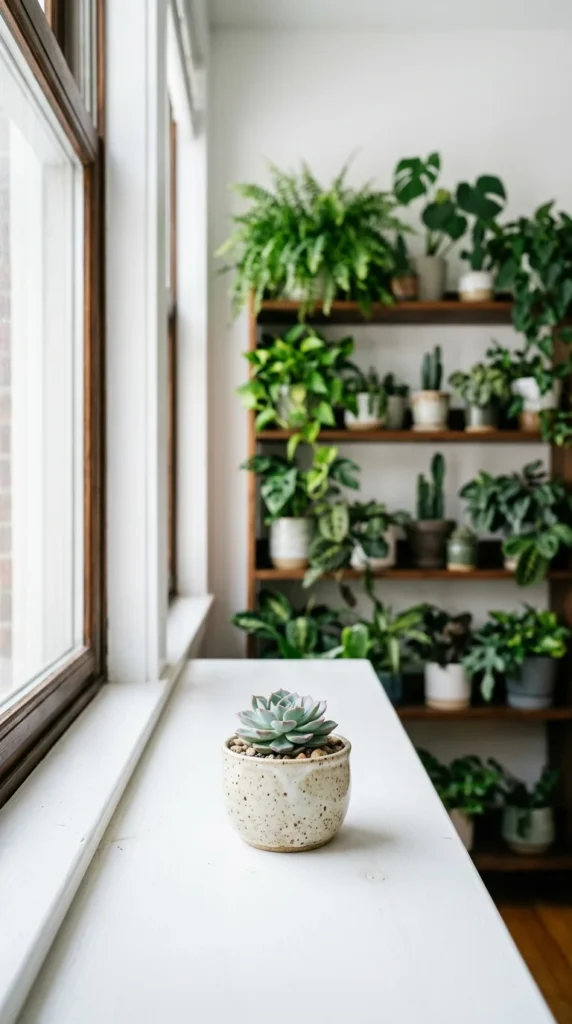
The very first step in any plant emergency is quarantine. Fungal spores are microscopic and incredibly lightweight; they can travel on a light breeze or hitch a ride on your watering can. As soon as you suspect a fungal infection—whether it’s powdery mildew, leaf spot, or anthracnose—move the affected plant to a separate room. This prevents the “spillover” effect where a single sick plant wipes out an entire arrangement. Keep the plant isolated for at least two weeks after the last signs of fungus have disappeared.
2. Neem Oil
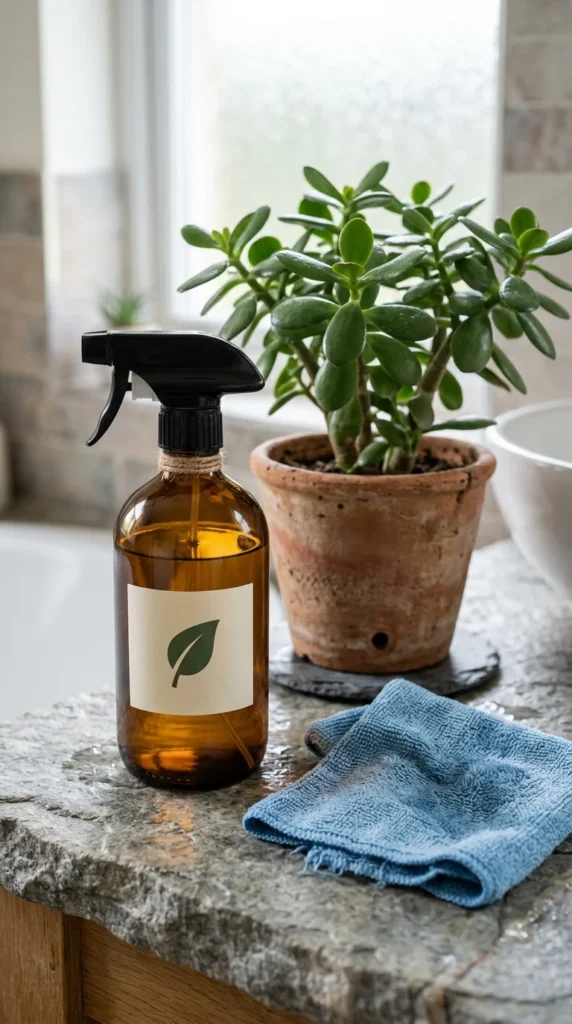
Neem oil is a natural byproduct of the neem tree and serves as a powerful organic fungicide and insecticide. It works by disrupting the life cycle of the fungi and preventing further spore germination. To use it, mix a teaspoon of pure neem oil with a few drops of dish soap in a quart of water. Spray the succulent thoroughly, ensuring you hit the undersides of the leaves where fungus often hides. Apply this in the evening or in low light, as neem oil can make succulent leaves sensitive to “sunburn” if exposed to direct light immediately after application.
3. Cinnamon Powder
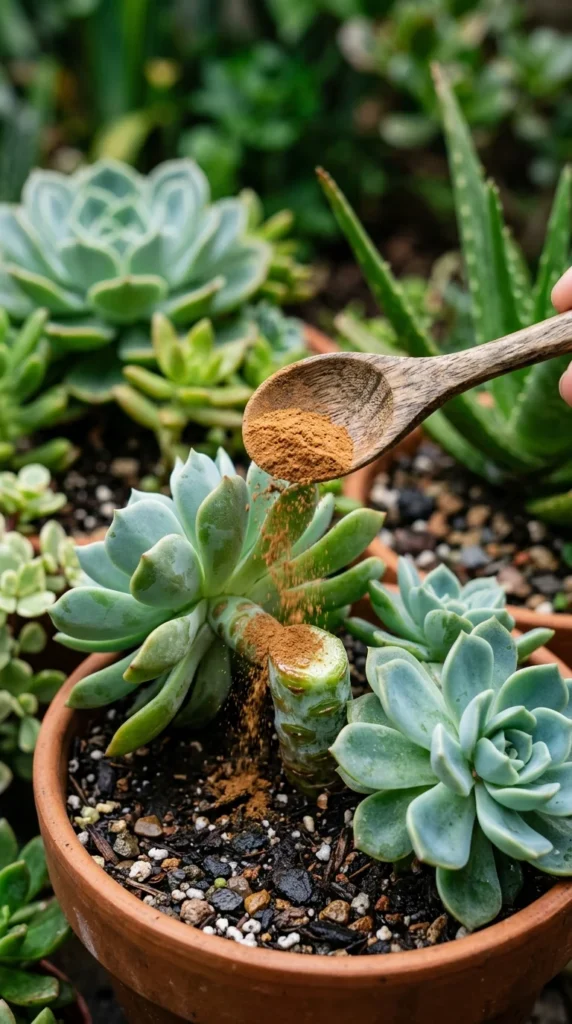
Your spice cabinet holds one of the most effective anti-fungal agents available. Cinnamon is a natural fungicide that has been used by gardeners for decades. If you have had to trim away infected leaves or stems, dust the “open wound” with ground cinnamon. It helps the plant callous over quickly while killing any remaining fungal spores on the surface. It is also excellent for treating “damping off” in succulent seedlings; simply sprinkle a light dusting over the soil surface to keep mold at bay.
4. Rubbing Alcohol
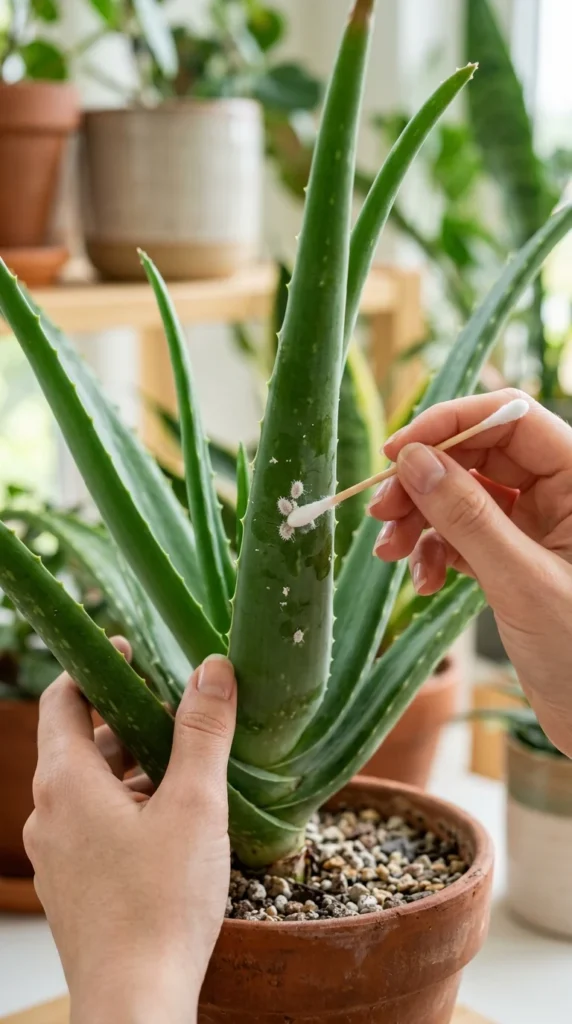
Isopropyl alcohol (70% concentration) is a quick fix for surface-level fungal issues and the pests that often bring them, like mealybugs. If you see white, cottony tufts or localized spots, dip a cotton swab in rubbing alcohol and dab the affected areas. The alcohol evaporates quickly, killing the fungus without over-saturating the plant’s tissues. For a more widespread issue, you can use a spray bottle, but always test a single leaf first to ensure the specific variety of succulent isn’t too sensitive to the treatment.
5. Baking Soda
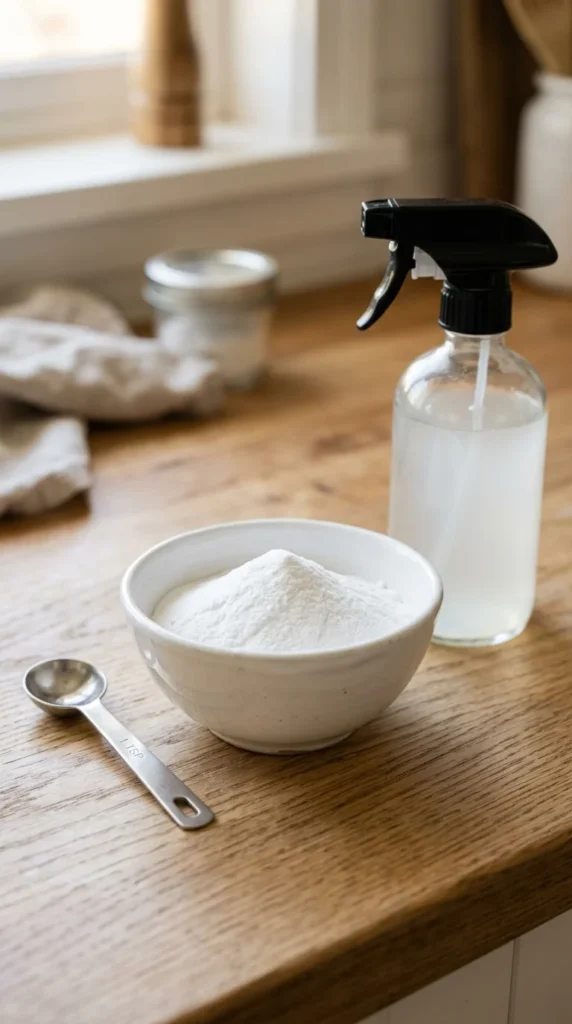
Baking soda (sodium bicarbonate) creates an alkaline environment on the surface of the leaf, which is inhospitable to many types of fungi, particularly powdery mildew. To create a DIY spray, mix one tablespoon of baking soda with half a teaspoon of liquid soap in a gallon of water. The soap helps the mixture stick to the waxy surface of the succulent. Spray the entire plant once a week until the fungus is gone. Be careful not to over-apply, as an excess of sodium can eventually build up in the soil and affect the plant’s health.
6. Apple Cider Vinegar

The acetic acid in apple cider vinegar is potent enough to kill fungal pathogens on contact. However, because vinegar is an acid, it must be diluted heavily to avoid dissolving the succulent’s protective waxy coating (epicuticular wax). Mix two tablespoons of ACV into a quart of water. Use this as a topical spray for persistent leaf spots. This treatment is best used for hardy succulents like Agave or Haworthia, as delicate, thin-leaved varieties may react poorly to the acidity.
7. Fungicide Sprays
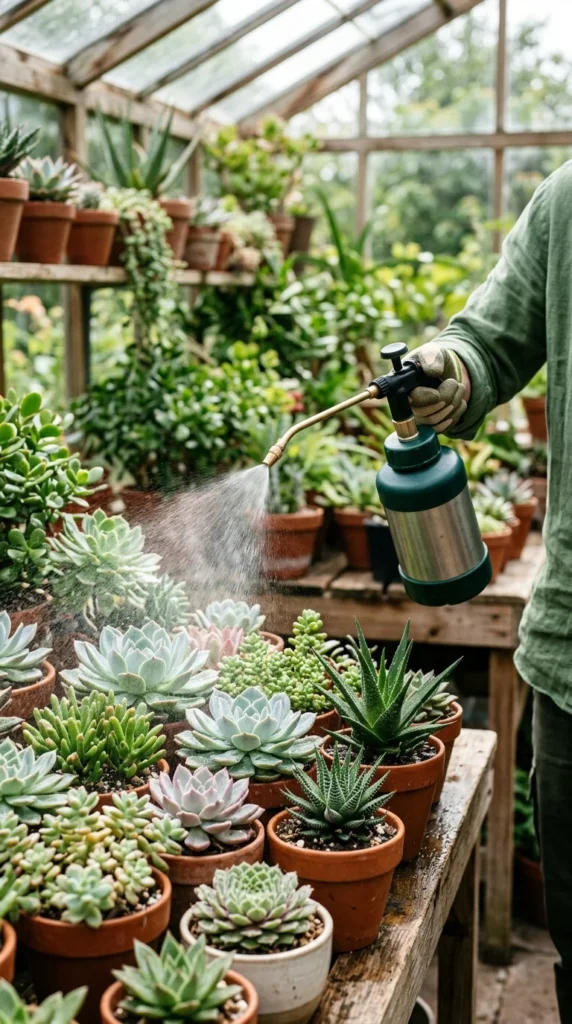
When natural remedies aren’t enough, it’s time to bring out the big guns. Commercial fungicides containing active ingredients like Myclobutanil or Chlorothalonil are specifically formulated to stop fungal DNA from replicating. These are “systemic” or “contact” treatments. Systemic fungicides are absorbed by the plant and protect it from the inside out. Always follow the label instructions strictly, and ensure the product is rated for “ornamentals” or “succulents” to avoid chemical burns.
8. Hydrogen Peroxide
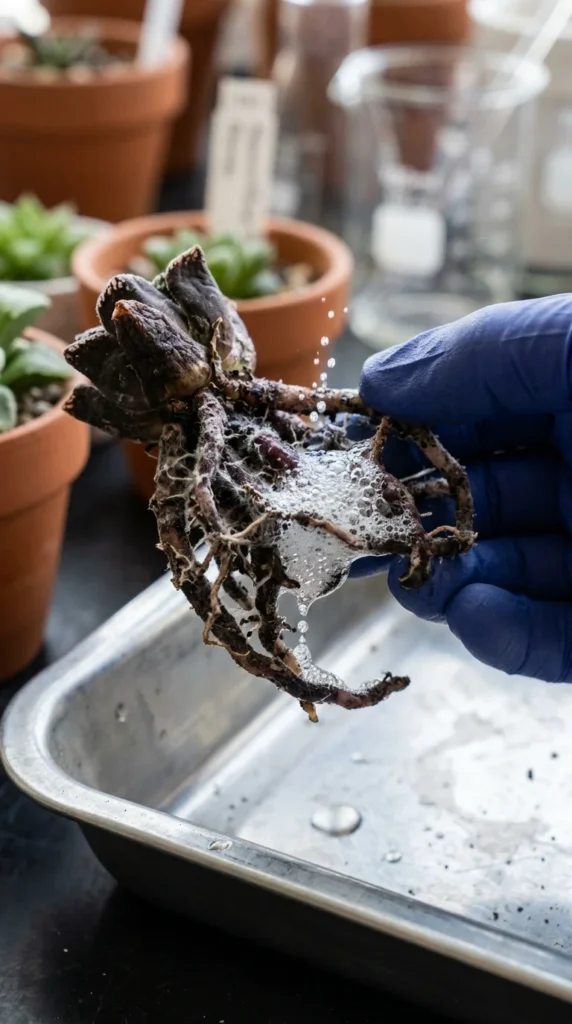
Hydrogen peroxide (3% concentration) is an oxygenating agent that kills fungus and bacteria on contact. It is particularly effective for treating root rot caused by soil-borne fungi. If your succulent feels mushy at the base, remove it from the pot and spray the roots with a 1:1 mixture of water and hydrogen peroxide. You will see it fizz and bubble—this is the peroxide oxidizing the organic fungal matter. Allow the roots to dry completely before repotting in fresh, sterile soil.
9. Root Trimming
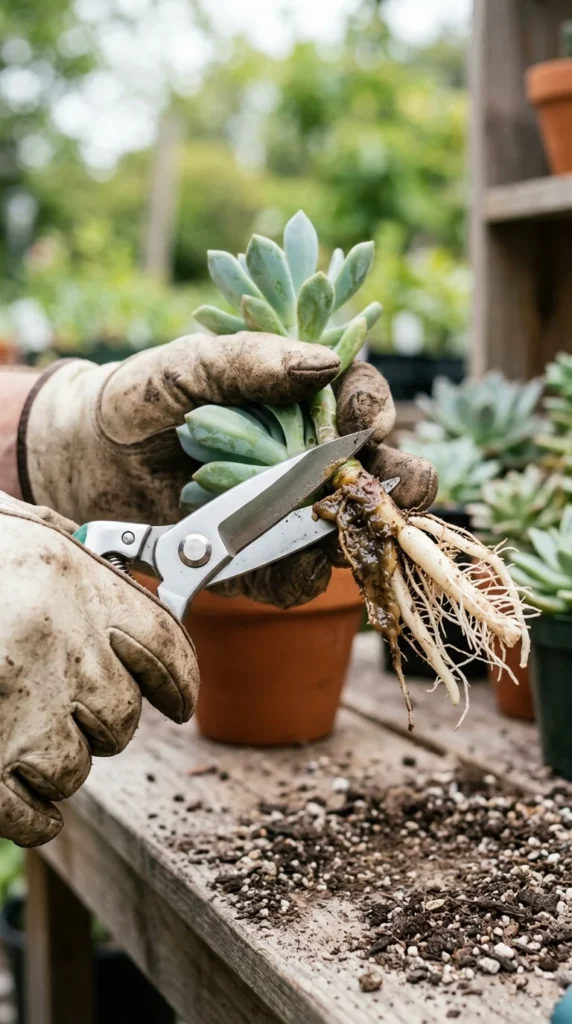
Sometimes, the fungus is internal. If a succulent has been overwatered, the roots may begin to rot, providing a feast for fungi. In this case, you must perform “surgery.” Take the plant out of its pot and wash away all the old soil. Use sterilized shears to cut away any roots that are black, brown, or slimy. You should only be left with firm, white, or light-colored roots. Let the plant sit in the open air for 24 to 48 hours to “air dry” its wounds before placing it back into a pot.
10. Soil Replacement
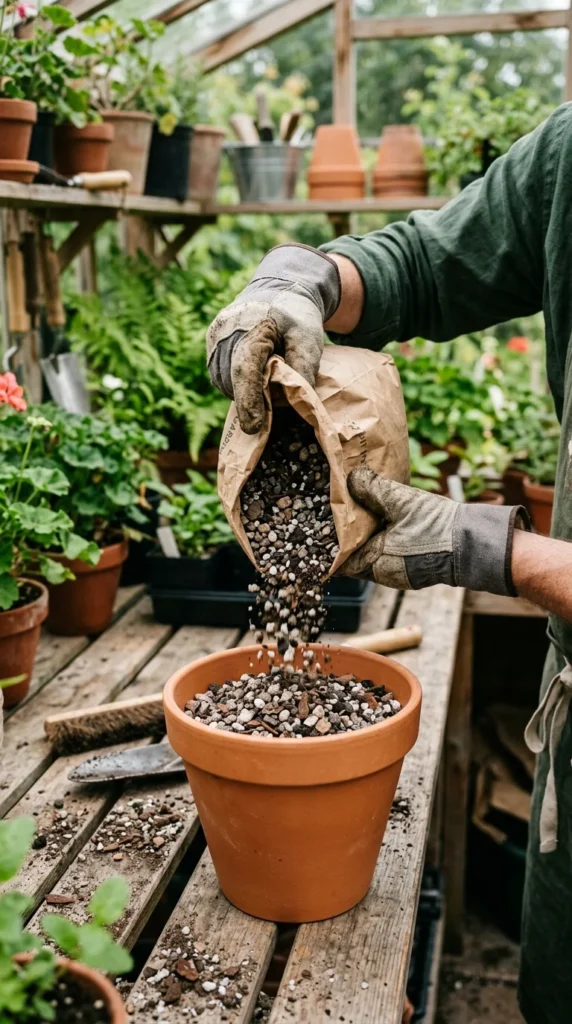
Fungal spores can live in the soil for months, waiting for the right moisture levels to strike again. If your succulent has had a fungal breakout, do not reuse the old soil. Dump it out, wash the pot with a bleach solution (one part bleach to nine parts water), and refill it with a fresh, well-draining succulent mix. Look for a mix that contains high amounts of perlite, pumice, or coarse sand to ensure water moves through the pot quickly, leaving the fungus with no damp environment to thrive in.
11. Improved Airflow
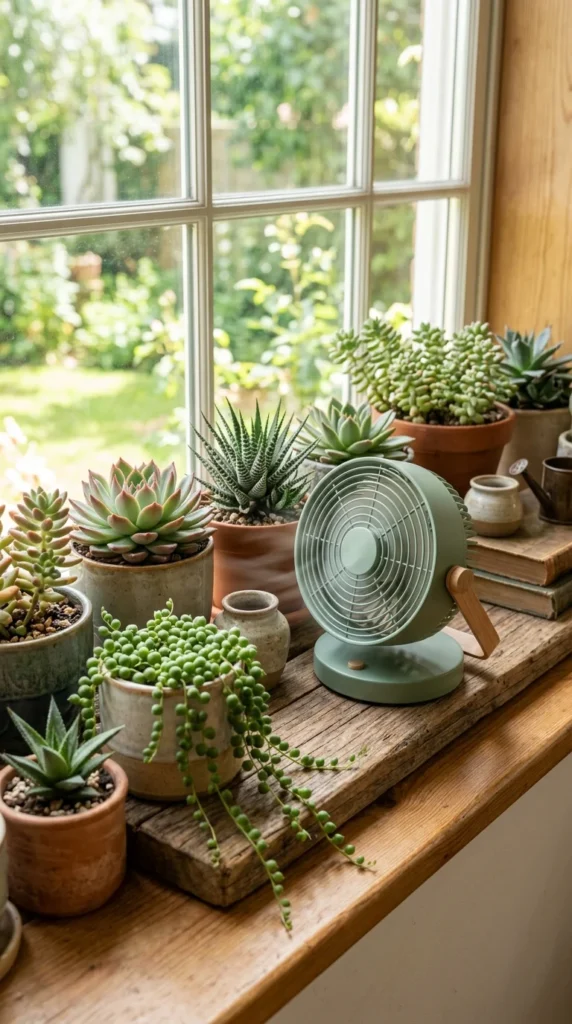
Fungus thrives in stagnant, humid air. If your succulents are crowded together in a corner or a humid room like a bathroom, they are sitting ducks for fungal infections. Spacing your plants out so their leaves aren’t touching allows air to circulate around the base of the plant. If you grow succulents indoors, running a small fan for a few hours a day can drastically reduce the humidity levels around the foliage, making it much harder for spores to settle and grow.
12. Sunlight Exposure
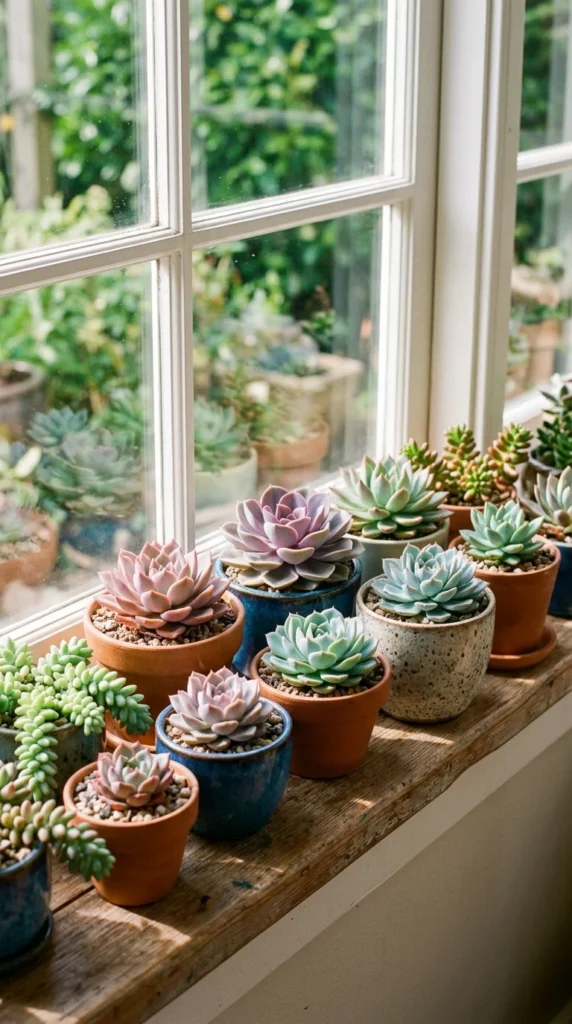
Many types of fungus, such as Sooty Mold, prefer damp, shaded conditions. Succulents are sun-loving plants, and UV rays act as a natural disinfectant. If your plant is struggling with a surface fungus, gradually move it into a brighter spot. The sun will help dry out the soil and the surface of the leaves, effectively “baking” away moisture-loving pathogens. Just be careful to introduce the light gradually to prevent the plant from scorching.
13. Bottom Watering
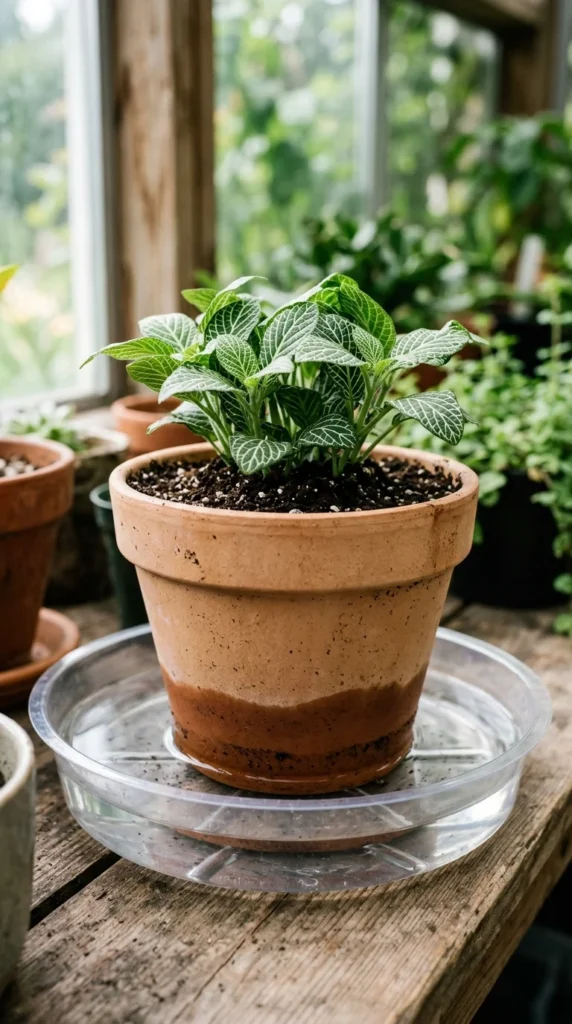
One of the biggest mistakes that leads to succulent fungus is getting water on the leaves. When water sits in the “crown” or the crevices of the leaves, it creates a micro-greenhouse for fungus. Switch to bottom watering: place your pot in a tray of water and let it soak up moisture through the drainage hole for 15-20 minutes. This keeps the foliage bone-dry while ensuring the roots get the hydration they need.
14. Sterilizing Tools
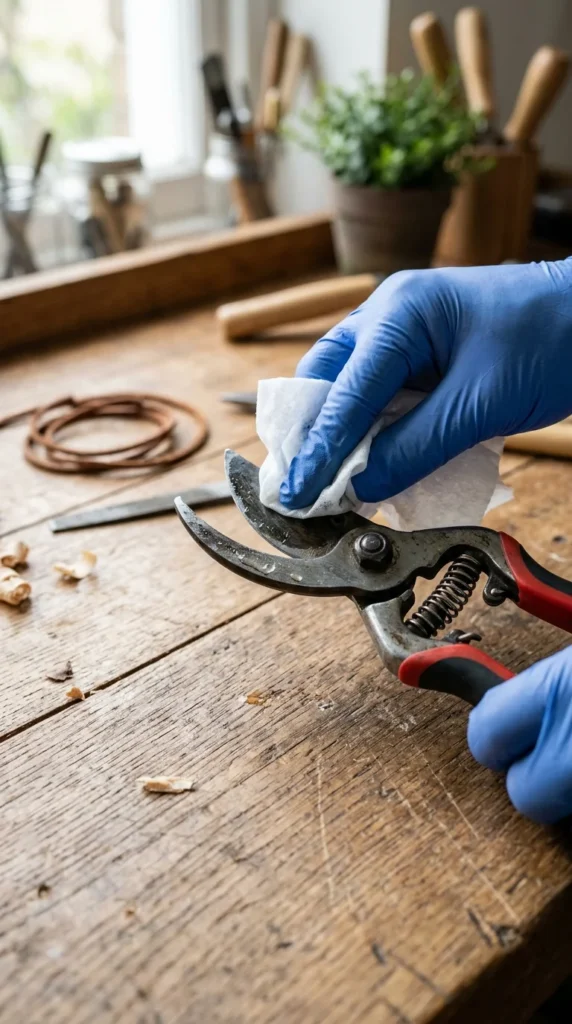
You might be the one spreading the fungus! If you use the same scissors to trim a sick plant and then move on to a healthy one, you are effectively inoculating your entire garden with fungal spores. Always sterilize your tools between every single plant. You can use a quick dip in 70% isopropyl alcohol or a quick pass under a flame. This simple habit is the cornerstone of professional plant care and prevents “cross-contamination.”
15. Sulfur Powder
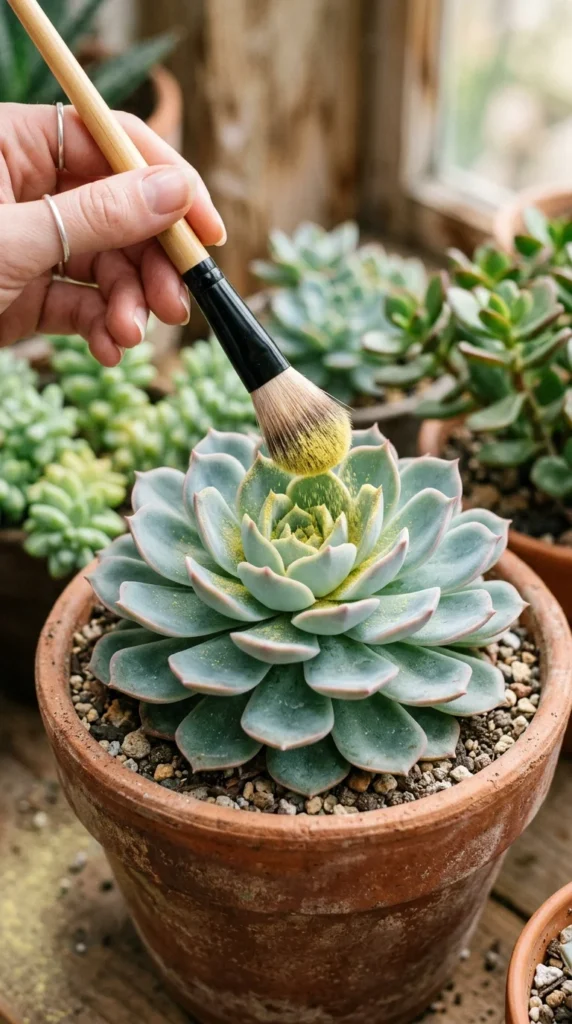
Sulfur is one of the oldest known fungicides. It is a natural mineral that lowers the pH on the surface of the plant, preventing fungal spores from germinating. It is particularly useful for succulents that are prone to stem rot. You can buy garden-grade sulfur powder and use a soft brush to “paint” it onto the stems or the soil surface. Unlike liquid sprays, sulfur doesn’t add moisture to the plant, which is a major advantage when dealing with succulents that are already over-hydrated.
16. Copper Fungicide
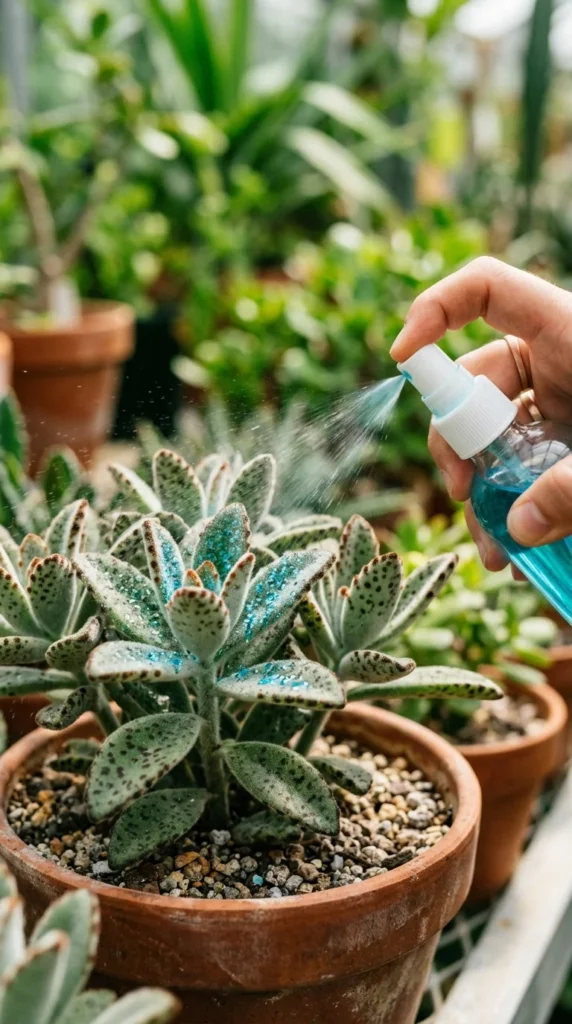
Copper-based fungicides are highly effective against a wide range of issues, including rust, downy mildew, and bacterial leaf spot. The copper ions are toxic to the fungal enzymes, preventing them from spreading. Because copper can be heavy, it is usually used as a “last resort” for severe infections that haven’t responded to neem or baking soda. Apply it outdoors if possible, and ensure the plant is well-ventilated during the drying process. Once the blue-green residue dries, the plant is protected against further attack.