
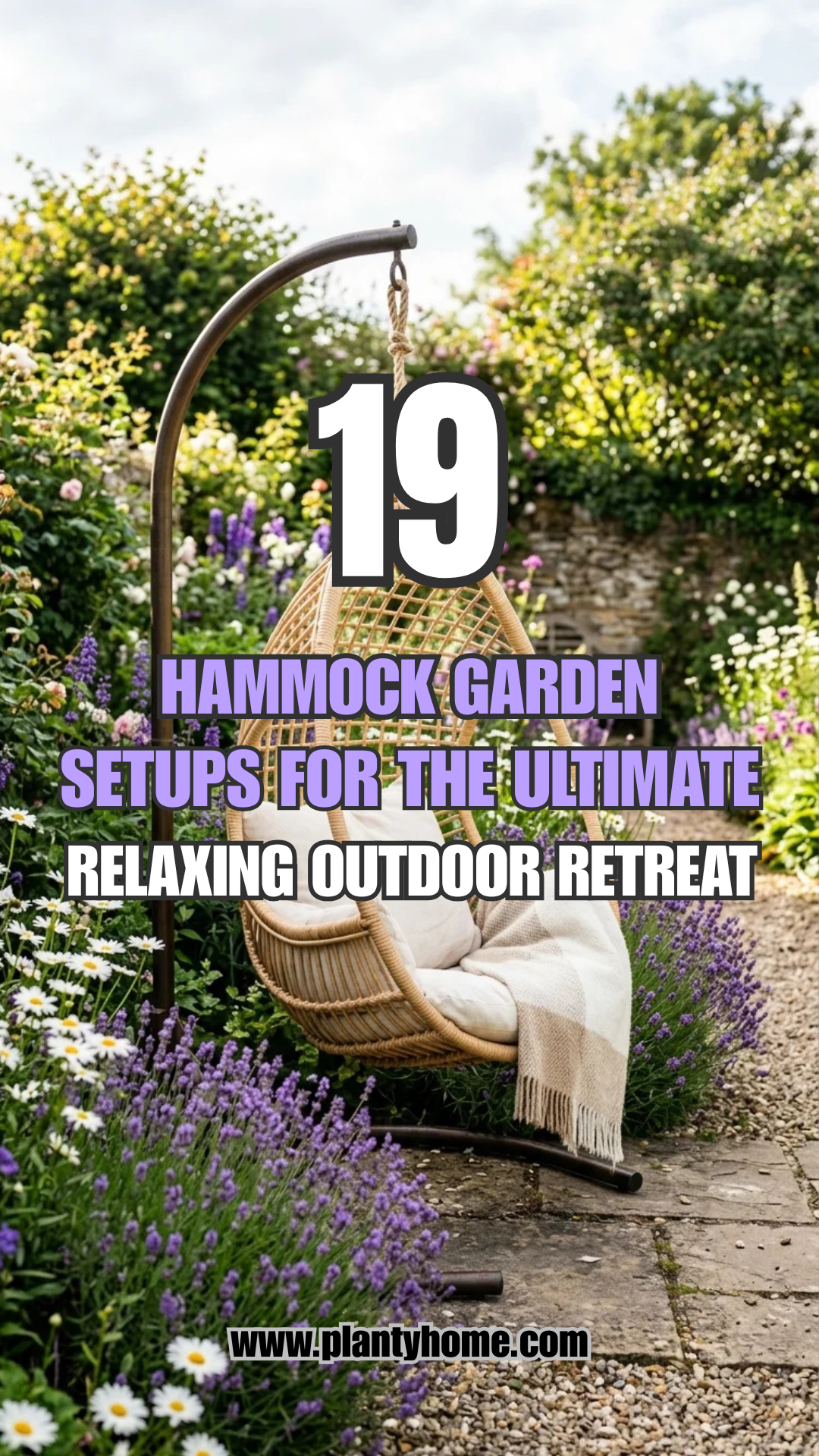
The modern garden is no longer merely a space for flora and fauna; it has evolved into a vital extension of the home, serving as a sanctuary for mental rejuvenation and physical rest. At the heart of this transition lies the hammock—an ancient invention that has become the universal symbol of leisure. Integrating a hammock into a landscape requires more than just two sturdy points; it requires an eye for aesthetics, comfort, and environmental harmony.
Whether you have a sprawling estate or a compact urban patio, the following nineteen hammock setups provide a blueprint for transforming your outdoor space into a world-class retreat.
1. Twin Trees
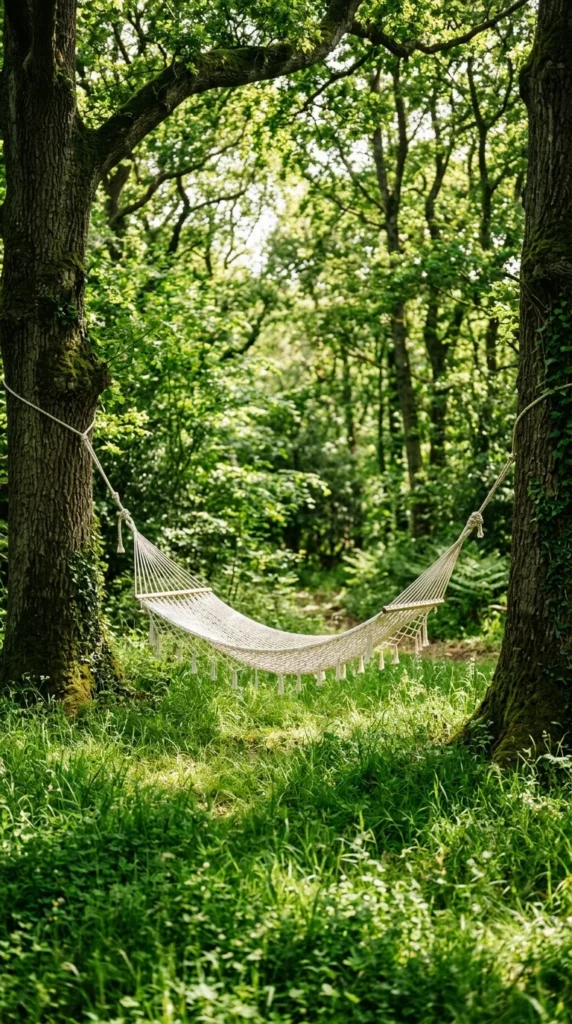
The quintessential hammock setup utilizes the natural strength of established trees. This traditional approach offers the most organic experience, allowing the user to feel physically connected to the landscape. When selecting trees, ensure they are at least 12 inches in diameter and spaced roughly 10 to 15 feet apart. Using tree-friendly straps instead of metal bolts protects the bark and ensures the longevity of your garden’s most vital features.
2. Pergola Paradise
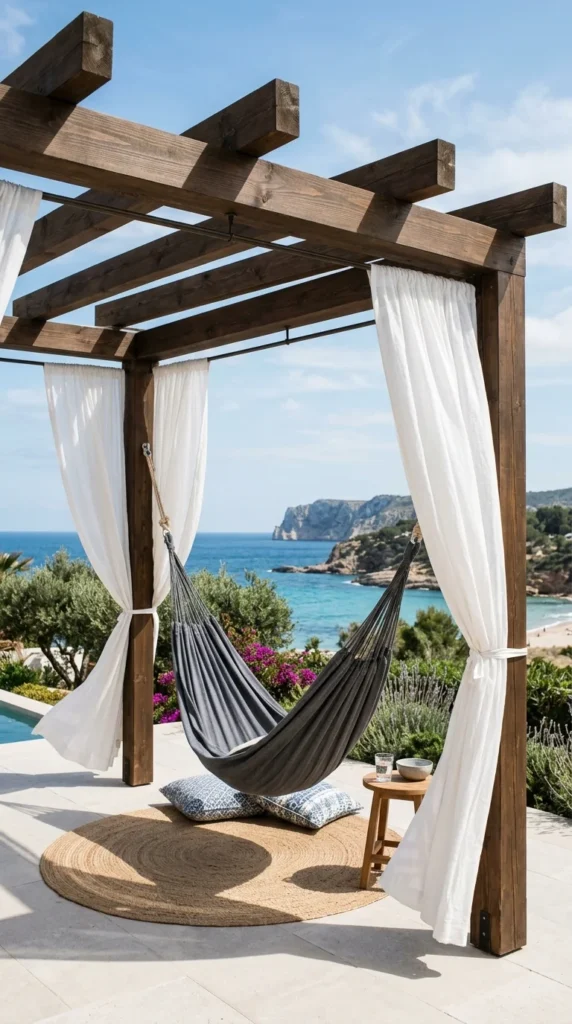
Integrating a hammock into a pergola provides a structured, architectural feel to your relaxation zone. This setup is ideal for those who prefer a permanent fixture that can withstand the elements. The overhead beams of a pergola allow for a higher mounting point, which can accommodate larger spreader-bar hammocks. This setup also provides the opportunity to hang climbing vines or outdoor curtains for added privacy and UV protection.
3. Bohemian Corner
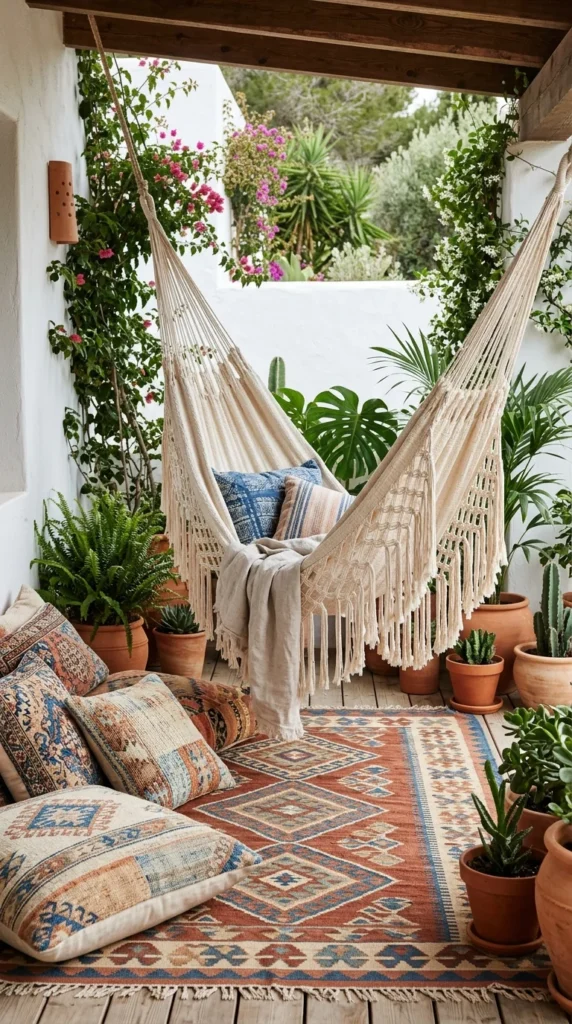
The Bohemian aesthetic focuses on texture and comfort. By using a macrame or fringed cotton hammock, you introduce an artisanal element to the garden. This setup works best in a secluded corner surrounded by lush, broad-leafed plants like hostas or ferns. The addition of weather-resistant textiles, such as outdoor rugs and plush cushions, creates a multi-layered sanctuary that invites long afternoons of reading and reflection.
4. Poolside Floating
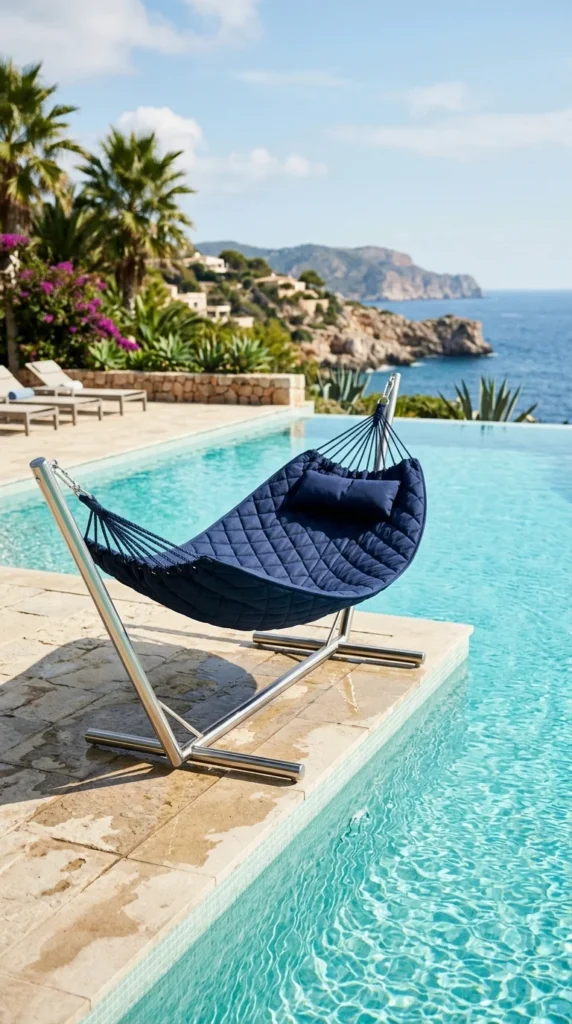
Positioning a hammock near water enhances the cooling sensation of the breeze. A poolside setup requires materials that are resistant to chlorine and moisture, such as synthetic mesh or treated polyester. Using a portable stand allows you to follow the shade throughout the day, ensuring you remain cool while enjoying the ambient sound of splashing water.
5. Vertical Garden
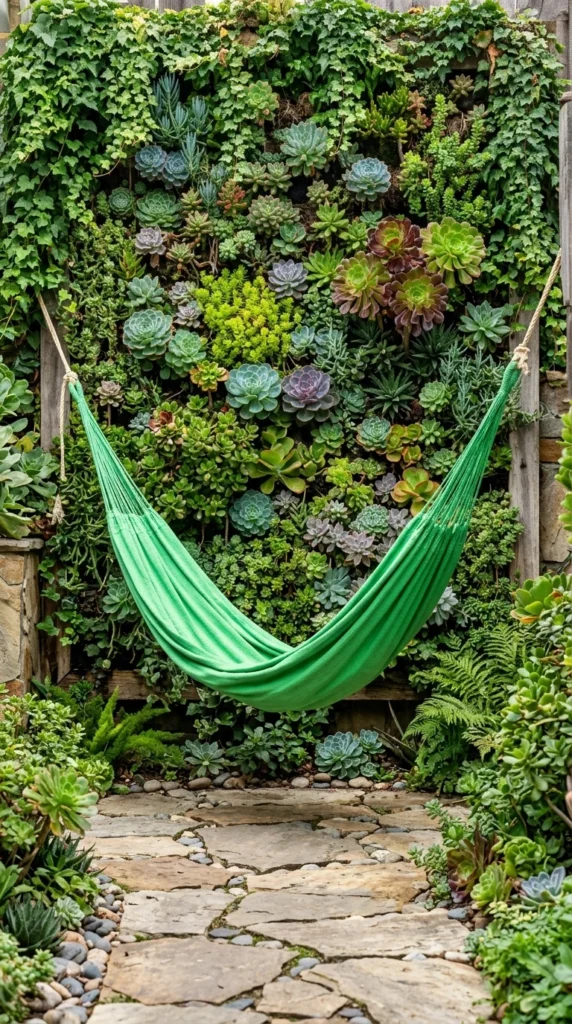
For those with limited ground space, a vertical garden setup maximizes the sensory experience. By hanging a hammock adjacent to a living wall, you are enveloped in the scent of fresh herbs and the vibrant colors of vertical greenery. This setup is particularly effective in urban courtyards where space is at a premium, creating a private “pocket park” atmosphere.
6. Seaside Driftwood
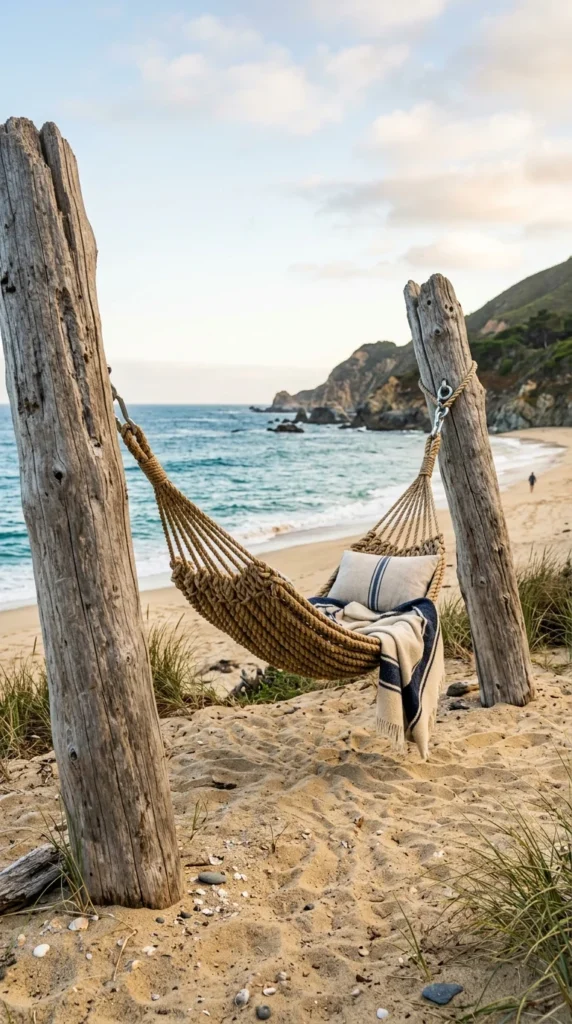
Evoke the feeling of a coastal escape by incorporating weathered wood and nautical elements. A heavy-duty rope hammock is the perfect centerpiece for a beach-themed garden. Surround the area with ornamental grasses and white sand or pea gravel to complete the maritime aesthetic. This setup is highly durable and gains character as the wood and rope weather naturally over time.
7. Minimalist Stand
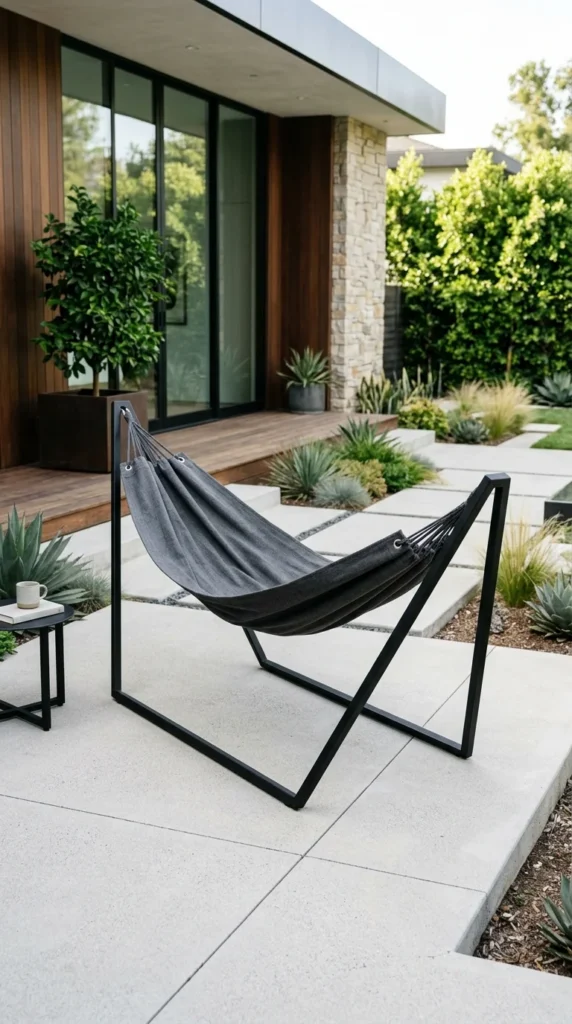
In contemporary landscapes, less is often more. A minimalist stand provides a clean, sculptural look that doesn’t distract from the surrounding architecture. Opt for a powder-coated steel or aluminum frame and a monochromatic fabric. This setup is perfect for modern homes with hardscaping, offering a sleek retreat that can be moved easily to accommodate different social gatherings.
8. Tropical Oasis
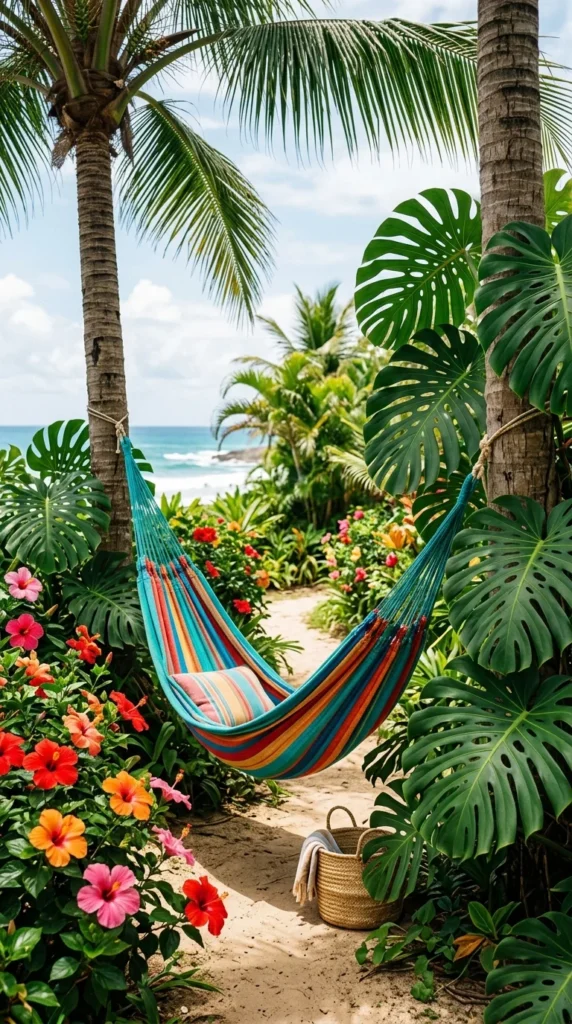
Transform your backyard into a Caribbean getaway by utilizing tropical flora. The use of a brightly colored, woven Brazilian hammock adds a pop of energy to the deep greens of tropical foliage. This setup thrives in humid climates and creates a high-impact visual focal point that suggests constant vacation vibes.
9. Moon Chair
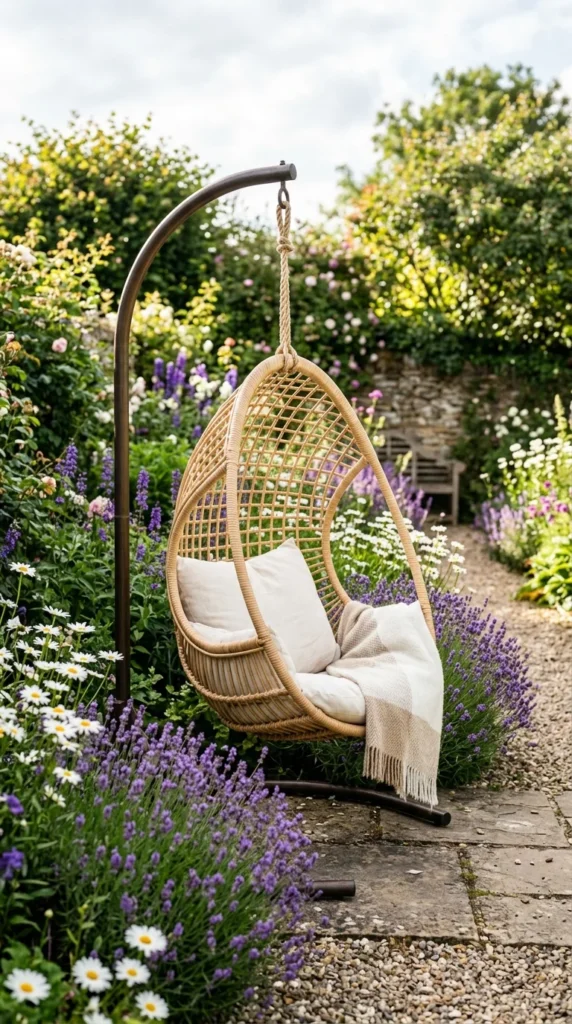
Not all hammocks require a horizontal stretch. The “moon chair” or hanging chair is a space-saving alternative that offers a cocoon-like experience. These are ideal for smaller garden nooks or under the eaves of a porch. The vertical orientation allows for a gentle spinning motion, providing a different perspective of the garden than a traditional lying hammock.
10. Fire Pit Focus
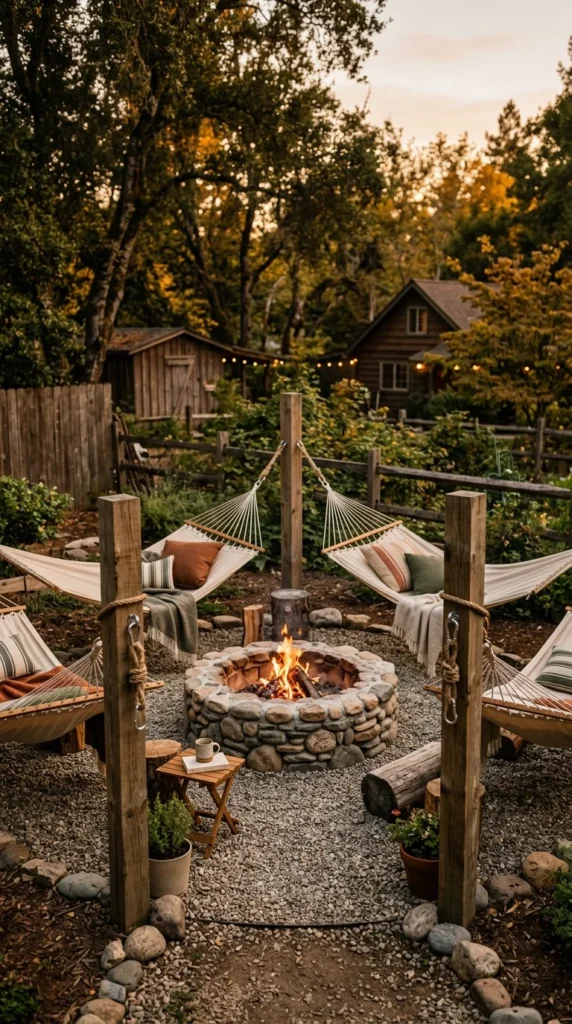
Social relaxation is the goal of this setup. By installing a series of posts around a central fire pit, you create a communal lounging area. This configuration allows multiple people to enjoy the warmth of the fire while suspended in comfort. It is an excellent choice for cool evening gatherings and provides a unique “base camp” feel to the backyard.
11. Hidden Canopy
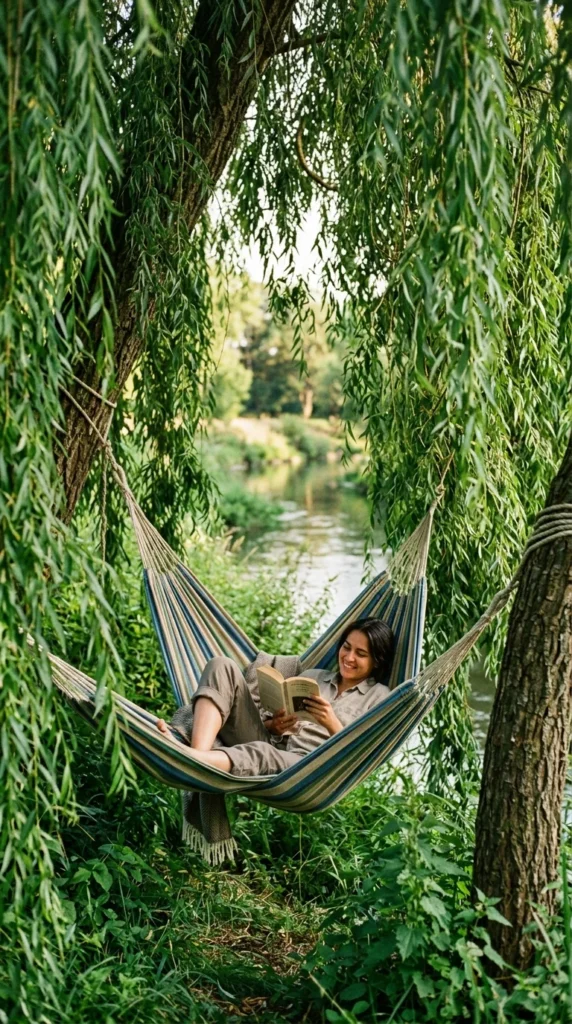
There is a profound sense of peace in being “hidden” within nature. A weeping willow or a large canopy tree provides a natural enclosure that feels separate from the rest of the world. This setup requires minimal intervention; let the natural foliage act as your walls. It is the ultimate choice for those seeking a meditative space for deep solitude.
12. Urban Balcony
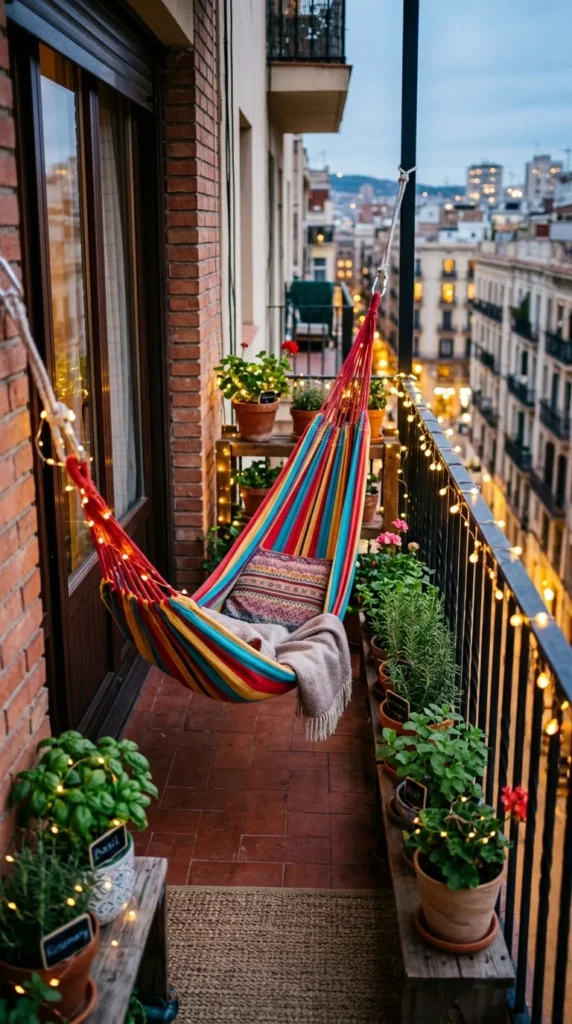
Even the smallest outdoor space can accommodate a hammock. By utilizing high-strength wall anchors, a hammock can be hung across the corner of a balcony or terrace. This setup provides a much-needed escape from the concrete jungle, offering a place to watch the sunset or read a book above the city noise.
13. Zen Sanctuary
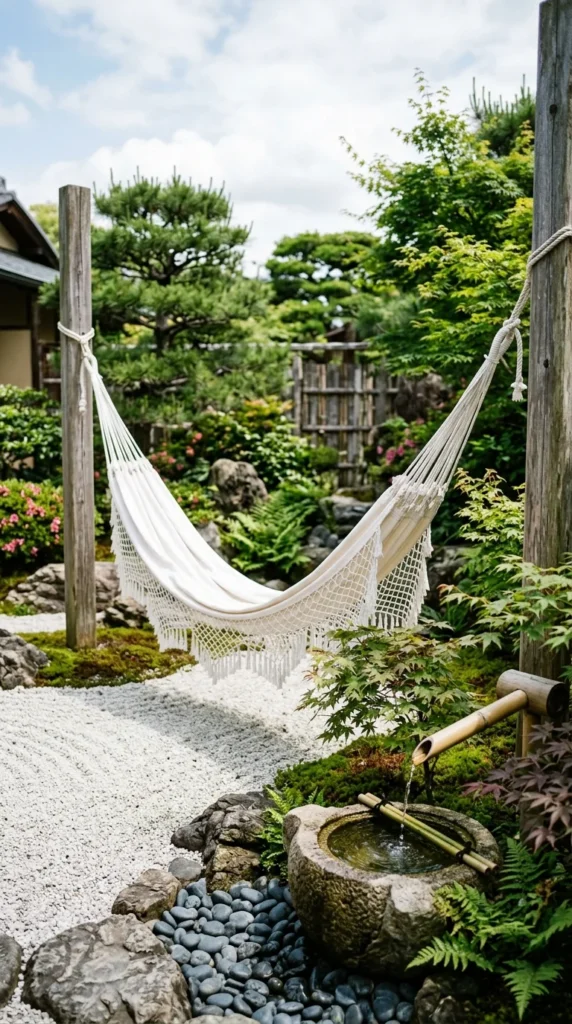
A Zen-inspired setup focuses on balance and tranquility. The hammock should be simple, perhaps in a natural linen or cream tone. Surround the area with elements of water and stone to encourage mindfulness. The sound of a nearby trickle of water combined with the slow sway of the hammock creates a sensory environment designed for stress reduction.
14. Family Bunk

For families with children, the “bunk” setup is a playful and space-efficient way to enjoy the outdoors. By using heavy-duty industrial pillars, hammocks can be stacked safely. This creates a vertical lounge area that is as much a playground as it is a place for a nap. Ensure all safety weight limits are strictly followed for this multi-level configuration.
15. Garden Archway
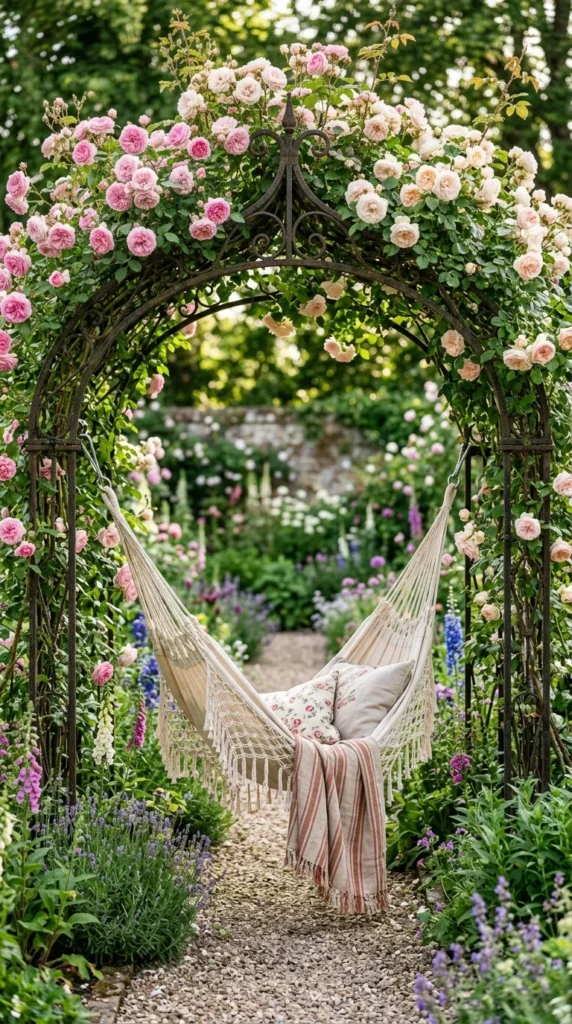
Combine the beauty of a flowering trellis with the comfort of a hammock. As the climbing roses or jasmine grow over the arch, they provide both shade and fragrance. This setup is highly romantic and serves as a beautiful garden feature even when the hammock is not in use.
16. Rustic Barn
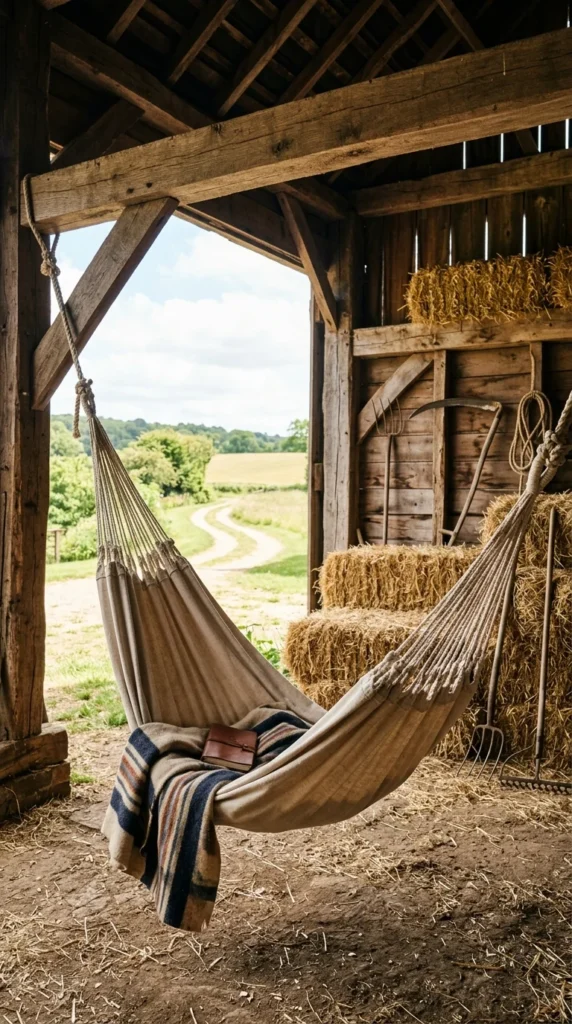
Utilize the structural integrity of a barn or outbuilding for a rustic retreat. The high ceilings and large timber beams of a barn allow for long suspension lines, which provide a wider, smoother swinging arc. This setup is perfect for those who enjoy a “farmhouse” aesthetic and want protection from the direct sun and rain.
17. Rooftop Lounge
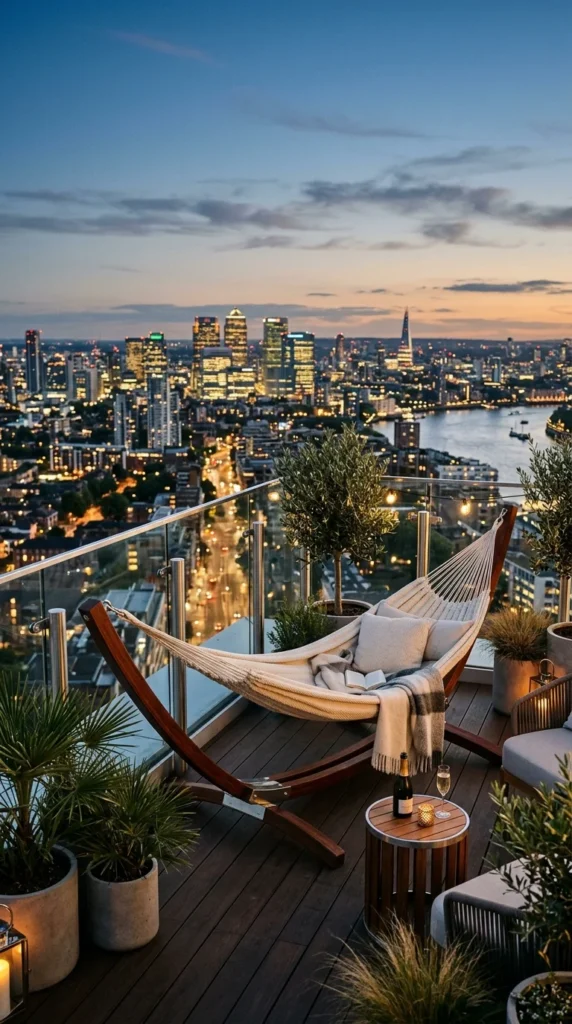
Elevate your perspective by moving the hammock to the roof. A rooftop lounge requires a sturdy, wind-resistant stand and quick-drying fabrics. This setup offers unparalleled views and a sense of openness that is impossible to achieve at ground level. It is the pinnacle of urban luxury.
18. Desert Escape
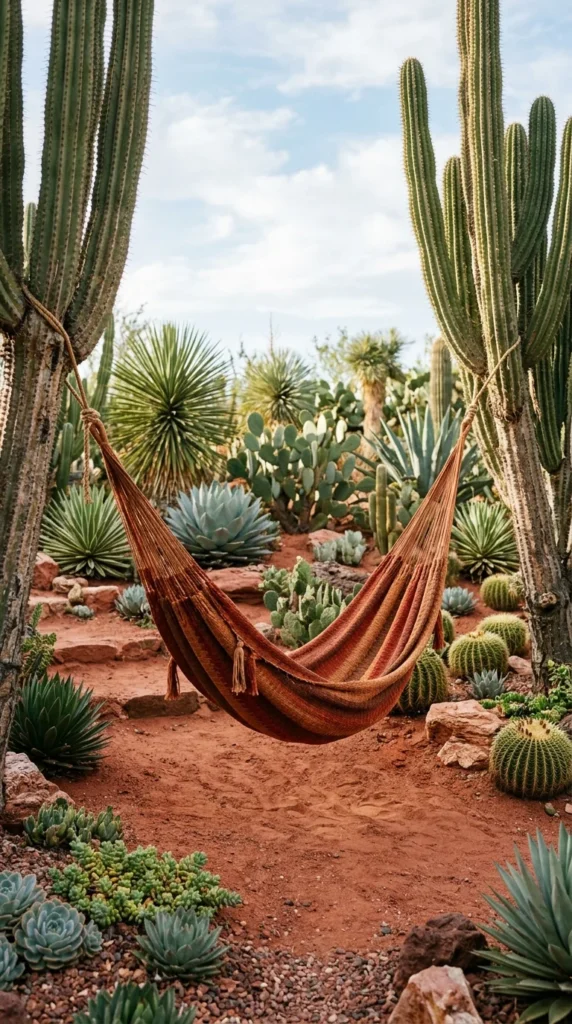
In arid climates, a hammock can be integrated into a xeriscape design. Using earthy tones and rugged materials that mirror the desert landscape creates a harmonious look. Since trees may be scarce, utilizing custom-built stone or metal pillars that match the desert aesthetic is a practical and stylish solution.
19. Woodland Nook
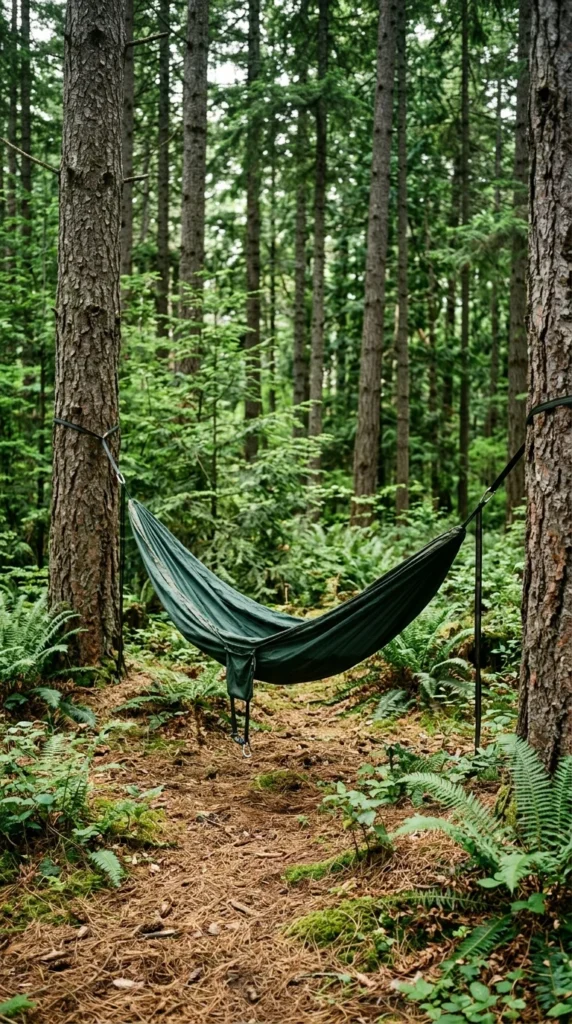
Embrace the deep forest by setting up a hammock in a shaded, wooded area of your property. The scent of pine and the cool, damp air of the woods provide a natural cooling system. A dark-colored hammock blends into the shadows, making the retreat feel like a secret discovery within the trees.