
Succulents are often the “set it and forget it” darlings of the plant world, but nothing sparks a panic quite like waking up to find your favorite rosette covered in mysterious white powder. Is it a natural sunscreen? A deadly fungal infection? Or perhaps an army of tiny, sap-sucking invaders?
Distinguishing between a healthy succulent and one in distress is a vital skill for any plant parent. This comprehensive guide breaks down the 17 reasons behind that white residue and exactly how to handle each one.
1. Epicuticular Wax
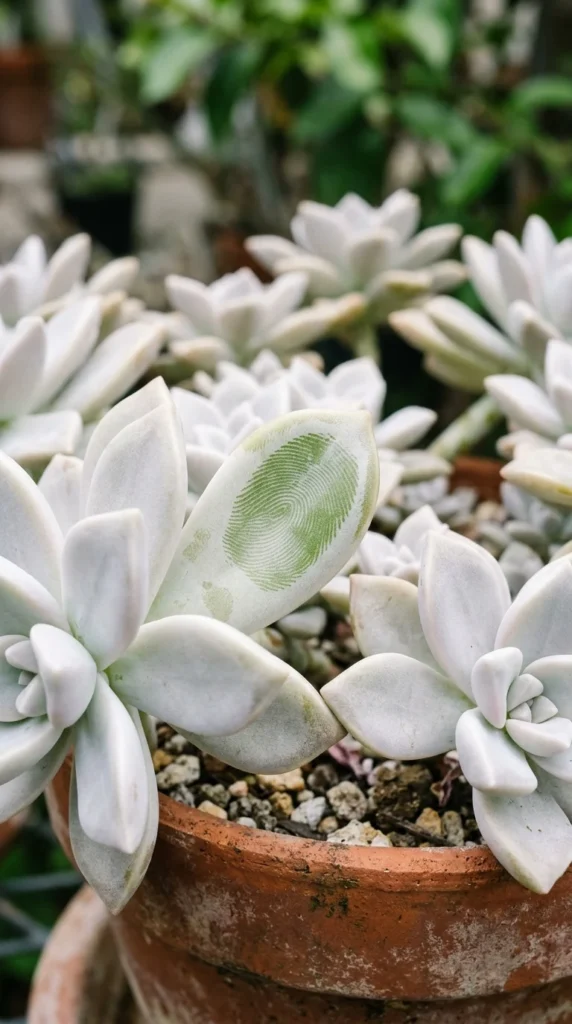
Often called “Farina,” this is the most common and positive reason for white powder. It is a natural, waxy coating produced by the plant to act as a raincoat and sunscreen. It prevents water from sitting on the leaves (which causes rot) and reflects harsh UV rays.
- What to do: Absolutely nothing. In fact, try not to touch the leaves! Once Farina is rubbed off by fingers or water, it rarely grows back, leaving the plant patchy and vulnerable to sunburn.
2. Mealybugs
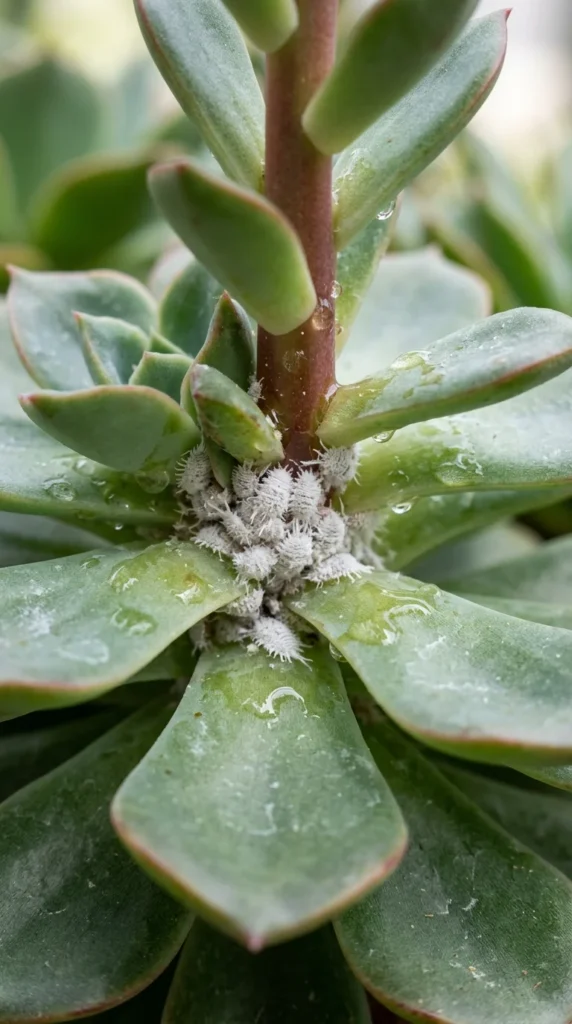
Mealybugs are the arch-nemesis of succulents. They look like tiny bits of white cotton or fluff. Unlike Farina, which is an even coating, mealybug residue is clumpy, sticky, and usually concentrated in the nooks and crannies of the plant.
- What to do: Isolate the plant immediately. Dip a Q-tip in 70% isopropyl alcohol and dab the bugs directly to kill them. For heavy infestations, spray the entire plant with a mixture of alcohol and water, ensuring you reach every hidden crevice.
3. Powdery Mildew
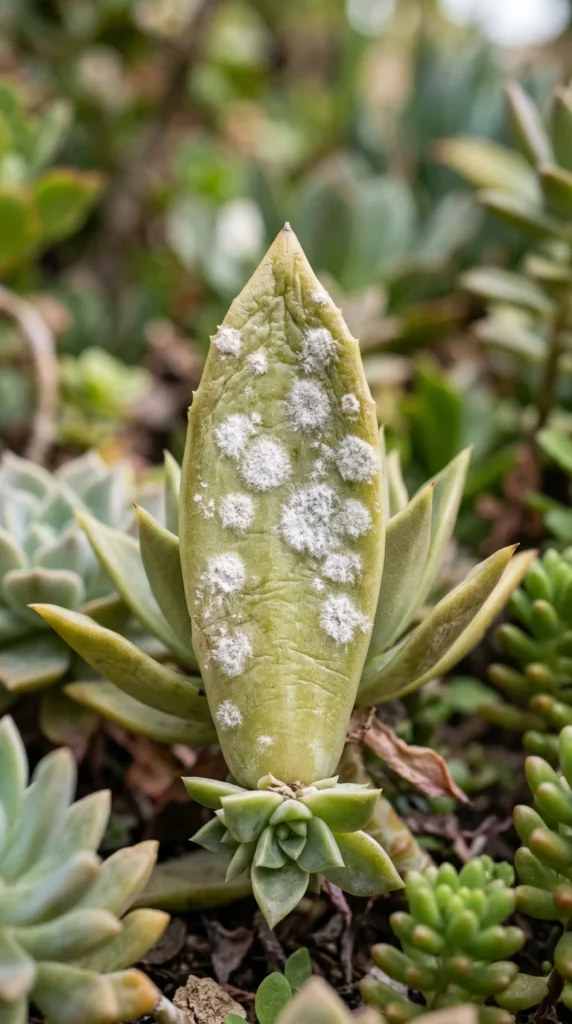
This is a fungal disease that thrives in humid conditions with poor airflow. It starts as small white spots and can quickly spread to cover the entire plant, eventually choking out the succulent’s ability to photosynthesize.
- What to do: Increase air circulation and reduce humidity. Remove the most affected leaves and treat the plant with a fungicide or a mixture of baking soda, water, and a drop of dish soap.
4. Hard Water
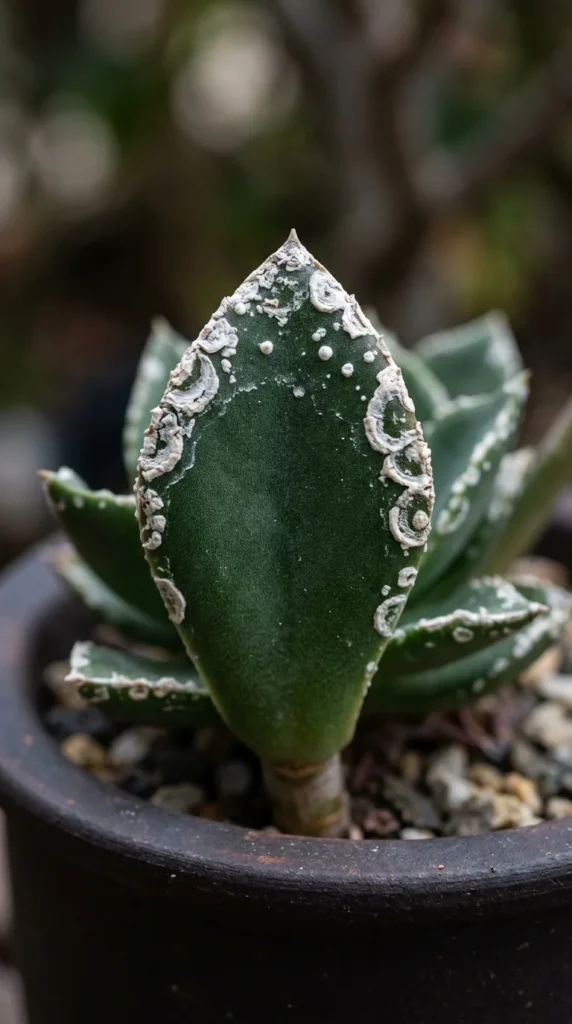
If you water your plants from above using tap water, you might notice white, crusty spots. These are mineral deposits (calcium and magnesium) left behind after the water evaporates.
- What to do: Switch to distilled water, rainwater, or filtered water. To remove existing spots, gently wipe the leaves with a very soft, damp cloth, but be careful not to rub off the natural Farina if the plant has it.
5. Edema
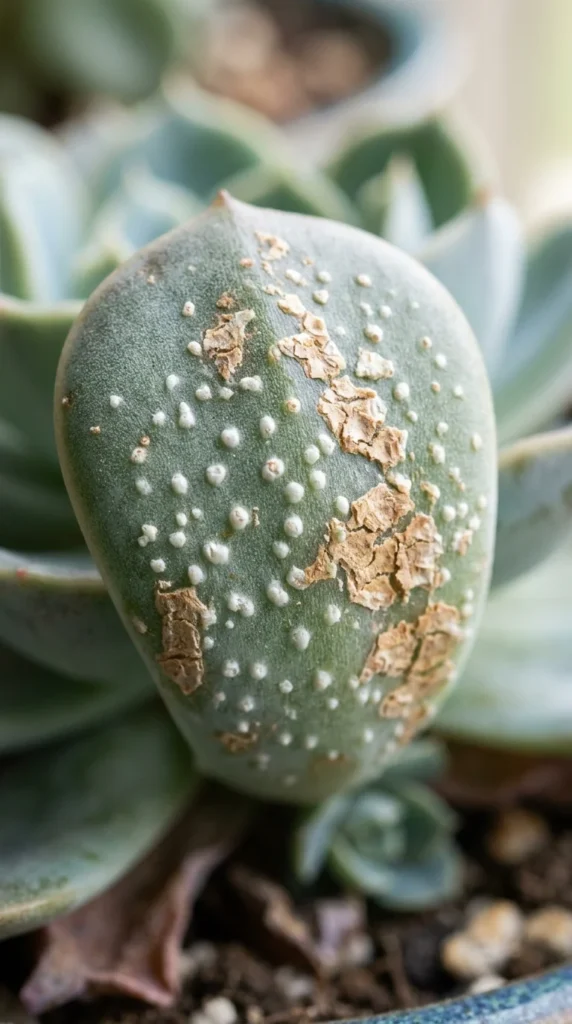
Edema occurs when a succulent takes up water faster than it can use it, causing the internal cells to rupture. As these “wounds” heal, they can form white, crusty, or corky bumps on the leaves.
- What to do: Adjust your watering schedule. Ensure the soil is completely dry before watering again and improve the drainage of your pot.
6. Spider Mites
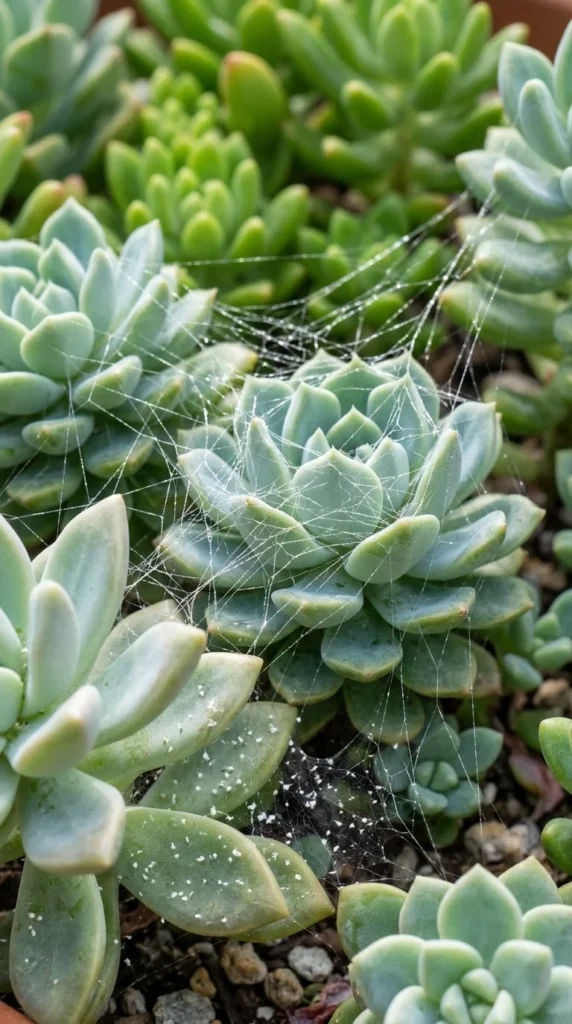
While spider mites themselves are tiny red or brown dots, their webbing and the damage they cause can look like a dusty, white film or fine powder. If you see “dust” that seems to be suspended in mid-air between leaves, you have mites.
- What to do: Give the plant a firm spray of water to knock the mites off (if the plant isn’t too fragile). Treat with neem oil or insecticidal soap, making sure to hit the undersides of the leaves.
7. Pesticide Residue
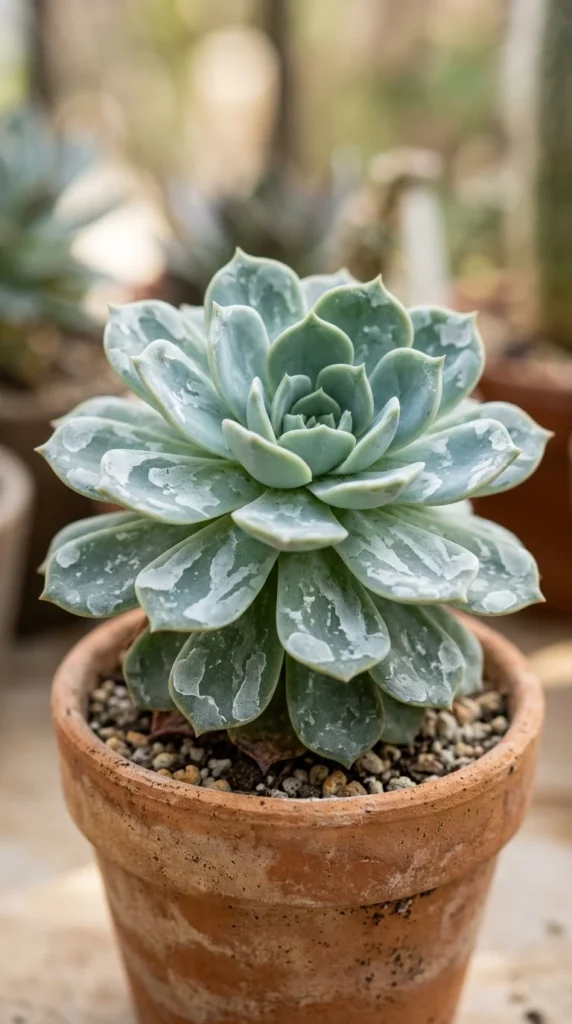
If you recently purchased a plant from a big-box store or treated it for pests, the white powder might just be dried chemicals. Many nurseries spray succulents with systemic insecticides or fungicides that leave a chalky film.
- What to do: If the plant looks healthy otherwise, don’t worry. You can leave it to wear off over time or gently rinse it if you’re sure it’s not the plant’s natural wax.
8. Root Mealybugs
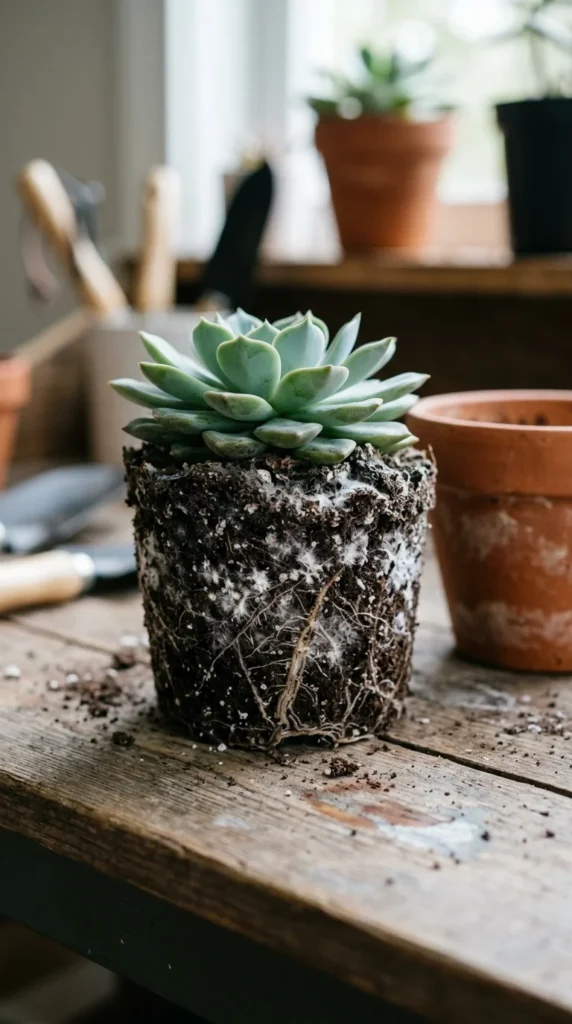
These are the cousins of the leaf mealybug, but they live underground. You might notice a white, powdery substance around the drainage holes or on the roots when you repot the plant.
- What to do: Wash all soil off the roots and soak the roots in a diluted alcohol solution or an insecticidal drench. Throw away the old soil and sterilize the pot before replanting.
9. Salt Buildup
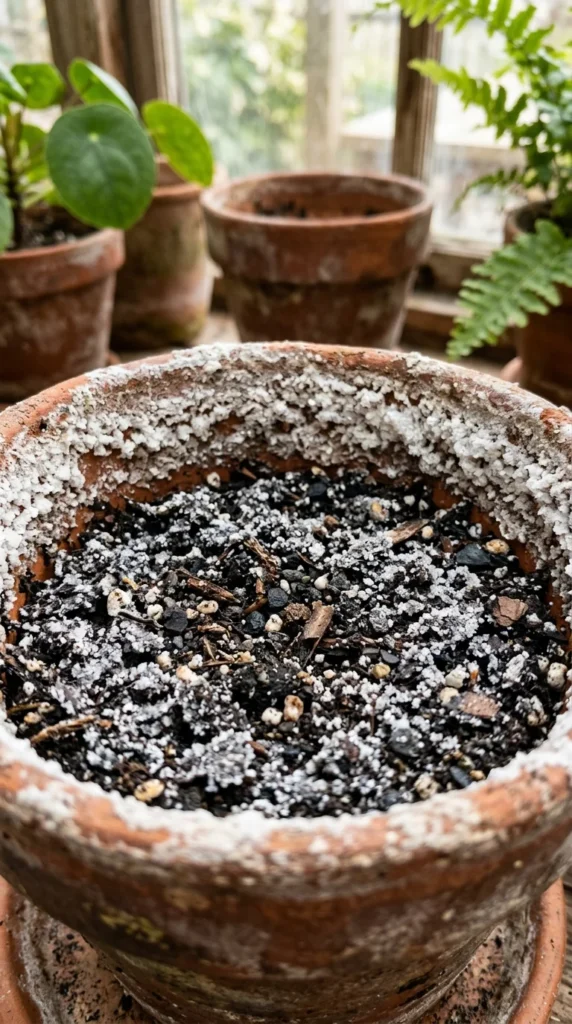
If you use chemical fertilizers frequently, salts can build up in the soil and eventually “wick” up to the base of the plant or the rim of the pot, appearing as a white, crystalline powder.
- What to do: Flush the soil with plenty of fresh, distilled water until it runs clear out the bottom. In the future, fertilize less frequently and use a more diluted strength.
10. Aphid Sheddings
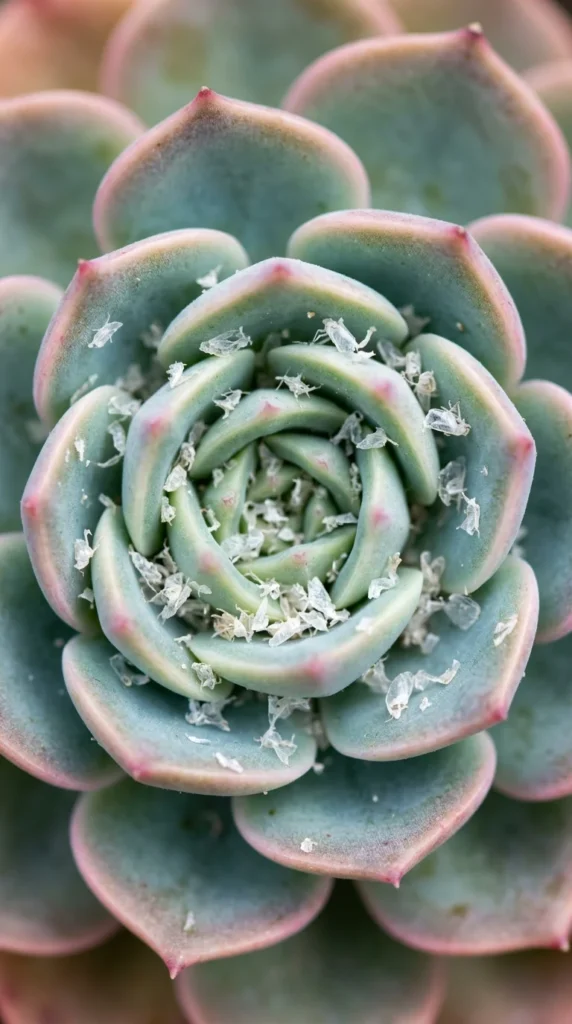
As aphids grow, they shed their skins. These discarded exoskeletons look like tiny, white, flaky bits of powder or dust accumulated in the center of the plant.
- What to do: Look for the live aphids (usually green or black). If you find them, treat the plant with insecticidal soap or a strong blast of water.
11. Cottony Cushion Scale
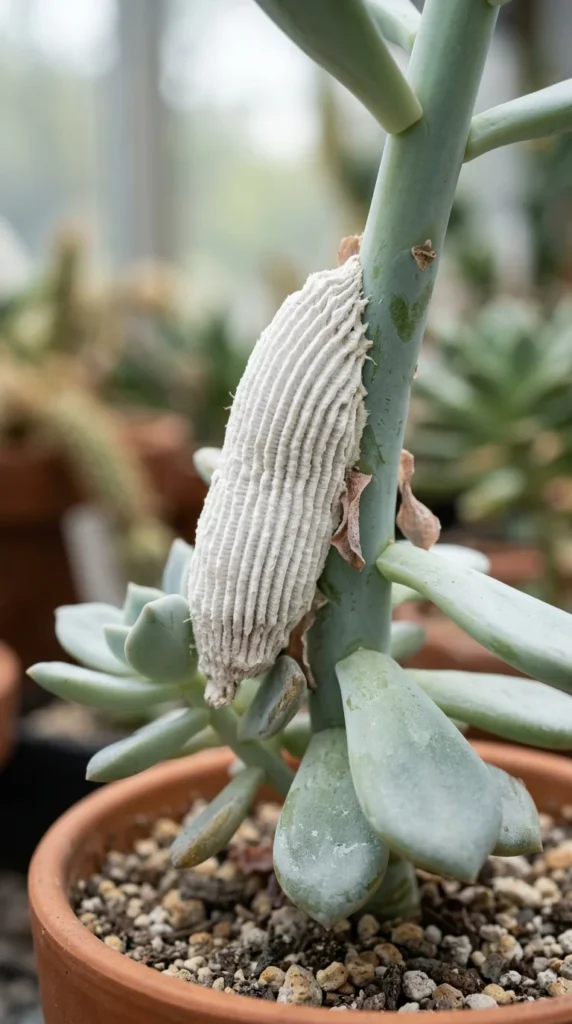
This specific type of scale insect produces a large, white, fluted egg sac that looks like a powdery white lump. It’s much larger and more structured than a standard mealybug.
- What to do: Manually remove the egg sacs with a pair of tweezers or a cloth soaked in alcohol. Treat the plant with neem oil to kill any remaining larvae.
12. Household Dust
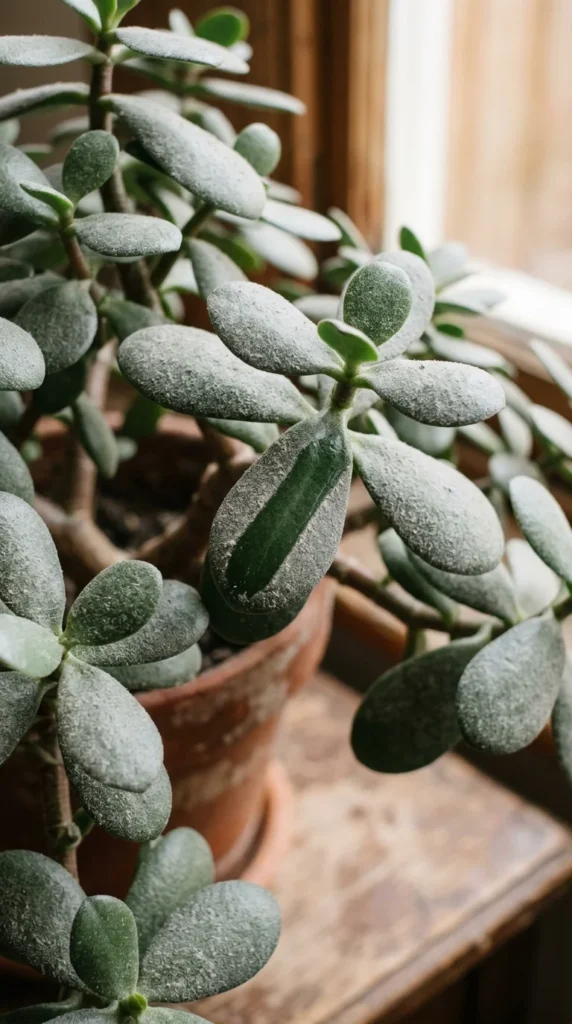
It sounds simple, but in a dry home, succulents can act as dust magnets. Because many succulents have a slightly tacky surface or Farina, dust sticks to them easily, making them look dull and “powdery.”
- What to do: Use a soft makeup brush or a small air puffer (like those used for camera lenses) to gently whisk away the dust without damaging the plant’s surface.
13. Perlite Dust
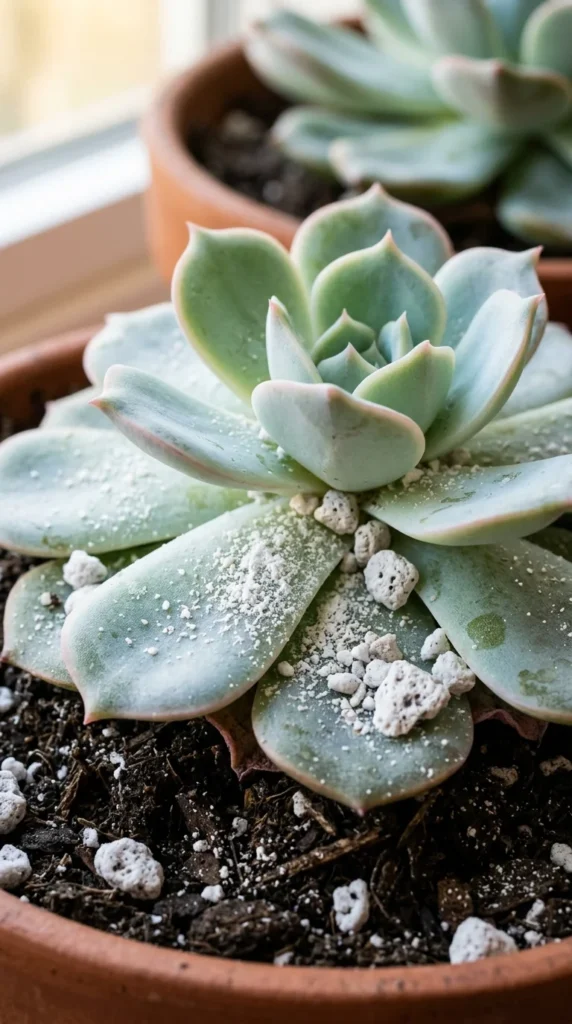
When you first pot a succulent, the perlite in the soil mix often breaks down into a fine white powder. When you water the plant, this dust can splash up onto the lower leaves.
- What to do: Simply blow the dust off or use a soft brush. It is completely harmless.
14. Botrytis (Gray Mold)
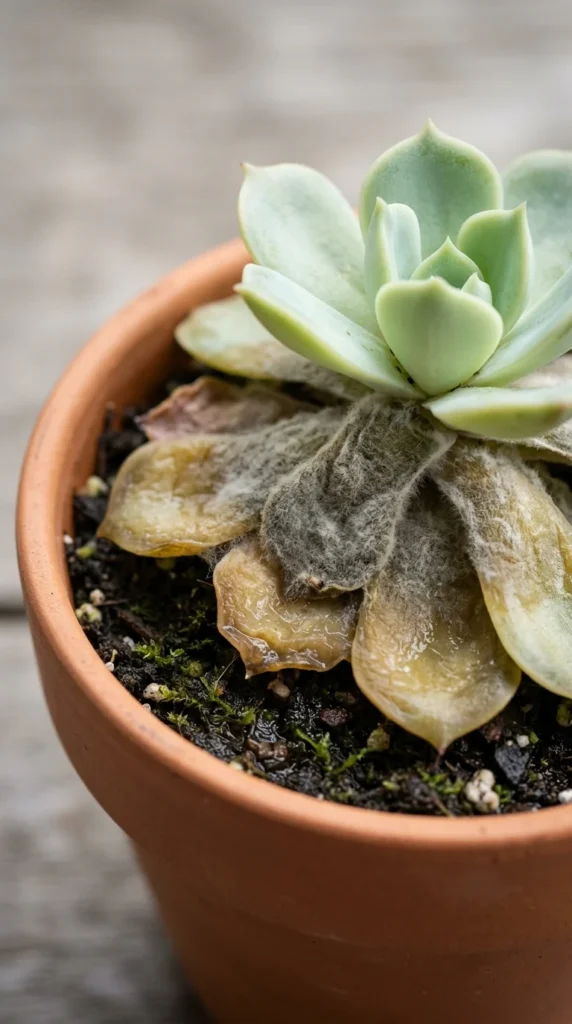
While usually gray, this mold can appear off-white in its early stages. It typically attacks plants that are already damaged or sitting in overly damp conditions.
- What to do: Cut away the infected parts immediately with sterile scissors. Improve ventilation and ensure the plant is in a bright, dry spot.
15. Neighboring Pollen
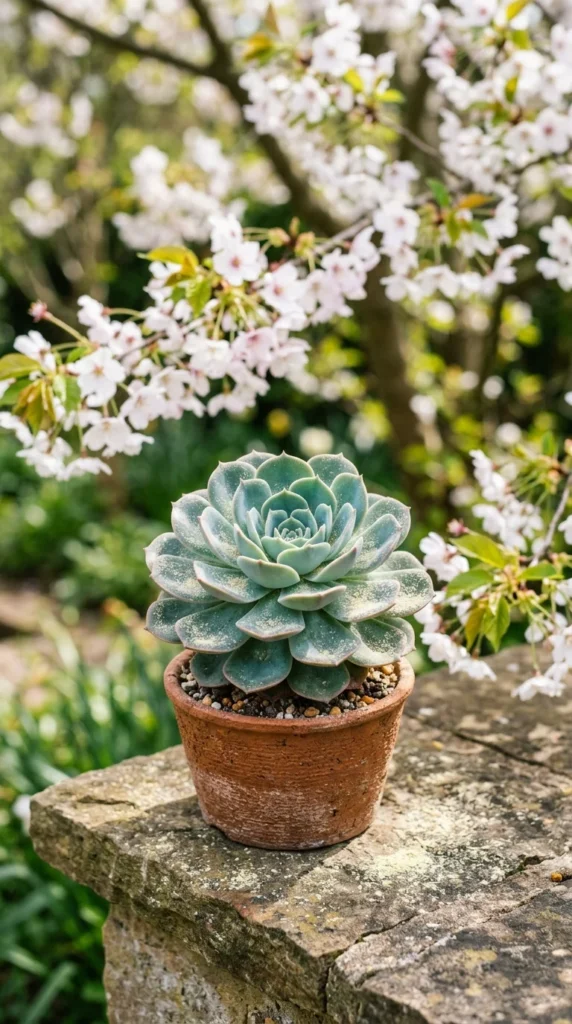
If your succulents are kept outdoors or near an open window during spring, they might be covered in a fine layer of pollen. This can look like a yellowish-white powder spread evenly across the leaves.
- What to do: If it bothers you, a light spray of water will wash it away. Otherwise, it will eventually disappear with the wind.
16. Whiteflies
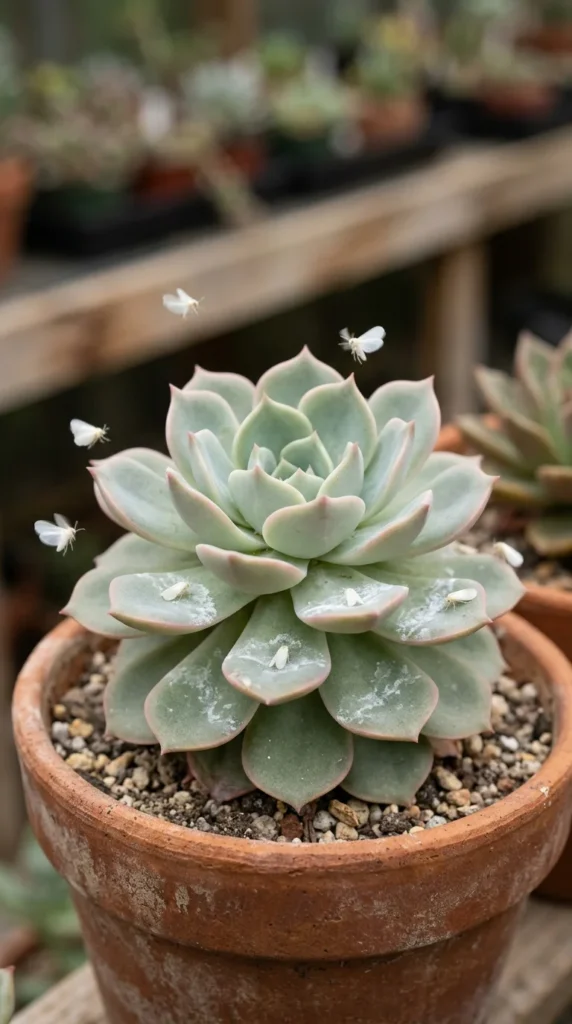
Whiteflies are tiny winged insects that hang out on the undersides of leaves. They produce a powdery wax and “honeydew,” which can make the plant look like it has been dusted with flour.
- What to do: Use yellow sticky traps to catch the adults and treat the leaves with neem oil or insecticidal soap to handle the nymphs.
17. Dormancy Crust
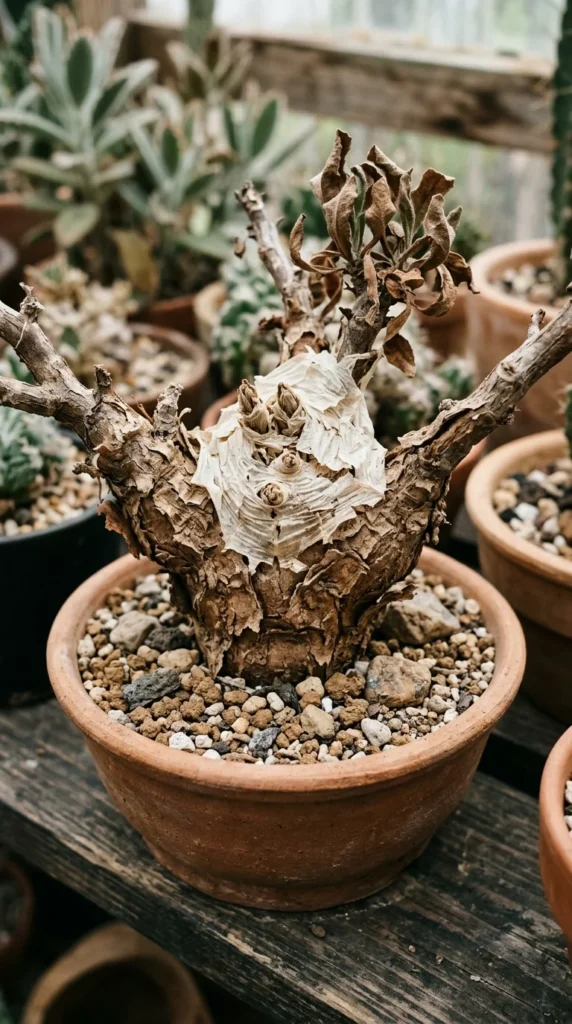
Some succulents, particularly certain types of Crassula or Haworthia, develop a thin, papery, or powdery-looking “skin” over their growth points during extreme dormancy to protect themselves from heat and desiccation.
- What to do: Leave it alone. This is a natural protective mechanism. Once the plant enters its active growing season and receives water, the “crust” will naturally break away as new growth emerges.