
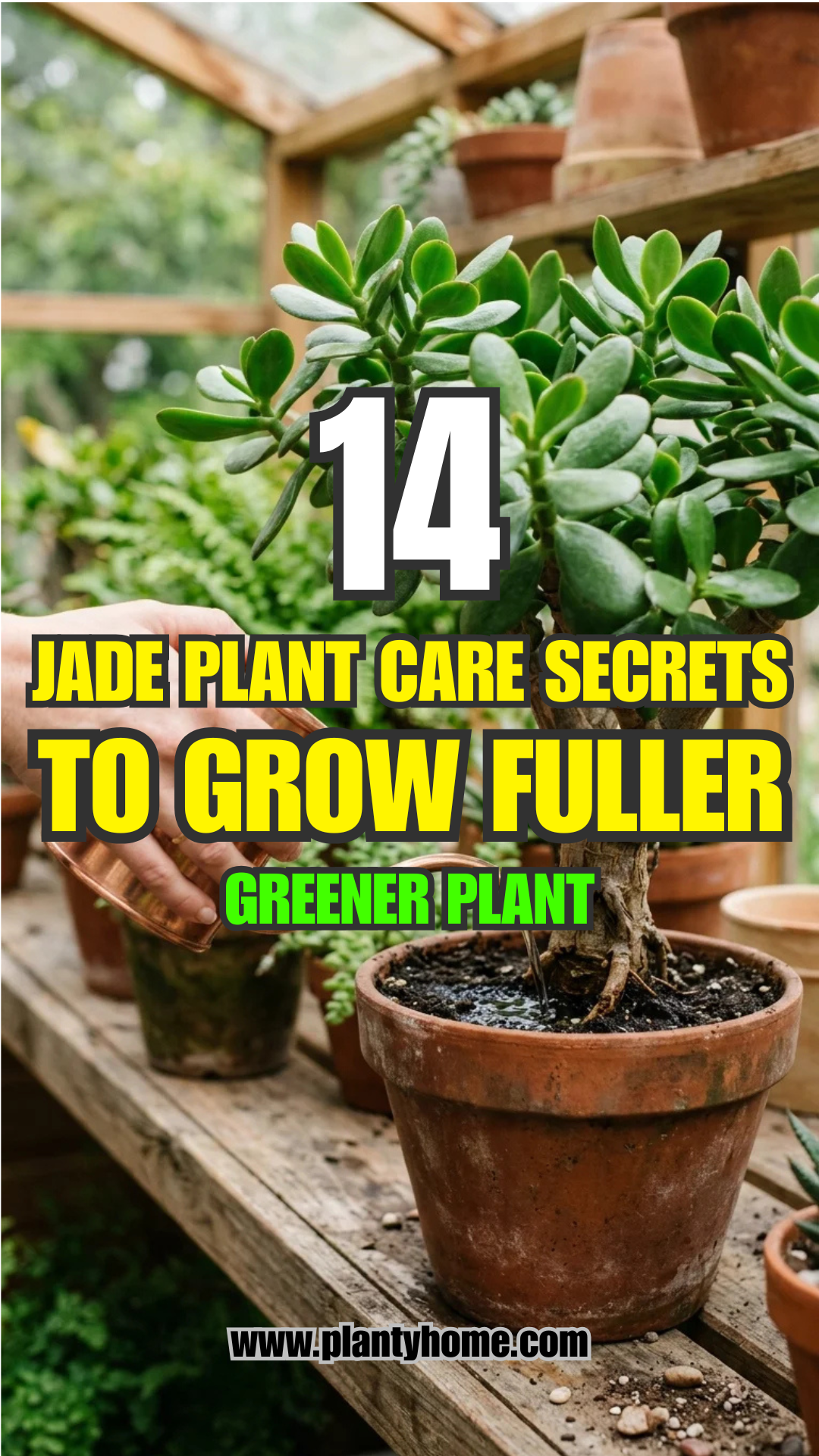
The Jade plant (Crassula ovata) is more than just a common succulent; in many cultures, it is a symbol of prosperity, luck, and friendship. Often referred to as the “Money Tree,” this resilient plant can live for decades, passing down through generations as a living heirloom. However, there is a distinct difference between a Jade plant that is simply surviving and one that is thriving with a thick, tree-like trunk and lush, emerald-green foliage.
Achieving that “full” look requires more than just occasional watering. It involves understanding the delicate balance of light, pruning techniques, and environmental stressors that trigger growth. If your Jade looks leggy, sparse, or pale, it is likely missing one of the fundamental pillars of succulent care. Here are 14 professional secrets to transforming your Jade into a stunning, miniature indoor tree.
1. Sunlight
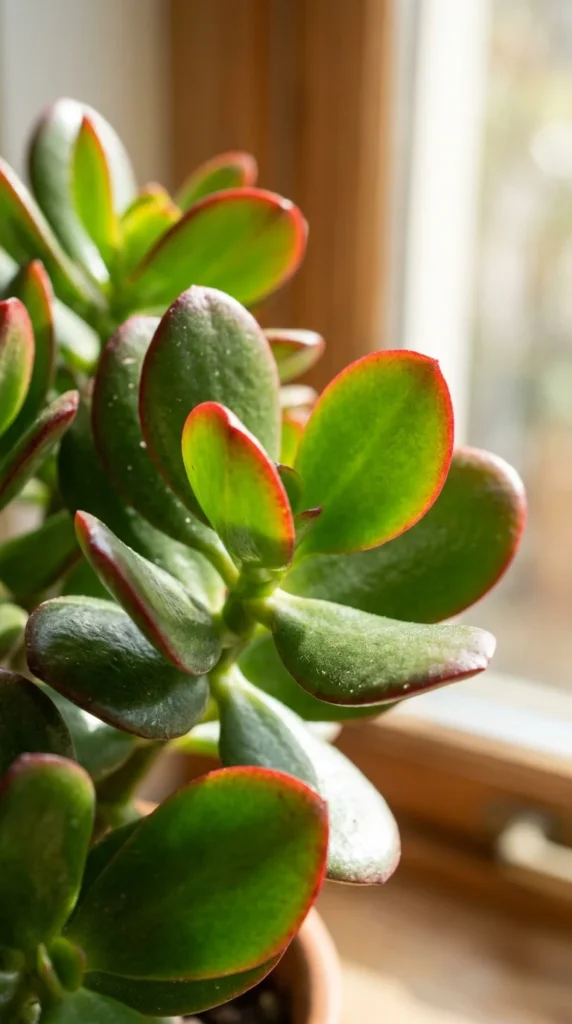
The absolute most critical factor in Jade plant health is light. While they are often sold as low-light plants, this is a misconception. To grow a thick, sturdy trunk and prevent “stretching” (etiolation), your Jade needs at least four to six hours of bright, indirect sunlight daily.
If you want those beautiful red-tinged edges on the leaves, you need to provide a bit of direct morning sun. Be careful, however, with sudden changes. If your plant has been in a dark corner, moving it directly into scorching afternoon sun will cause the leaves to develop permanent brown burn marks. Transition it gradually over two weeks to help it acclimate to higher light levels.
2. Watering
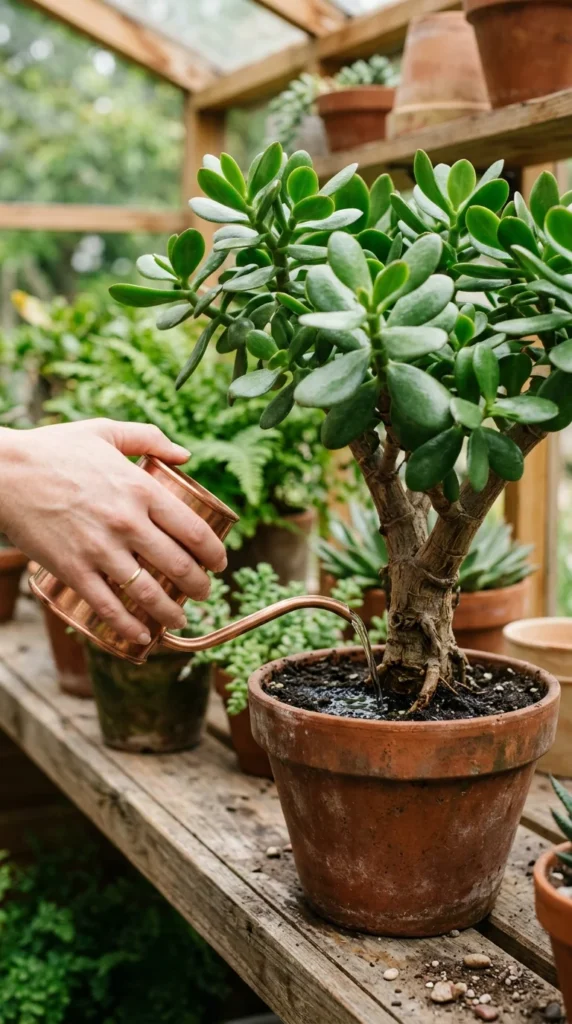
The “soak and dry” method is the golden rule for Jades. These plants store water in their fleshy leaves and stems, making them highly drought-tolerant but extremely susceptible to root rot. Never water on a schedule. Instead, stick your finger two inches into the soil; if it feels dry, it’s time to water.
When you do water, do it thoroughly until water drains out of the bottom of the pot. This flushes out accumulated salts and ensures the deep roots get hydrated. In the winter, Jades go into a semi-dormant state and require significantly less water—sometimes only once every 4 to 6 weeks.
3. Soil
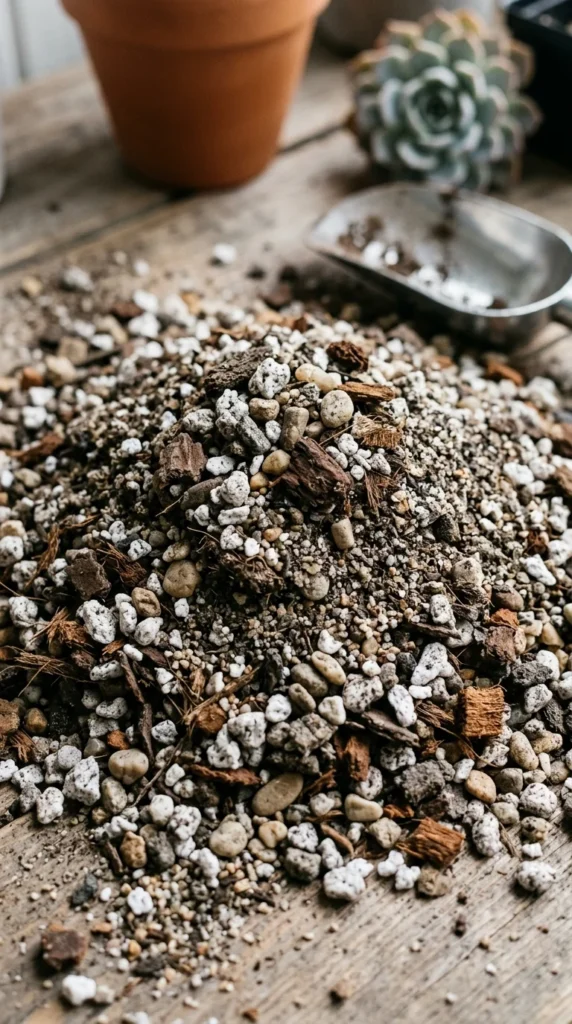
Standard potting soil is a death sentence for Jade plants. It retains too much moisture for too long, suffocating the roots. To grow a fuller plant, you need a substrate that mimics their rocky, arid natural habitat.
A high-quality succulent or cactus mix is a great start, but many experts recommend “buffing” it further. Mix two parts potting soil with one part perlite and one part coarse sand or pumice. This ensures that even if you accidentally overwater, the excess liquid will pass through the root zone quickly, allowing the roots to breathe.
4. Potting
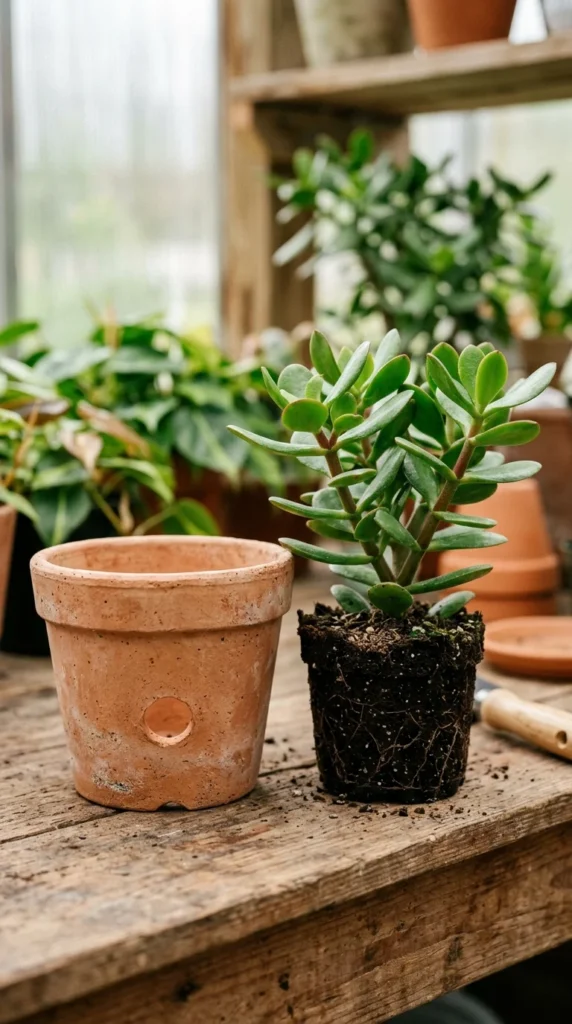
The material of your pot matters just as much as the soil. For Jades, unglazed terracotta is the gold standard. Terracotta is porous, meaning it allows moisture to evaporate through the walls of the pot, helping the soil dry out faster.
Additionally, Jades are top-heavy. As they grow fuller and taller, they can easily tip over in lightweight plastic pots. A heavy clay or ceramic pot provides the necessary counterweight to keep your mini-tree upright. Always ensure there is at least one large drainage hole at the bottom.
5. Pruning
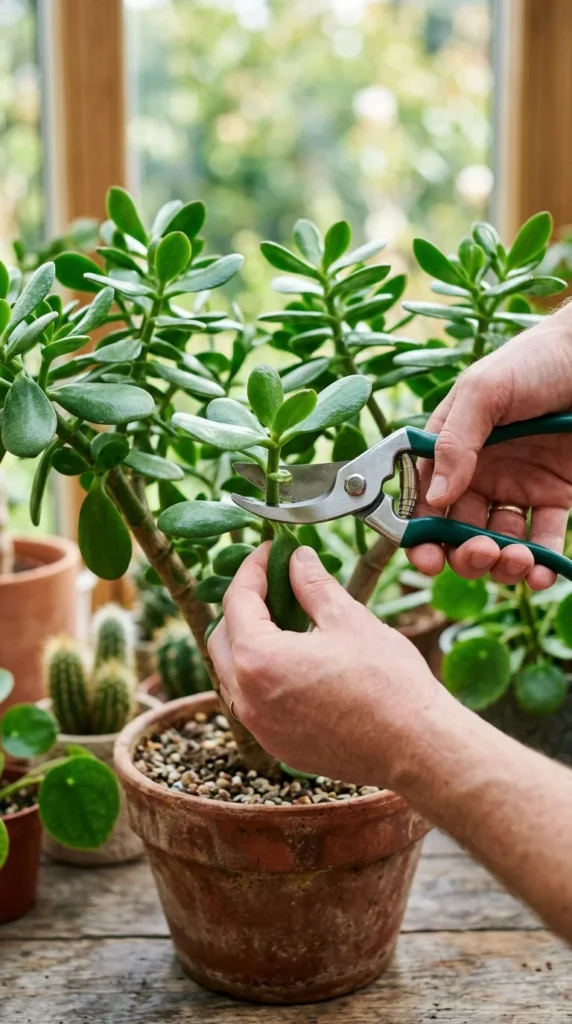
If you want a Jade that looks like a lush tree rather than a vine, you must prune it. Pruning encourages the plant to “branch out.” When you snip off the end of a branch, the plant typically responds by growing two new branches from the node below the cut.
Don’t be afraid to be aggressive. You can prune back up to one-third of the plant at a time during the spring or summer. Focus on removing “leggy” stems that are reaching for light and thinning out the center to allow light to reach the inner leaves. This stimulates the trunk to thicken and results in a much denser canopy.
6. Fertilizing
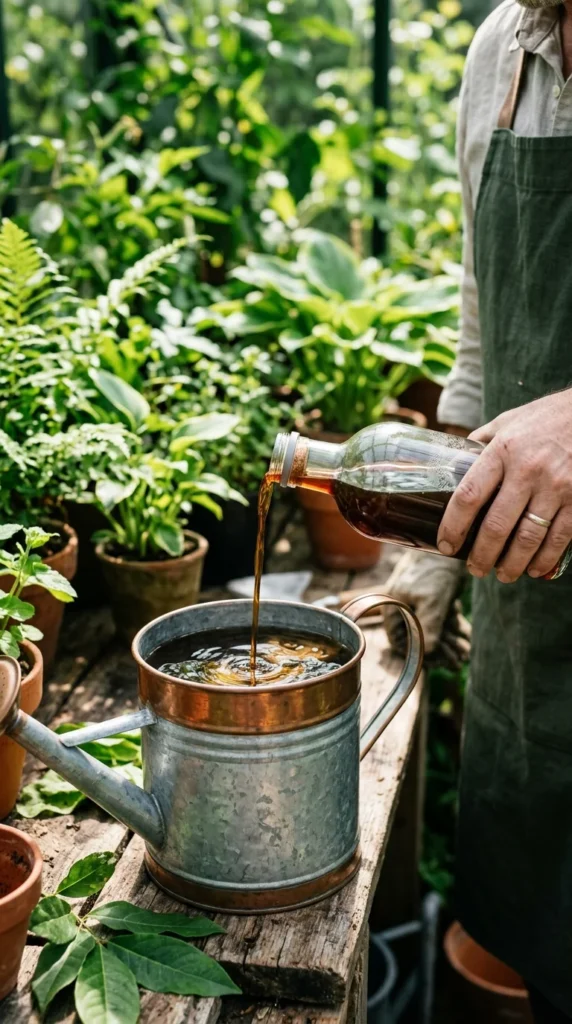
Jades aren’t heavy feeders, but they do appreciate a boost during their active growing season (spring and summer). A balanced, water-soluble fertilizer diluted to half-strength is ideal.
Look for a formula with a slightly lower nitrogen count to avoid soft, weak growth. Feeding your plant once every six weeks during the warmer months provides the nutrients necessary for vibrant green color and cellular strength. Avoid fertilizing in the winter, as the plant isn’t growing fast enough to utilize the nutrients, which can lead to salt buildup and root burn.
7. Temperature
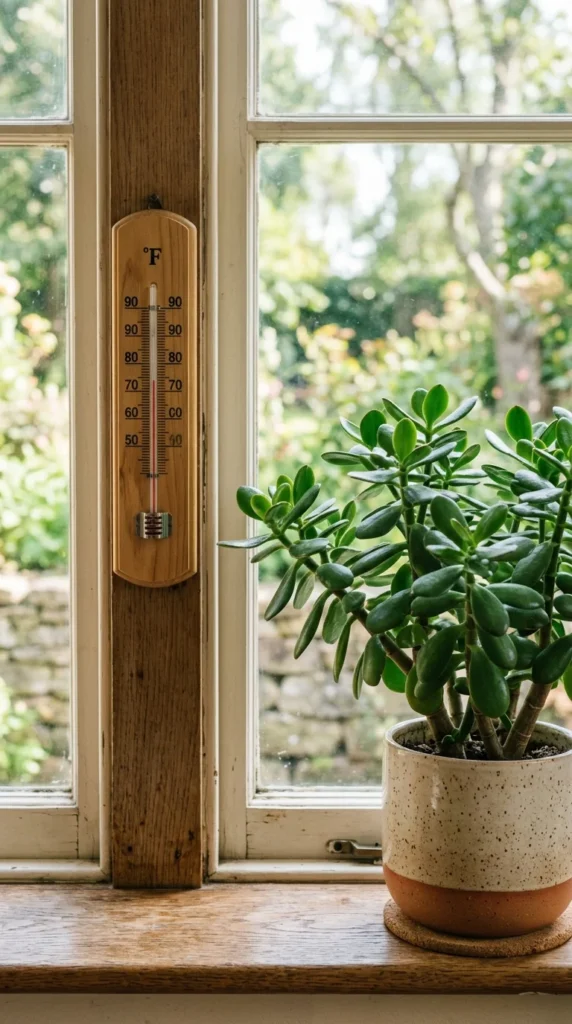
Jade plants thrive in temperatures between 65°F and 75°F (18°C–24°C) during the day and slightly cooler at night. They are surprisingly hardy, but they are not frost-tolerant. If the temperature drops below 40°F (4°C), the water stored in their leaves can freeze, causing the cells to burst and the plant to collapse.
Keep them away from drafty windows in the winter and away from direct blasts from air conditioning vents in the summer. Consistency is key; sudden temperature swings can cause the plant to drop its leaves as a stress response.
8. Airflow
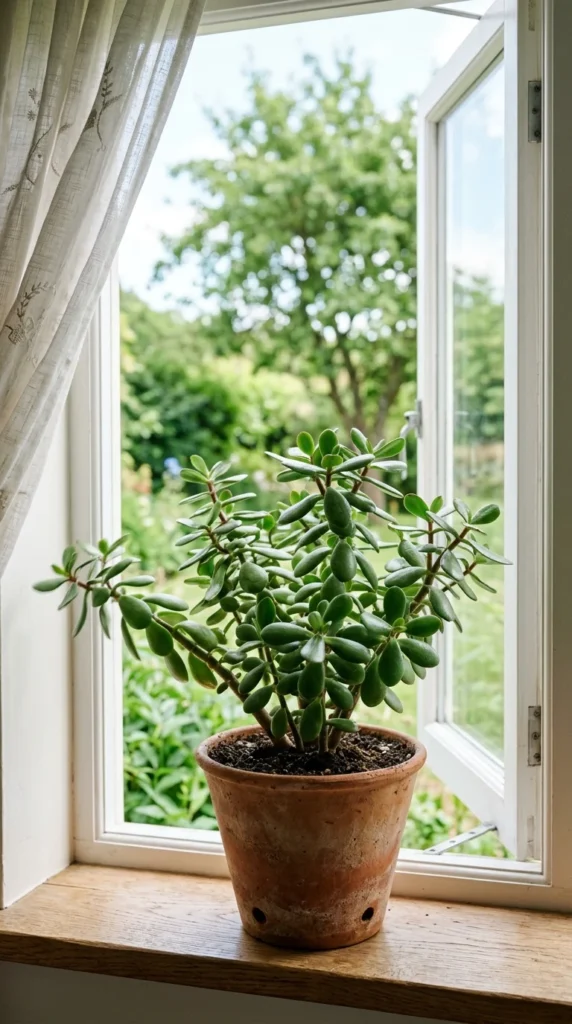
Good air circulation is an often-overlooked secret to a healthy Jade. Stagnant air allows moisture to sit on the leaves and soil surface, which can invite fungal issues like powdery mildew or root rot.
If your plant is in a crowded corner with many other plants, give it some breathing room. A gentle breeze from a cracked window or a ceiling fan helps strengthen the stems through “thigmomorphogenesis”—the process by which plants grow stronger in response to physical touch or wind.
9. Cleaning
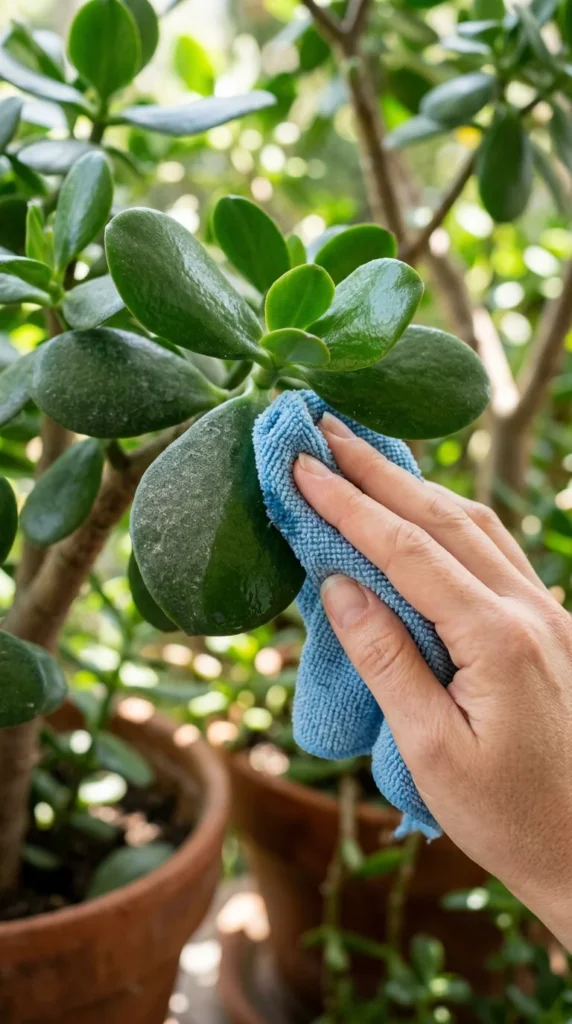
Because Jade leaves are flat and waxy, they act as dust magnets. A thick layer of dust doesn’t just look bad; it physically blocks the stomata (pores) on the leaves and reduces the plant’s ability to photosynthesize.
Once a month, take a damp cloth and gently wipe down the leaves. For smaller plants, you can give them a gentle “shower” in the sink with lukewarm water, but make sure the leaves dry completely and no water stays trapped in the crown of the plant, which could lead to rot.
10. Pests
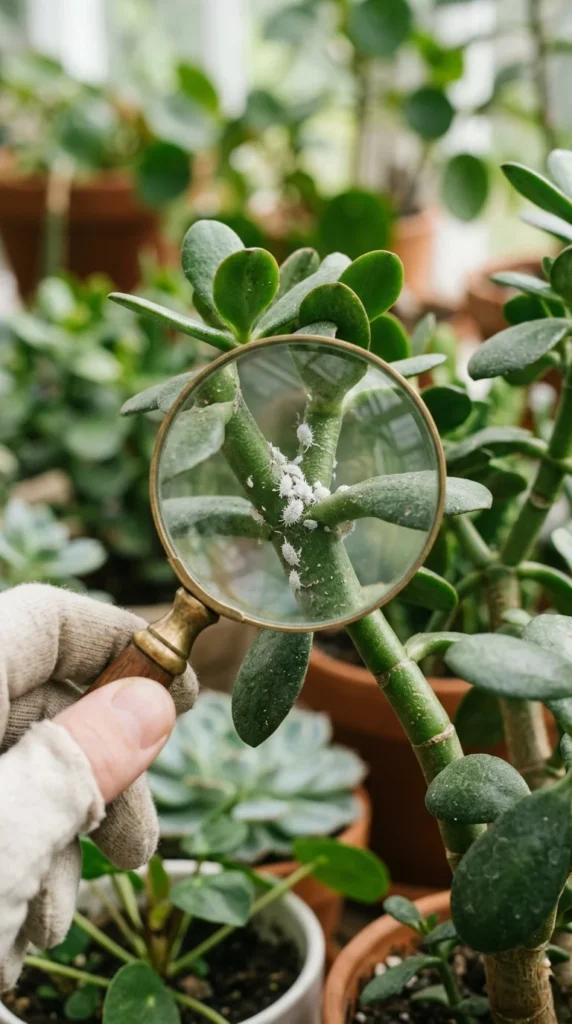
The most common enemy of the Jade plant is the mealybug. These tiny, white, cottony insects hide in the nooks where the leaves meet the stems, sucking the sap and weakening the plant.
If you spot them, act fast. Dip a cotton swab in 70% isopropyl alcohol and dab it directly onto the bugs to kill them instantly. Check your plant weekly; catching an infestation early is the only way to prevent it from spreading and causing permanent scarring on the foliage.
11. Repotting
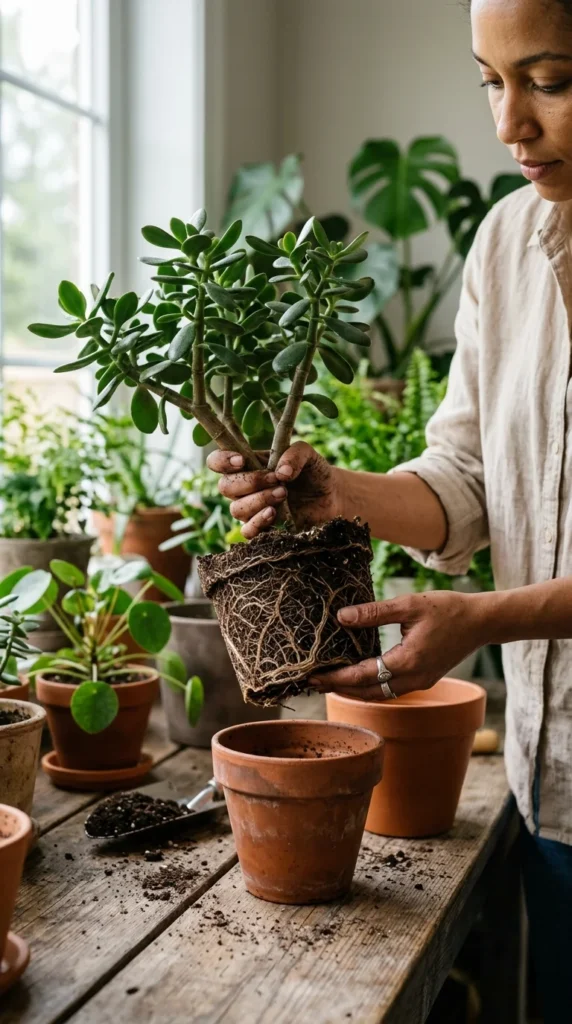
Contrary to popular belief, Jade plants actually enjoy being slightly root-bound. Keeping them in a snug pot can help control their size and encourages them to put energy into the trunk and leaves rather than an expansive root system.
You generally only need to repot every 2 to 3 years. When you do, only go up one pot size. If the pot is too large, the excess soil will hold onto water longer than the roots can absorb it, leading to the dreaded root rot. Always repot in the spring when the plant is entering its most vigorous growth phase.
12. Propagation
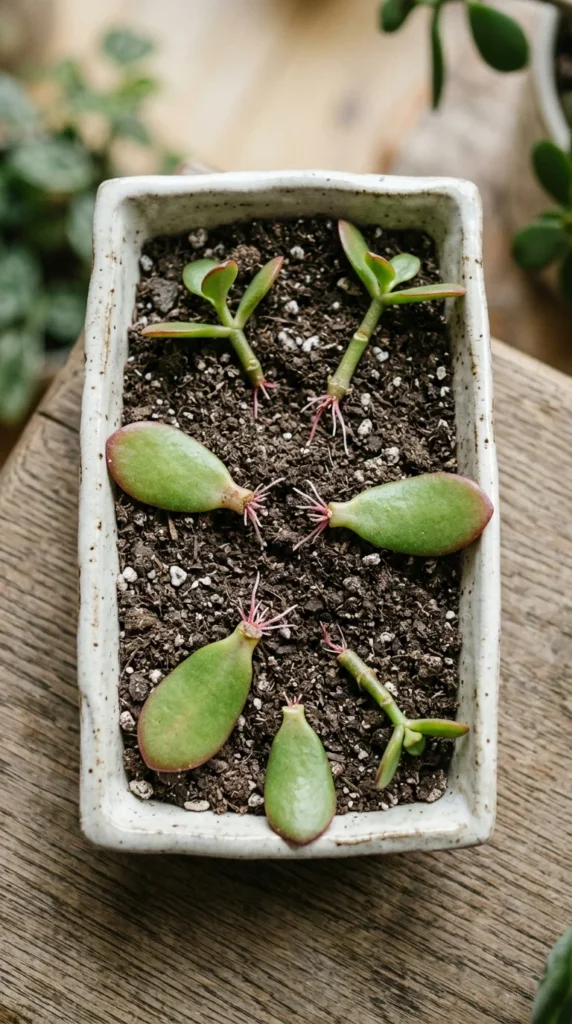
One of the best ways to ensure you always have a full, lush Jade is to propagate your own. If a leaf falls off or you prune a branch, don’t throw it away! Let the cutting “callous” over for a few days in a dry spot, then simply place it on top of some succulent soil.
Within a few weeks, tiny pink roots will emerge, followed by a miniature Jade plant. You can plant these “pups” back into the base of the parent plant to fill in any gaps and create a much bushier, multi-stemmed appearance.
13. Seasonality
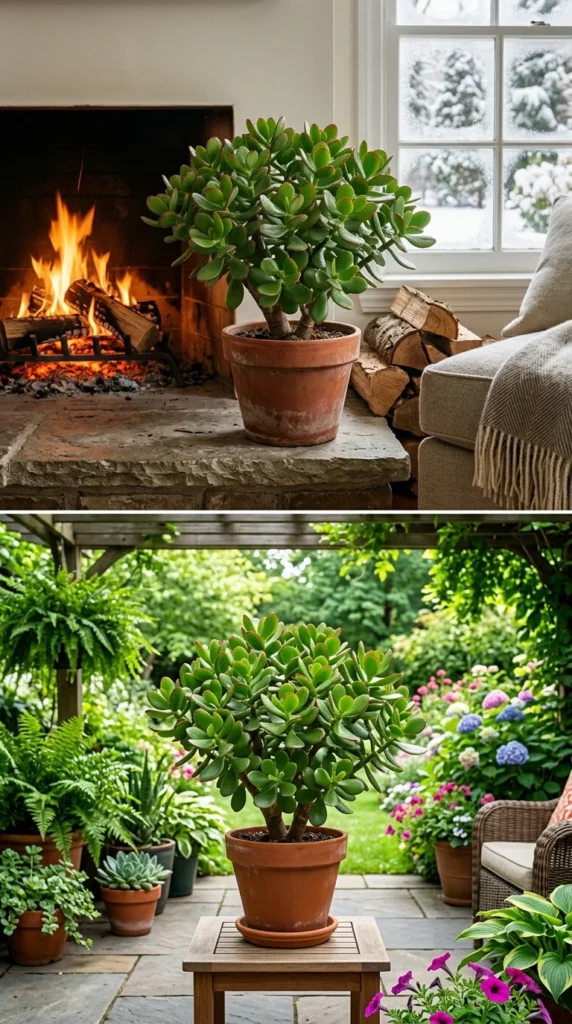
Understanding the seasons is vital for a “fuller, greener” plant. In the summer, if you have the space, move your Jade outdoors to a shaded porch. The natural light and humidity will trigger a massive growth spurt that you simply can’t replicate indoors.
In the winter, the plant wants to rest. Reduce watering, stop fertilizing, and keep it in a cooler room. This rest period is essential; it allows the plant to store energy so it can explode with new growth once the spring sun returns.
14. Stability
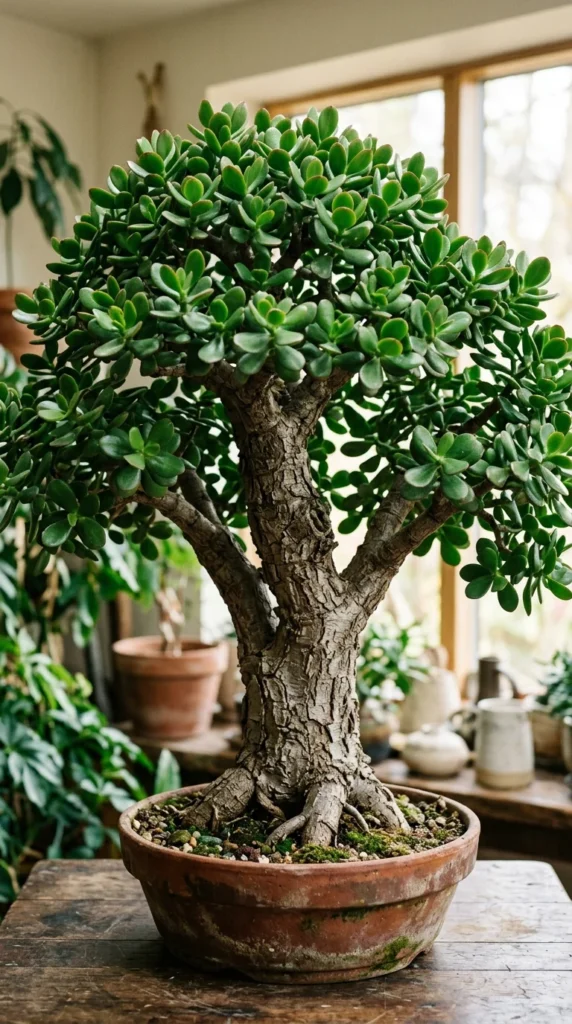
A full Jade plant is a heavy Jade plant. As yours grows, it may become top-heavy. To keep it stable and encourage the trunk to thicken, you can use small decorative stones on top of the soil. Not only do these add weight to the pot, but they also help keep the lower leaves from touching damp soil.
If a branch becomes so heavy that it starts to droop, use a bamboo stake to support it temporarily. Over time, as the branch receives enough light and nutrients, it will “lignify”—the process of turning from a soft green stem into a hard, woody branch capable of supporting its own weight.