
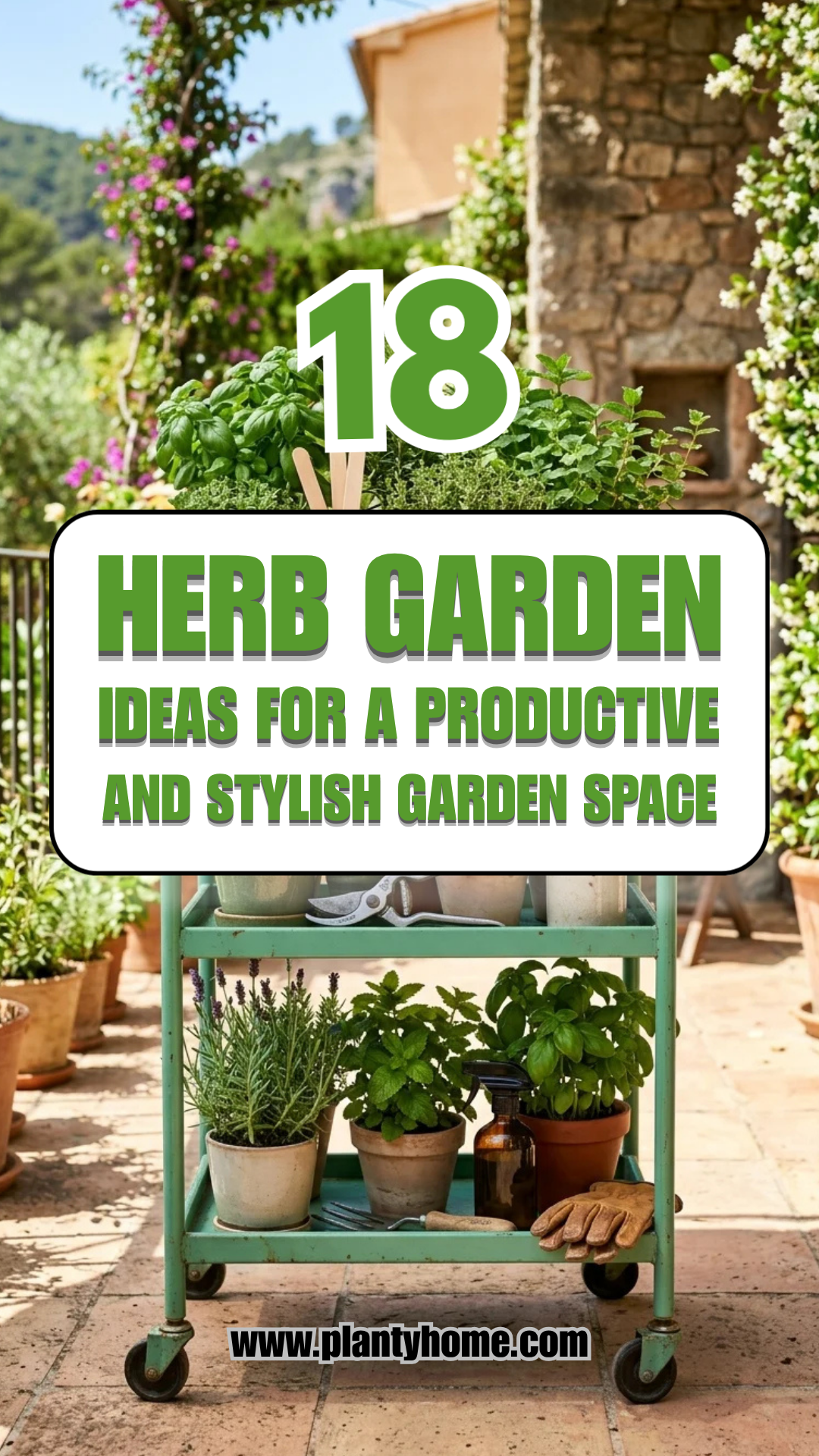
The allure of a herb garden lies in its dual functionality: it serves as a sensory sanctuary while providing a continuous harvest of fresh flavors for the kitchen. Whether you have a sprawling backyard or a modest city balcony, incorporating herbs into your landscape design adds texture, fragrance, and utility. Cultivating herbs is often the first step for many into the world of gardening because of their resilience and the immediate gratification they provide at the dinner table.
Creating a space that is both productive and stylish requires a blend of horticultural knowledge and aesthetic planning. From the structured elegance of formal herb knots to the rustic charm of upcycled containers, the possibilities for herb gardening are virtually limitless. The following eighteen ideas offer a comprehensive guide to designing a herb garden that maximizes yield without compromising on visual appeal.
1. Tiered Planters
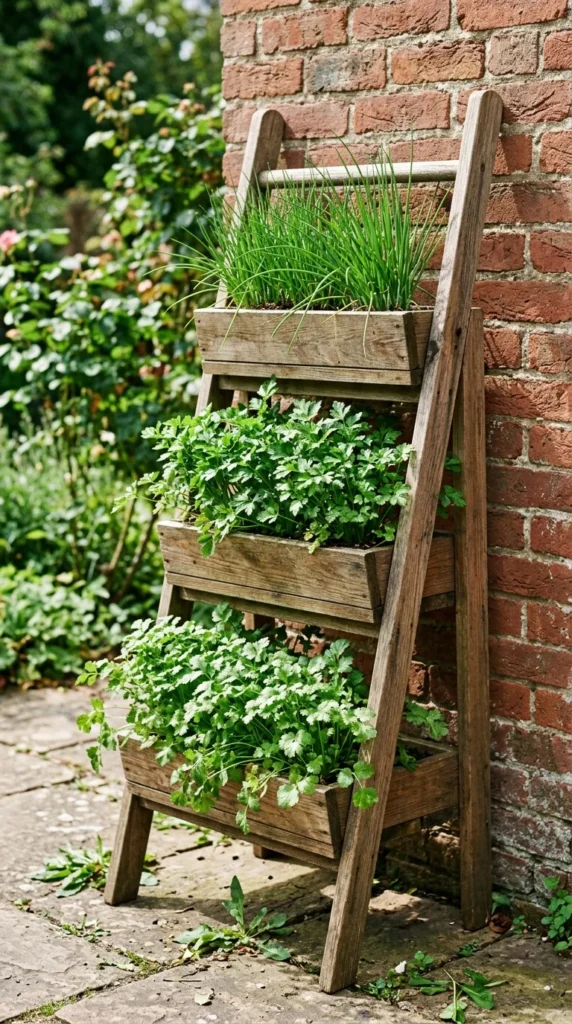
Tiered planters are the ultimate solution for gardeners dealing with limited square footage. By utilizing vertical space, these structures allow for a high density of plants while creating a striking visual focal point. The staggered levels ensure that each herb receives adequate sunlight, which is critical for sun-loving varieties like Mediterranean herbs. Furthermore, tiered systems improve drainage, as excess water from the top levels can often trickle down to the lower ones, though careful monitoring is required to prevent waterlogging the bottom plants.
2. Hanging Baskets
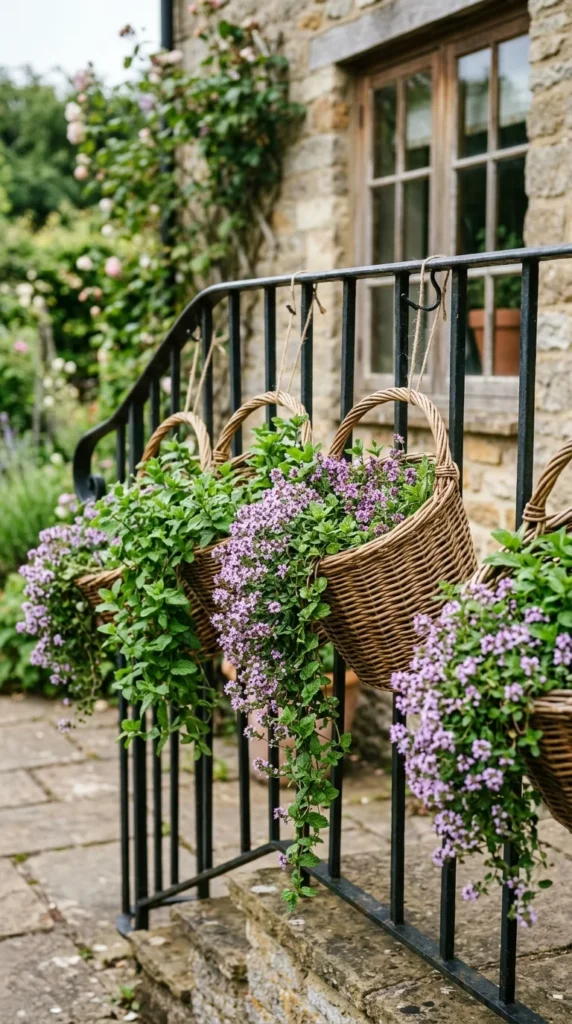
Hanging baskets add a layer of vertical interest to porches, balconies, and garden structures. They are particularly effective for “trailing” herbs that spill over the edges, creating a soft, romantic look. Mint, trailing rosemary, and nasturtiums (which offer edible flowers) thrive in this environment. To maintain health, hanging baskets require more frequent watering than ground-level plants because they are more exposed to wind and air on all sides, leading to faster evaporation.
3. Window Boxes
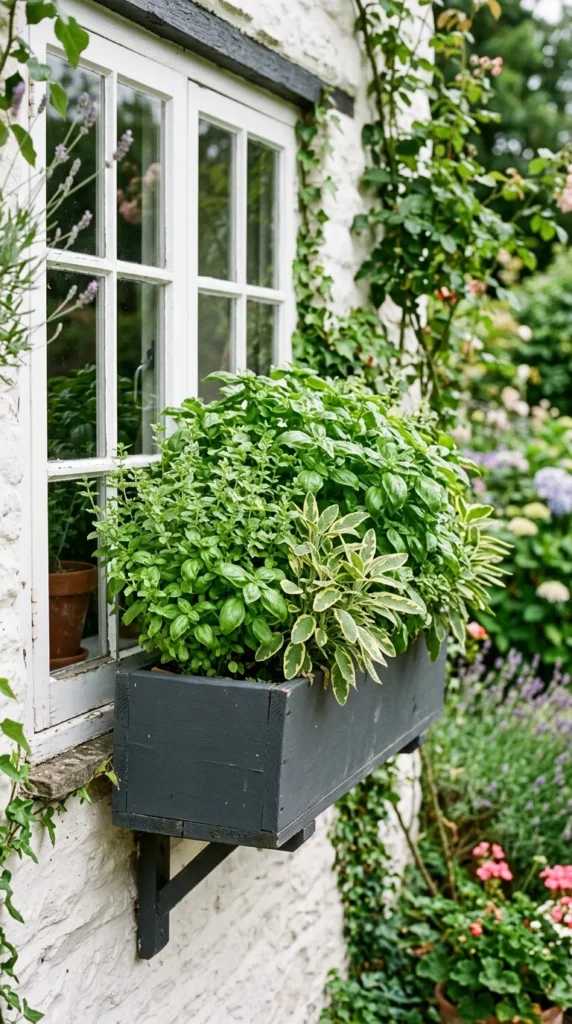
There is perhaps no herb garden setup more convenient than a window box positioned right outside the kitchen. This placement allows for “cut-and-come-again” harvesting while cooking. When designing a window box, consider the weight of the soil and water; ensure the brackets are securely fastened to the structure. To keep the display looking stylish, mix textures—such as the broad, soft leaves of basil with the needle-like foliage of rosemary or the fine fronds of dill.
4. Raised Beds
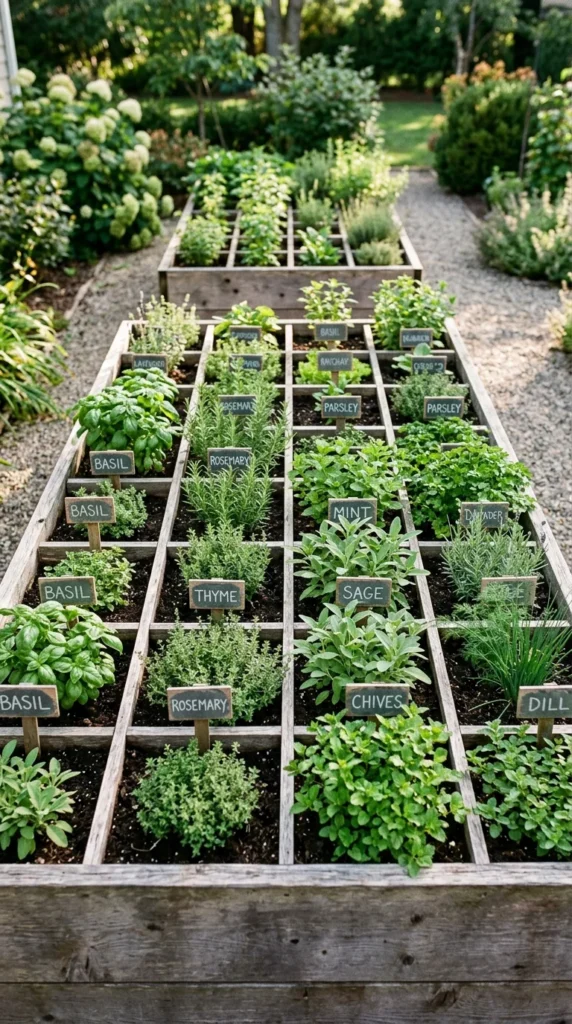
Raised beds offer superior control over soil quality and drainage, which is essential for herb health. By elevating the planting area, you also reduce the physical strain on your back and knees. For a professional aesthetic, use high-quality materials like cedar, redwood, or powder-coated metal. Incorporating a “square foot gardening” approach within the bed can help keep different herb species organized and prevent aggressive spreaders, like mint, from overtaking more delicate plants like chervil.
5. Vertical Walls
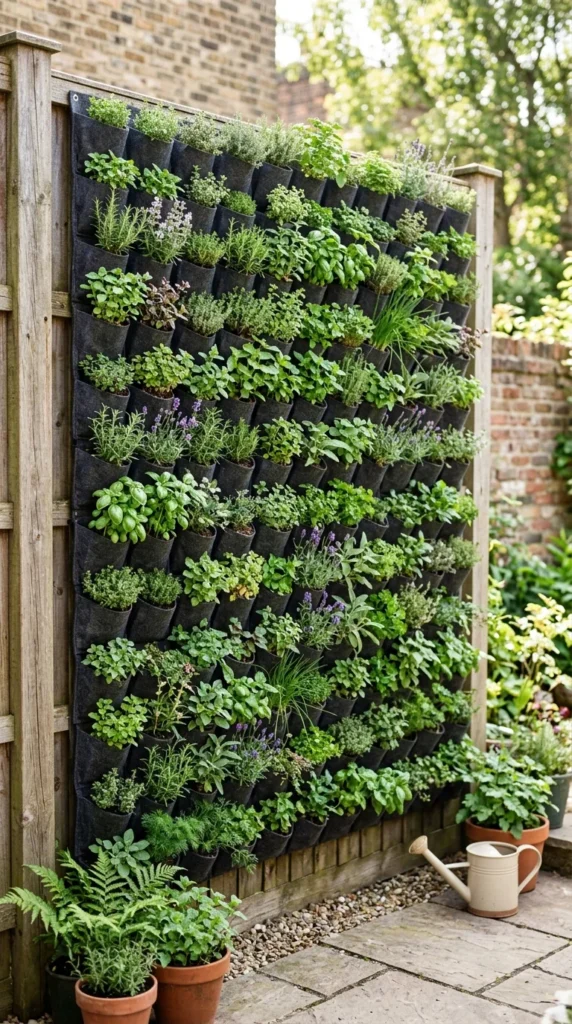
Vertical herb walls transform a bland fence or wall into a living piece of art. These systems often use modular pockets or a hydroponic setup to nourish the plants. This is an excellent choice for urban environments where ground space is nonexistent. When selecting herbs for a vertical wall, pay attention to their light requirements; place sun-hungry herbs like oregano at the top and shade-tolerant ones like lemon balm or parsley toward the bottom where they might be shaded by the plants above.
6. Repurposed Pallets
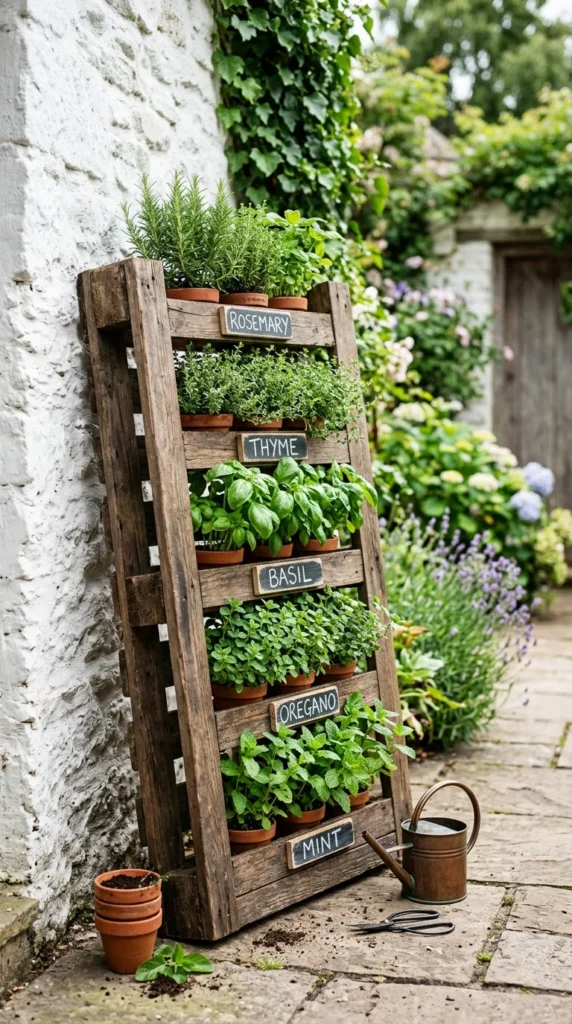
Upcycling wooden pallets is a sustainable and cost-effective way to build a rustic herb garden. By sealing the wood and adding landscape fabric to create pockets, you turn industrial waste into a productive garden. To ensure safety, only use pallets marked with “HT” (Heat Treated) rather than “MB” (Methyl Bromide), as the latter contains harmful chemicals. This style fits perfectly in a farmhouse or bohemian-themed garden space.
7. Mason Jars
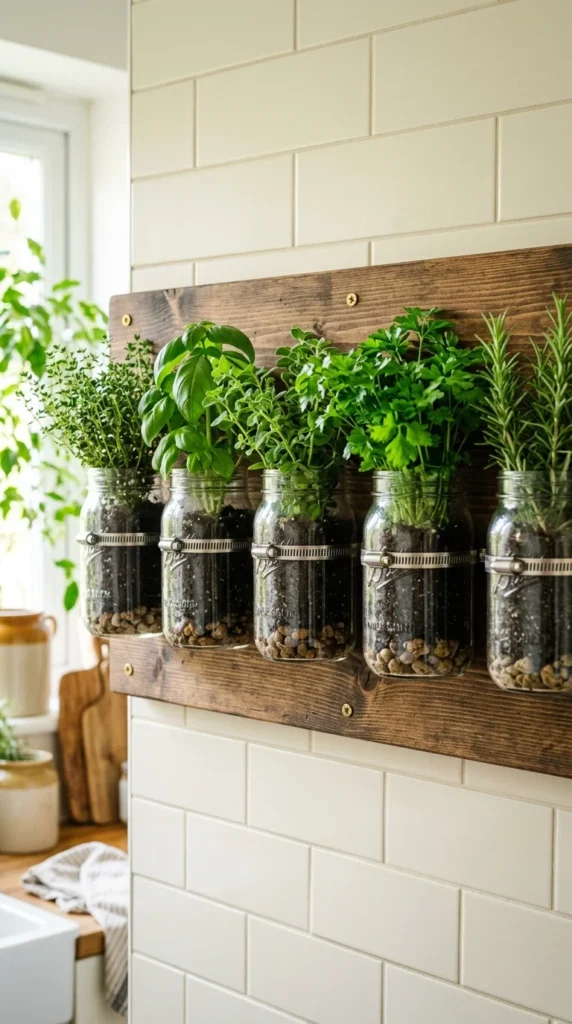
For those without any outdoor space, mason jar herb gardens bring the greenery inside. This setup is highly aesthetic and fits well with modern or rustic kitchen decor. Since glass jars do not have drainage holes, it is imperative to place a layer of pebbles or charcoal at the bottom to prevent root rot. These are best suited for herbs that stay relatively small or for those you plan to use and replace frequently.
8. Herb Spirals
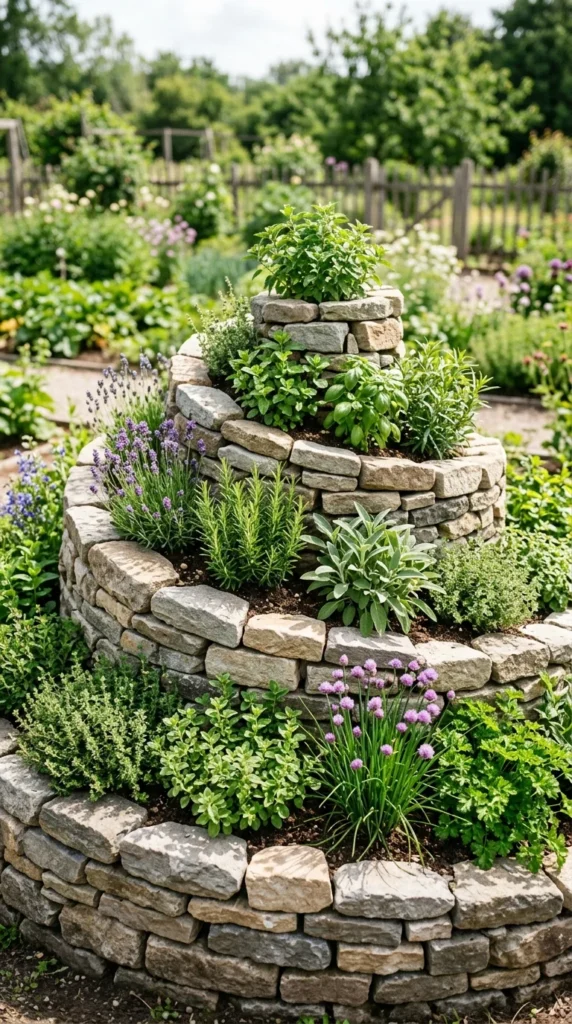
The herb spiral is a staple of permaculture design. It creates various microclimates within a very small footprint. The top of the spiral is the warmest and driest, making it perfect for rosemary and thyme. As the spiral winds downward, the soil stays moister and cooler, providing an ideal home for parsley, chives, and mint at the base. Beyond its productivity, the stone or brick construction adds a sculptural element to the landscape.
9. Rolling Carts
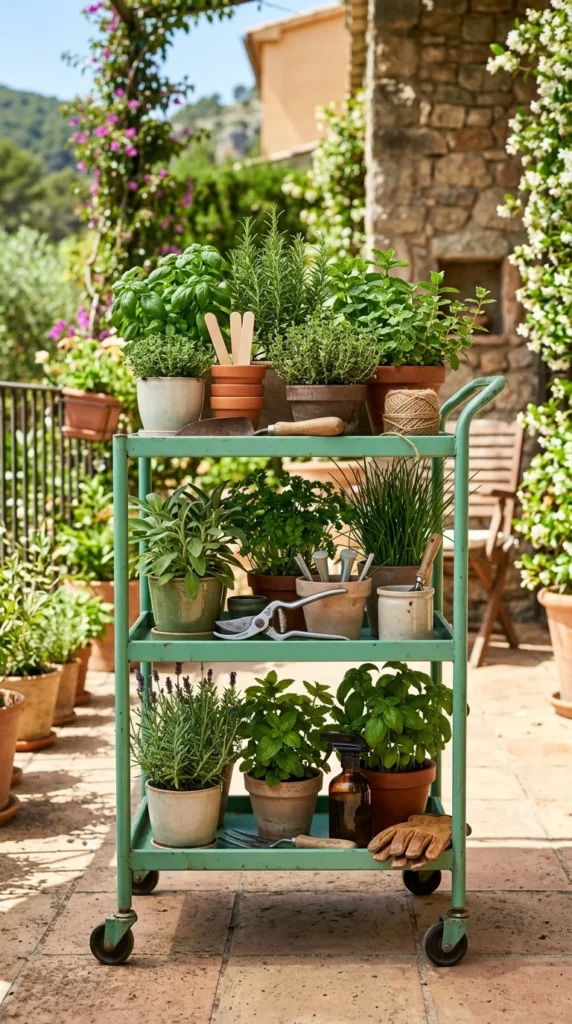
A rolling herb cart offers the ultimate flexibility. As the seasons change and the sun’s angle shifts, you can simply wheel your garden to the most optimal location. This is also ideal for protecting sensitive herbs during a surprise frost or heavy storm. Stylistically, a vintage metal cart or a sleek modern trolley can complement your outdoor furniture and act as a mobile serving station for fresh cocktail garnishes during gatherings.
10. Terracotta Pots
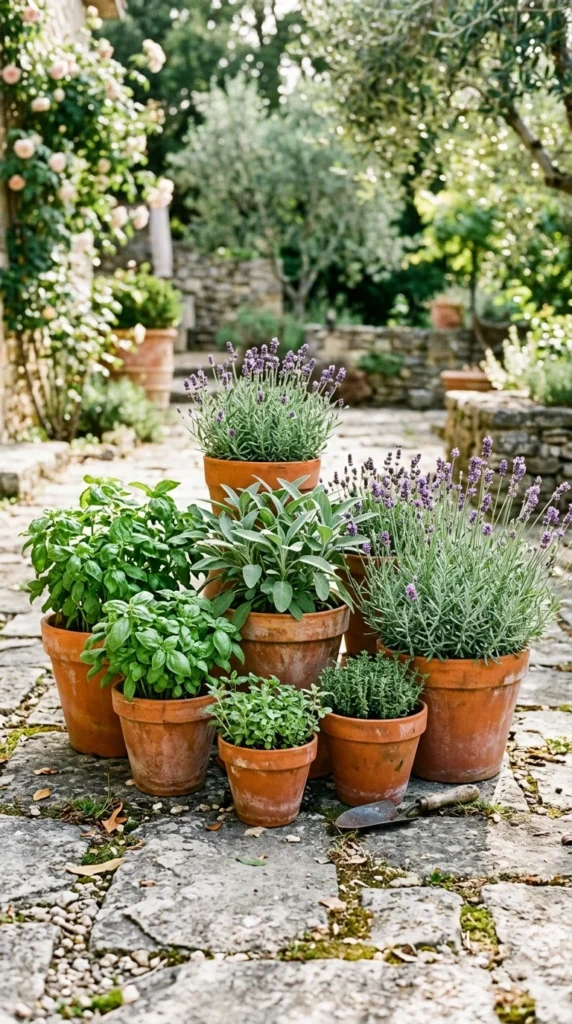
Terracotta is the classic choice for a Mediterranean-style herb garden. The porous nature of the clay allows the soil to breathe and prevents water from sitting around the roots—a common killer of herbs. For a stylish look, group pots of varying heights and diameters together. This creates a “collection” feel rather than a scattered appearance. Over time, terracotta develops a beautiful patina that adds aged character to your garden space.
11. Tea Gardens
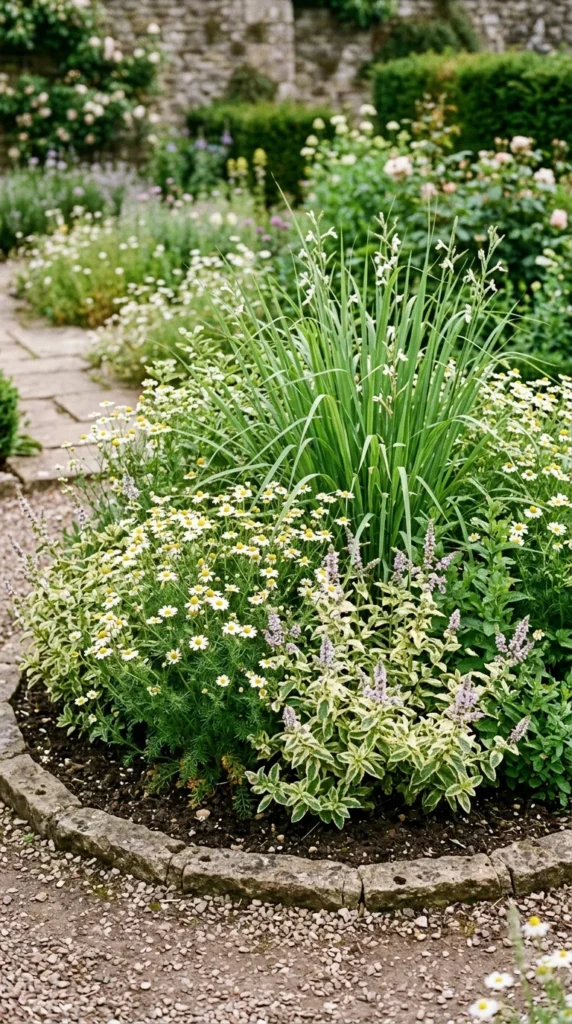
A themed herb garden, such as one dedicated to tea, is both functional and delightful. Focus on plants like German chamomile, peppermint, lemon verbena, and anise hyssop. These plants often produce beautiful flowers that attract pollinators, adding movement and life to the garden. Grouping them by their use makes harvesting for your morning or evening brew a simple and meditative task.
12. Border Edging
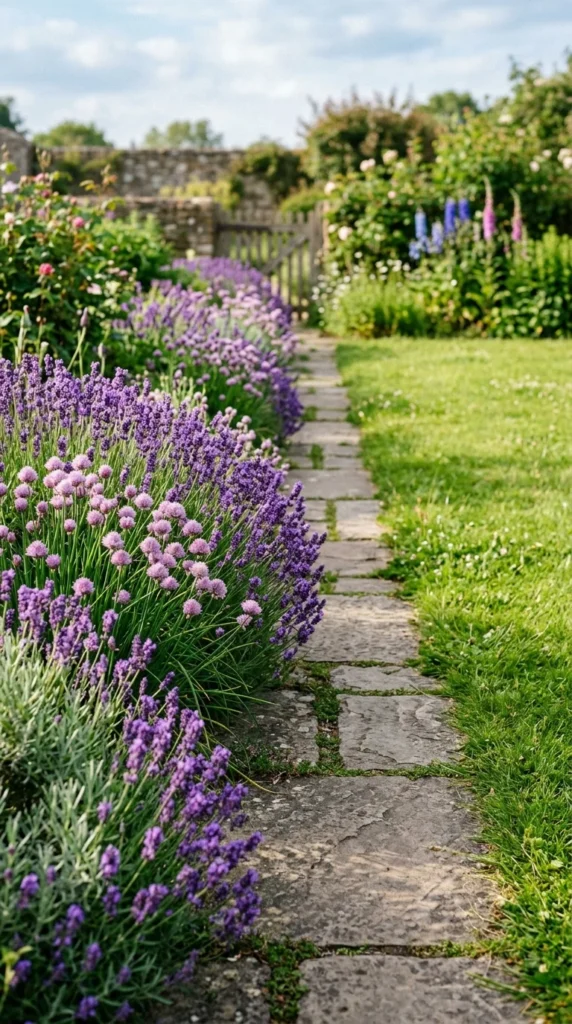
Using herbs as garden borders is a brilliant way to integrate them into your existing landscaping. Low-growing, hardy herbs like thyme or dwarf lavender create a fragrant “edge” that releases its scent whenever someone brushes past. This technique defines walkways and garden beds while providing a massive harvest area. It bridges the gap between a purely decorative garden and a productive edible landscape.
13. Galvanized Troughs
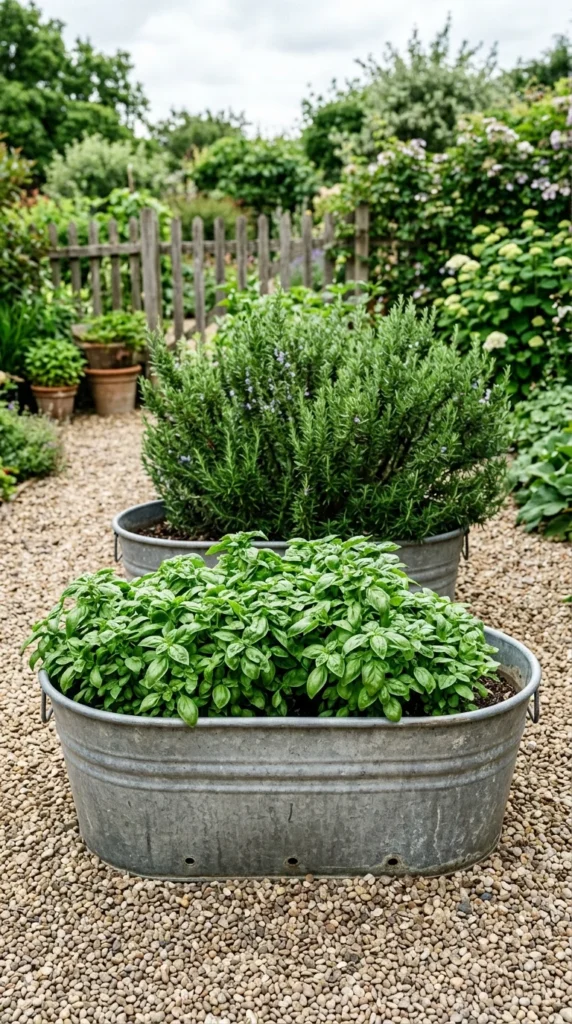
For a modern farmhouse or industrial aesthetic, galvanized steel troughs are an excellent choice. These containers are incredibly durable and provide plenty of room for deep-rooted herbs like fennel or large shrubs like rosemary. Because metal can heat up quickly in the summer, it is often recommended to line the interior with bubble wrap or landscape fabric to insulate the soil and protect the roots from extreme temperature fluctuations.
14. Smart Hydroponics
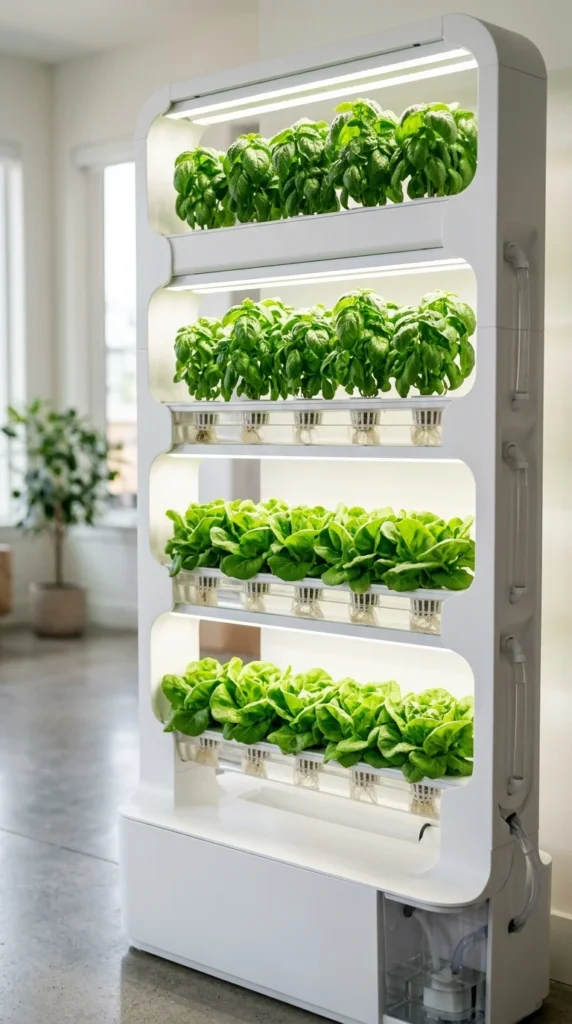
In the modern, stylish home, smart hydroponic systems represent the cutting edge of herb gardening. These units often come with automated lighting and watering schedules, making them “set-and-forget” solutions for busy individuals. From a design perspective, their minimalist look fits perfectly on a kitchen island or a bookshelf, providing fresh greens year-round regardless of the weather outside.
15. Staircase Shelving
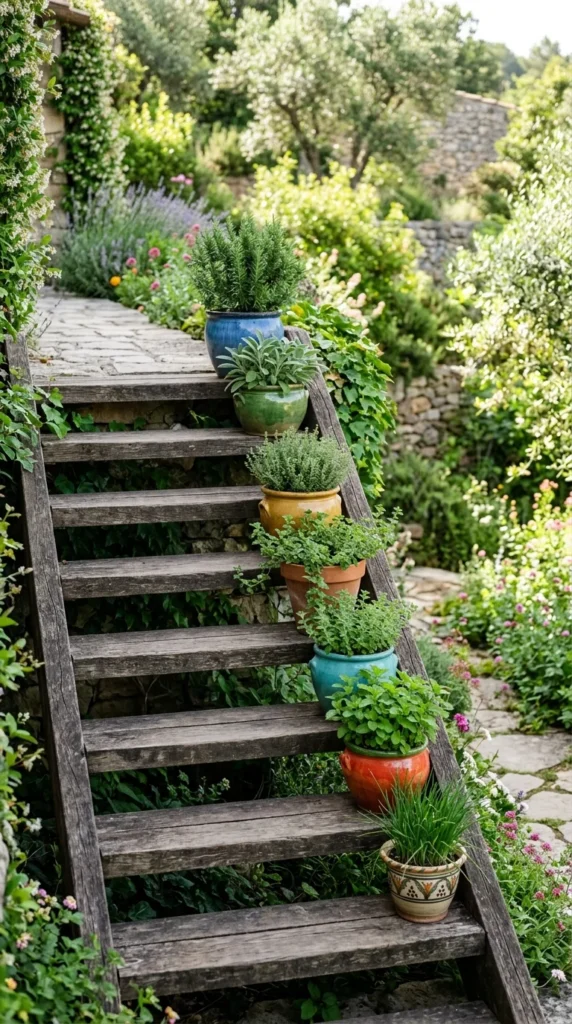
If you have an outdoor staircase that isn’t frequently used, or a set of decorative “ladder” shelves, you can create a beautiful cascading effect. This arrangement makes use of verticality and ensures that every plant is easily accessible for harvesting. Using mismatched pots can create a whimsical, eclectic look, while matching pots provide a clean, contemporary feel.
16. Cinder Blocks
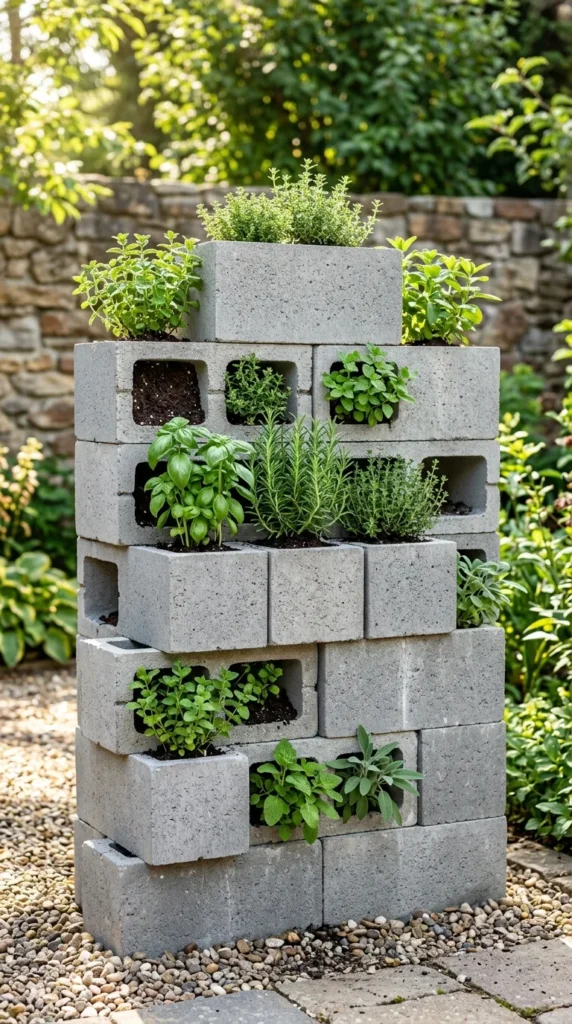
Cinder blocks are an underrated material for DIY garden enthusiasts. By stacking them in different configurations, you can create a brutalist or geometric herb garden that serves as a sculptural element. The individual “cells” of the blocks are perfect for keeping invasive herbs contained. For added style, you can paint the exterior of the blocks with masonry paint to match your home’s color palette.
17. Macramé Slings
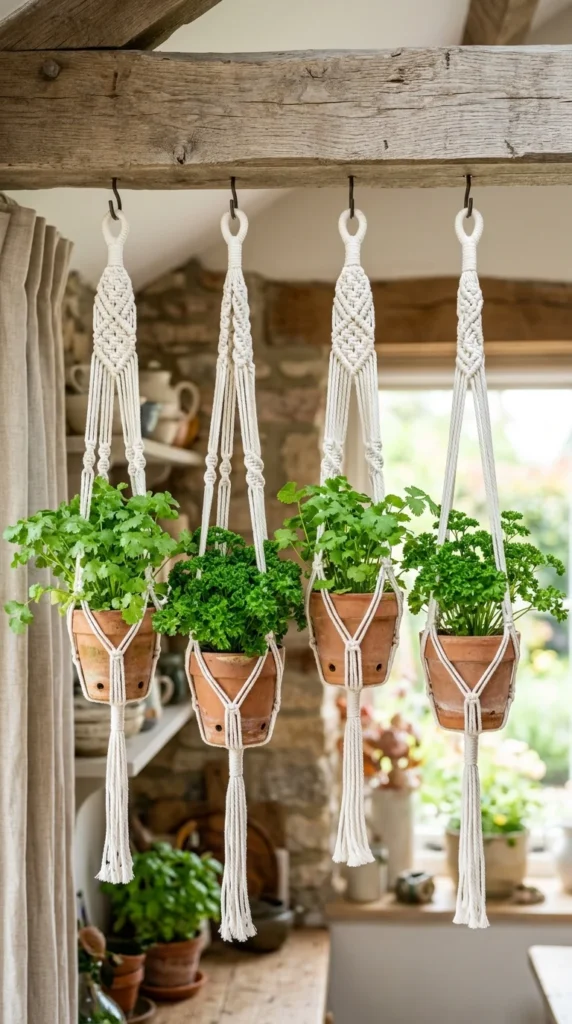
To achieve a “boho-chic” aesthetic, use macramé plant hangers to suspend your herbs. This works particularly well in bright indoor spaces or under covered patios. The intricate knots and fringed edges of the macramé add a soft, textile element that contrasts beautifully with the sharp or feathery textures of the herbs. This method keeps your countertops clear while keeping your plants at eye level.
18. Cocktail Garden
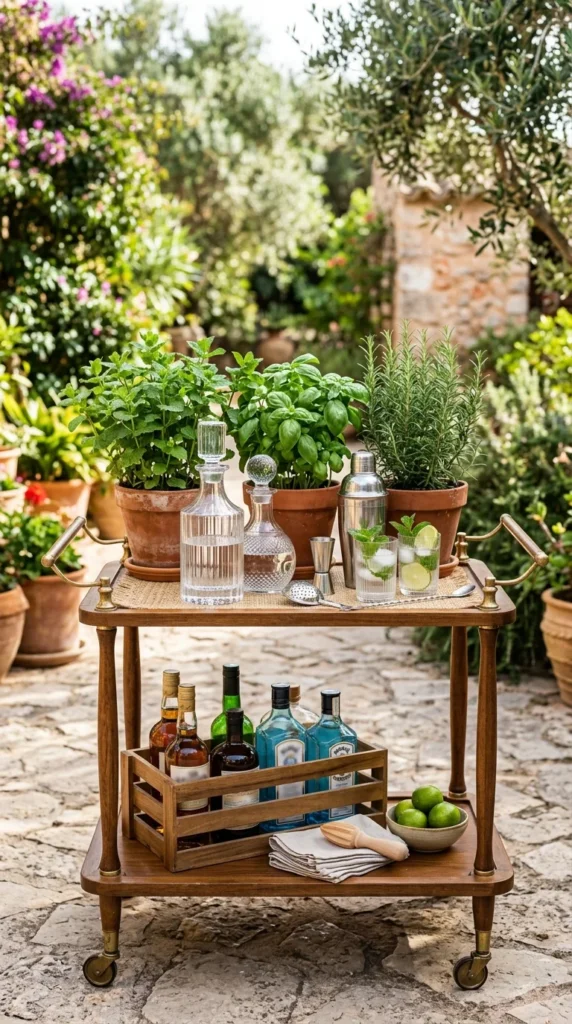
The cocktail garden is a specialized theme designed for the entertainer. By growing herbs specifically used in mixology—such as various mints, basil, rosemary, and even lavender—you create a sophisticated “bar-to-table” experience. Designating a specific area for these herbs, perhaps near your outdoor seating or barbecue area, makes it easy for guests to pick their own garnishes, turning your herb garden into an interactive part of your social gatherings.