
Rock gardening is an ancient art form that has seen a modern resurgence as homeowners seek sustainable, low-maintenance, and visually striking alternatives to traditional lawns. By shifting the focus from high-water-consumption turf to the timeless permanence of stone, you can create a landscape that feels both grounded and ethereal. Whether you are dealing with a steep incline, a parched corner of the yard, or simply want to introduce more architectural structure to your outdoor space, rock gardens offer a versatile solution.
The beauty of a rock garden lies in its ability to mimic the natural world. Unlike formal flower beds that require constant weeding and pruning, a well-designed rock garden embraces the “effortless” aesthetic, where the interaction between hard stone and soft foliage creates a balanced ecosystem. From the Zen-like simplicity of a Japanese gravel bed to the rugged intensity of an alpine slope, the following fifteen ideas provide a comprehensive blueprint for transforming your yard into a stony sanctuary.
1. Alpine Slope
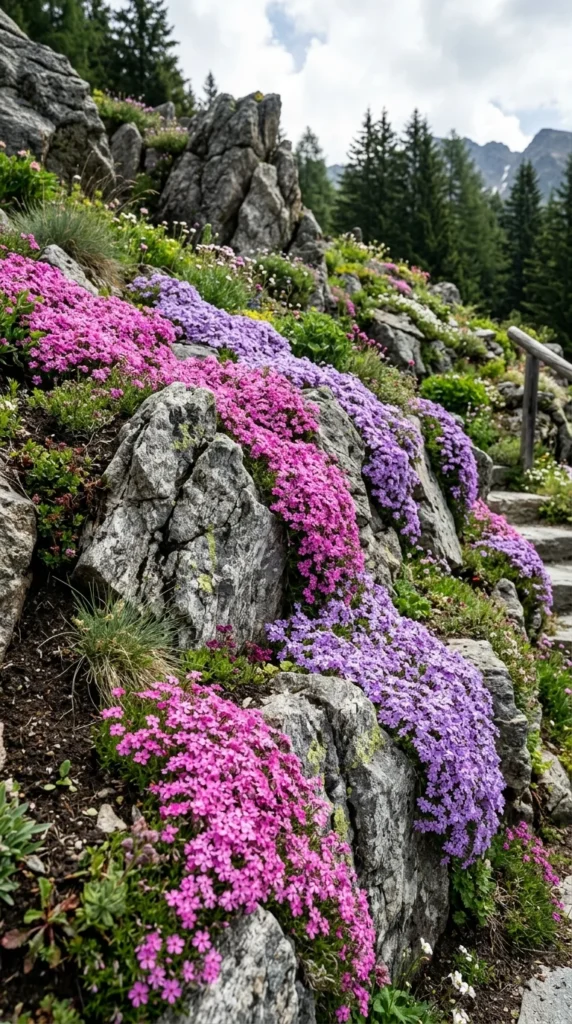
The alpine slope is the quintessential rock garden. It is designed to replicate the harsh but beautiful conditions found above the treeline. This style is particularly effective for yards with natural hills or slopes that are difficult to mow. To achieve this look, use large, angular rocks and bury them at least halfway into the earth to make them look like natural outcroppings.
Plants selected for an alpine slope must be hardy and drought-tolerant. Species such as Saxifraga, Edelweiss, and various types of Sedum thrive in the excellent drainage provided by the rocky substrate. The goal is to create a “scree” effect, where small pebbles and larger boulders intermingle, providing a textural playground for the eyes.
2. Zen Sanctuary
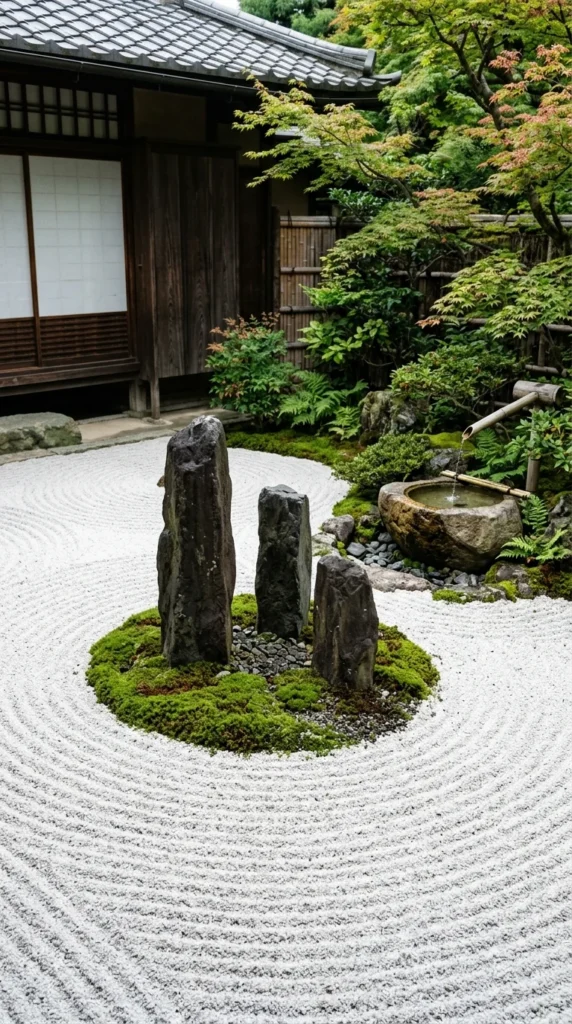
For those seeking tranquility, the Zen sanctuary—or Karesansui—focuses on the concept of “dry landscapes.” In this design, rocks represent mountains, while raked gravel or sand symbolizes water. This is an ideal choice for small courtyards or enclosed patios where a sense of peace is paramount.
The key to a successful Zen garden is restraint. Choose a few high-quality “scholar stones”—rocks with interesting shapes or textures—and place them thoughtfully. The act of raking the gravel becomes a meditative practice, and the lack of high-maintenance greenery ensures the space remains pristine with minimal effort.
3. Succulent Oasis
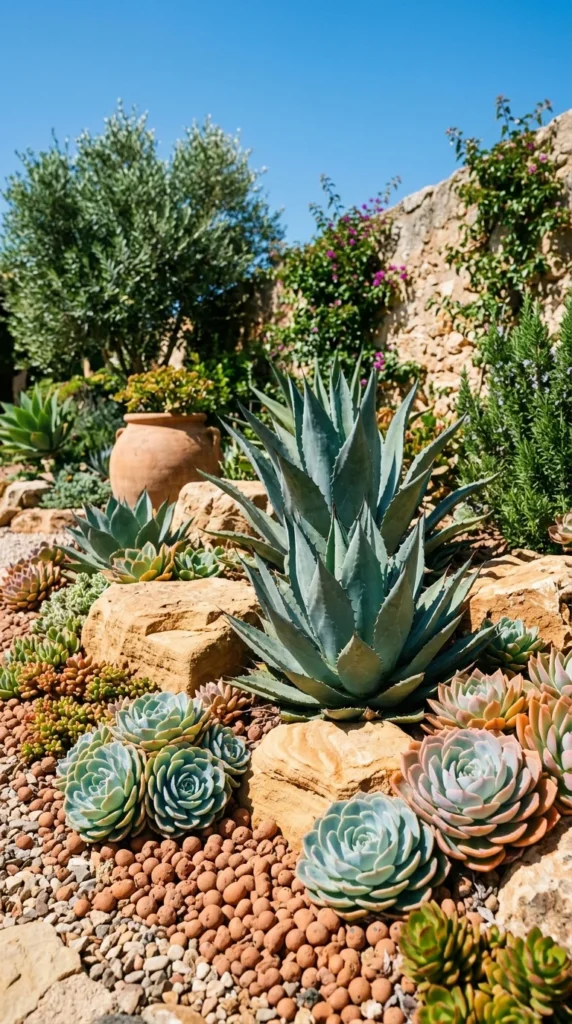
Succulents and rocks are a match made in horticultural heaven. Both require excellent drainage and can withstand intense heat, making this the perfect “effortless” garden for arid climates. By using rocks of varying sizes, you create microclimates that protect delicate succulents from wind and excessive sun.
To make this look truly professional, consider the color palette of your stones. Using red volcanic rock or warm sandstone can make the blue and teal hues of many succulents pop. Intersperse taller architectural plants like Yucca or Aloe with ground-hugging “hens and chicks” to create layers of height and interest.
4. Riverbed Dry-Stream
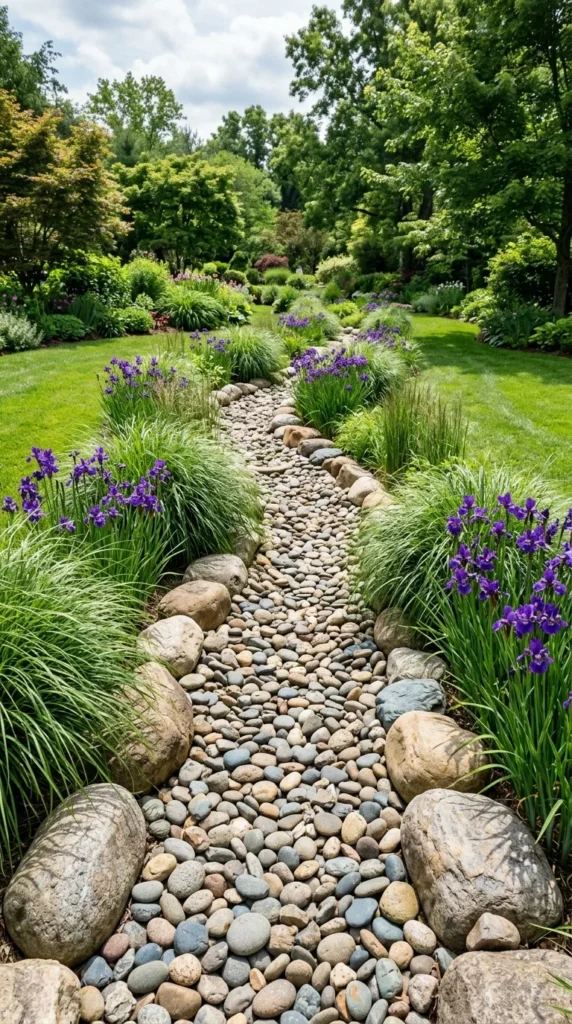
A dry-stream bed is both a functional and aesthetic masterstroke. Functionally, it can help redirect rainwater runoff away from your home’s foundation. Aesthetically, it breaks up the monotony of a flat yard by introducing the visual language of moving water without the need for pumps or electricity.
To create a realistic dry-stream, use a mix of “river jacks” (smooth, rounded stones) and larger “anchor rocks” at the bends of the path. The stream should widen and narrow naturally, just as a real creek would. Planting moisture-loving specimens like ferns or Japanese Forest Grass along the edges enhances the illusion of a watery environment.
5. Flagstone Path
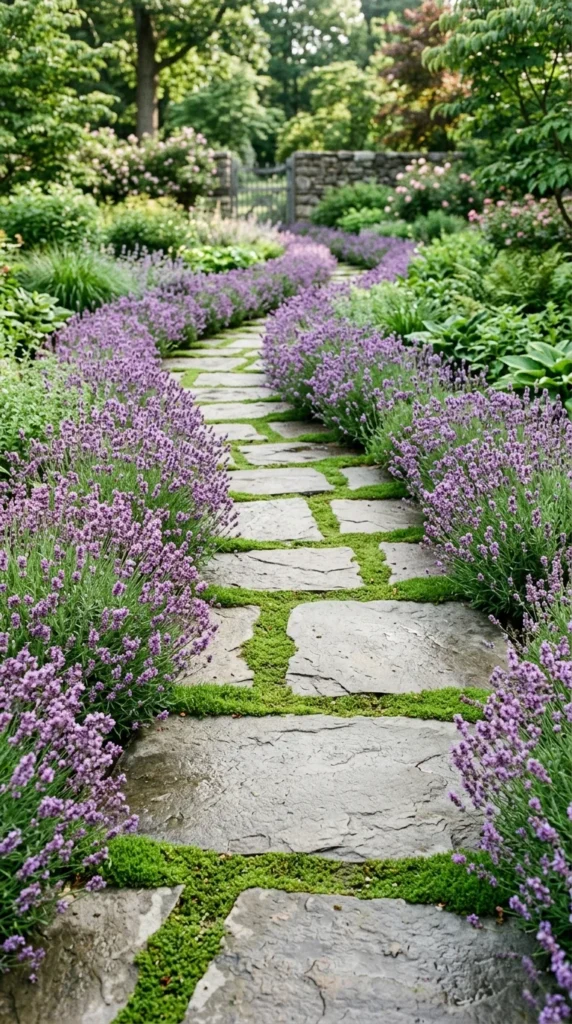
Integrating a rock garden into your yard’s circulation is a great way to ensure it feels like a cohesive part of the home. A flagstone path surrounded by rock garden elements allows you to “walk through” the landscape rather than just looking at it.
Instead of using mortar to set the stones, use a “living grout” of creeping thyme or moss. This softens the hard edges of the stone and releases a pleasant fragrance when stepped upon. This approach is the definition of effortless beauty, as the plants naturally fill the gaps, suppressing weeds and reducing maintenance.
6. Retaining Walls
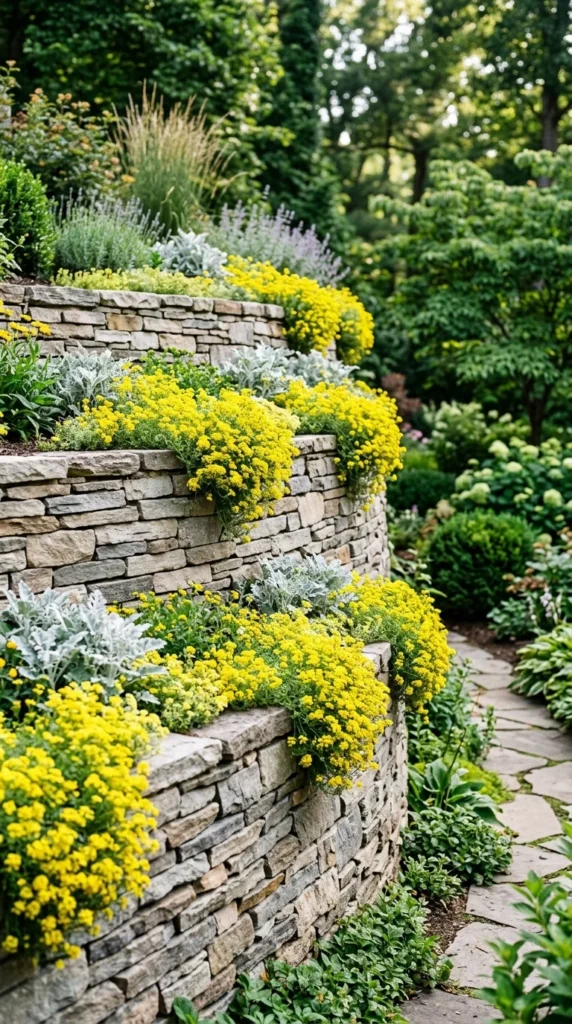
Rock gardens don’t have to be horizontal. Using stones to build dry-stack retaining walls adds vertical dimension to a flat yard and creates distinct “rooms” within the landscape. A dry-stack wall—built without mortar—allows for small plants to be tucked into the crevices between the stones.
This technique, known as “wall gardening,” turns a structural necessity into a blooming vertical tapestry. Over time, the stones will weather and grow lichen, giving the wall an ancient, established feel that looks like it has been part of the landscape for centuries.
7. Boulder Centerpiece
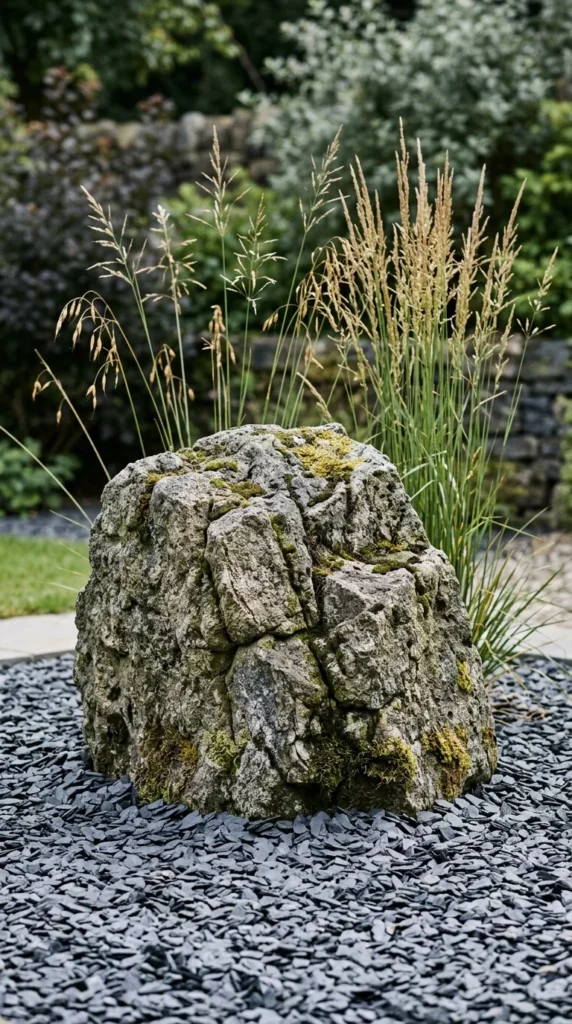
Sometimes, less is more. If you have a large, open space, a single “hero” boulder can act as a natural sculpture. This approach is incredibly low-effort but high-impact. The key is finding a stone with enough character—unusual coloring, deep textures, or an interesting silhouette.
Surround the base of your centerpiece boulder with a contrasting mulch, such as dark wood chips or fine pea gravel, to make it stand out. A few well-placed spotlights can transform the boulder into a dramatic focal point at night, highlighting its rugged surfaces.
8. Gravel Minimalism
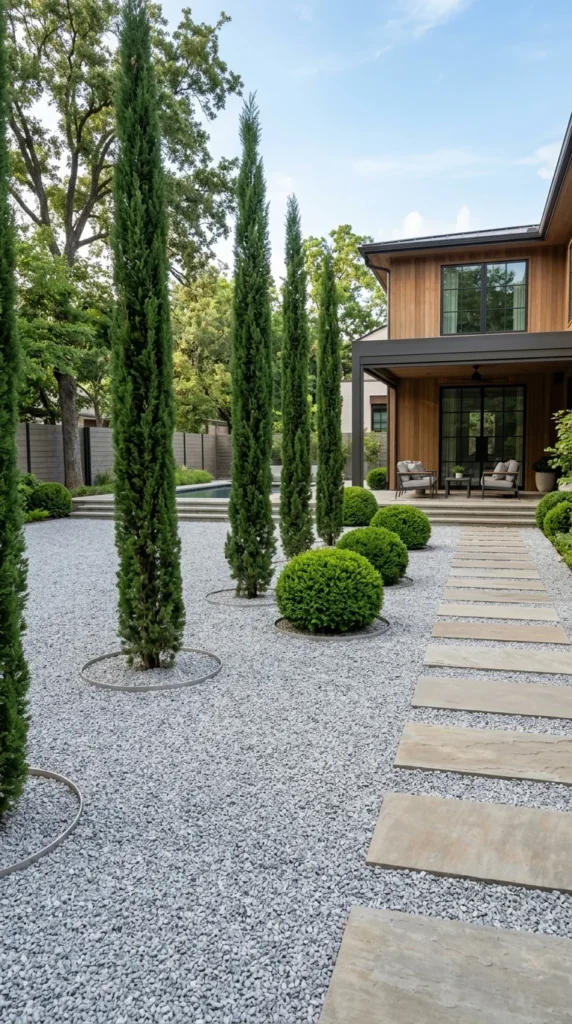
Modern architecture often calls for a landscape that mirrors its clean lines and neutral tones. Gravel minimalism does exactly that. By replacing large areas of grass with high-quality gravel, you create a sophisticated, textured floor for your outdoor living space.
To prevent the look from feeling too cold, use “islands” of planting. These small, concentrated areas of greenery provide visual relief and prevent the yard from looking like a parking lot. Use a heavy-duty weed barrier beneath the gravel to ensure the “effortless” claim holds true for years to come.
9. Coastal Driftwood
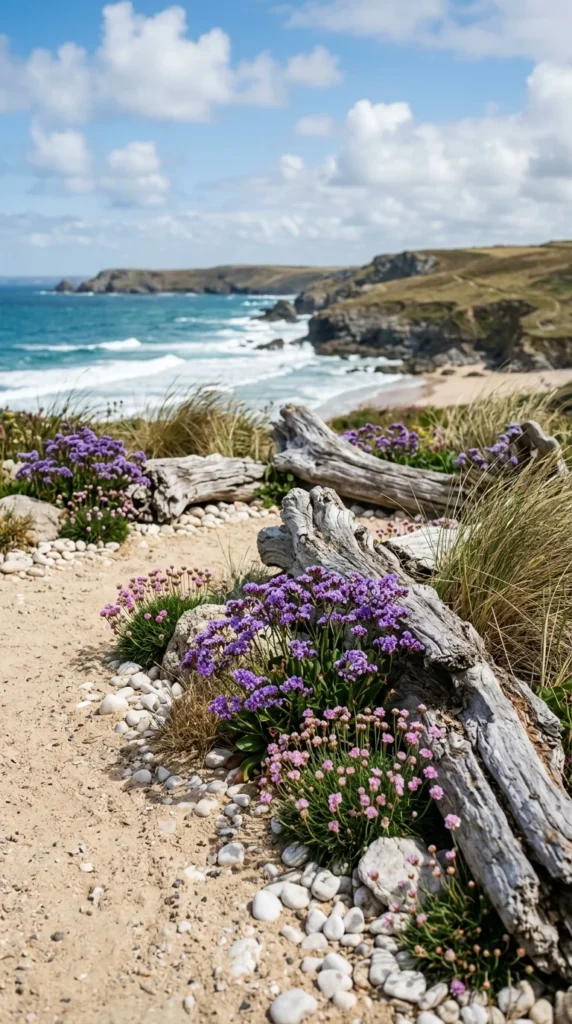
If you live near the coast—or just want to feel like you do—incorporating organic elements like driftwood into your rock garden adds a unique, nautical charm. The silver-grey of weathered wood complements the cool tones of granite and slate perfectly.
In a coastal rock garden, the arrangement should feel wind-swept and organic. Avoid straight lines and instead opt for clusters of stones and wood that look like they were deposited by a high tide. Use salt-tolerant plants to ensure your garden thrives in the coastal air.
10. Vertical Crevice
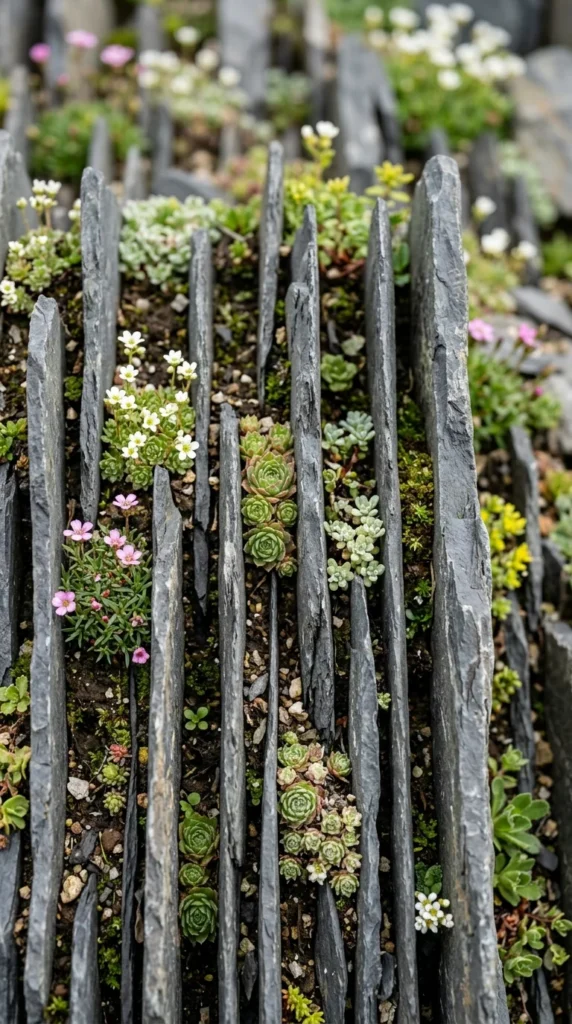
The crevice garden is a specialized technique that has gained popularity among rock garden enthusiasts. By burying stones vertically rather than horizontally, you create deep, cool root runs that are ideal for sensitive plants. This mimics the natural cracks found in mountain cliffs.
Visually, crevice gardens are stunningly architectural. They look like a miniature mountain range viewed from above. Because the plants are tucked into narrow gaps, they are protected from the elements, making this a great way to grow more “fussy” botanical specimens with minimal intervention once established.
11. Woodland Shade
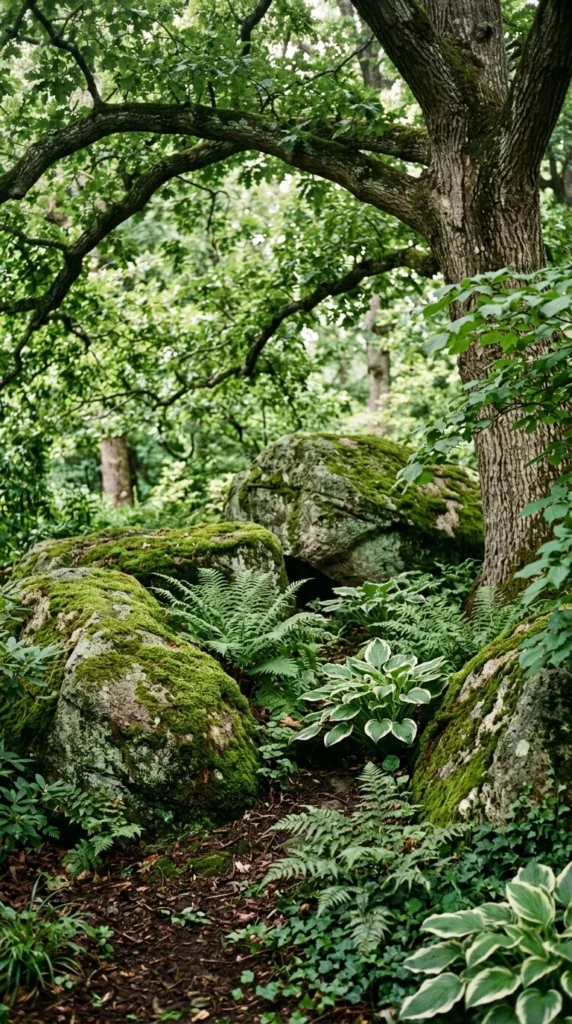
Rock gardens are often associated with full sun, but they can be equally beautiful in the shade. A woodland rock garden utilizes mossy stones, old logs, and shade-loving perennials to create a lush, primordial atmosphere.
In this setting, the rocks serve to hold moisture in the soil and provide a cool surface for moss to colonize. The contrast between the dark, damp stone and the bright greens of ferns or the whites of Lily of the Valley creates a serene, magical forest floor aesthetic.
12. Wildflower Meadow
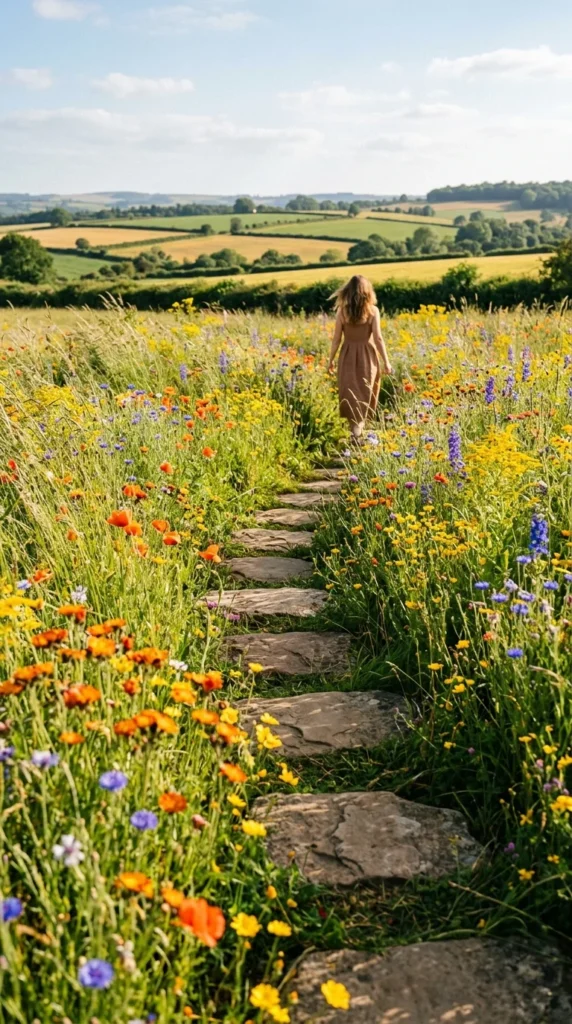
For a truly effortless look, combine a rock garden with a wildflower meadow. This approach is highly beneficial for local pollinators and requires very little maintenance once the wildflowers are established. Use large, flat rocks as “perches” or stepping stones throughout the meadow.
The rocks provide a structural skeleton for the garden during the winter months when the wildflowers have died back. In the spring and summer, the stones act as a grounding element, preventing the meadow from looking overgrown or unkempt by providing clear boundaries and paths.
13. Modern Geometric
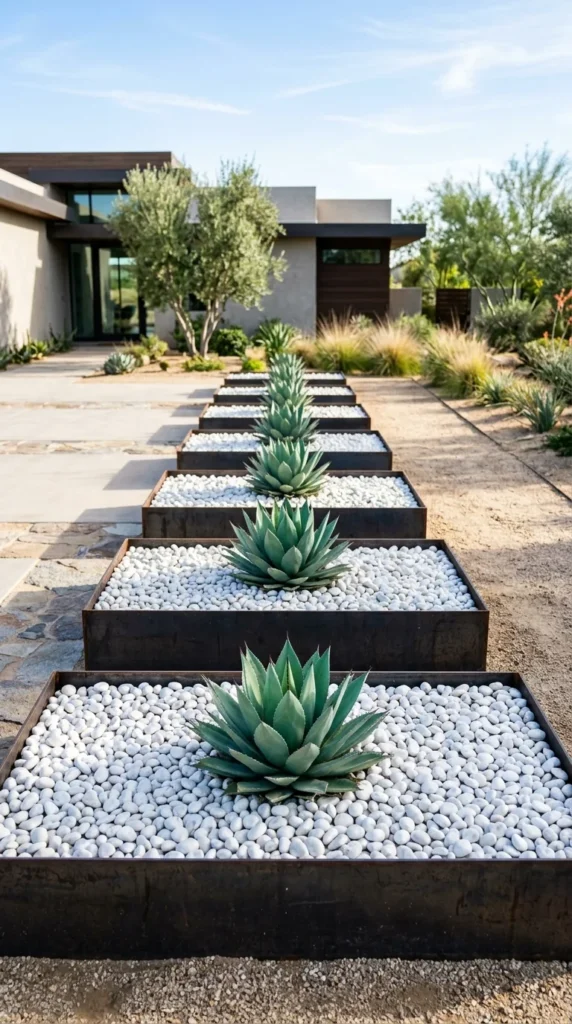
Geometric rock gardens appeal to the homeowner who loves order and symmetry. By using man-made materials like Corten steel or poured concrete to frame natural stone, you create a high-contrast look that feels very contemporary.
This style works best with a monochromatic color palette. For example, using dark grey slate gravel inside white concrete borders creates a crisp, clean look. The maintenance is virtually zero, as the hardscaping does all the heavy lifting in terms of visual interest.
14. Waterfall Cascade
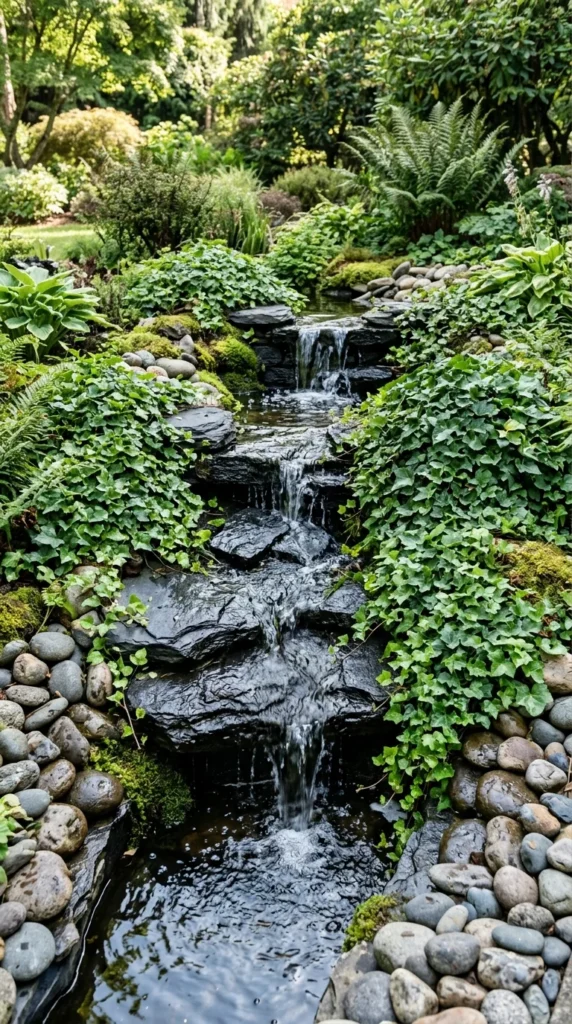
There is nothing quite as relaxing as the sound of running water. Incorporating a waterfall into a rock garden adds a dynamic element that stone alone cannot provide. Using flat, sedimentary rocks like slate or shale allows you to create “spillways” where the water can thin out and catch the light.
A rock garden waterfall doesn’t need to be huge to be effective. Even a small, three-tier cascade tucked into a corner can transform the atmosphere of the entire yard. The moisture from the waterfall will also allow you to grow a wider variety of mosses and aquatic plants.
15. Terraced Levels
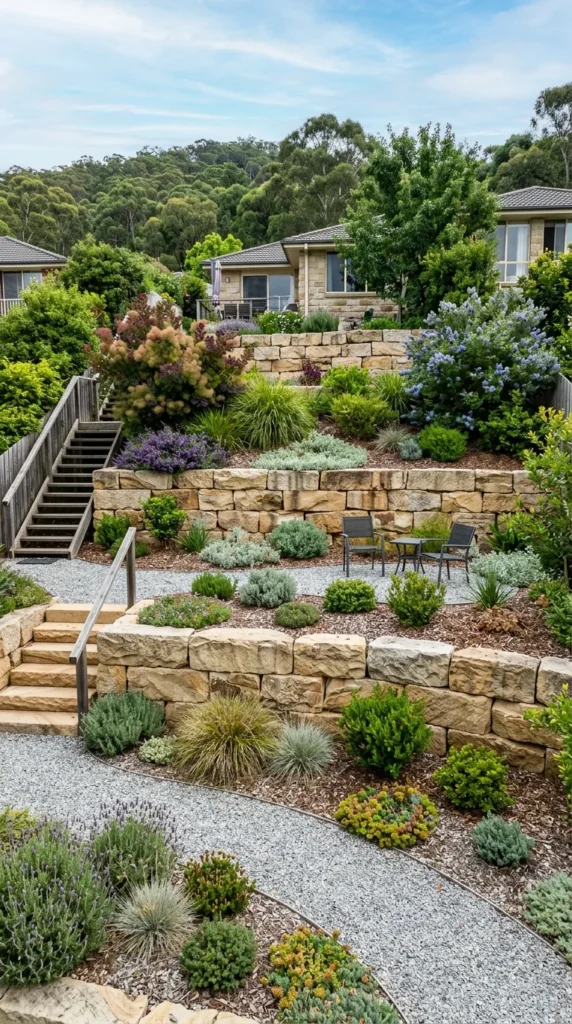
Terracing is the ultimate solution for a steep, unusable backyard. By using large stones to create a series of flat platforms, you turn a landscape challenge into a grand design feature. Each terrace can have its own theme—one for succulents, one for a fire pit, and one for a gravel path.
Terracing with rock adds immense value to a property and provides a sense of “grandeur.” It effectively doubles or triples your usable garden space while providing excellent drainage and soil stability. The use of heavy stone ensures the terraces will last for generations, embodying the true spirit of a permanent, beautiful landscape.