
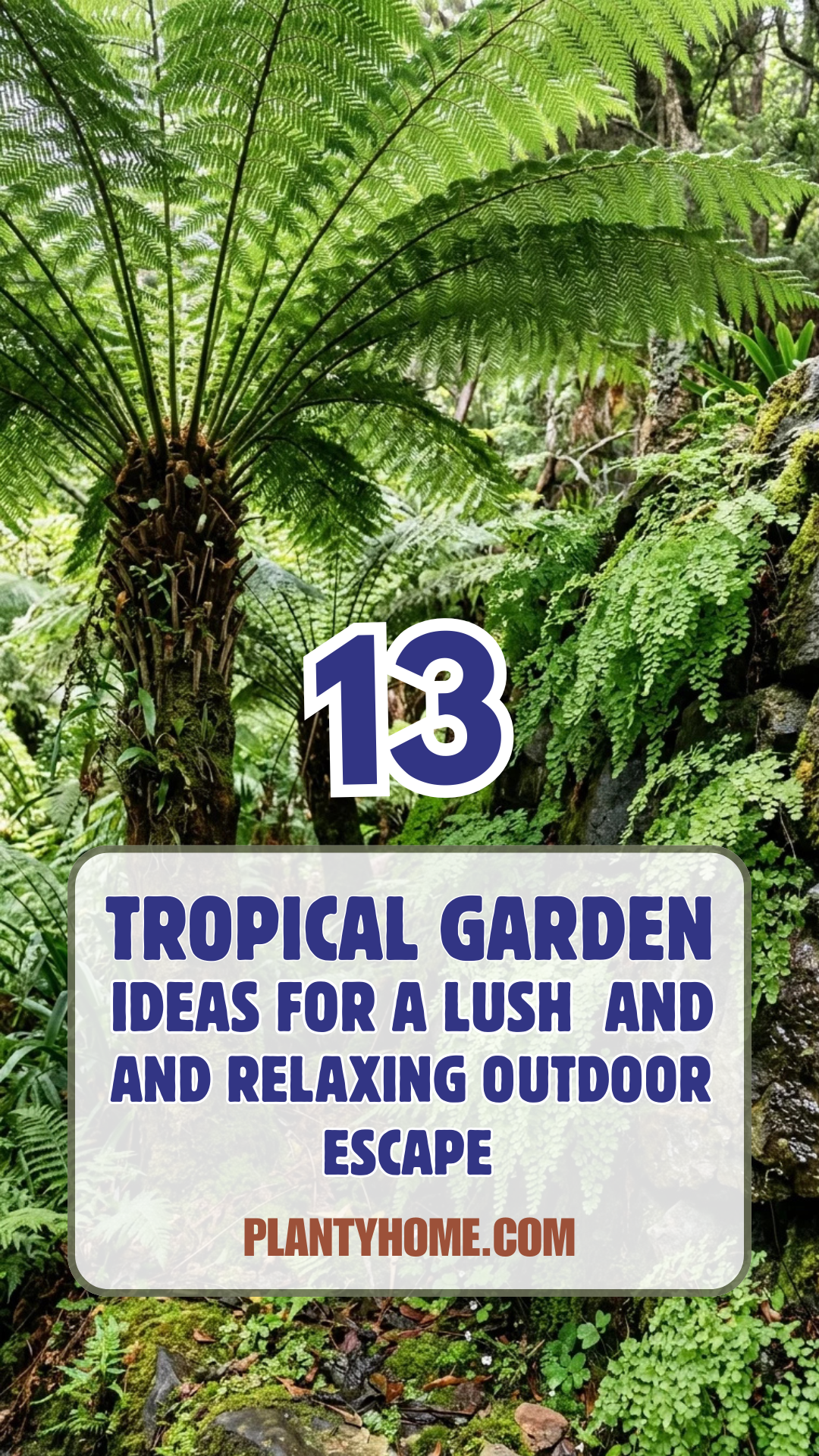
The allure of a tropical garden lies in its ability to transport you to an exotic paradise without ever leaving your home. Characterized by dense greenery, bold textures, and vibrant splashes of color, a tropical landscape is more than just a garden; it is a sensory experience. Whether you live in a humid equatorial climate or a more temperate zone, the principles of tropical design—layering, humidity, and botanical diversity—can be adapted to create a private sanctuary.
Transforming your outdoor space into a lush retreat requires a strategic approach to plant selection, hardscaping, and water elements. By focusing on the interplay between light and shadow and incorporating elements that evoke a sense of adventure, you can cultivate an environment that feels both wild and meticulously curated.
1. Palm Trees
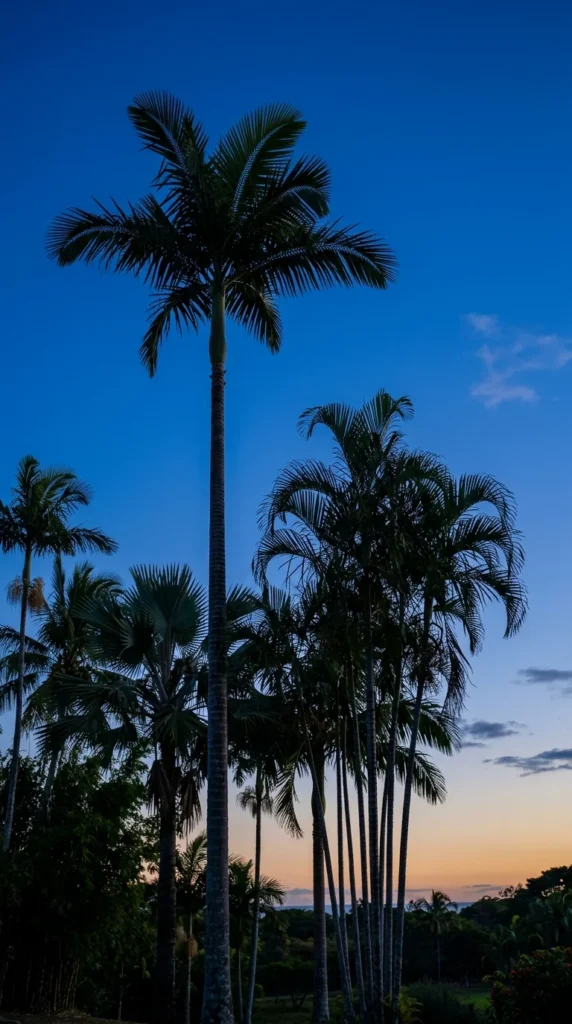
Palm trees are the quintessential pillars of any tropical garden. They provide the necessary vertical scale and architectural silhouette that defines the horizon of an exotic landscape. From the majestic height of the Royal Palm to the bushy, low-growing Fronds of the Sago Palm, these plants offer a variety of textures and heights.
When incorporating palms, consider the “ceiling” of your garden. Taller species create a high canopy that allows filtered light to reach the plants below, mimicking the layered structure of a rainforest. For smaller suburban plots, clumping palms like the Bamboo Palm or the Pygmy Date Palm offer the tropical aesthetic without overwhelming the space. Their movement in the wind adds a rhythmic, rustling sound that enhances the auditory relaxation of the space.
2. Layered Foliage
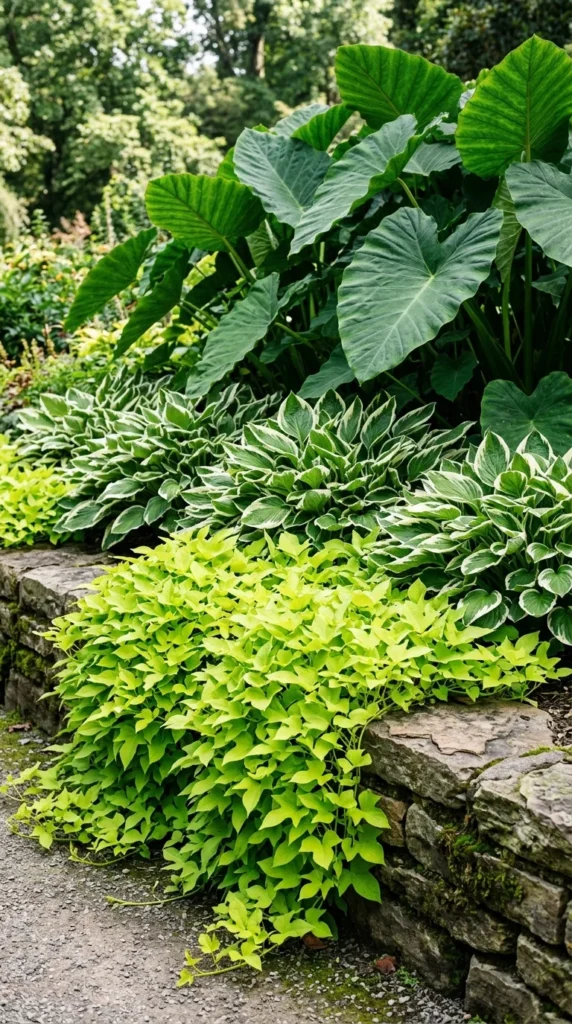
The secret to the “lush” look of a tropical escape is density. In nature, tropical forests are composed of distinct layers: the emergent layer, the canopy, the understory, and the forest floor. You can replicate this by planting in tiers.
Start with large-leafed “anchor” plants like Elephant Ears (Colocasia) or Giant Bird of Paradise to create a backdrop of deep greens. In front of these, place medium-sized shrubs with variegated leaves or interesting shapes, such as Crotons or Cordylines. Finally, fill the gaps with groundcovers and trailing vines. This layering eliminates visible soil, creating a carpet of greenery that feels immersive and secluded.
3. Water Features
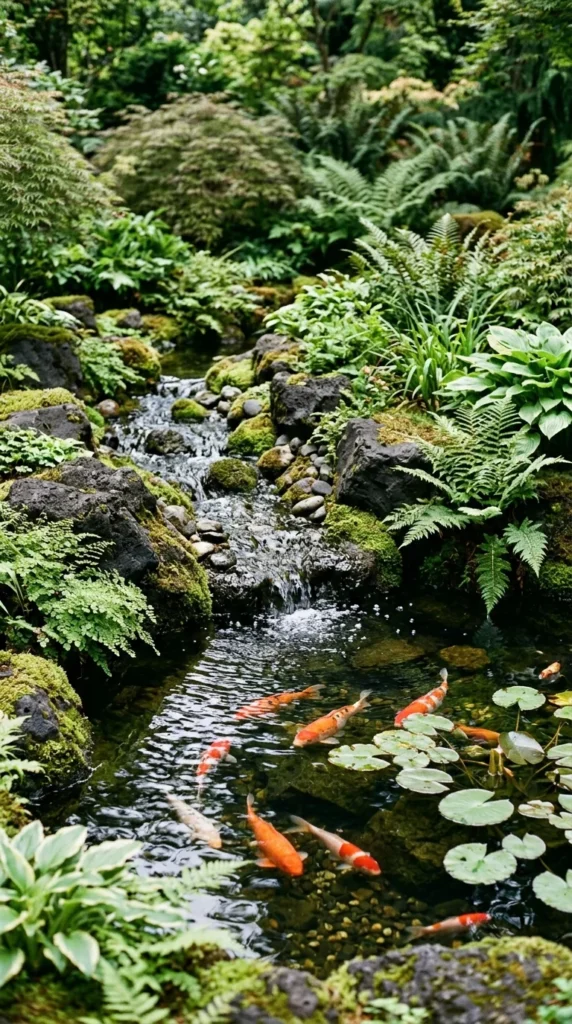
Water is a fundamental element in tropical environments, providing both visual beauty and essential humidity. A well-placed water feature acts as a focal point and cools the surrounding air through evaporation. This can range from a simple basalt stone birdbath to a sophisticated multi-tiered waterfall.
The sound of running water is a powerful tool for masking neighborhood noise, further isolating your garden as a private retreat. If space is limited, a “disappearing” fountain—where water flows over a stone into a hidden underground reservoir—provides the ambiance of a spring without the maintenance of a full pond. Surrounding these features with moisture-loving ferns and mosses enhances the “hidden jungle” aesthetic.
4. Bold Blooms
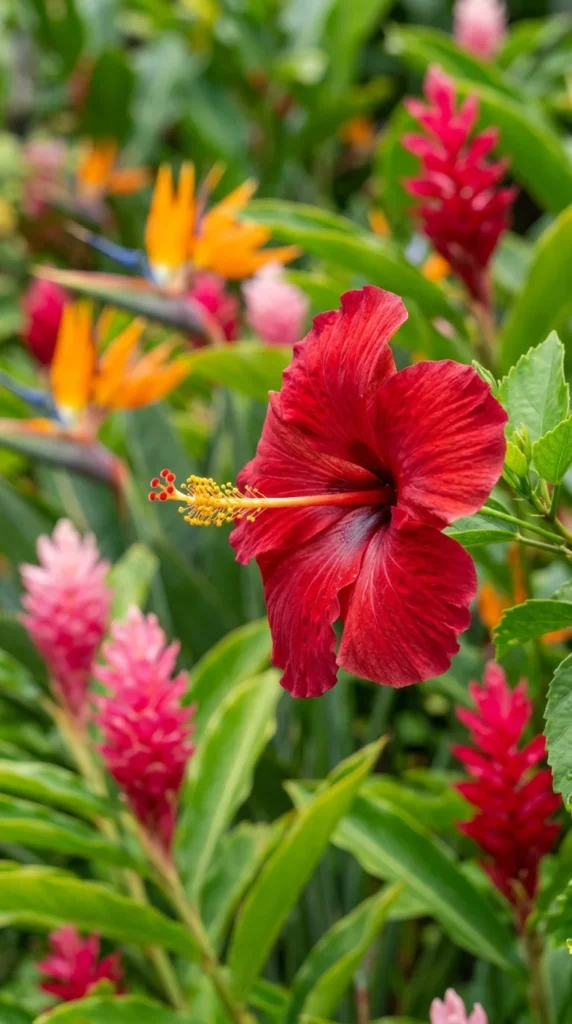
While greenery provides the foundation, bold, exotic flowers provide the “jewelry” of the garden. Tropical blooms are known for their oversized proportions and saturated colors. Hibiscus, Canna Lilies, and Ginger plants offer striking reds, oranges, and yellows that pop against a sea of green.
To maintain a professional and cohesive look, choose a color palette rather than planting every color available. A “hot” palette of oranges, reds, and deep purples creates an energetic, sun-drenched feel, while a “cool” palette of whites, light pinks, and blues offers a more serene, moonlit garden vibe. Ensure you plant these in clusters rather than as single specimens to create high-impact color blocks.
5. Natural Stone
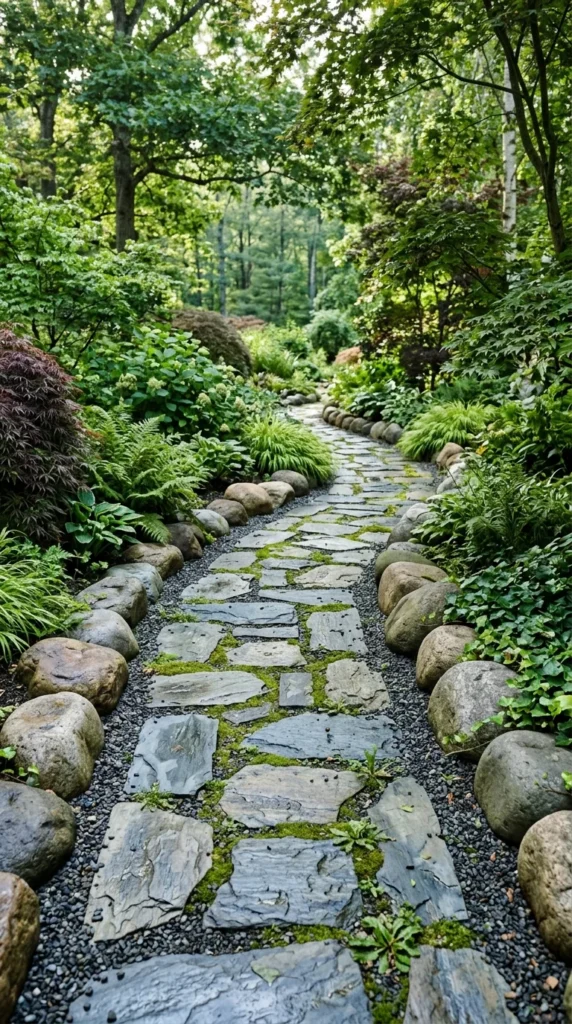
To balance the soft textures of tropical plants, incorporate hardscaping materials that feel organic and weathered. Natural stone—such as slate, flagstone, or volcanic rock—complements the jungle aesthetic far better than polished concrete or brick.
Using large river boulders as accents among your plantings provides a sense of permanence and age. These stones also serve a functional purpose by absorbing heat during the day and releasing it at night, which can help sensitive tropical plants survive cooler evenings. For pathways, irregular stepping stones surrounded by pebbles or “Mondo Grass” encourage a slower, more mindful pace as you move through the garden.
6. Shady Retreats
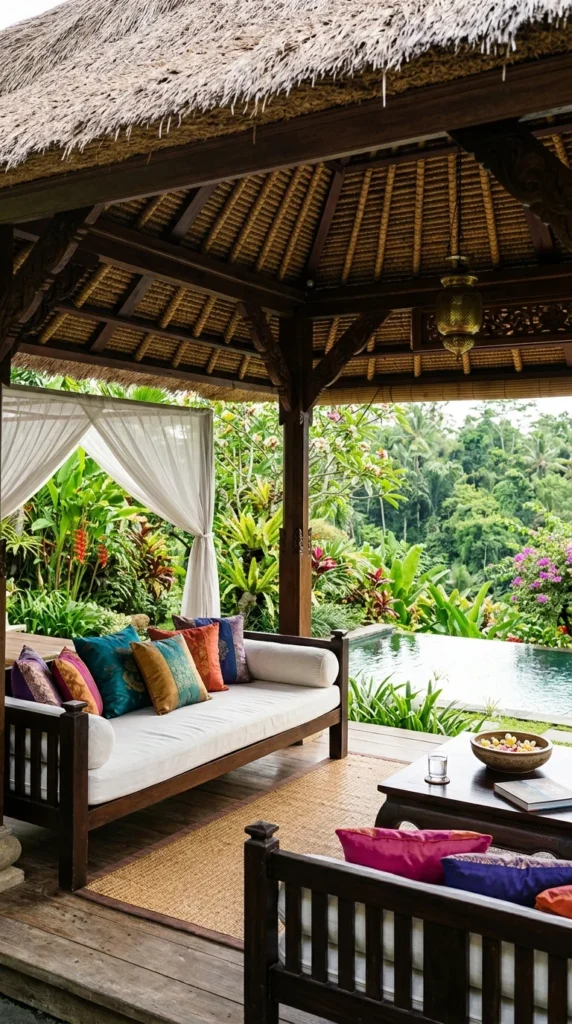
A tropical garden is meant to be lived in, not just viewed. Integrating a shaded seating area is essential for escaping the midday sun. Structures like a Balinese “Bale” or a simple timber pergola covered in climbing vines like Mandevilla or Passionflower create an inviting destination within the landscape.
Incorporate comfortable, weather-resistant furniture that encourages lounging. Hammocks, daybeds, or deep-seated rattan chairs allow you to fully immerse yourself in the environment. Position these retreats in the deepest part of the garden to maximize the feeling of being “lost” in your own private jungle.
7. Bamboo Accents
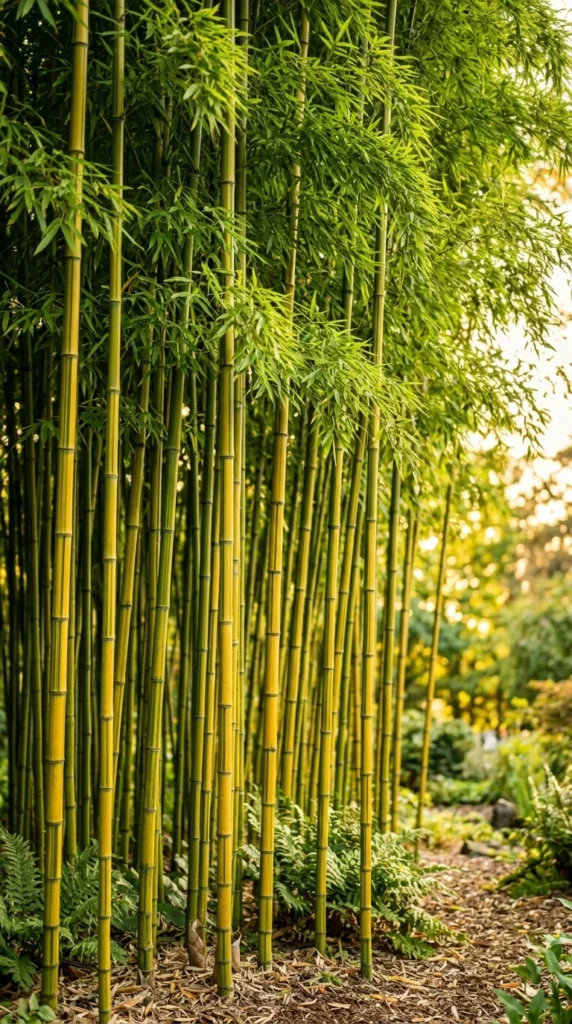
Bamboo is a versatile tool in tropical design, prized for its rapid growth and architectural elegance. It is particularly effective for creating living privacy screens, shielding your sanctuary from prying eyes or unsightly views.
When choosing bamboo, always opt for “clumping” varieties (like Bambusa multiplex) rather than “running” varieties to prevent the plant from spreading uncontrollably throughout your yard. Beyond living plants, bamboo can be used in its dried form for fencing, water spouts, or decorative trellises, adding a cohesive, organic texture to the overall design.
8. Fern Grottoes
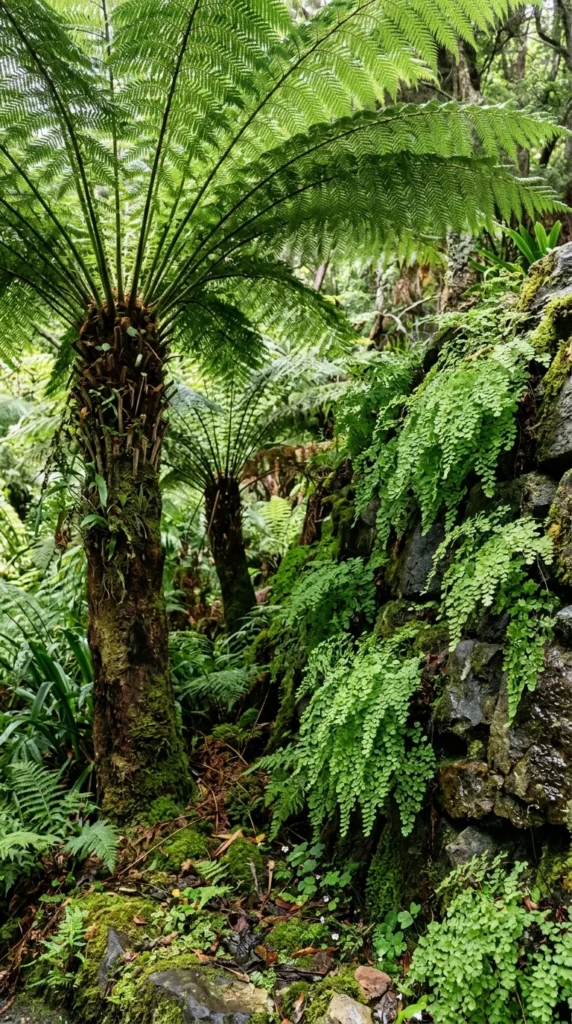
Ferns bring a primitive, ancient quality to a tropical garden. They thrive in the damp, shaded pockets created by larger trees and structures. Tree ferns, with their tall trunks and wide-reaching fronds, provide an excellent mid-story element, while Bird’s Nest ferns can be tucked into the crooks of tree branches or mounted on walls.
Creating a “grotto” effect involves grouping these moisture-loving plants in a low-lying area of the garden, perhaps near a water feature or under a dense canopy. The varying shades of green and the intricate, lacy patterns of the fronds create a cooling visual effect that is incredibly soothing.
9. Tropical Lighting
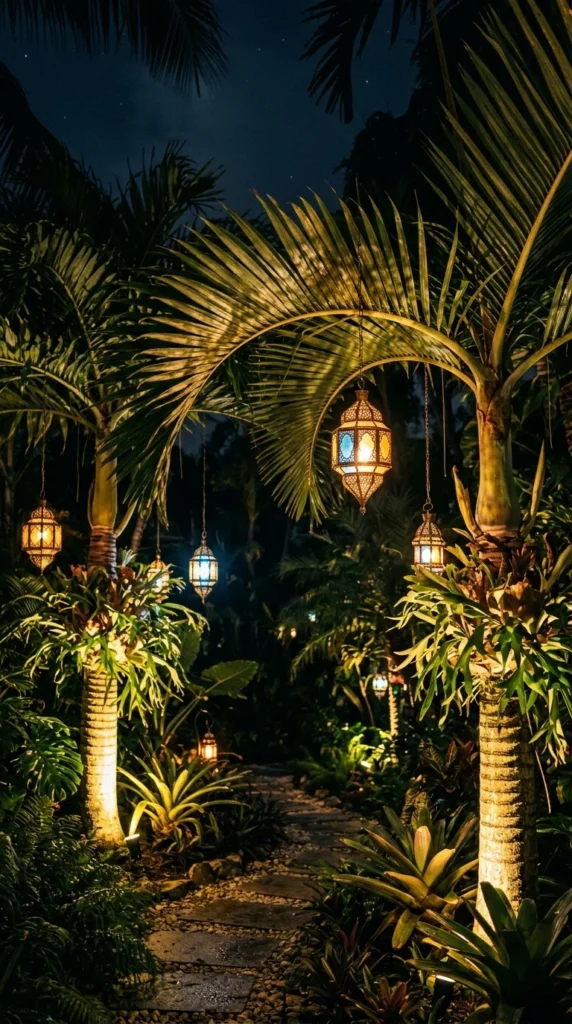
A tropical garden should be just as captivating at night as it is during the day. Proper lighting transforms the space into a magical, moonlit escape. The key is “uplighting”—placing small LED spotlights at the base of architectural plants like palms or large-leafed Philodendrons to highlight their structure and cast dramatic shadows against walls or fences.
Avoid bright, overhead floodlights which can flatten the landscape and destroy the ambiance. Instead, use soft, warm-toned lights nestled within the foliage. Path lights should be low to the ground, guiding the way without distracting from the plants. Hanging lanterns or string lights in seating areas adds a festive, resort-like feel.
10. Exotic Hardwoods
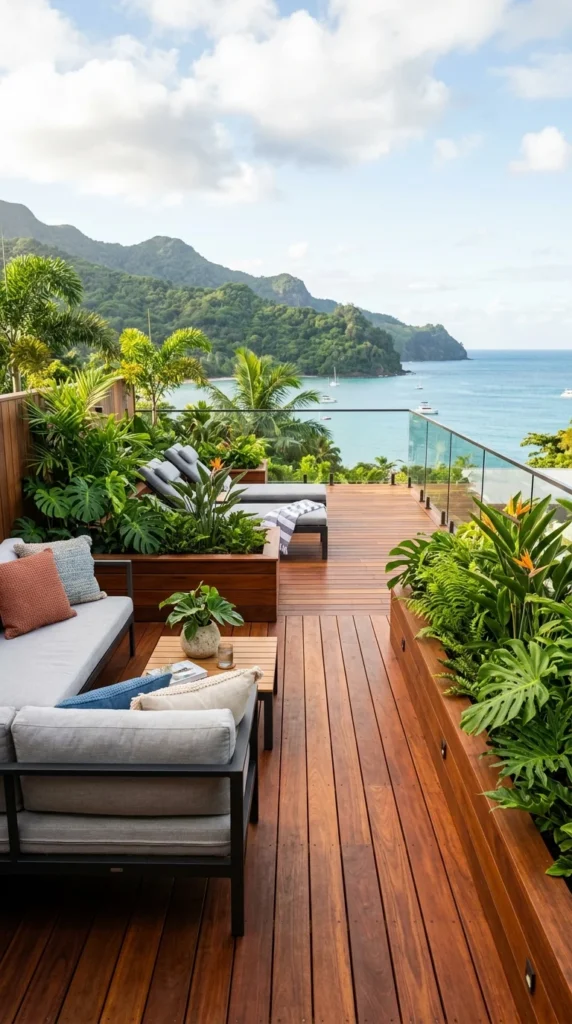
The use of warm, exotic hardwoods for decking and fencing adds a touch of luxury and complements the earthy tones of a tropical landscape. Woods like Ipe, Teak, or Cumaru are naturally resistant to rot and insects, making them ideal for the humid conditions often associated with tropical plantings.
A raised wooden deck can serve as a “floating” platform amidst the greenery, providing a clean, dry space for dining or relaxing. The contrast between the straight lines of the timber and the wild, organic shapes of the surrounding plants creates a sophisticated, modern aesthetic that elevates the entire garden design.
11. Bromeliad Clusters
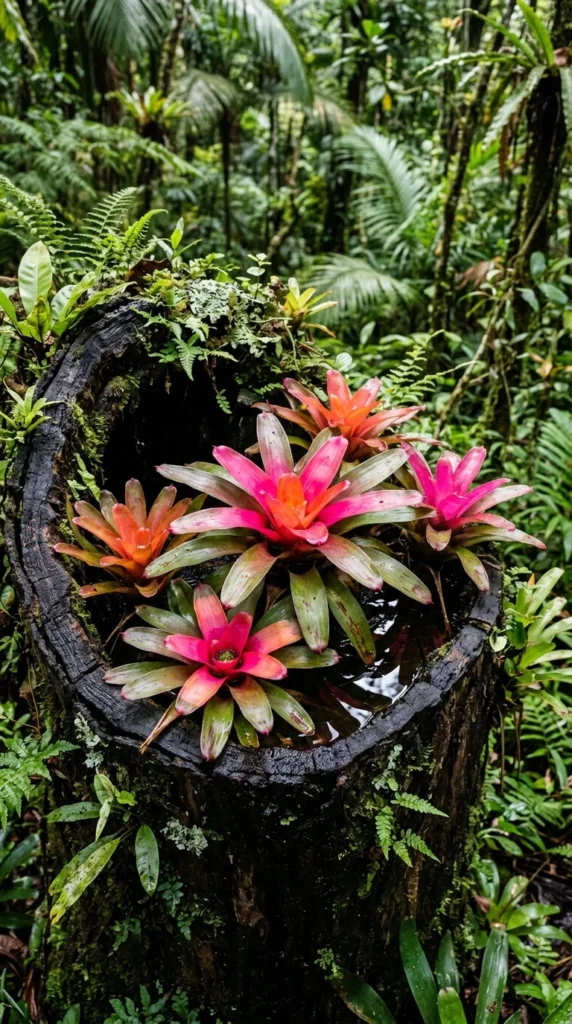
Bromeliads are the ultimate “low-maintenance” tropical plant. These epiphytes (plants that grow on other plants) add pops of color in unexpected places. They can be planted in the ground, but they truly shine when tucked into the forks of trees, mounted on driftwood, or arranged in decorative pots.
Their unique ability to hold water in their central “cup” attracts birds and beneficial insects, adding to the biodiversity of your garden. With their geometric shapes and neon-bright central bracts, they act as living sculptures that require very little soil, making them perfect for filling vertical gaps in your garden walls.
12. Garden Pathways
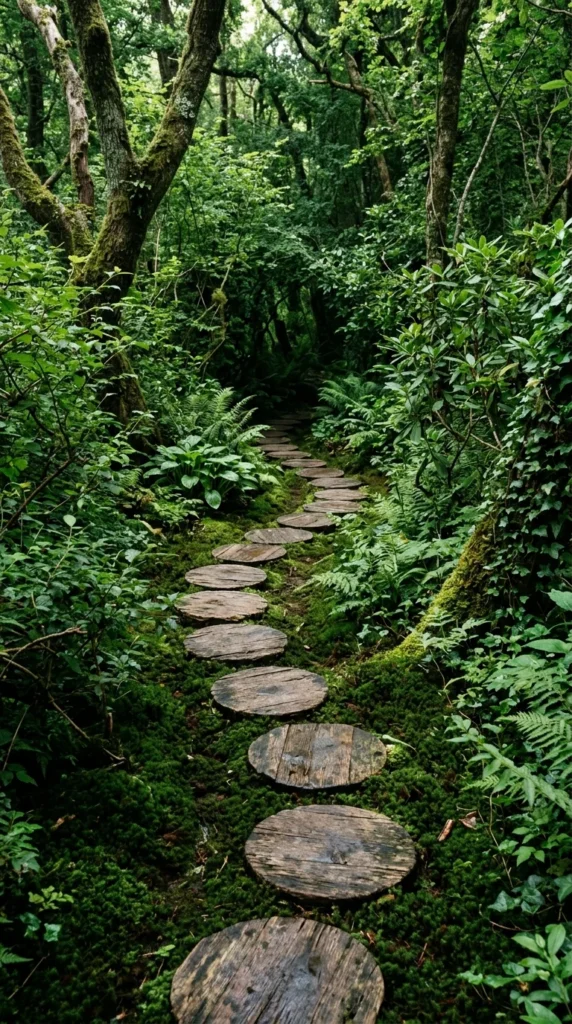
In a tropical escape, the journey is just as important as the destination. Instead of straight, functional paths, design winding trails that force the visitor to slow down and discover the garden piece by piece. This creates an illusion of a much larger space.
Use materials that blend into the environment. Wood slices, stepping stones, or even crushed shells can define the path while maintaining a natural look. Ensure that plants slightly overhang the edges of the path, brushing against the legs of those walking by; this physical interaction with the foliage deepens the sense of immersion in nature.
13. Outdoor Showers
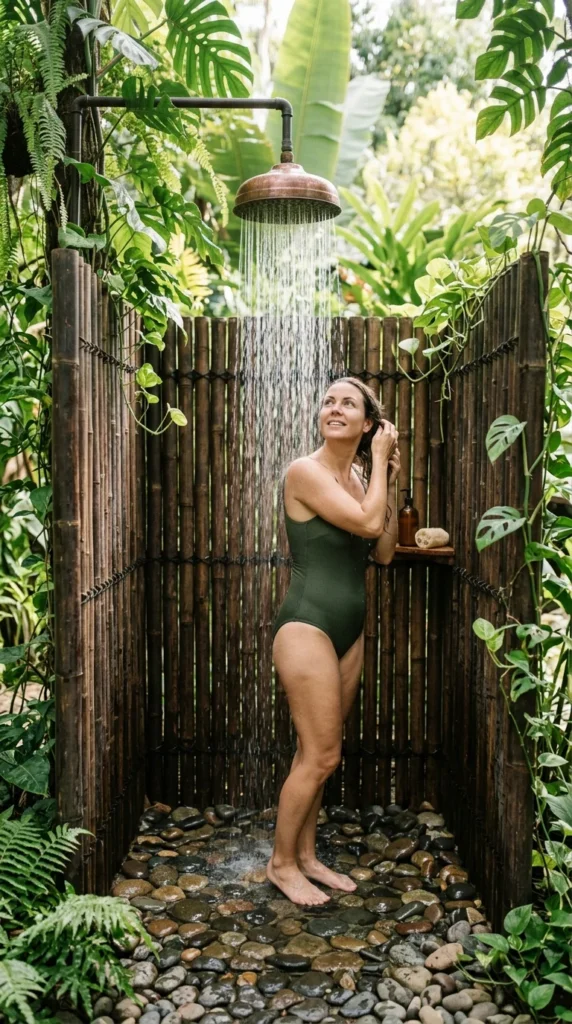
Nothing says “tropical resort” quite like an outdoor shower. It is the ultimate functional luxury for a relaxing outdoor escape. Tucked away in a private corner and surrounded by high-density foliage or bamboo screens, an outdoor shower provides a refreshing way to cool off after a day in the sun or a dip in the pool.
Use high-quality fixtures in copper or brass that will develop a natural patina over time. The drainage area can be designed with river stones or a wooden grate to allow water to seep into the ground, nourishing the surrounding plants. This final touch completes the transformation of your backyard into a fully realized, multi-sensory tropical sanctuary.