
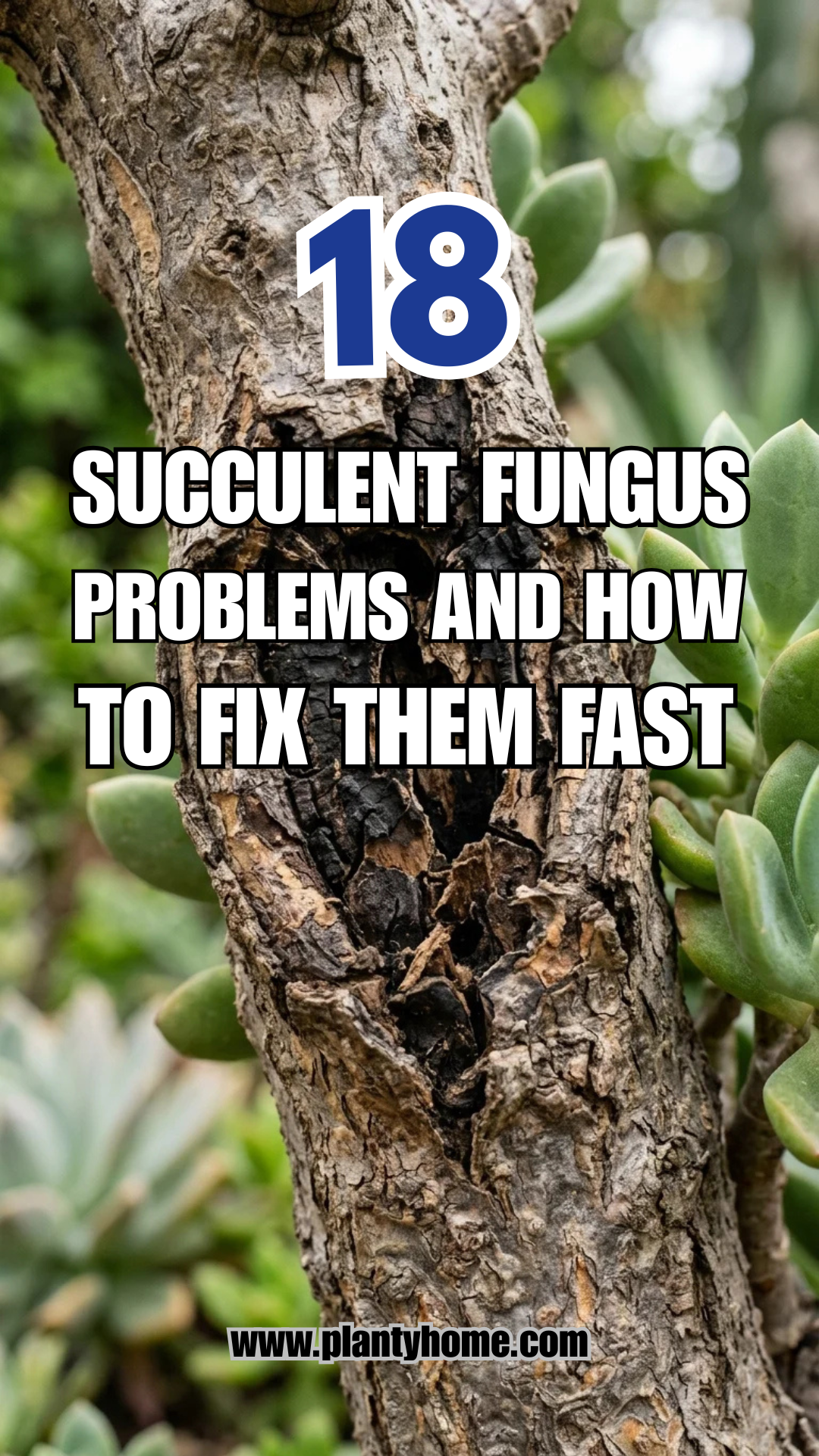
Succulents are often celebrated for their resilience and low-maintenance nature. However, their greatest strength—their ability to store water—is also their greatest vulnerability. When environmental conditions shift toward high humidity, poor airflow, or excessive moisture, succulents become prime targets for fungal pathogens. Left untreated, these fungal issues can move with alarming speed, turning a prized specimen into mush within days.
Understanding how to identify and treat these 18 common fungal problems is essential for any serious collector or hobbyist.
1. Root Rot
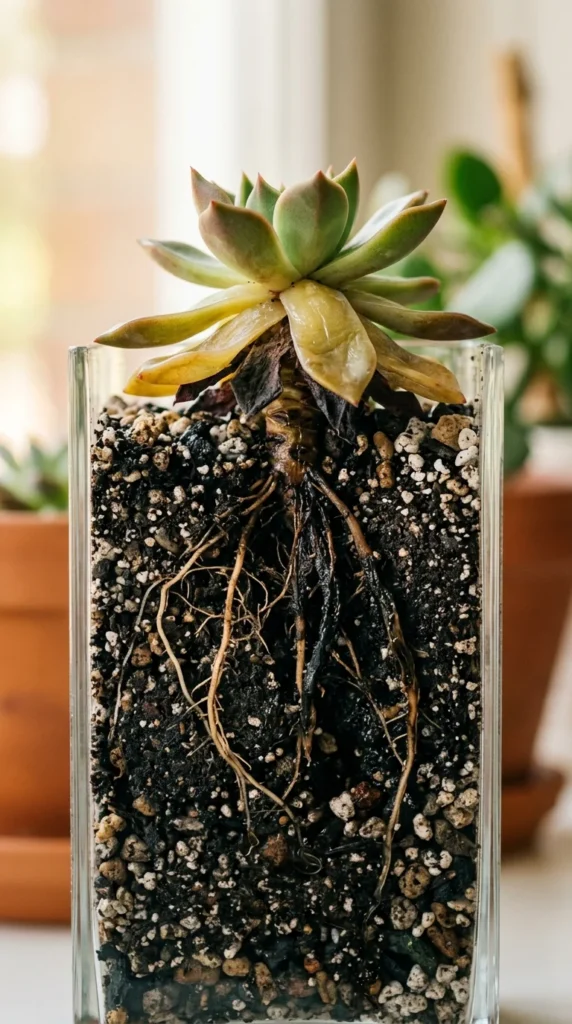
Root rot is the most common fungal ailment for succulents, typically caused by Pythium or Phytophthora species. It thrives in waterlogged soil where oxygen is depleted.
- Symptoms: Leaves turning yellow or translucent, a foul odor from the soil, and roots that are black, slimy, and easily pull away.
- The Fast Fix: Immediately remove the plant from its pot. Shake off all old soil and trim away any black or mushy roots using sterilized shears. Let the plant air-dry for 48 hours until the wounds callous, then replant in fresh, dry, well-draining succulent mix.
2. Powdery Mildew
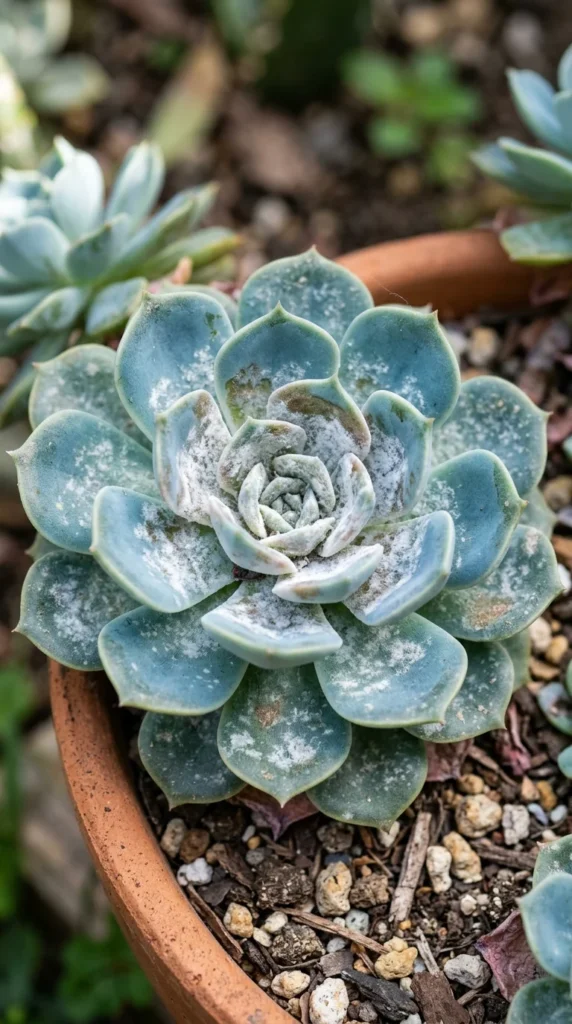
Powdery mildew is a superficial fungus that appears as white or gray dusty spots. It is often triggered by high humidity combined with cool nights.
- Symptoms: A white, dusty coating on leaves that can eventually lead to leaf distortion or yellowing.
- The Fast Fix: Increase air circulation and reduce humidity. Spray the affected areas with a mixture of one tablespoon of baking soda and a teaspoon of liquid soap in a gallon of water, or use a commercial neem oil spray.
3. Sooty Mold
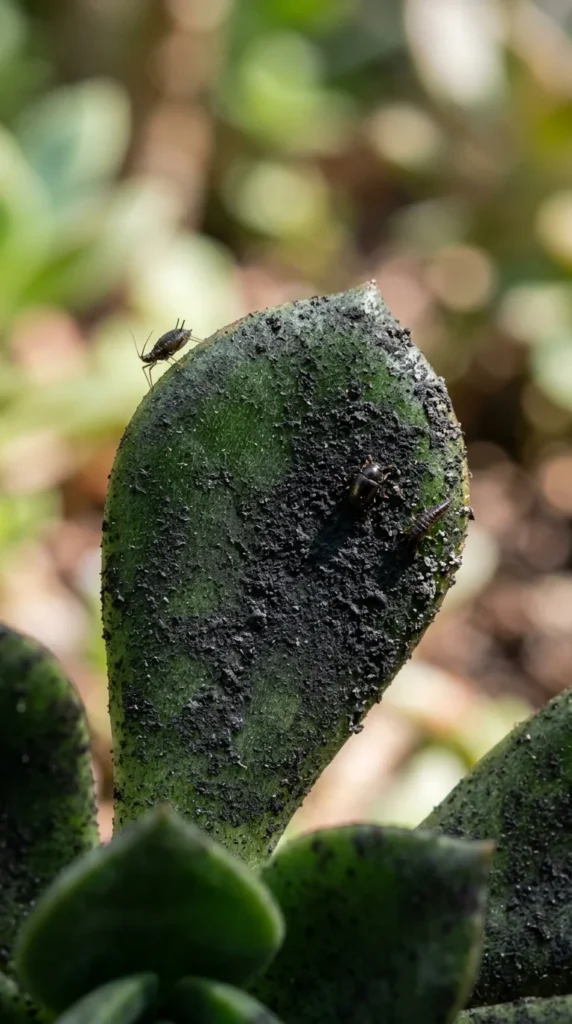
Sooty mold doesn’t actually feed on the plant itself; instead, it grows on the “honeydew” (sticky excrement) left behind by pests like aphids or mealybugs.
- Symptoms: A black, soot-like film on the surface of the leaves that can be rubbed off with a finger.
- The Fast Fix: First, treat the pest infestation using isopropyl alcohol or insecticidal soap. Once the pests are gone, gently wipe the black mold off the leaves with a damp, soft cloth.
4. Gray Mold
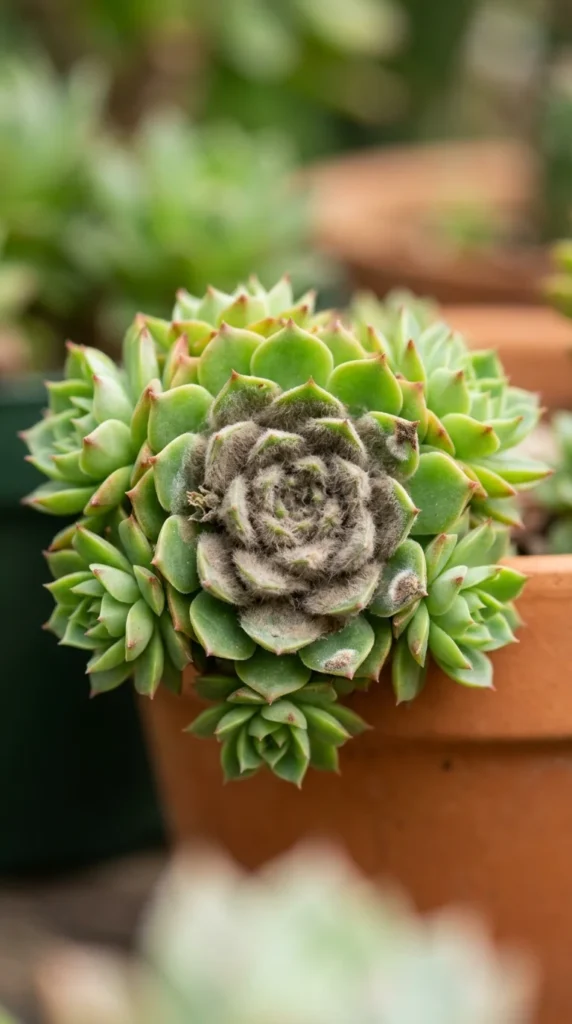
Also known as Botrytis cinerea, gray mold is a necrotrophic fungus that attacks weakened or damaged tissues, especially in damp, cool environments.
- Symptoms: Fuzzy gray or brown patches on leaves or flowers; affected areas quickly turn into a soft, rotting mass.
- The Fast Fix: Cut away all infected parts immediately and dispose of them (do not compost). Move the plant to a brighter, drier location and ensure no water sits on the leaves during irrigation.
5. Anthracnose
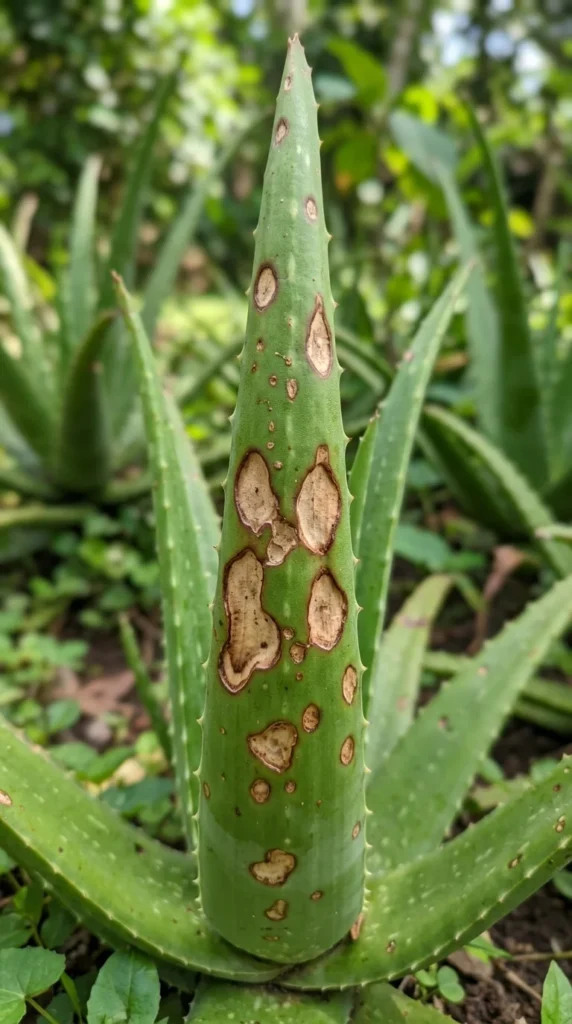
Anthracnose is caused by the Colletotrichum fungus and is characterized by distinct, sunken lesions.
- Symptoms: Circular, sunken spots on leaves that may be tan, brown, or black, often with a raised border.
- The Fast Fix: Prune infected leaves to prevent the spores from spreading. Treat the remaining plant with a copper-based fungicide and avoid overhead watering to keep the foliage dry.
6. Fusarium Wilt
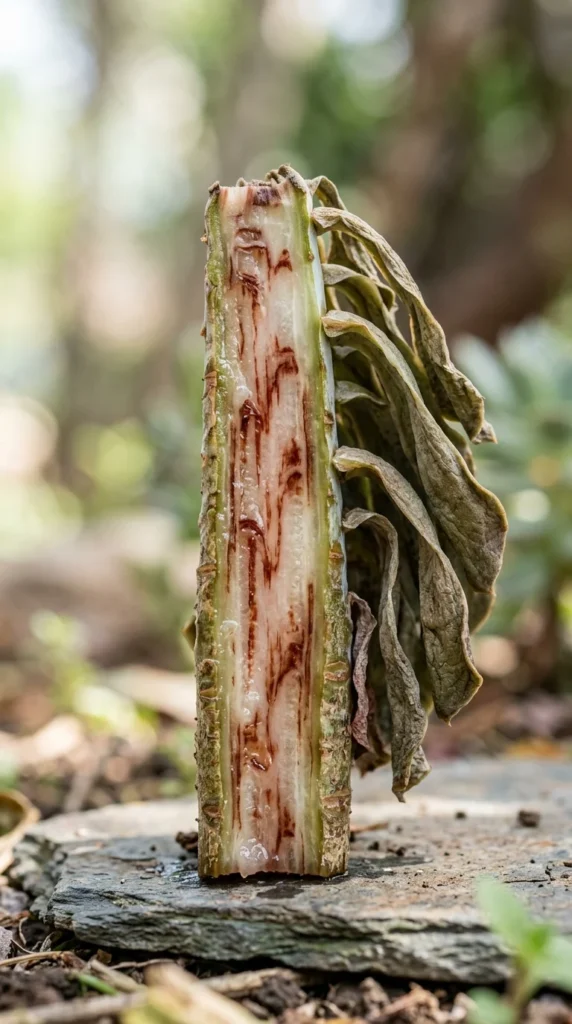
Fusarium is a soil-borne fungus that enters through the roots and clogs the plant’s vascular system, preventing water transport.
- Symptoms: Sudden wilting of the plant despite moist soil, often accompanied by yellowing on one side of the plant.
- The Fast Fix: Because Fusarium is internal, it is difficult to cure. If caught early, you can take a cutting from the very top of the plant (ensuring the stem interior is clean and green) to propagate a new, healthy plant, and discard the infected base and soil.
7. Rust Fungus
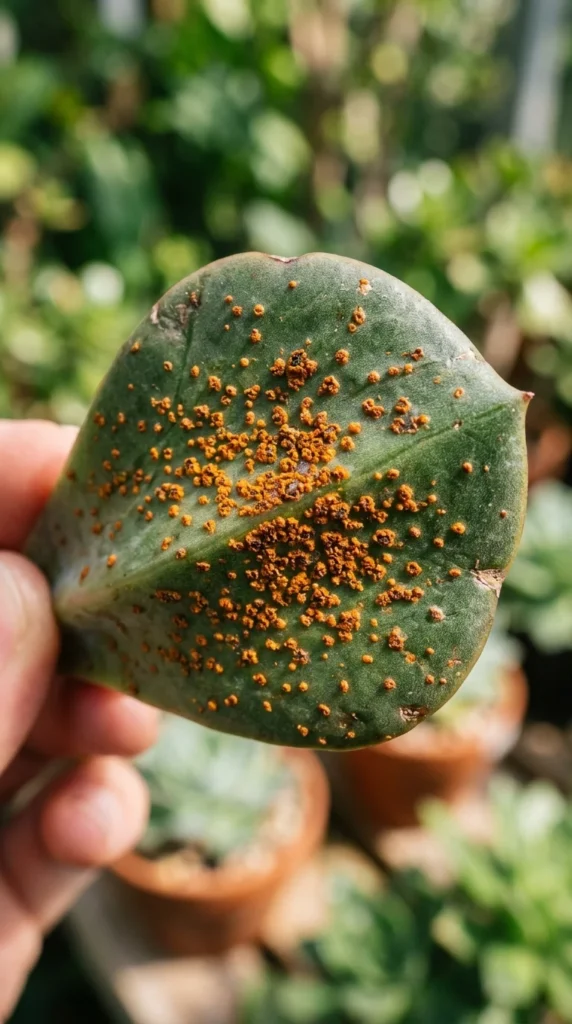
Rust is caused by various fungal species and is easily identified by its distinct color, resembling oxidized iron.
- Symptoms: Small, raised orange, yellow, or brown bumps (pustules) on the undersides of leaves.
- The Fast Fix: Isolate the plant immediately as rust spores travel easily through the air. Remove infected leaves and apply a sulfur-based fungicide to the rest of the plant.
8. Stem Rot
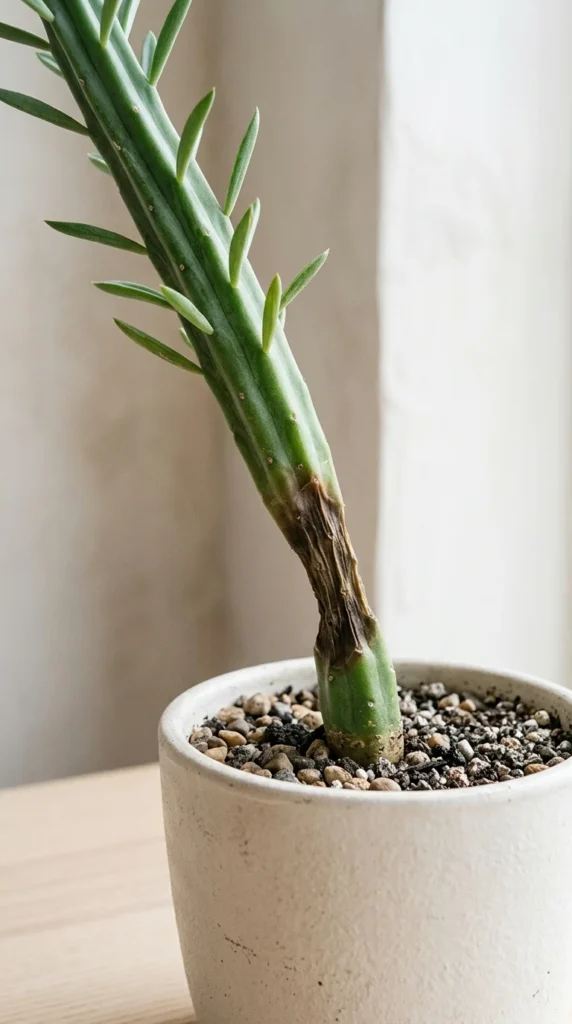
Stem rot often starts at the soil line and moves upward, usually due to the stem sitting in damp soil for too long.
- Symptoms: The base of the stem turns brown, black, or mushy, while the top of the plant may still look healthy.
- The Fast Fix: Behead the succulent! Cut the healthy top portion off well above the rot. Check that the cut end is completely green and free of dark spots. Let it callous for a few days and then place it on dry soil to grow new roots.
9. Crown Rot
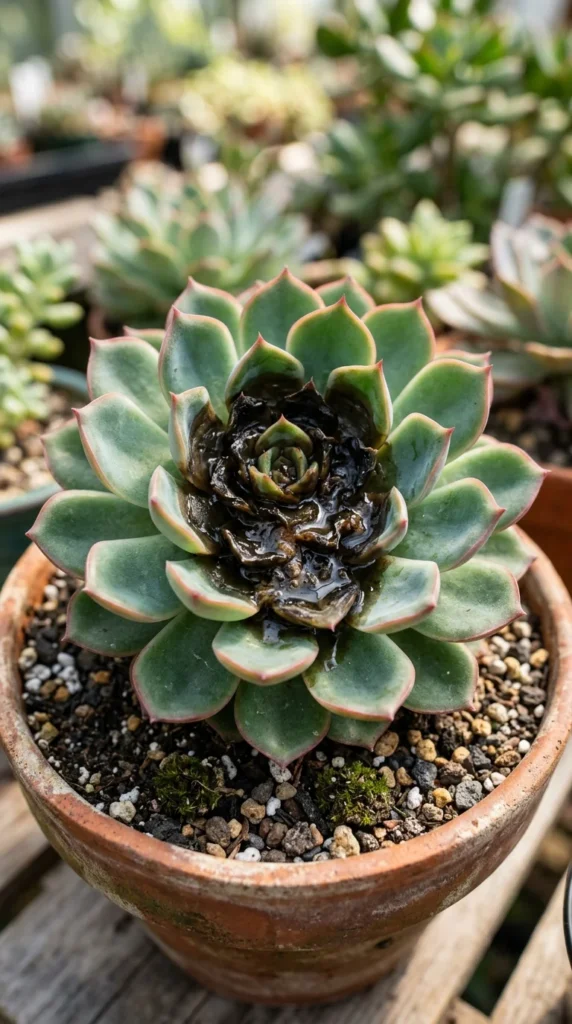
Crown rot occurs when water is trapped in the center of a rosette-shaped succulent, allowing fungi to attack the growth point.
- Symptoms: The center leaves of the rosette turn black and fall out easily at the slightest touch.
- The Fast Fix: If the crown is completely gone, the plant cannot grow “up” anymore. Remove the mushy center and treat with cinnamon (a natural antifungal). The plant may eventually produce “pups” (offsets) from the sides of the stem.
10. Damping Off
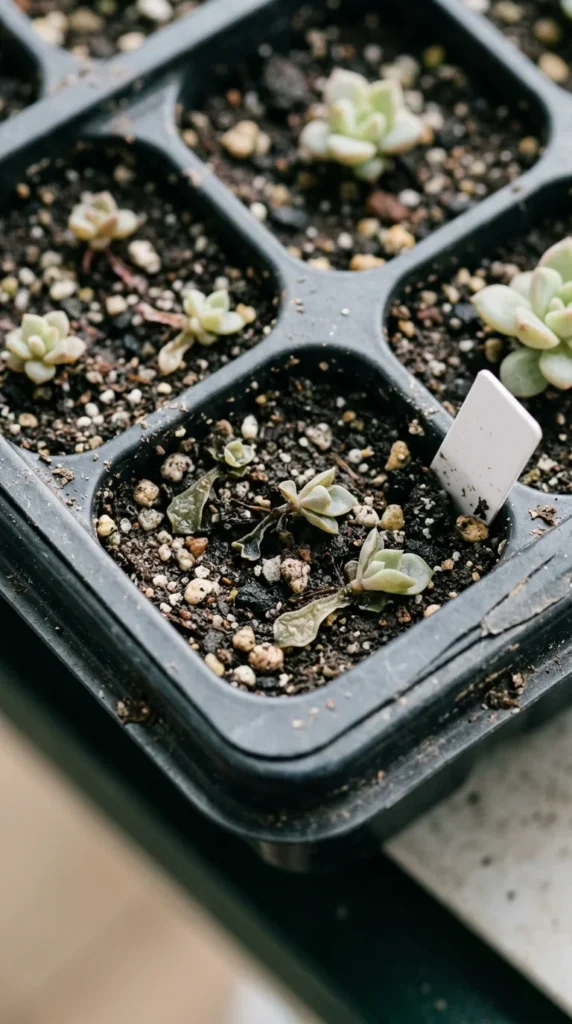
This is a nightmare for those growing succulents from seeds. It is caused by various fungi like Rhizoctonia.
- Symptoms: Young seedlings suddenly collapse at the base and die.
- The Fast Fix: There is no cure for affected seedlings. Prevent it by using sterilized soil, ensuring high light levels, and using a light misting of chamomile tea, which has mild antifungal properties.
11. Southern Blight
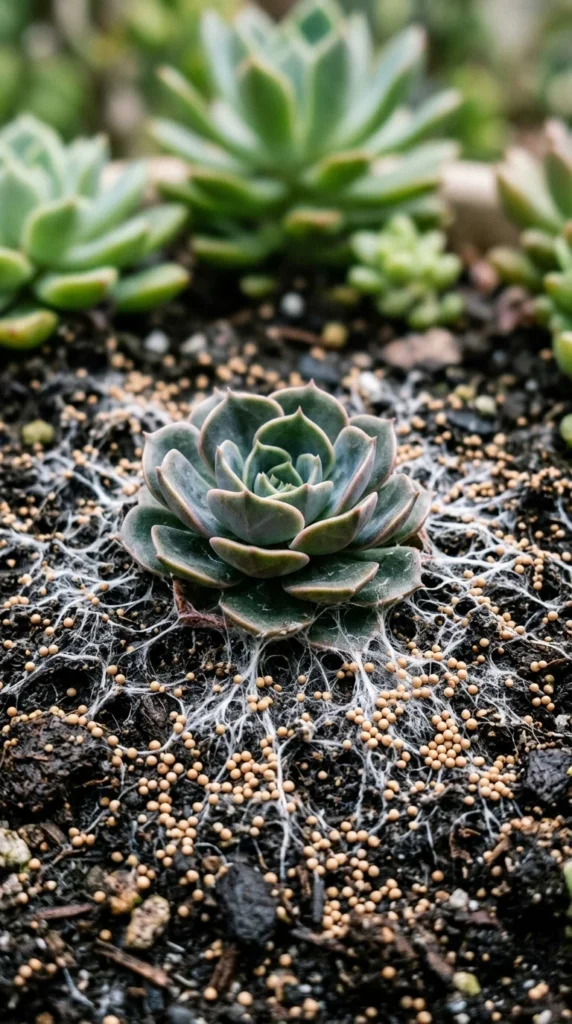
Sclerotium rolfsii is a devastating fungus that thrives in warm, humid conditions and can spread through the soil.
- Symptoms: White, fan-like webbing (mycelium) at the base of the plant and the appearance of small, round, mustard-seed-like structures (sclerotia).
- The Fast Fix: This fungus is highly persistent. Remove the plant and the top two inches of soil. Treat the area or the remaining soil with a fungicide containing flutolanil or PCNB if available.
12. Cercospora Leaf Spot
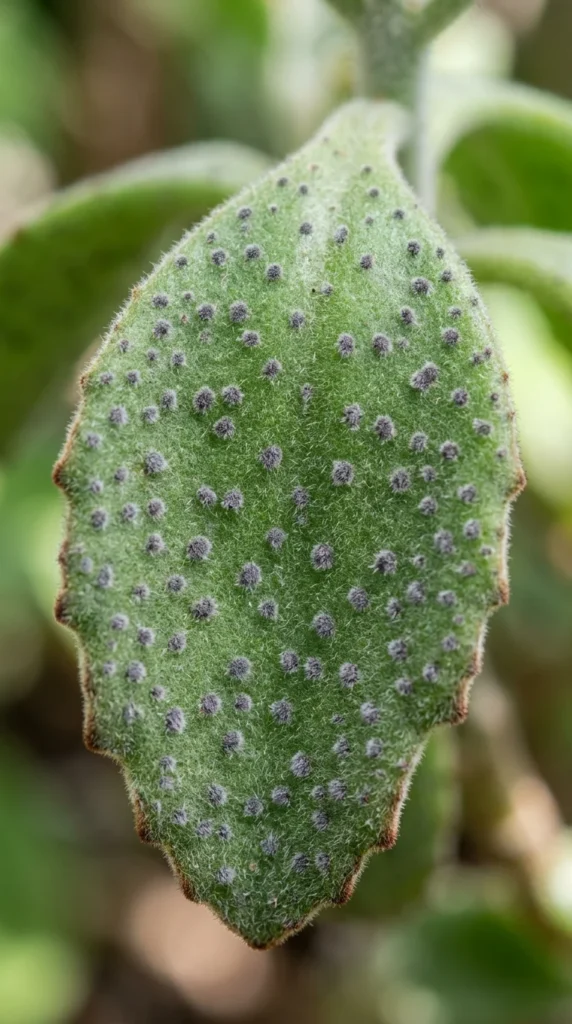
This fungus creates small, dark spots that can eventually merge to cover large portions of the leaf.
- Symptoms: Small, irregular dark brown or black spots, sometimes with a grayish center.
- The Fast Fix: Improve air circulation and keep leaves dry. Apply a copper fungicide or a systemic fungicide to prevent further spread.
13. Black Spot
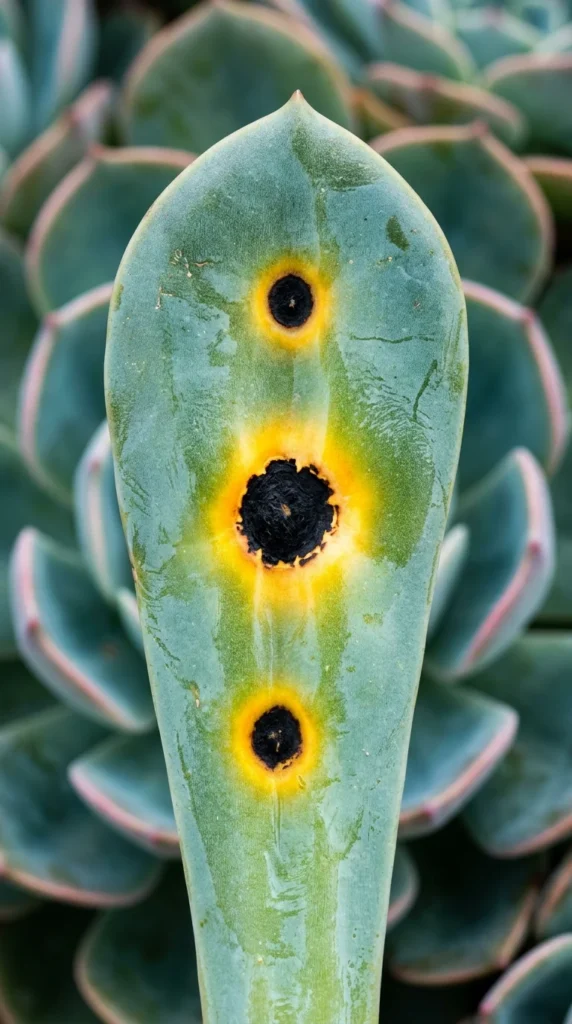
Often confused with physical damage, fungal black spot is more uniform and often has a “halo” around the lesion.
- Symptoms: Large, distinct black circular spots on leaves that may eventually cause the leaf to drop.
- The Fast Fix: Remove affected leaves. Apply neem oil or a specialized rose fungicide, which is often effective against various black spot fungi.
14. White Mold
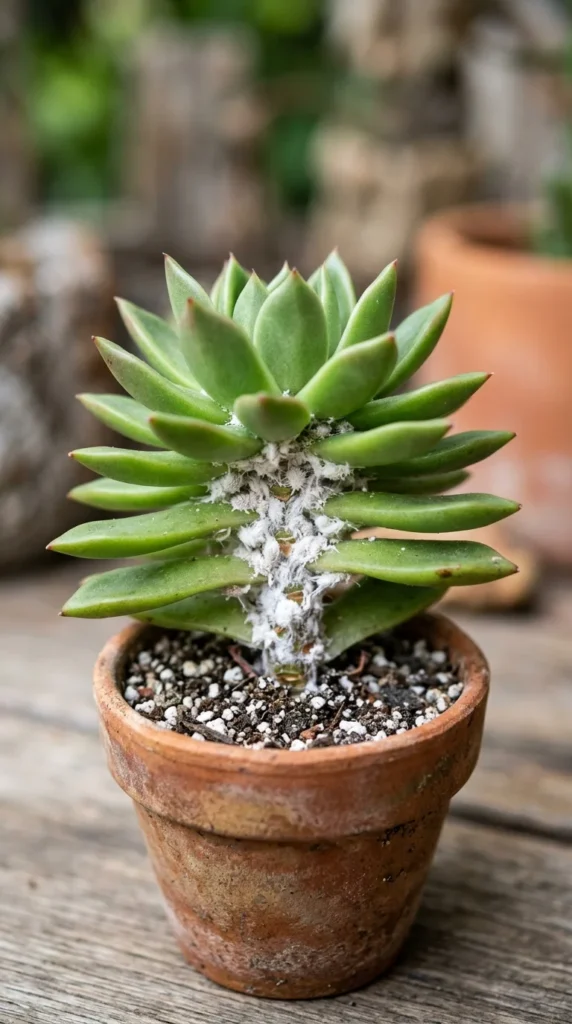
Sclerotinia can look like mealybug fluff but is actually a dense fungal growth that causes rapid tissue decay.
- Symptoms: White, cottony growth on stems or leaves, followed by the tissue underneath turning soft and watery.
- The Fast Fix: Scrape off the mold and treat the area with a strong fungicide. If the stem is compromised, take healthy cuttings and discard the infected parent plant.
15. Septoria Leaf Spot
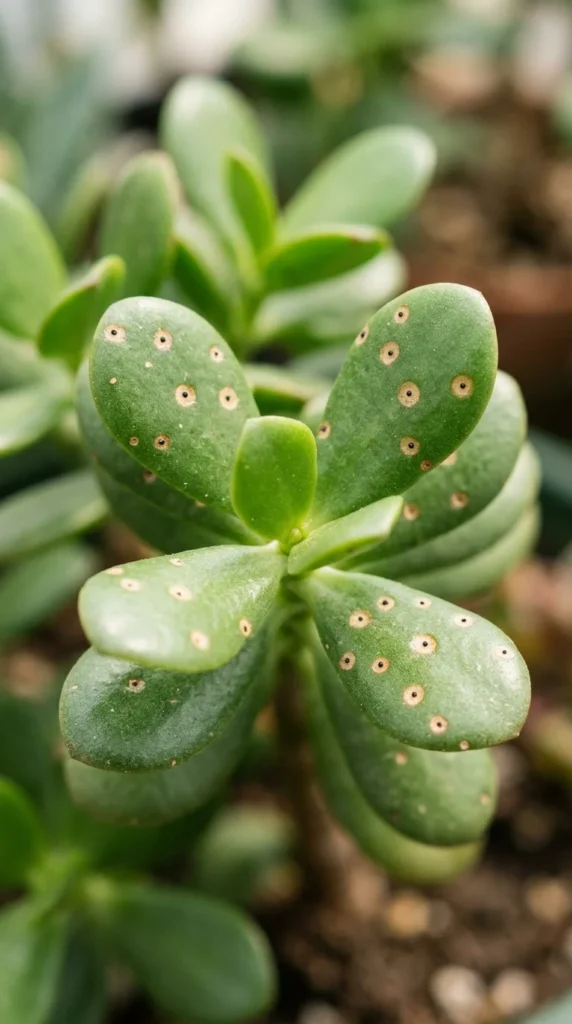
Septoria is characterized by spots that contain tiny black fruiting bodies, which look like pepper flakes.
- Symptoms: Grayish-tan spots with tiny black specks inside them.
- The Fast Fix: Increase light exposure and reduce watering frequency. Remove the most heavily infected leaves to reduce the spore load.
16. Alternaria Leaf Spot
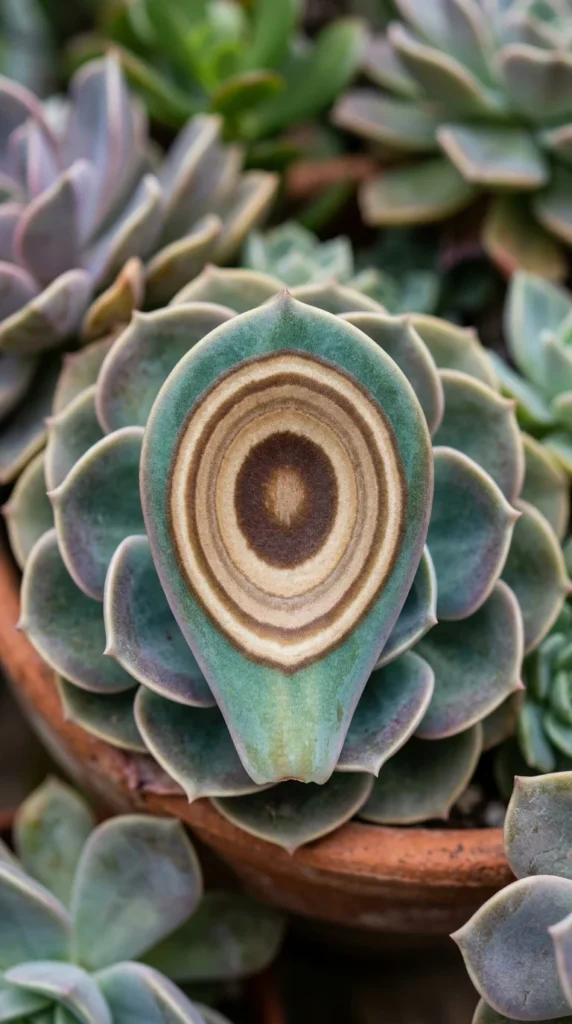
This fungus is known for creating a “target” pattern on the leaves of various plants, including succulents.
- Symptoms: Dark brown spots that expand in concentric circles.
- The Fast Fix: Use a fungicide containing chlorothalonil or mancozeb. Avoid watering in the evening so the plant doesn’t sit wet overnight.
17. Phoma Stem Canker
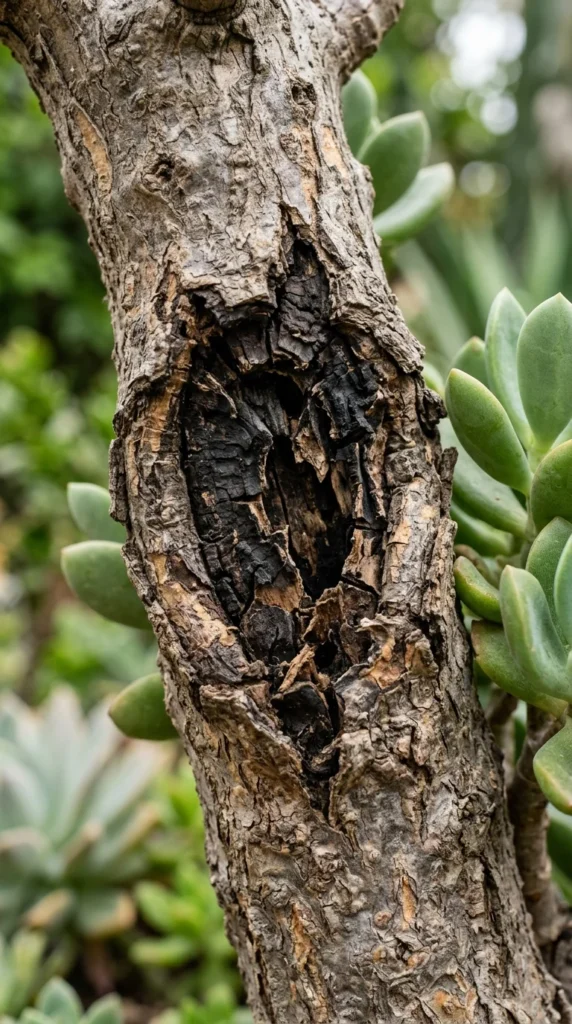
Phoma species can cause deep lesions or “cankers” on the stems of older, more woody succulents.
- Symptoms: Sunken, cracked areas on the stem that may ooze or appear darker than the surrounding tissue.
- The Fast Fix: Carefully excise the canker using a sterile knife, cutting back to healthy tissue. Seal the wound with a fungicidal paste or cinnamon.
18. Verticillium Wilt
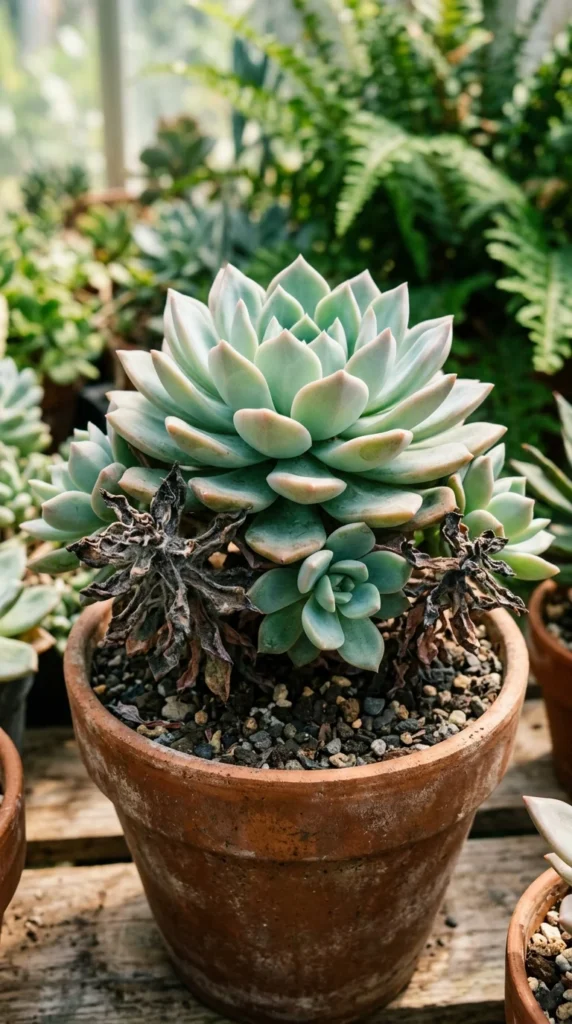
Similar to Fusarium, this is a vascular wilt that enters through the roots but can affect only specific branches or sections.
- Symptoms: Wilting and yellowing of specific sections of the plant, while other parts remain healthy.
- The Fast Fix: Prune away the wilted sections, ensuring you cut into healthy wood. Sterilize your tools between every single cut to prevent spreading the fungus to healthy parts of the plant.