
Succulents are celebrated for their architectural beauty and low-maintenance nature, but nothing causes a plant parent more anxiety than the sudden appearance of a mysterious white powder. Whether it’s a natural protective layer or a sign of a looming infestation, understanding the “white stuff” is critical to the longevity of your collection. This guide explores 26 reasons for white powder on succulents and provides professional solutions for each.
1. Farina
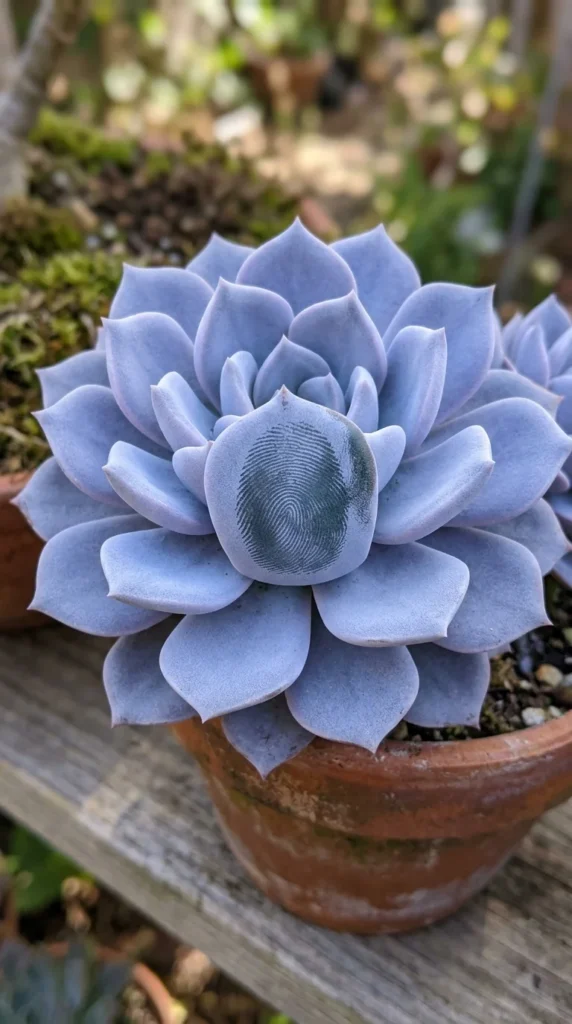
The Cause: Also known as epicuticular wax, farina is a natural, healthy coating produced by many succulents (like Echeveria, Graptopetalum, and Pachyphytum). It acts as a natural sunscreen, a water repellent, and a barrier against pests.
The Solution: Do nothing. In fact, avoid touching the leaves, as the oils from your fingers will rub the farina off, and it rarely grows back perfectly. This leaves the plant vulnerable to sunburn.
2. Mealybugs
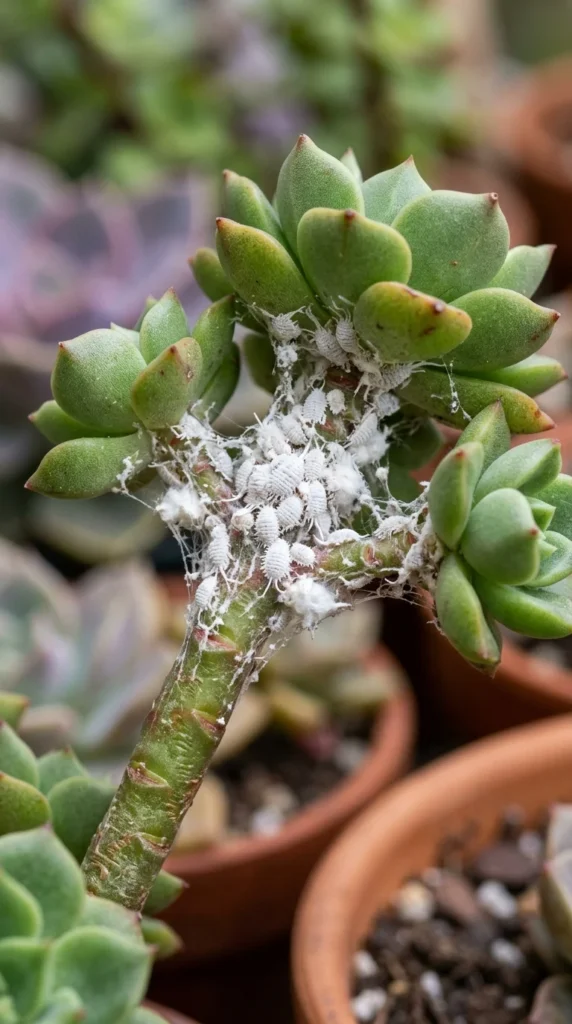
The Cause: Mealybugs are the most common succulent pests. They are small, soft-bodied insects that secrete a white, waxy, cotton-like substance to protect themselves while they suck the sap from your plants.
The Solution: Dip a cotton swab in 70% isopropyl alcohol and dab the insects directly. For larger infestations, spray the entire plant with a mixture of water and alcohol, ensuring you reach the crevices where they hide.
3. Powdery Mildew
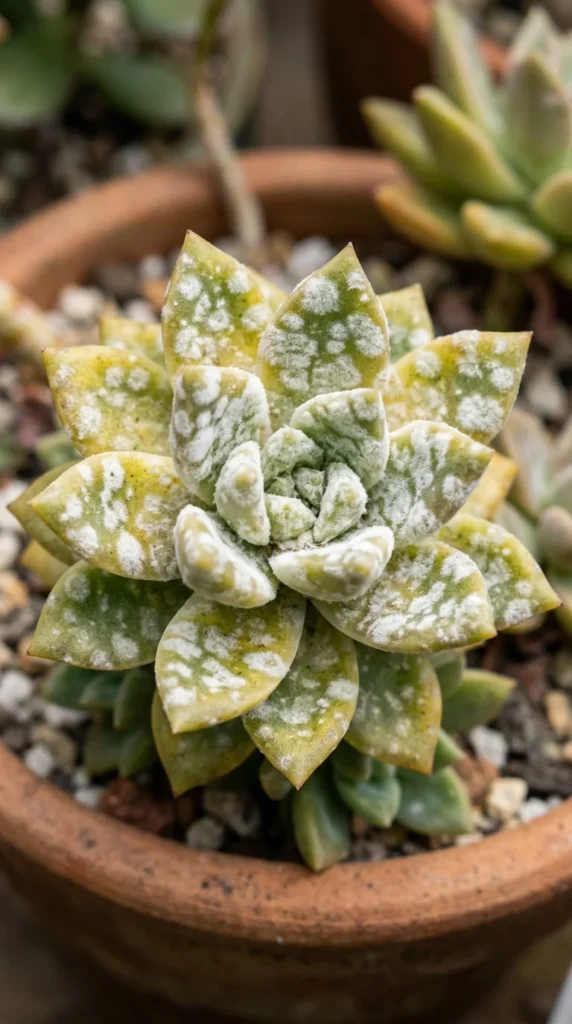
The Cause: This is a fungal disease that thrives in humid conditions with poor air circulation. It looks like white flour dusted haphazardly over the leaves and can spread rapidly to other plants.
The Solution: Increase airflow using a fan and decrease humidity. Treat the plant with a fungicide or a homemade solution of 1 tablespoon baking soda and 1/2 teaspoon liquid soap in a gallon of water.
4. Hard Water
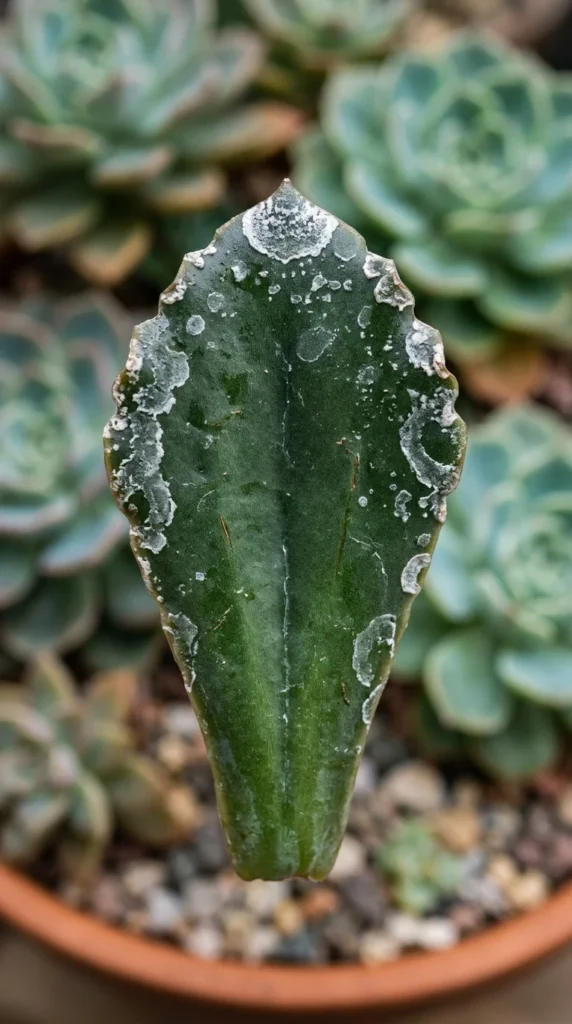
The Cause: If you have “hard” tap water, it contains high levels of minerals like calcium and magnesium. When you mist your plants or water from above, the water evaporates, leaving these white mineral deposits behind.
The Solution: Switch to distilled water, rainwater, or filtered water. You can gently wipe the leaves with a damp cloth and a drop of lemon juice to dissolve existing spots.
5. Fertilizer Salts
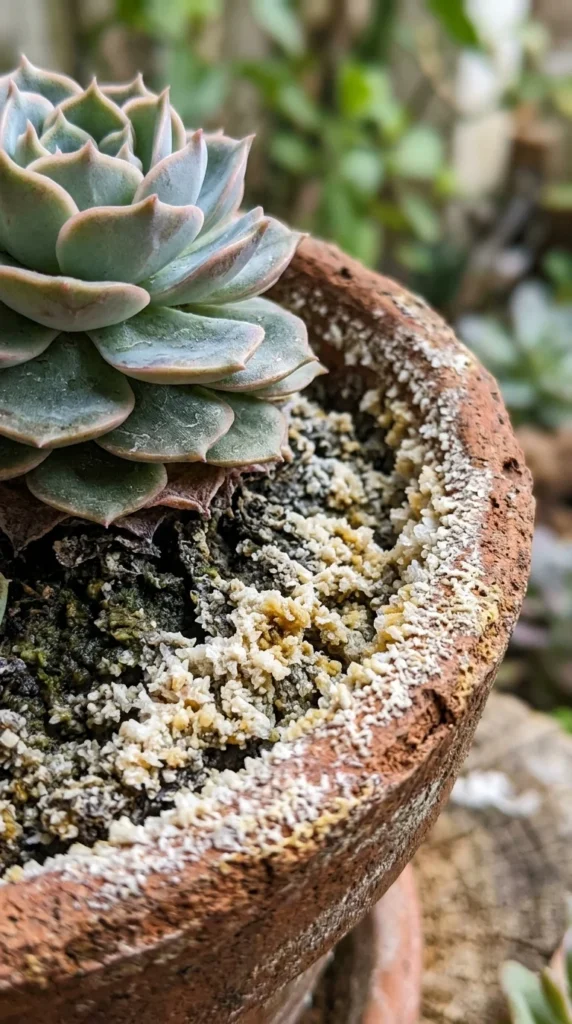
The Cause: Over-fertilizing or using synthetic fertilizers can lead to a buildup of salts. These salts often manifest as a white, crusty powder on the soil surface or around the base of the plant’s stem.
The Solution: Flush the soil with plenty of distilled water to wash away the salts. In the future, use half-strength fertilizer and only apply it during the growing season.
6. Root Mealybugs
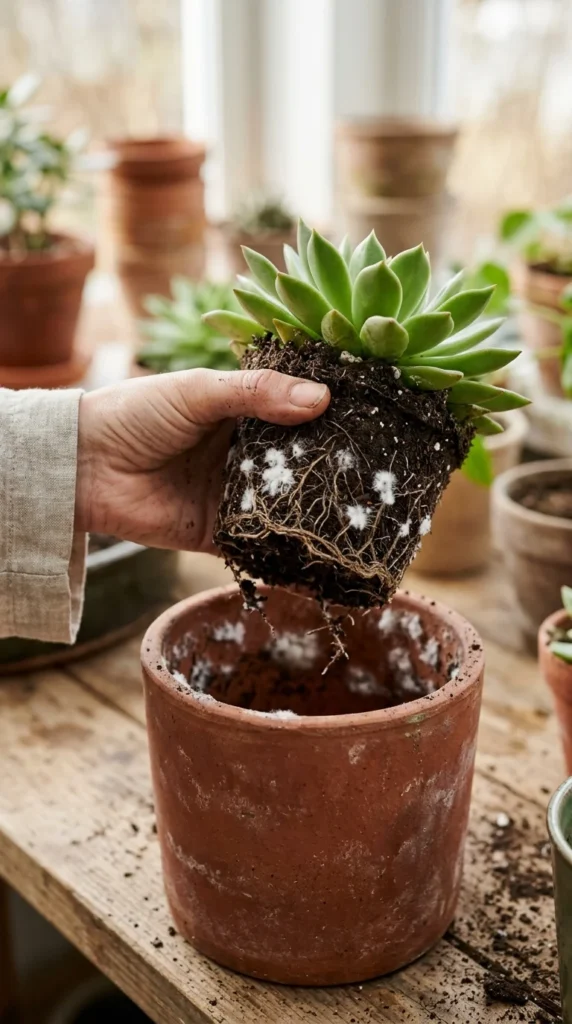
The Cause: Similar to leaf mealybugs, these live underground. You might notice white powder on the roots or the inside of the pot when repotting. They stunt growth and can kill the plant from the bottom up.
The Solution: Wash all soil off the roots and soak the roots in a diluted insecticidal soap or a mild bleach solution (1 part bleach to 10 parts water). Repot in fresh, sterile soil and a clean pot.
7. Spider Mites
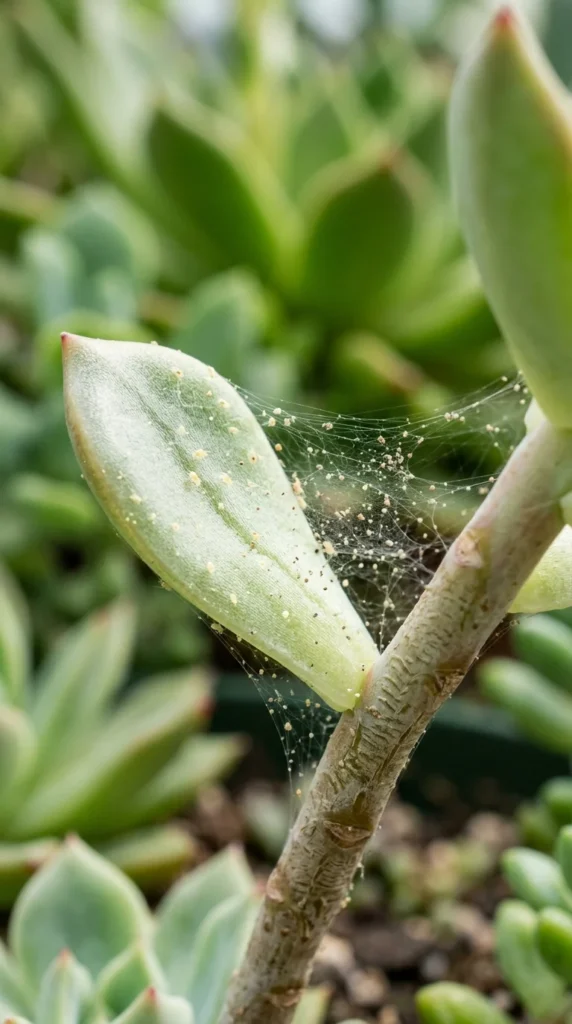
The Cause: These microscopic arachnids spin fine white webs that can look like dusty powder. They thrive in hot, dry environments and suck the chlorophyll out of the leaves, leaving them speckled.
The Solution: Increase humidity around the plant and wash the mites off with a strong stream of water. Use neem oil or a miticide for persistent infestations.
8. Soil Mold
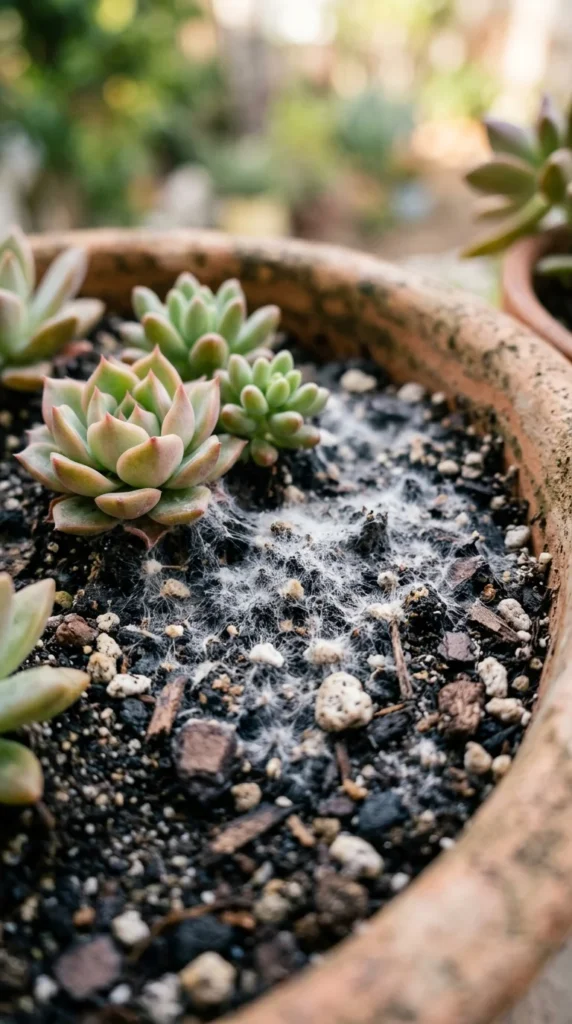
The Cause: White, fuzzy mold on the soil is usually a sign that the soil is staying too wet or that there is decaying organic matter in the mix. While usually harmless to the plant, it indicates a moisture problem.
The Solution: Allow the soil to dry out completely. Scrape off the top layer of mold and replace it with dry sand or chicken grit to improve surface drainage.
9. Edema
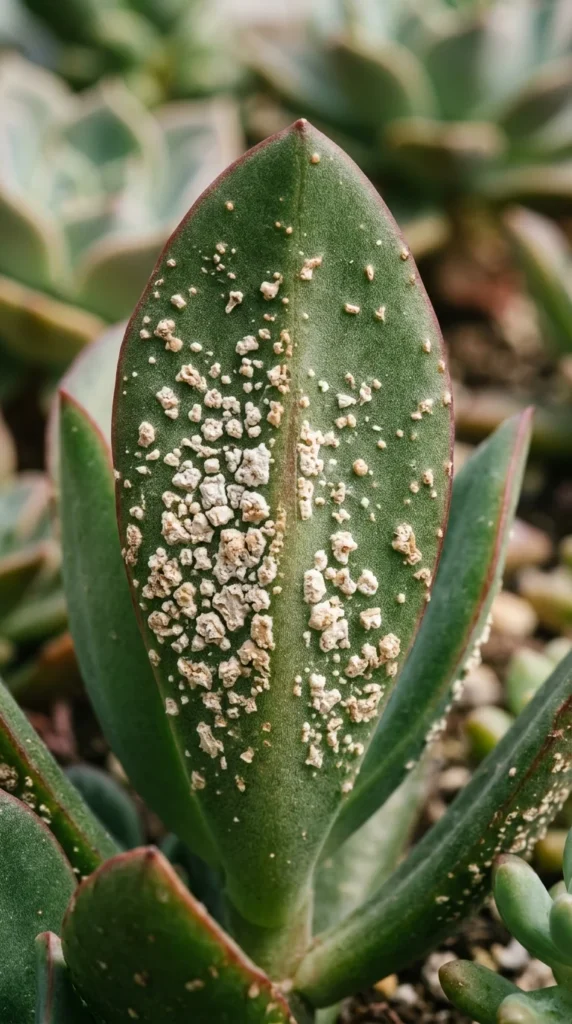
The Cause: Edema occurs when a plant absorbs more water than it can use or release through transpiration. The cells burst and heal, leaving behind white, crusty, or corky scars.
The Solution: Regulate your watering schedule. Ensure the plant has well-draining soil and that you are not watering during periods of high humidity or low light.
10. Pesticide Residue
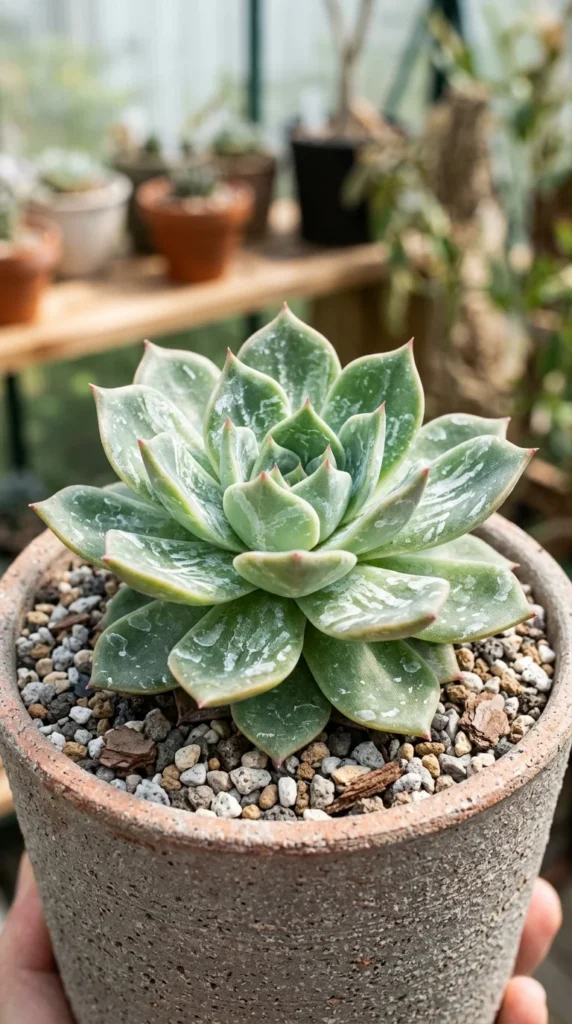
The Cause: Many commercial pesticides, including neem oil or insecticidal soaps, leave a white or cloudy residue on the leaves once the liquid carrier evaporates.
The Solution: If the residue bothers you, gently wipe the leaves with a soft, damp cloth after the treatment has finished its work (usually 24-48 hours later).
11. Household Dust
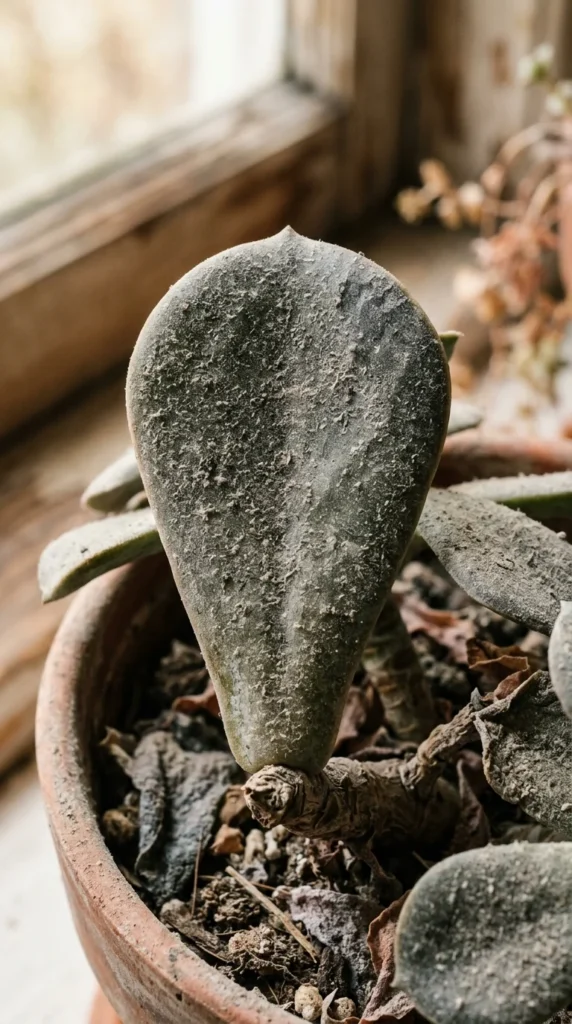
The Cause: Just like furniture, succulents collect dust. This is especially common for indoor plants in rooms with high foot traffic or near air vents.
The Solution: Use a soft-bristled makeup brush or a pressurized air canister (from a distance) to gently clean the leaves. For larger leaves, a damp cloth works well.
12. Pollen
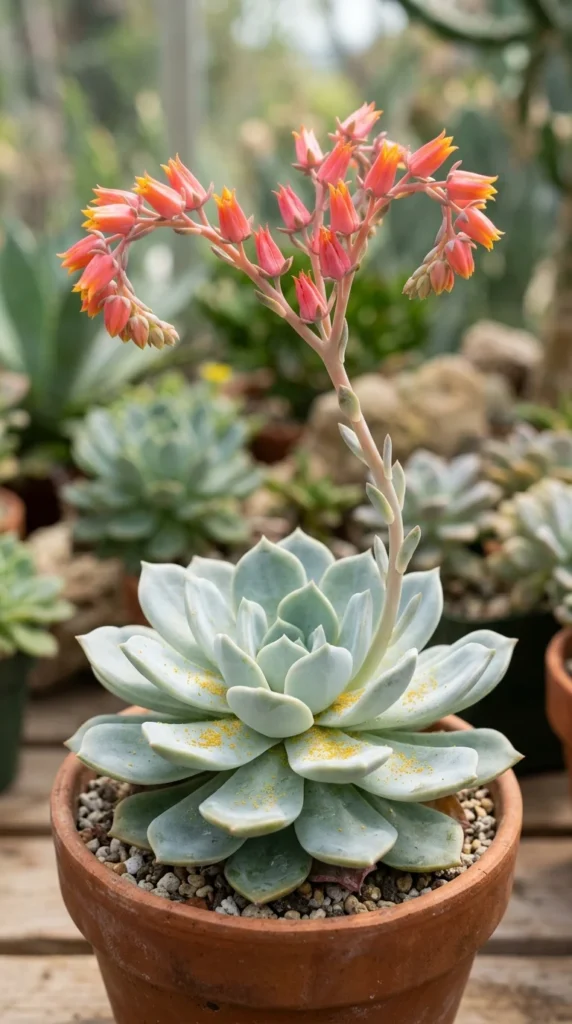
The Cause: If your succulent is blooming, or if it is near a window during spring, white or light yellow pollen can settle on the leaves, mimicking a powdery fungus.
The Solution: Simply blow the pollen off or leave it be; it is harmless and will eventually dissipate on its own.
13. Botrytis Cinerea
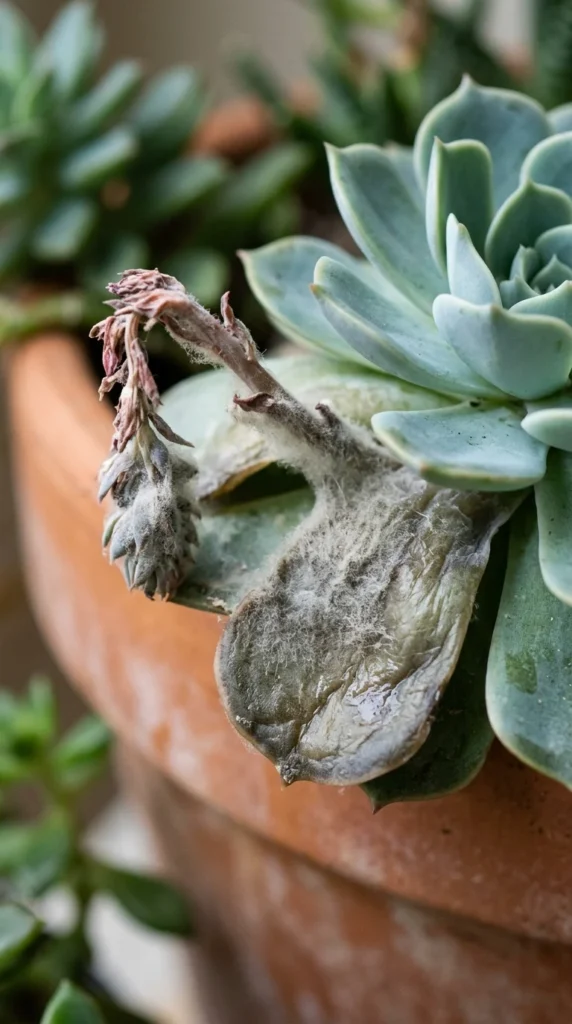
The Cause: Also known as “grey mold,” this fungus attacks weakened or damaged plant tissue. It often looks like a thick, dirty white or grey powder.
The Solution: Remove any affected leaves or flowers immediately with sterile shears. Improve air circulation and avoid getting water on the leaves during irrigation.
14. Cochineal Scale
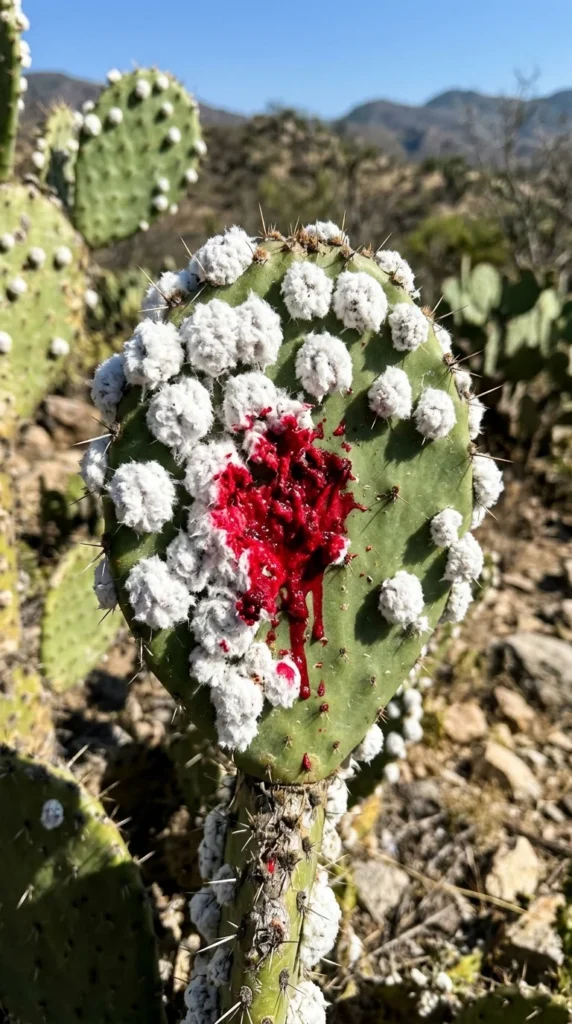
The Cause: This is a specific type of scale insect common on Cacti. They produce a white, waxy, “popcorn-like” covering that protects the insect underneath.
The Solution: These can be physically scraped off or treated with a systemic insecticide. For organic control, use a strong spray of water followed by an application of insecticidal soap.
15. Whiteflies
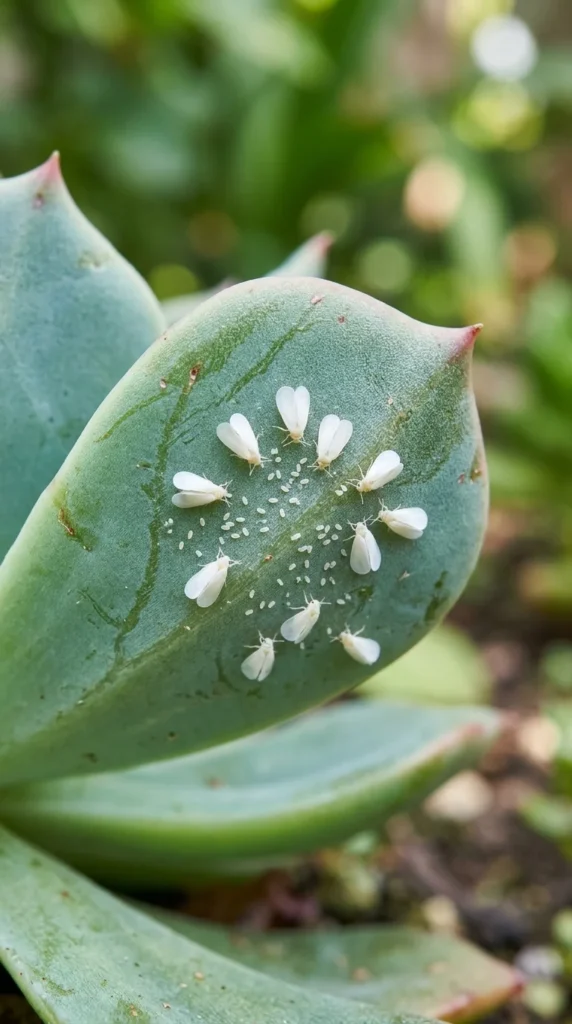
The Cause: Whiteflies are small winged insects that congregate on the undersides of leaves. They leave behind a powdery white wax and sticky honeydew.
The Solution: Use yellow sticky traps to catch adults and spray the undersides of leaves with neem oil to kill the larvae and eggs.
16. Aphid Exoskeletons
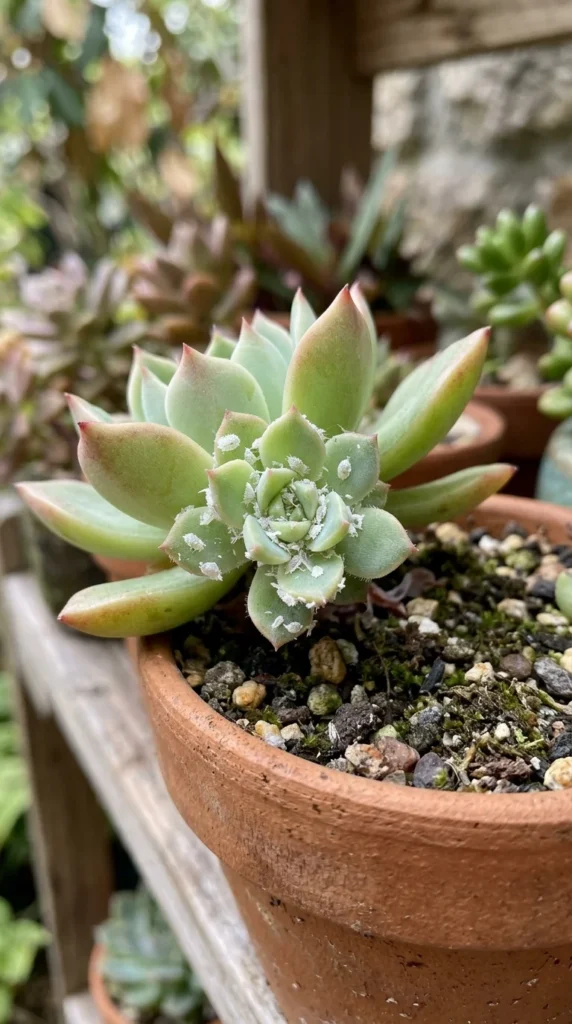
The Cause: As aphids grow, they shed their skins. These white, flaky exoskeletons can accumulate on the plant and look like a white powder or a dandruff-like substance.
The Solution: Check for live aphids (usually green or black). Wash the plant with water to remove the shed skins and treat for live aphids using insecticidal soap.
17. Sunburn Peeling
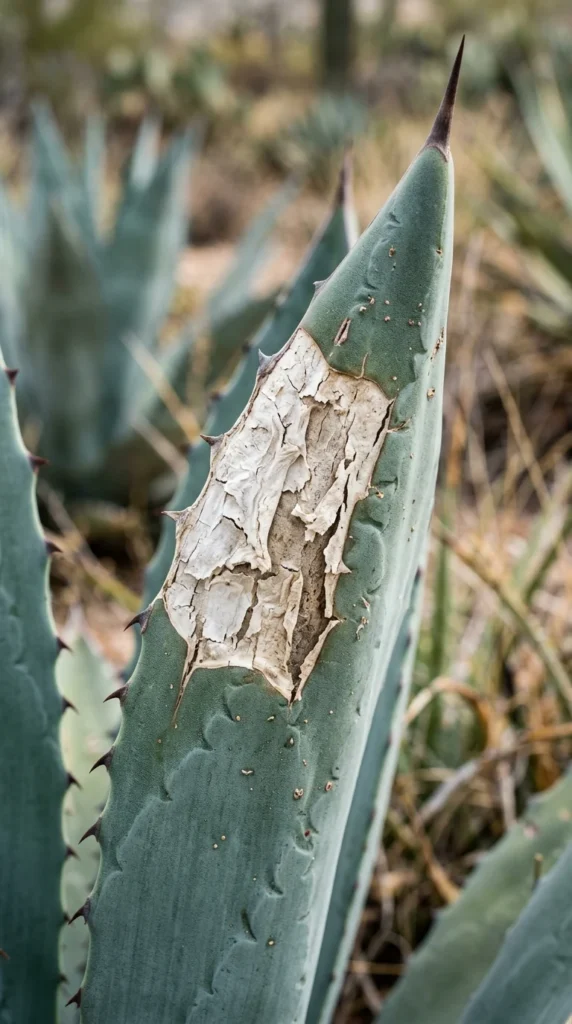
The Cause: Intense sun exposure can “bleach” or kill the top layer of succulent tissue. As the plant tries to heal, the dead skin may turn white and flaky.
The Solution: Move the plant to a spot with filtered light or use a shade cloth. Once the damage is done, it is permanent, but the plant can be salvaged if the core is healthy.
18. Woolly Aphids
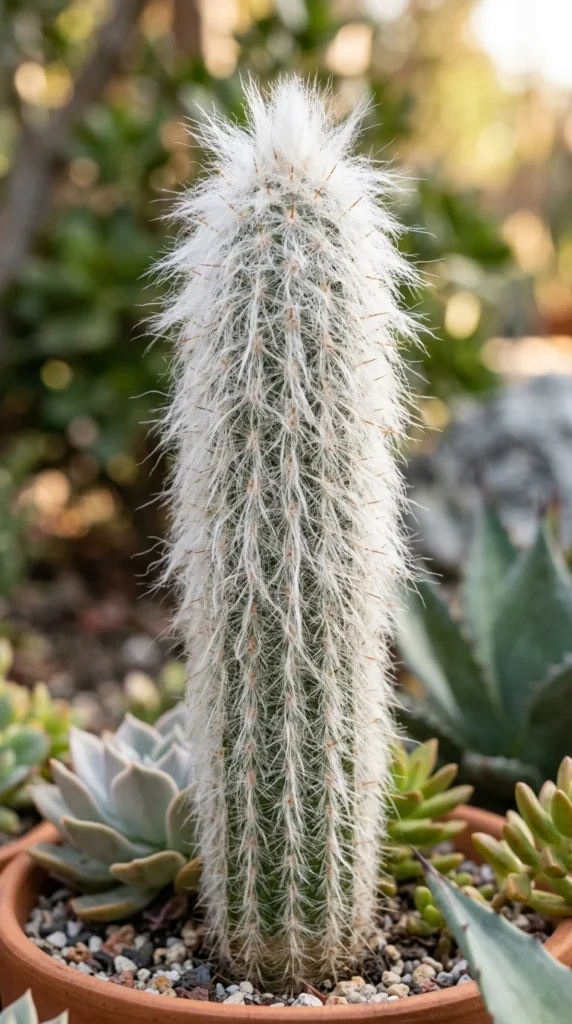
The Cause: These aphids produce long, white, waxy strands for protection. They look like tiny bits of cotton or wool stuck to the stems.
The Solution: Treat exactly like mealybugs: use isopropyl alcohol on a swab or an insecticidal spray. They are persistent, so multiple treatments may be necessary.
19. Diatomaceous Earth
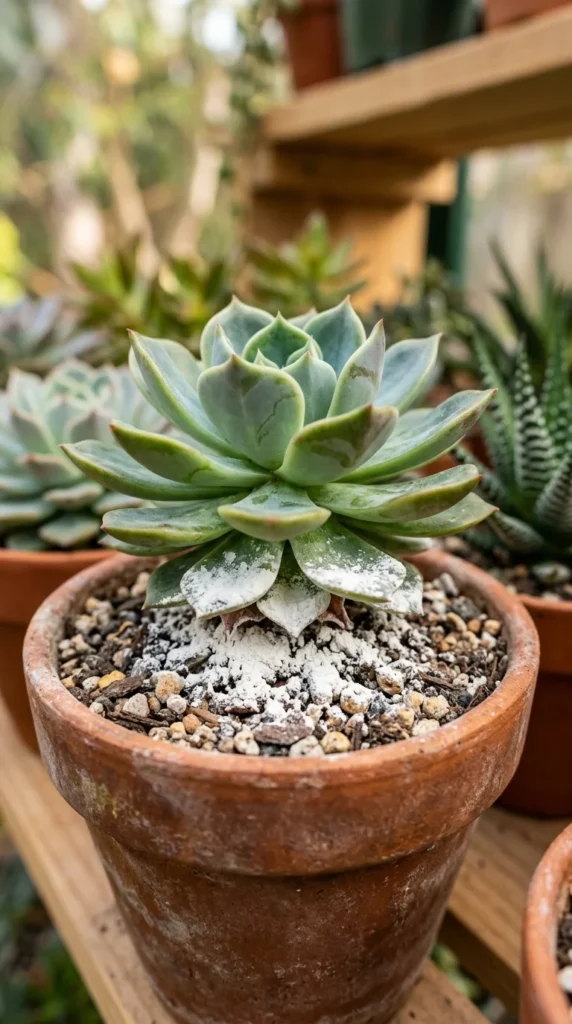
The Cause: If you have recently treated your plants for crawling insects, you may have used Diatomaceous Earth (DE). It is a white, powdery substance made of fossilized algae.
The Solution: DE only works when dry. If you no longer have a pest problem, you can simply wash it off with water.
20. Salt Excretion (Guttation)
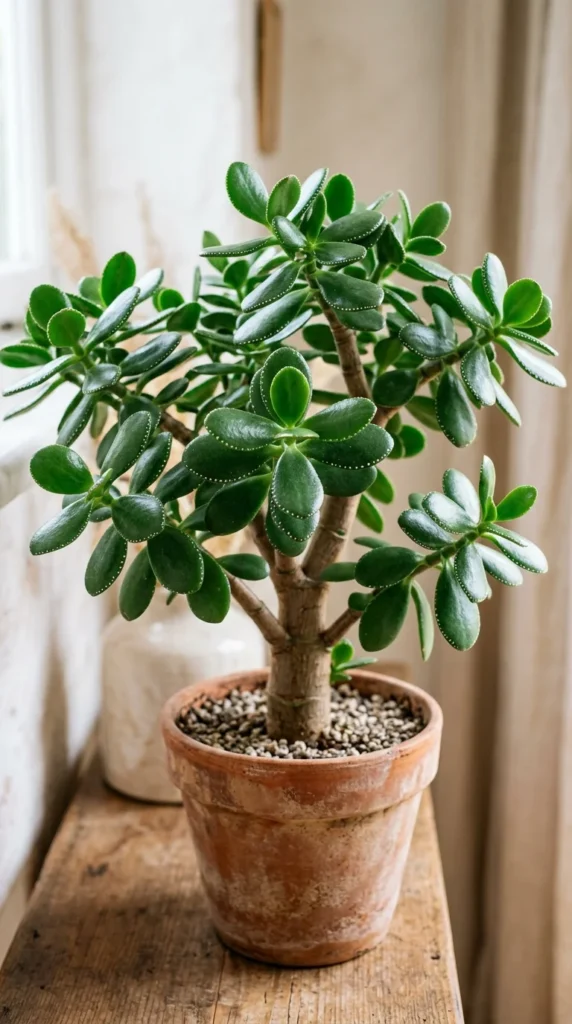
The Cause: Some succulents, particularly Jade plants, have specialized pores called hydathodes. They “sweat” out excess minerals and salts, which dry into tiny white dots.
The Solution: This is harmless. You can reduce the appearance by using filtered or distilled water, which contains fewer minerals for the plant to excrete.
21. Leaf Propagations Fuzz
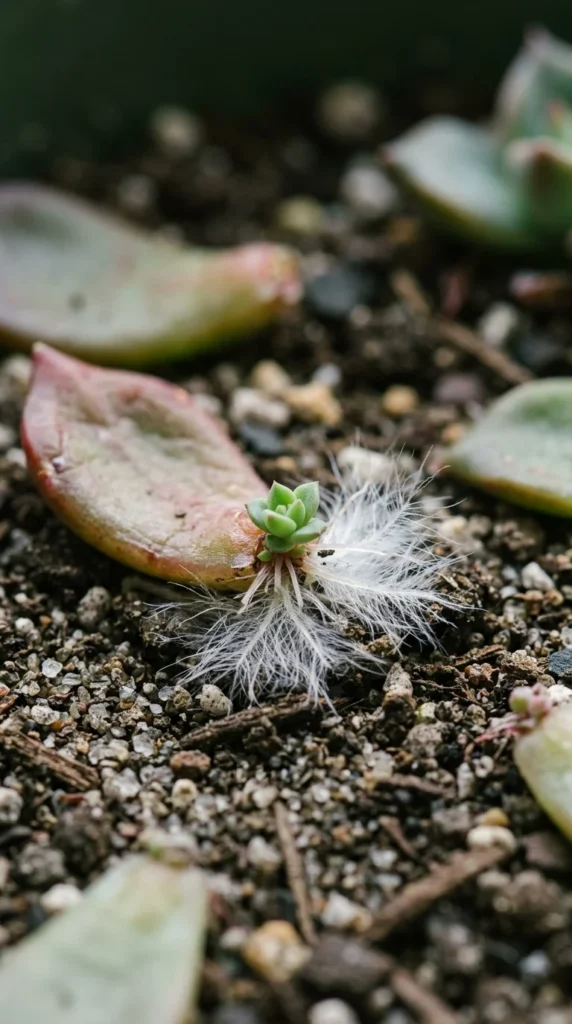
The Cause: Many succulent species develop fine white “hairs” or “fuzz” near the base of new growth or roots during leaf propagation to help absorb moisture from the air.
The Solution: Do nothing. This is a sign of a healthy, developing plant and is not a fungus or pest.
22. Cottony Cushion Scale
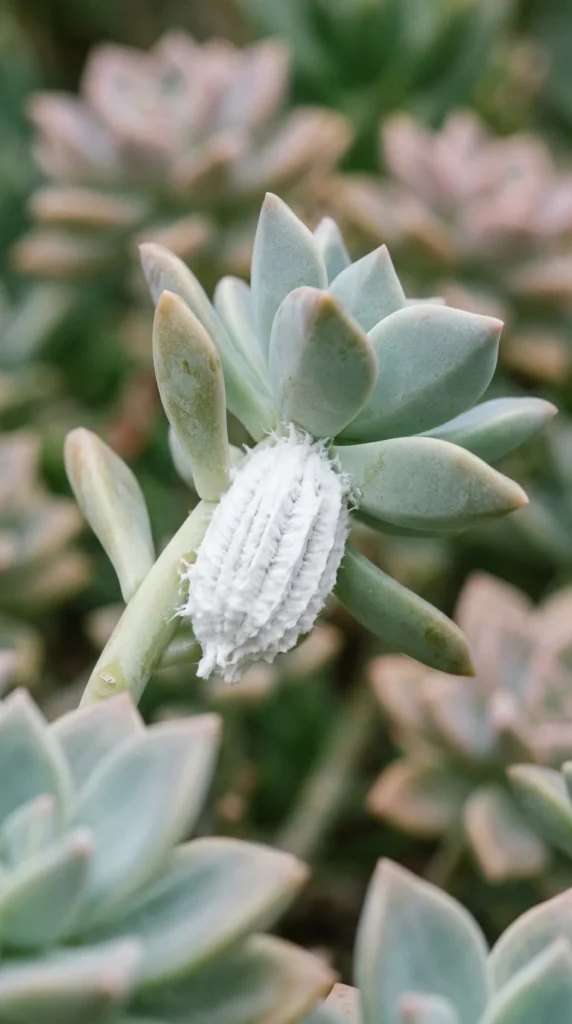
The Cause: This pest is easily identified by its large, white, fluted egg sac. It can severely weaken a plant by sucking large amounts of sap.
The Solution: Remove the sacs manually and apply horticultural oil or a systemic insecticide to kill the “crawlers” (immature scale).
23. Thrips Damage
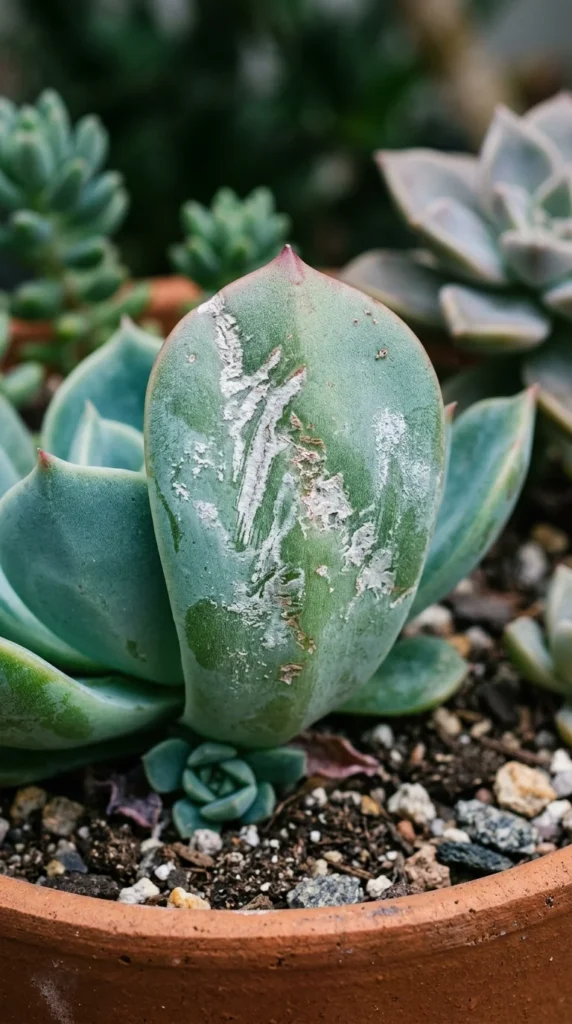
The Cause: Thrips are tiny, slender insects that rasp the surface of the leaf. This creates silvery or white scar tissue that can look like a light powder from a distance.
The Solution: Use blue sticky traps and spray the plant with Spinosad or neem oil. Remove heavily damaged leaves to prevent the spread.
24. Bird Droppings
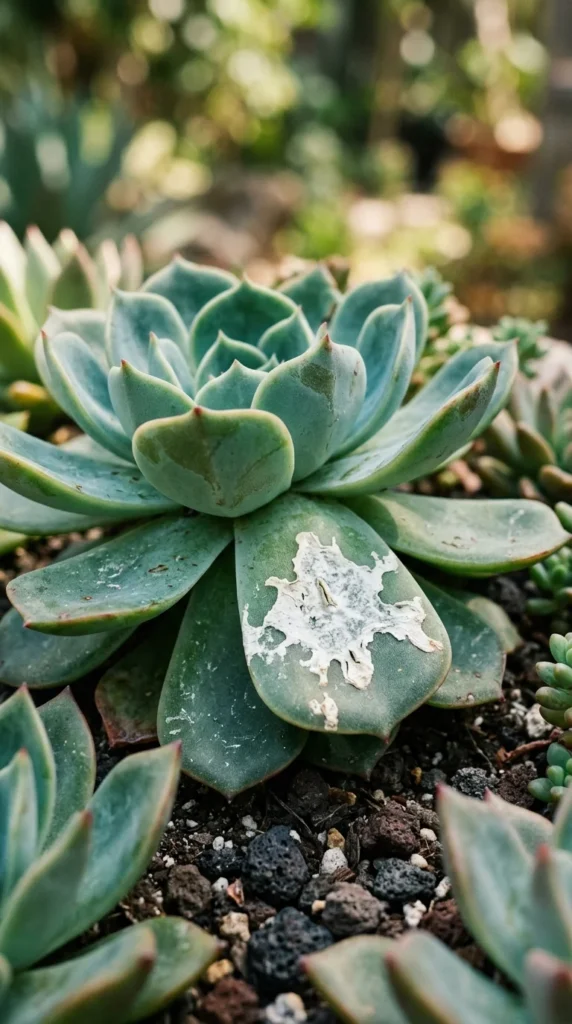
The Cause: For outdoor succulents, dried bird droppings can often be mistaken for fungal growth or scale.
The Solution: Simply wash it off with a spray of water. Unlike fungal infections, it will be isolated and won’t spread across the plant tissue.
25. Lacewing Eggs
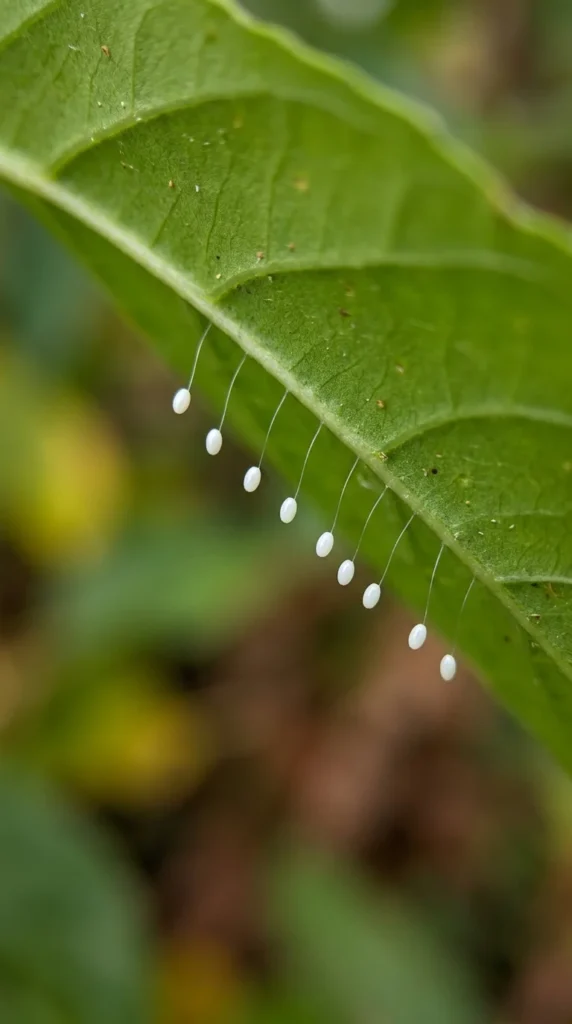
The Cause: Green Lacewings are “beneficial” insects because their larvae eat pests. They lay their eggs on long, thin, white silken stalks to protect them from predators.
The Solution: Leave them alone! These are the “good guys.” Once they hatch, they will help clean your succulents of mealybugs and aphids.
26. Construction or Drywall Dust
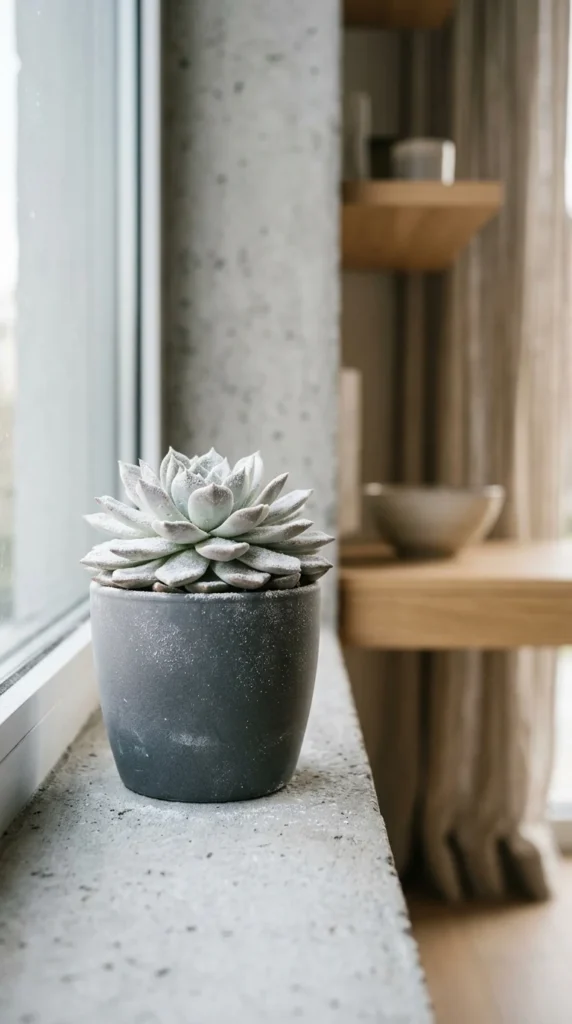
The Cause: If you’ve recently done home renovations, drywall dust is incredibly fine and can settle deep into the crevices of succulents.
The Solution: Use a vacuum with a soft brush attachment on low suction, or take the plant outdoors and use a bellows or “air puffer” to blow the dust out of the center of the rosette.