
Succulent enthusiasts often find themselves in a state of panic when they notice a mysterious white powder coating their beloved plants. This substance can range from a natural, protective barrier to a devastating pest infestation that can wipe out a collection in weeks. Understanding the nuance between a healthy plant and one in distress is the first step toward successful succulent care. Here are 17 insights into what white powder on succulents means and how to address it.
1. Epicuticular Wax
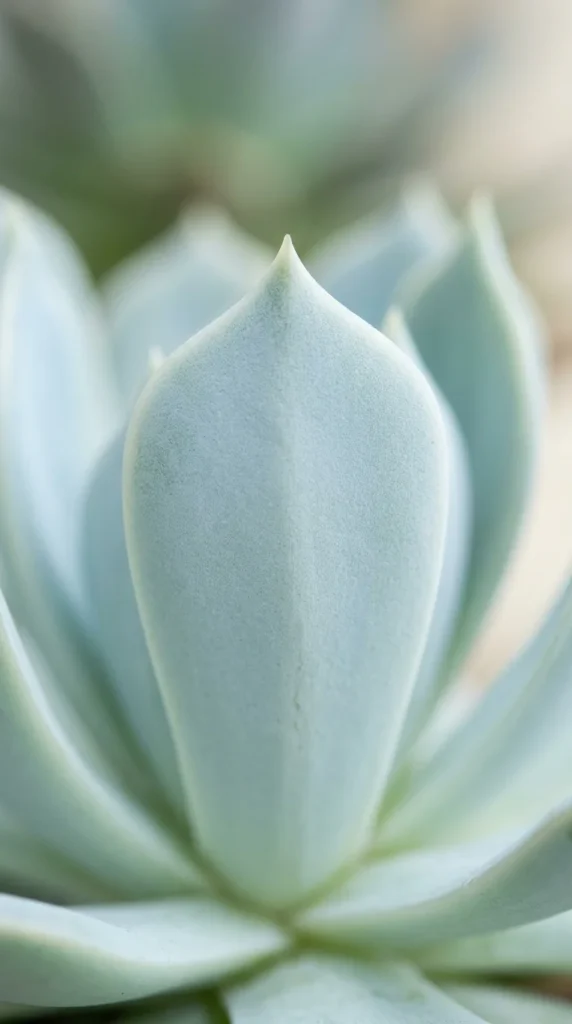
Commonly known as “farina,” epicuticular wax is a natural, powdery coating produced by many succulents, particularly those in the Echeveria, Graptopetalum, and Pachyphytum genera. This substance is entirely beneficial and serves as the plant’s internal defense mechanism. It creates a soft, matte finish that gives succulents their desirable pastel hues. If you touch the leaf and the powder rubs off, leaving a darker, shinier patch, you are looking at farina. Since the plant cannot easily regenerate this coating, the best “fix” is to avoid touching the leaves or using overhead watering, which can wash it away and leave the plant looking blotchy.
2. Mealybug Infestations
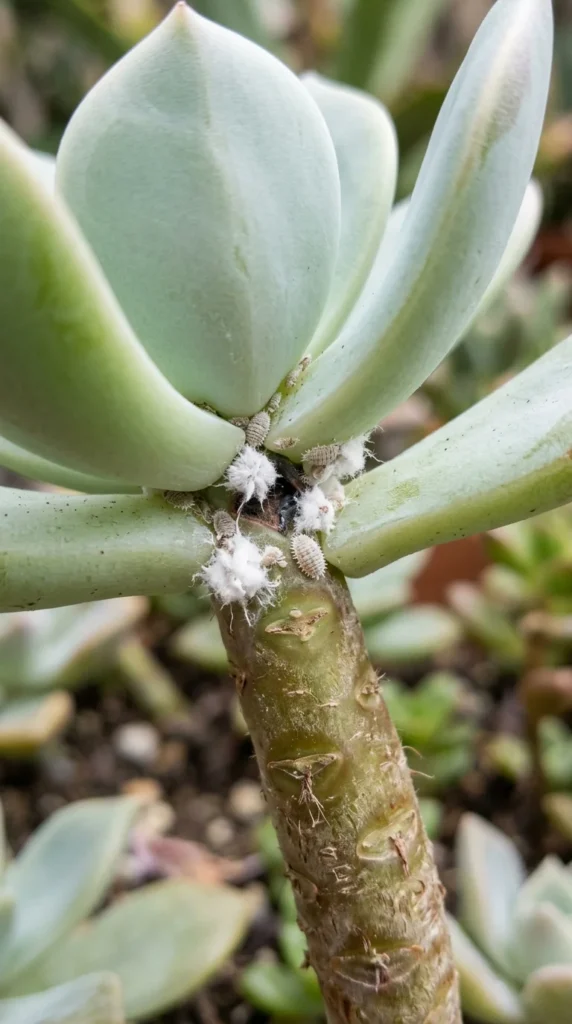
Mealybugs are perhaps the most common “bad” white powder. Unlike the uniform coating of farina, mealybug residue looks like tiny bits of cotton or spiderwebs tucked into the leaf axils and crevices of the plant. These are sap-sucking insects that can weaken the plant, cause leaf drop, and eventually lead to death. To fix this, isolate the plant immediately. Use a cotton swab dipped in 70% isopropyl alcohol to dab the white clumps directly, which kills the insects on contact. For larger infestations, a spray bottle with a mixture of water and alcohol may be necessary.
3. Powdery Mildew
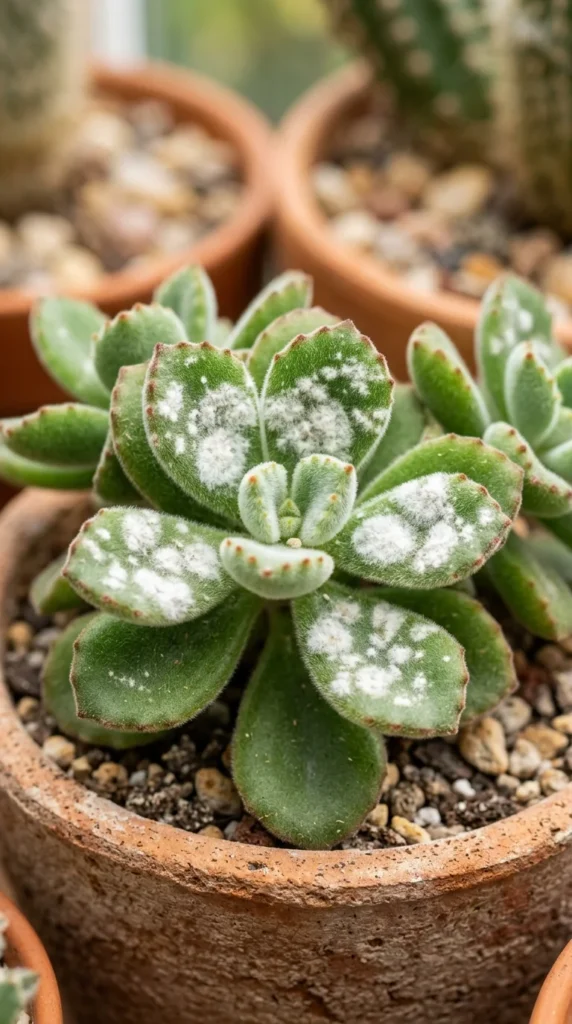
Powdery mildew is a fungal infection that appears as splotchy, circular patches of white or light gray powder. Unlike farina, which is smooth, powdery mildew looks distinctly fuzzy or dusty and often appears on both the top and bottom of the leaves. It thrives in humid environments with poor air circulation. To fix it, improve the airflow around your plants using a fan and reduce humidity. You can treat the affected leaves with a fungicide or a DIY mixture of one tablespoon of baking soda and a half-teaspoon of liquid soap in a gallon of water.
4. Hard Water
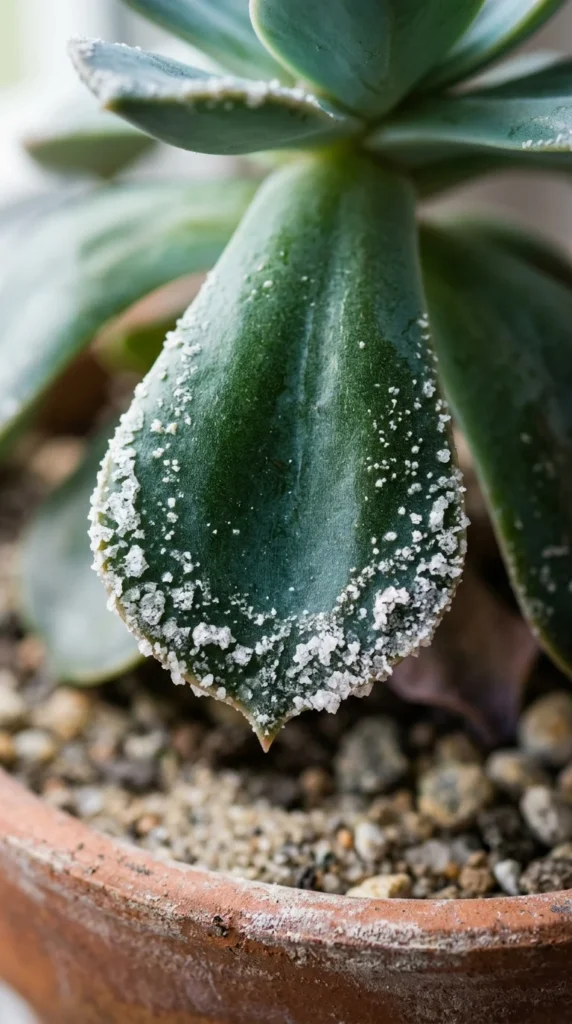
If you live in an area with hard water, the “white powder” might actually be mineral deposits. When you water your plants or mist them, the water evaporates, leaving behind calcium and magnesium salts. These usually appear as white spots or rings on the foliage. While not inherently harmful to the plant’s health, it can be aesthetically unpleasing and may eventually clog the leaf pores (stomata). To fix this, switch to distilled water, rainwater, or a filtered water source. You can gently wipe away existing deposits with a damp microfiber cloth, though be careful not to rub off the natural farina.
5. Spider Mites
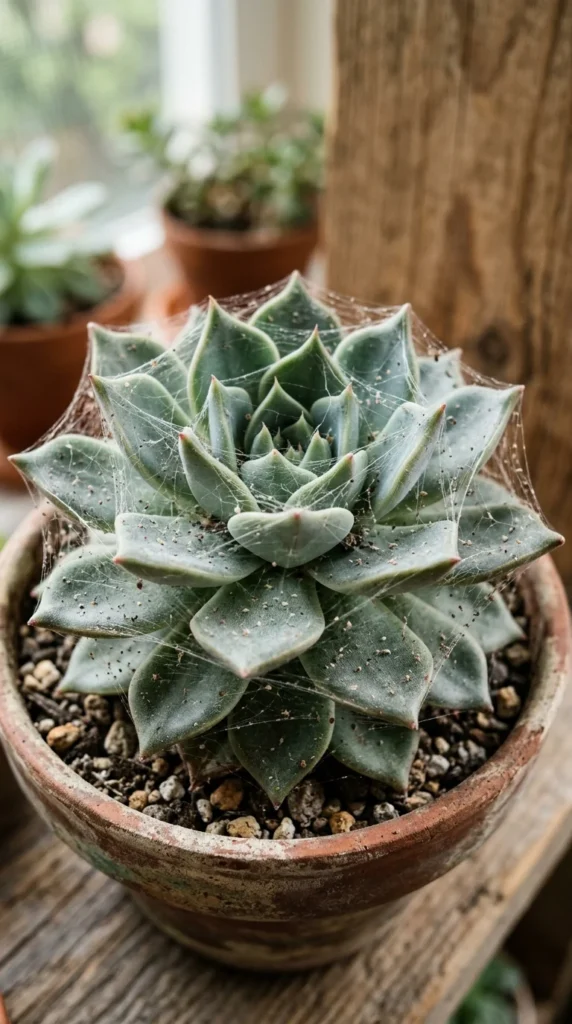
Spider mites are microscopic pests that manifest as a fine, white, web-like powder on the undersides of leaves or near the crown of the plant. You might also notice tiny yellow or brown stippling (dots) on the leaves where the mites have fed. Because they are so small, the webbing is often the first visible sign. To fix a spider mite problem, wash the plant under a firm stream of water to dislodge the mites, then apply neem oil or an insecticidal soap consistently for several weeks to break the life cycle.
6. Whitefly Residue
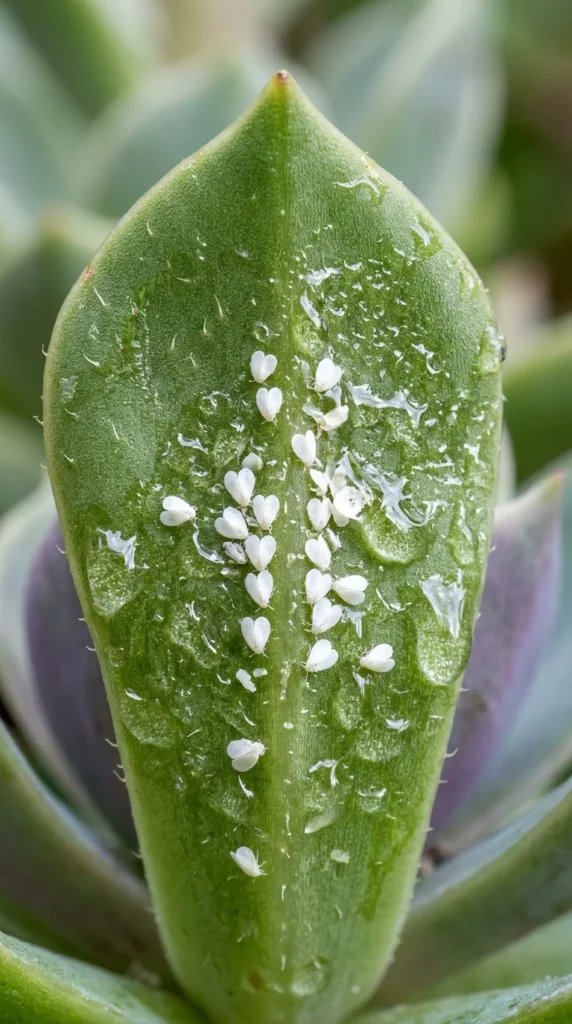
Whiteflies are tiny, moth-like insects that congregate on the undersides of leaves. They produce a sticky substance called honeydew, which can eventually attract white, waxy secretions or even black sooty mold. If you shake the plant and a “cloud” of white dust flies up, you have whiteflies. To fix this, use yellow sticky traps to catch the adults and apply neem oil to the leaves to kill the larvae. Keeping the plant in a breezy location can also prevent these pests from settling.
7. Cottony Scale
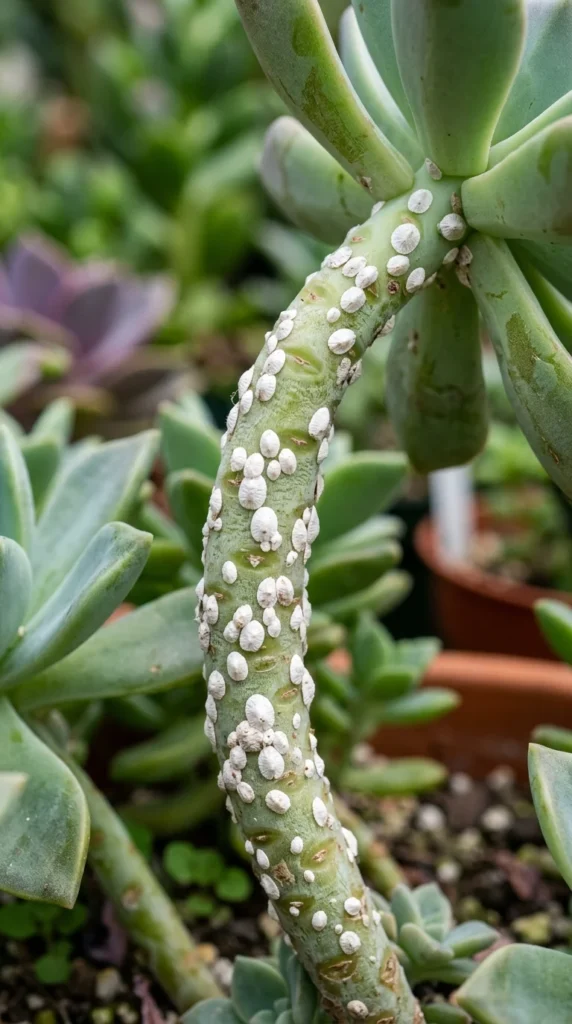
Scale insects are related to mealybugs but have a hard or waxy shell. “Cottony” scale species produce a white, fluffy egg sac that can be mistaken for mealybug residue or fungus. These pests attach themselves to the stems and leaves, sucking the plant’s juices. Because of their protective shells, they are harder to kill than mealybugs. To fix this, scrape the scales off manually with a fingernail or a soft brush, and treat the area with horticultural oil to suffocate any remaining nymphs.
8. Diatomaceous Earth
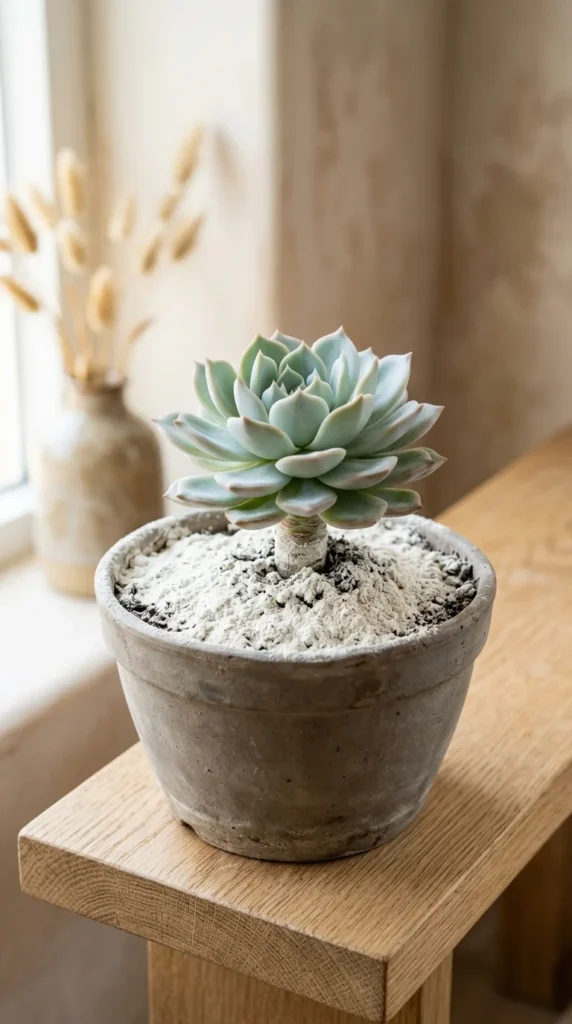
Sometimes the white powder is something you put there yourself! Diatomaceous earth (DE) is a popular organic pest control powder made from fossilized algae. It is highly effective against crawling insects. However, if it gets on the leaves of the plant, it looks like a thick, white dust. While it isn’t harmful to the plant, it can look messy. To fix it, simply blow the excess off with a can of compressed air or use a soft makeup brush to tidy up the plant’s appearance once the pest issue is resolved.
9. Root Rot
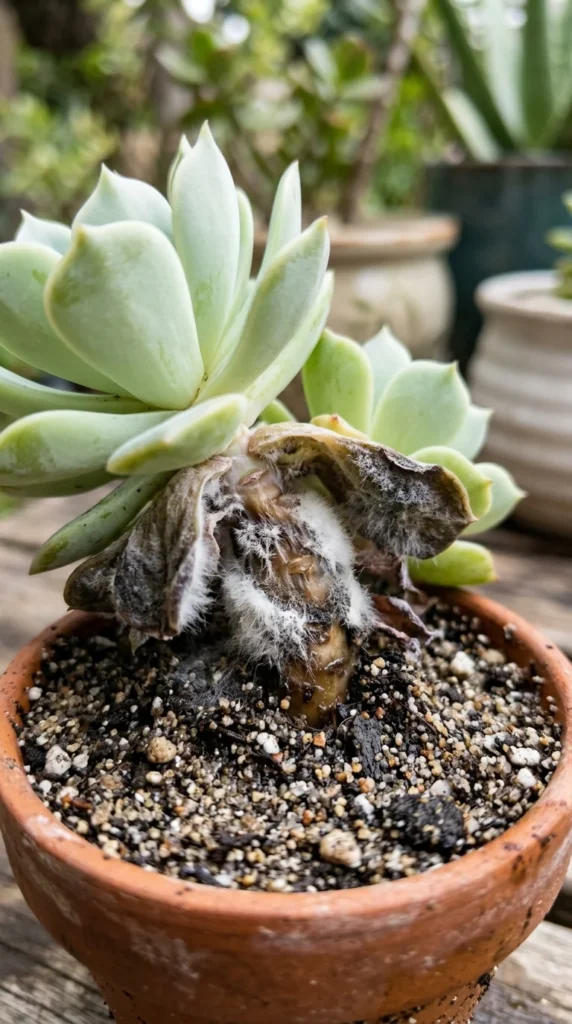
White powder or fuzz appearing at the very base of the plant, where the stem meets the soil, is a major red flag for root rot caused by overwatering. This is often a fungal growth resulting from decaying plant tissue. If the stem feels mushy or the leaves are turning translucent and falling off, the rot has set in. To fix this, you must act fast: remove the plant from the soil, cut away any black or mushy roots and stems with a sterile knife, let the healthy part callow over for a few days, and then replant in fresh, dry, well-draining cactus soil.
10. Beneficial Mycelium
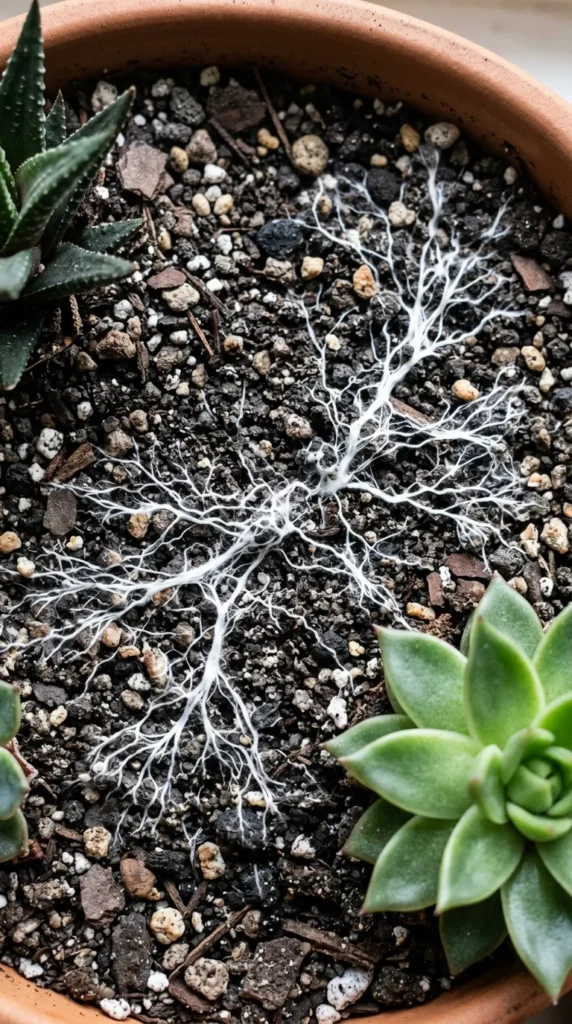
Not all white growth in the soil is bad. Sometimes, you may see a white, powdery or web-like substance on the surface of the potting mix. This is often saprophytic fungus or mycelium. It usually means the soil is rich in organic matter and is staying moist. While it doesn’t harm the succulent directly, it is a sign that your soil might be holding too much moisture for a desert plant. To fix this, scrape off the top layer of mold, increase sunlight, and extend the time between waterings to let the soil dry out completely.
11. Household Dust
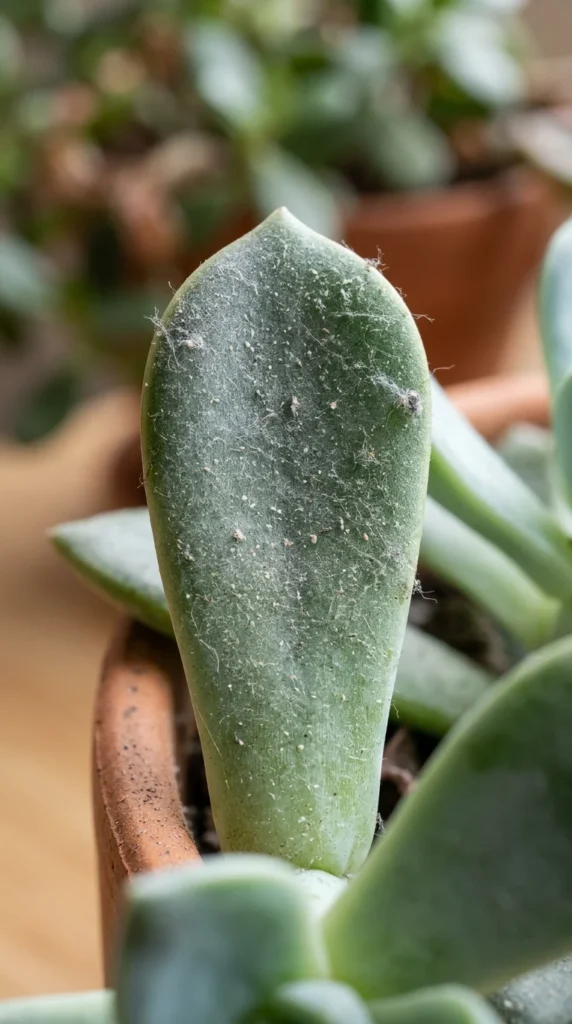
It sounds simple, but many indoor succulents simply accumulate household dust. Because succulent leaves are often thick and static-prone, they act as magnets for lint, pet hair, and dust particles. This can block sunlight and reduce the plant’s ability to photosynthesize. To fix this, use a soft, dry paintbrush or a specialized succulent blower to gently clean the leaves. Avoid using wet cloths if the plant has a thick layer of farina, as this will smear the wax and ruin the look of the plant.
12. Salt Buildup
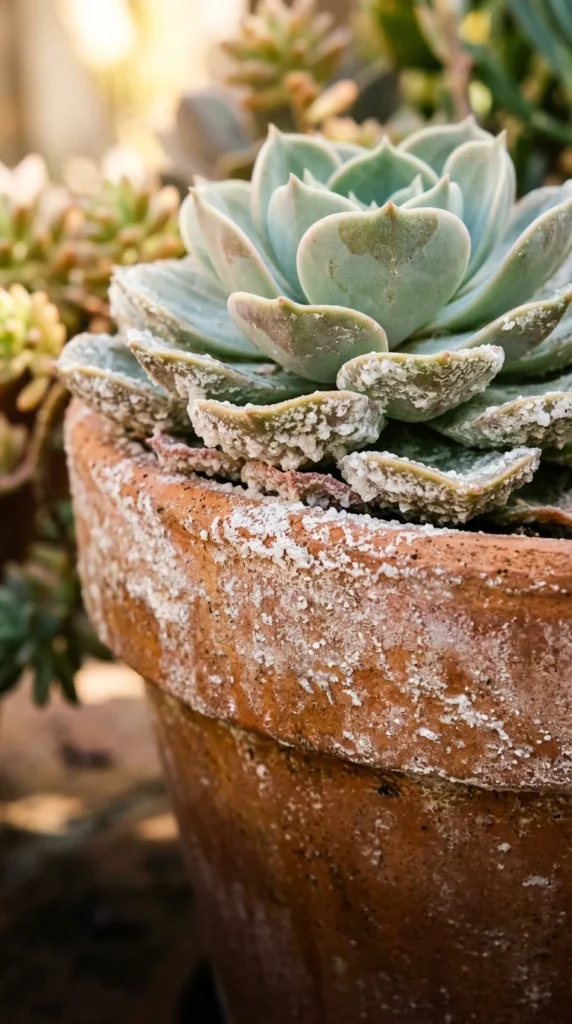
Succulents grown in terracotta pots often show a white, powdery crust on the outside of the pot or on the soil surface. This is “efflorescence,” caused by salts and minerals from water and fertilizer leaching through the porous clay. While it’s mostly a cosmetic issue on the pot, salt buildup on the soil can eventually burn the succulent’s roots. To fix this, flush the soil with plenty of distilled water until it runs clear out of the drainage holes, and wipe the exterior of the pot with a vinegar-water solution.
13. Chemical Residue
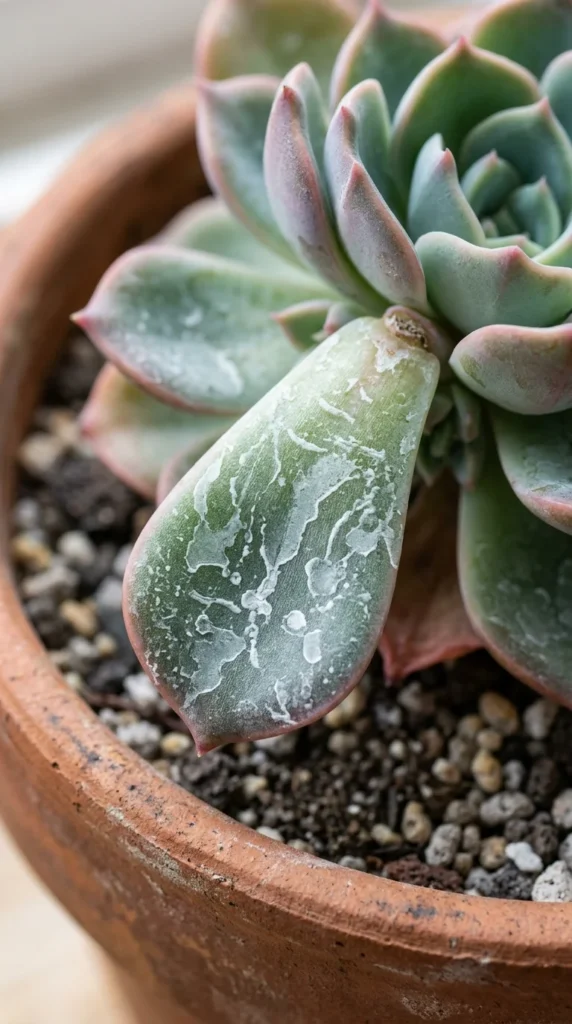
If you have recently purchased a succulent from a big-box nursery, you might notice white, splotchy residue. This is often dried pesticide, fungicide, or leaf shiner used by commercial growers. It usually looks like dried water spots but is more opaque. To fix this, you can try to gently wash it off with a very mild soap solution and a soft brush, but often it is best to simply wait for the plant to grow new, clean leaves and naturally shed the older, treated ones.
14. Edema Scarring
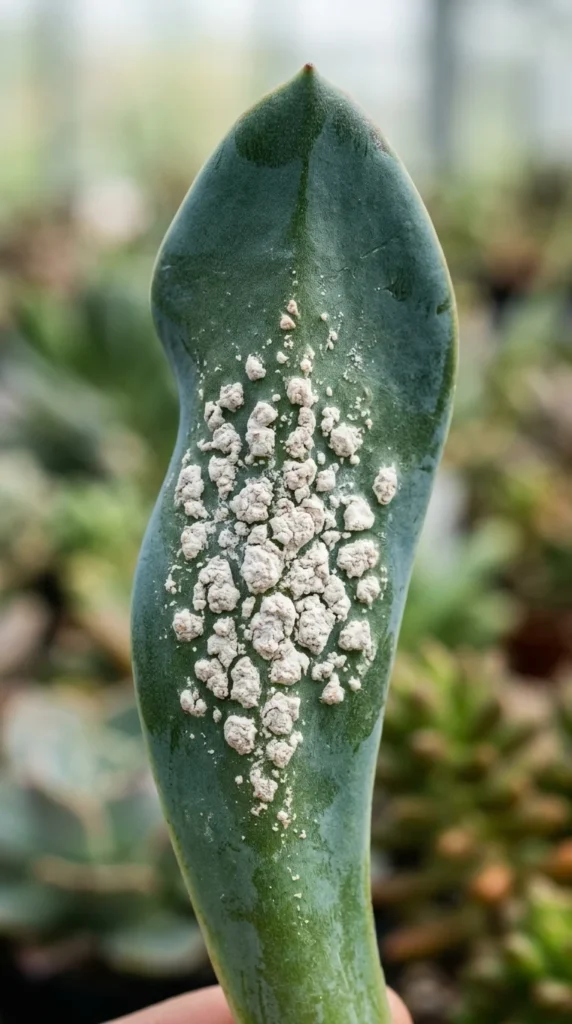
Edema occurs when a succulent takes up more water than it can use or get rid of through transpiration. This causes the internal cells to burst. As the plant heals, it forms “scars” that can look like white or tan powdery bumps on the underside of the leaves. This is not a pest or a disease, but a physiological condition. To fix it, regulate your watering schedule and ensure the plant is not sitting in soggy soil. The scars are permanent, so prevention is the only real cure.
15. Thrip Damage
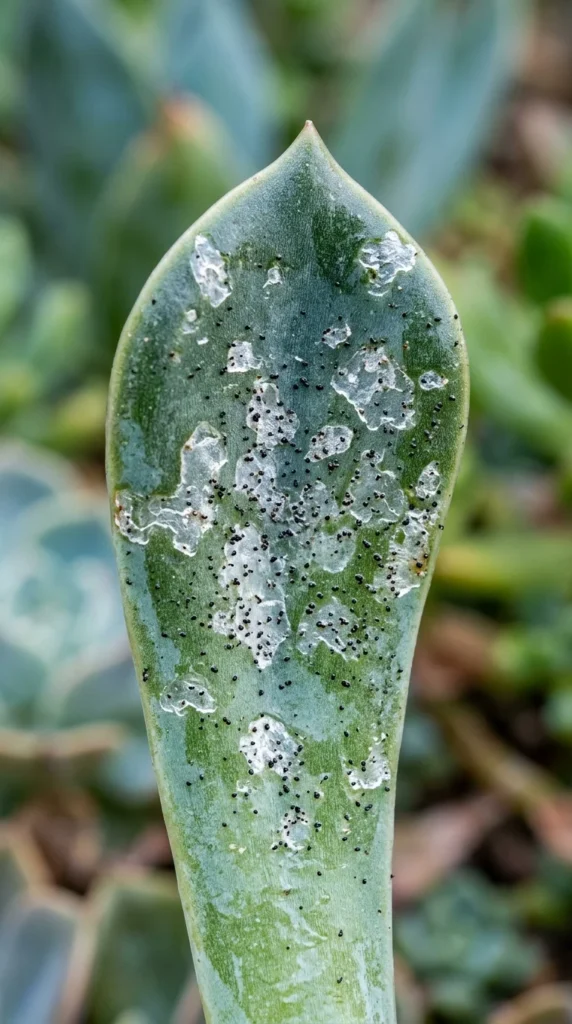
Thrips are tiny, slender insects that rasp at the surface of succulent leaves to drink the sap. The damaged areas often turn a silvery-white color that can look like a dry powder from a distance. You will also see “frass,” which are tiny black specks of excrement, in the damaged areas. To fix this, use systemic granules in the soil or spray the plant with Spinosad-based products, as thrips can be very resilient to standard contact sprays.
16. UV Protection
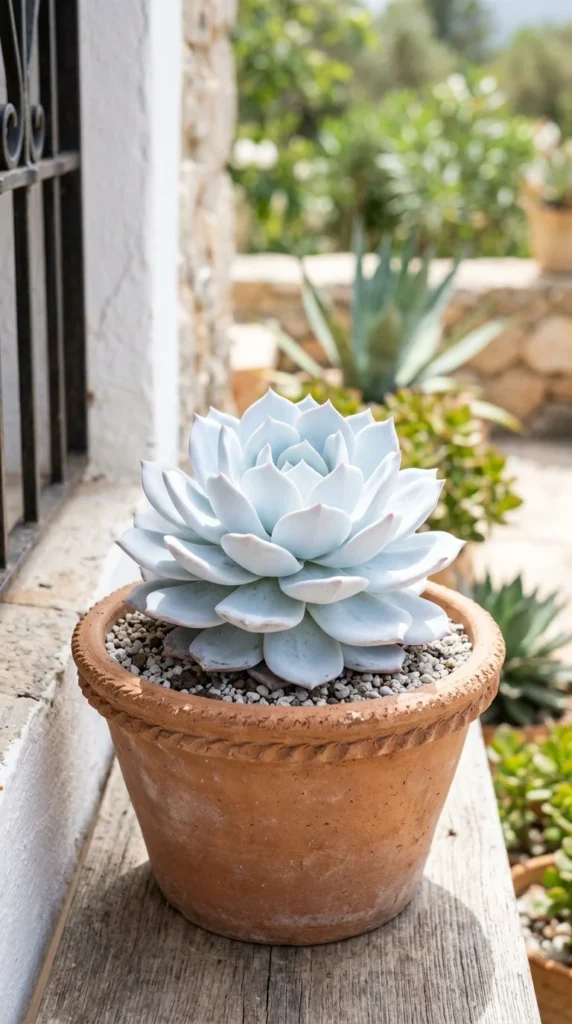
One of the primary “meanings” of the white powder (farina) is UV protection. In their natural habitats, succulents are exposed to intense, direct sunlight that would scorch most plants. The white powder acts as a built-in sunscreen, reflecting harmful UV rays and preventing the leaves from burning. If your plant is losing its white powder, it may become more susceptible to sun damage. To fix this, ensure you are not accidentally removing the farina and provide a shade cloth if the plant must be moved from a dark area to a very bright one.
17. Water Repellency
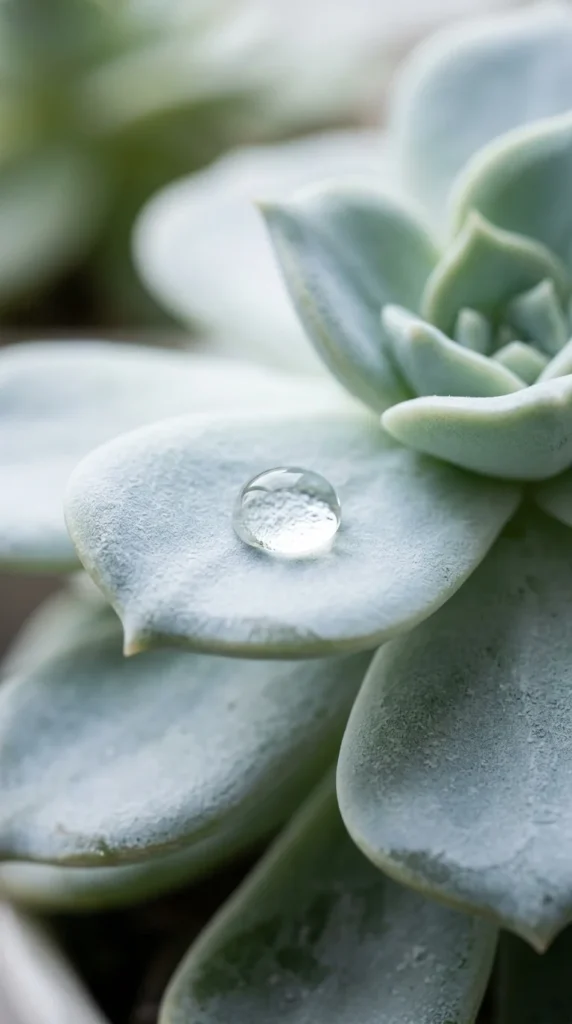
The white powder on succulents is hydrophobic, meaning it repels water. This is an evolutionary trait that prevents water from sitting on the leaves for too long, which could otherwise lead to fungal infections or rot in the wild. When you see water beading up and rolling off a powdery succulent, it means the plant’s natural defenses are working perfectly. To maintain this, always water at the base of the plant into the soil rather than over the foliage, ensuring the protective white barrier remains intact and functional.