
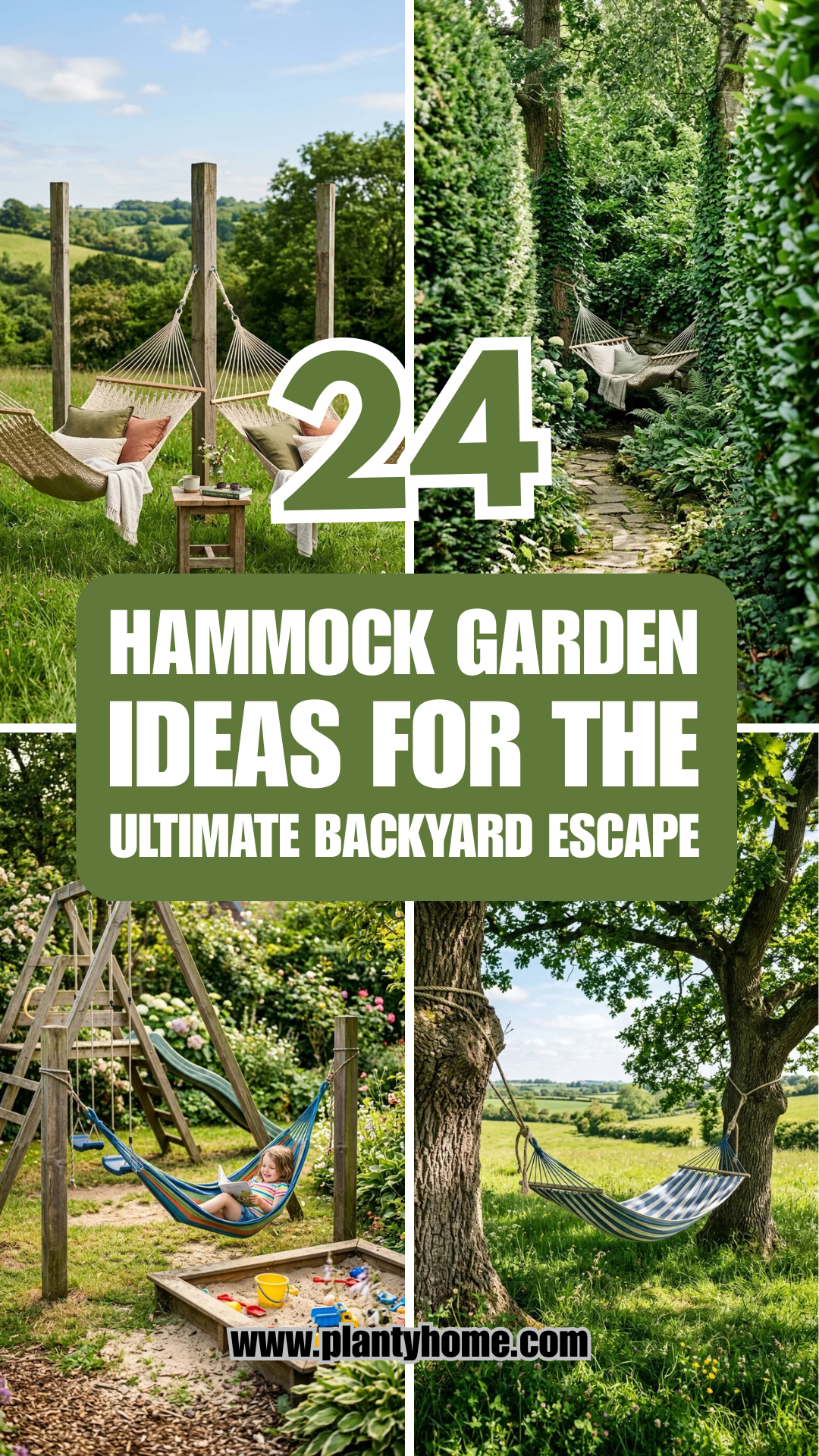
Creating a sanctuary in your own backyard has never been more achievable than with the addition of a hammock. Far more than just a piece of outdoor furniture, a hammock is a symbol of relaxation, a dedicated space for mindfulness, and a versatile design element that can transform even the smallest patch of grass into a luxury retreat. Whether you have a sprawling estate with century-old oaks or a compact urban balcony, there is a hammock configuration that can elevate your outdoor living experience.
In this guide, we explore 24 diverse hammock garden ideas that prioritize comfort, aesthetics, and functionality. From rustic setups to modern architectural marvels, these ideas will inspire you to reclaim your outdoor space and create the ultimate escape.
1. Classic Trees
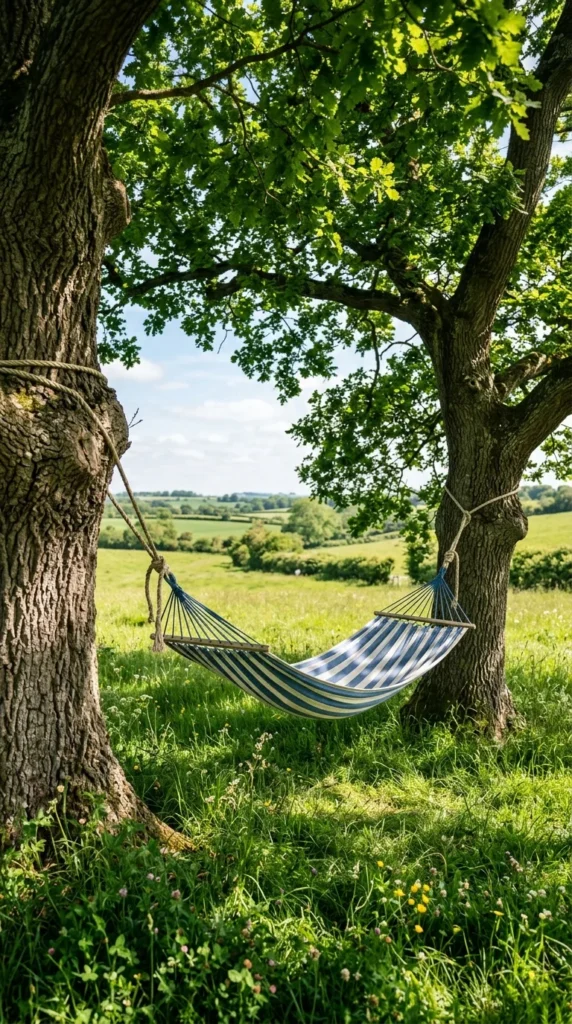
The quintessential hammock experience involves two sturdy, mature trees. This natural setup requires minimal hardware—usually just a pair of high-quality tree straps to protect the bark. The canopy of the trees provides natural shade, making it the perfect spot for a mid-afternoon nap. When choosing trees, ensure they are healthy and at least 12 to 15 feet apart to allow for the ideal “banana” curve in the hammock.
2. Pergola Paradise
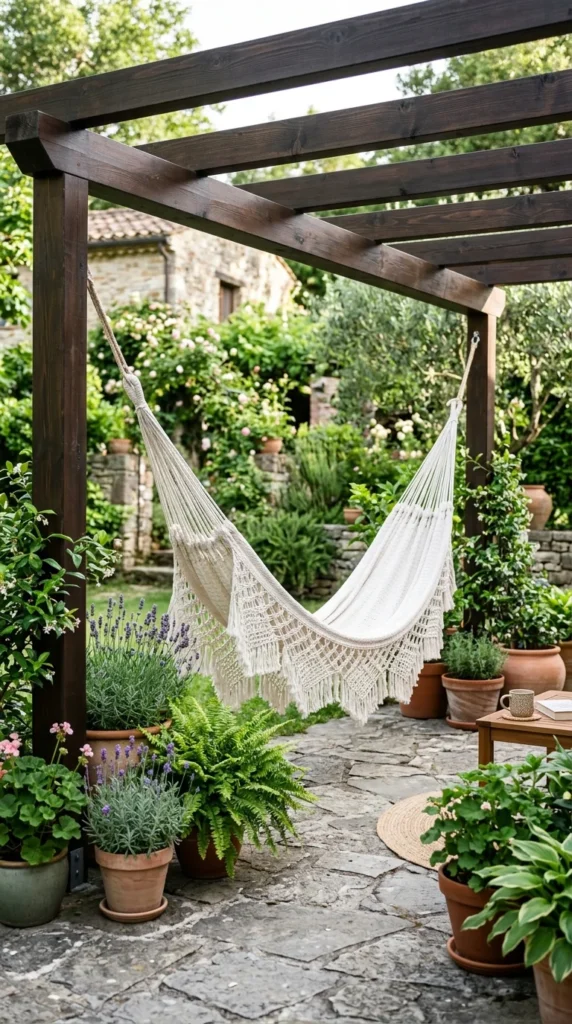
If your garden lacks mature trees, a pergola is an excellent architectural alternative. By anchoring the hammock to the heavy-duty posts of a pergola, you create a structured, permanent relaxation zone. This setup works beautifully on patios or decks, allowing you to integrate the hammock into your existing outdoor dining or lounge area.
3. Poolside Lounge
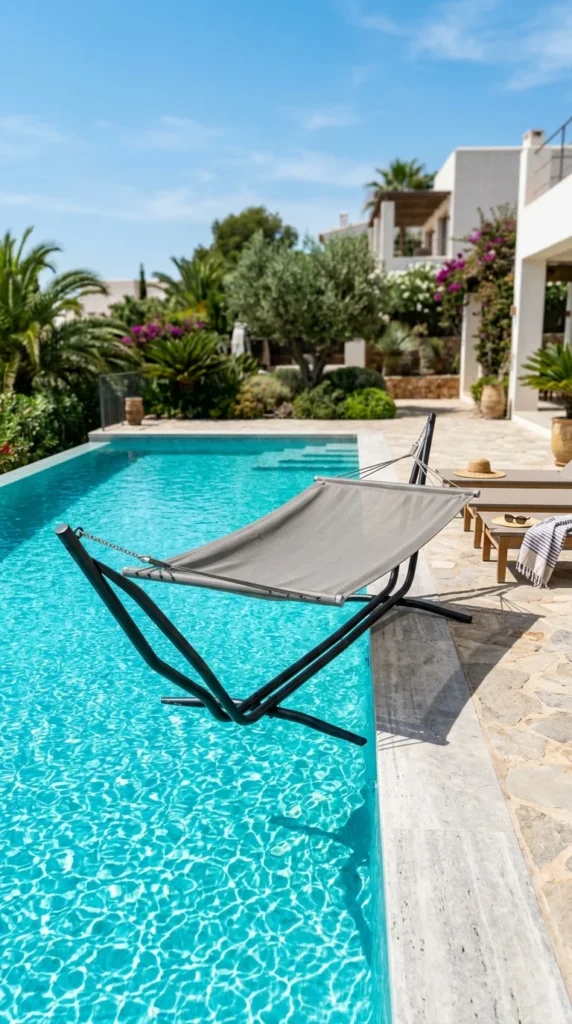
Nothing says “vacation at home” like a hammock by the pool. To make this work, use quick-drying synthetic materials that won’t mildew when exposed to splashes. A freestanding metal or wooden frame is often best here, as it allows you to move the hammock to follow the sun or the shade throughout the day.
4. Urban Balcony
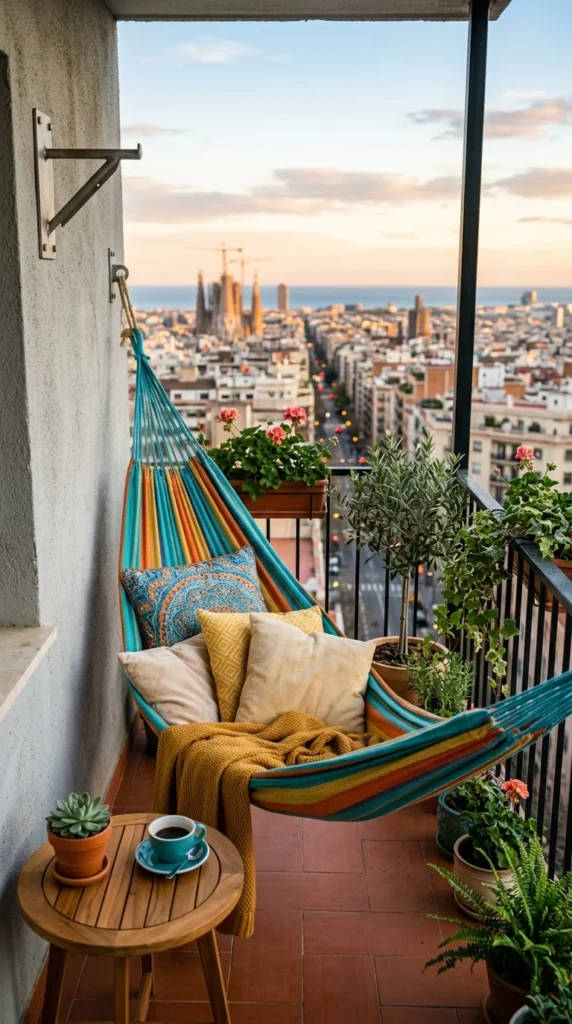
You don’t need a massive yard to enjoy a hammock. For urban dwellers, a balcony hammock can be a game-changer. By using heavy-duty masonry bolts (if permitted) or a compact C-stand, you can create a sky-high sanctuary. Opt for bright, woven patterns to add a pop of color to a concrete environment.
5. Fire Pit Circle
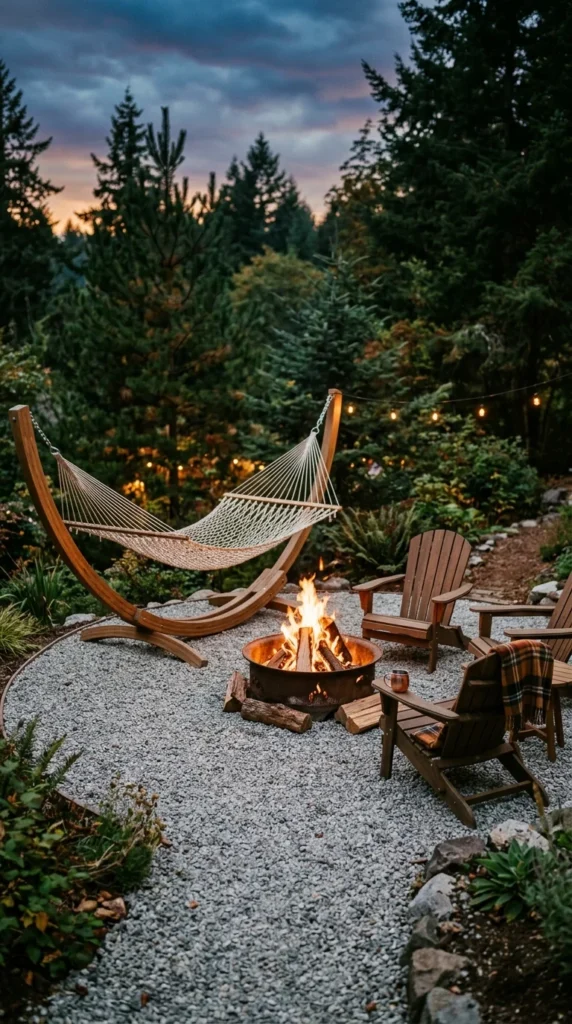
Integrating a hammock near a fire pit creates a cozy, communal atmosphere. Position the hammock far enough away to avoid sparks but close enough to enjoy the warmth and the crackle of the wood. This setup extends the usability of your hammock garden into the cooler autumn months.
6. Tropical Jungle
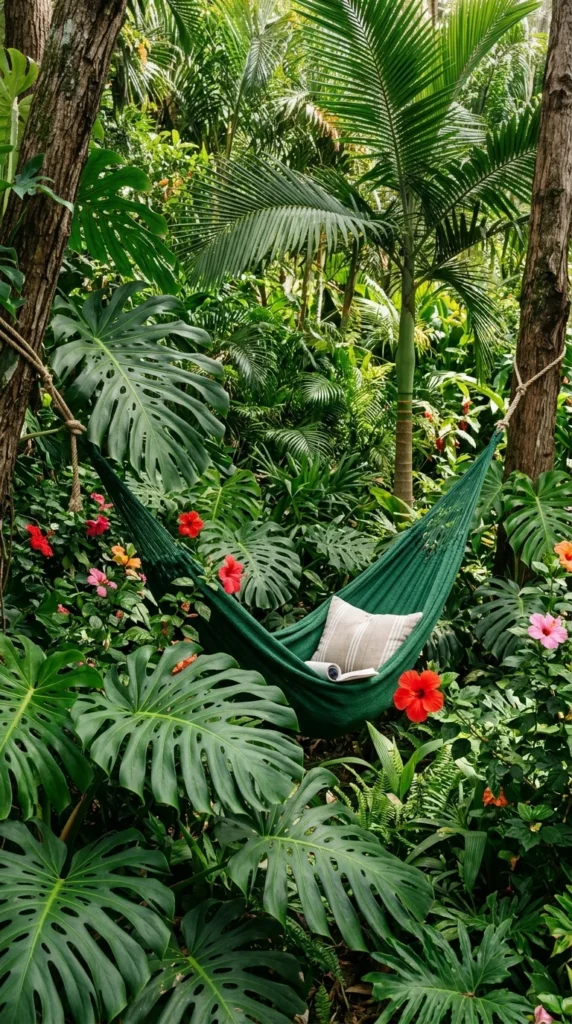
Embrace the “junglecore” aesthetic by surrounding your hammock with lush, oversized tropical plants. Use varieties like hostas, ferns, and palms to create a living screen. This high-density planting provides maximum privacy and makes you feel like you’ve been transported to a remote rainforest.
7. Bohemian Macramé
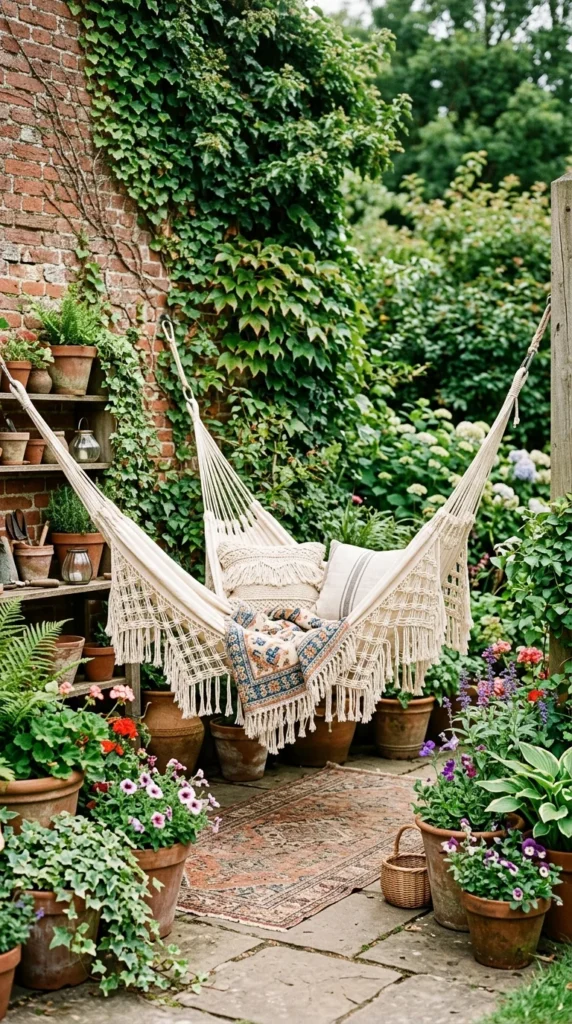
For those who love the “Boho-Chic” look, a macramé hammock with intricate knots and flowing fringe is a must. Pair this with textured outdoor rugs, floor pillows, and a few lanterns to create a dreamlike, Pinterest-worthy corner that is as beautiful to look at as it is to sit in.
8. Floating Deck
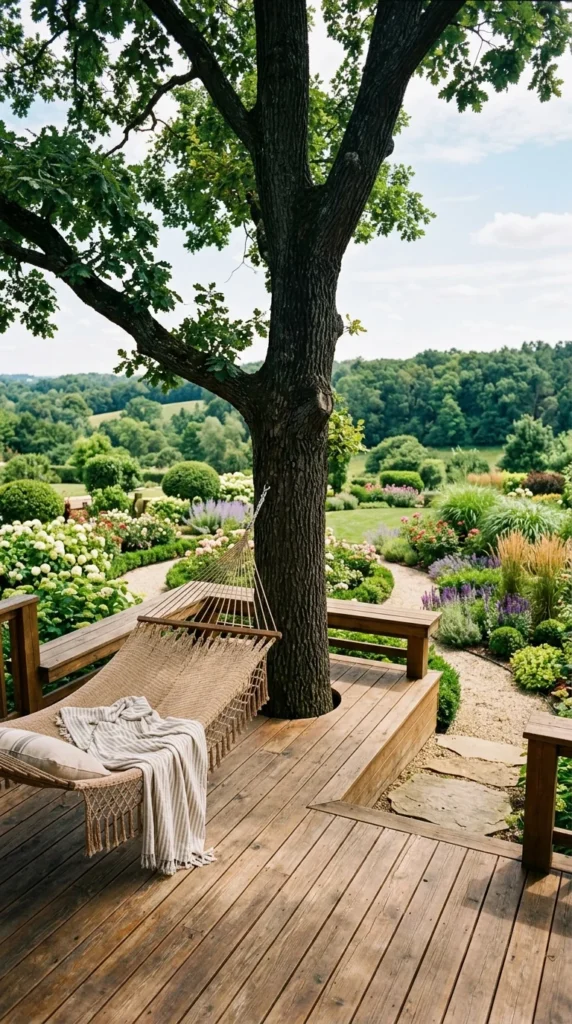
Building a low-profile “island” deck specifically for your hammock can define the space and keep your feet off the grass. This is particularly useful in areas with uneven ground. The wooden platform provides a clean, level surface for side tables and shoes.
9. Children’s Play Zone
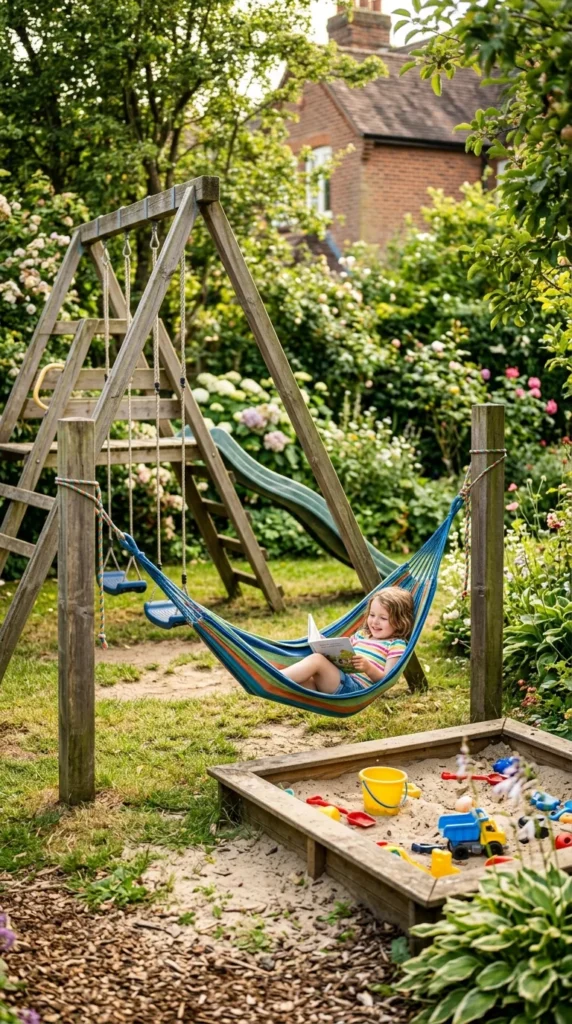
Hammocks aren’t just for adults. A low-slung, durable nylon hammock can serve as a reading nook or a “cocoon” for kids. Ensure it is hung very close to a soft surface, like mulch or grass, to prioritize safety while giving children a unique place to play and rest.
10. Secret Garden
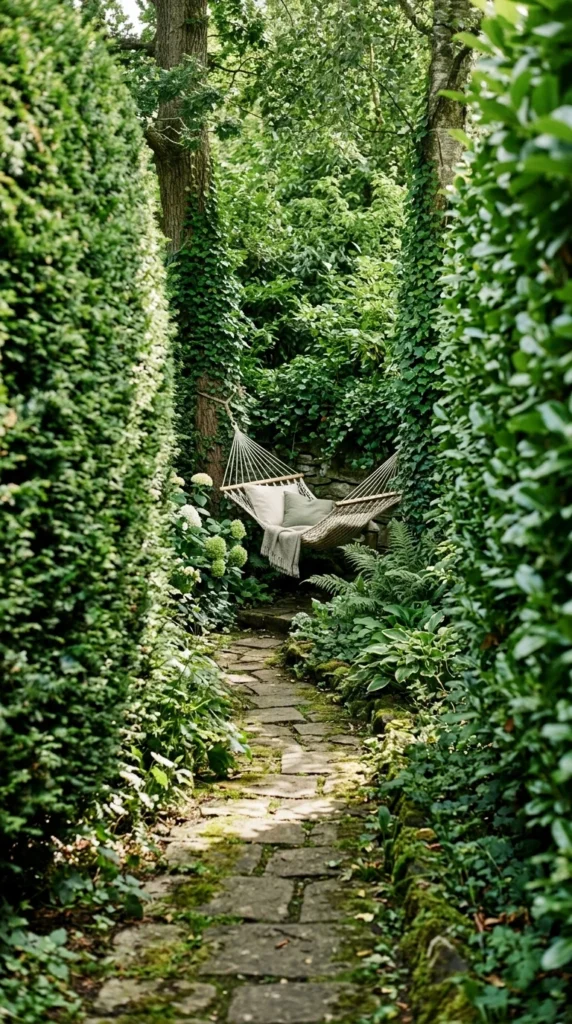
Use tall hedges, trellises, or climbing roses to wall off a small section of your yard. Placing a hammock in this “secret” spot creates a true escape from the world, perfect for meditation or deep focus.
11. Modern Minimalist
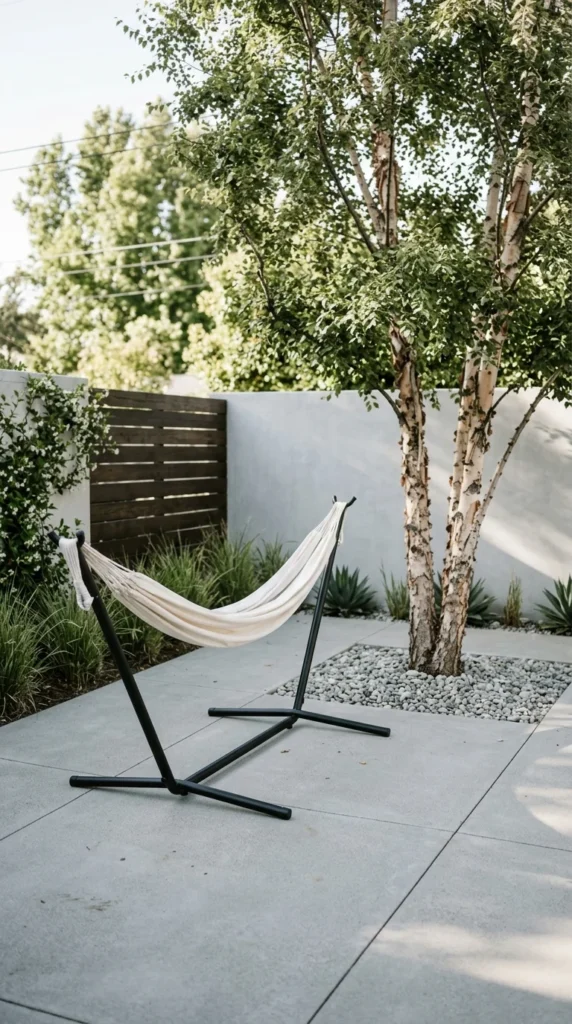
If your home features modern architecture, keep your hammock garden simple. Use a monochromatic color palette—black, white, or charcoal—and a stand with clean, geometric lines. This approach treats the hammock as a piece of functional sculpture.
12. Dual Hammock Social Area
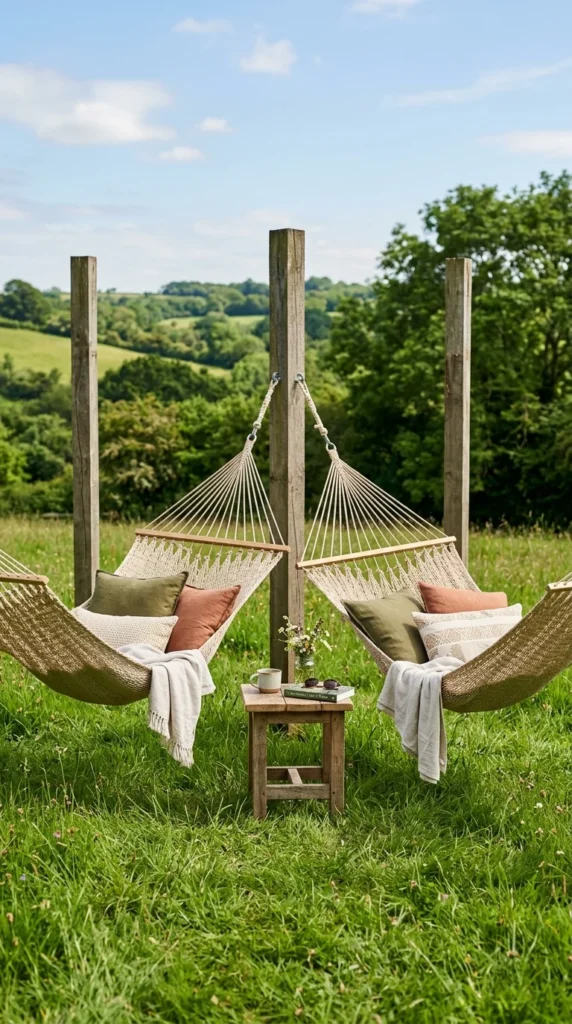
Relaxing is often better when done together. By installing three posts in a triangle or two parallel lines, you can hang multiple hammocks in the same area. This creates a “hammock park” vibe that encourages conversation and shared relaxation.
13. Waterfront Relaxation
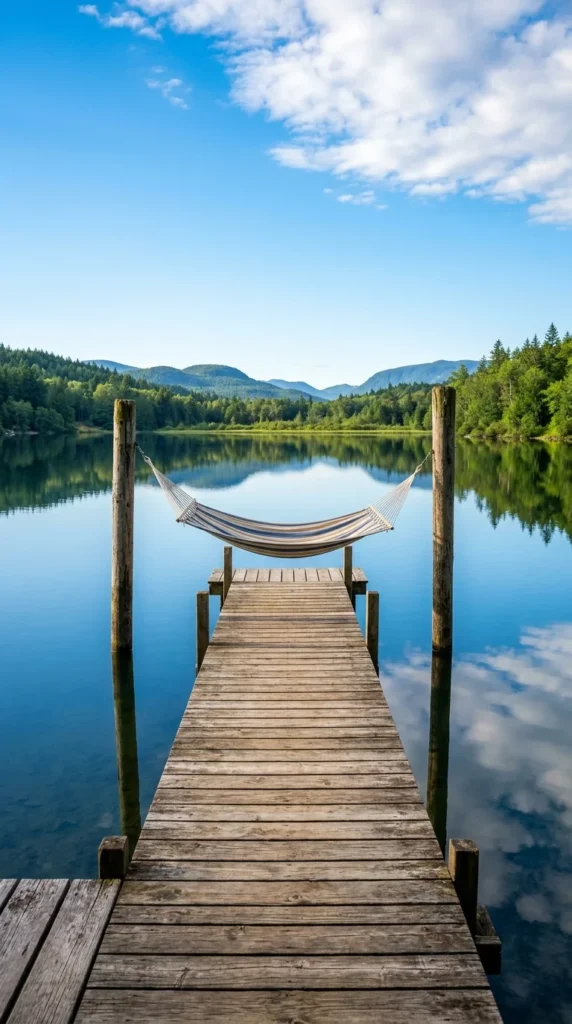
If you are lucky enough to live near water, capitalize on the view. A hammock hung on a dock or near a shoreline allows you to enjoy the breeze and the rhythmic sound of waves, which significantly enhances the stress-relief benefits of swaying.
14. Indoor-Outdoor Sunroom
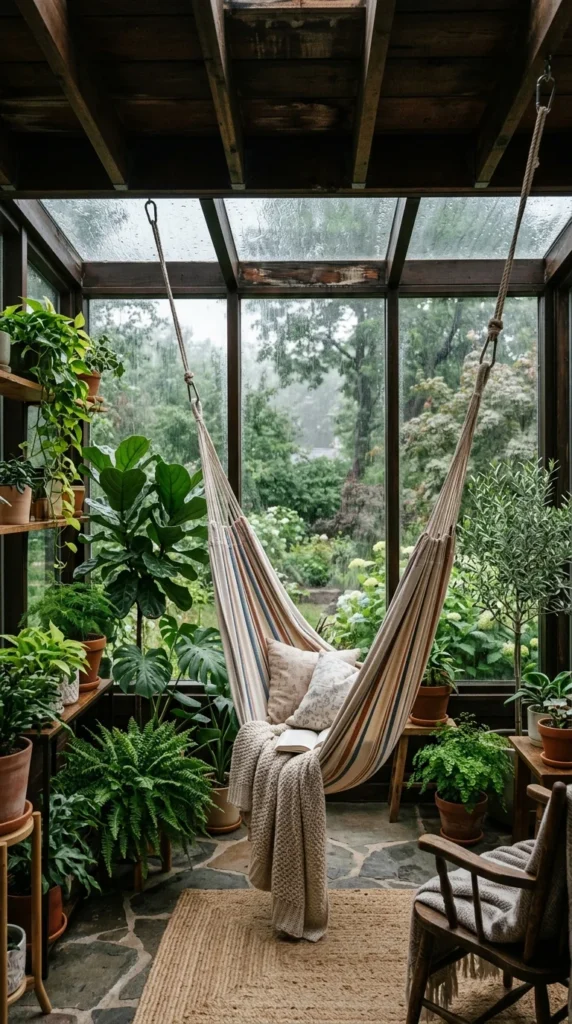
A sunroom or a covered porch offers the best of both worlds. You get the feeling of being outside while being protected from rain and insects. Hanging a hammock from the ceiling joists of a porch creates a permanent lounging spot that can be used regardless of the weather.
15. Flowerbed Border
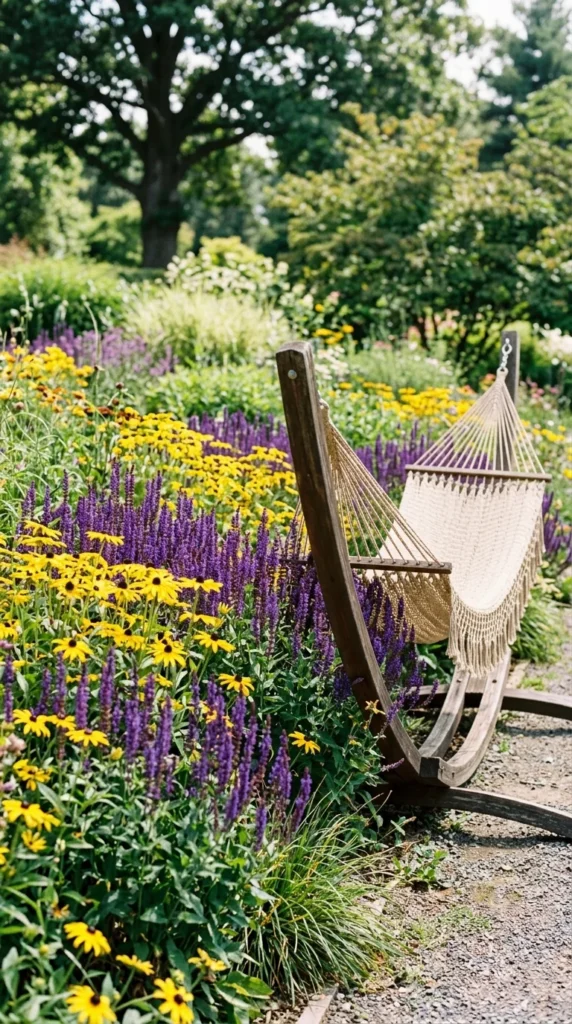
Position your hammock so that it is literally surrounded by blooms. The scent of jasmine, lavender, or roses at eye level creates a sensory experience that goes beyond mere physical comfort.
16. Rustic Log Frame
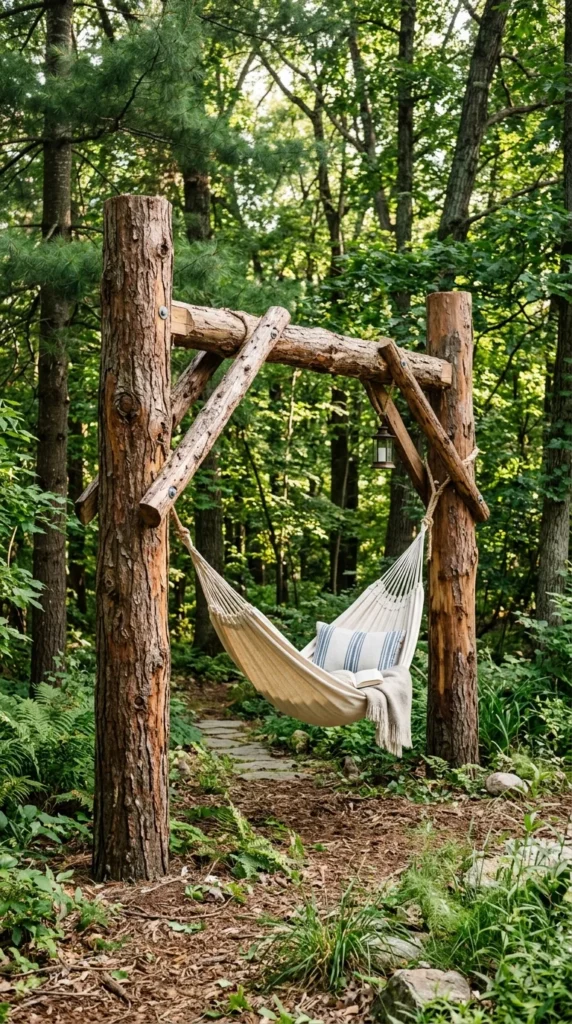
For a cabin or a rustic-style home, a DIY frame made from natural logs or heavy timber looks more integrated into the landscape than a metal stand. It adds a rugged, handmade charm to the garden.
17. Rooftop Escape
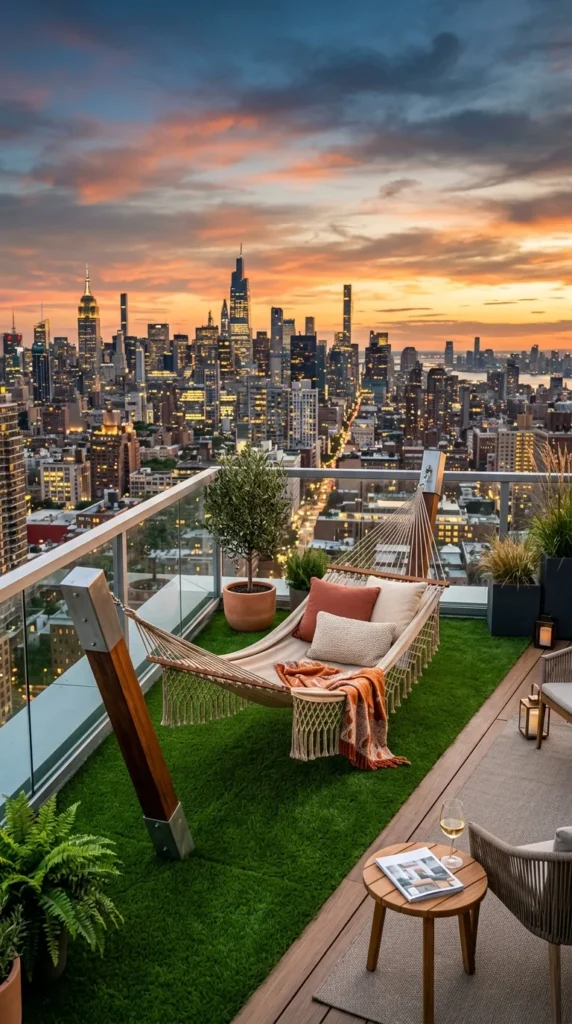
Transform a flat roof into a private getaway. Because rooftops often have high wind speeds, a heavy, stable stand is essential. Add some large planters with ornamental grasses to soften the urban edges.
18. Vertical Garden Backdrop
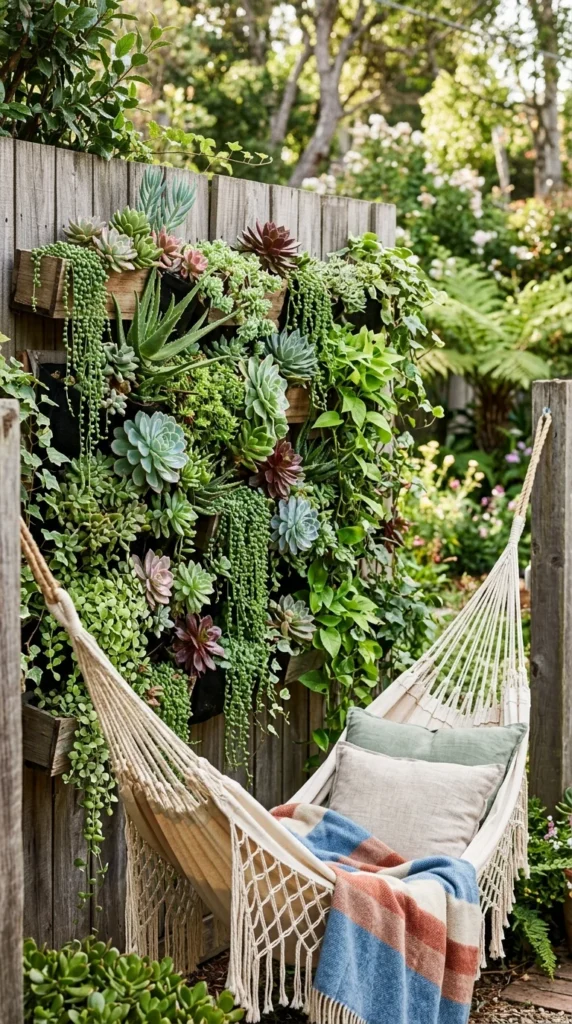
If you have limited floor space, grow “up.” A vertical garden provides a lush, green backdrop for your hammock and can even help dampen neighborhood noise, making your escape feel more secluded.
19. Zen Stone Path
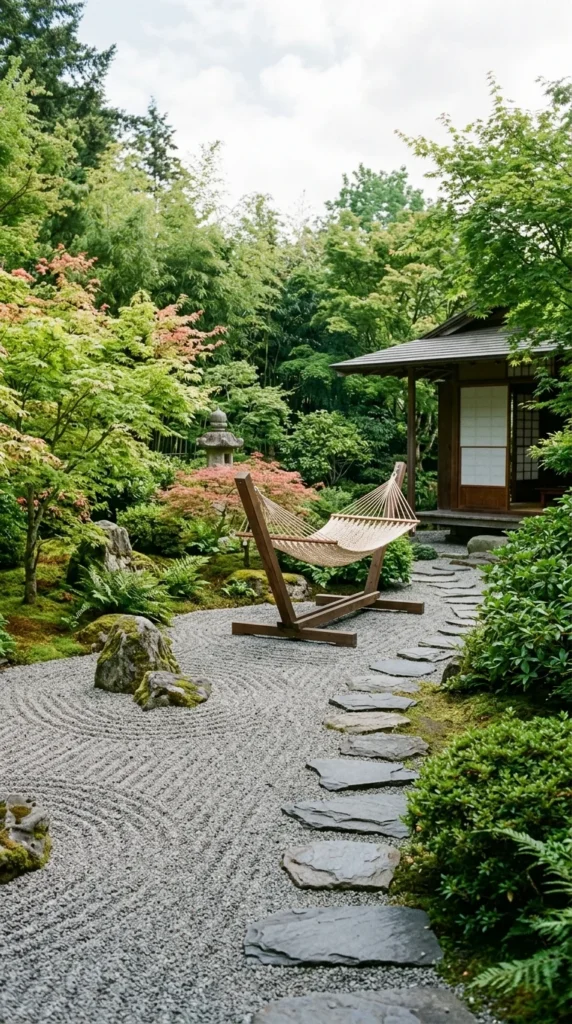
Incorporate your hammock into a Zen garden design. The slow, rhythmic swaying of the hammock complements the peaceful, contemplative nature of Japanese landscaping. Use neutral colors to maintain the serene atmosphere.
20. String Light Canopy
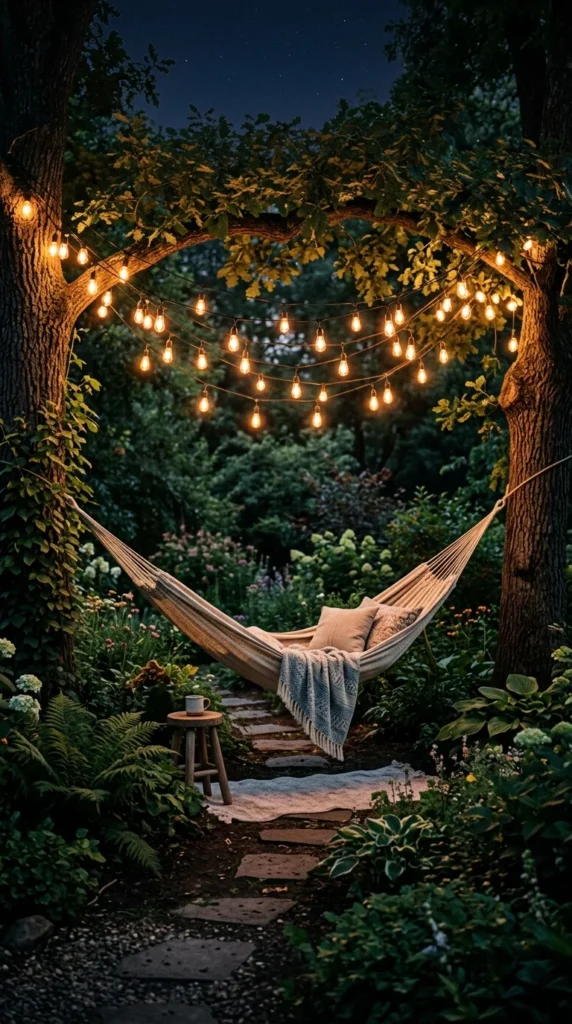
Don’t let the sunset end your relaxation. By stringing warm LED lights above your hammock, you create a magical, starry-night effect. This makes the hammock the perfect spot for stargazing or late-night reading.
21. Desert Xeriscape
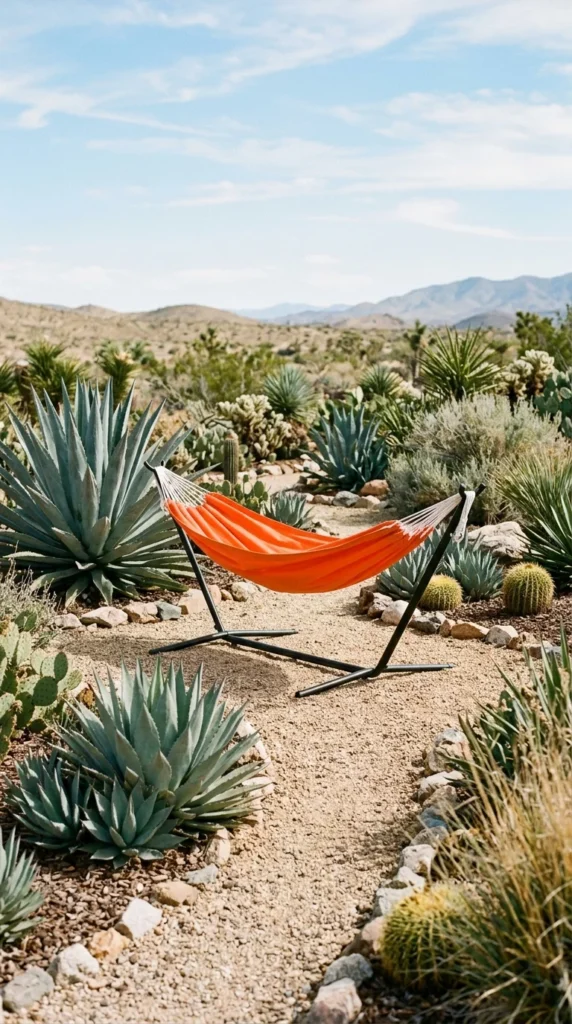
Hammocks aren’t just for lush green lawns. In drought-tolerant gardens, a hammock adds a touch of softness to the sharp textures of cacti and succulents. Choose vibrant colors like orange or turquoise to contrast with the desert sand and stone.
22. Cottage Core Meadow
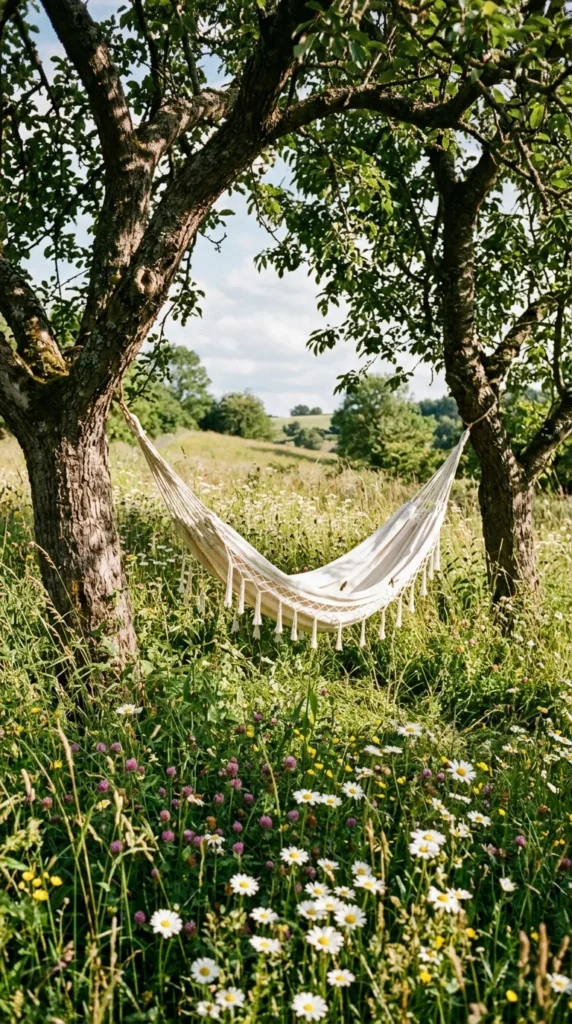
Embrace the “cottage core” trend by letting a portion of your yard grow wild. A linen or cotton hammock placed in a meadow of wildflowers feels nostalgic and incredibly peaceful.
23. Multi-Level Terrace
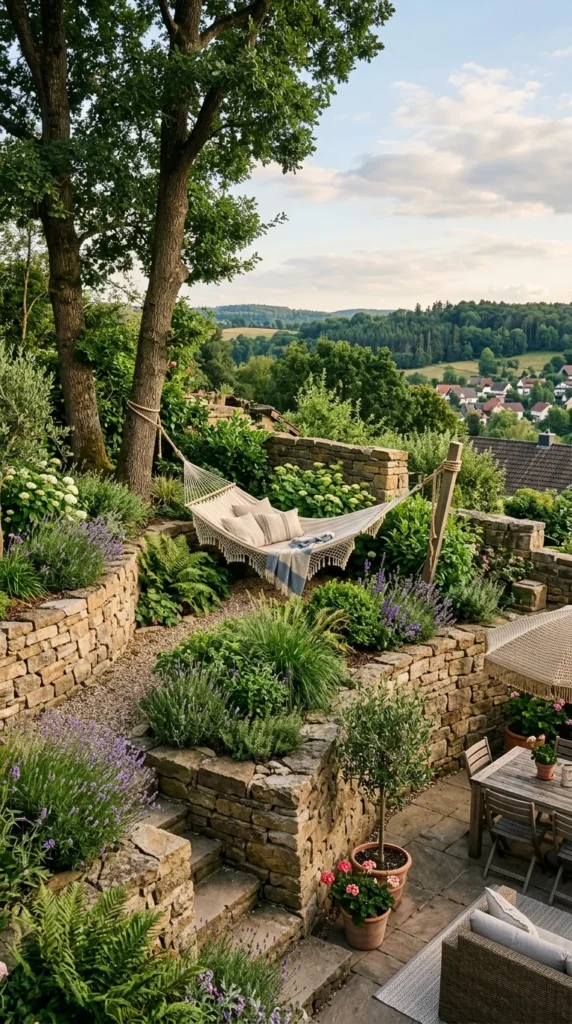
If your yard is sloped, use the different levels to your advantage. A hammock tucked onto a middle terrace provides a unique vantage point and makes use of space that might otherwise be difficult to landscape.
24. Winterized Enclosure
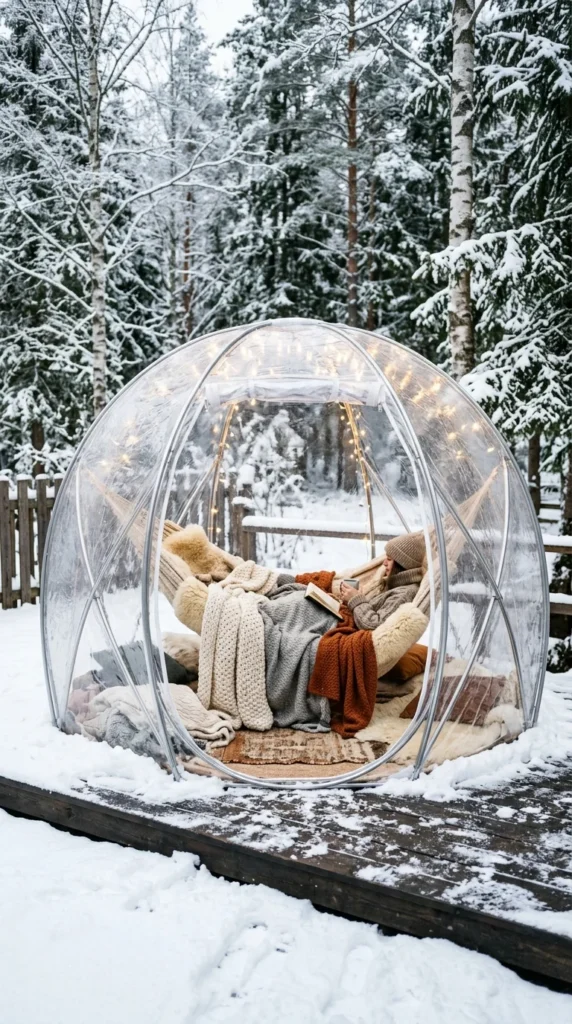
Who says hammocks are only for summer? By placing a hammock inside a clear garden igloo or a glass-walled gazebo, you can enjoy the winter scenery while staying warm and dry. Add sheepskin rugs and heavy blankets for the ultimate cozy experience.
Conclusion
A hammock garden is more than just a place to sit; it is a commitment to rest and a celebration of the outdoors. Whether you choose a high-tech modern stand or a simple rope tied between two trees, the key is to create an environment that speaks to your personal style of relaxation. By considering factors like shade, scent, view, and privacy, you can turn any corner of your backyard into a world-class escape. Grab a book, a cool drink, and get ready to sway your worries away.