
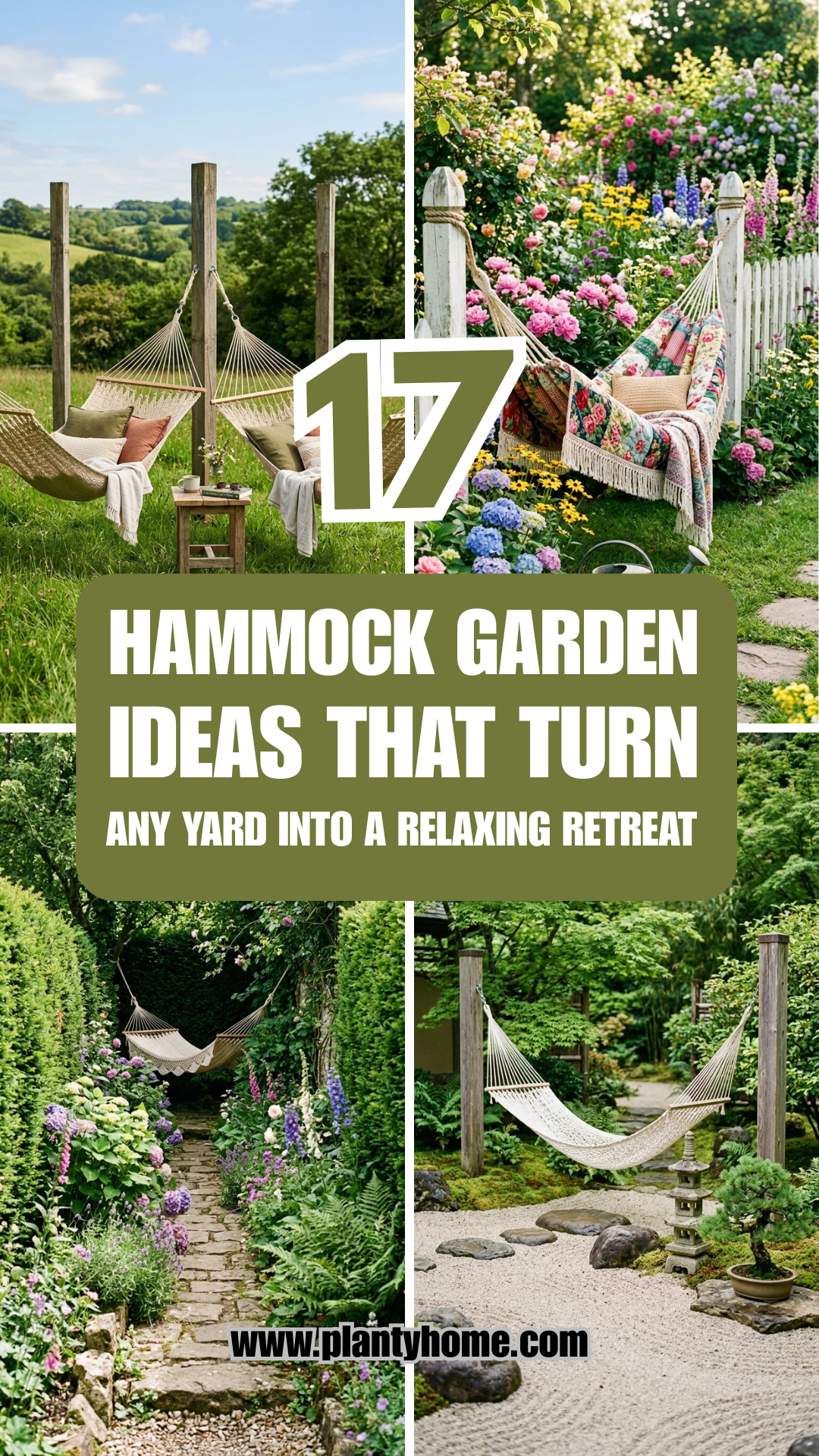
Creating a personal sanctuary in your backyard often starts with one simple addition: the hammock. More than just a place to nap, a well-integrated hammock transforms a standard garden into a curated retreat. Whether you have sprawling acreage or a compact urban patio, these 17 ideas will inspire you to hang, swing, and relax in style.
1. Woodland Grove
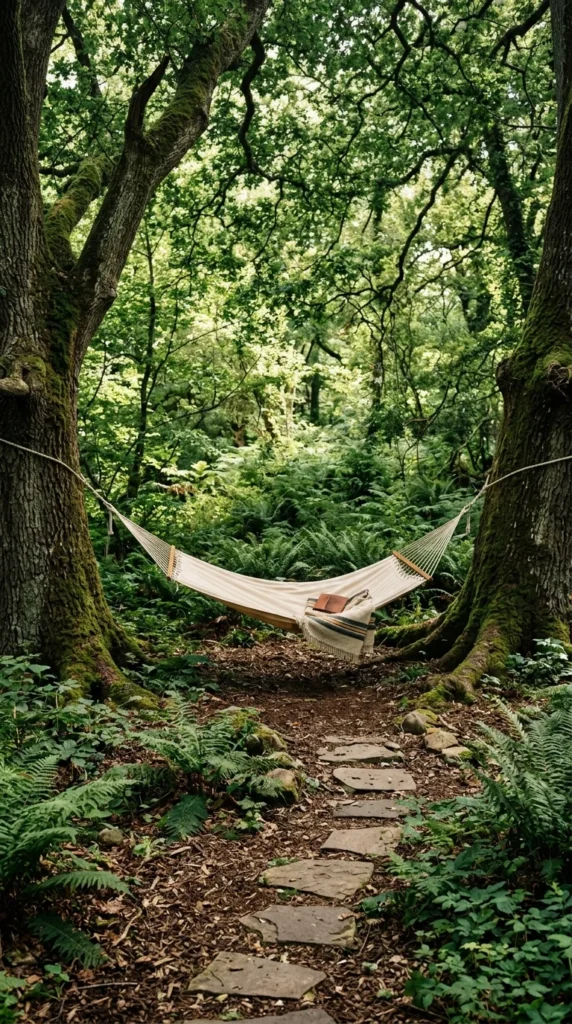
The most classic way to hang a hammock is between two sturdy trees. If your yard features a wooded area, lean into the natural aesthetic. Use tree-friendly straps to protect the bark and choose a hammock in earthy tones like forest green or sandy beige to blend with the environment. Surround the base with shade-loving plants like hostas and ferns to create a “living room” feel deep within the foliage.
2. Structured Pergola
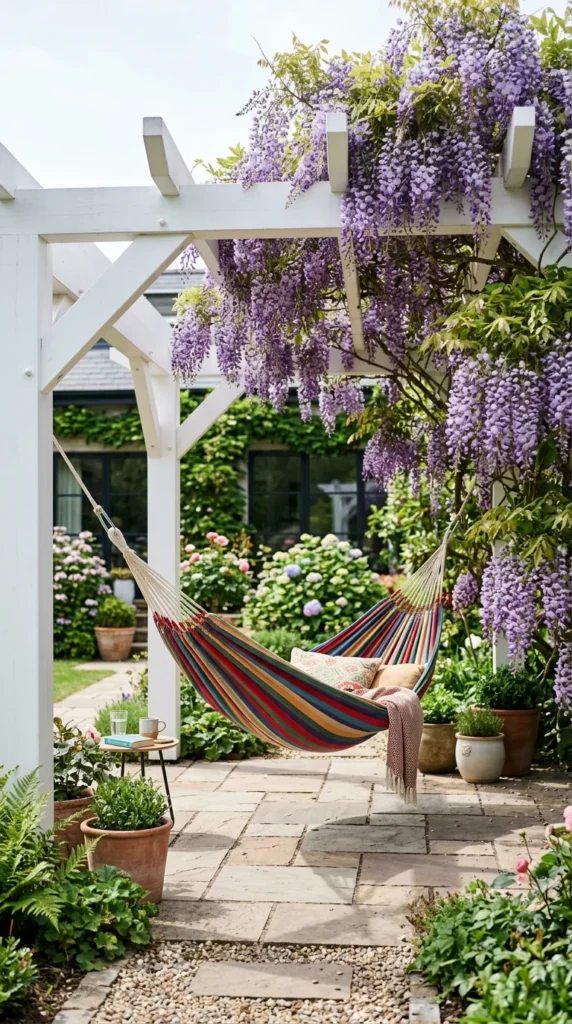
For yards without mature trees, a pergola offers the perfect structural support. Hanging a hammock from a pergola allows you to position your relaxation spot exactly where you want it—perhaps near an outdoor kitchen or overlooking a flower bed. The rigid beams provide a secure anchor point, and you can wrap the posts with climbing roses or jasmine for a fragrant, enclosed experience.
3. Tropical Oasis

You don’t need to live in the Caribbean to enjoy a tropical vibe. Use lush, broad-leafed plants and bright floral accents to frame your hammock. Choose a nylon or mesh hammock that can withstand humidity and pair it with a bamboo side table. Adding a small water feature nearby, like a bubbling rock or a mini-fountain, provides the soothing sound of moving water to complete the resort-style atmosphere.
4. Bohemian Corner
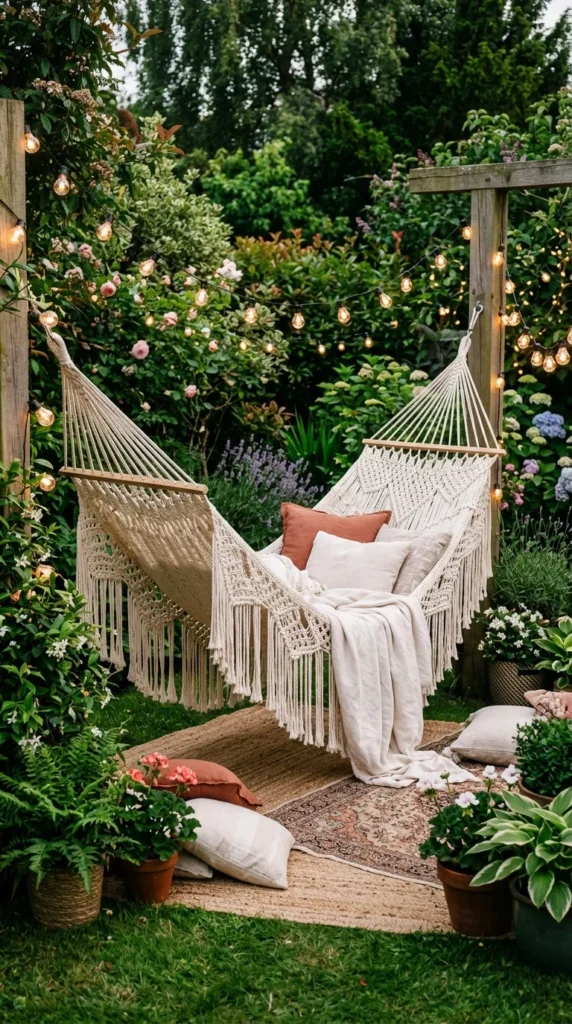
The “Boho” look is all about texture and comfort. Look for hammocks featuring fringe, tassels, or hand-woven patterns. To execute this style, layer the ground with weather-resistant rugs and scatter several outdoor-safe pillows. This setup is less about a quick nap and more about a dedicated “chill zone” where you can read, meditate, or enjoy a glass of wine in a visually rich environment.
5. Modern Minimalist
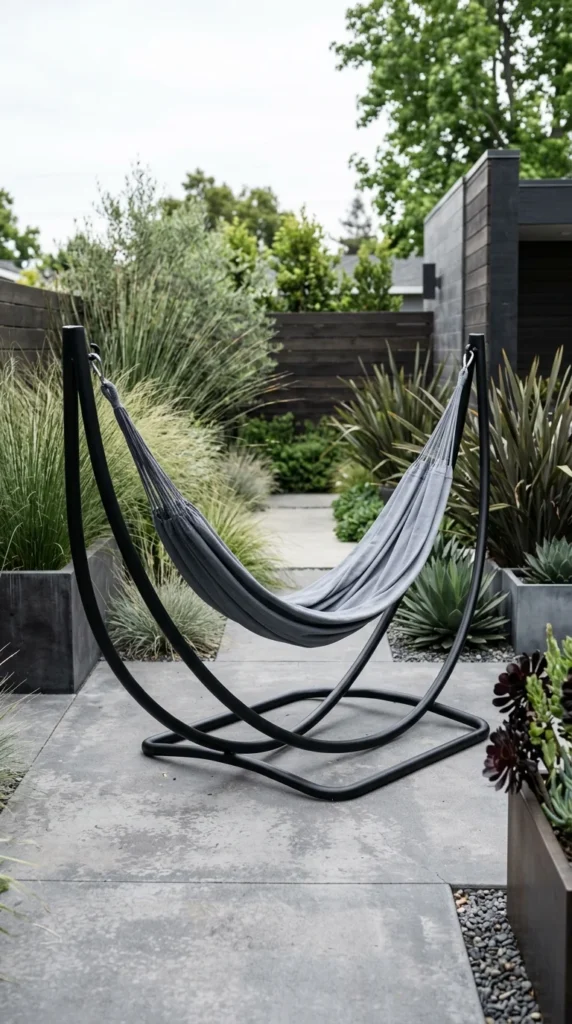
If your home features contemporary architecture, a traditional rope hammock might feel out of place. Opt for a designer hammock stand with clean lines and a monochromatic fabric. Position the hammock on a gravel or concrete pad to maintain the “less is more” aesthetic. Use ornamental grasses like Feather Reed Grass to provide movement and privacy without cluttering the visual field.
6. Poolside Lounge
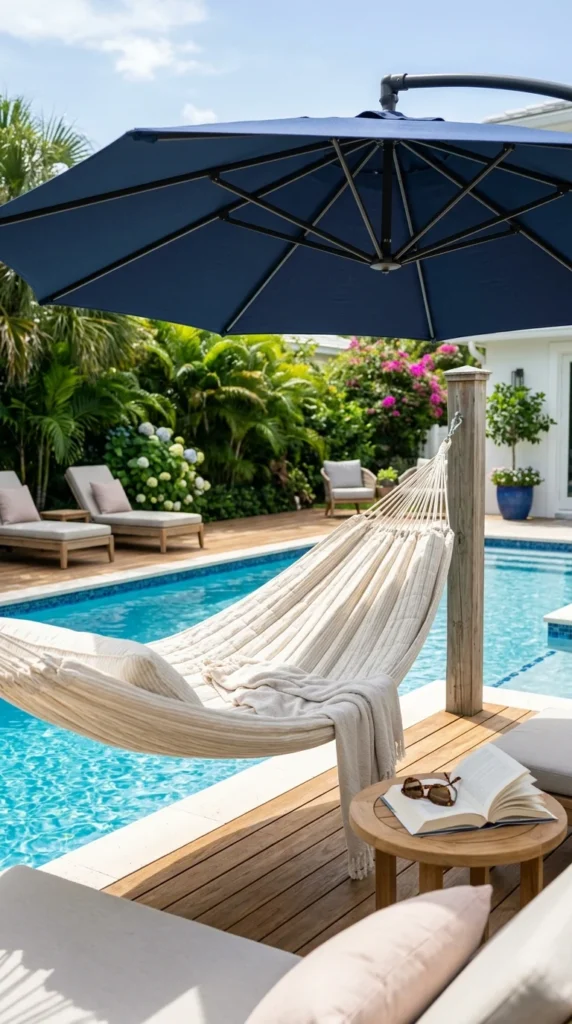
Take your pool days to the next level by swapping a standard lounge chair for a hammock. A spreader-bar hammock is ideal here as it stays open, making it easier to get in and out of while wearing swimwear. Ensure the material is quick-drying and UV-resistant to handle splashes and constant sun exposure. The gentle swaying motion provides a unique way to dry off after a swim.
7. Vertical Garden
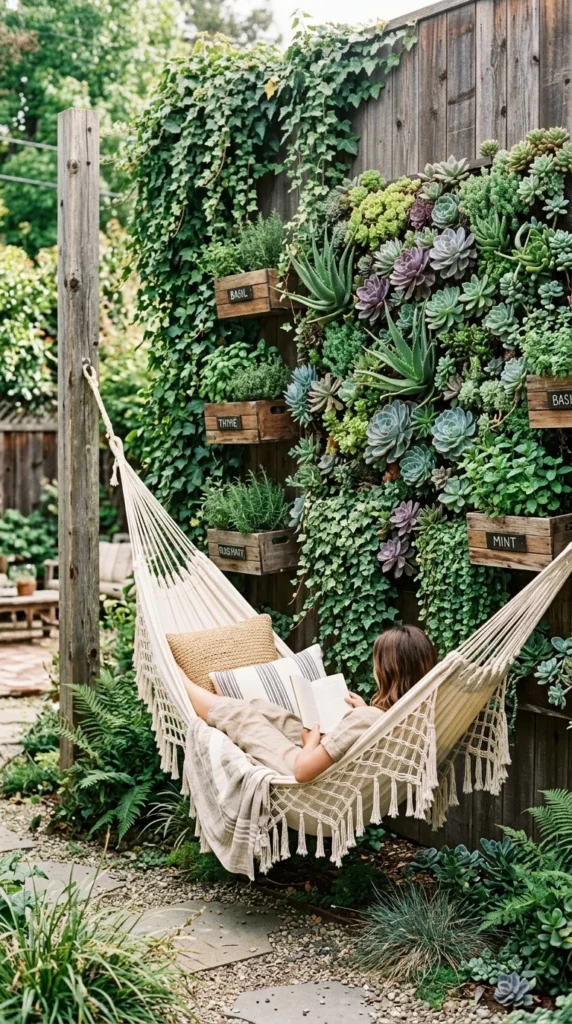
In smaller yards, every square inch counts. Combine your love for gardening and lounging by placing your hammock in front of a vertical garden. This creates a “living wallpaper” effect. As you swing, you’ll be surrounded by the scent of fresh herbs or the visual texture of succulents. This setup also provides an excellent backdrop for photography and makes a small space feel like a lush enclosure.
8. Fire Pit Social
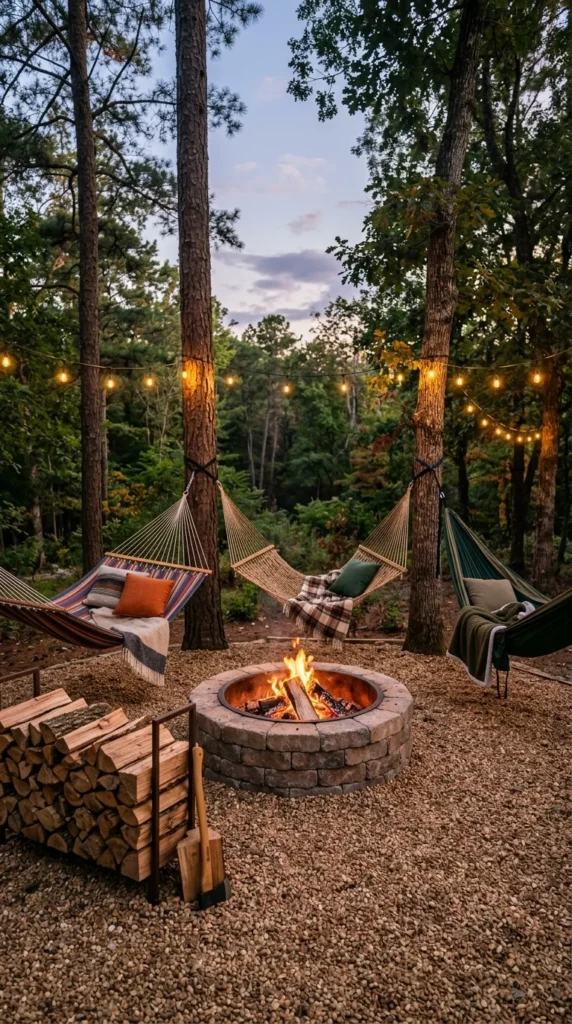
Who says a hammock is a solo activity? Create a social hub by arranging multiple hammocks around a central fire pit. Use heavy-duty 4×4 wooden posts anchored in concrete if you don’t have enough trees. This setup encourages conversation and allows everyone to enjoy the warmth of the fire while floating off the ground. It’s a perfect alternative to traditional patio furniture for a more relaxed, campfire-inspired evening.
9. Secret Path
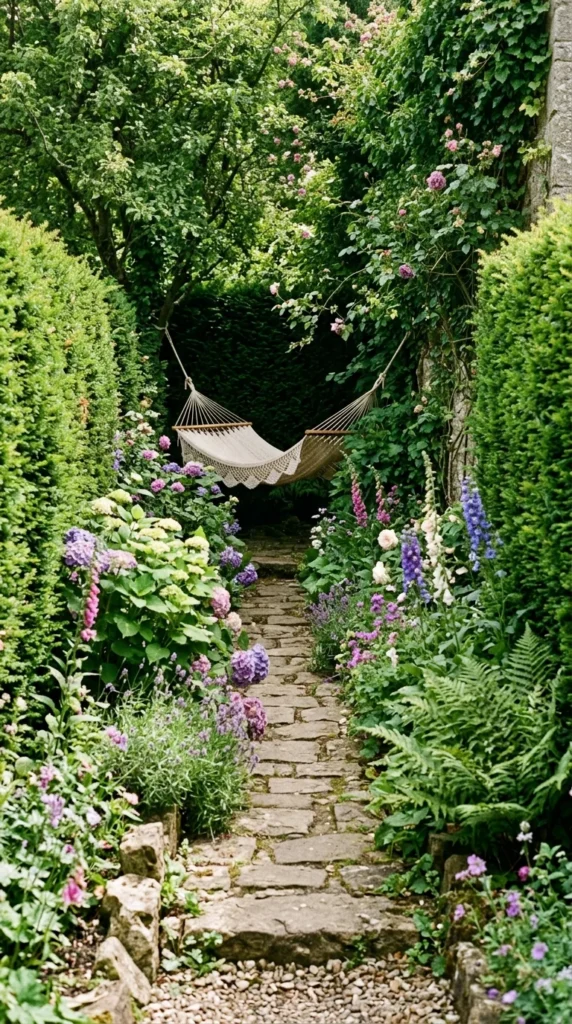
Create a sense of mystery in your garden by tucking a hammock at the end of a winding path. Use tall shrubs like boxwood or privet to create “walls” that hide the hammock from the main house. This becomes your private getaway for moments when you need total solitude. A small “Quiet Zone” sign or a simple wind chime can add to the charm of this hidden sanctuary.
10. Urban Balcony
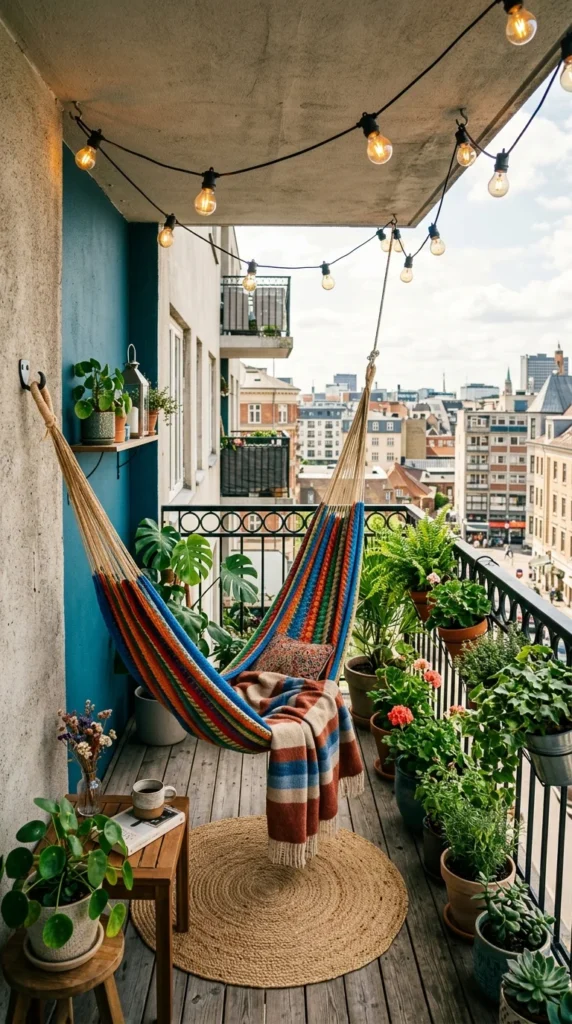
You don’t need a yard to have a hammock garden. On a balcony, use wall mounts specifically designed for masonry or studs to hang a chair-style hammock or a short-point hammock. Surround the area with tiered plant stands and hanging baskets to mimic the feeling of a ground-level garden. This vertical greenery provides privacy from neighbors while giving you a lush space to enjoy the fresh air.
11. Multi-Level Deck
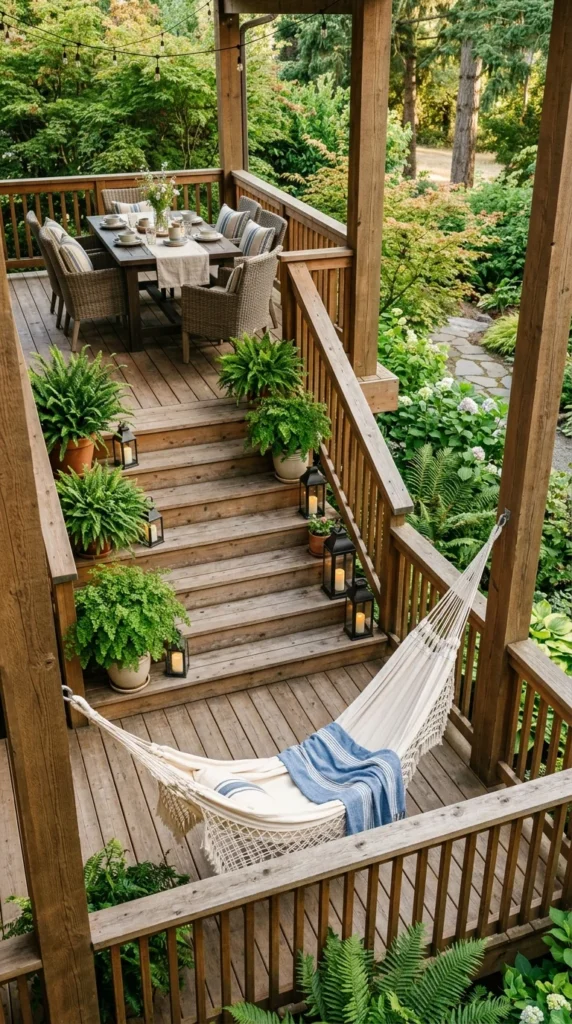
Utilize the architecture of your deck to create a dedicated relaxation zone. Hanging a hammock underneath an elevated deck provides built-in shade and protection from light rain. If you have a multi-level deck, the transition between the levels creates a natural nook for a hammock. This keeps the lounging area separate from the high-traffic dining or grilling areas.
12. Zen Sanctuary
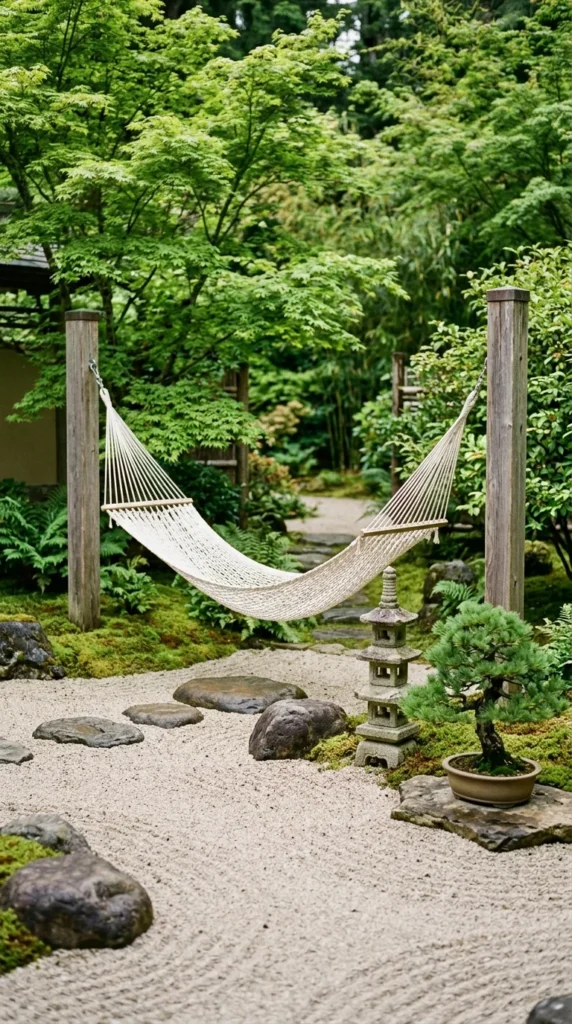
Focus on peace and mindfulness by incorporating a hammock into a Zen garden. Stick to a neutral color palette—whites, creams, and natural wood tones. Use elements like bamboo fencing, raked gravel, and smooth stones to create an environment of order and calm. The rhythmic swaying of the hammock mimics the flow of water, making it a perfect spot for meditation or deep breathing exercises.
13. Cottage Charm
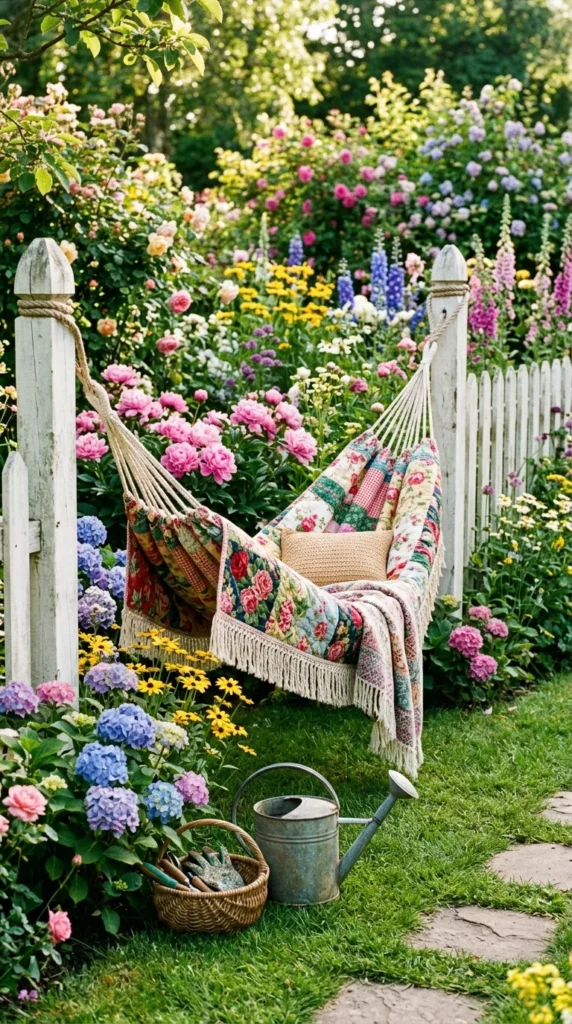
For a romantic, whimsical look, place your hammock in the center of a traditional cottage garden. The key here is abundance—let the flowers grow tall and slightly wild around the hammock. Choose fabrics with vintage floral prints or classic stripes. This setup feels like something out of a storybook and provides a sensory experience of colors and scents as you lounge.
14. Rooftop Retreat
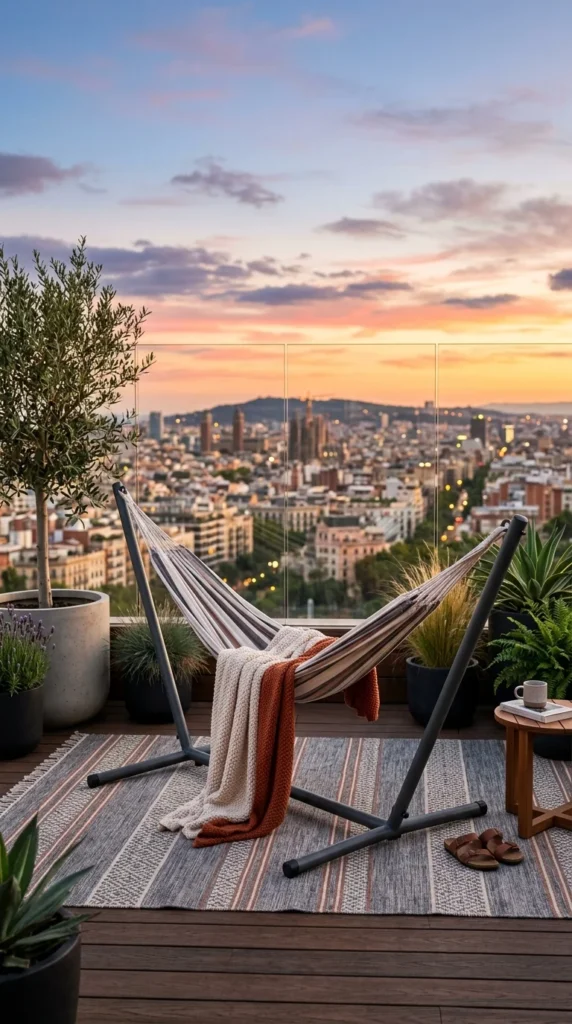
If your “garden” is on the roof, focus on wind-resistant setups and portable stands. Rooftop hammocks offer unparalleled views and a unique sense of floating above the world. Because rooftops can get hot, look for hammocks made of breathable materials and consider adding a retractable awning or a large patio umbrella to provide relief from the midday sun.
15. Desert Xeriscape
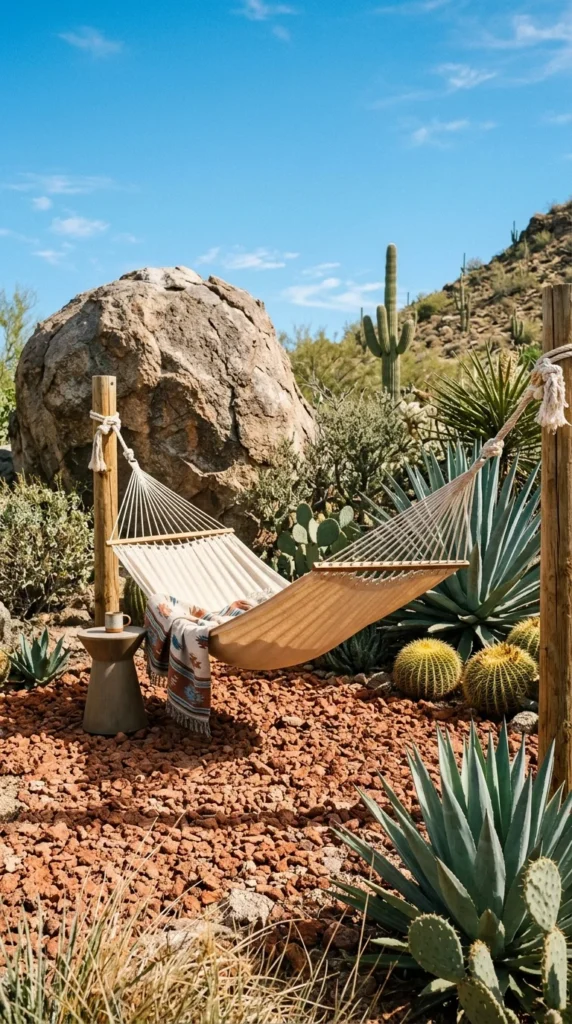
In arid climates, a hammock garden can be both beautiful and water-wise. Use a sturdy hammock made of sun-resilient fabric and pair it with a landscape of succulents and cacti. The structural shapes of desert plants provide a stunning visual contrast to the soft lines of a swaying hammock. Use a wooden or rusted metal stand to complement the natural tones of the desert earth.
16. Nighttime Glow
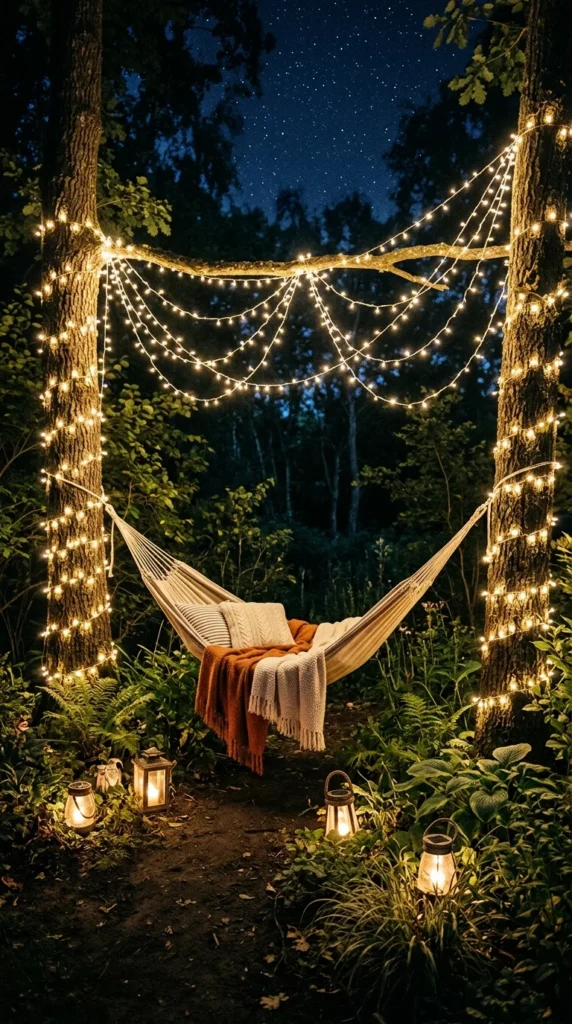
Your hammock garden shouldn’t be off-limits once the sun goes down. Integrate lighting specifically around your hammock to create an enchanting evening retreat. Solar-powered path lights, string lights overhead, and even a small spotlight on a nearby tree can transform the space. This is the perfect spot for stargazing or enjoying the cool night air in total comfort.
17. Indoor-Outdoor Transition
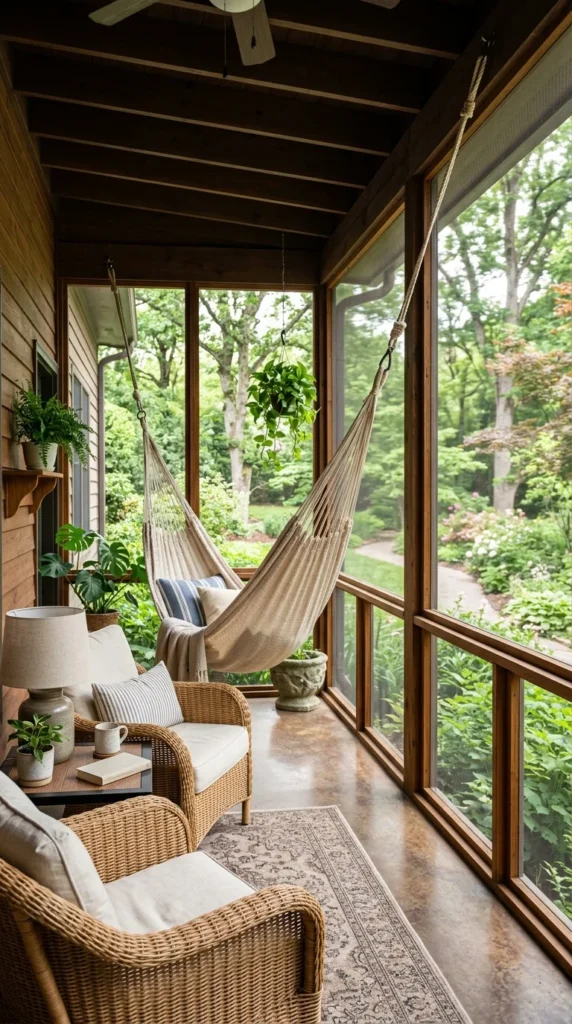
If you want the garden feel with more protection from the elements, hang your hammock on a screened-in porch or a sunroom. This allows you to enjoy the view of your garden and the sound of the wind without worrying about insects or sudden rain showers. Use large potted floor plants inside the porch to bridge the gap between the indoors and the outdoor garden, creating a seamless transition.