
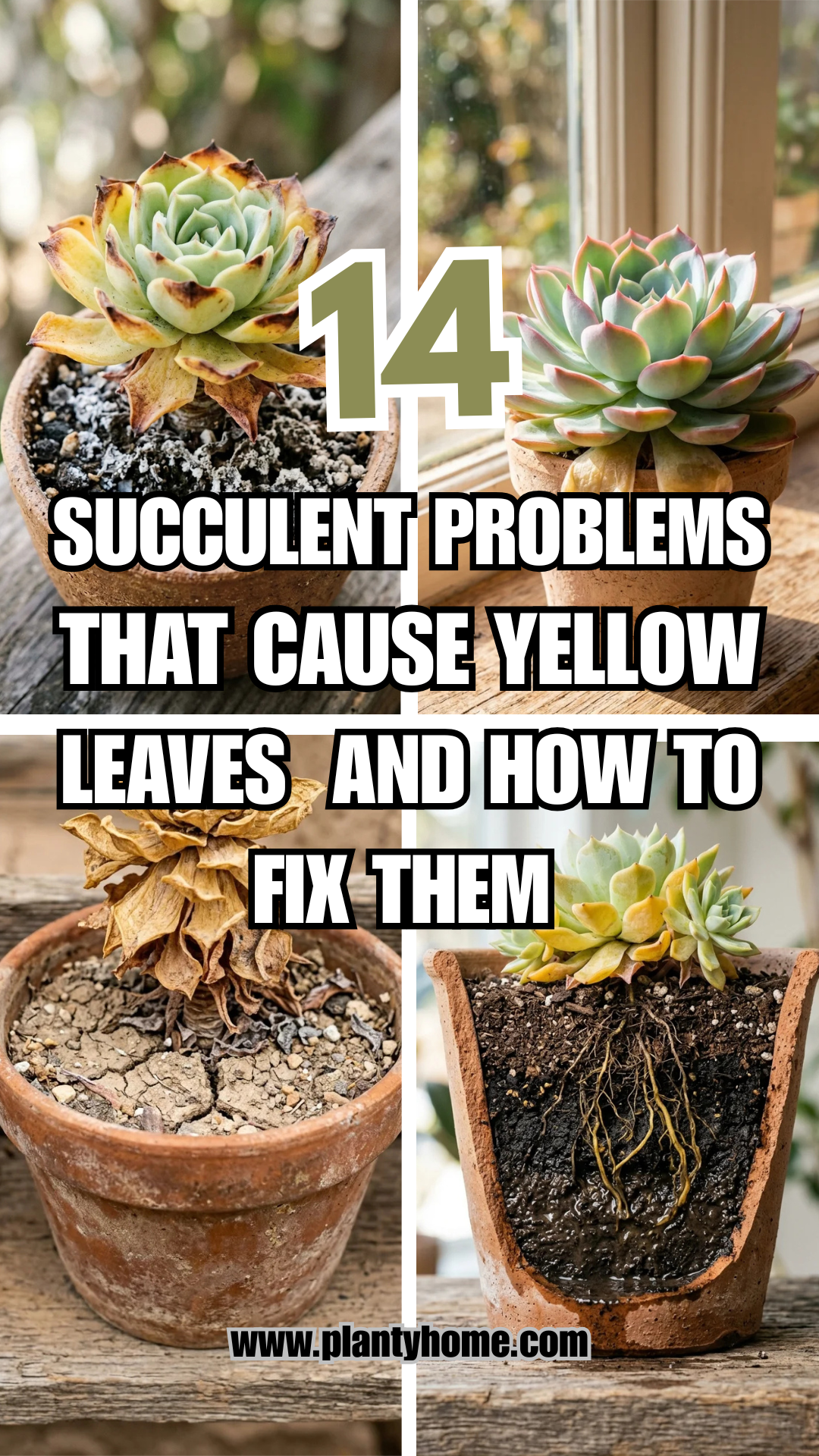
Finding a yellow leaf on your favorite succulent can feel like a botanical emergency. Succulents are celebrated for their “set it and forget it” nature, but they aren’t invincible. Yellowing leaves are the plant’s primary way of communicating distress. Whether the leaves are turning mushy and translucent or dry and crispy, each shade of yellow tells a different story about what is happening beneath the soil or in the surrounding environment.
In this guide, we will break down the 14 most common reasons your succulents are turning yellow and provide actionable solutions to bring them back to their vibrant, healthy selves.
1. Overwatering
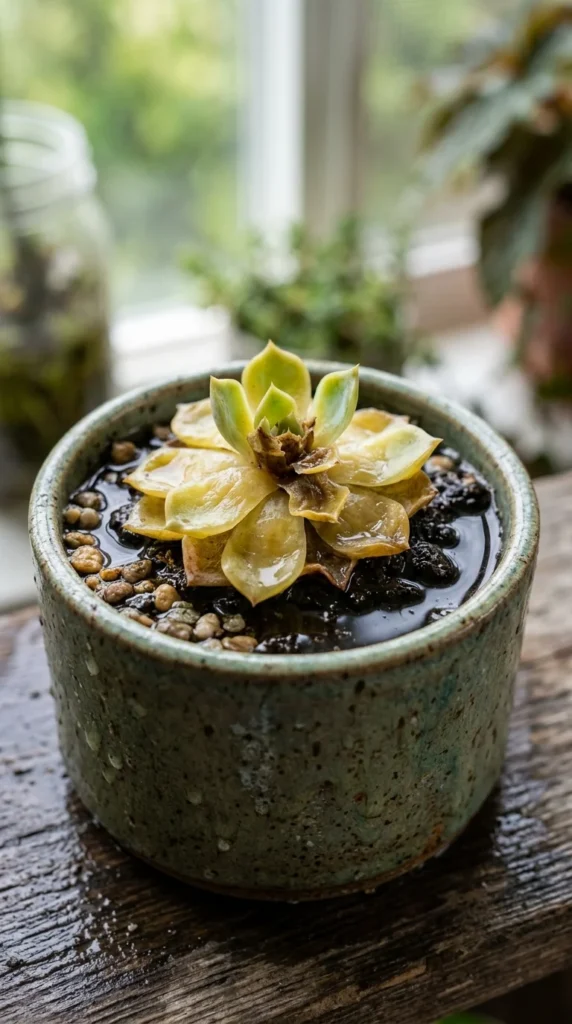
Overwatering is the number one killer of indoor succulents. When a succulent receives too much water, its cells swell until they literally burst. This results in leaves that look translucent, feel mushy to the touch, and eventually turn a sickly yellow.
How to Fix It:
- Stop watering immediately: Allow the soil to dry out completely.
- Check the roots: If the plant is severely yellow, remove it from the pot. If the roots are black or slimy, you have root rot (see point 9).
- Adjust your schedule: Only water when the soil is dry at least two inches deep.
2. Underwatering
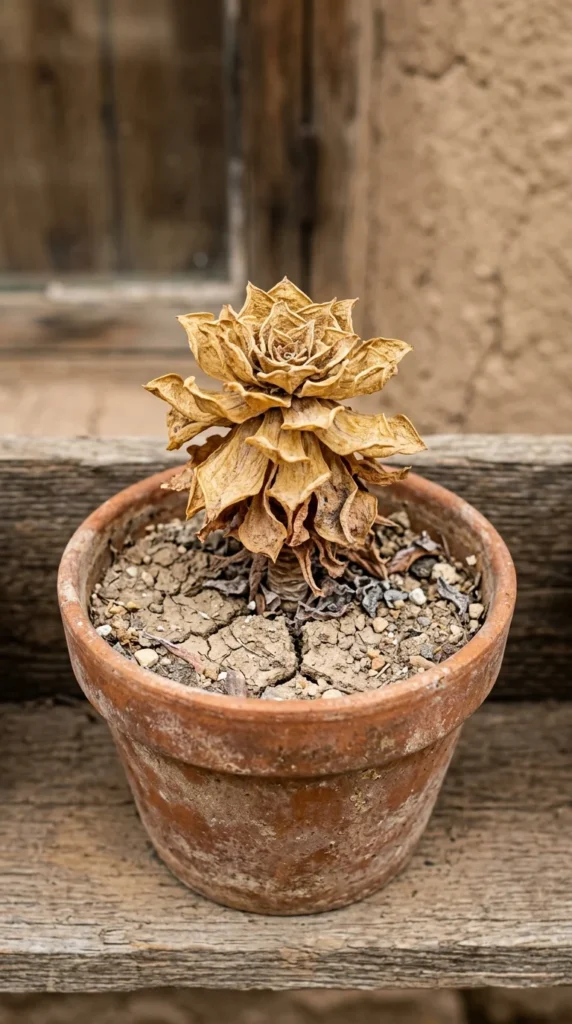
While succulents store water in their leaves, they aren’t camels—they do eventually run out. When a succulent is desperately thirsty, it will begin to consume the water stored in its own leaves to survive. These leaves will turn yellow, then brown, and become thin and wrinkled.
How to Fix It:
- The “Soak and Dry” method: Give your plant a deep watering until water runs out of the drainage hole.
- Consistent monitoring: Check the leaves; if they feel flexible and thin rather than firm and plump, it’s time for a drink.
3. Malnutrition
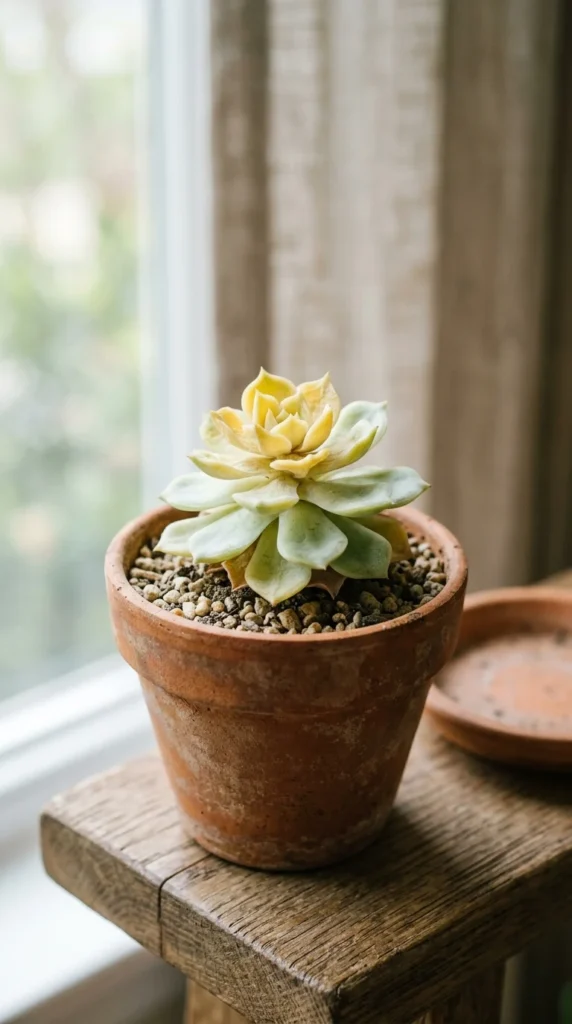
Just like humans, succulents need nutrients to maintain their color and structural integrity. If your succulent hasn’t been repotted in years or is in “dead” soil, it may suffer from nitrogen or magnesium deficiencies, leading to a pale yellow hue across the entire plant.
How to Fix It:
- Fertilize: Use a diluted, balanced liquid fertilizer specifically designed for cacti and succulents during the growing season (spring and summer).
- Refresh the soil: Repot your plant every two years with fresh, nutrient-rich succulent mix.
4. Sunburn
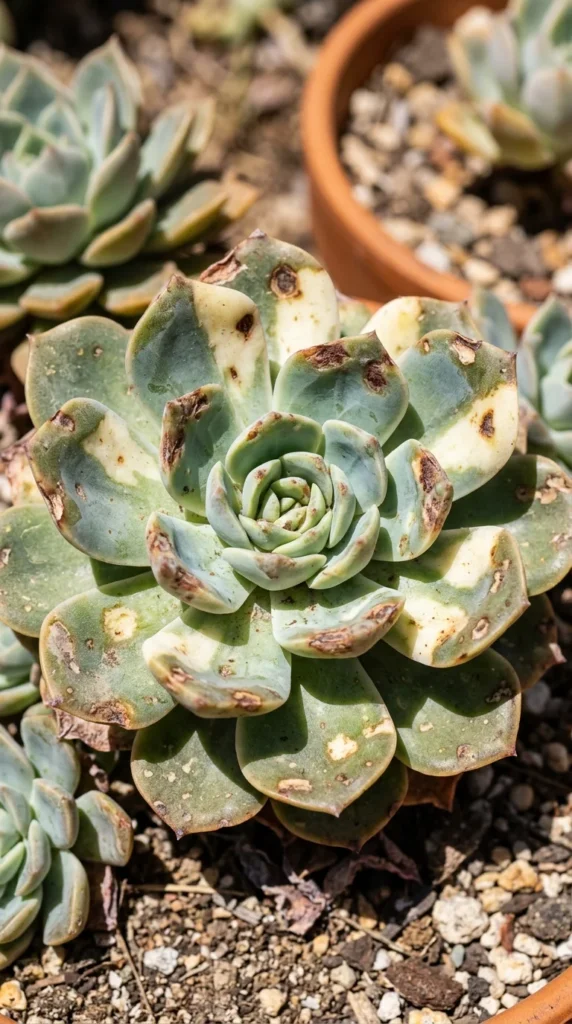
Yes, succulents can get sunburned. While most love light, a sudden move from a dark corner to a scorching south-facing window can bleach the leaves. Sunburn usually appears as yellow or white patches that eventually turn into hard, brown scars.
How to Fix It:
- Acclimation: Move plants to brighter areas gradually over 1–2 weeks.
- Provide shade: Use a sheer curtain to filter intense afternoon sun if the plant is indoors.
5. Etiolation
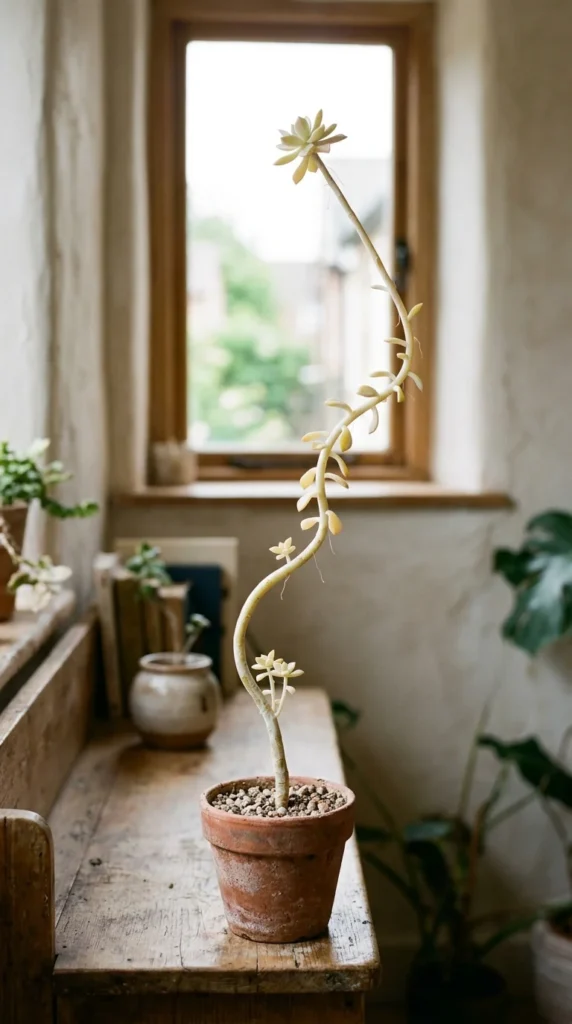
When a succulent doesn’t get enough light, it enters a state called etiolation. It “stretches” toward the light source, becoming tall and “leggy.” The leaves often turn a pale yellow because they cannot produce enough chlorophyll without adequate sun.
How to Fix It:
- Brighten up: Move the plant to a brighter location or provide a dedicated LED grow light.
- Behead and restart: If the plant is too stretched, you can cut the top off, let it callous, and replant it as a new, compact succulent.
6. Aging
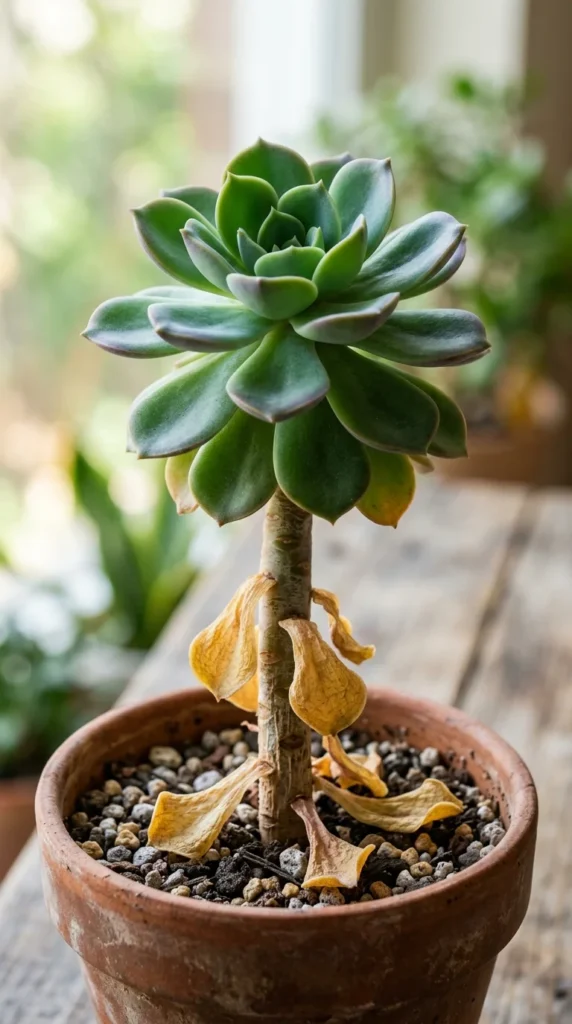
Not every yellow leaf is a sign of a crisis. As succulents grow, they naturally shed their oldest leaves at the base of the stem to make room for new growth at the top. These leaves will turn yellow, dry up, and fall off.
How to Fix It:
- Grooming: Simply pluck the dried yellow leaves away. As long as the new growth at the top looks healthy and firm, your plant is doing perfectly fine.
7. Drainage
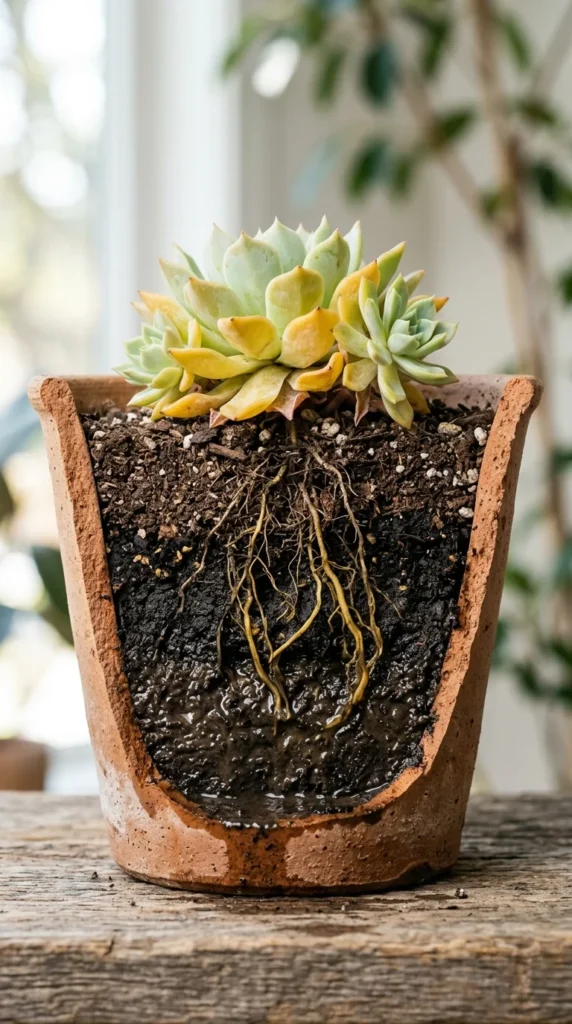
You could be watering the “correct” amount, but if the water has nowhere to go, it will sit at the bottom of the pot. Stagnant water creates a lack of oxygen for the roots, leading to yellowing and decay.
How to Fix It:
- Drainage holes are mandatory: Always use a pot with at least one hole at the bottom.
- Add grit: Mix perlite, pumice, or coarse sand into your soil to ensure water moves through quickly.
8. Pests
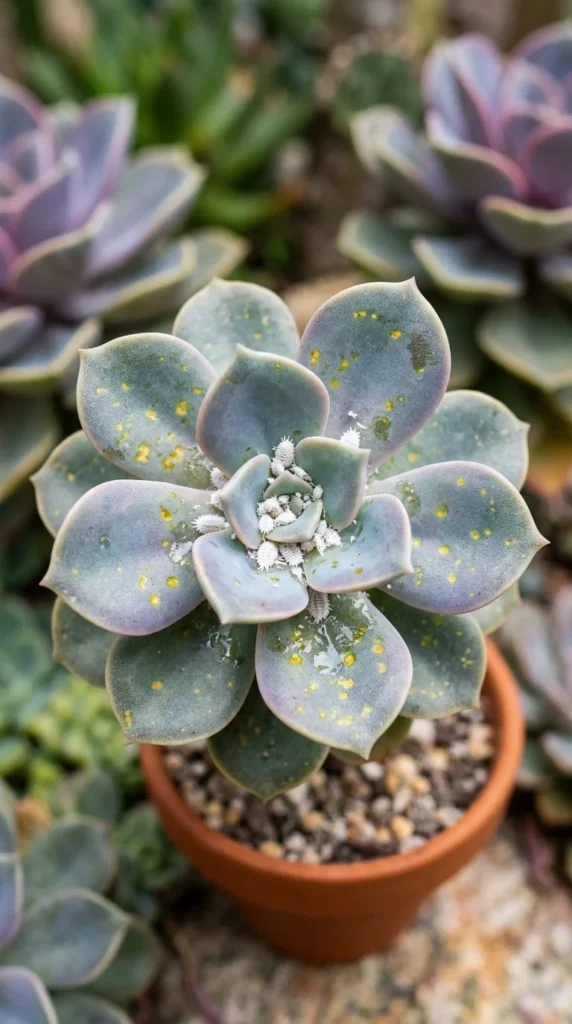
Common pests like mealybugs, aphids, and spider mites suck the sap out of succulent leaves. This localized damage causes small yellow spots or general yellowing and wilting of the affected foliage.
How to Fix It:
- Isolate: Move the infested plant away from others immediately.
- Treatment: Use a cotton swab dipped in 70% isopropyl alcohol to kill mealybugs, or spray the plant with neem oil.
9. Rot
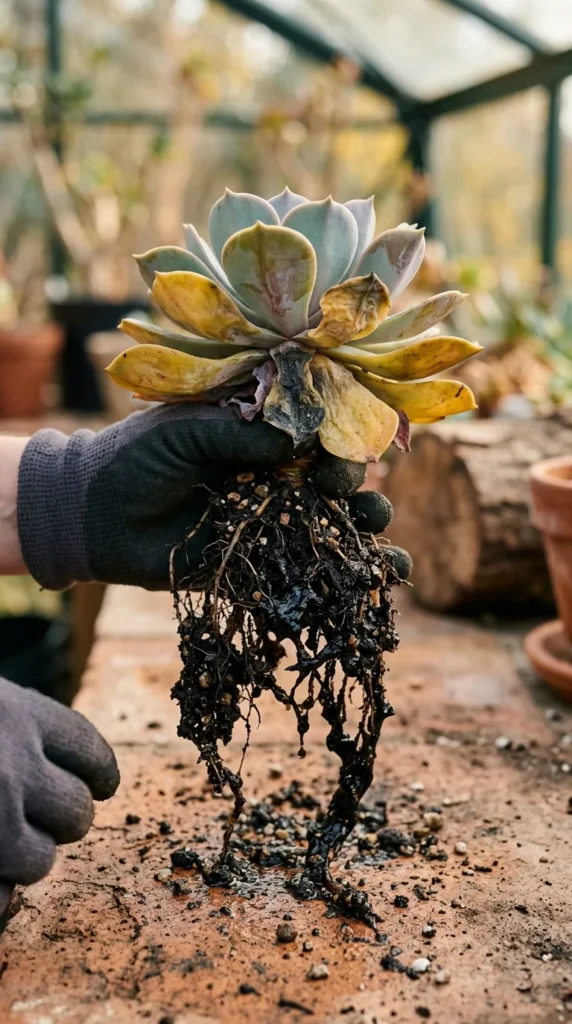
Root rot is the advanced stage of overwatering or poor drainage. Once the roots begin to decay due to fungal pathogens in wet soil, they can no longer transport nutrients to the leaves, causing a rapid yellowing and “collapse” of the plant.
How to Fix It:
- Surgery: Take the plant out of the soil and cut away any black, mushy roots with sterilized scissors.
- Air dry: Let the plant sit out of soil for 24–48 hours to dry before repotting in completely fresh, dry soil.
10. Shock
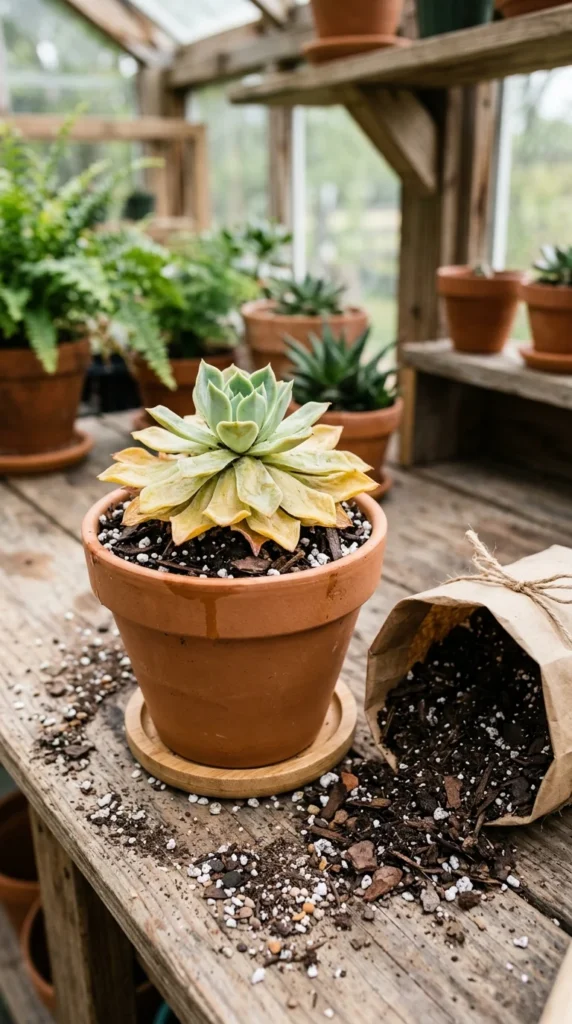
Succulents are creatures of habit. Moving them to a new environment, repotting them, or shipping them through the mail can cause transplant shock. The plant may drop or yellow a few leaves as it adjusts to its new surroundings.
How to Fix It:
- Patience: Give the plant a week or two to stabilize.
- Avoid extremes: Don’t fertilize or give the plant direct, harsh sun immediately after a move.
11. Soil
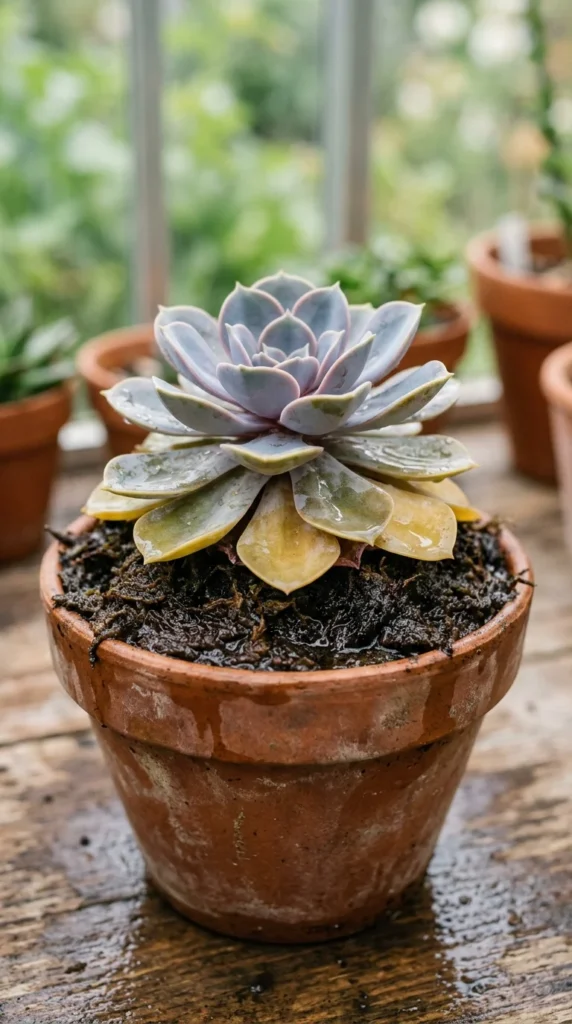
Using standard garden soil or heavy potting mix is a recipe for yellow leaves. These soils are designed to retain moisture, which is the opposite of what a succulent needs. The trapped moisture suffocates the roots, leading to yellowing.
How to Fix It:
- The Right Mix: Use a dedicated cactus and succulent potting mix.
- The 50/50 Rule: If you only have regular potting soil, mix it with 50% perlite or pumice to increase aeration.
12. Temperature
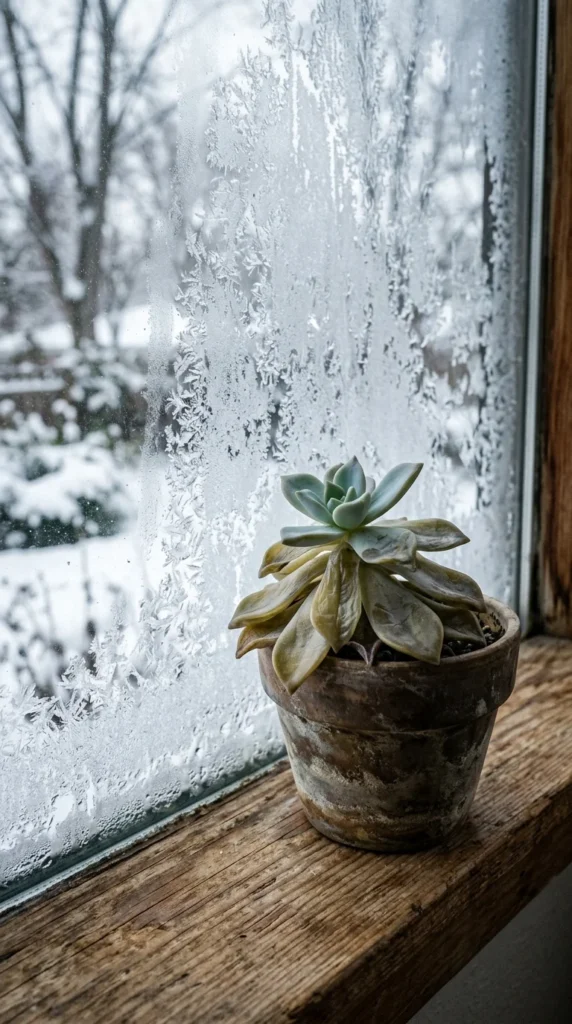
Most succulents are tropical or desert plants that cannot handle extreme cold. If a succulent is exposed to a drafty window in winter or a sudden frost, its leaves may turn yellow or even black as the water inside the cells freezes.
How to Fix It:
- Indoor migration: Move succulents away from windows or cold entryways during winter.
- Maintain warmth: Keep your plants in temperatures between 60°F and 80°F (15°C–27°C).
13. Fertilizer
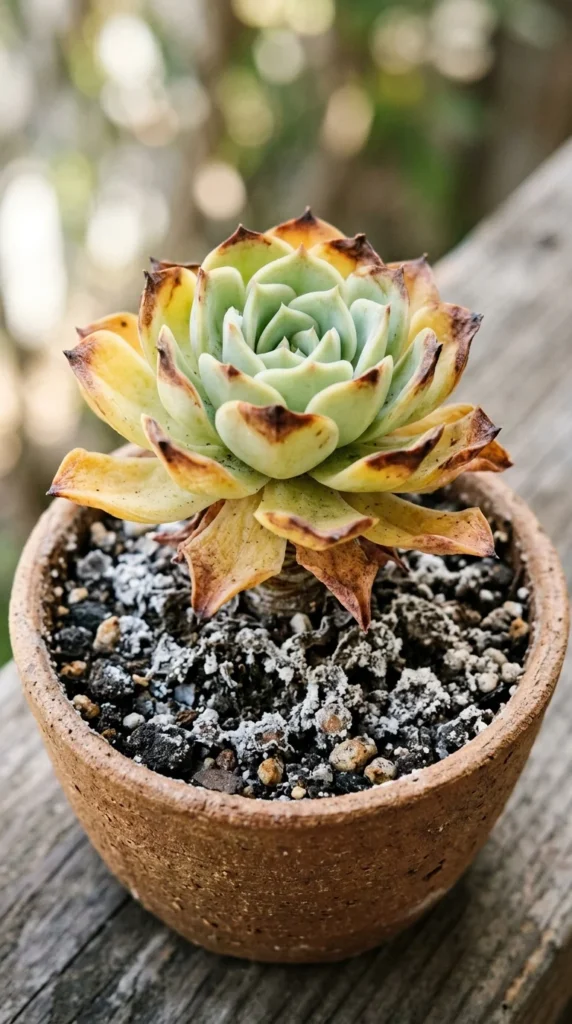
While succulents need food, too much of a good thing is toxic. Excessive fertilizer causes “chemical burn,” which manifests as yellowing leaf edges and a buildup of white crusty minerals on the soil surface.
How to Fix It:
- Flush the soil: Pour distilled water through the pot multiple times to wash away excess salts.
- Less is more: Only fertilize once or twice a year at half the recommended strength.
14. Fungus
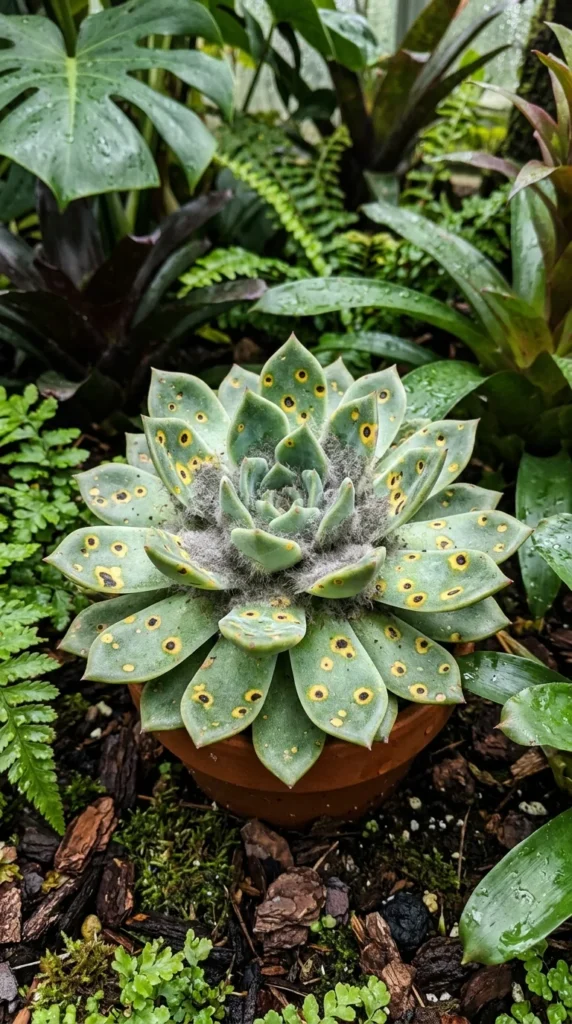
High humidity and poor airflow can lead to fungal infections like powdery mildew or leaf spot. These often start as yellow spots that quickly spread, turning the entire leaf yellow and then black.
How to Fix It:
- Increase Airflow: Use a small fan to circulate air around your plants.
- Fungicide: Treat the plant with an organic fungicide or a mixture of baking soda and water to stop the spread.
By identifying the specific type of yellowing your succulent is experiencing, you can intervene quickly and save your plant. Remember: when in doubt, it’s usually better to underwater than overwater!