
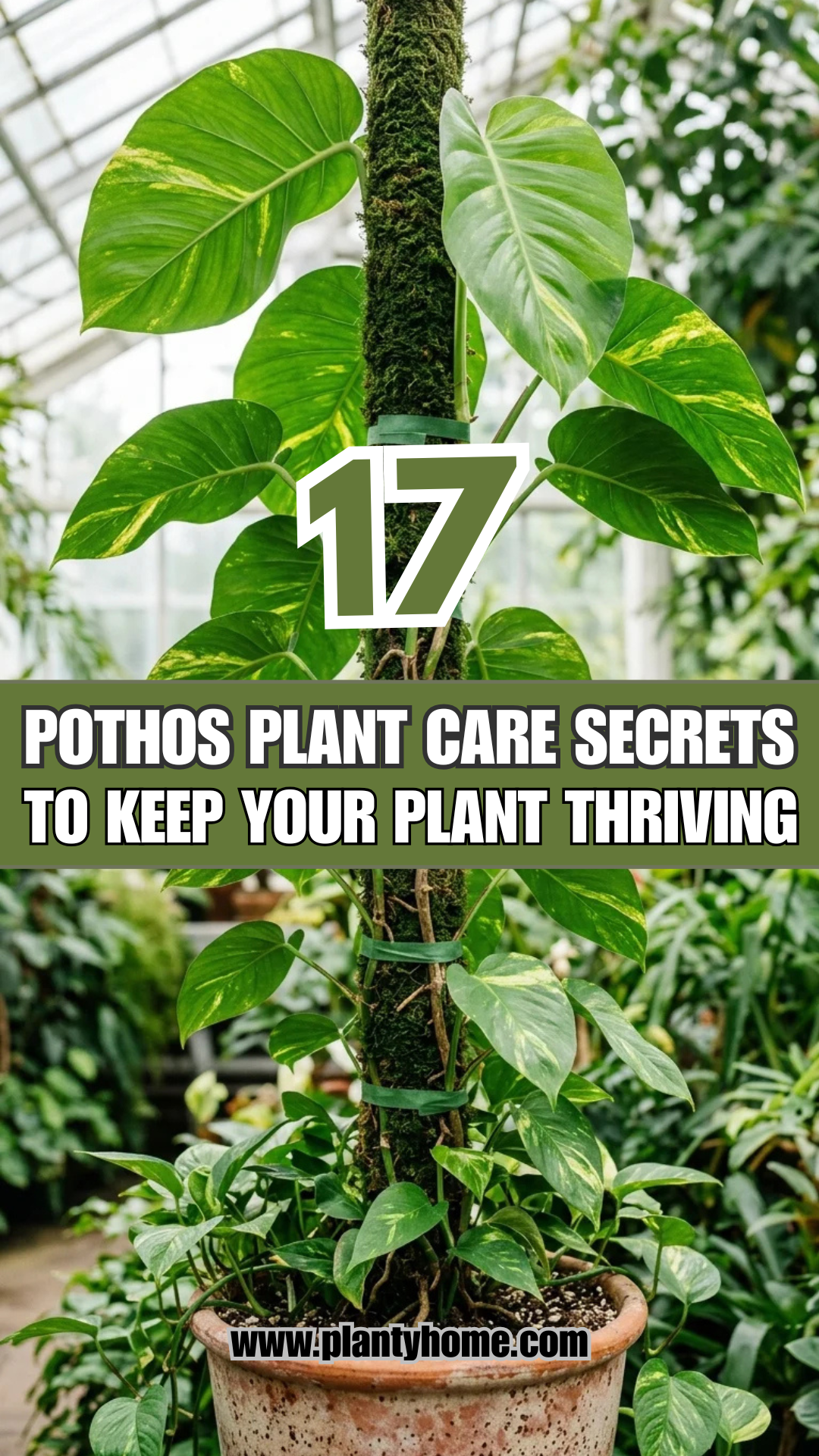
The Pothos (Epipremnum aureum), often called “Devil’s Ivy,” is the undisputed champion of the houseplant world. Renowned for its near-indestructibility and rapid growth, it is the go-to choice for beginners and seasoned collectors alike. However, there is a massive difference between a Pothos that is merely surviving and one that is truly thriving.
To transform your vine from a leggy, sparse plant into a thick, vibrant jungle canopy, you need to look beyond the basic “water once a week” advice. Here are 17 expert secrets to mastering Pothos care.
1. Bright Light
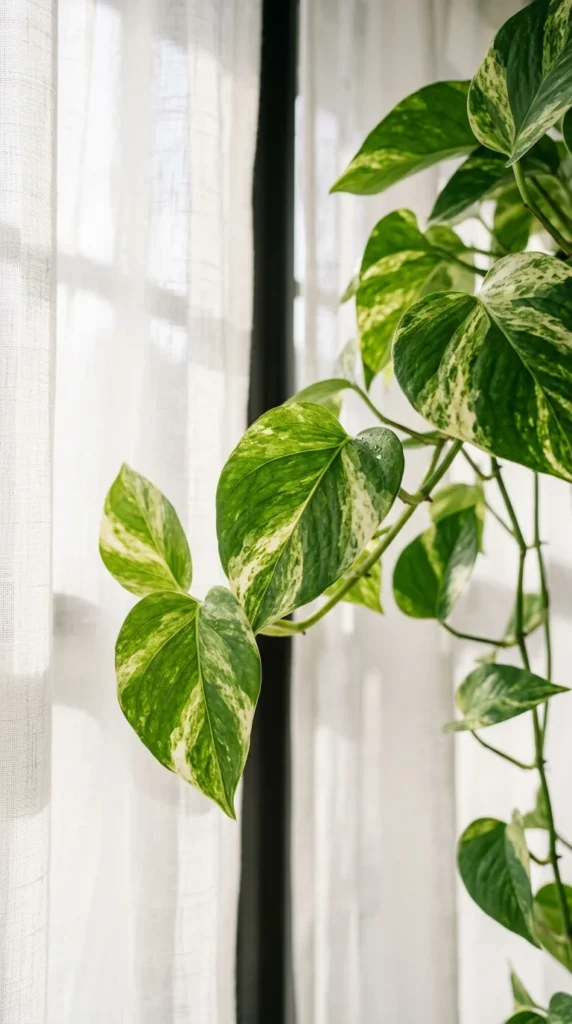
While Pothos are famous for tolerating low light, “tolerating” is not the same as “loving.” If you want your plant to grow quickly and maintain its beautiful variegation—those splashes of white, cream, or gold—it needs bright, indirect light. In low light, the plant often “reverts” to solid green to maximize its chlorophyll production, losing its decorative patterns. Position your plant near a north or east-facing window for the best results.
2. Drainage
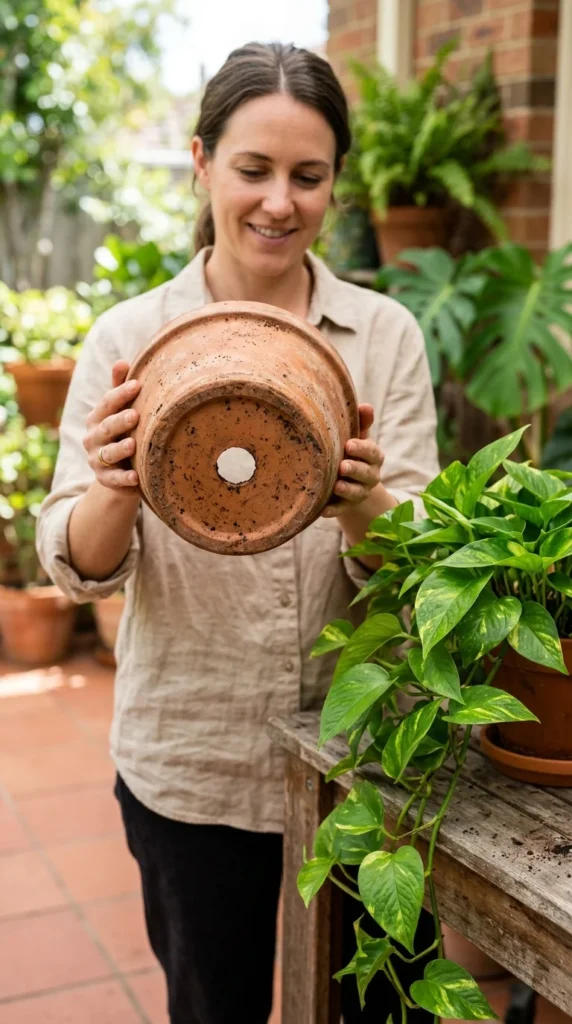
The quickest way to kill a Pothos is through root rot caused by standing water. These plants prefer to have their roots in a medium that breathes. Always ensure your pot has at least one large drainage hole. If you find a decorative “cachepot” without holes, keep the Pothos in a plastic nursery pot inside it, so you can easily remove it to drain excess water after a drink.
3. Airy Soil
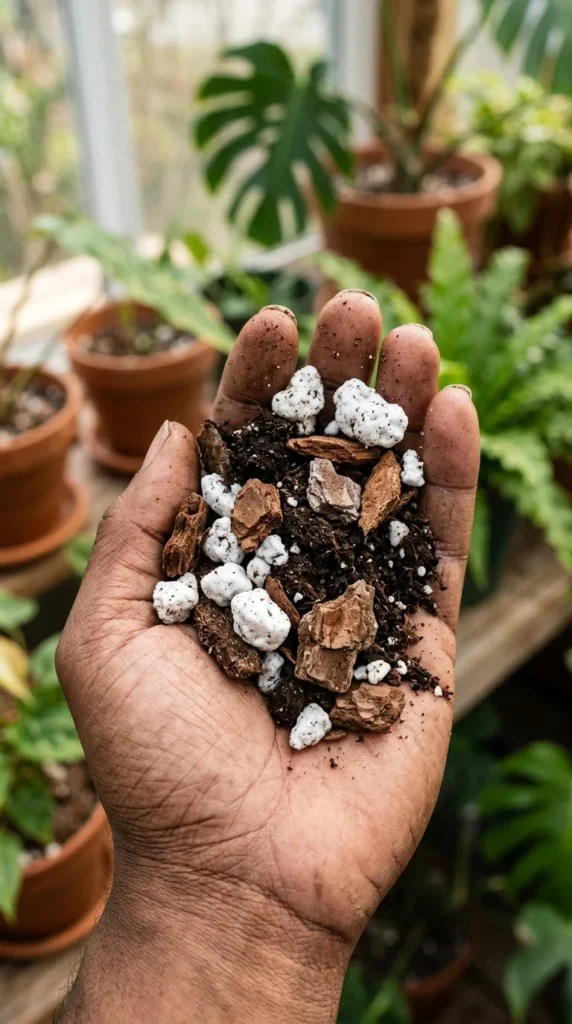
Standard potting soil is often too heavy and retains too much moisture for a Pothos. To keep the roots happy, create a custom mix. Combine two parts high-quality potting soil with one part perlite and one part orchid bark. This creates “macro-pores” in the soil, allowing oxygen to reach the roots and water to flow through freely, mimicking the airy forest floor of their natural habitat.
4. Regular Pruning
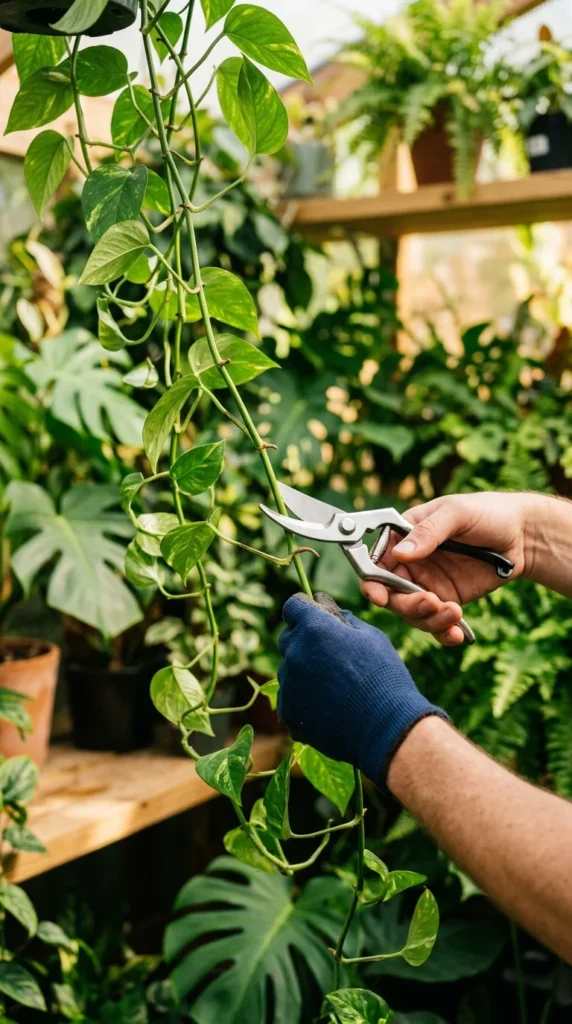
If your Pothos looks “leggy”—meaning long vines with very few leaves—pruning is the solution. Cutting the vines encourages the plant to branch out from the base. Always cut just below a “node” (the little brown bump where a leaf meets the stem). This stimulates the plant to release growth hormones, resulting in a much fuller, bushier appearance over time.
5. Vertical Support
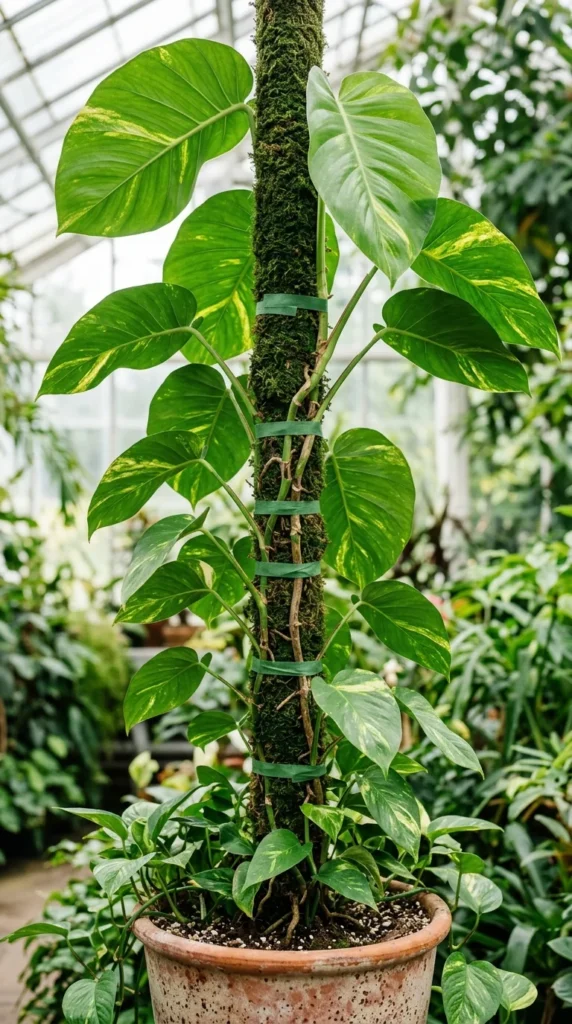
In the wild, Pothos are climbers, not trailers. When they grow upward, their leaves naturally become significantly larger and may even develop “fenestrations” (holes like a Monstera). By providing a moss pole or a cedar plank, you tap into the plant’s natural instincts. Keep the moss pole damp to encourage the aerial roots to grip and grow into the support.
6. Balanced Feeding
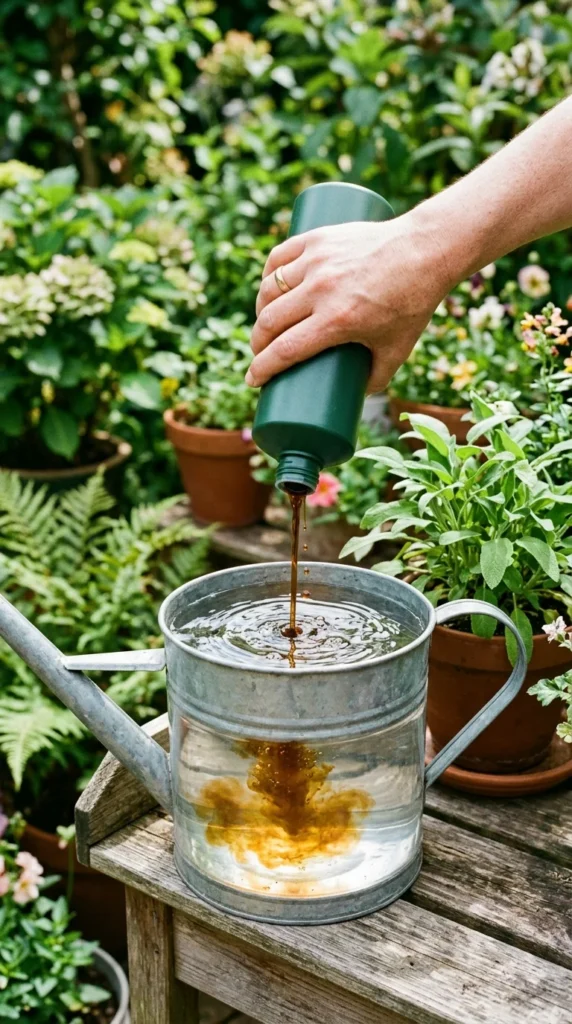
Pothos aren’t heavy feeders, but they do need nutrients to produce those long vines. During the growing season (spring and summer), use a balanced, water-soluble fertilizer (20-20-20) diluted to half-strength every four to six weeks. Avoid fertilizing in the winter when the plant’s growth slows down, as the salts can build up in the soil and burn the roots.
7. Water Cuttings
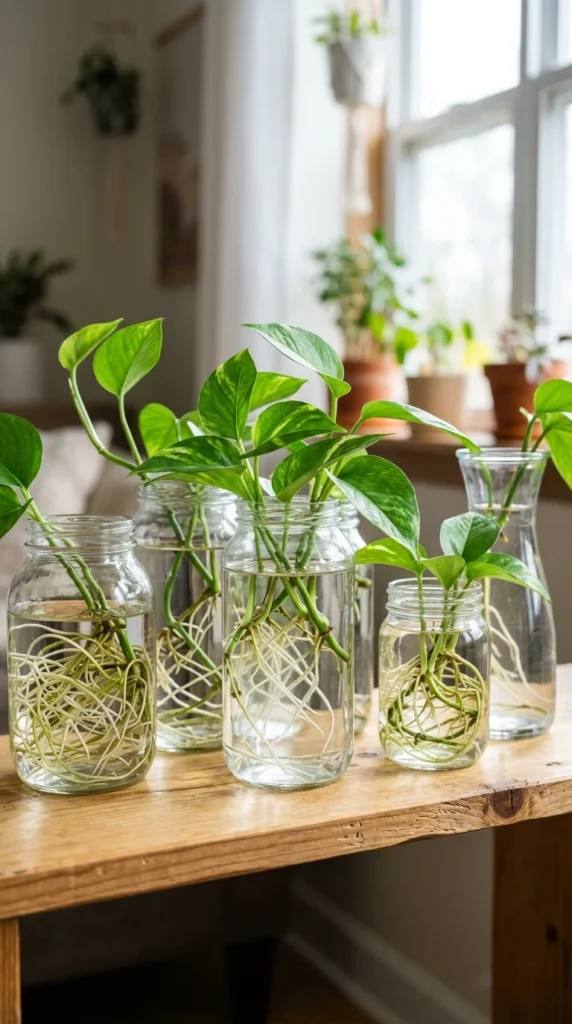
One of the best-kept secrets to a massive Pothos is “propagate and replant.” Take your prunings, stick them in a jar of clean water, and wait for roots to develop. Once the roots are two inches long, plant them back into the top of the original mother pot. This covers any bare soil and gives the illusion of a single, incredibly thick plant.
8. Clean Leaves
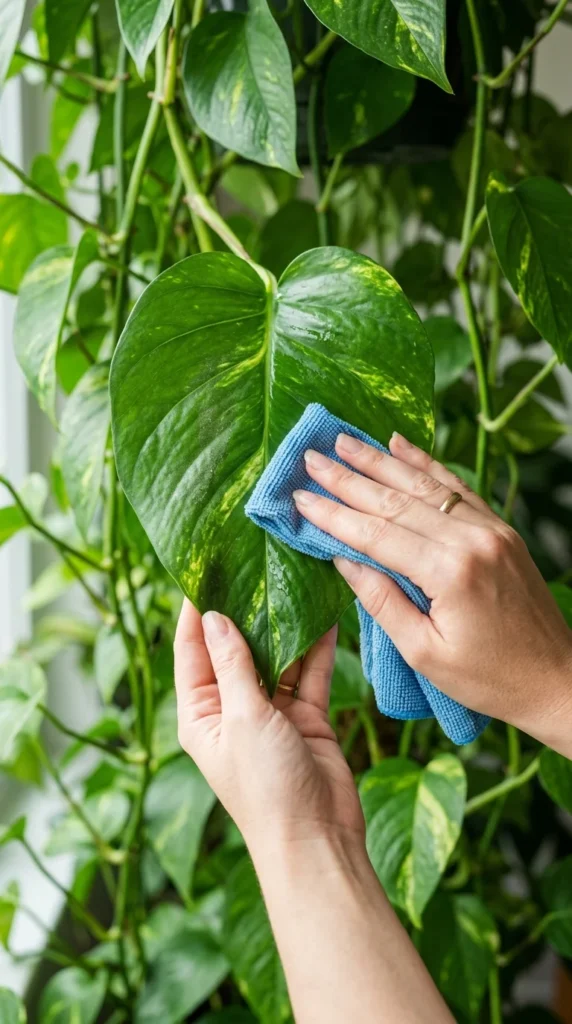
In a home environment, dust accumulates on leaves and blocks the “stomata,” the tiny pores the plant uses to breathe and photosynthesize. Once a month, take a damp cloth and gently wipe down every leaf. Not only does this make the plant look instantly more vibrant and shiny, but it also improves the plant’s ability to convert light into energy.
9. Tropical Warmth
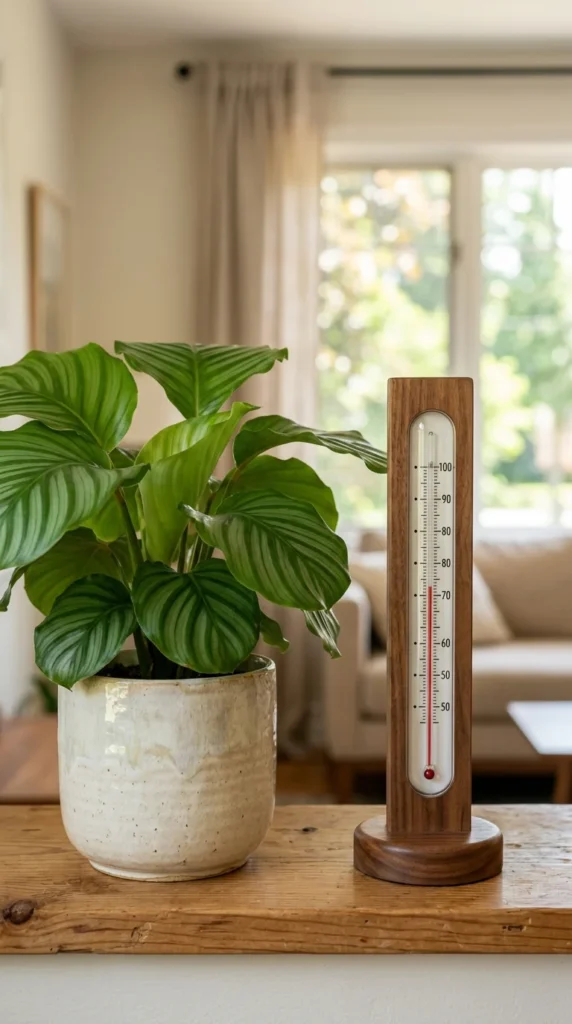
Pothos are tropical plants that thrive in temperatures between 65°F and 85°F (18°C – 29°C). They are very sensitive to cold drafts. Keep them away from air conditioning vents in the summer and drafty windows or doors in the winter. If the temperature drops below 50°F, the plant may stop growing or suffer from black, “chilled” spots on the foliage.
10. Added Moisture
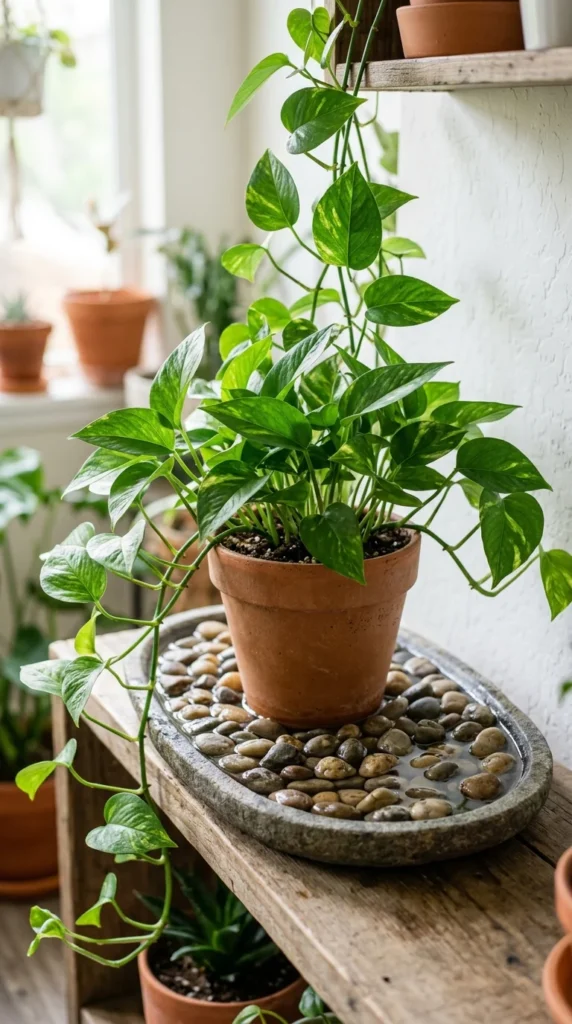
While Pothos can handle the dry air of most modern homes, they truly flourish in higher humidity (50-70%). You can boost humidity by grouping plants together, using a humidifier, or placing the pot on a pebble tray filled with water. Just ensure the bottom of the pot isn’t touching the water, as this leads to soggy soil.
11. Small Pots
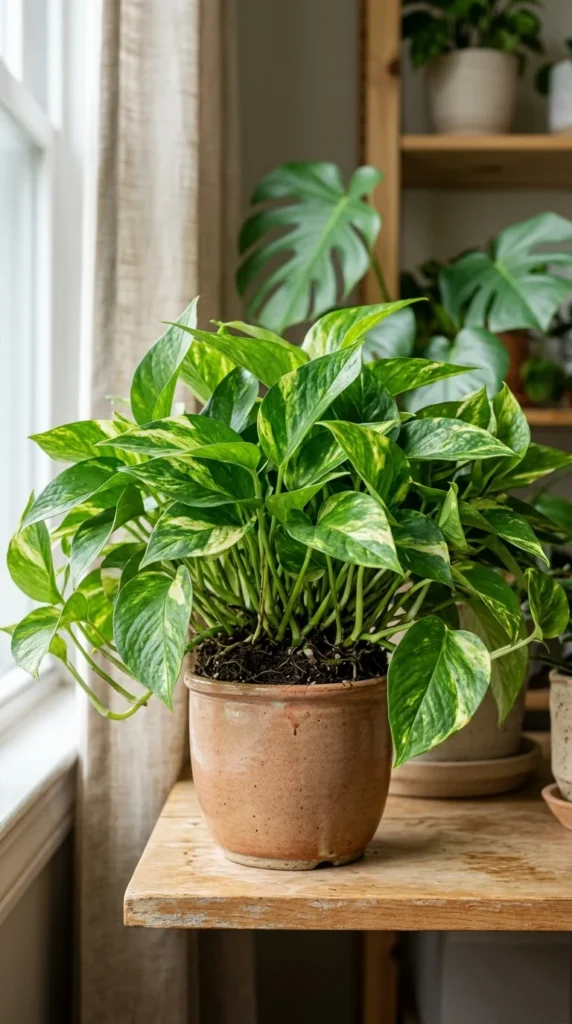
Pothos actually prefer to be slightly root-bound. If you put a small plant in a massive pot, the excess soil stays wet for too long because the roots can’t drink it all up. This leads to rot. Only move up one pot size (about 2 inches in diameter) when you see roots curling around the bottom of the drainage holes or pushing through the top of the soil.
12. Neem Oil
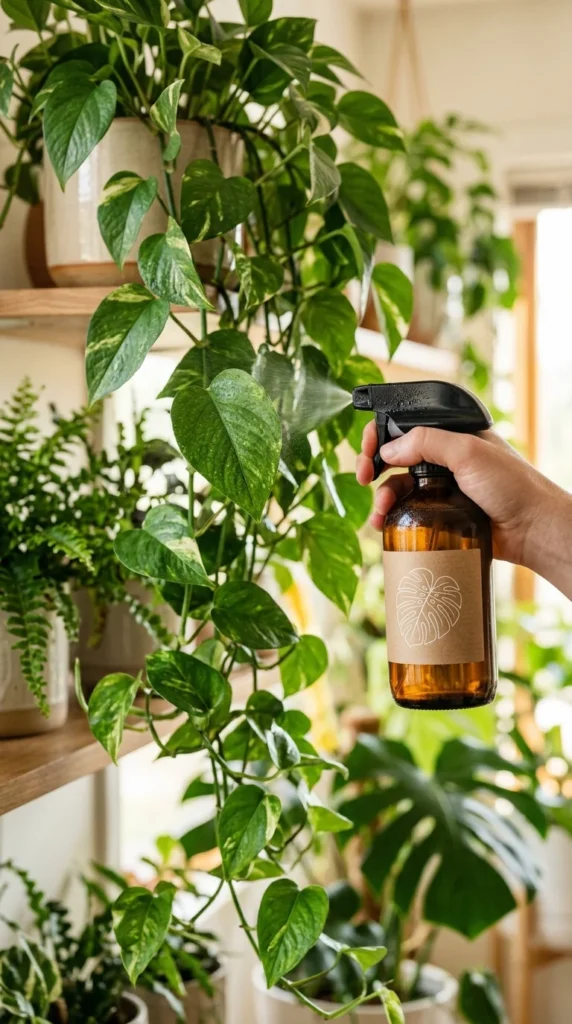
Pests like mealybugs, spider mites, and scale occasionally target Pothos. Make it a habit to inspect the undersides of the leaves once a week. Using a diluted Neem oil spray as a preventative measure every few weeks can keep these pests at bay. If you see white, cottony tufts (mealybugs), wipe them off immediately with a cotton swab dipped in rubbing alcohol.
13. Color Maintenance
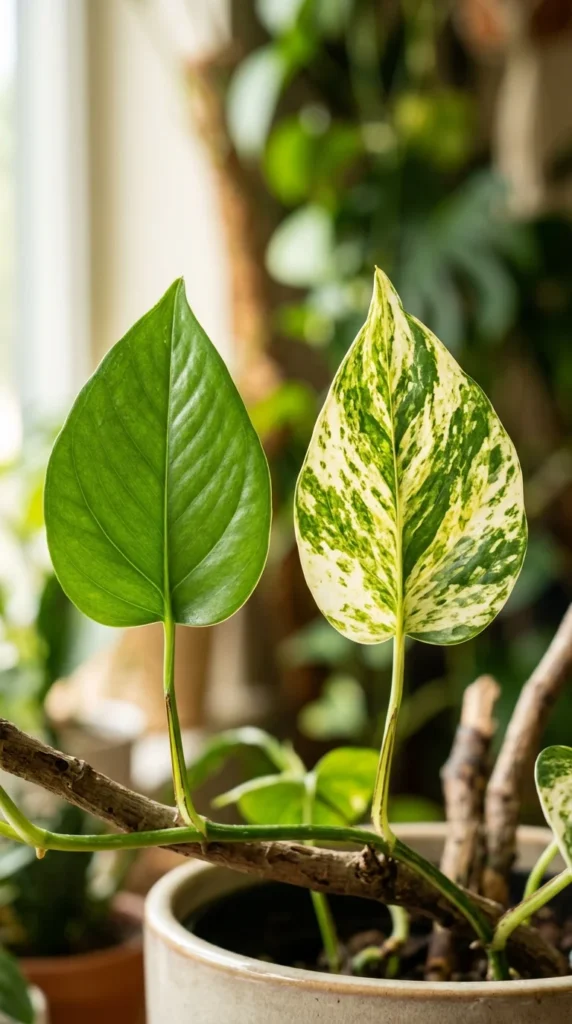
If your variegated Pothos (like a Marble Queen or Golden Pothos) starts growing solid green leaves, it’s a cry for help. The plant is producing more chlorophyll to survive in a low-light spot. To get the color back, move it to a brighter location and prune the solid green stems back to the last variegated leaf. This forces the plant to “re-start” from a point where the variegated DNA is active.
14. Bottom Watering
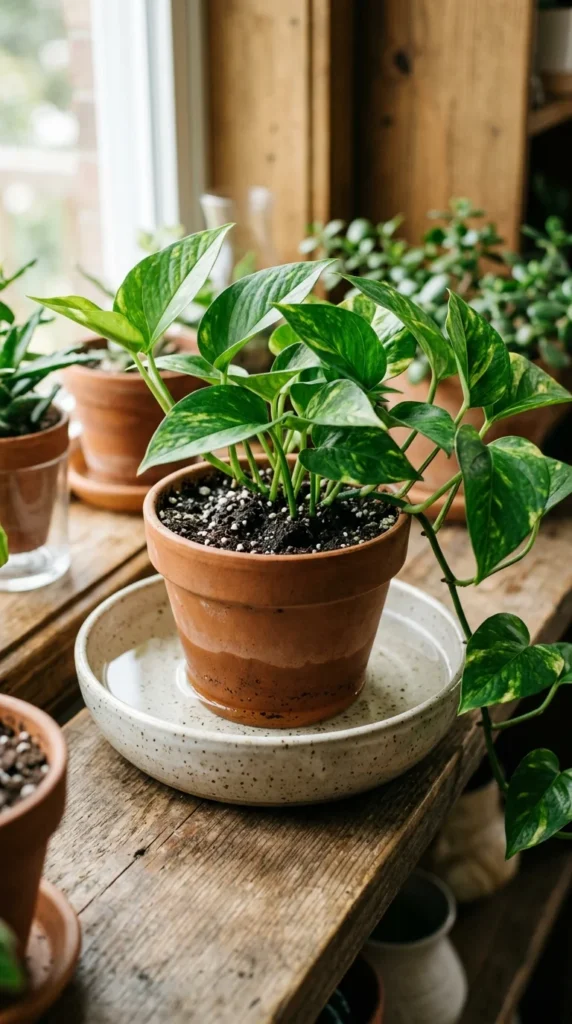
Top watering can sometimes leave “dry pockets” in the soil where roots eventually die off. Every few waterings, try “bottom watering.” Place the pot in a bowl of water for 30 minutes, allowing the soil to wick up moisture through the drainage holes. This ensures the entire root ball is saturated and encourages roots to grow downward toward the moisture.
15. Sun Rotation
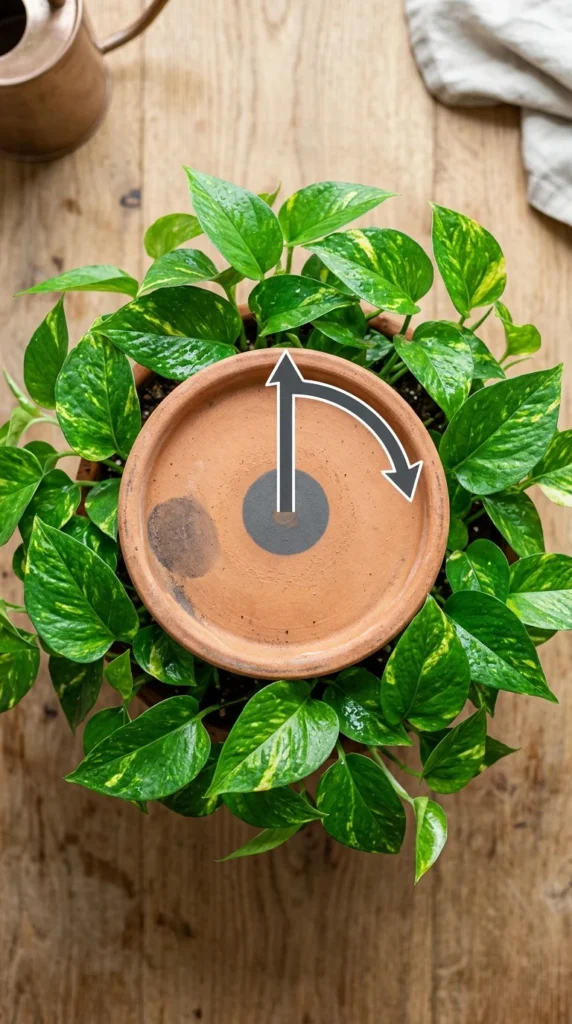
Plants naturally grow toward their light source—a phenomenon called phototropism. If you never move your pot, your Pothos will eventually become lopsided, with all the leaves facing the window and a bare back. Give the pot a quarter-turn every time you water it. This ensures even growth and a balanced, symmetrical silhouette.
16. Winter Rest
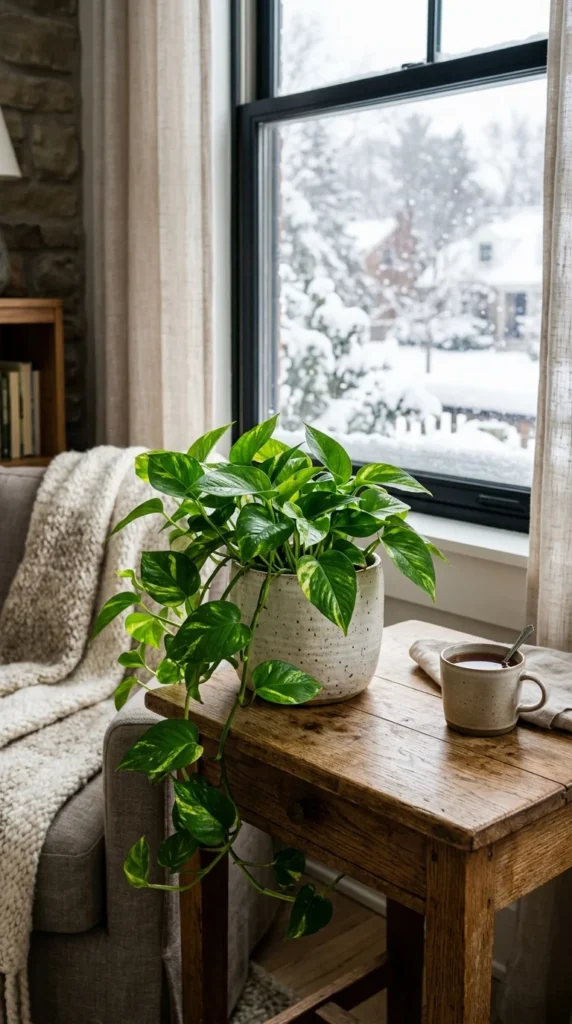
During the winter months, when daylight hours are shorter, your Pothos will enter a semi-dormant state. During this time, its water needs will drop significantly. You might only need to water it once every two or three weeks. Always check the soil moisture with your finger before adding water; if the top two inches are still damp, wait a few more days.
17. Safe Placement
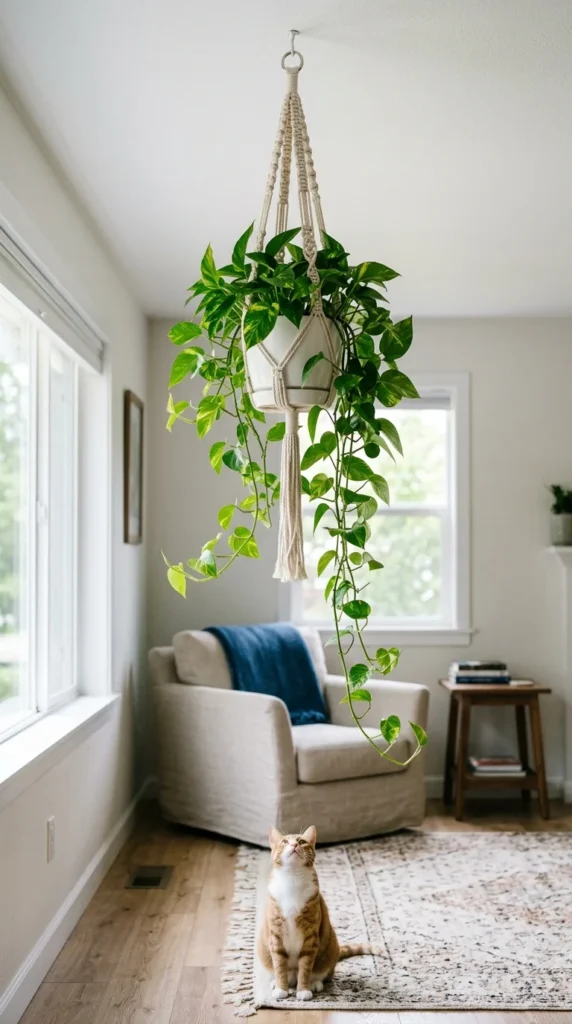
It is important to remember that Pothos contain calcium oxalate crystals, which are toxic if ingested by pets or humans. They can cause swelling of the mouth and digestive upset. To keep everyone safe while still enjoying the beauty of the plant, use hanging planters or high wall-mounted shelves. This keeps the trailing vines out of reach of curious cats, dogs, or toddlers.