
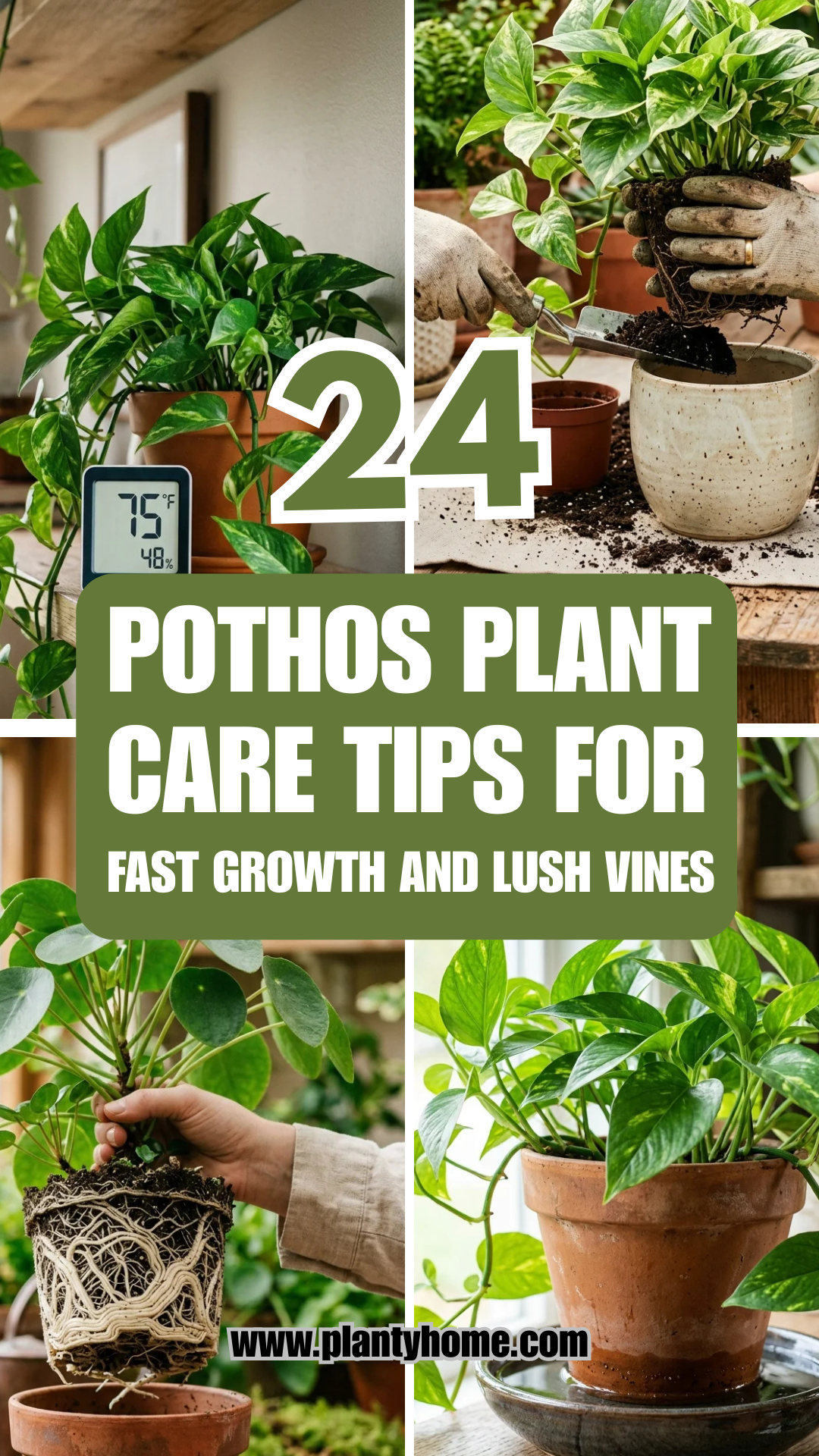
The Pothos (Epipremnum aureum), often called “Devil’s Ivy,” is the undisputed champion of the indoor gardening world. Known for its near-immortality and rapid growth, it is the perfect companion for both forgetful beginners and seasoned “plant parents” looking to create an indoor jungle. However, there is a significant difference between a Pothos that is merely surviving and one that is thriving with thick, lush vines and giant, variegated leaves. If you want to transform your leggy specimen into a cascading masterpiece, follow these 24 expert tips to maximize growth and vitality.
1. Lighting
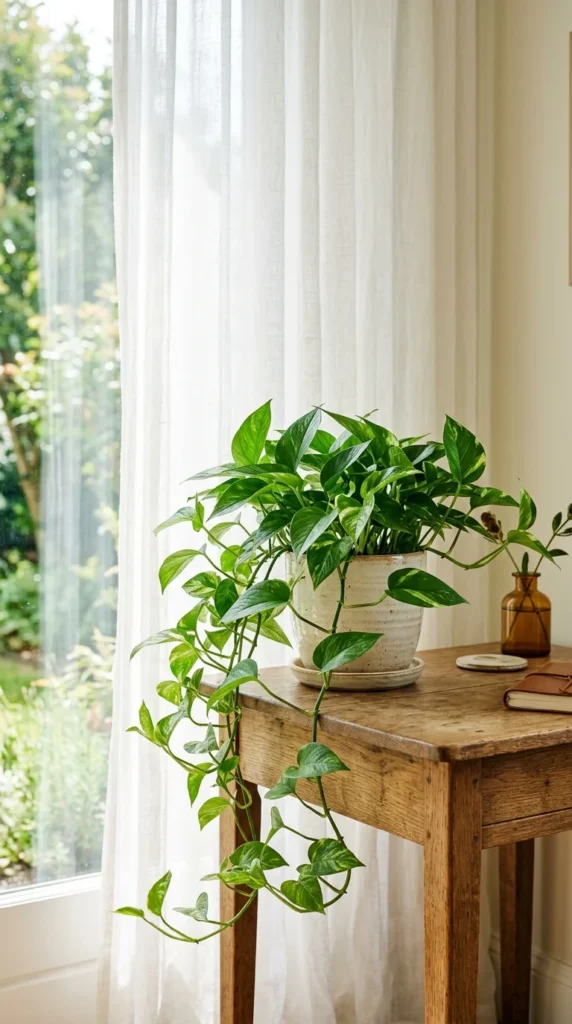
While Pothos are famous for tolerating low light, they won’t grow “fast” in a dark corner. To achieve rapid growth and maintain vibrant variegation (the white or yellow splashes on the leaves), place your plant in bright, indirect light. Direct afternoon sun can scorch the leaves, but a spot near a north or east-facing window provides the perfect balance of energy for photosynthesis without the risk of leaf burn.
2. Watering
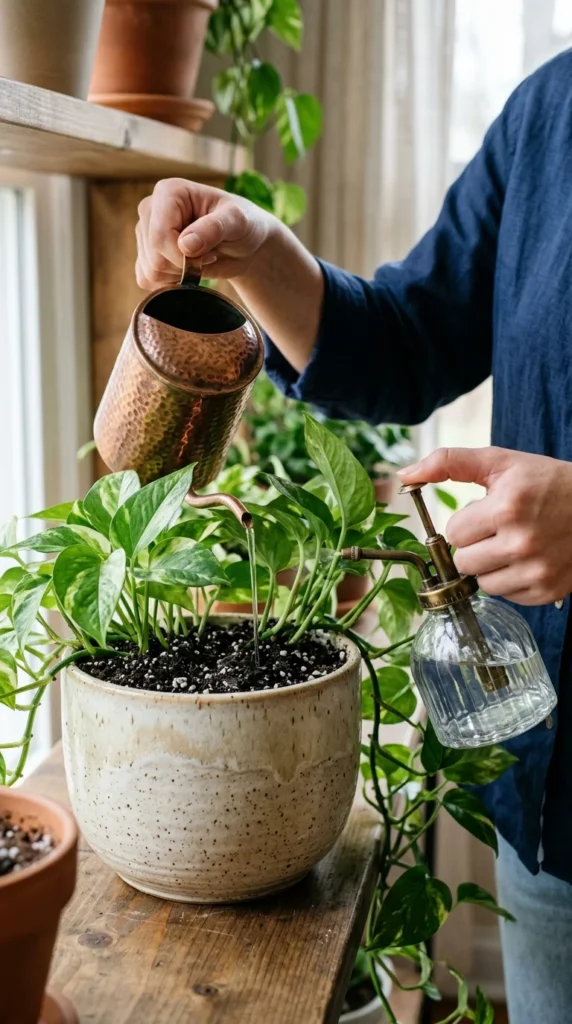
Overwatering is the number one killer of Pothos. The secret to fast growth is “informed neglect.” Wait until the top 2 to 3 inches of soil are completely dry before watering again. When the leaves start to droop slightly, the plant is telling you it’s thirsty. A deep soak until water runs out of the drainage holes encourages the roots to grow deep and strong.
3. Drainage
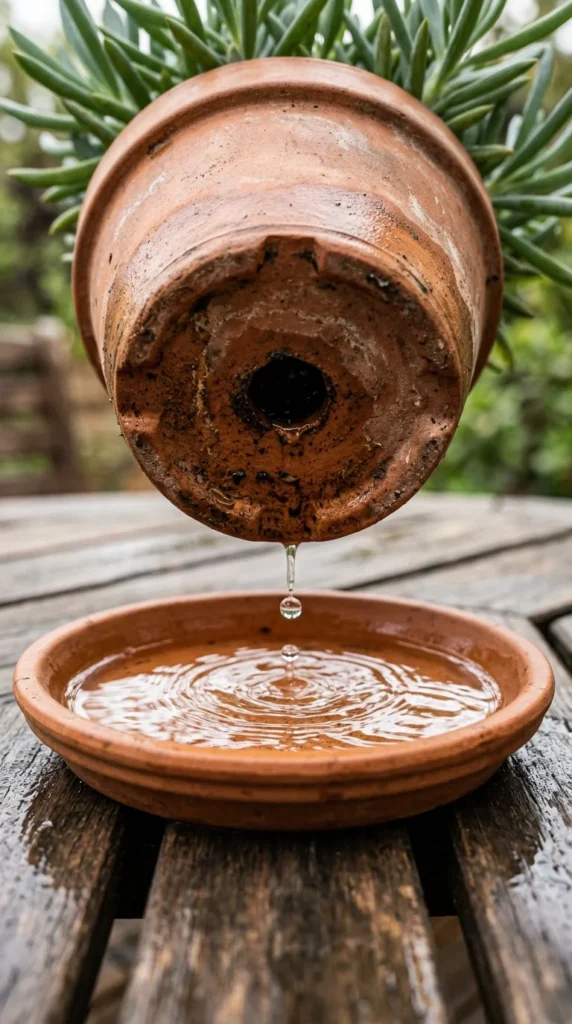
Never let your Pothos sit in “wet feet.” Stagnant water at the bottom of the pot leads to root rot, which halts growth instantly. Always use a pot with at least one large drainage hole. If you have a decorative “cachepot” without holes, keep the plant in a plastic nursery liner inside it so you can easily remove it to drain excess water after a drink.
4. Humidity
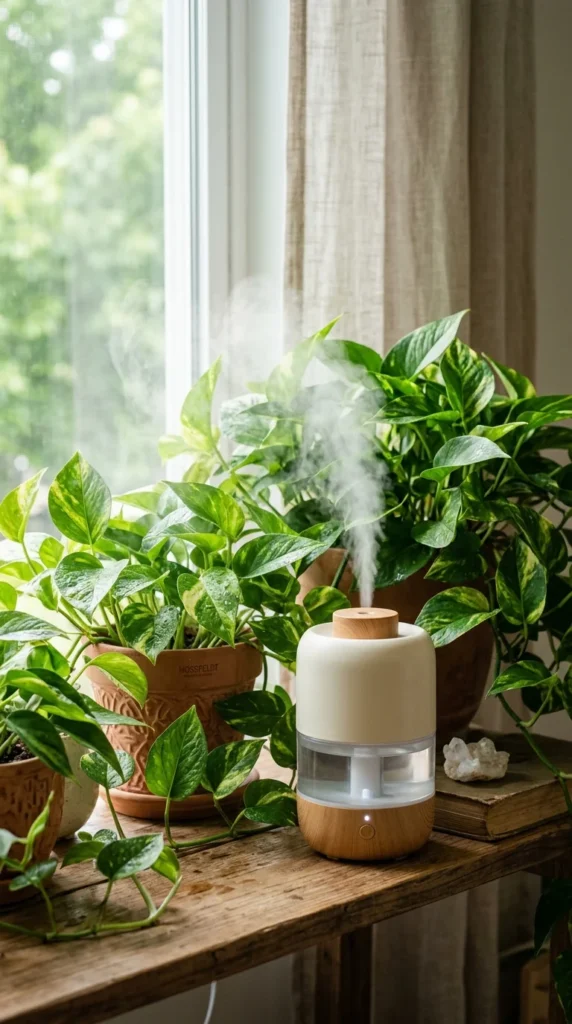
Pothos are native to the tropical forests of French Polynesia, where humidity is high. While they adapt well to dry indoor air, increasing the humidity to 50–70% will result in larger leaves and faster vine extension. You can achieve this by misting the leaves, using a humidifier, or placing the pot on a tray filled with pebbles and water.
5. Temperature

These plants love warmth. They grow fastest when temperatures are kept between 70°F and 90°F (21°C to 32°C). If the temperature drops below 55°F, the plant’s metabolism slows down significantly, and growth will stall. Keep your Pothos away from cold drafts, air conditioning vents, and frosty windows during winter.
6. Soil
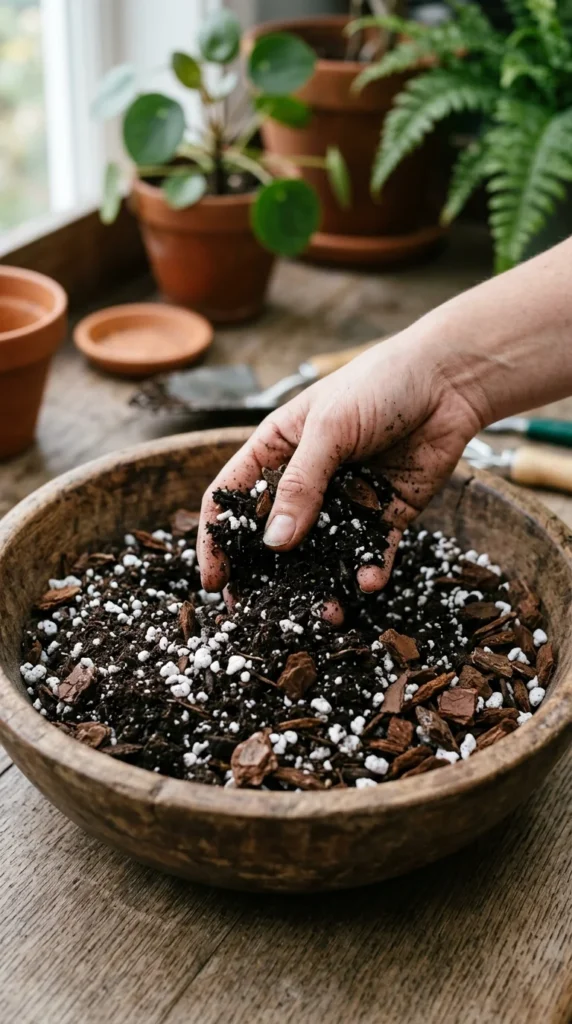
Standard potting soil can often be too heavy and suffocating for Pothos roots. For explosive growth, use a well-draining mix. A blend of two parts potting soil, one part perlite, and one part orchid bark allows for maximum aeration. This ensures the roots get plenty of oxygen, which is essential for the plant to push out new foliage.
7. Fertilizing
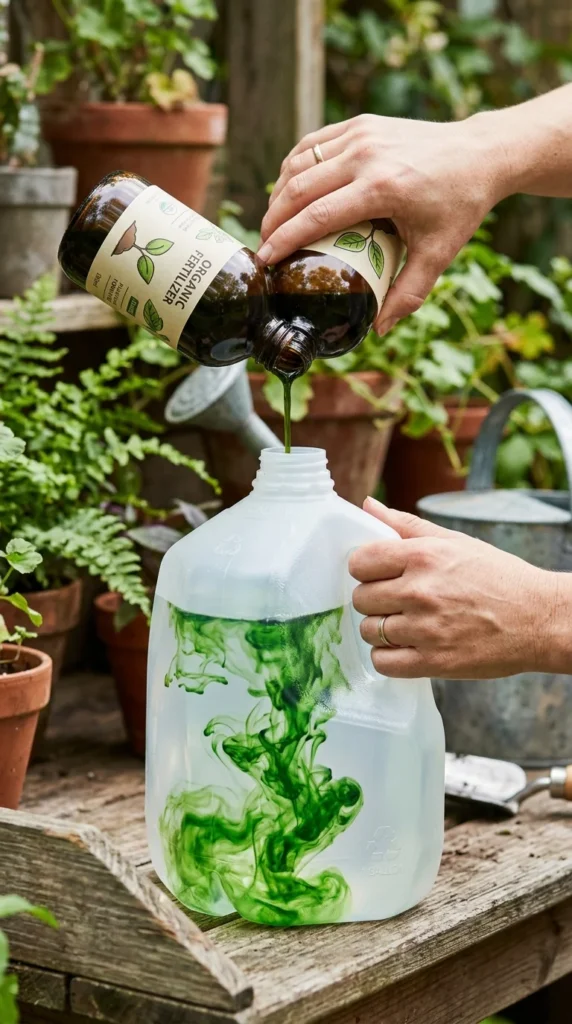
To get those long, lush vines, you need to feed your plant. During the growing season (spring and summer), use a balanced, water-soluble liquid fertilizer every 4 to 6 weeks. Pothos are particularly fond of nitrogen, which fuels leaf and stem development. Reduce feeding in the winter when the plant’s growth naturally slows down.
8. Pruning
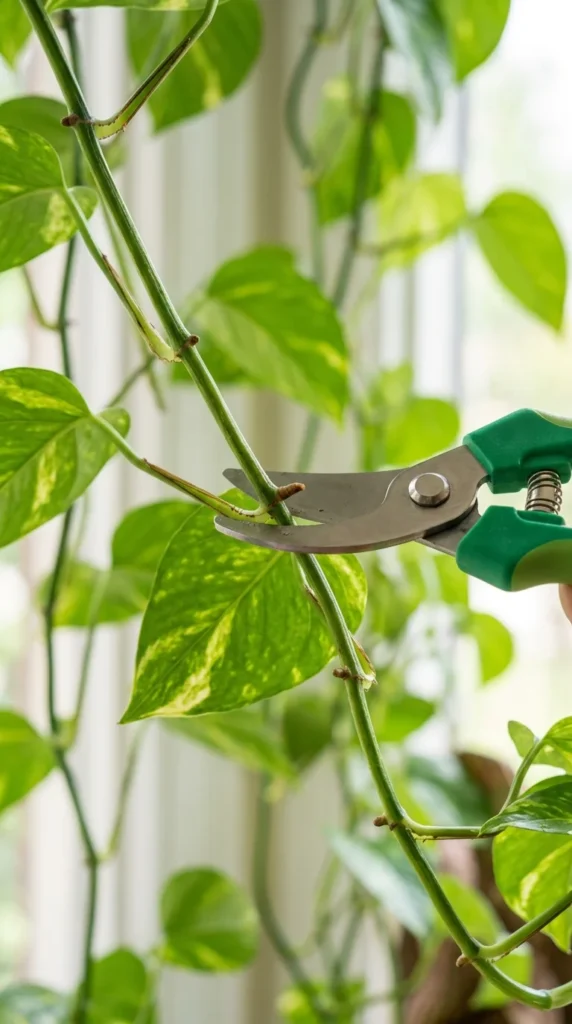
It may seem counterintuitive, but cutting your plant makes it grow faster and fuller. Pruning leggy, leafless vines encourages the plant to branch out from the base. Always cut just above a node (the little bump where a leaf meets the stem). This stimulates the plant to send out new growth points, resulting in a bushier appearance rather than one long, thin strand.
9. Climbing
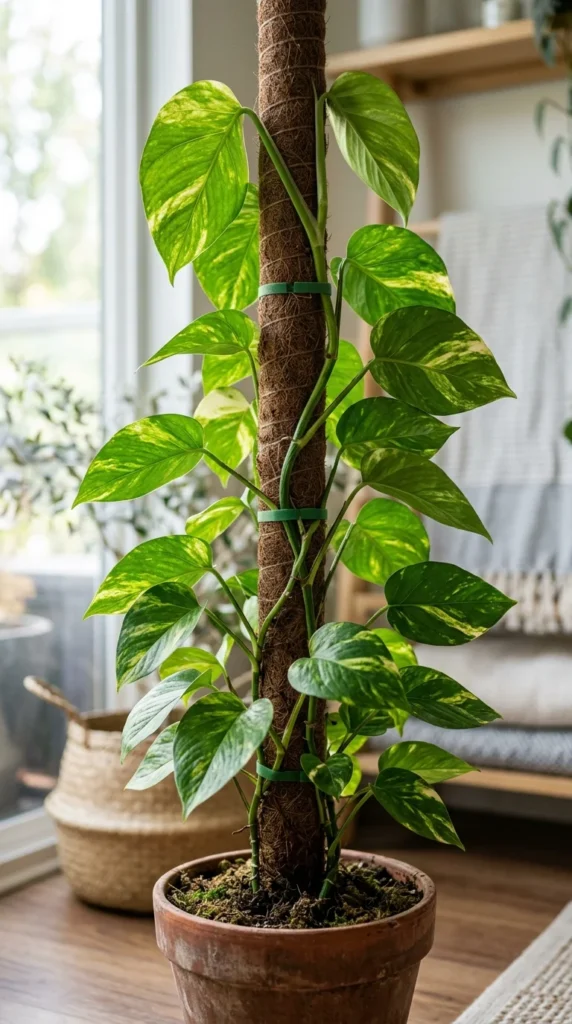
In the wild, Pothos are climbers, not trailers. When a Pothos climbs upward on a moss pole or trellis, its leaves will naturally grow much larger—sometimes even developing “fenestrations” (holes) like a Monstera. Providing a vertical support mimics its natural habitat and signals the plant to produce thick, robust vines.
10. Propagation
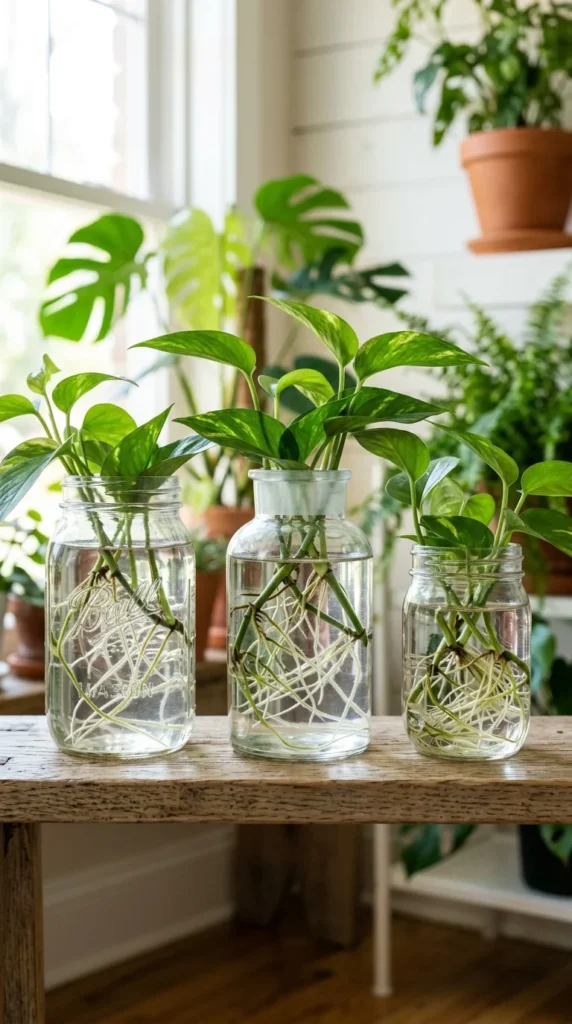
Don’t throw away your prunings! Pothos are incredibly easy to propagate in water. Simply place a cutting with at least one node in a jar of clean water. Once the roots are a few inches long, you can plant them back into the original pot to fill out any “bald” spots at the top, creating a much thicker-looking plant.
11. Cleaning

Dust buildup on leaves blocks sunlight and prevents the plant from photosynthesizing efficiently. Every few weeks, wipe the leaves with a damp cloth or give the entire plant a gentle “shower” in the sink. This not only makes the plant look shiny and beautiful but also boosts its energy production levels.
12. Pests
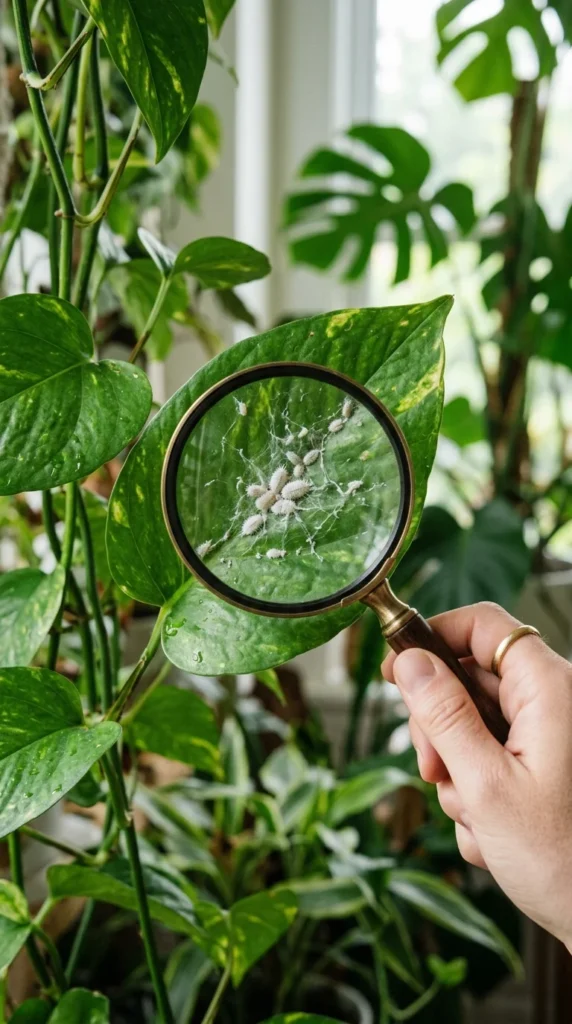
While Pothos are hardy, they can occasionally fall victim to mealybugs, spider mites, or fungus gnats. Regularly inspect the undersides of leaves and the junctions of the stems. If you spot any pests, treat the plant immediately with neem oil or insecticidal soap. A pest-free plant can dedicate all its energy to growth rather than defense.
13. Potting
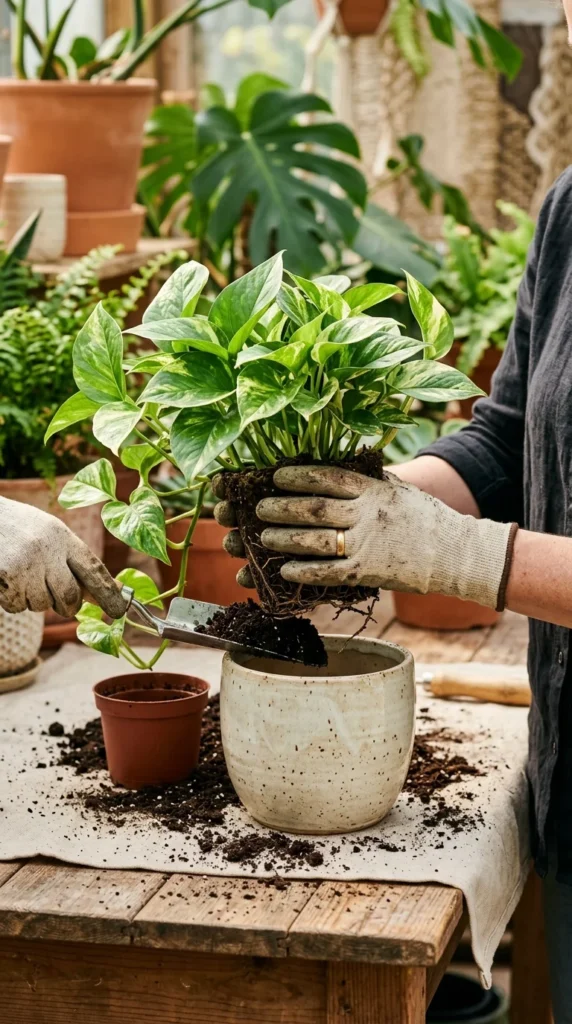
Pothos prefer to be slightly root-bound, but there is a limit. If you notice roots circling the bottom of the pot or poking out of the drainage holes, it’s time to repot. Choose a container only 1 to 2 inches larger in diameter than the current one. Giving the roots a little extra room to expand will often trigger a sudden burst of new top growth.
14. Seasons
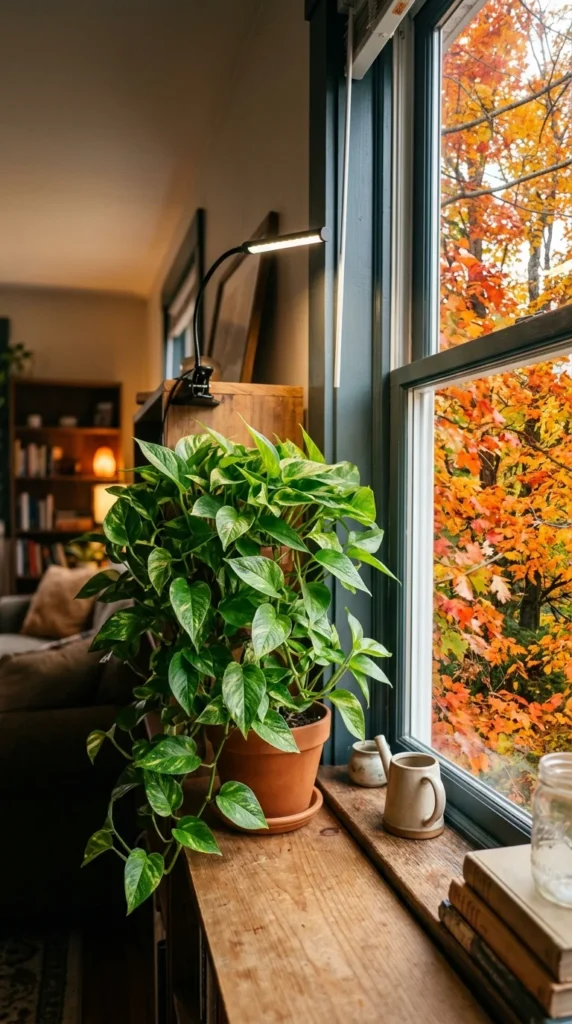
Understand that your Pothos will not grow at the same rate year-round. In the winter, the shorter days and cooler temperatures cause the plant to enter a semi-dormant state. During this time, reduce watering and stop fertilizing. Respecting the plant’s natural rhythm ensures it has the energy stored up for a massive growth spurt come spring.
15. Shine
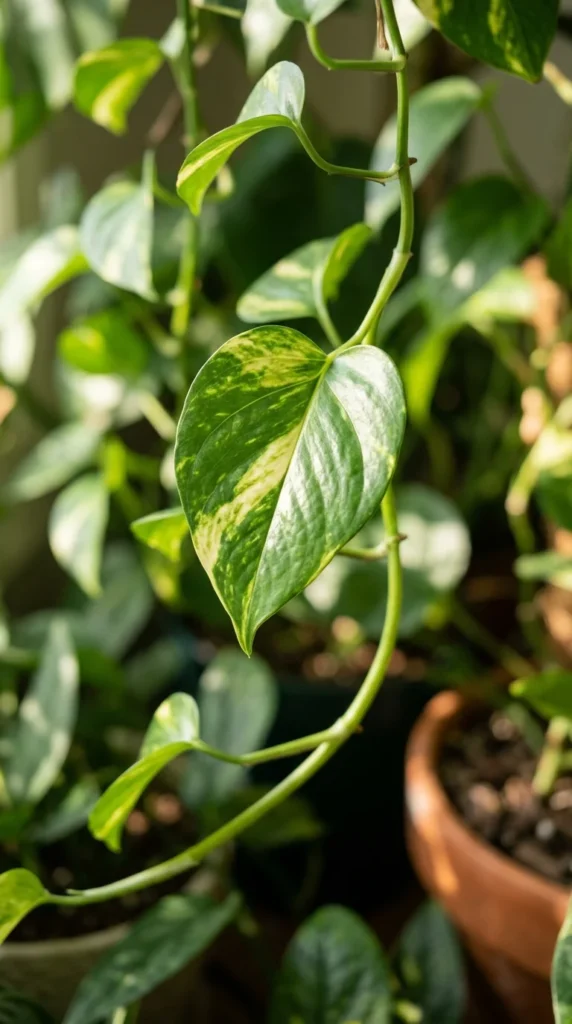
Avoid commercial “leaf shine” products, which can clog the pores (stomata) of the leaves. Instead, use a mixture of water and a tiny drop of mild dish soap, or simply use diluted neem oil. This keeps the leaves looking lustrous and healthy while allowing the plant to breathe and grow at its maximum potential.
16. Nodes
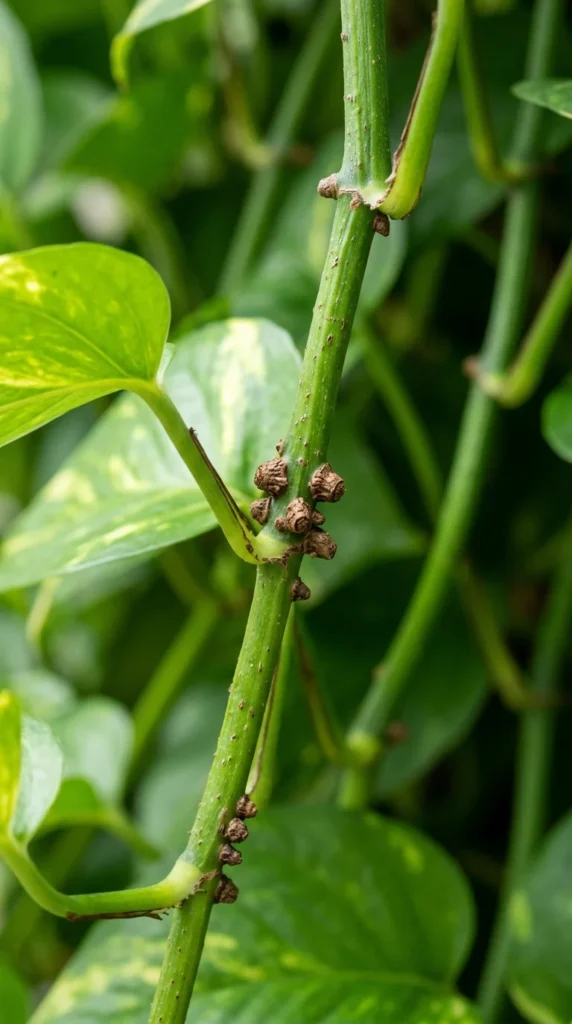
The nodes are the “brain” of the Pothos vine. This is where roots and new leaves emerge. If you want a fuller pot, you can take a long vine and pin the nodes directly onto the soil surface using u-shaped landscape pins. The nodes will grow roots into the soil, and eventually, new stems will sprout from those points, thickening the base of the plant.
17. Water
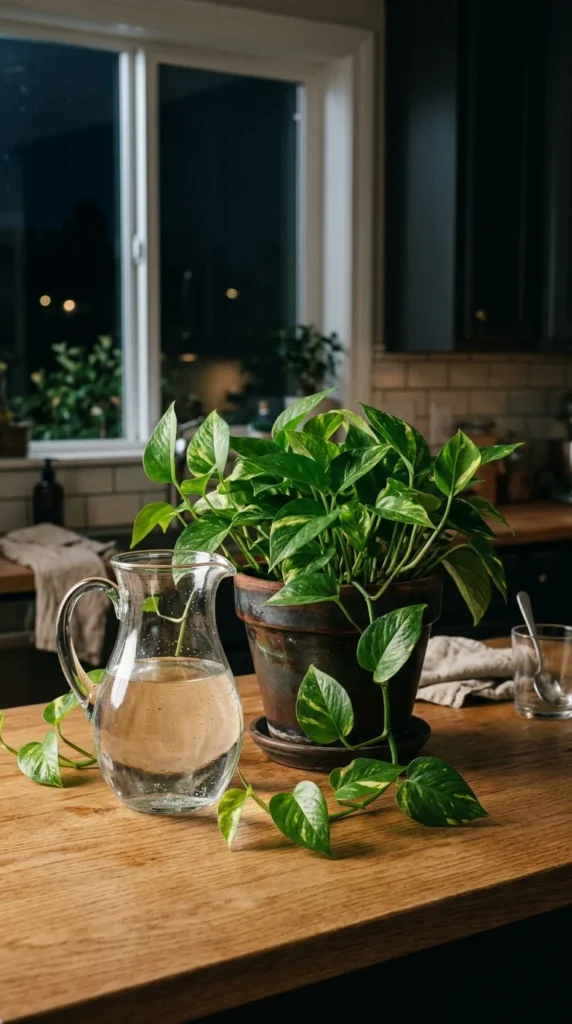
Tap water often contains chlorine and minerals that can build up in the soil over time, causing brown tips on the leaves. If possible, use filtered water, rainwater, or let tap water sit out for 24 hours before using it. This allows the chemicals to dissipate, making the water much gentler on the plant’s sensitive root system.
18. Variegation
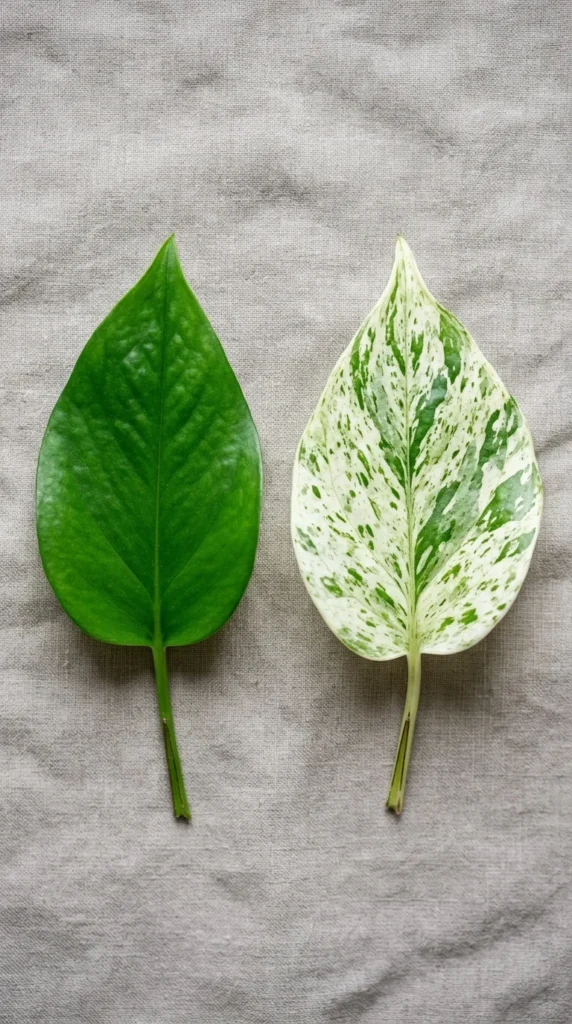
If your variegated Pothos (like a Marble Queen or Golden) is turning solid green, it’s not getting enough light. The plant produces more chlorophyll to compensate for low light levels. To bring back the beautiful patterns and speed up growth, move it to a brighter location. The more variegation the plant has, the more light it needs to thrive.
19. Rootbound
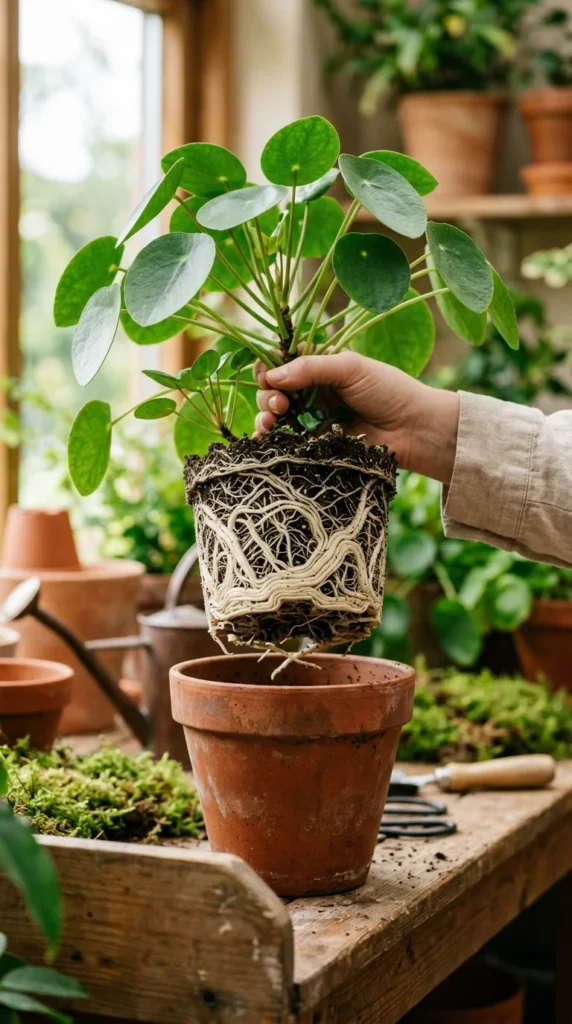
Check the roots once a year. If they are a solid mass with very little soil left, the plant is “rootbound.” While Pothos handle this better than most, an extremely rootbound plant will stop growing because it can no longer absorb enough water or nutrients. Gentle root pruning or moving to a larger pot will solve this “growth plateau.”
20. Circulation
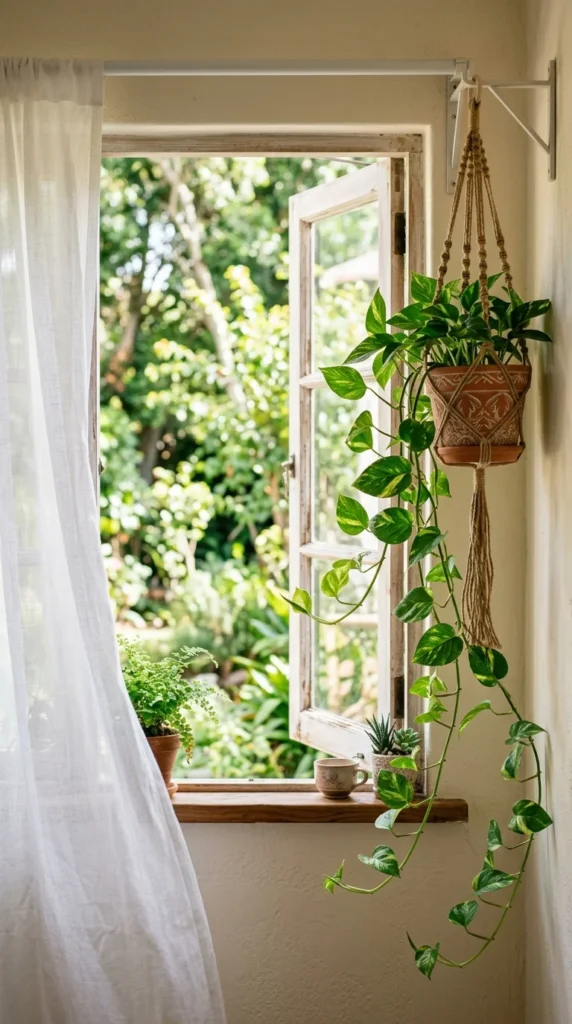
Good air circulation is vital for preventing fungal diseases and strengthening the plant’s stems. Avoid tucking your Pothos into a stagnant, crowded corner. A little bit of airflow helps the soil dry out at a healthy rate and keeps the foliage strong. If the air is too still, the plant may become susceptible to “edema” or leaf spots.
21. Grouping
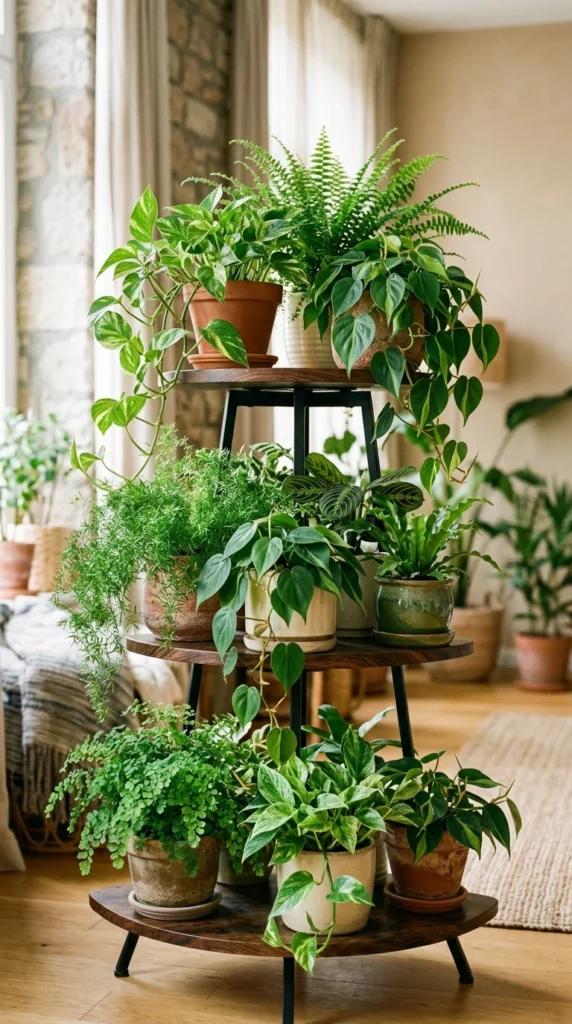
Grouping plants together creates a “micro-environment” with higher humidity. Plants “breathe” out moisture through a process called transpiration. By placing your Pothos near other plants, you create a pocket of humid air that keeps the leaves supple and encourages the vines to stretch out faster.
22. Rotation

Plants naturally grow toward their light source—a phenomenon called phototropism. If you don’t rotate your Pothos, it will become “lopsided,” with all the growth leaning toward the window. Give the pot a quarter-turn every time you water. This ensures even distribution of light and a balanced, symmetrical shape for your trailing vines.
23. Bottom-Watering
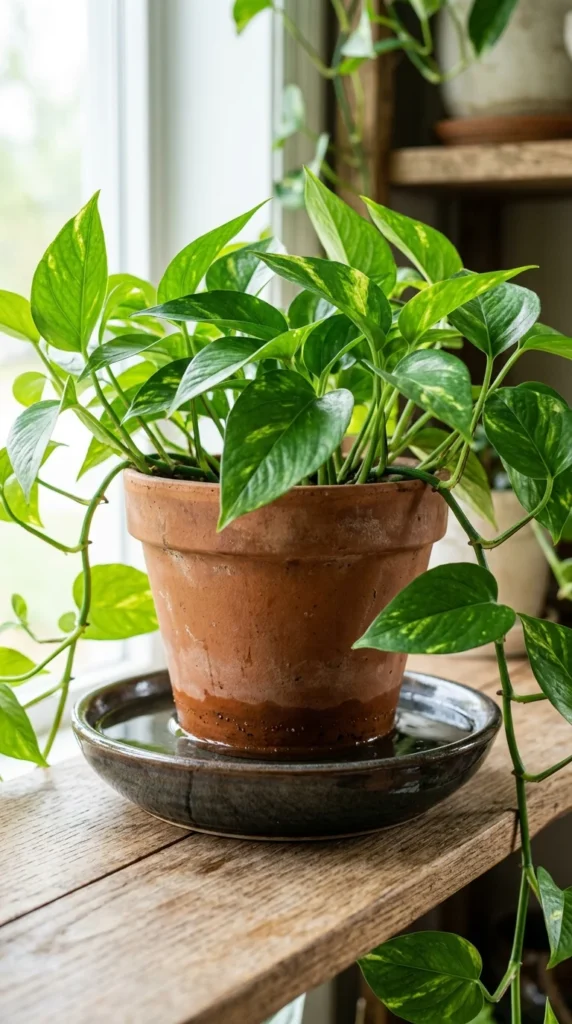
Bottom-watering is a fantastic technique for Pothos. Place the pot in a bowl of water and let it soak for 20 minutes. This ensures the entire root ball is saturated and prevents “dry pockets” in the soil that can happen with top-watering. It also helps prevent fungus gnats, as the top layer of soil stays drier.
24. Consistency
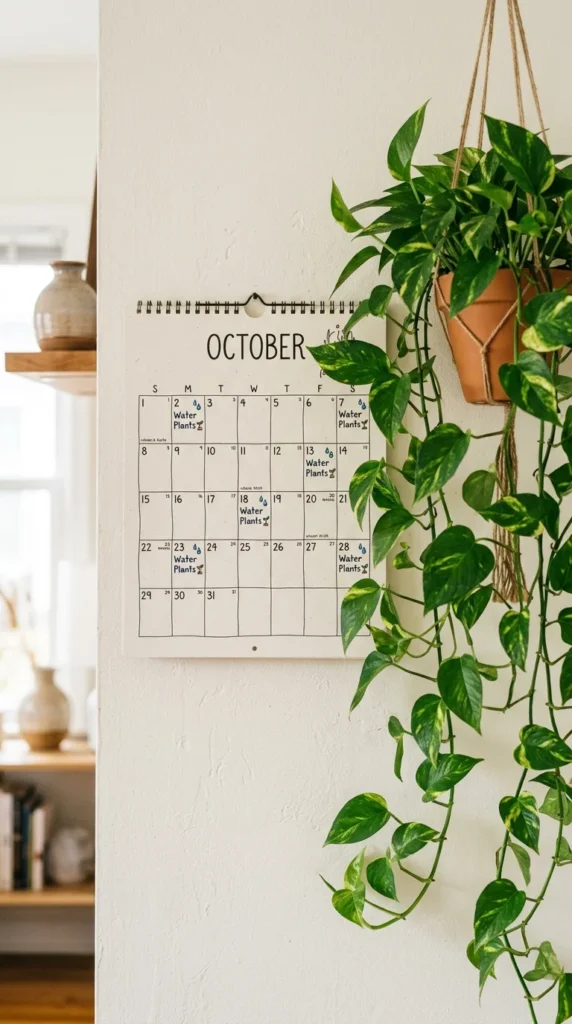
The final and most important tip is consistency. Pothos are hardy, but they thrive on a routine. Try to check your plant’s soil on the same day every week. By providing a stable environment with regular care, you reduce the plant’s stress. A stress-free Pothos is a fast-growing Pothos, ready to turn your home into a lush, green sanctuary.