
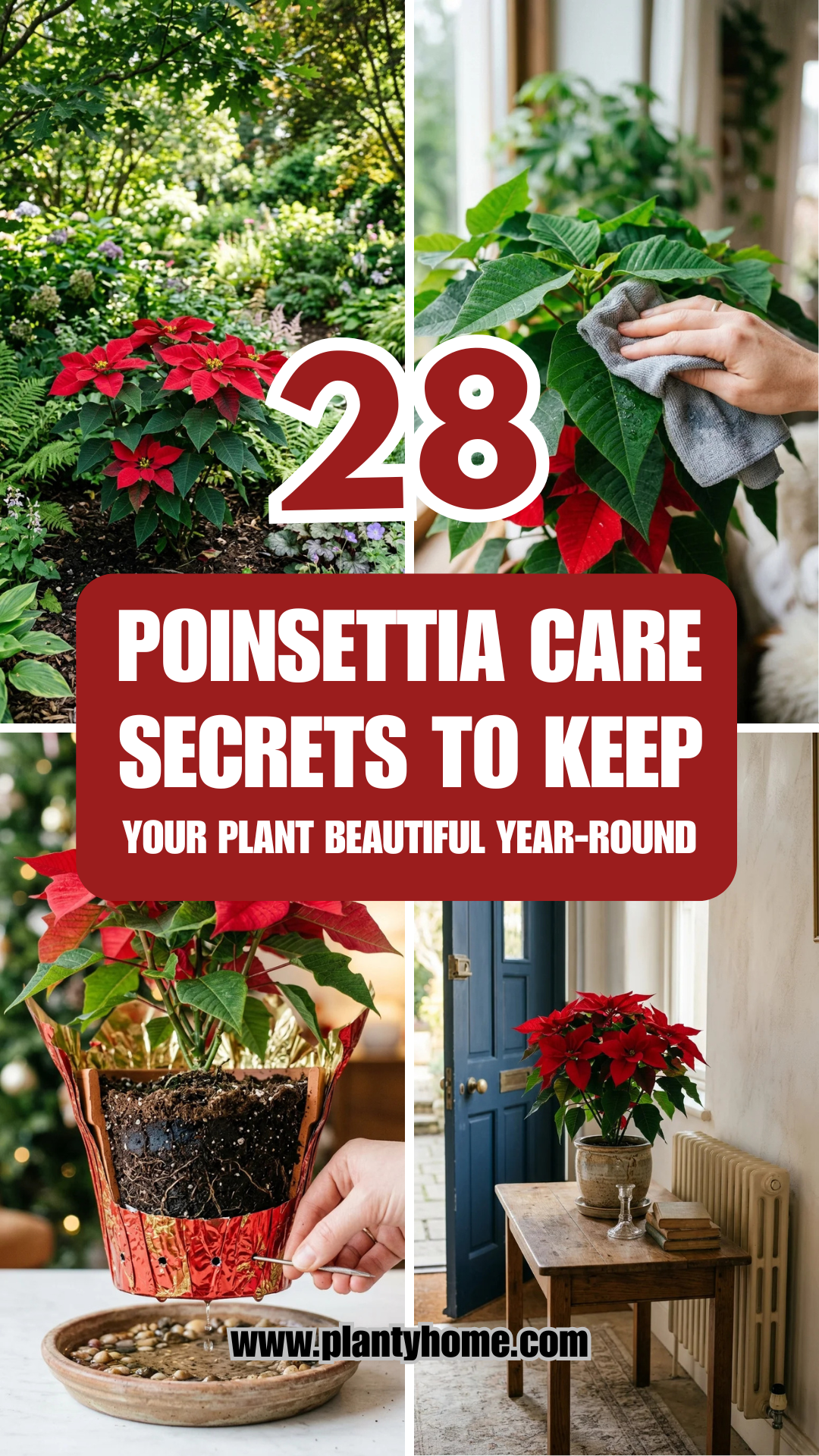
Poinsettias (Euphorbia pulcherrima) are the undisputed royalty of the holiday season. While most people treat them as disposable floral arrangements, these Mexican natives are actually perennial shrubs that can live for many years. Transitioning a Poinsettia from a festive centerpiece to a year-round houseplant requires specialized knowledge and a bit of discipline. Here are 28 secrets to ensuring your plant thrives long after the holiday lights have been packed away.
1. Selection

When buying a Poinsettia, look for “freshness” indicators. The true flowers of the Poinsettia are the small yellow buds in the center of the colored bracts, known as cyathia. If these buds are closed and green/yellow, the plant is fresh. If they are shedding pollen or falling off, the plant is past its prime. Ensure the foliage is dark green all the way down to the soil line, which indicates a healthy root system.
2. Transportation
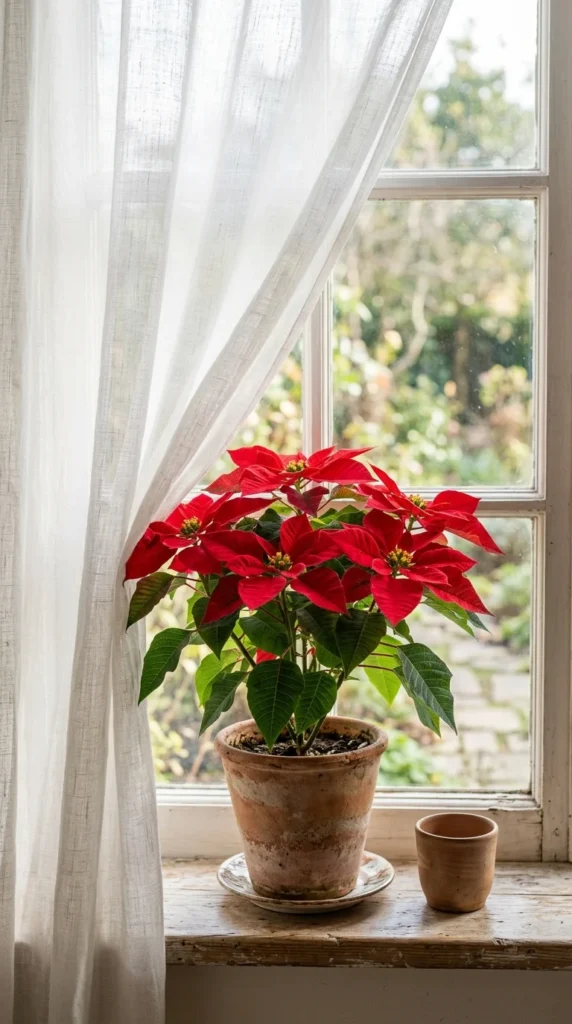
Poinsettias are tropical plants and are extremely sensitive to cold. Even a few minutes in sub-freezing temperatures can cause the leaves to drop. When bringing your plant home from the store, ensure it is sleeved or wrapped in paper. Never leave a Poinsettia in a cold car while you run other errands; the internal temperature of the vehicle can drop rapidly, shocking the plant.
3. Lighting

To maintain their vibrant colors, Poinsettias need plenty of bright, indirect sunlight. A south, east, or west-facing window is ideal. However, avoid direct, harsh midday sun, which can scorch the leaves and fade the bracts. If your home is particularly dark, you may need to supplement with a full-spectrum grow light to prevent the plant from becoming leggy.
4. Temperature
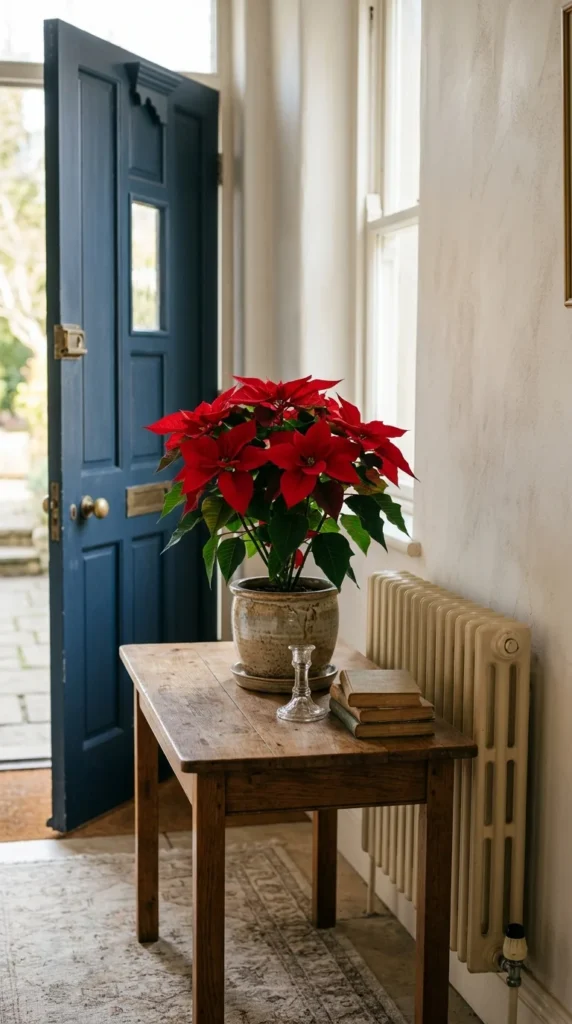
Poinsettias prefer temperatures that mimic their native Mexican climate. During the day, aim for 65°F to 70°F (18°C to 21°C). At night, they appreciate slightly cooler temperatures, around 60°F (15°C). Avoid placing them near heat vents, fireplaces, or radiators, as excessive heat will cause the plant to dry out too quickly and drop its leaves.
5. Drafts
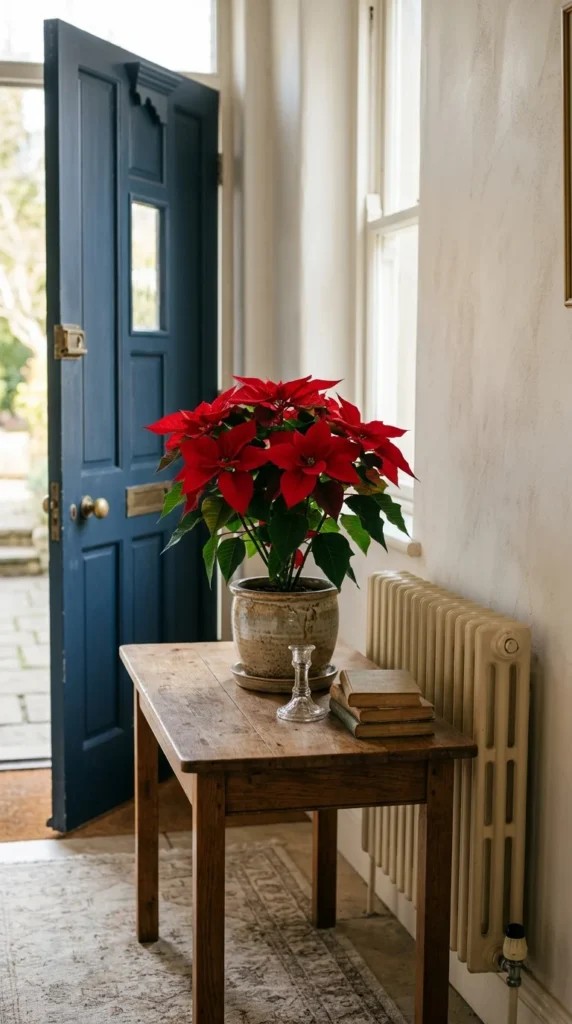
Sudden temperature fluctuations are the enemy of the Poinsettia. Keep your plant away from drafty windows, frequently opened doors, or air conditioning vents. These “cold snaps” or “hot blasts” cause the plant stress, leading to premature leaf drop (abscission). A stable environment is the secret to longevity.
6. Watering
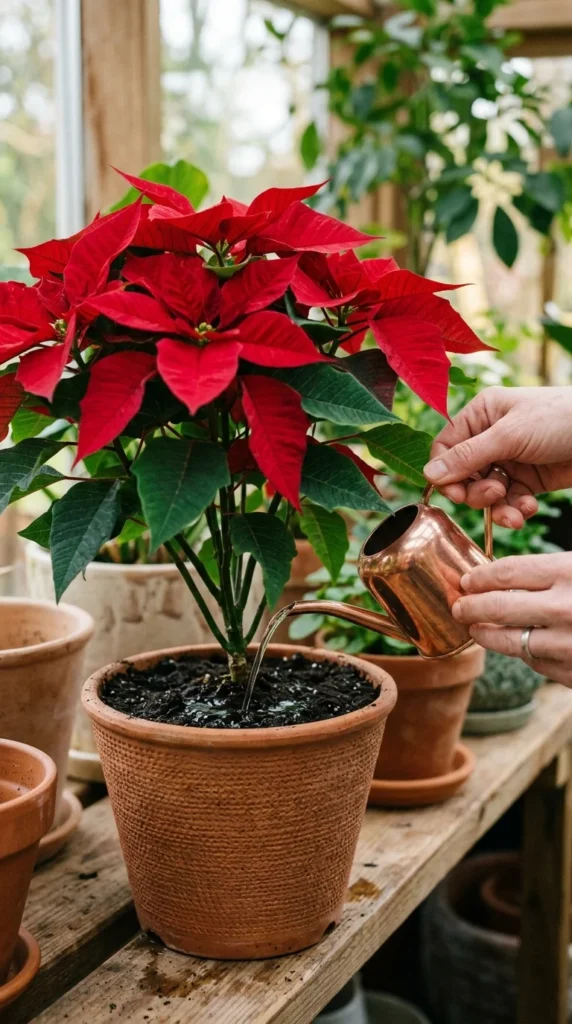
Overwatering is the most common cause of Poinsettia death. Only water when the surface of the soil feels dry to the touch. When you water, do so thoroughly until water drains out of the bottom of the pot. Never let the plant sit in standing water, as this leads to root rot. If the plant wilts, it is likely too dry; if the leaves turn yellow and fall, it is likely too wet.
7. Drainage
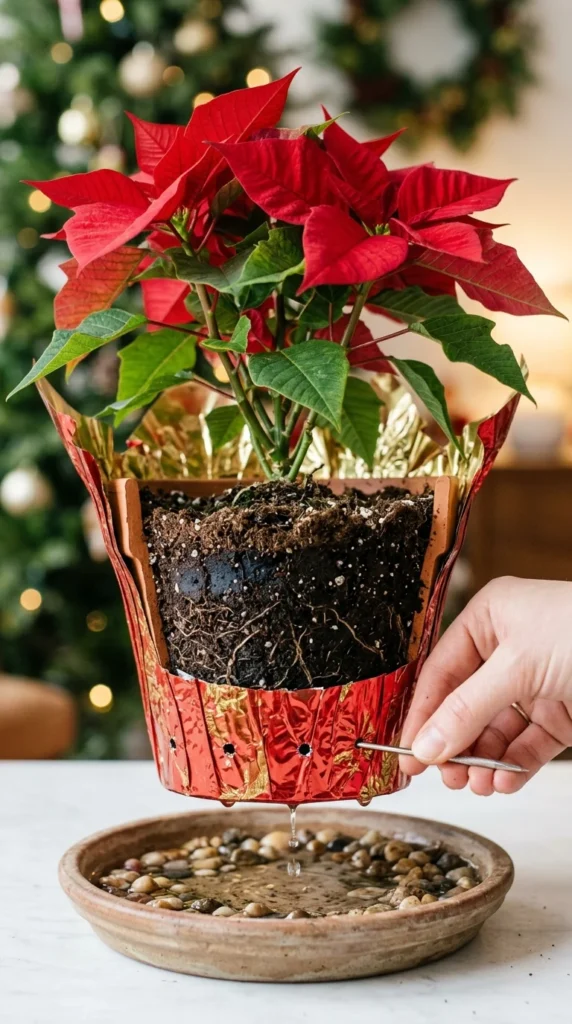
Most Poinsettias come wrapped in decorative foil. While beautiful, this foil traps water at the bottom, drowning the roots. Secret: Either remove the foil entirely or poke holes in the bottom and place the pot on a saucer. This ensures that excess water can escape freely.
8. Humidity
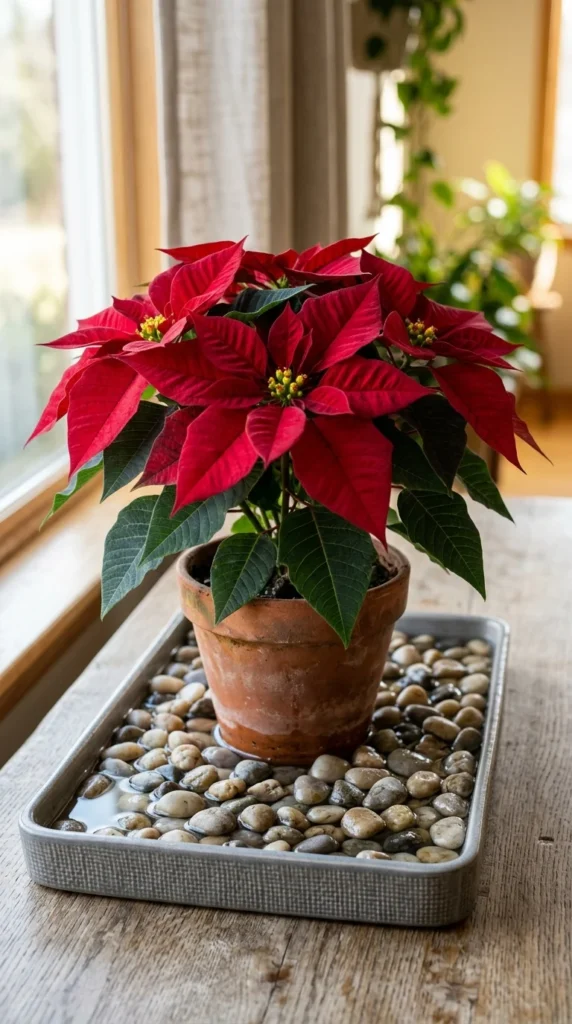
Standard indoor air in winter is often too dry for Poinsettias. To increase humidity without rotting the leaves, place the pot on a pebble tray filled with water. As the water evaporates, it creates a humid microclimate around the plant. Avoid misting the leaves directly, as this can encourage fungal growth like powdery mildew.
9. Fertilizing
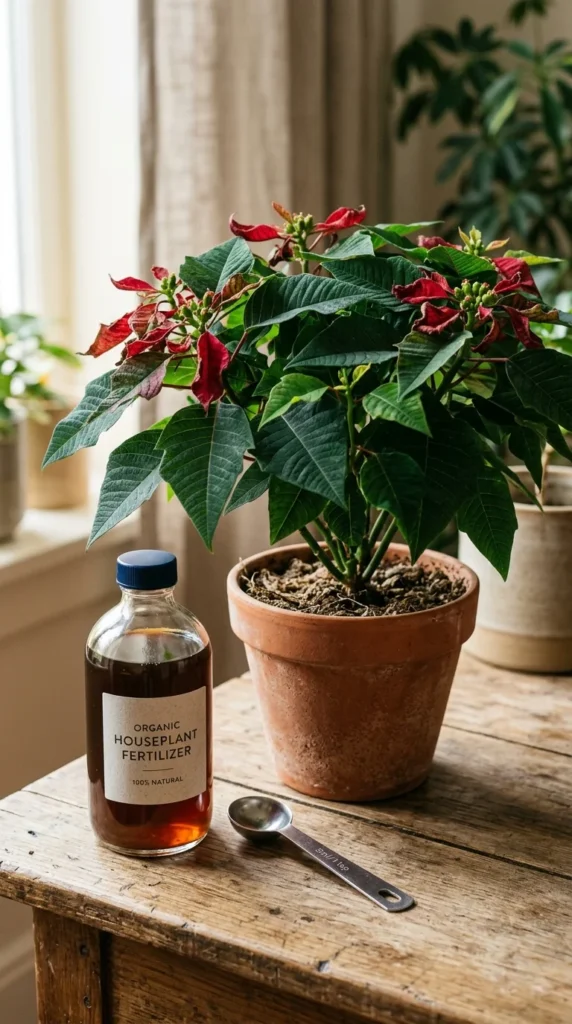
Do not fertilize your Poinsettia while it is in full bloom during the holiday season. Wait until the flowering period is over and you see new green growth (usually in late winter or early spring). Use a balanced, all-purpose houseplant fertilizer diluted to half strength once a month to support the plant’s vegetative growth.
10. Soil
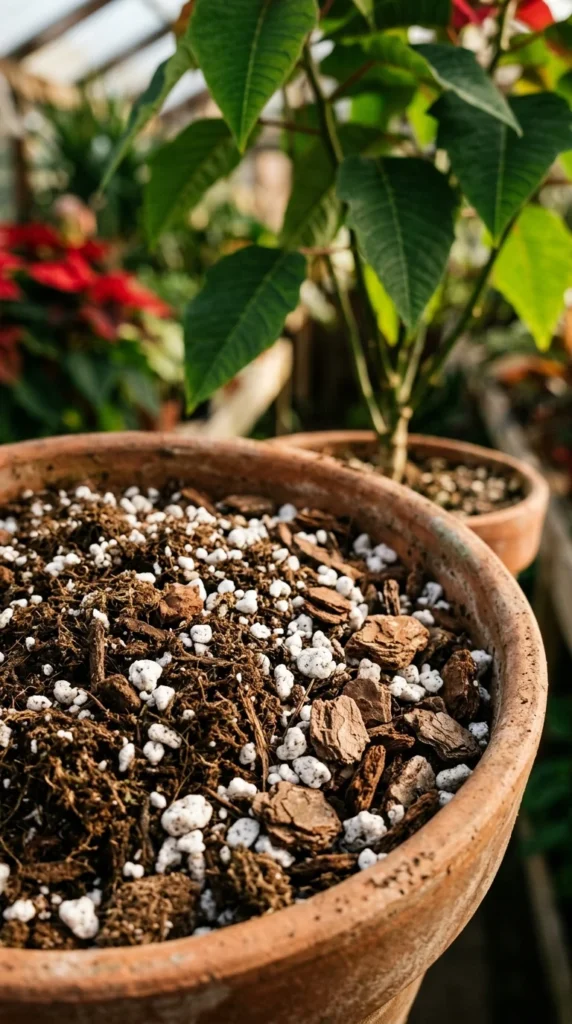
Poinsettias require a well-draining, peat-based potting soil. If you decide to repot your plant, choose a mix that stays moist but allows for plenty of aeration. A mix containing perlite or vermiculite is perfect. Avoid heavy garden soil, which packs down too tightly and suffocates the roots.
11. Pruning
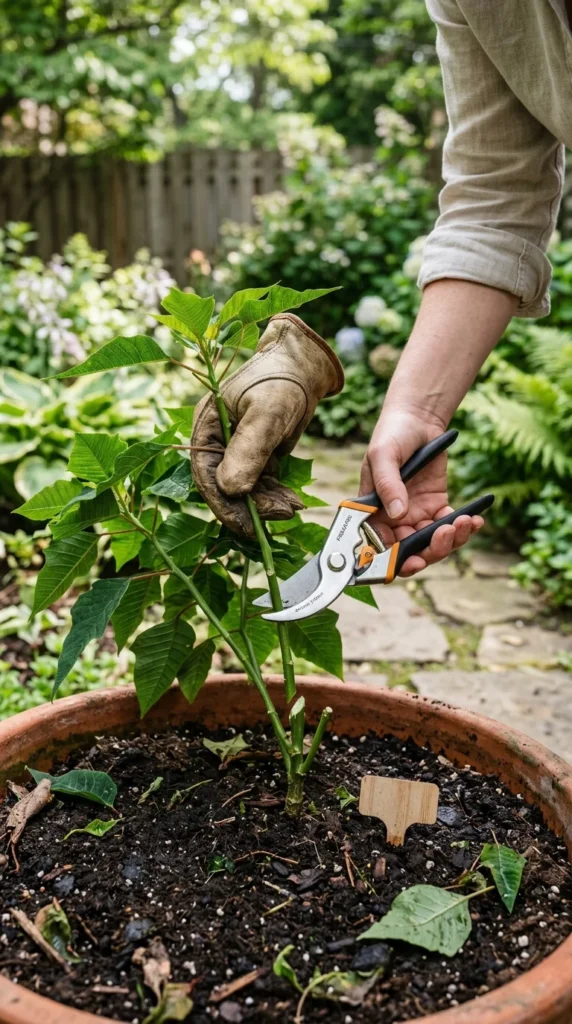
To keep your Poinsettia from becoming a tall, spindly mess, you must prune it in late March or early April. Cut the stems back to about 4 to 6 inches in height. This may feel drastic, but it encourages the plant to grow back bushier and fuller. Always use sterilized shears to prevent the spread of disease.
12. Cleaning
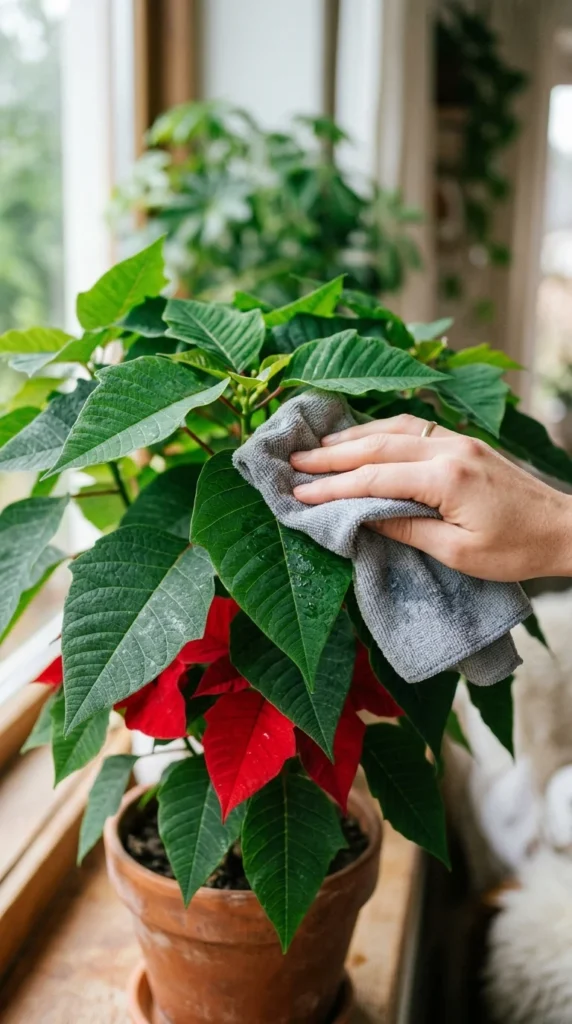
Dust buildup on leaves blocks sunlight and prevents the plant from photosynthesizing efficiently. Every few weeks, gently wipe the leaves with a damp cloth. This not only keeps the plant healthy but also allows you to inspect the underside of the leaves for any potential pests.
13. Repotting
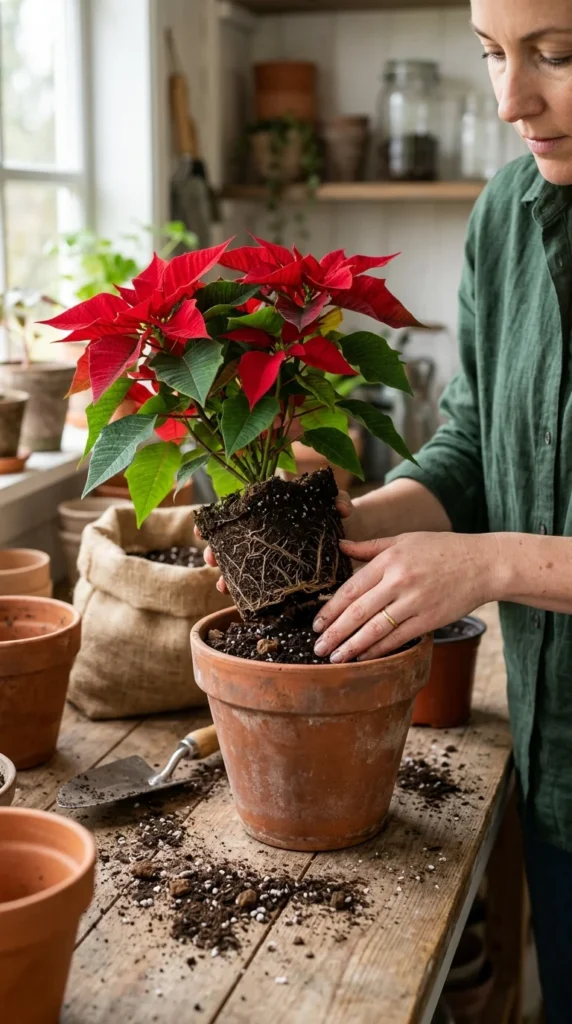
By late spring (May or June), your Poinsettia may have outgrown its nursery pot. Move it to a container that is one size larger (e.g., from a 6-inch to an 8-inch pot). Ensure the new pot has plenty of drainage holes. This extra space allows the roots to expand and supports the rapid growth that occurs during the summer months.
14. Summering
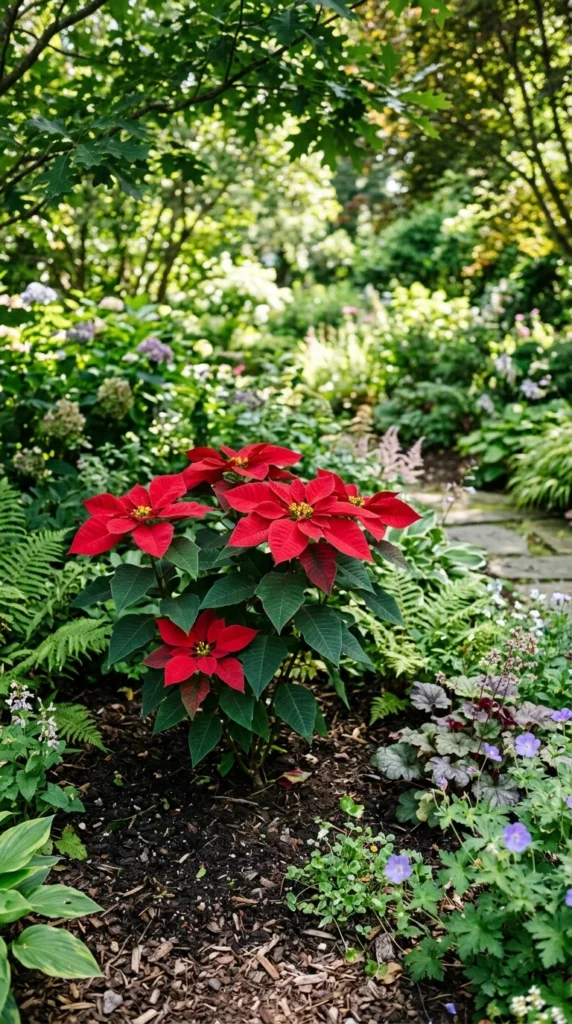
Once the nighttime temperatures consistently stay above 50°F (10°C), you can move your Poinsettia outdoors. Start in a fully shaded area and gradually move it to a spot with filtered sunlight. This “summer vacation” gives the plant the energy it needs to produce vibrant bracts later in the year.
15. Pinching
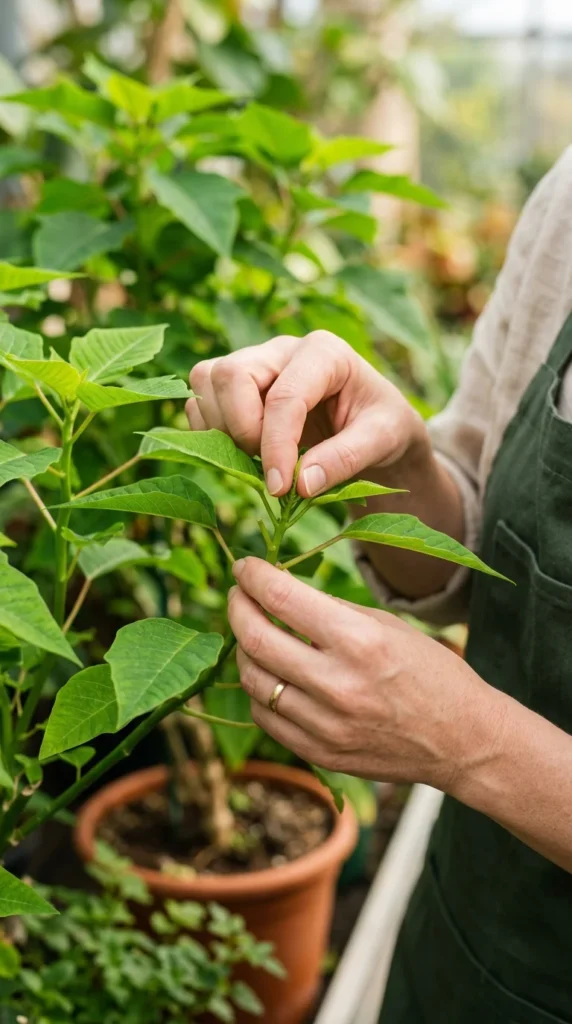
Between June and August, “pinch” the new growth. This involves snipping off the tips of the stems once they have grown about 6 inches. Pinching forces the plant to branch out, resulting in a much fuller, more symmetrical plant with more flower sites for the upcoming season.
16. Darkness
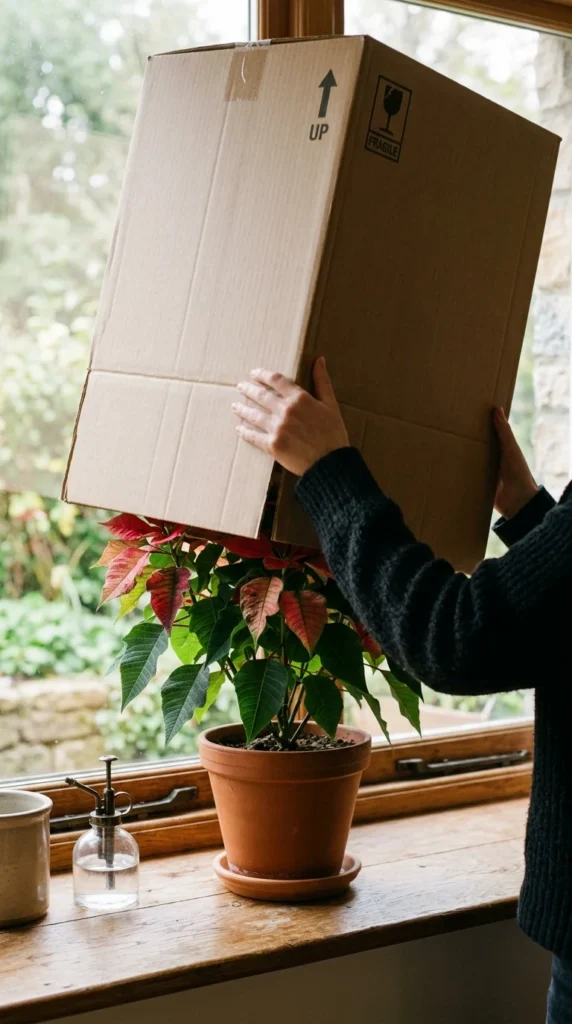
This is the most critical secret for reblooming. Poinsettias are photoperiodic, meaning they require long periods of uninterrupted darkness to change color. Starting in early October, the plant needs 14 hours of total darkness every night (e.g., from 5 PM to 7 AM). You can achieve this by placing the plant in a closet or covering it with a light-proof box. Even a streetlamp or a hallway light can disrupt this process.
17. Pests
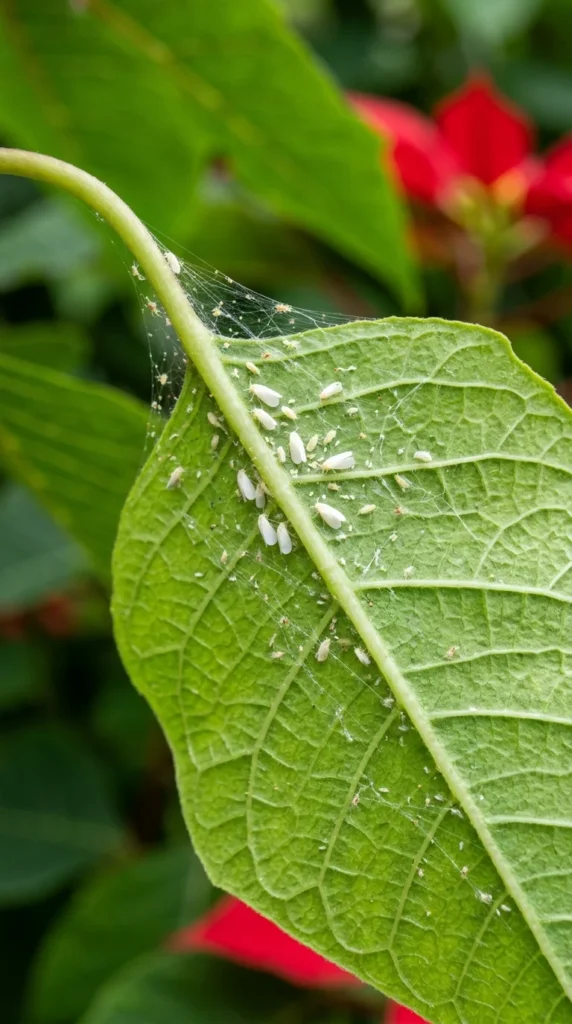
Keep an eye out for common pests like whiteflies, fungus gnats, and spider mites. Whiteflies are especially drawn to Poinsettias. If you see tiny white insects flying when you move the plant, treat it immediately with insecticidal soap or neem oil. Catching an infestation early is the only way to save the foliage.
18. Disease
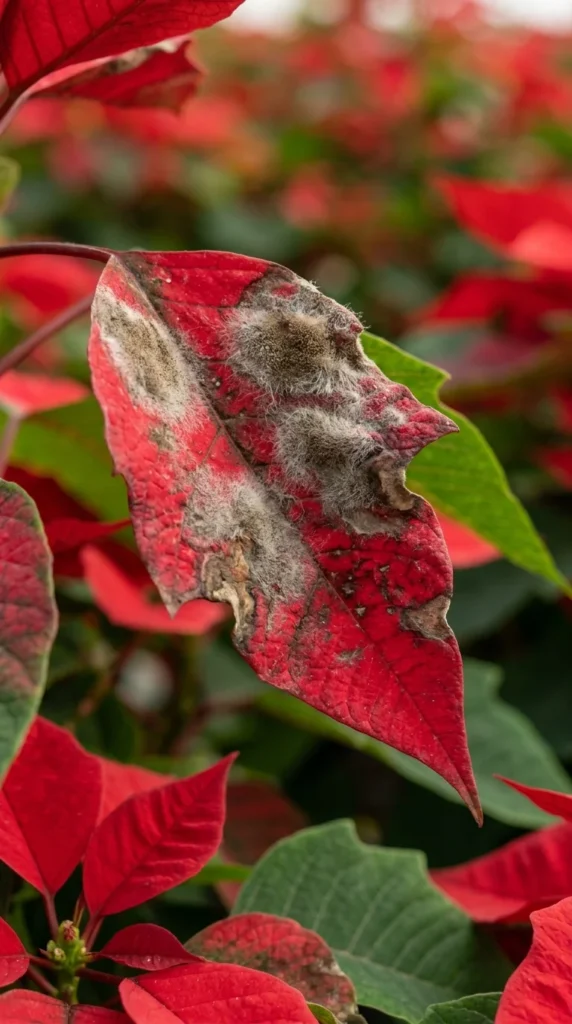
The most common disease for Poinsettias is Botrytis (gray mold) and root rot. Prevent these by ensuring good air circulation around the plant and never overwatering. If you notice mushy stems or fuzzy gray spots on the leaves, remove the affected parts immediately and reduce the humidity.
19. Toxicity

Contrary to popular belief, Poinsettias are not deadly, but they are mildly toxic. The milky white sap contains latex-like compounds that can cause skin irritation in humans and stomach upset (vomiting/drooling) in cats and dogs. Keep the plant on high surfaces out of reach of curious pets and toddlers.
20. Ethylene
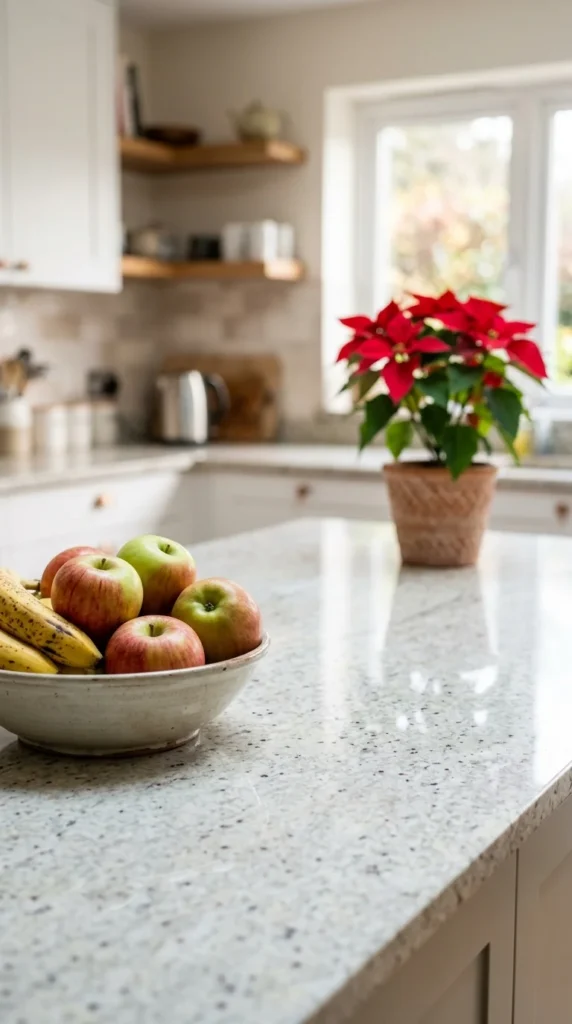
Poinsettias are highly sensitive to ethylene gas, which is naturally released by ripening fruit (especially apples and bananas). Exposure to ethylene can cause the bracts to wilt and drop prematurely. Keep your plant away from the fruit bowl in the kitchen to preserve its beauty.
21. Roots
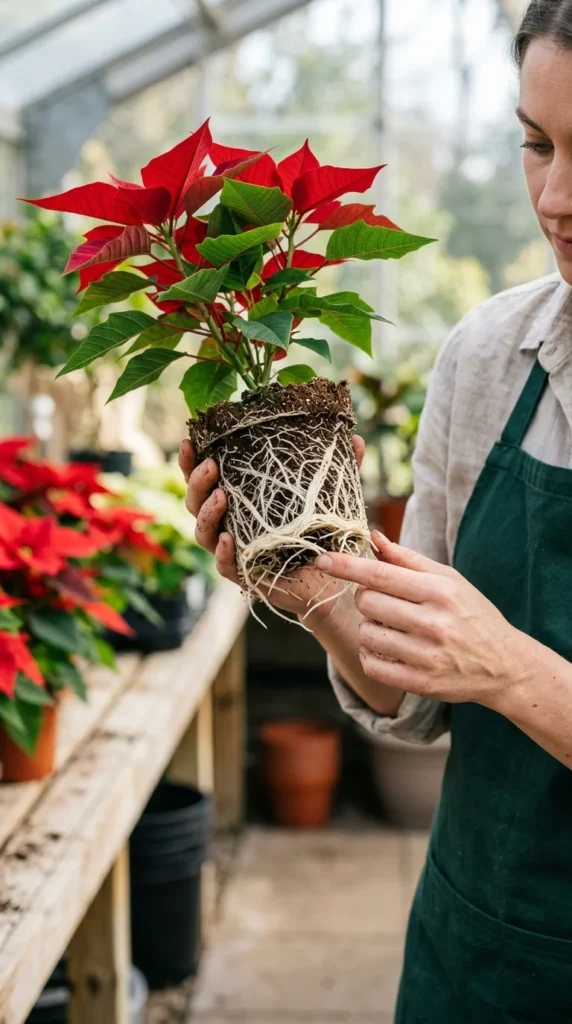
Healthy roots are the foundation of a healthy Poinsettia. When repotting, if you see brown, slimy roots, the plant has root rot. Trim away the damaged roots and treat the remaining root ball with a mild fungicide before placing it in fresh, dry soil. Healthy roots should be firm and white or light tan.
22. Bracts
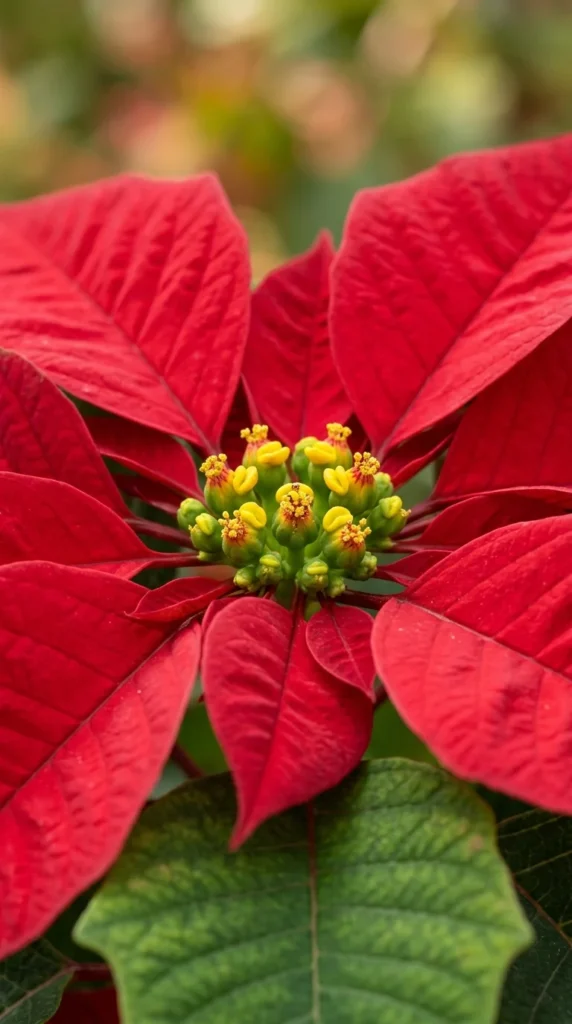
Understanding the anatomy helps with care. The colorful parts are not petals; they are modified leaves called bracts. Because they are leaves, they need the same care as the green foliage. If the bracts start to turn green, the plant is likely not receiving enough light or is transitioning back to its vegetative state.
23. Cyathia
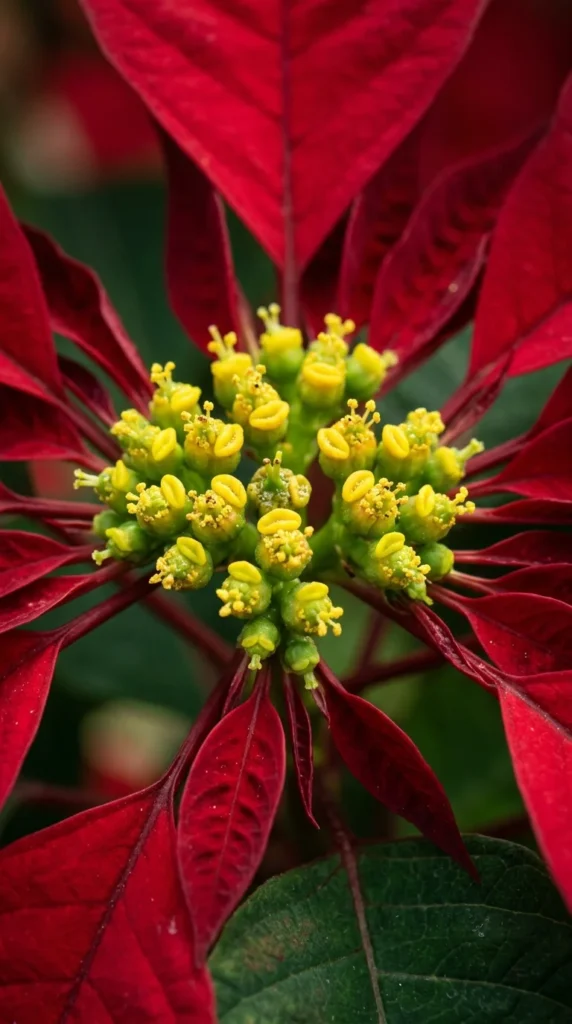
The cyathia are the “true” flowers. When they drop off, the plant often begins to shed its bracts as well. To delay this, keep the plant in a cooler spot (around 65°F). Once the cyathia are gone, the plant will naturally want to enter a period of dormancy.
24. Support
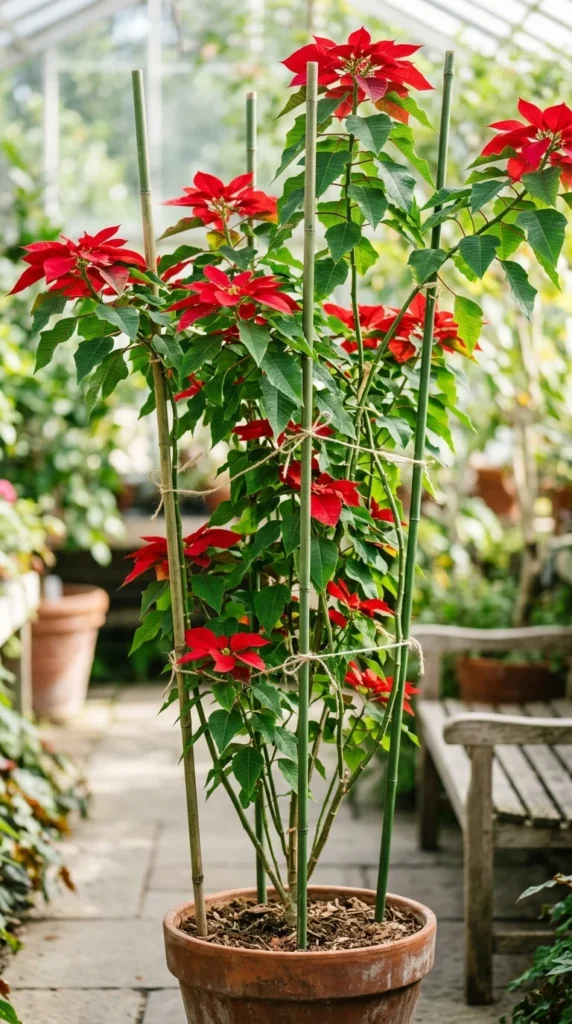
As Poinsettias grow throughout the year, they can become top-heavy, especially when they begin to produce large bracts in the winter. Use bamboo stakes or circular plant supports to keep the stems from snapping under their own weight.
25. Propagation
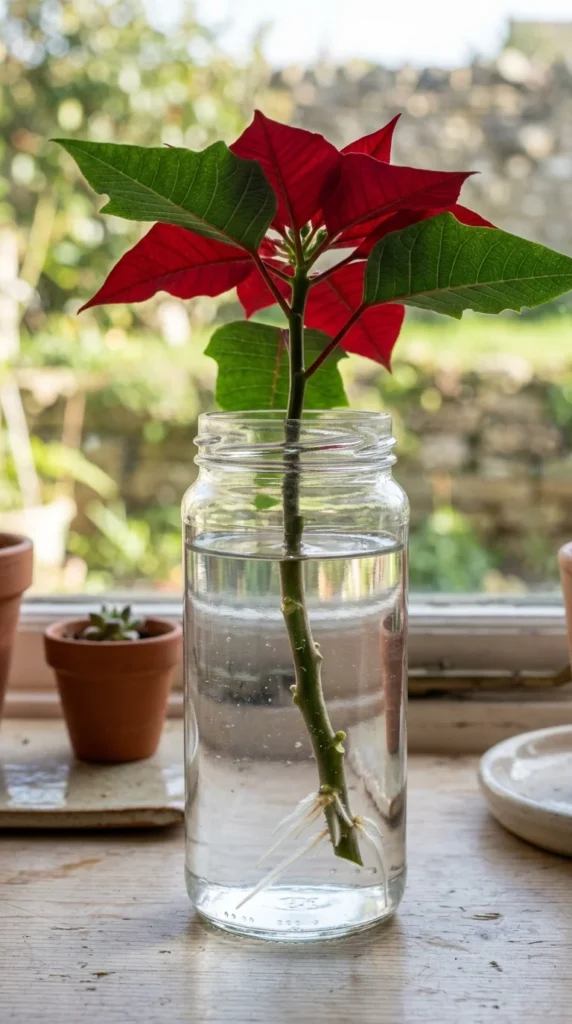
You can grow new Poinsettias from your original plant! In early summer, take a 4-inch cutting from a healthy stem. Dip the end in rooting hormone and place it in a mix of perlite and peat. Keep it warm and humid, and in a few weeks, you will have a new baby Poinsettia.
26. Mulching
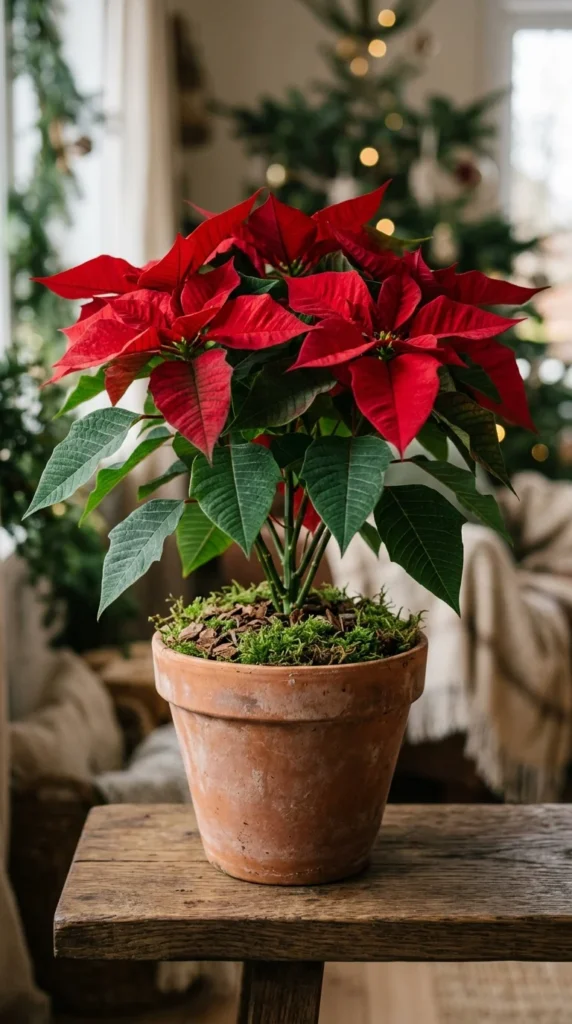
If you keep your Poinsettia outdoors during the summer, a light layer of mulch can help retain soil moisture and keep the roots cool. Indoors, a layer of decorative moss can serve a similar purpose while also adding to the aesthetic appeal of the plant.
27. Acclimation
When moving the plant from outdoors back indoors in the fall, do it gradually. Move it to a shadier spot outside for a week before bringing it inside. This “hardening off” in reverse prevents the shock of moving from high-intensity outdoor light to lower-intensity indoor light.
28. Patience
Reblooming a Poinsettia is a long-term project that requires months of specific light cycles and care. Don’t be discouraged if your plant doesn’t look like a store-bought version in its first year. With consistency and patience, you can master the art of the year-round Poinsettia and enjoy its spectacular display every holiday season.