
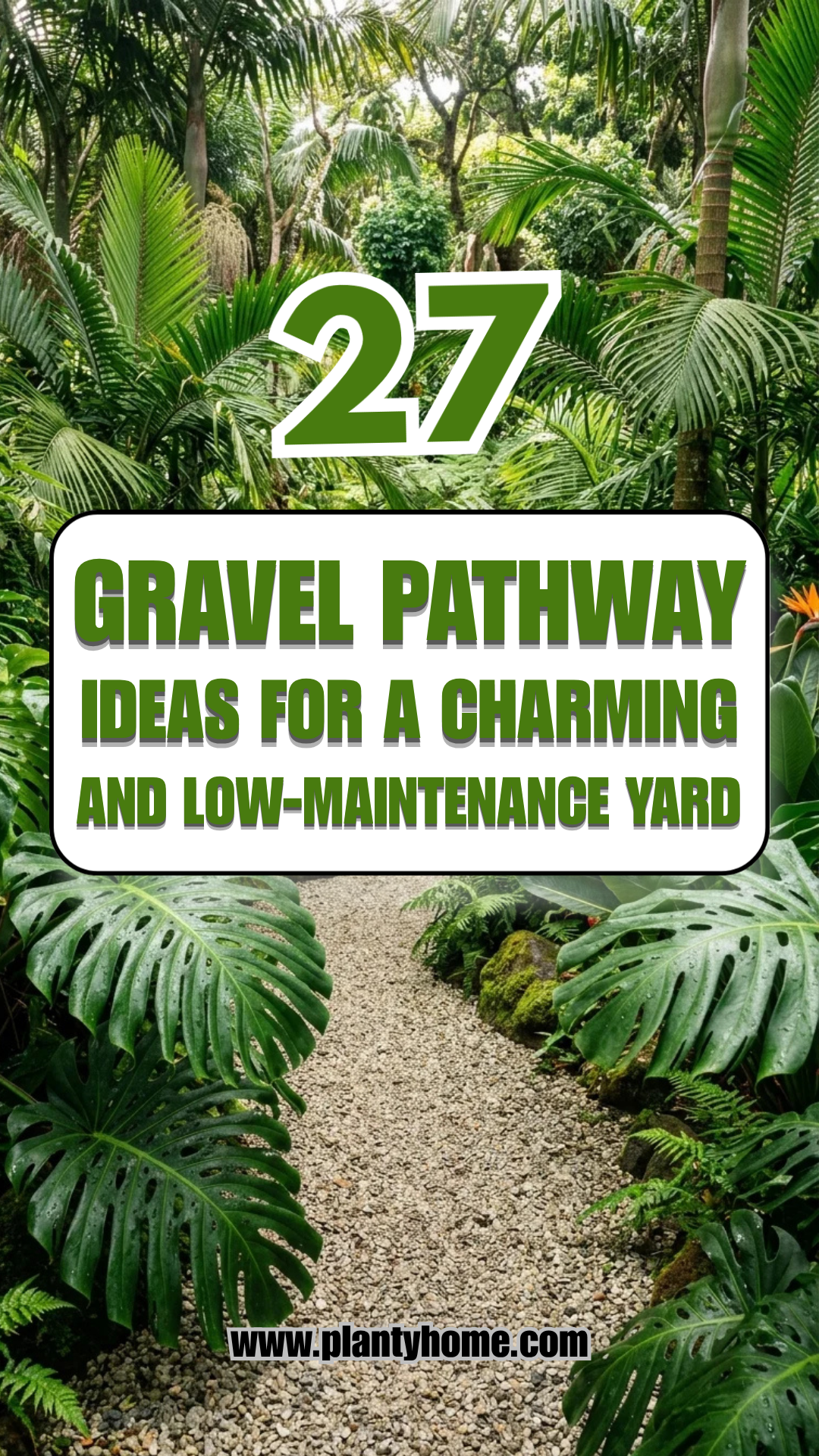
Gravel pathways offer a unique blend of practicality and aesthetic appeal that few other landscaping materials can match. Unlike solid concrete or heavy pavers, gravel is permeable, allowing rainwater to soak into the ground, which prevents runoff and erosion. It is also one of the most cost-effective ways to transform a backyard, providing a crunching sound underfoot that adds a sensory layer to your garden experience. Whether you are aiming for a rustic woodland look, a sleek modern courtyard, or a classic English cottage vibe, gravel is a versatile medium that adapts to any vision.
1. Pea Gravel
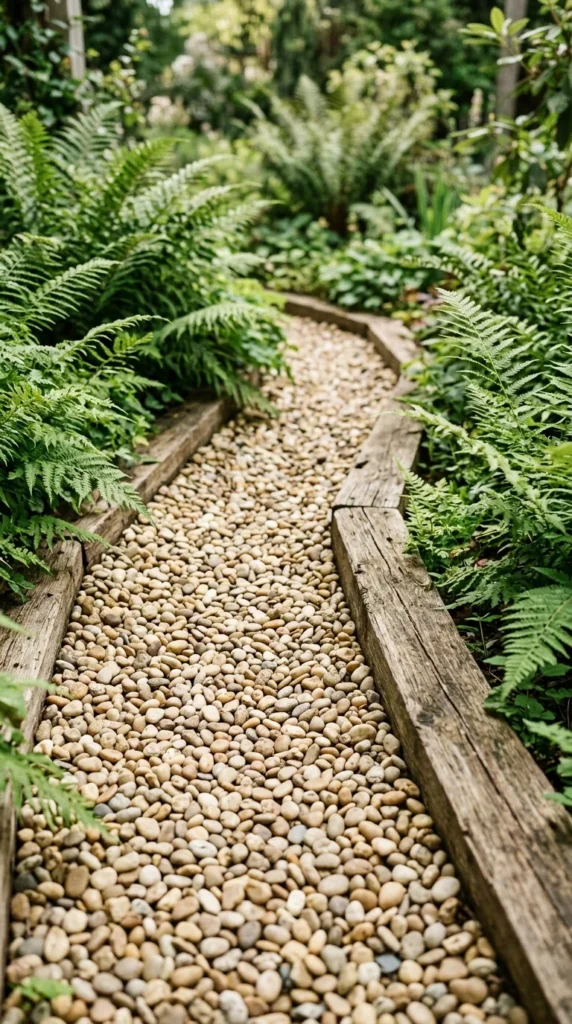
Pea gravel is perhaps the most popular choice for residential walkways. These small, rounded stones are roughly the size of a pea and come in a variety of natural earth tones. Because the edges are smooth, they are comfortable to walk on even in thin-soled shoes. Pea gravel is excellent for high-traffic areas and provides a soft, organic texture that complements traditional garden designs.
2. Slate Chips
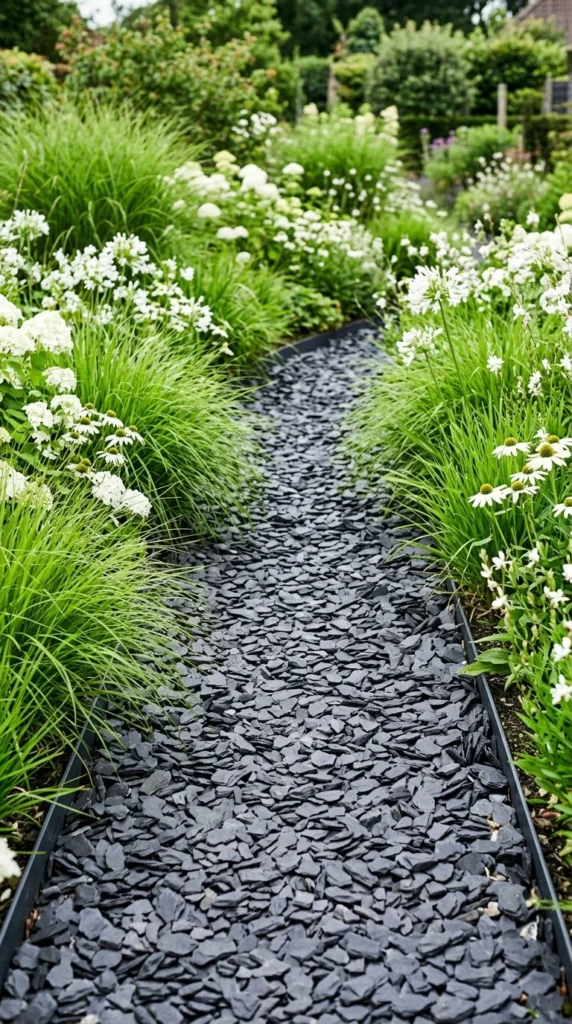
For a more contemporary or “cool” toned look, slate chips are an ideal option. These flat, angular pieces of stone provide a stable walking surface because they lock together better than rounded stones. Available in shades of deep grey, blue-purple, and even green, slate chips create a sophisticated contrast against bright green lawns and vibrant flowering shrubs.
3. Flagstone Steppers
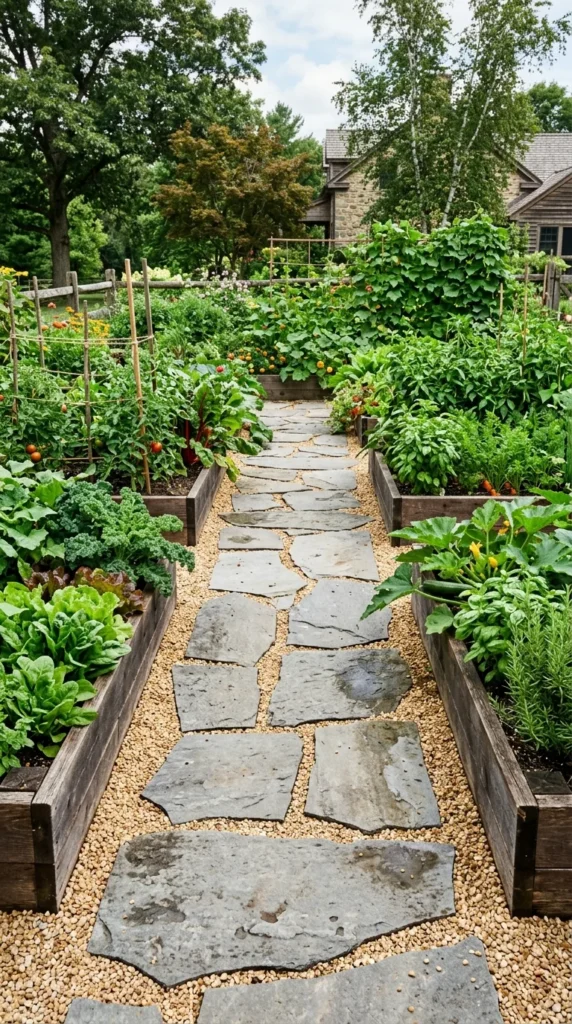
Integrating flagstone “steppers” into a gravel path provides the best of both worlds: the stability of a solid surface and the drainage of gravel. By spacing out large flat stones and filling the gaps with fine gravel, you create a visual rhythm that guides the eye through the yard. This technique is particularly useful for preventing the “sinking” feeling that can occur with deep gravel.
4. Brick Edging
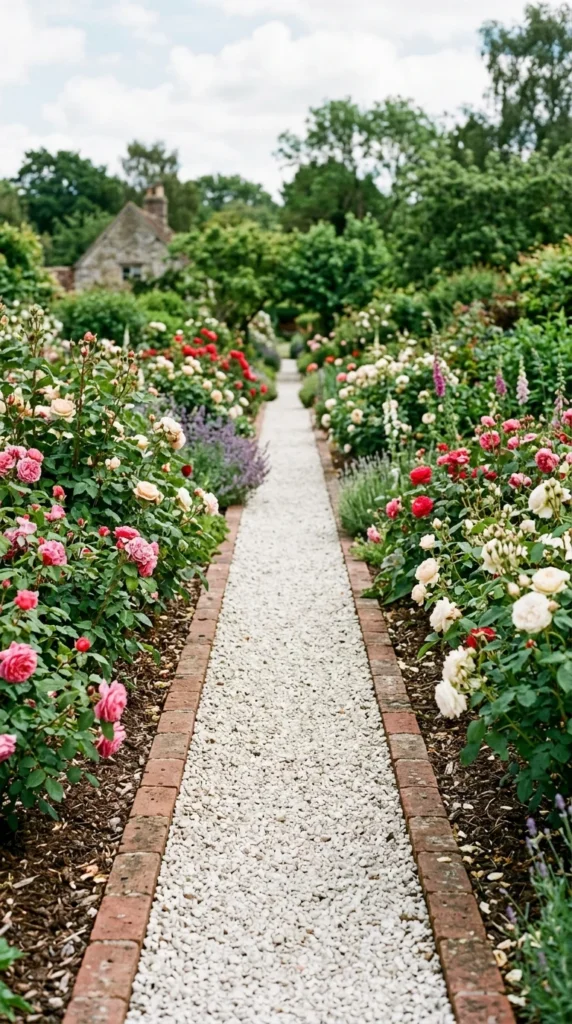
A gravel path is only as good as its border. Using reclaimed red bricks as an edging material adds a touch of historical charm and structural integrity. Bricks prevent the gravel from migrating into your lawn or flower beds, maintaining a crisp, clean line that defines the architecture of your outdoor space.
5. Wood Borders
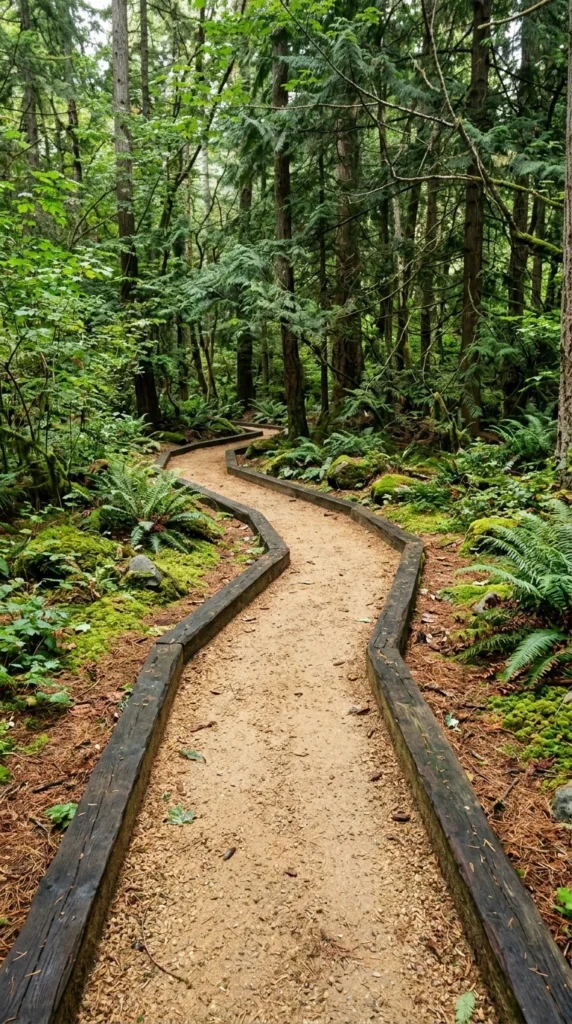
For a naturalistic or woodland garden, timber borders are a perfect match. Pressure-treated 4x4s or natural cedar beams provide a sturdy frame for the gravel while blending seamlessly into a rustic environment. This look is particularly effective on slight inclines where the wood can act as a mini-retaining wall for the stones.
6. Crushed Granite
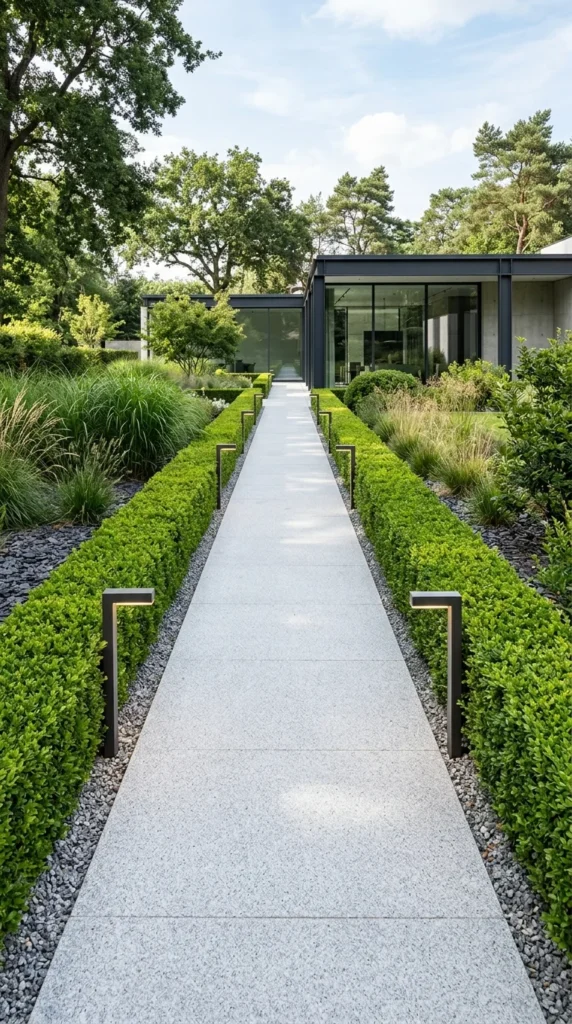
Crushed granite has sharp, angular edges that allow the stones to pack down tightly. This makes it one of the most stable gravel options for pathways that might accommodate strollers or wheelbarrows. Its salt-and-pepper appearance offers a neutral palette that works well in both formal and informal settings.
7. River Rock Accents
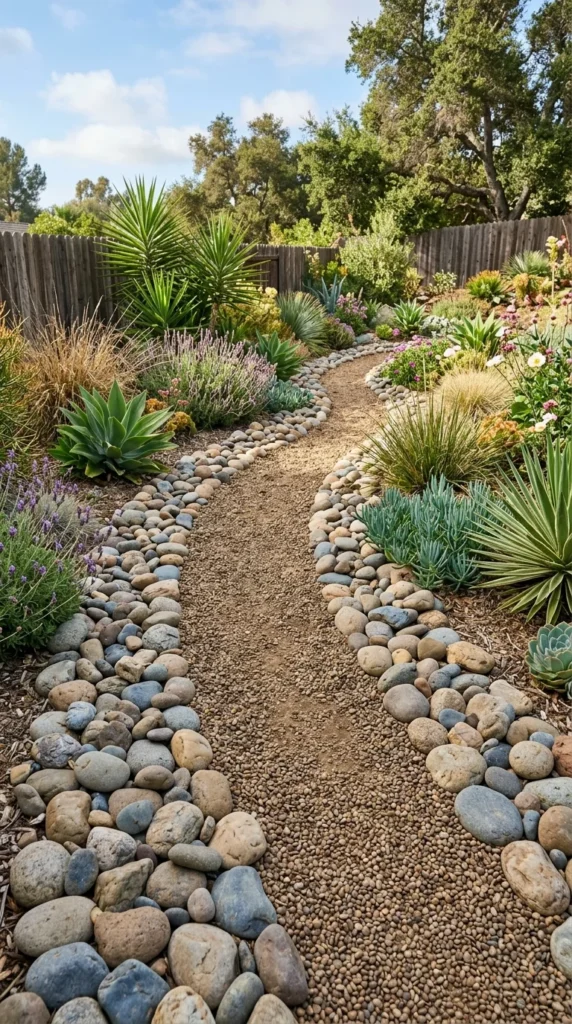
Combining different sizes of stone adds visual interest and depth. By using small gravel for the walking surface and lining the edges with larger, smooth river rocks, you can mimic the look of a natural stream bed. This is an excellent solution for yards with drainage issues, as it doubles as a functional French drain.
8. Geometric Pavers
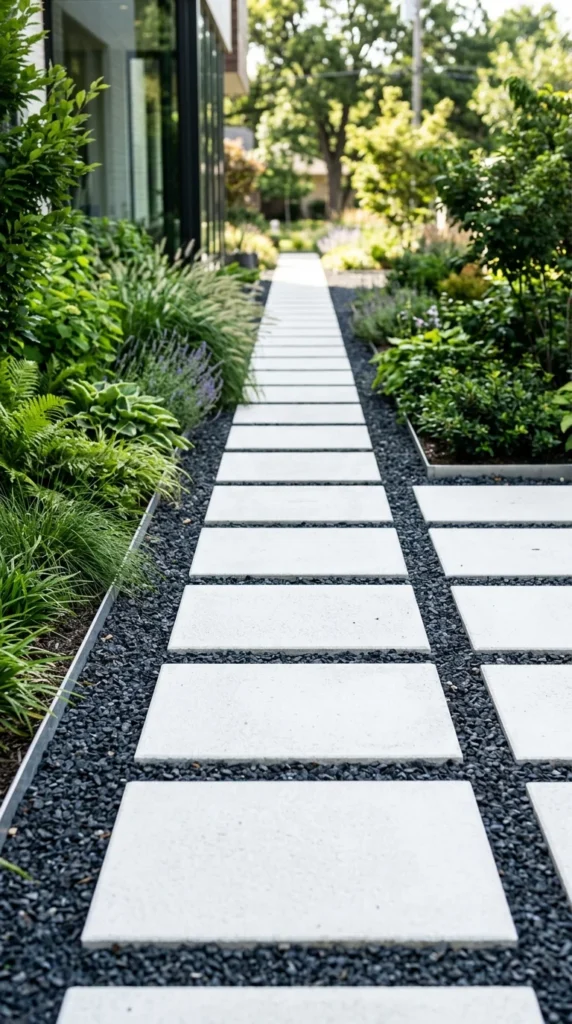
Modern landscaping often relies on clean lines and repetition. Placing square or rectangular concrete pavers in a grid or a straight line and surrounding them with a contrasting gravel color creates a bold, architectural statement. This “stepping stone” style is perfect for side yards and entryways.
9. Decomposed Granite
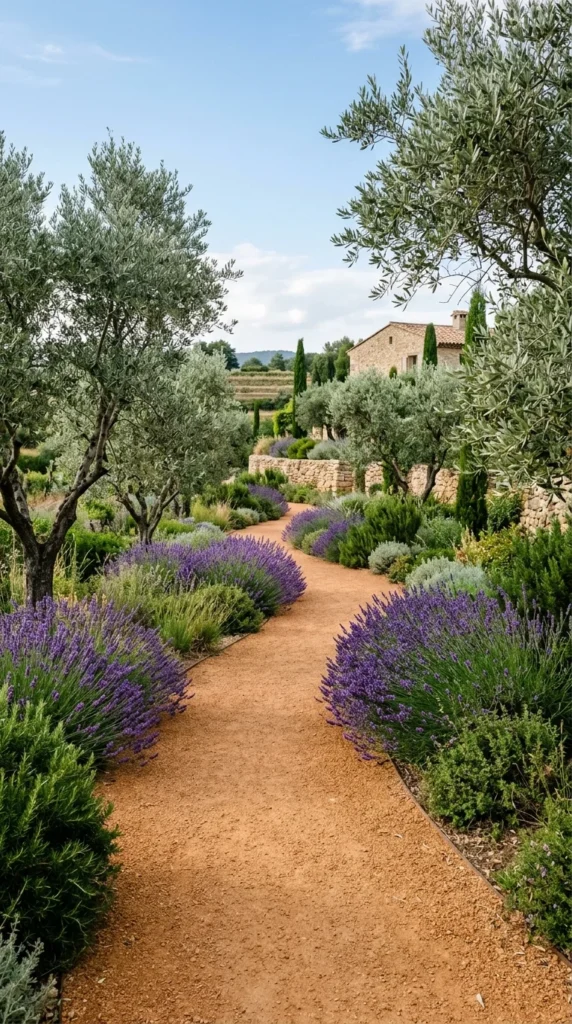
Decomposed granite (DG) is a favorite among professional landscapers for its natural, desert-like appearance. It contains very fine particles that, when compacted, create a surface nearly as hard as pavement while remaining permeable. It’s ideal for a “soft” look that feels integrated into the earth.
10. Zen Garden Sand
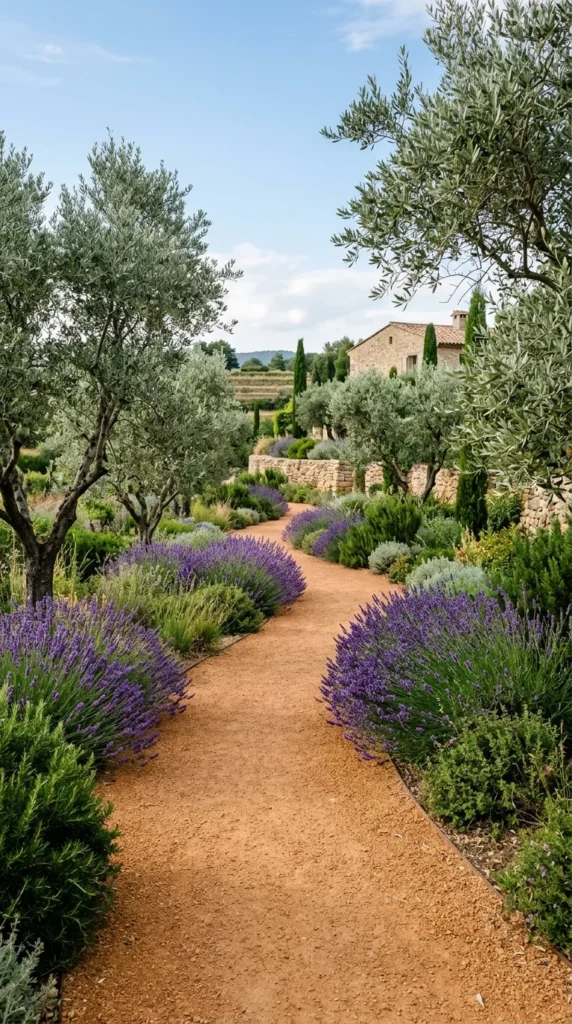
Inspired by Japanese Zen gardens, fine white gravel or coarse sand can be used to create a meditative space. While not ideal for high-traffic thoroughfares, these paths serve as focal points in a garden meant for reflection. The act of raking the gravel becomes a peaceful ritual for the homeowner.
11. Lava Rock
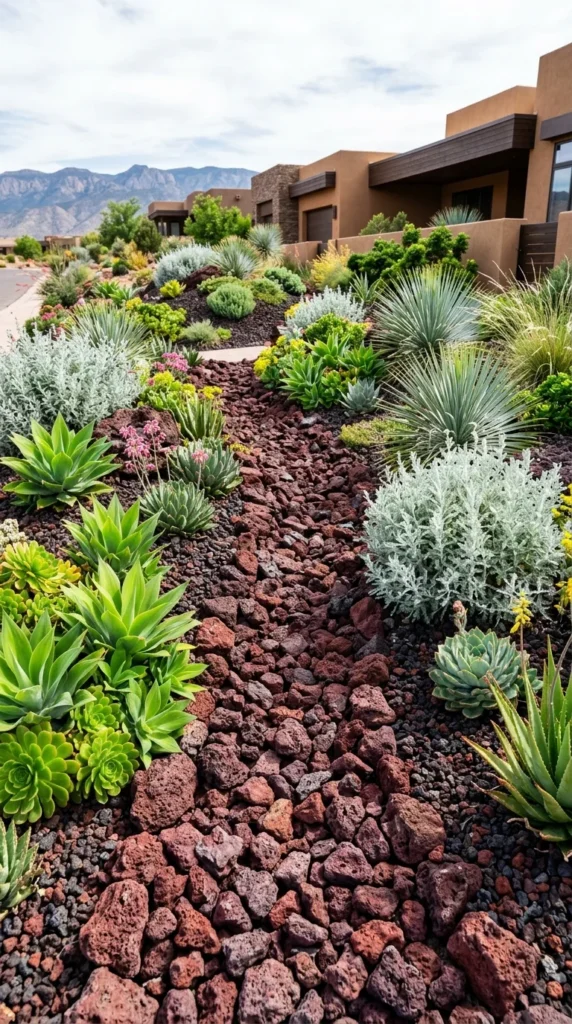
Lava rock is lightweight and features a unique, porous texture. In shades of deep red or charcoal black, it provides a high-impact color palette. It is particularly effective in drought-tolerant landscapes where its ability to retain some moisture helps keep the soil underneath cool.
12. Log Slices
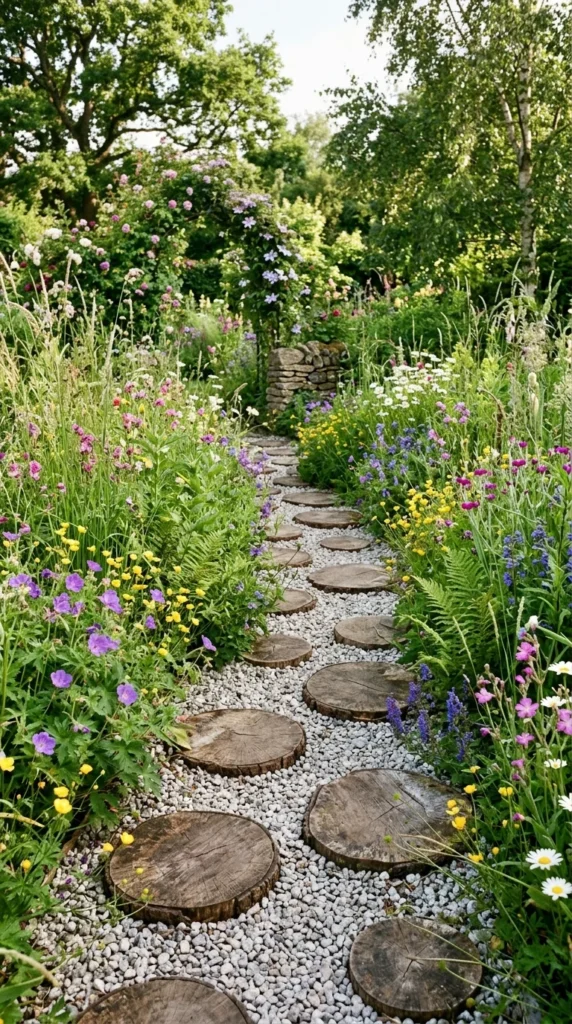
For a whimsical, “fairytale” aesthetic, use cross-sections of logs (stepping “rounds”) as your primary walkway, filling the gaps with small gravel. This eco-friendly approach uses reclaimed wood and provides a beautiful, organic pattern that looks right at home in a cottage garden or a children’s play area.
13. Metal Edging
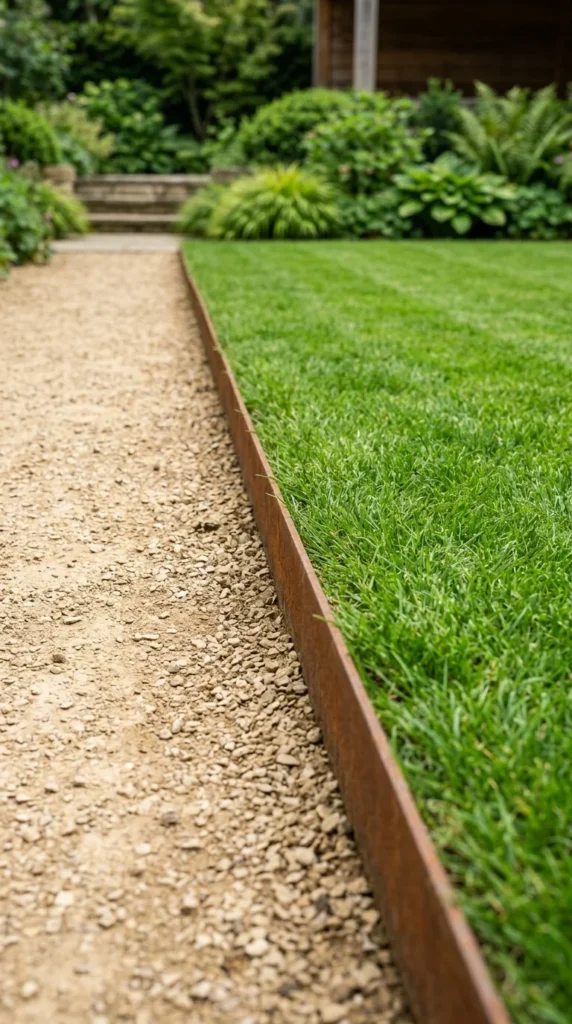
If you prefer a minimalist look, thin metal edging is the way to go. Steel or aluminum borders are nearly invisible from a distance, allowing the gravel to meet the grass or garden bed in a razor-sharp line. Corten steel, which develops a beautiful rust-colored patina over time, is a favorite for contemporary designs.
14. Winding Curves
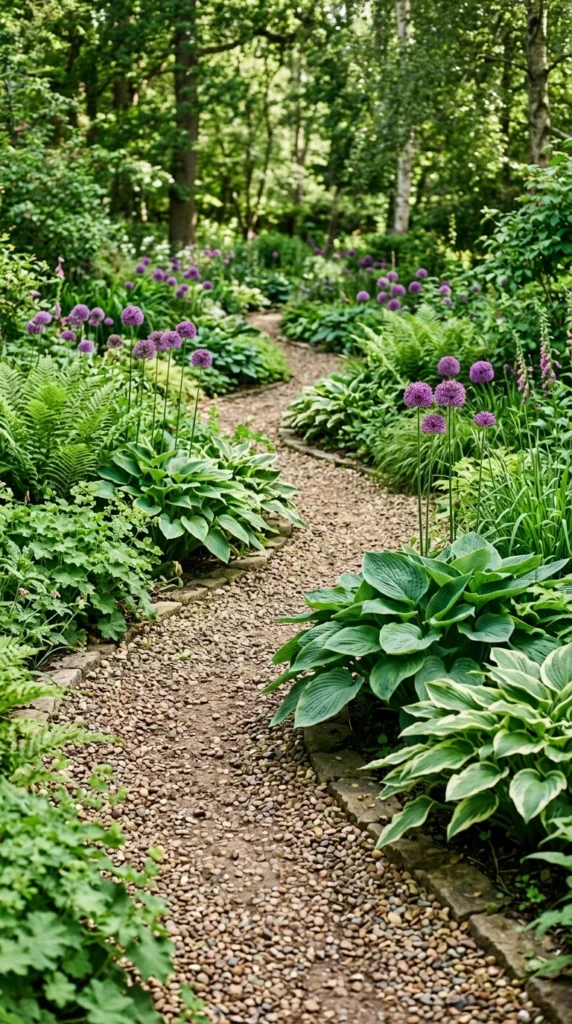
Straight paths are functional, but winding paths are enchanting. A curved gravel walkway slows down the pace of the viewer, encouraging them to take in the different sections of the garden. Because gravel is a loose material, it is far easier to create complex curves with it than with rigid pavers or poured concrete.
15. Multi-colored Mix
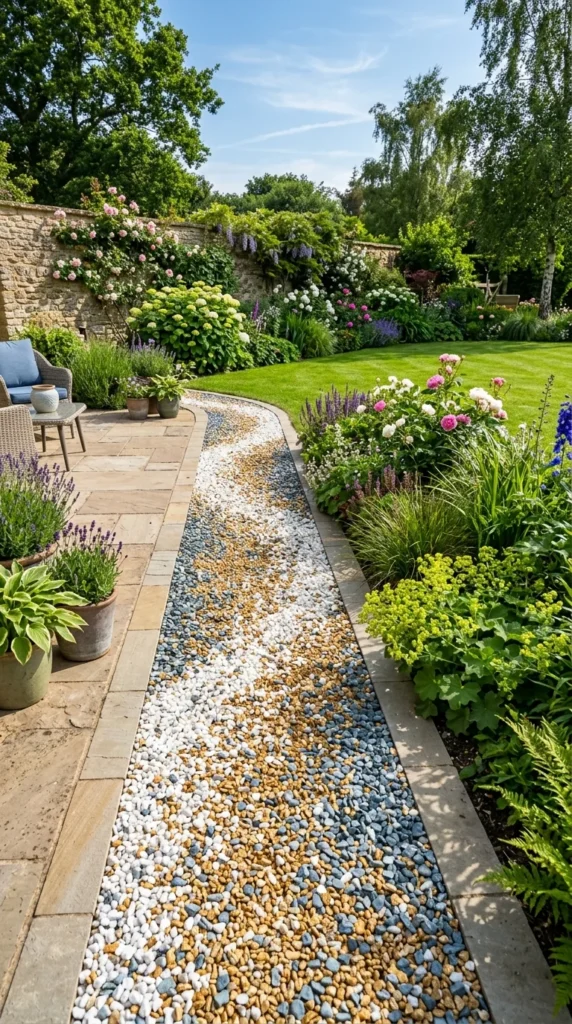
Don’t feel limited to a single color. Many suppliers offer “rainbow” or “mixed” gravel blends. These combinations are great for hiding dirt and debris, making them extremely low-maintenance. The variety of colors allows the path to coordinate with multiple elements of your home’s exterior.
16. Cobblestone Borders
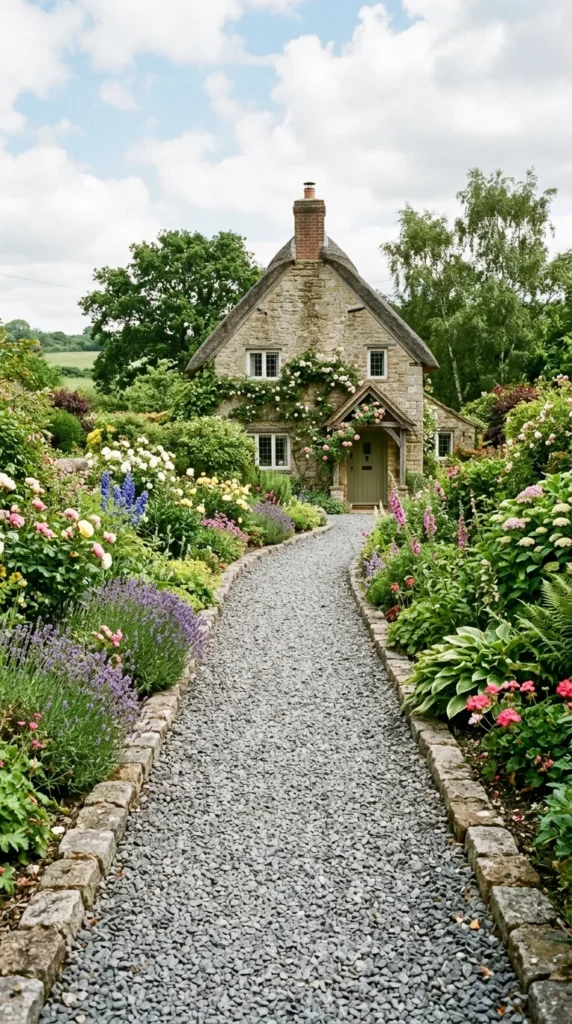
Cobblestones offer an “Old World” charm that pairs beautifully with gravel. The heavy, tactile nature of the stones provides a permanent frame for the looser gravel. This combination is often seen in European estate gardens and adds an immediate sense of history and permanence to a yard.
17. Concrete Slabs
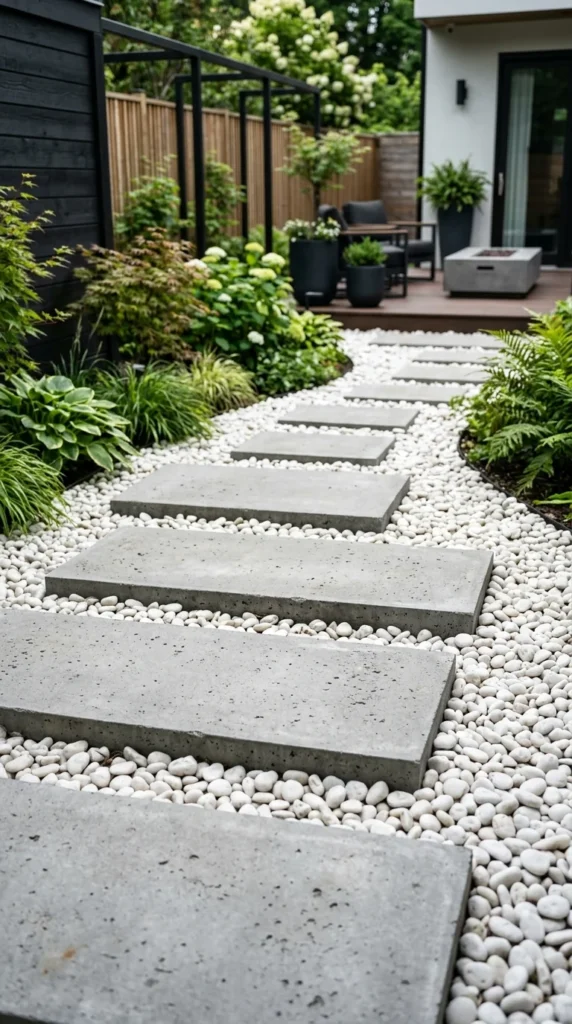
By using oversized concrete slabs and surrounding them with fine gravel, you can create a “floating” walkway. This is a hallmark of mid-century modern landscaping. The large surface area of the slabs makes walking easy, while the gravel borders provide a striking visual frame.
18. Shell Gravel
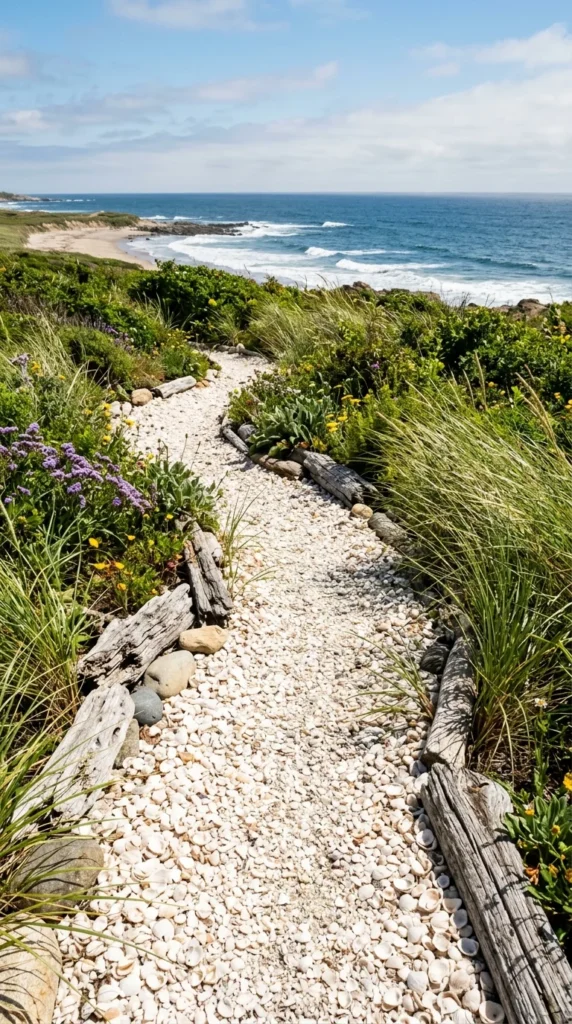
For homes near the coast, crushed shells (like oyster or scallop shells) are a sustainable and beautiful alternative to traditional stone gravel. They provide a bright, reflective surface that brightens up shaded areas and creates a distinct seaside atmosphere. Over time, the shells break down and provide calcium to the surrounding soil.
19. Grass Inlays
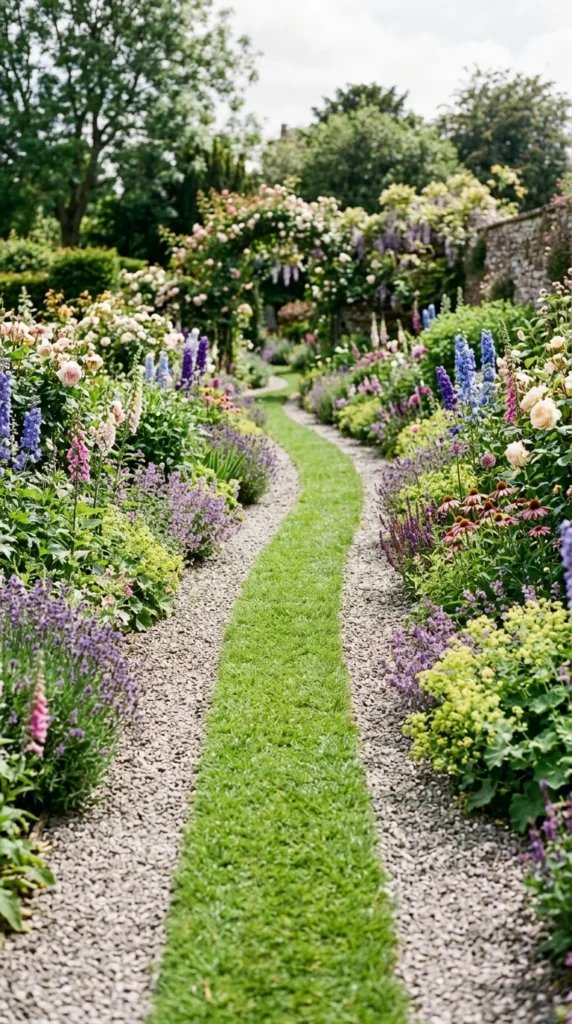
Inverting the typical design, you can use gravel as an accent for a grass path. This “ribbon” style is often used in driveways but works beautifully for wide garden paths. It maintains the greenery of the yard while providing a solid, mud-free area for your feet or garden cart wheels.
20. Terraced Steps
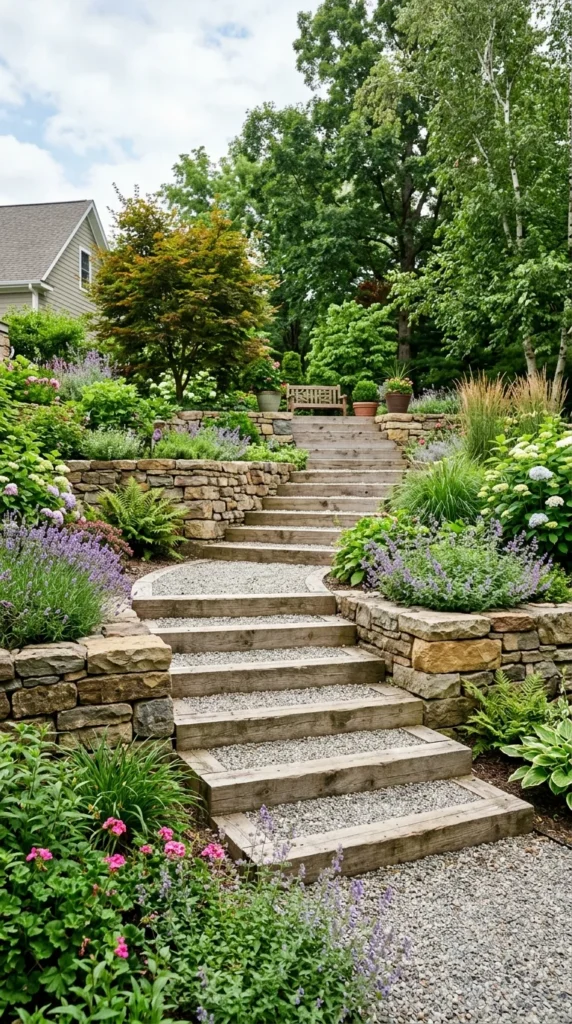
If your yard has a slope, gravel is an excellent filler for terraced steps. Use wood or stone as the “riser” (the vertical part of the step) and fill the “tread” (the horizontal part) with gravel. This provides excellent traction and prevents the erosion that often plagues sloped dirt paths.
21. Solar Lighting
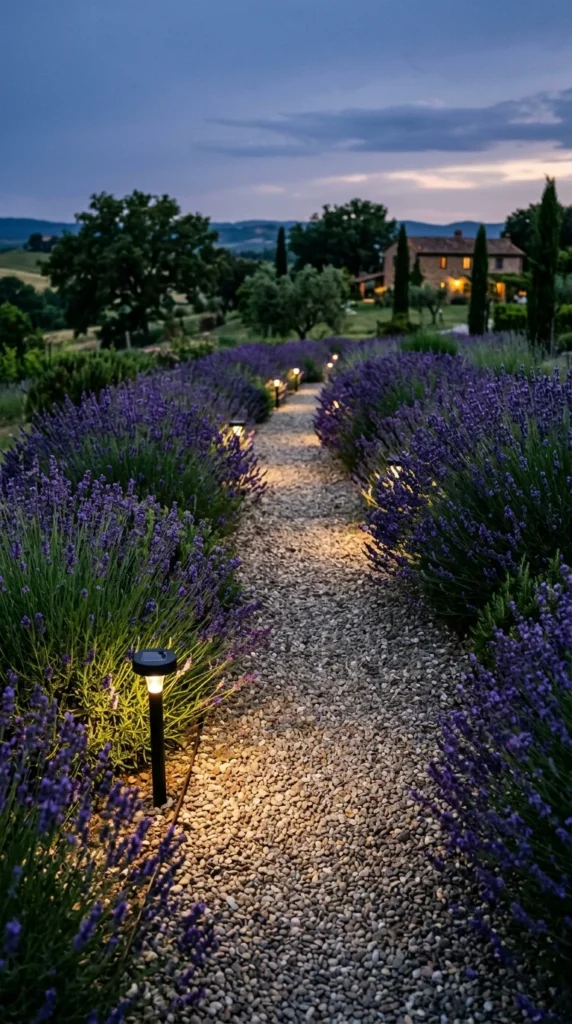
Enhance the safety and beauty of your gravel path by installing solar-powered LED lights along the perimeter. The light reflects off the individual stones, creating a soft, ambient glow that makes the garden usable long after the sun goes down.
22. Permeable Grids
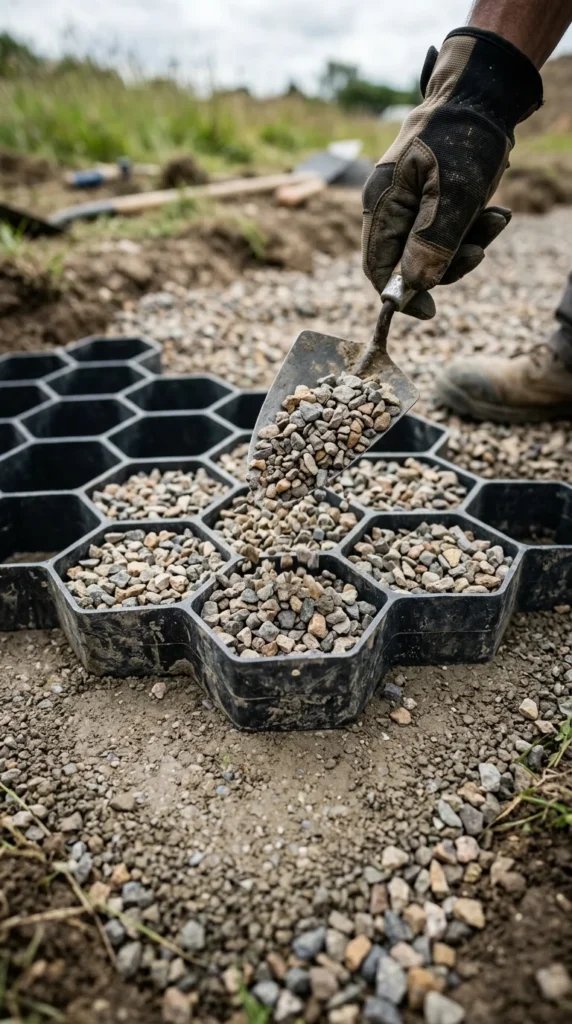
For areas where you need extra stability—such as a path used for heavy equipment or high-heeled shoes—use a permeable plastic grid. These grids are laid down first and then filled with gravel. The cells lock the stones in place, preventing “shifting” and keeping the path perfectly level.
23. Tropical Foliage
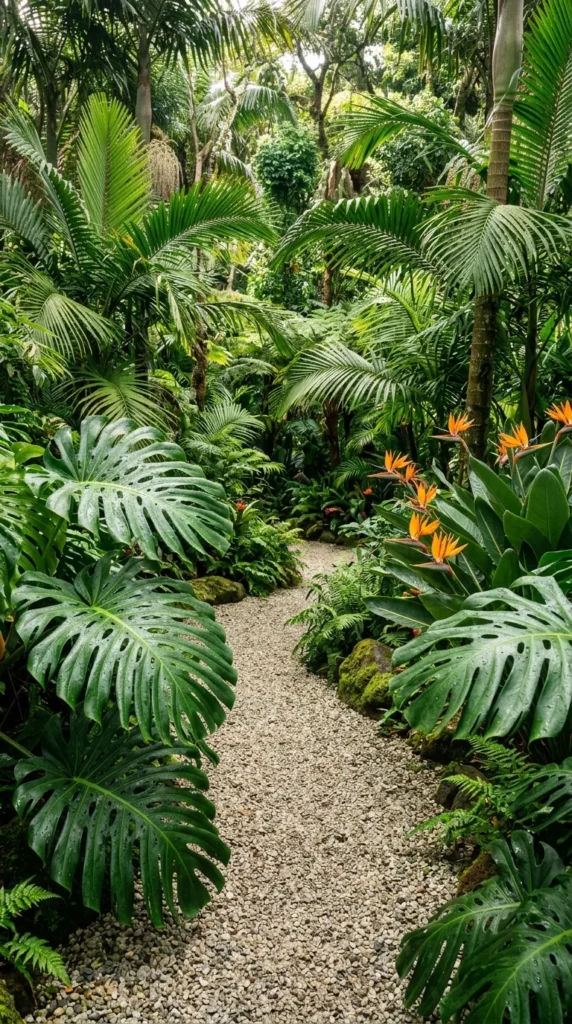
Gravel paths aren’t just for dry climates; they look stunning in tropical settings as well. The light color of most gravels provides a stark, clean contrast to the deep, waxy greens of tropical plants. It also helps manage the heavy rainfall common in these climates by providing instant drainage.
24. Minimalist White
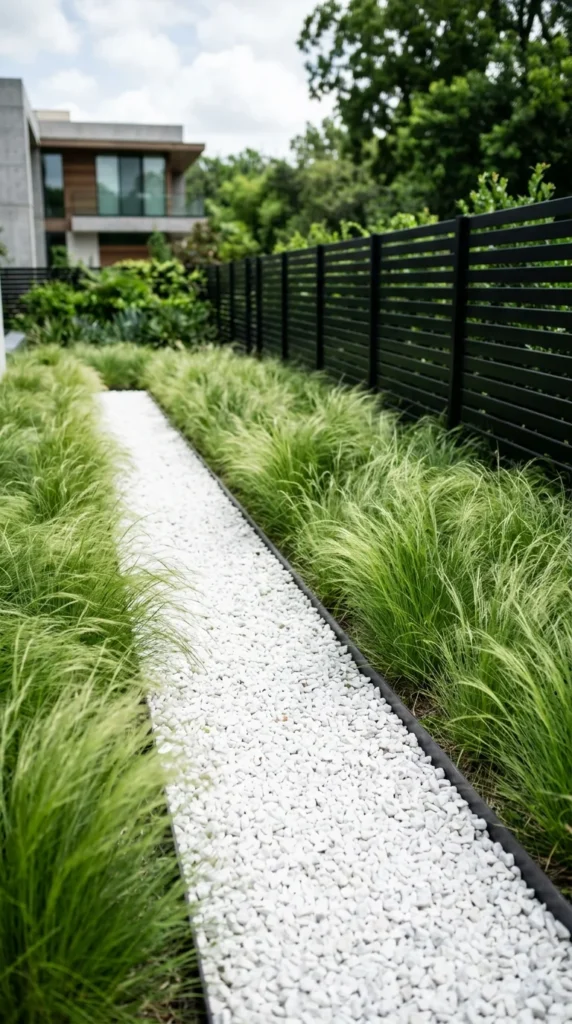
Using pure white marble chips creates a high-contrast, high-end look. This is perfect for small courtyards or “light wells” where you want to bounce as much light as possible. Pair it with black accents for a sophisticated, monochrome aesthetic that feels like an art gallery.
25. Dark Basalt
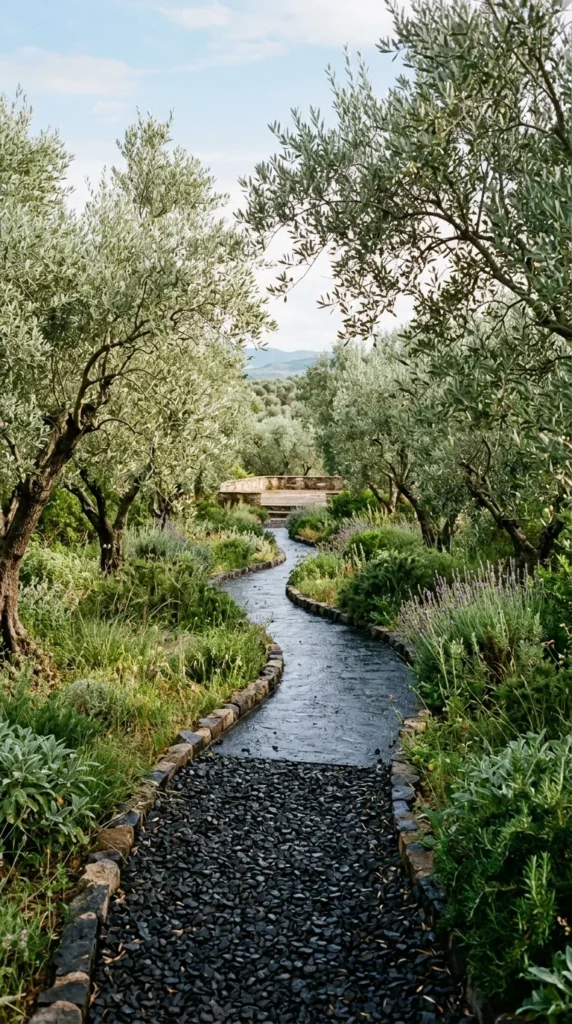
At the opposite end of the spectrum is dark basalt. When wet, it turns a deep, jet black; when dry, it is a sophisticated matte charcoal. It is an excellent choice for modern homes and looks particularly striking when paired with metallic garden art or vibrant lime-green foliage.
26. Patterned Mosaics
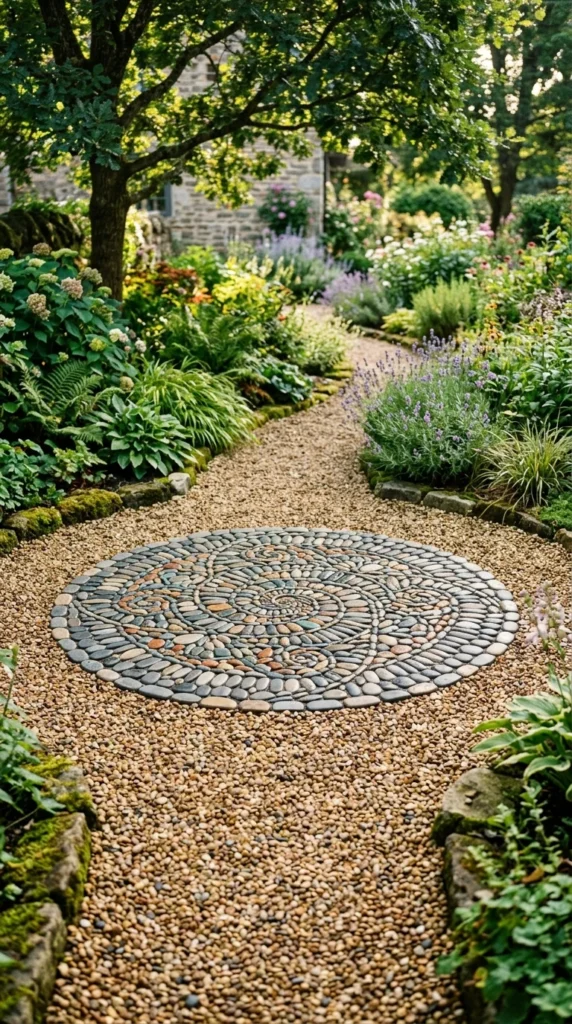
Get creative by embedding small “islands” of stone mosaics within your gravel path. You can use flat pebbles to create swirls, sunbursts, or geometric patterns. This transforms a simple utility path into a custom work of art that reflects your personal style.
27. Gravel-to-Patio Transition
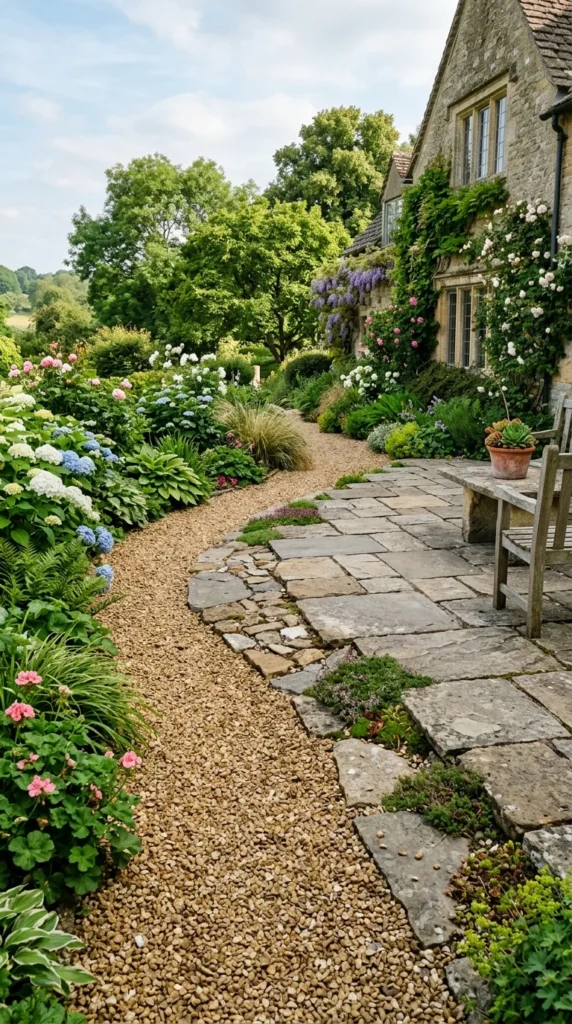
Finally, use gravel to create a seamless transition between different zones of your yard. A narrow gravel path that gradually widens into a gravel-floored seating area or a stone patio creates a sense of flow. It avoids the harsh “start and stop” lines that can make a small yard feel cramped.
Practical Tips for Gravel Path Success
While gravel is low-maintenance, a little preparation goes a long way in ensuring your path stays beautiful for years to come.
- Excavate Properly: Don’t just pour gravel on top of the grass. Dig down about 2-4 inches to create a “trough” for the gravel to sit in. This keeps the path level with the surrounding ground.
- Landscape Fabric: Always lay down a high-quality, heavy-duty landscape fabric before pouring the stone. This prevents weeds from growing up through the path while still allowing water to drain down.
- Compaction is Key: For finer materials like decomposed granite or crushed stone, use a plate compactor or a hand tamper to press the material down. This creates a much more stable surface for walking.
- Depth Matters: For walking paths, aim for a gravel depth of 2 to 3 inches. Any deeper, and your feet will sink in; any shallower, and the landscape fabric might start to peek through.
- Maintenance: Occasionally rake your path to keep the surface level and remove fallen leaves. Every few years, you may want to add a “top-off” layer of fresh gravel to keep it looking new.