
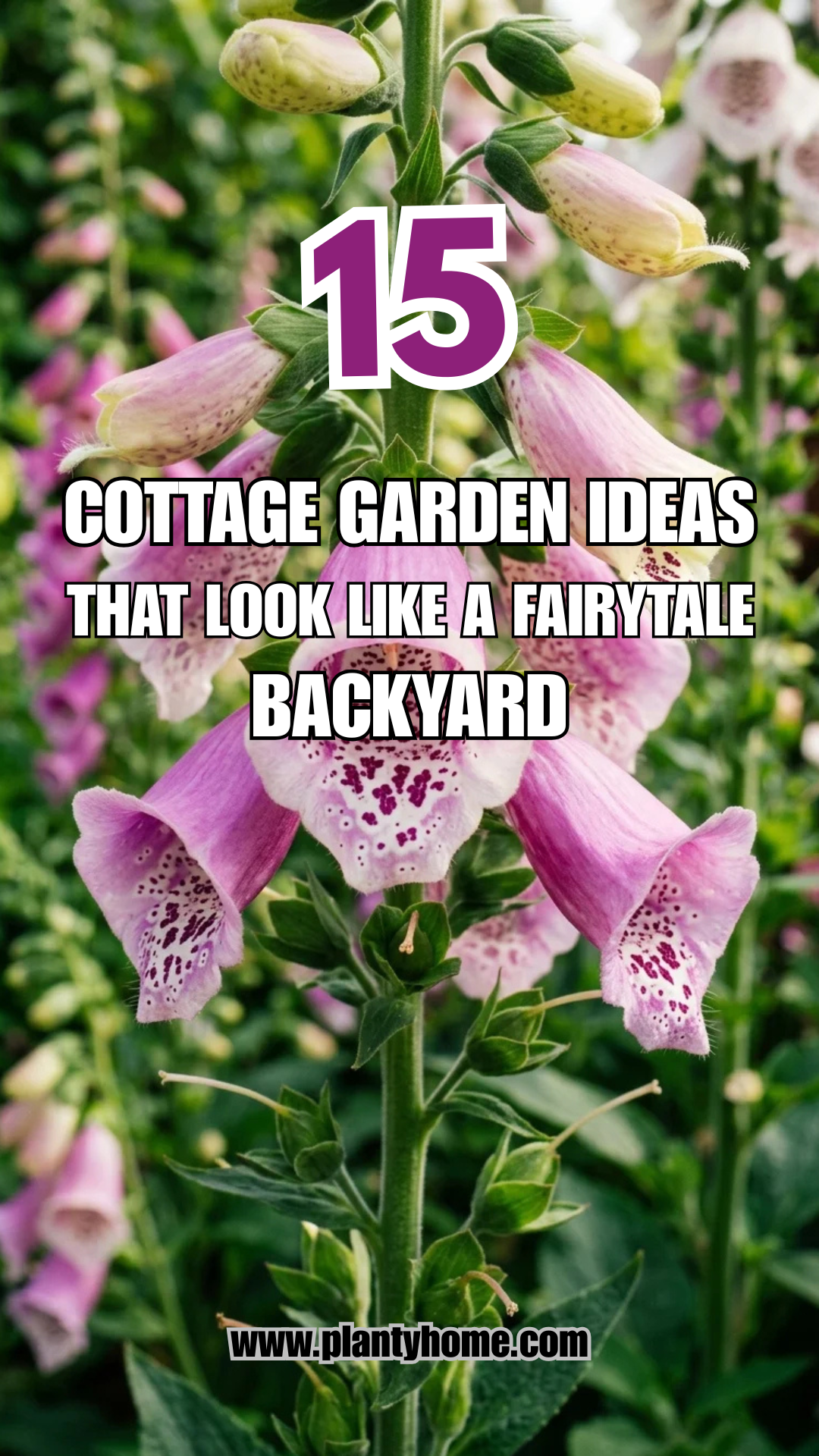
The cottage garden is an aesthetic that defies the rigid structure of modern landscaping. It is a celebration of controlled chaos, where fragrant blooms, winding paths, and rustic ornaments converge to create a space that feels as though it was lifted from the pages of a classic storybook. Originally designed by 18th-century laborers to maximize small plots of land for both food and beauty, the modern cottage garden has evolved into a sanctuary for biodiversity and a retreat for the soul.
To achieve a fairytale-like backyard, one must embrace imperfection. The goal is to create a sensory experience—one filled with the hum of bees, the scent of lavender, and a kaleidoscope of colors that shift with the seasons. Below are fifteen essential ideas to help you transform your outdoor space into an enchanting cottage-style haven.
1. Winding Paths
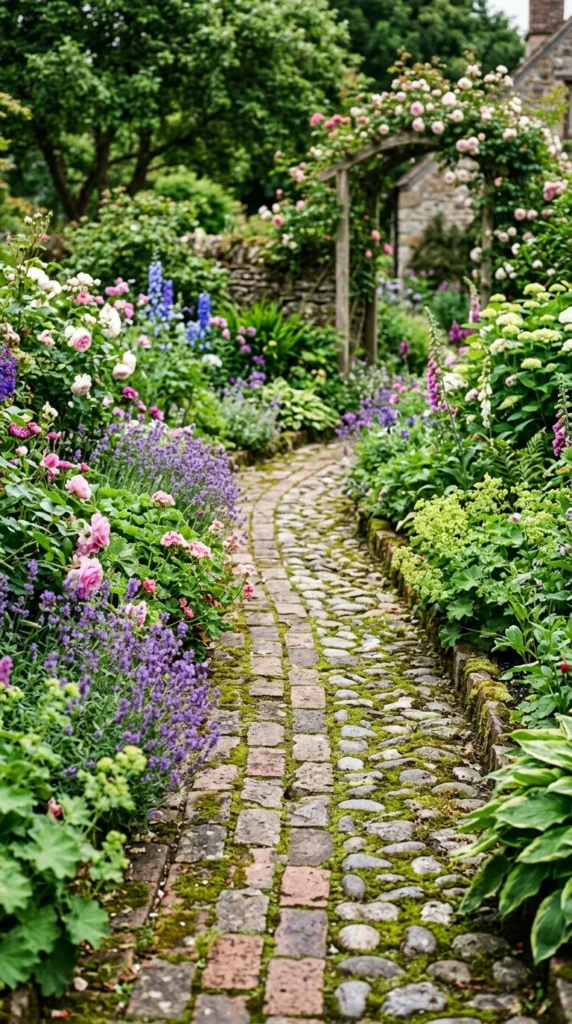
The hallmark of a fairytale garden is the element of mystery, and nothing provides this better than a winding path. Unlike the straight, utilitarian lines of contemporary designs, a curved path forces the visitor to slow down and discover the garden one step at a time. Using organic materials like reclaimed brick, crushed gravel, or flagstone softened by creeping thyme allows the walkway to blend seamlessly into the environment. These paths should disappear behind a shrub or a tall cluster of flowers, inviting exploration into the deeper, “secret” parts of the yard.
2. Climbing Roses
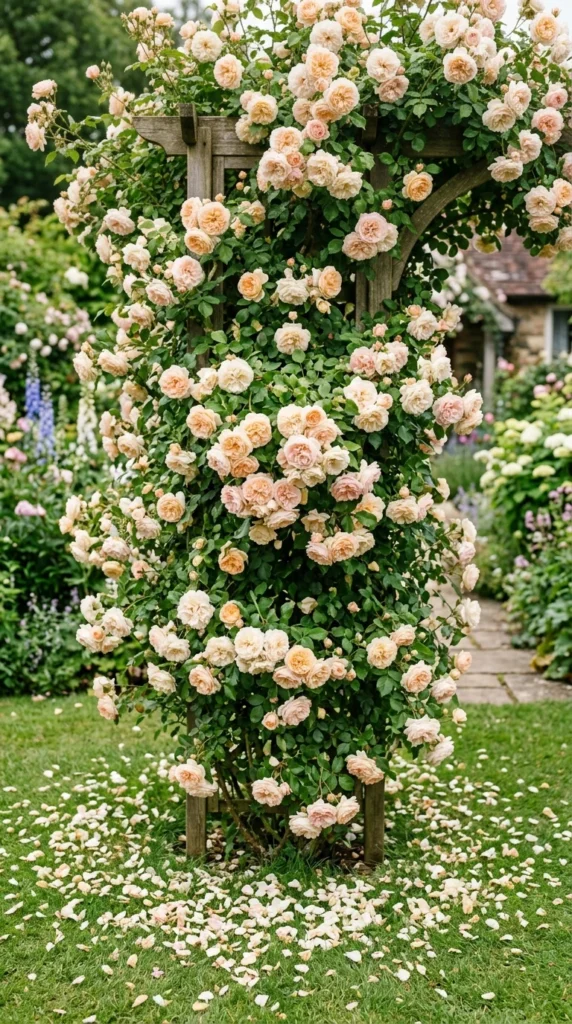
No cottage garden is complete without the romantic presence of climbing roses. These plants provide vertical interest, drawing the eye upward and covering walls, fences, or pillars in a blanket of color. Varieties such as ‘New Dawn’ or ‘Eden’ are particularly prized for their large, ruffled blooms and intoxicating scents. When allowed to scramble over a porch or around a window frame, they create the “living wallpaper” effect that is central to the fairytale aesthetic.
3. Picket Fences
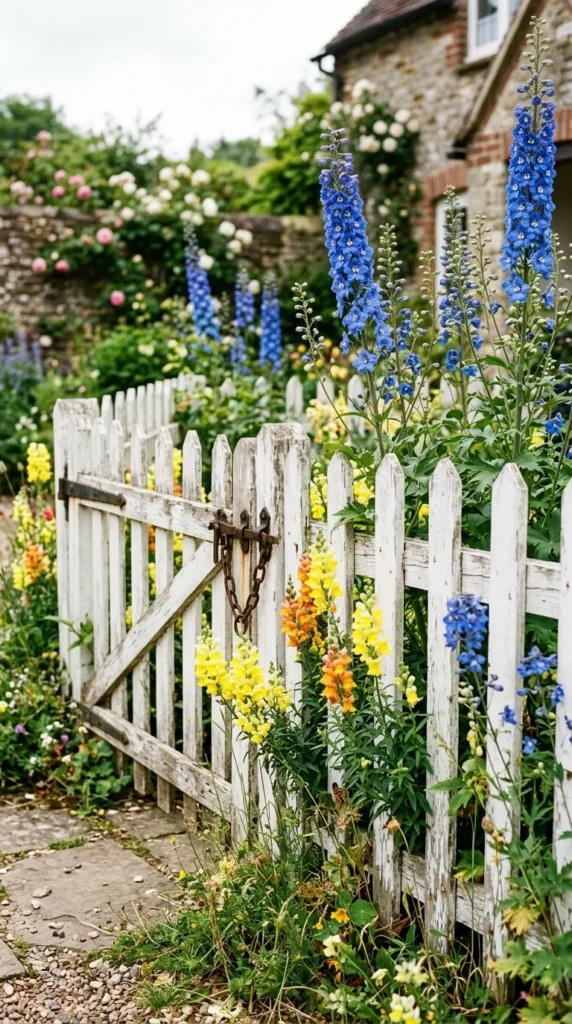
The white picket fence is the quintessential boundary for a cottage garden. It provides a crisp, structural backdrop that makes the wild, unruly colors of the flowers pop. However, in a fairytale setting, the fence should never look too “perfect.” Allowing it to weather naturally or letting heavy blooms like hollyhocks and sunflowers lean against it softens the perimeter. The fence serves as a support system for the plants while establishing a clear sense of home and enclosure.
4. Hidden Seating
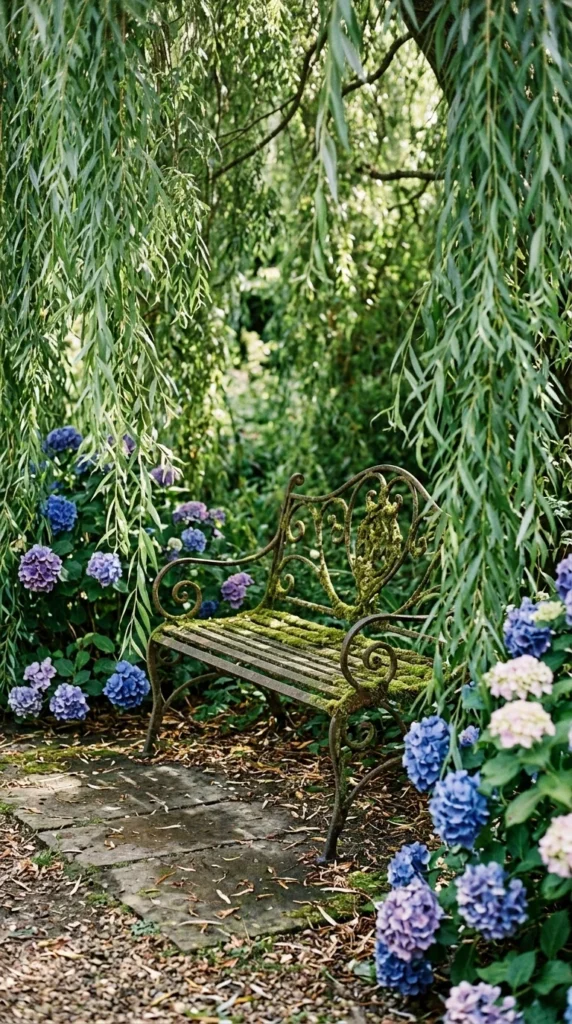
To truly inhabit a fairytale garden, one needs a place to sit and observe. Seating should be tucked away in “secret” nooks rather than placed prominently in the center of a lawn. A weathered stone bench, a rustic wooden swing, or a pair of mismatched bistro chairs placed under a canopy of trees creates a destination for reflection. The key is to make the seating feel like it has been there for decades, slowly being reclaimed by the surrounding greenery.
5. Wildflower Borders

Traditional cottage gardens do not leave bare earth. Every inch of soil is occupied by a plant, creating a lush, tapestry-like effect. Wildflower borders are perfect for filling large gaps and attracting pollinators like butterflies and hummingbirds. By mixing different heights—putting tall lupines in the back and low-growing sweet alyssum at the front—you create a sense of depth and abundance that looks effortless yet meticulously layered.
6. Garden Arches
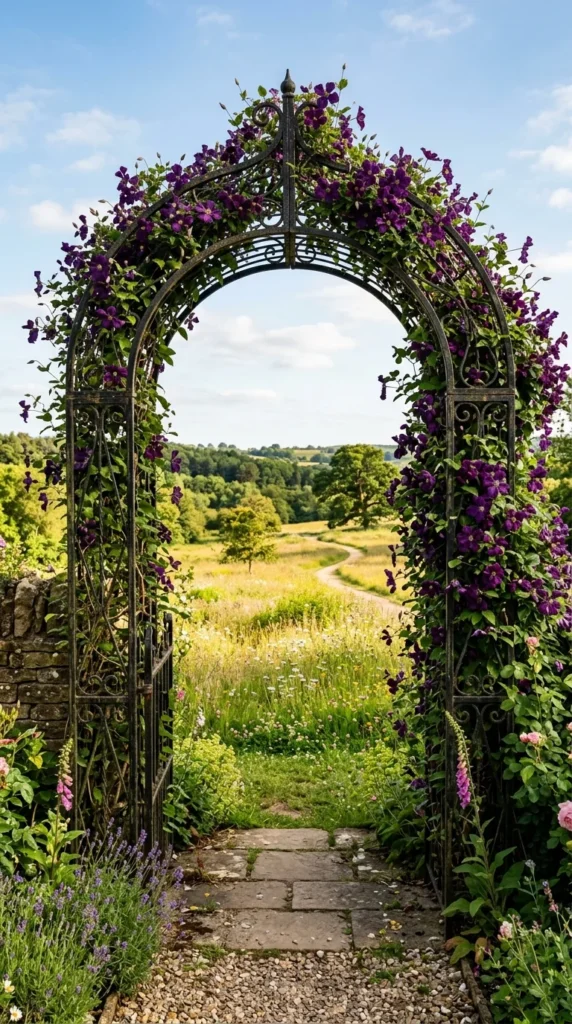
Arches act as the “doorways” of the garden. They signal a transition from one area to another, such as moving from a sunny lawn into a shaded woodland corner. Whether made of ornate wrought iron or rustic cedar branches, an arch covered in jasmine, honeysuckle, or clematis adds height and drama. Walking through a fragrant, flower-covered portal is a sensory experience that immediately evokes a sense of enchantment.
7. Foxgloves
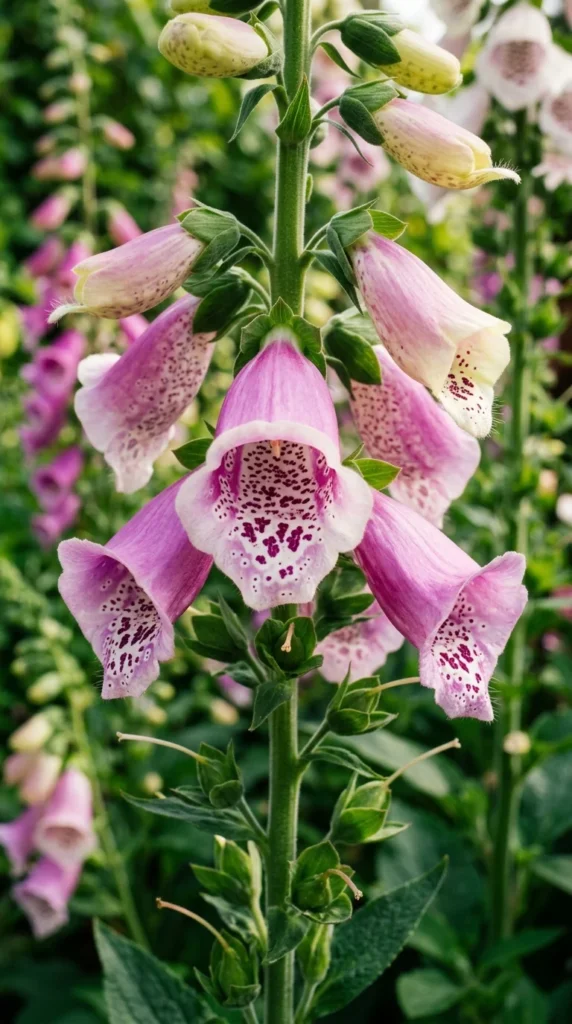
Foxgloves (Digitalis) are perhaps the most iconic fairytale flower. Their tall, dramatic spikes and bell-shaped blooms have a whimsical, almost otherworldly appearance. Traditionally associated with forest folklore, they thrive in the dappled shade often found in cottage gardens. Because they are biennials, they have a charming habit of self-seeding, meaning they will pop up in unexpected places each year, adding to the garden’s spontaneous and natural feel.
8. Stone Basins
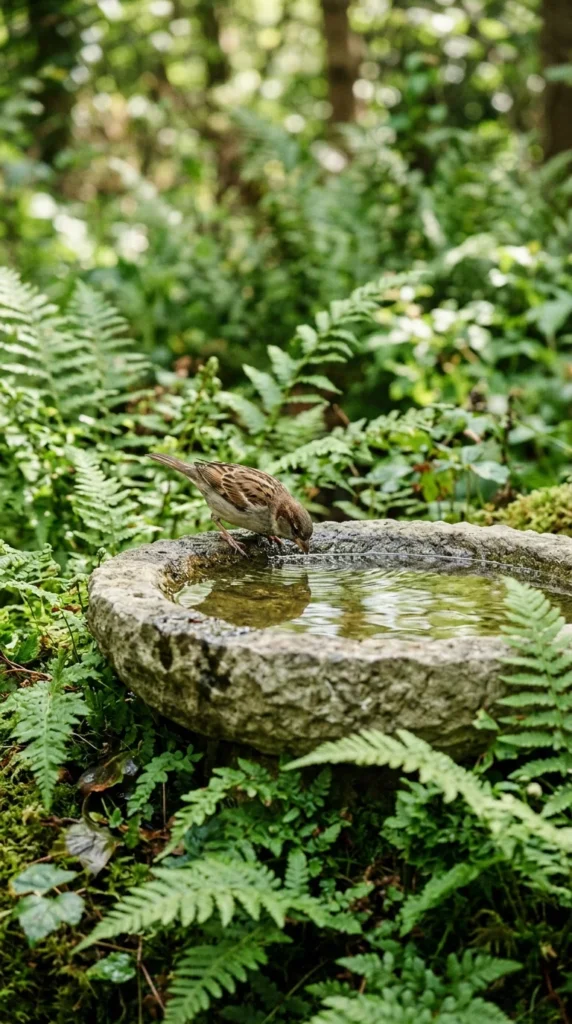
Water elements in a cottage garden should be subtle and understated. A simple stone basin or a weathered bird bath provides a focal point and a necessary resource for local wildlife. The sound of water—whether from a small trickling fountain or the occasional splash of a bird—adds a calming auditory layer to the garden. Choosing stone over plastic or shiny ceramic ensures the piece looks like a natural artifact of the landscape.
9. Layered Perennials
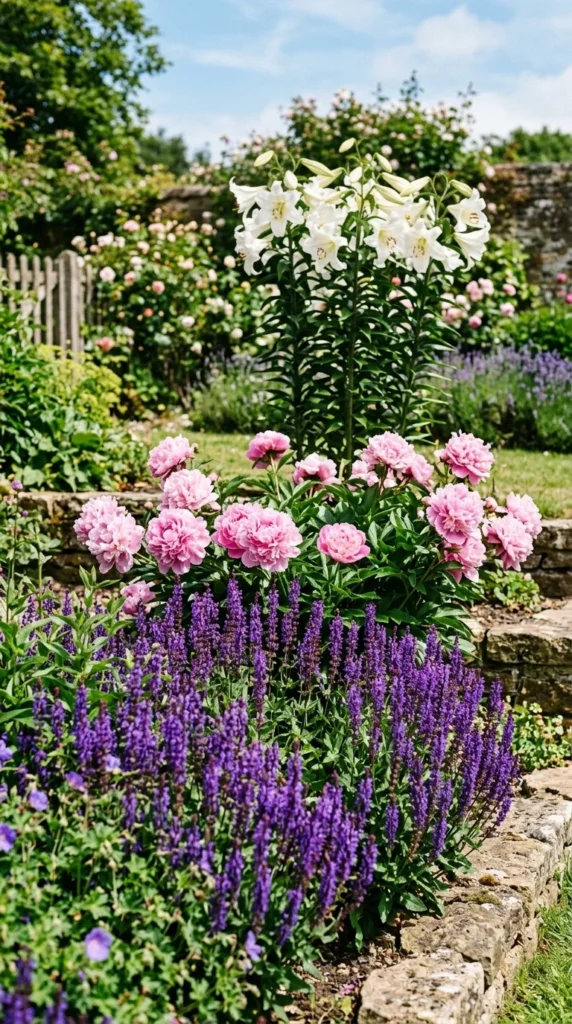
The “fairytale” look is achieved through density. By planting perennials that bloom at different times of the year, you ensure the garden is never empty. Layering involves placing plants with different textures and colors close together. For example, the soft, silvery foliage of Lamb’s Ear provides a beautiful contrast to the deep green leaves and bright spheres of Alliums. This density suppresses weeds and creates a “sunken garden” feel that is cozy and private.
10. Potager Layouts
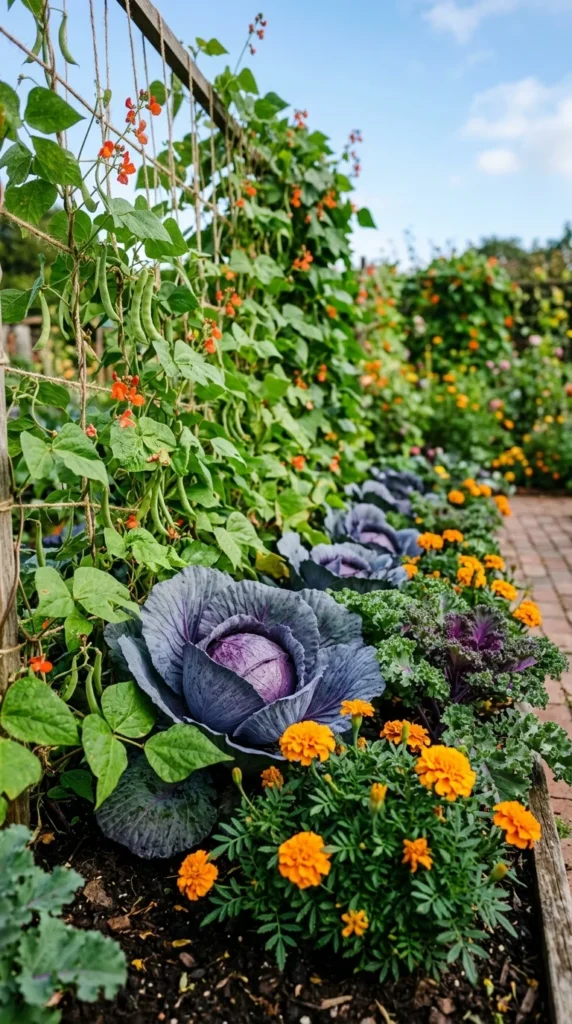
A potager is a French-style kitchen garden that prioritizes beauty as much as utility. In a cottage garden, herbs, vegetables, and flowers live side-by-side. Imagine scarlet runner beans climbing up a rustic teepee, surrounded by flowering chives and medicinal calendula. This integration makes the garden feel lived-in and productive, bridging the gap between a decorative landscape and a functional homestead.
11. Weathered Statuary
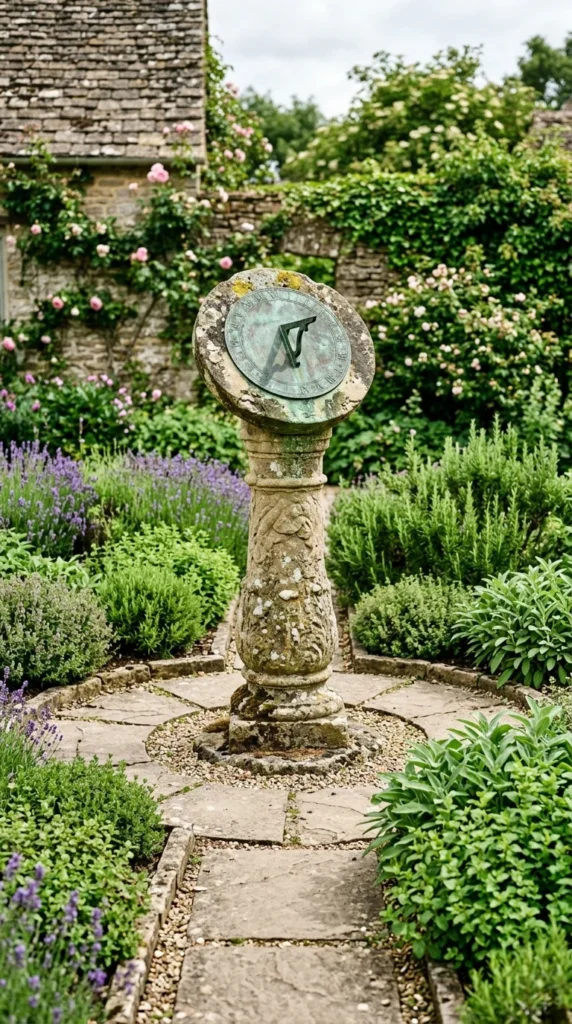
Ornaments in a cottage garden should tell a story. A moss-covered sundial, a stone frog peeking out from under a hosta leaf, or a weathered cherub statue adds a touch of classical mystery. The secret is to use statuary sparingly and place it where it won’t be seen immediately. Finding a small, weathered figure hidden among the foliage creates a moment of delight and reinforces the idea that the garden is a magical, inhabited space.
12. Thyme Lawns

For a truly enchanted look, consider replacing traditional turf grass with a “herbal lawn” or groundcover. Creeping thyme is an excellent choice; it stays low to the ground, requires no mowing, and releases a wonderful fragrance when stepped upon. During the summer, it erupts into a sea of tiny purple or white flowers. This alternative lawn style feels softer and more organic than a manicured grass carpet, fitting the informal nature of the cottage style perfectly.
13. Evening Lighting
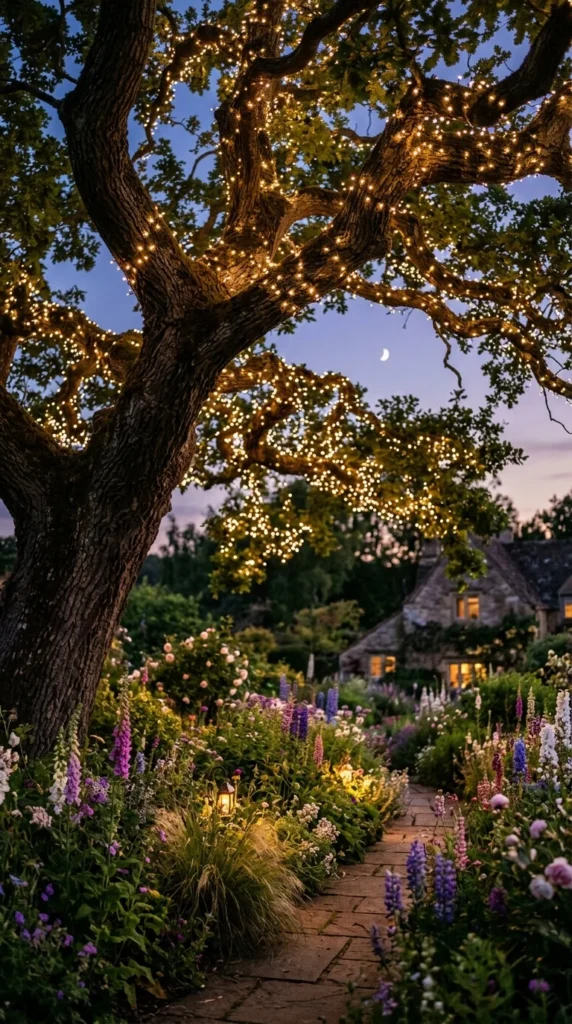
The magic of a fairytale garden shouldn’t disappear when the sun goes down. Soft, ambient lighting can transform the space into an evening wonderland. Avoid harsh floodlights or bright LED path lights. Instead, use delicate fairy lights draped through tree branches, or copper lanterns hanging from shepherd’s hooks. The goal is to mimic the soft glow of fireflies, illuminating just enough to highlight the silhouettes of the plants and the textures of the paths.
14. Mossy Walls

If your garden has stone walls or rock features, encourage the growth of moss and lichens. This “patina of age” is vital for the fairytale look, as it makes the garden appear as though it has existed for centuries. You can accelerate this process by applying a mixture of buttermilk and moss spores to the stones. Small crevice-dwelling plants, like Saxifrage or “Hen and Chicks,” can also be tucked into the gaps to soften the hard edges of the masonry.
15. Lavender Hedges

Lavender is the sensory backbone of the cottage garden. Used as a low hedge along a path or a border, it provides structure and a constant, soothing fragrance. The silvery-grey foliage persists through much of the year, offering interest even when other plants are dormant. Lavender also serves as a magnet for bees and butterflies, ensuring your garden is always full of life—a key component of any backyard that aims to look and feel like a fairytale.