


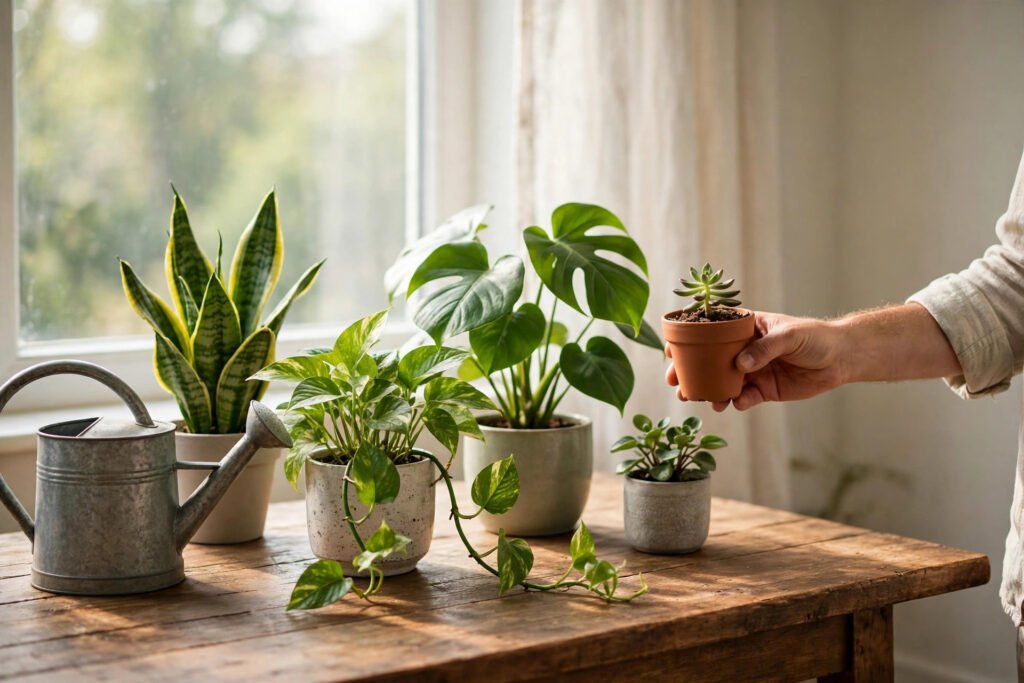
Overwatering kills more houseplants than almost anything else, and it usually starts with one simple mistake: watering on a schedule instead of checking the soil first. A plant in a bright window, a small pot, or dry indoor air can need water twice as often as the same plant in a cool, shaded corner. The calendar cannot tell you that. The soil can.
Here are four reliable ways to check soil moisture before you water, what each one does well, where each one fails, and which plants each suits best.

1. The Finger Test
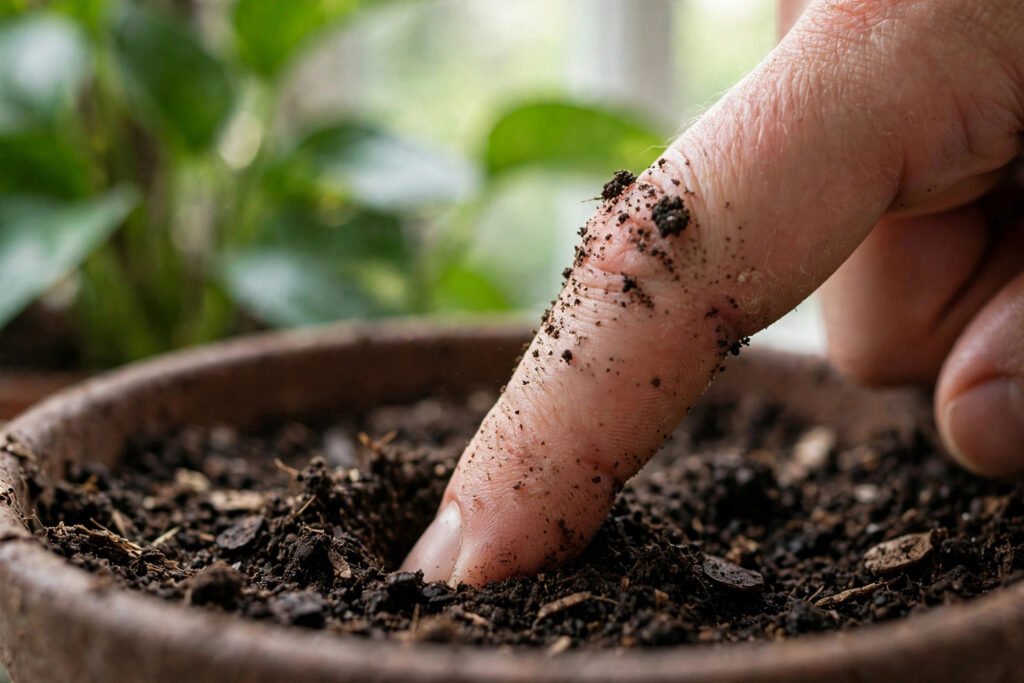
Push your finger into the soil up to the second knuckle, roughly 4–5 cm (about 2 inches) deep.
- If soil sticks to your finger and feels damp, wait and check again in a day or two.
- If it comes out mostly clean and dry, most common houseplants are ready for water.
- For succulents and cacti, wait until the soil is dry much deeper than this before watering.
Best for: most everyday houseplants in small and medium pots.
Limits: it only tells you about the top layer. In a deep pot, the surface can be dry while the bottom is still wet — which is exactly where roots rot.
2. The Wooden Skewer or Chopstick Test
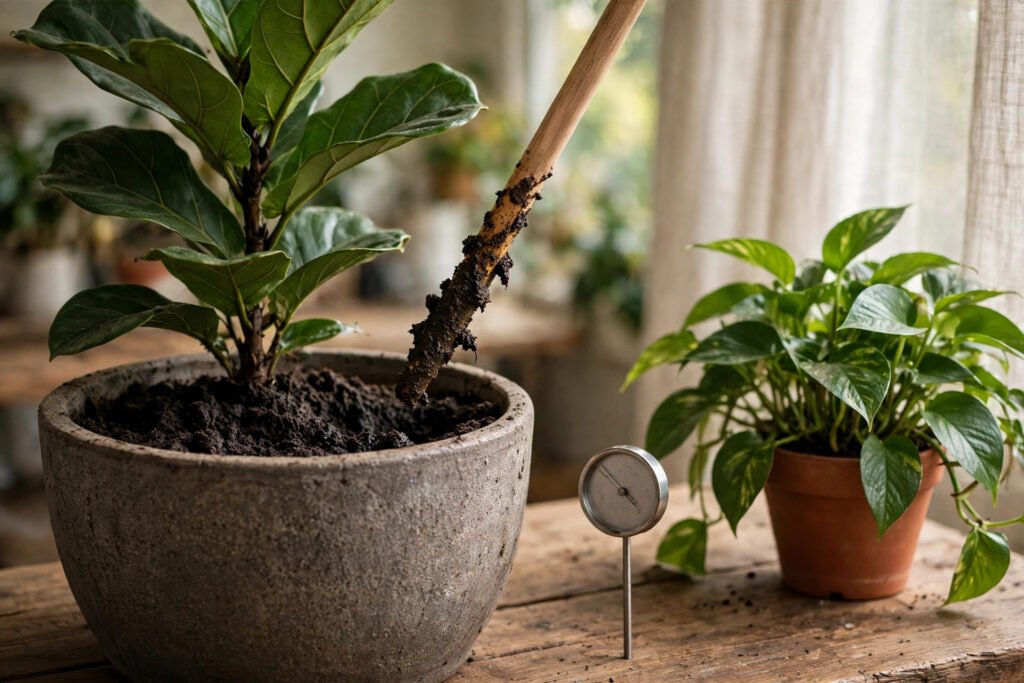
Push a plain wooden skewer, chopstick or bamboo kebab stick gently into the pot, close to the edge so you do not damage the main roots, and leave it for about 10 seconds before pulling it out.
- Dark, damp soil clinging to the wood means the soil at that depth is still moist.
- A clean, dry stick means the moisture has dropped through most of the pot.
This works on the same idea as testing a cake with a toothpick, and it is the best low-cost check for large or deep pots where the finger test is misleading.
Best for: large pots, deep pots, and plants that hate wet feet, such as snake plants and ZZ plants.
Limits: be gentle — push slowly and stop if you meet strong resistance.
3. The Pot Weight Method
Lift the pot right after a thorough watering and notice how heavy it feels. Lift it again every few days. A well-watered pot feels noticeably heavier than a dry one, because water is most of the weight that changes.
After two or three watering cycles, most people can judge “dry enough to water” just by lifting.
Best for: plants in lightweight nursery or plastic pots, and for people who keep many plants and want a fast check.
Limits: hard with very large, heavy, or ceramic pots, and it takes a little practice at first.
4. A Moisture Meter
Push the probe of a soil moisture meter about two-thirds of the way into the pot and read the dial after a few seconds. As a rough guide, many tropical houseplants are ready for water when the meter reads in the low “moist” range (around 3–4 on a typical 1–10 scale), while succulents should fall to the dry range first.
Two tips make meters much more reliable:
- Check in two or three spots, not just one, because soil dries unevenly.
- Wipe the probe clean after every use, and do not leave it sitting in the soil — that corrodes the probe and ruins the readings.
Best for: beginners, moisture-sensitive plants, and anyone who tends to overwater.
Limits: cheap meters wear out, and they measure electrical conductivity, so very gritty or heavily fertilised soil can read inaccurately. Always sanity-check a strange reading with a skewer.
Which Method Should You Use?
- Small pots, everyday plants: finger test.
- Large or deep pots: skewer test.
- Many plants, fast routine: pot weight.
- You keep overwatering: moisture meter, backed up by the skewer test.
For most homes, the skewer test plus lifting the pot covers nearly every plant, costs nothing, and takes ten seconds.
Common Mistakes to Avoid
- Checking only the surface. Dry soil on top does not mean dry soil at the roots.
- Watering a little every day. Most houseplants do better with a thorough watering, then a proper dry-out in between, than with constant small sips.
- Using the same rule for every plant. A fern and a succulent in the same room can differ by a week or more in watering needs.
- Ignoring the season. Plants use far less water in cool, low-light months, so the same pot stays wet much longer.
- Forgetting drainage. No checking method can save a plant sitting in a pot with no drainage hole and water pooled at the bottom.
The Bottom Line
Before you water any houseplant, spend ten seconds checking first. Pick the method that fits the pot: finger for small pots, skewer for deep ones, weight for a quick routine, and a meter if you are learning. That one habit — watering when the plant actually needs it, not when the calendar says so — prevents more root rot, fungus gnats and yellowing leaves than any fertiliser or special soil ever will.