
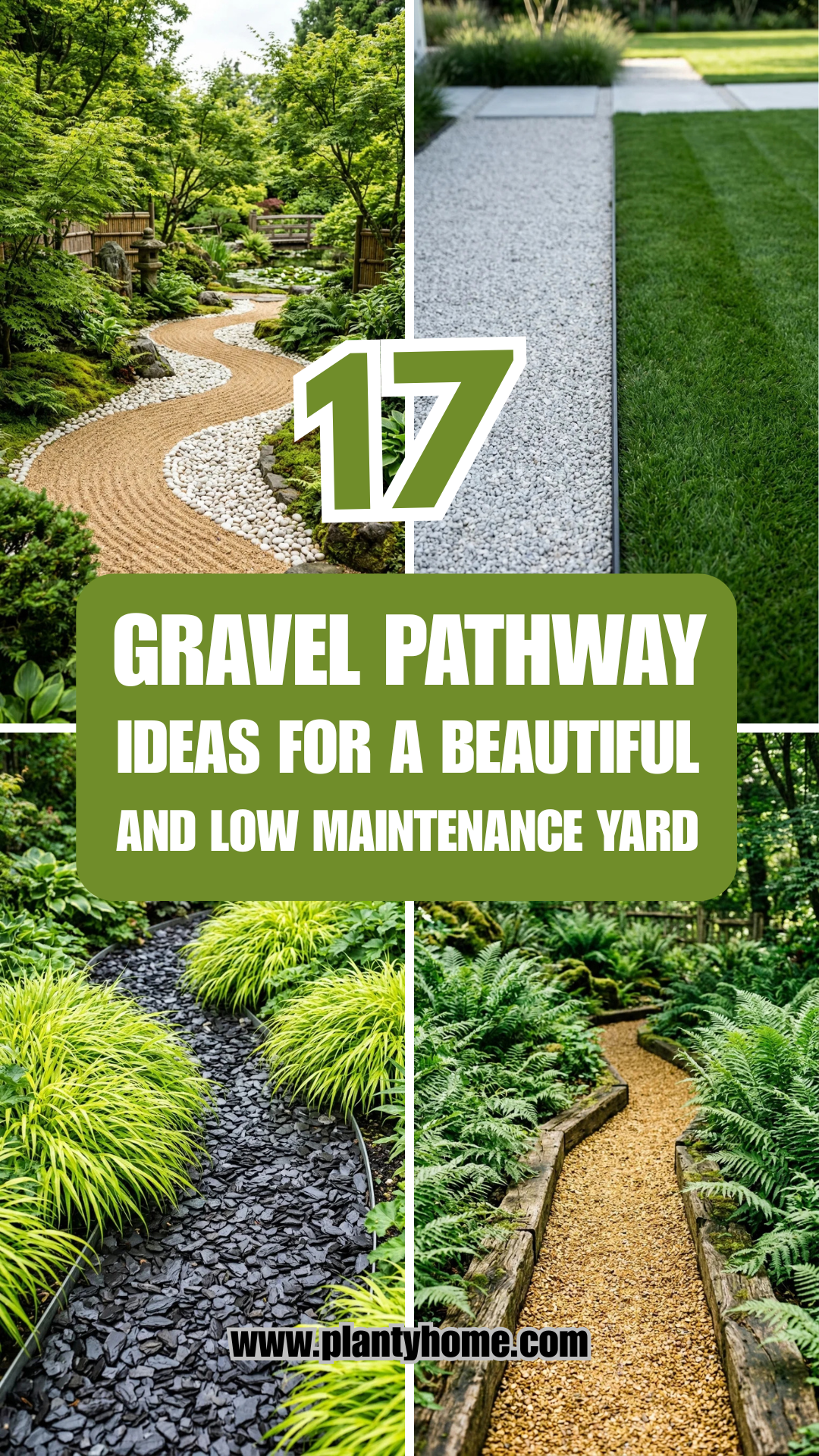
Gravel pathways are a cornerstone of functional and aesthetic landscaping. They offer a versatile, cost-effective, and permeable solution for navigating outdoor spaces while adding texture and visual interest. Whether you are aiming for a rustic cottage feel, a serene Zen retreat, or a sharp modern aesthetic, gravel provides the flexibility to achieve your vision. Beyond their beauty, these pathways are prized for their low-maintenance nature, providing excellent drainage and a satisfying crunch underfoot that signals a transition into nature.
Choosing the right gravel pathway involves more than just selecting a color; it requires considering the size of the aggregate, the edging material, and the overall harmony with your home’s architecture. In this comprehensive guide, we explore 17 innovative gravel pathway ideas to transform your yard into a curated sanctuary.
1. Pea Gravel
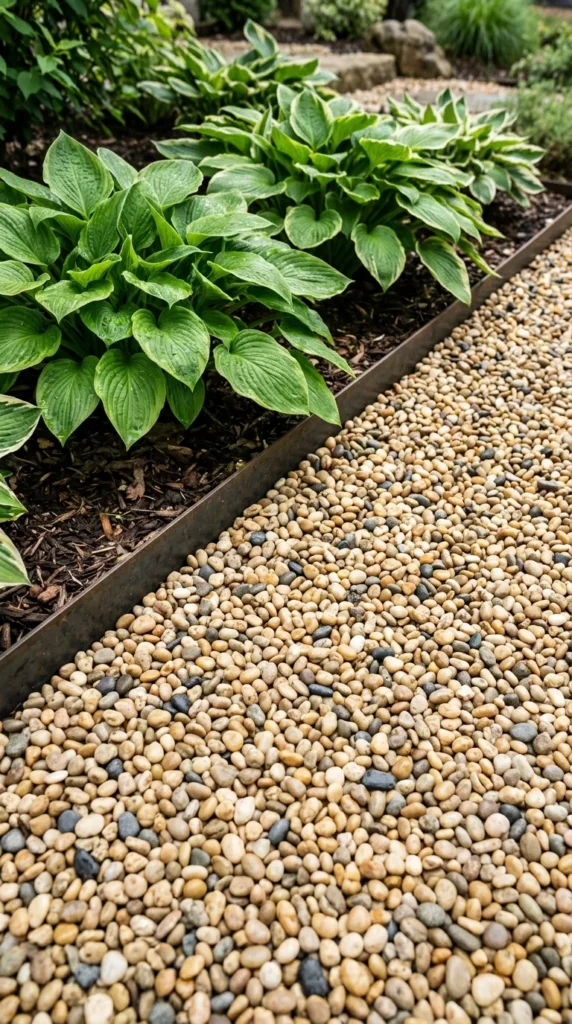
Pea gravel is perhaps the most popular choice for garden paths due to its smooth, rounded texture. Unlike crushed stone, pea gravel has been naturally weathered, making it comfortable to walk on even in bare feet. Its small size allows it to flow into curves easily, making it ideal for winding paths that snake through flower beds. To prevent the “marbles” effect where stones shift too much, it is best applied in a layer no deeper than two inches over a compacted sub-base.
2. Flagstone Mix
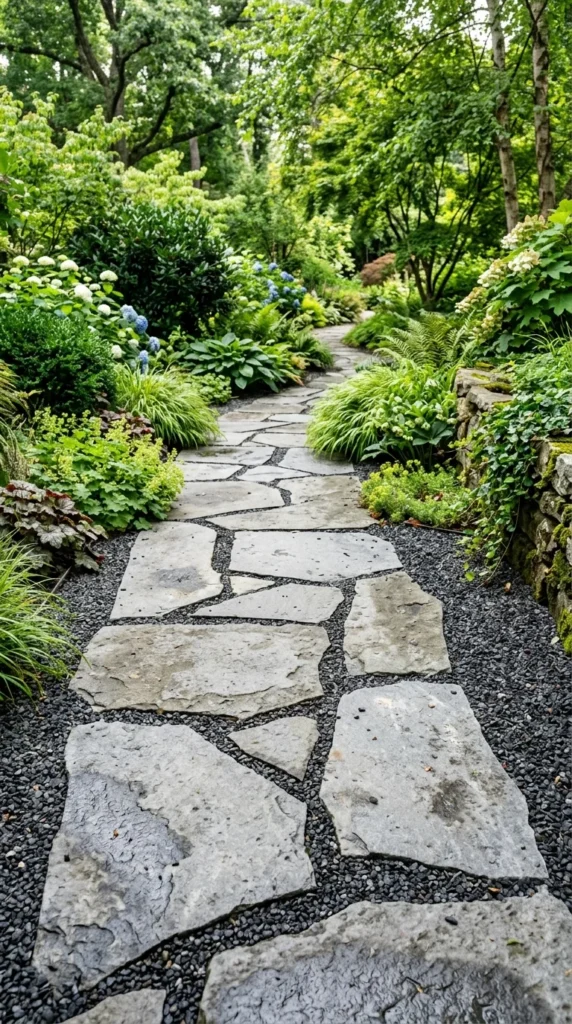
Combining gravel with large flagstone pavers offers the best of both worlds: the stability of a solid surface and the textural beauty of loose stone. This approach is particularly effective for high-traffic areas where walking on pure gravel might feel unstable. The gravel fills the irregular gaps between the stones, creating a mosaic effect that looks organic and intentional. Darker gravels paired with lighter stones create a high-contrast, modern look, while tonal matching provides a more traditional feel.
3. Edged Borders
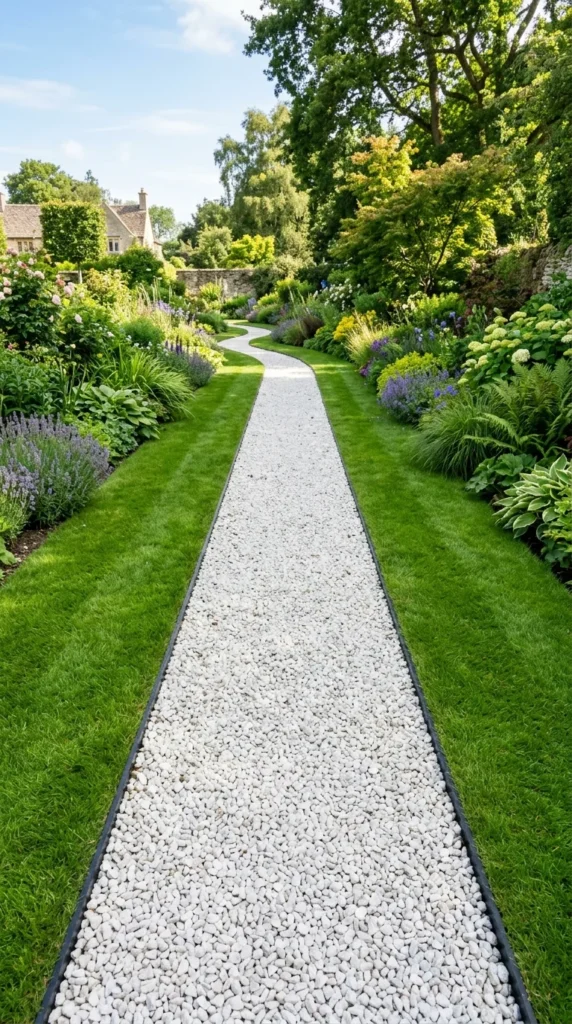
The secret to a professional-looking gravel path is the edging. Without a firm border, gravel eventually migrates into the lawn or garden beds, creating a maintenance headache. Metal edging, such as steel or aluminum, offers a slim, nearly invisible profile that allows the path to take center stage. For a more pronounced look, heavy timber or concrete curbing can be used. Edging not only keeps the stones contained but also provides a clean line for lawn mowers to follow.
4. Stepping Stones
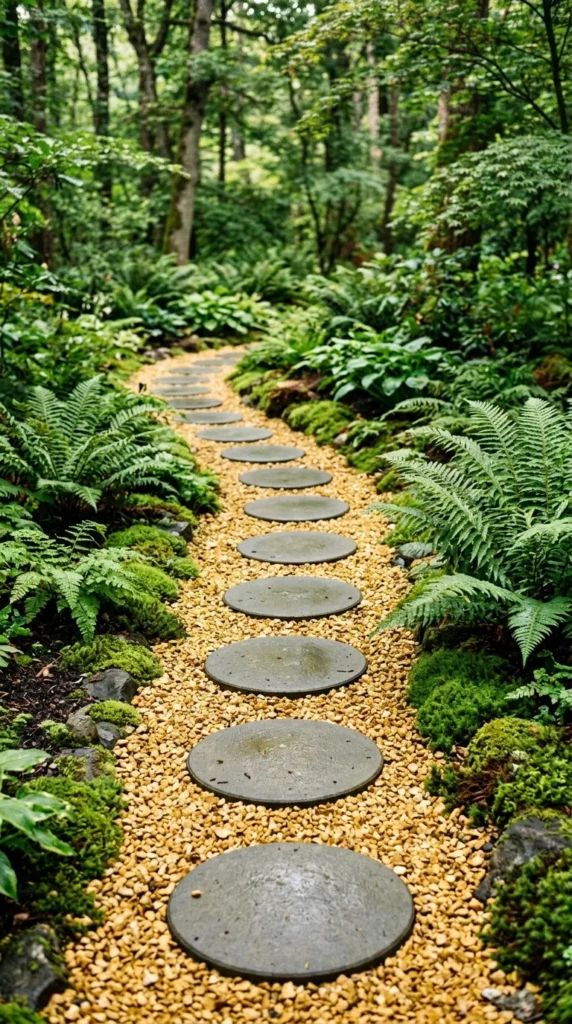
Integrating stepping stones into a gravel path creates a rhythmic visual flow and makes the walkway easier to navigate. This design is particularly useful in rainy climates, as it provides a dry, elevated surface for the feet while the surrounding gravel handles water runoff. Using circular stones can soften the look of a yard, while square or rectangular stones lend themselves to a more formal, structured environment.
5. Crushed Granite
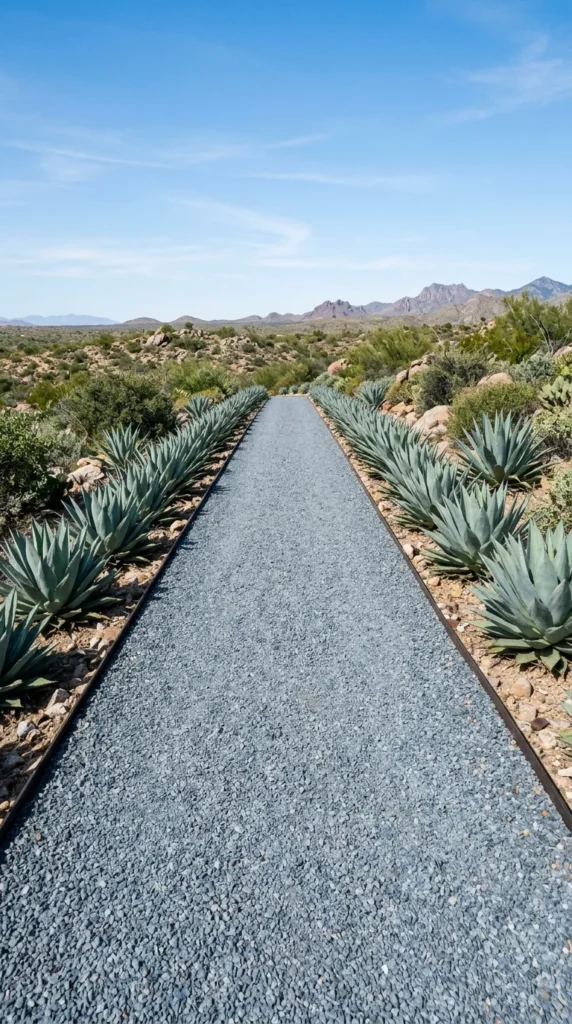
Crushed granite, often referred to as “decomposed granite” (DG) when it includes fines, is a favorite for designers seeking a more stable, “packed” feel. Because the stones are angular rather than rounded, they lock together under pressure. This makes crushed granite an excellent choice for paths that need to support wheelbarrows, bicycles, or strollers. When treated with a stabilizer, it becomes almost as firm as pavement while retaining its natural, porous appearance.
6. Wood Plank Inlays
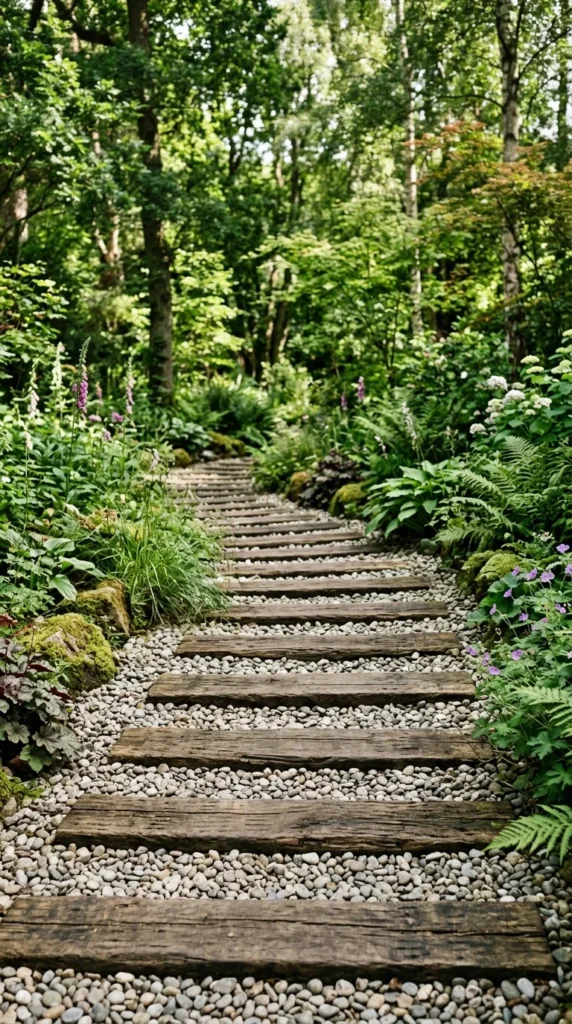
For a rustic or Pacific Northwest-inspired look, inlaying wood planks into gravel provides a stunning textural contrast. The warmth of the wood balances the coolness of the stone. This style works exceptionally well in shaded areas or woodland gardens where a “forest floor” aesthetic is desired. It is important to use pressure-treated lumber or naturally rot-resistant species like cedar or black locust to ensure the longevity of the planks.
7. River Rock Accents
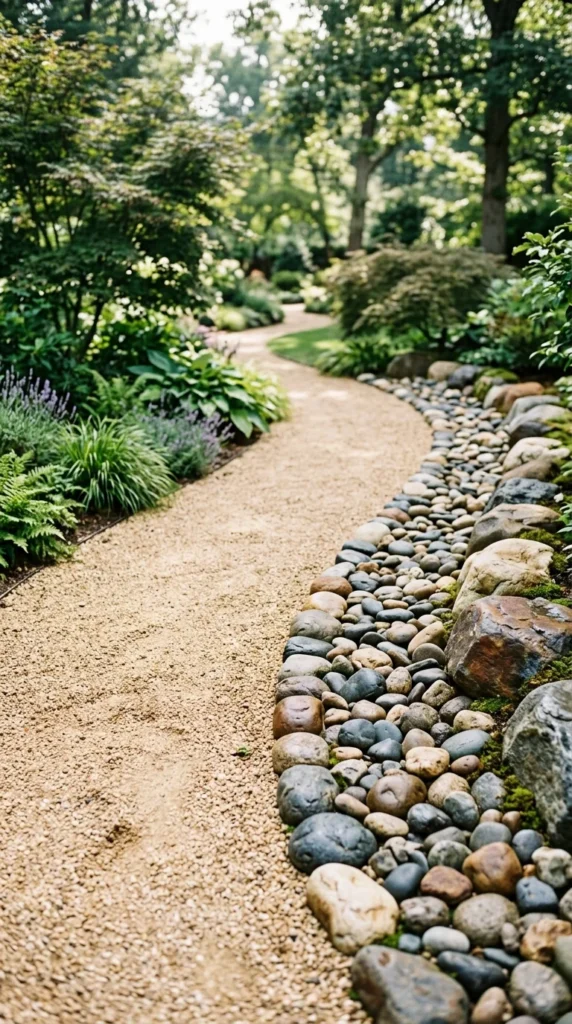
Using larger river rocks as accents or borders for a smaller gravel path adds a layer of geological interest. This technique mimics the look of a natural dry creek bed. You can use the larger stones to line the edges of the path or even create “islands” of larger rocks within a wider gravel area. This is not only aesthetically pleasing but also serves a functional purpose by slowing down water flow during heavy rain.
8. Geometric Patterns
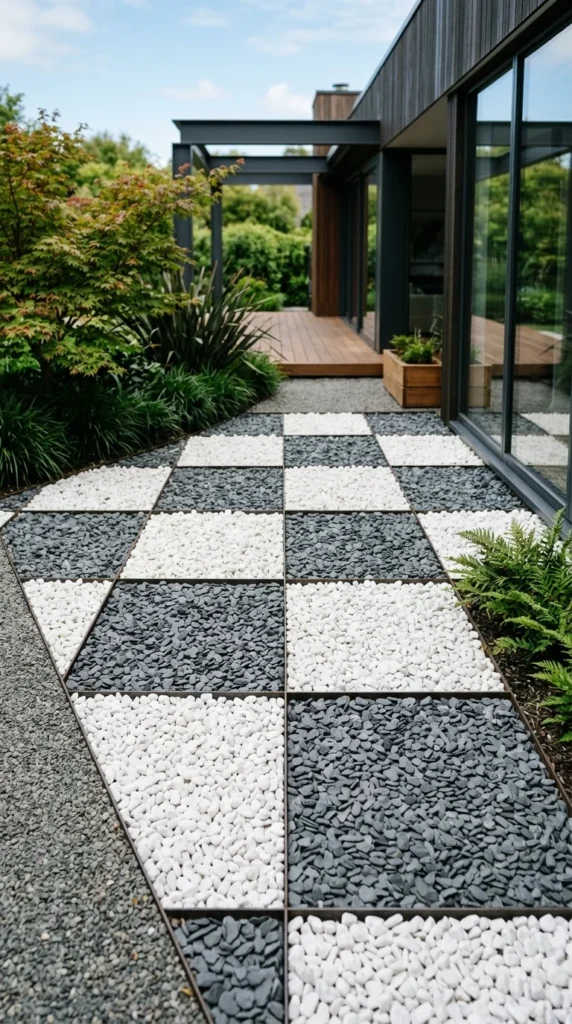
Gravel can be used as a medium for artistic expression by creating geometric patterns. By using different colors of stone and internal dividers, you can create checkerboards, stripes, or even more complex tessellations. This approach works best in modern, minimalist landscapes where the ground plane is treated as a piece of art. It requires precise installation of benders or dividers to keep the colors from mixing over time.
9. Mediterranean White
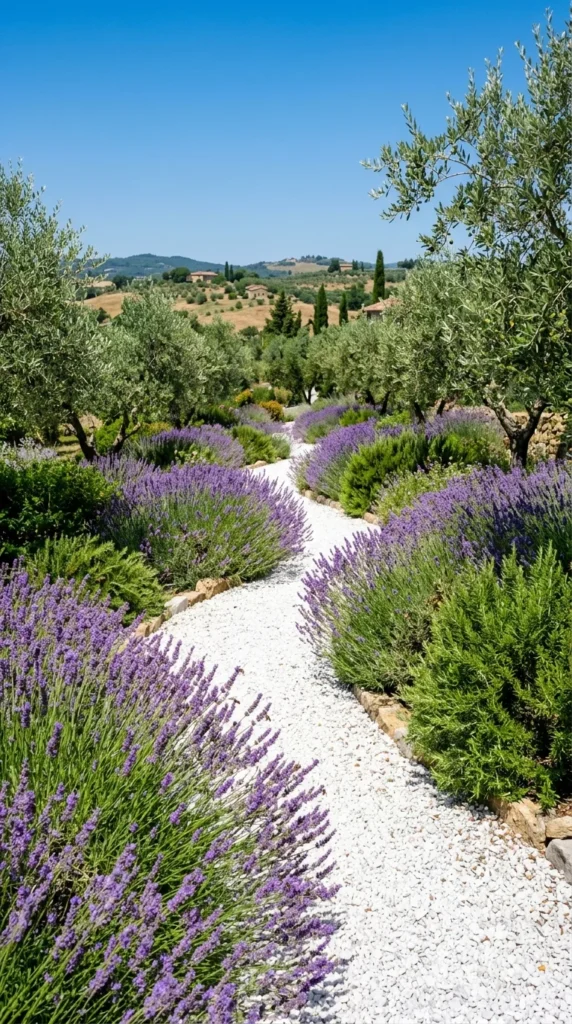
To capture the essence of a coastal Greek or Italian villa, white gravel is the go-to material. White marble chips or limestone reflect sunlight, brightening up shaded corners of the yard and providing a cool, crisp look. This style pairs beautifully with terracotta pots, bright blue accents, and drought-tolerant Mediterranean plants. Note that white gravel can show dirt more easily than darker tones, so it is best used in areas away from heavy leaf fall.
10. Rustic Slate
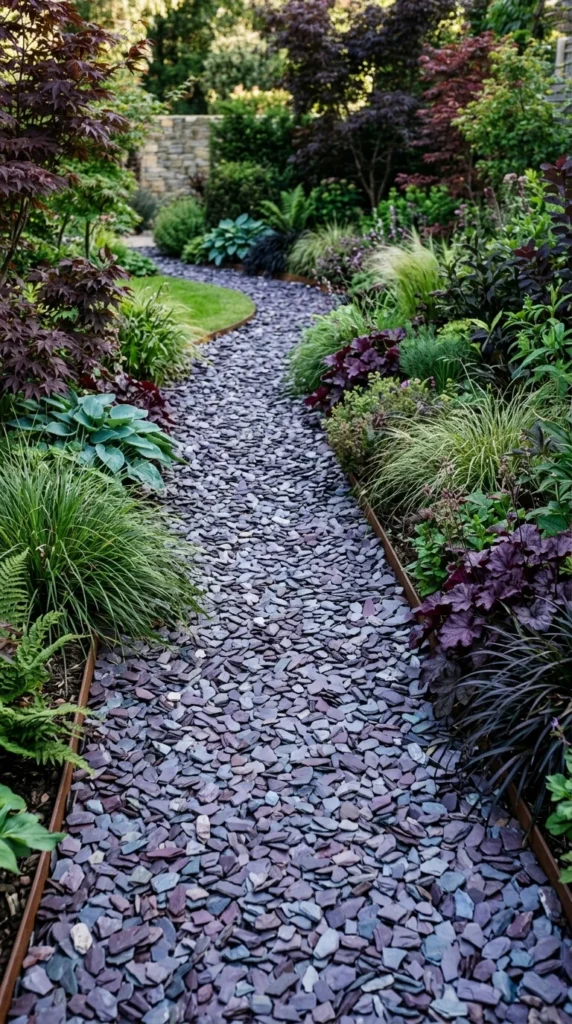
Slate chippings offer a unique, flat profile that differs significantly from traditional rounded gravel. Because the pieces are flat, they tend to stay in place better and create a “shingled” effect. Slate comes in a variety of striking natural colors, including deep purples, greens, and blues, which can change dramatically when wet, adding a dynamic element to the garden during rain showers.
11. Zen Garden Path
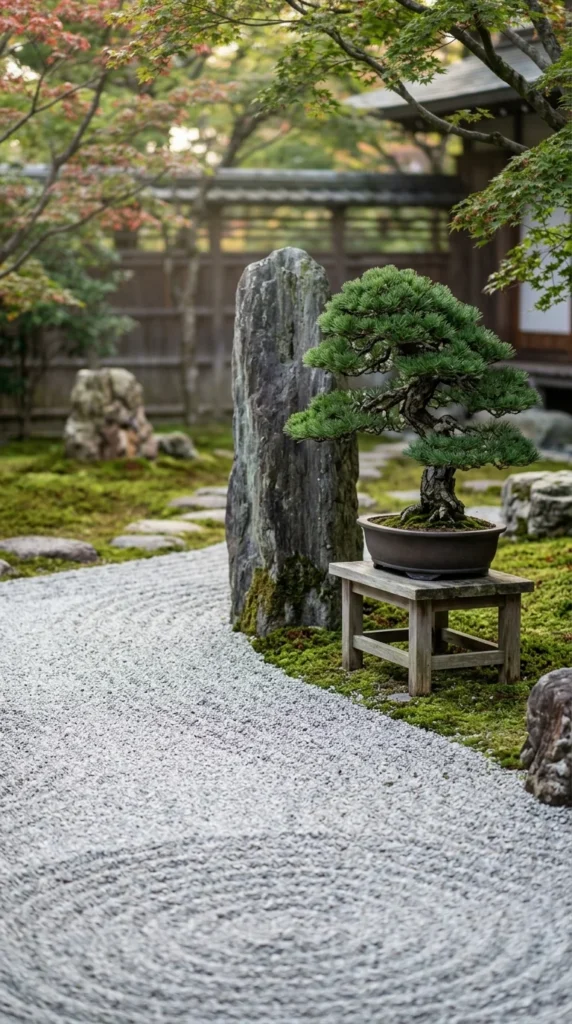
Inspired by Japanese Karesansui gardens, a Zen-style gravel path emphasizes peace and contemplation. Usually featuring very fine gravel or coarse sand, these paths are often raked into patterns representing ripples in water. While high-maintenance if you choose to rake it daily, a Zen path can also be simplified with static, fine-textured grey stone and minimal plantings like moss or Japanese maples to create a sanctuary for reflection.
12. Brick-Edged Walkway
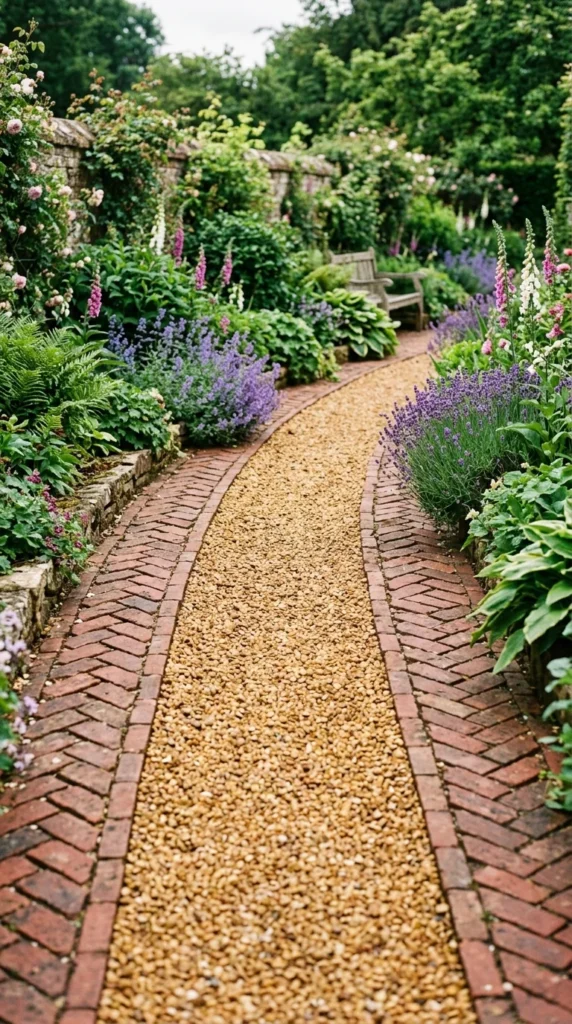
Combining gravel with a brick border is a timeless look that fits perfectly with colonial, cottage, or traditional home styles. The bricks provide a sturdy frame that prevents the gravel from spreading, while the color of the brick can be chosen to complement the house’s exterior. This design allows for a “crunchy” walkway that still feels substantial and permanent.
13. Multi-Toned Mix
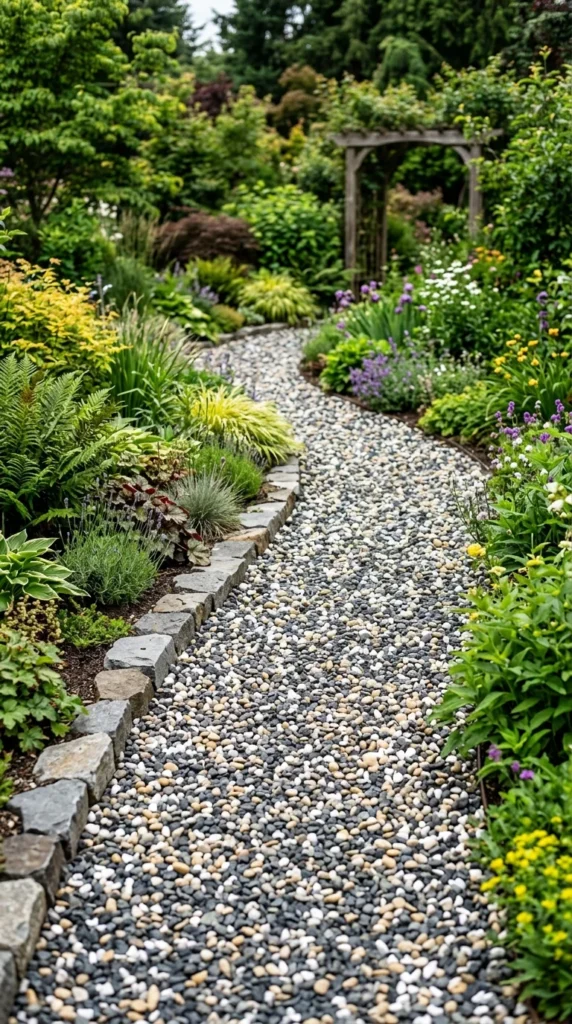
Using a pre-mixed blend of different stone colors can help a pathway blend into the natural environment more effectively than a single-color stone. Multi-toned gravel is also more forgiving when it comes to debris; stray leaves, twigs, or dirt are less noticeable against a variegated background. This is a practical choice for high-maintenance yards where you don’t want to be constantly sweeping the path.
14. Forest Bark Blend
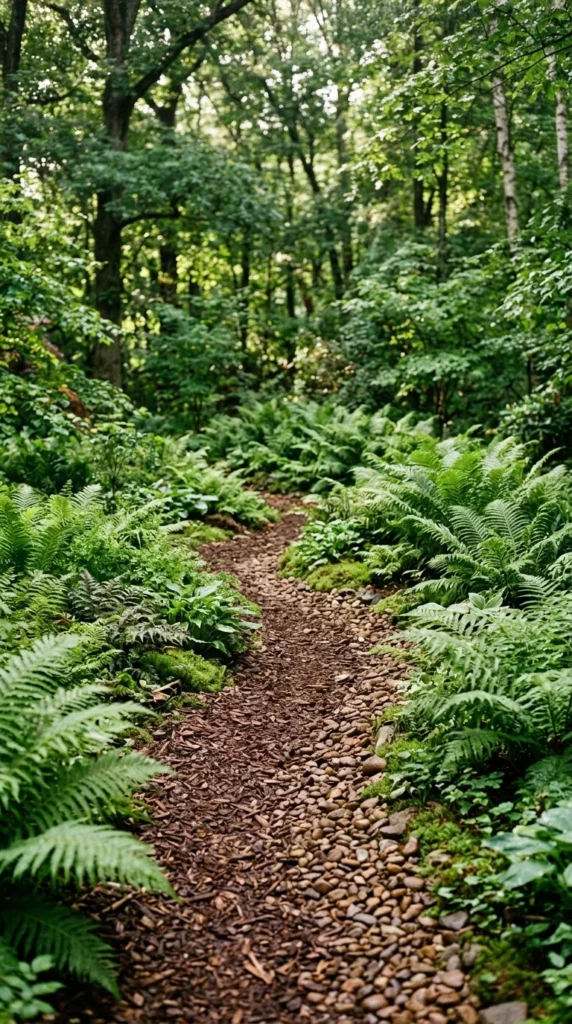
For a path that feels soft underfoot and blends seamlessly with a wooded lot, consider a “forest blend.” By mixing small gravel with organic bark mulch, you create a path that looks like a natural trail. While the bark will eventually decompose and need refreshing, the gravel provides a permanent skeleton for the path, ensuring it doesn’t turn into a mud pit during the winter months.
15. Terraced Slopes
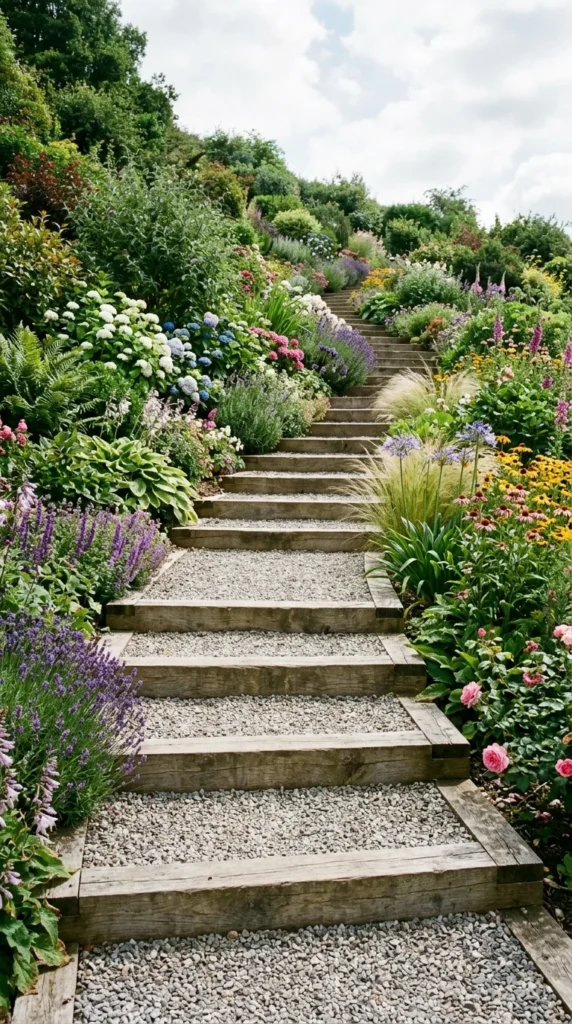
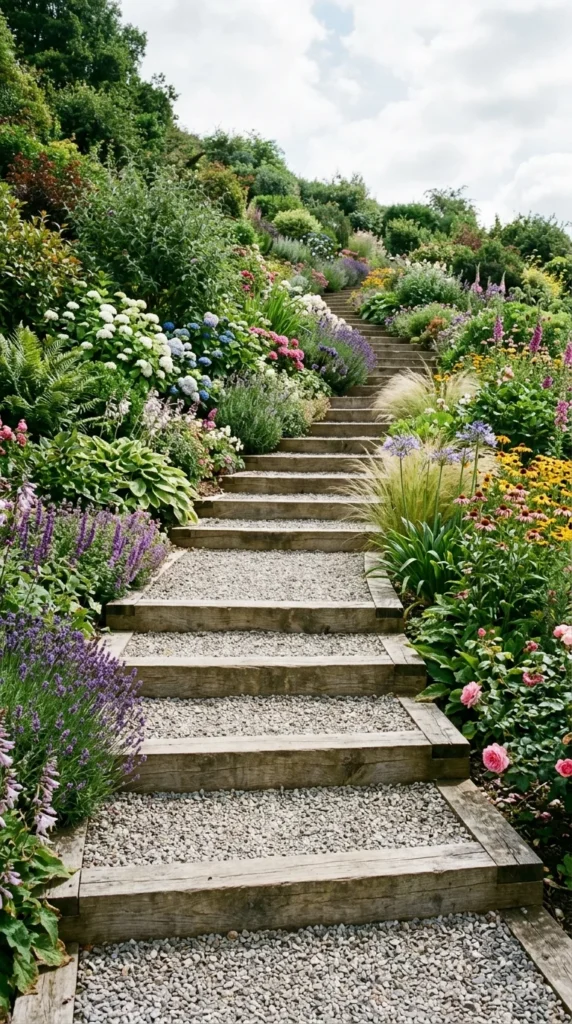
Gravel is an excellent material for navigating slopes when combined with timber or stone “risers.” By terracing a hillside into a series of flat gravel landings, you prevent erosion and make a steep yard accessible. The gravel allows water to permeate through each level rather than rushing down the surface, which protects the integrity of the hill.
16. Circular Patio Link
Instead of a standard straight or curved path, you can use gravel to create a series of interconnected “zones.” This approach involves creating wider, circular areas of gravel that act as small patios or seating nooks, linked by narrower gravel walkways. It encourages visitors to linger in different parts of the garden and makes the outdoor space feel larger and more complex.
17. Modern Minimalist
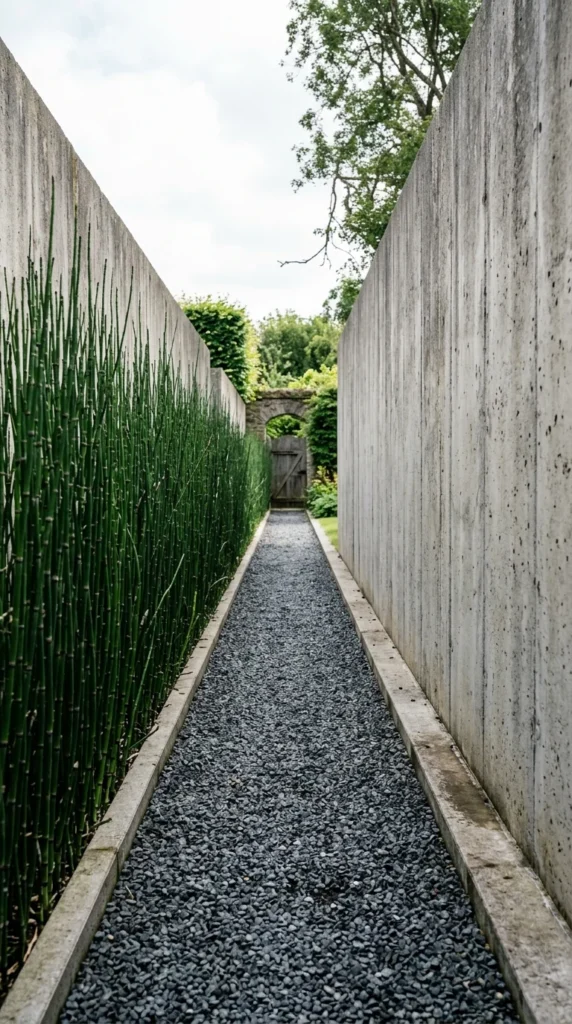
For a contemporary home, a minimalist gravel path focuses on precision and monochromatic color schemes. Using a single type of dark stone—like black lava rock or charcoal basalt—within a perfectly straight frame creates a sense of order and sophistication. This style often skips the flowers in favor of architectural greenery, emphasizing the clean lines and the stark contrast between the stone and the surrounding structures.