
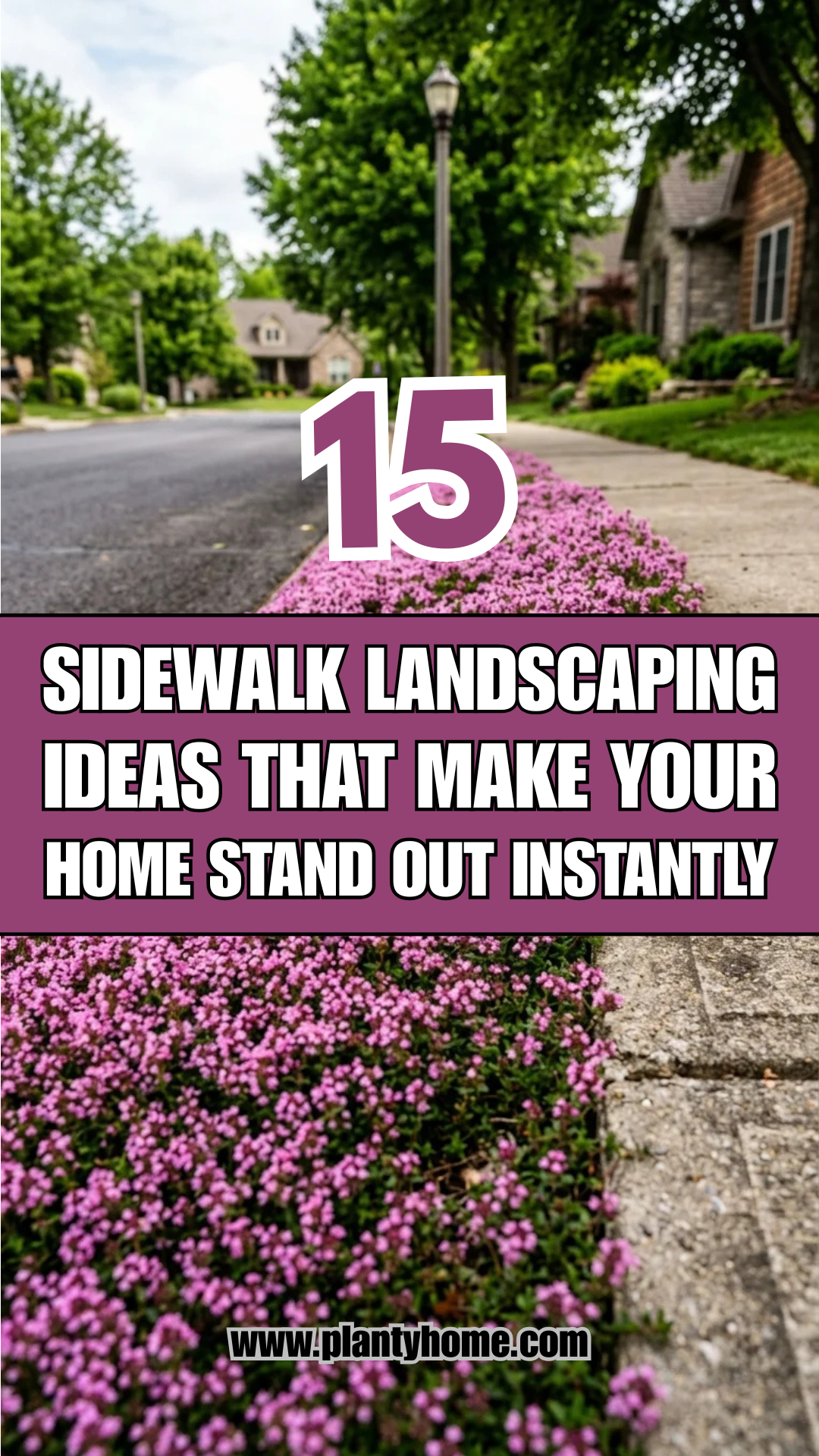
The area between your sidewalk and the street—often referred to as the “hell strip” due to its harsh growing conditions—is frequently the most overlooked part of a home’s exterior. However, this narrow ribbon of land is the first thing guests and passersby notice. Transforming this space from a patch of patchy grass or bare dirt into a lush, intentional garden can instantly elevate your property’s curb appeal and even increase its value.
Landscaping this specific zone requires a balance of aesthetics and resilience. The plants must endure heat reflected from the pavement, potential salt spray in winter, and foot traffic from people exiting cars. By choosing the right elements, you can create a welcoming transition that makes your home the standout star of the neighborhood.
1. Succulent Garden
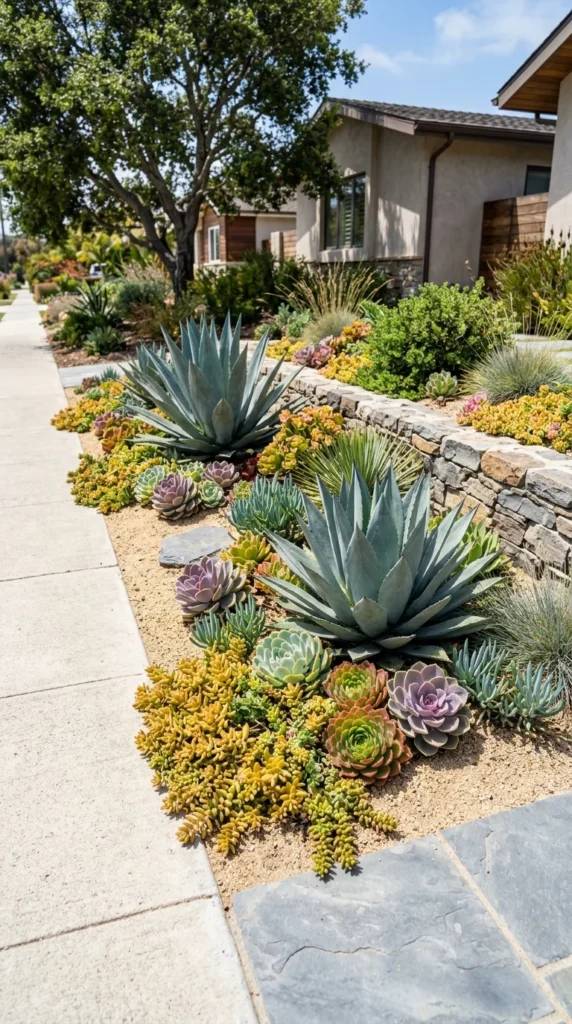
Succulents are an ideal choice for sidewalk landscaping, especially in warmer climates. Because they store water in their leaves, they are incredibly drought-tolerant and can withstand the intense heat radiating from the concrete. A succulent garden offers a structural, architectural look that feels contemporary and clean.
To create an engaging succulent strip, vary the heights and textures. Use tall, striking plants like Agave or Yucca as focal points, and surround them with lower-growing varieties like “Hen and Chicks” or “Sticks on Fire” for a pop of color. Using a top-dressing of gravel or crushed stone instead of organic mulch helps with drainage and prevents the plants from rotting, while also providing a polished, finished appearance.
2. Lavender Rows
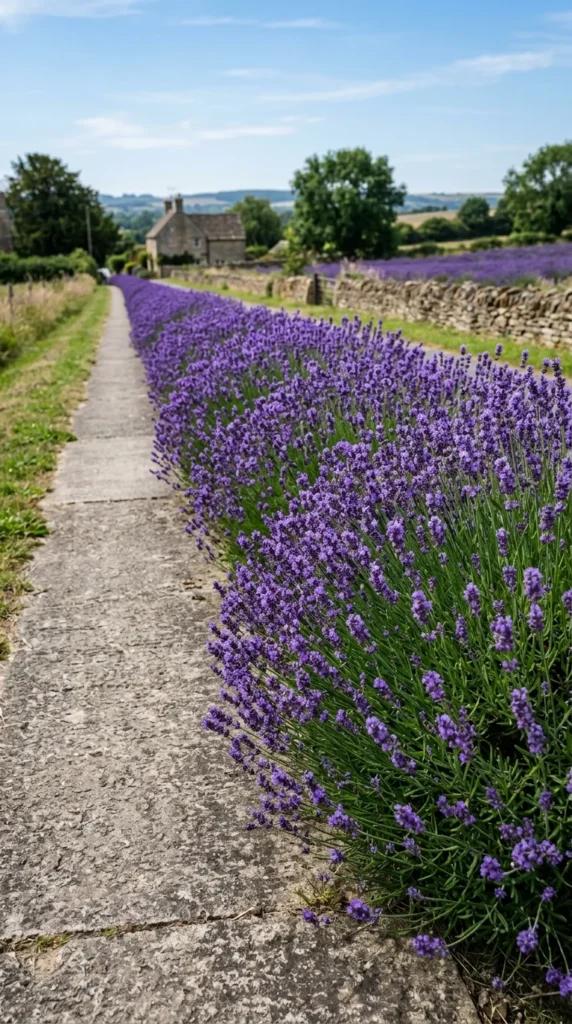
Few plants offer the sensory delight of lavender. Planting a continuous row of lavender along your sidewalk creates a soft, romantic border that releases a calming fragrance every time someone walks by. Lavender is remarkably hardy once established, preferring the well-drained soil and full sun exposure typical of sidewalk verges.
For a formal look, stick to a single variety like ‘Munstead’ or ‘Hidcote’ to ensure uniform height and color. For a more cottage-style feel, intersperse lavender with other Mediterranean herbs like rosemary or sage. Not only does lavender look beautiful, but it also attracts pollinators like bees and butterflies, turning your sidewalk into a mini-ecosystem.
3. Ornamental Grasses
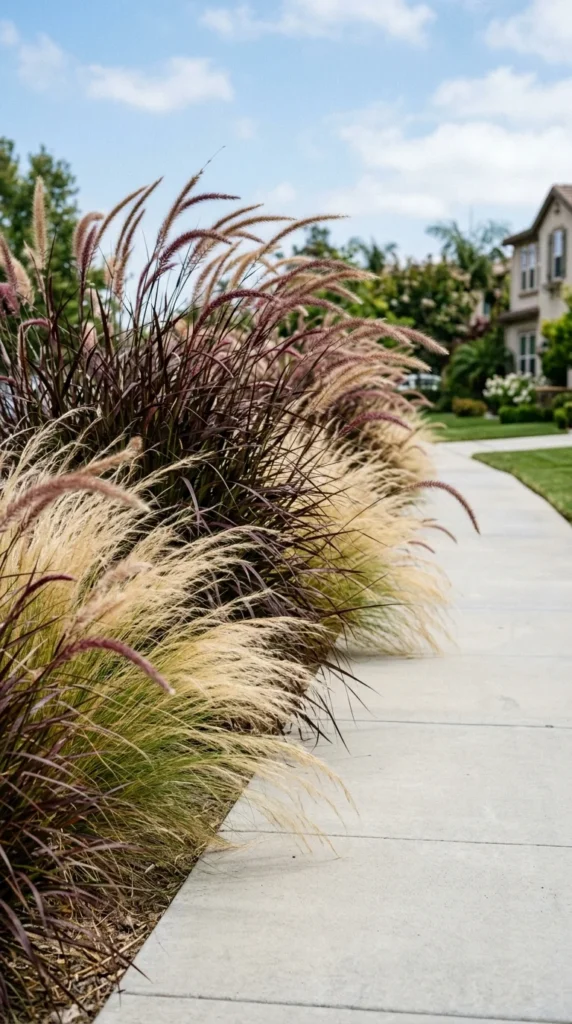
Ornamental grasses are the secret weapon of professional landscapers. They provide height, movement, and year-round interest with very little maintenance. When the wind blows, these grasses rustle and sway, adding a dynamic element that static plants cannot provide.
Consider “Little Bluestem” for its blue-green summer hues and reddish-bronze fall color, or “Blue Fescue” for its compact, mounded shape and striking icy-blue tint. Because many ornamental grasses are salt-tolerant and thrive in poor soil, they are perfectly suited for the harsh environment of the street-side strip. In the winter, their dried plumes remain standing, offering visual interest even in the snow.
4. Stepping Stones
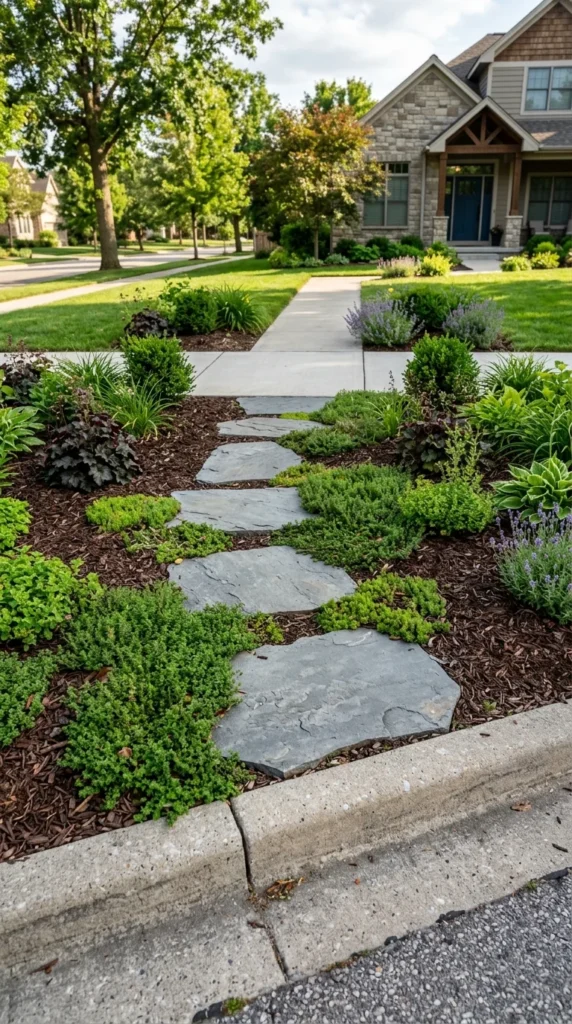
Functionality is key when landscaping a sidewalk area. People often need to cross from their parked cars to the sidewalk, and if you have a dense garden, they may be forced to step on your plants. Integrating stepping stones or a flagstone path solves this problem while adding a structural design element.
Choose stones that complement the architecture of your home. Large, irregular flagstones create a natural, rustic feel, while square or rectangular pavers offer a more modern, geometric aesthetic. Fill the gaps between the stones with “steppable” groundcovers like Irish Moss or Elfin Thyme to soften the look and prevent weeds from taking hold.
5. Native Wildflowers
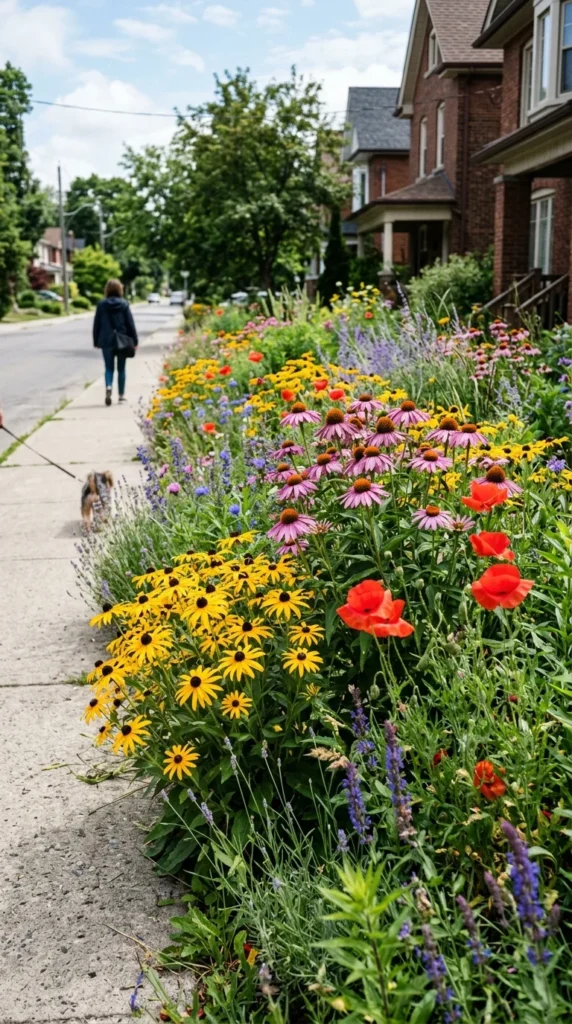
If you prefer a more natural, “wild” look, a native wildflower meadow is an excellent choice. Native plants are evolutionary adapted to your local climate and soil, meaning they require significantly less water, fertilizer, and pest control than exotic species.
A wildflower strip acts as a “pollinator highway,” providing essential food and habitat for local birds and insects. To keep this look from appearing messy or overgrown, use a clear border—such as a brick edge or a low wooden fence—to signal that the meadow is an intentional garden. Mixing in some perennial flowers ensures that the garden returns year after year with minimal effort.
6. Boxwood Hedges
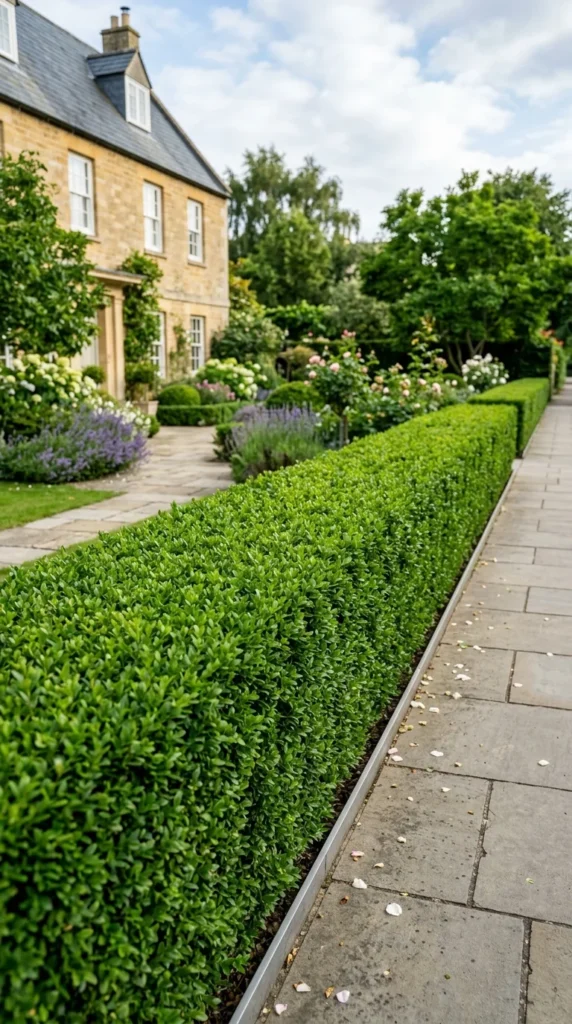
For homeowners who love a “clean” and traditional aesthetic, low-growing boxwood hedges are the gold standard. These evergreens provide a permanent structure that looks good in all four seasons. By keeping them trimmed to a height of 12 to 18 inches, you create a clear boundary without obstructing the view of your home.
Boxwoods are incredibly versatile. You can plant them in a straight line for a formal look or use them to frame other plants, such as seasonal bulbs or colorful annuals. Their dense, dark green foliage provides a beautiful contrast to light-colored sidewalks and provides a sense of “order” that instantly boosts the perceived value of a property.
7. Ceramic Containers
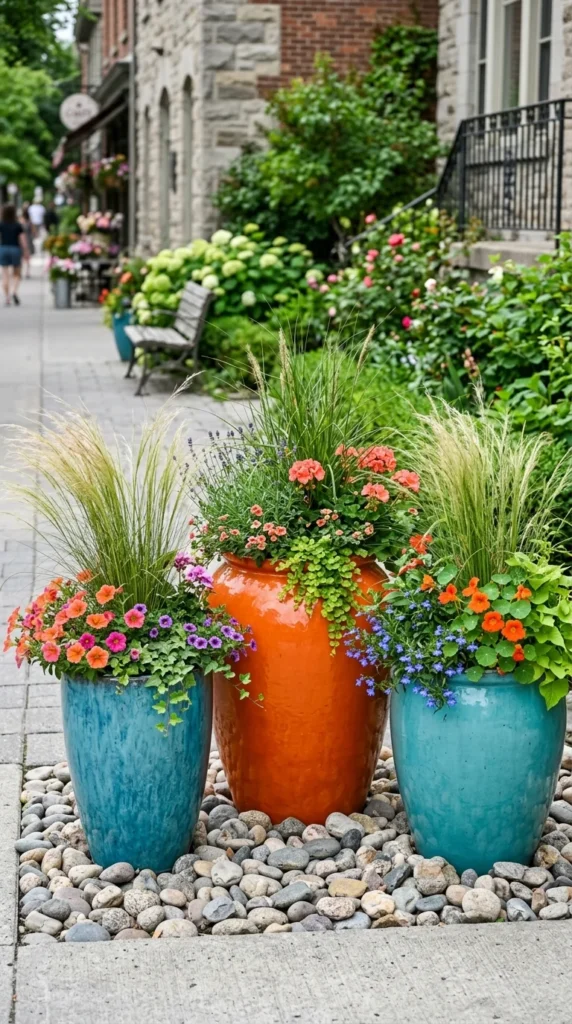
If your sidewalk strip has particularly poor soil or is mostly covered by concrete, container gardening is a brilliant workaround. Large, heavy ceramic pots add height and a splash of color that is impossible to achieve with ground-level planting alone.
Using containers allows you to swap out plants seasonally—think tulips in the spring, petunias in the summer, and ornamental cabbages in the autumn. To ensure they look integrated into the landscape, choose pots of varying heights but in a coordinated color palette. Ensure the pots are heavy enough to not be easily moved or knocked over, and consider a drip irrigation line to keep them hydrated during the summer heat.
8. Creeping Thyme
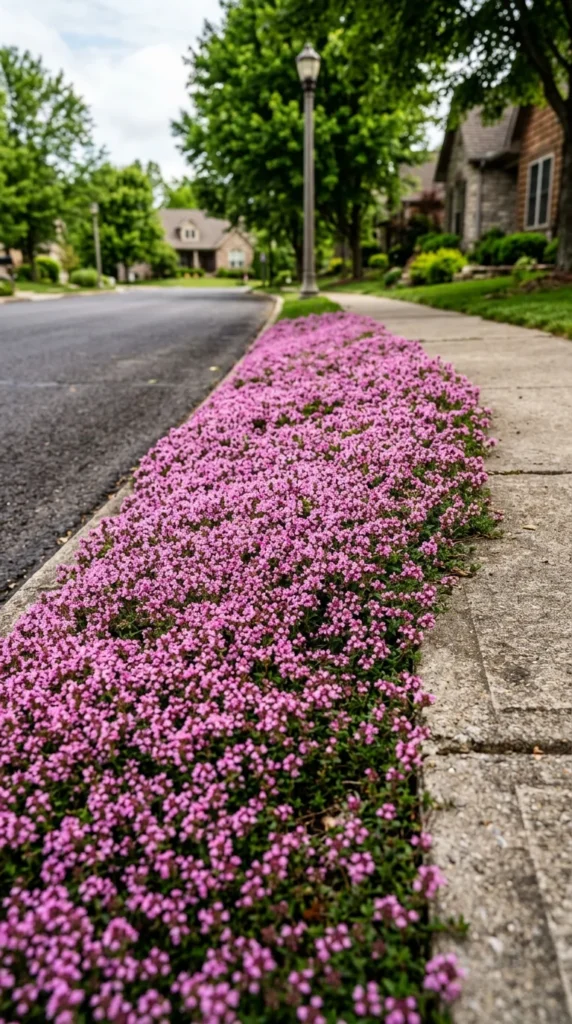
Creeping thyme is one of the best lawn alternatives for the sidewalk area. It grows only a few inches tall, requires no mowing, and is tough enough to handle light foot traffic. When it blooms in late spring or early summer, it transforms into a solid carpet of pink, purple, or white flowers.
Aside from its beauty, creeping thyme is a “living mulch.” It grows so densely that it naturally chokes out weeds, reducing your maintenance time. It also releases a pleasant herbal scent when crushed, making it a delight for anyone stepping out of a car. It’s a sustainable, water-wise choice that looks much more sophisticated than a simple strip of grass.
9. Stone Walls
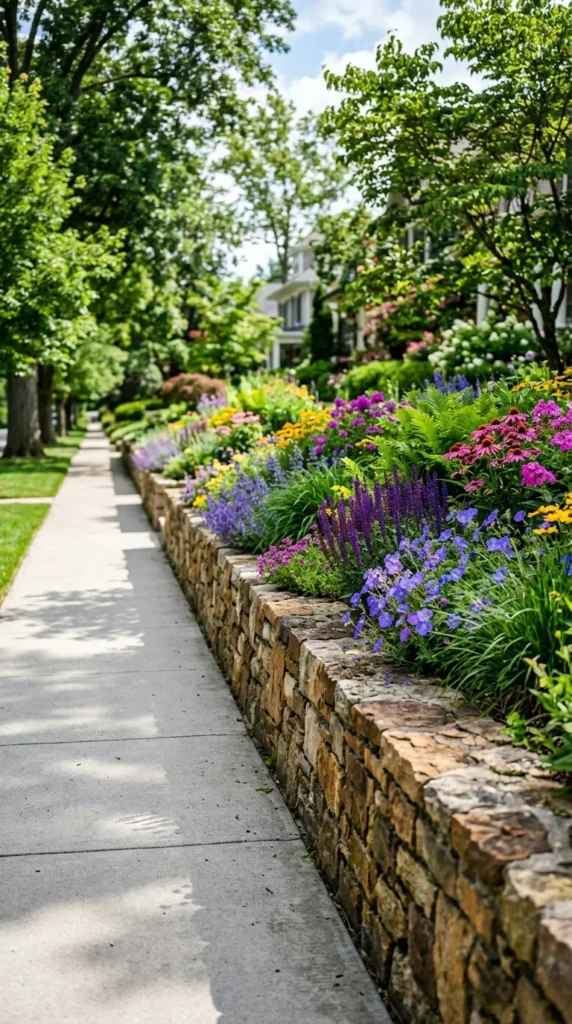
If your property has a slight slope toward the street, a low retaining wall can be a game-changer. Even a wall that is only 12 inches high can create a “raised bed” effect that gives your landscaping more prominence and presence.
Building a wall out of natural stone or decorative concrete blocks adds a sense of permanence and luxury. It also helps to keep mulch and soil from washing away onto the sidewalk during heavy rains. You can plant “spiller” plants, like Creeping Phlox or Lobelia, along the edge of the wall so they cascade over the stones, softening the hard edges and adding a layer of visual interest.
10. River Rocks
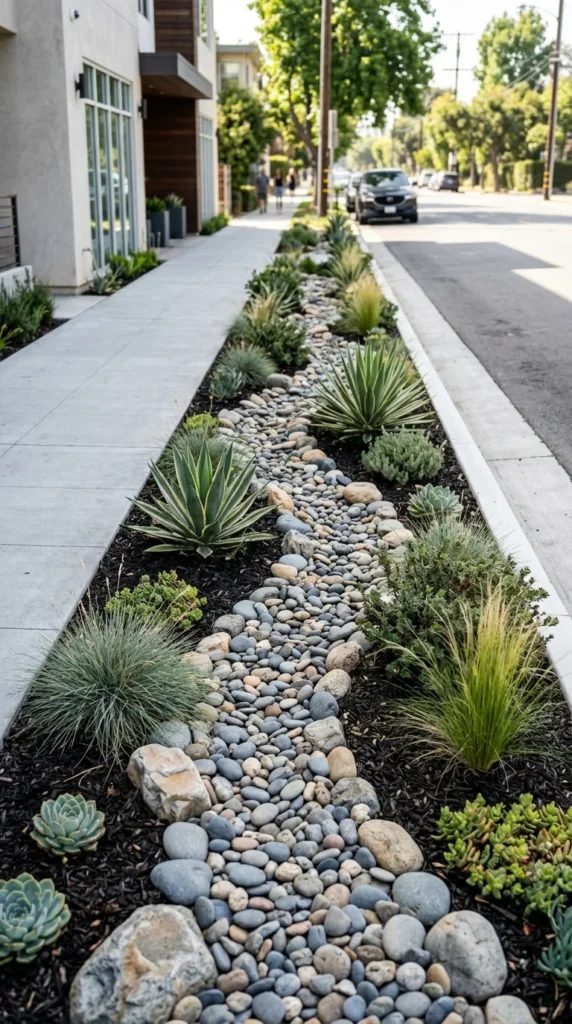
River rocks are an excellent solution for homeowners who want a high-impact, low-maintenance look. By using stones of different sizes—from small pebbles to large boulders—you can create the appearance of a dry creek bed. This is particularly effective in areas that struggle with drainage or where grass simply won’t grow.
To keep a rock garden from looking too sterile, tuck a few drought-tolerant plants, like ornamental grasses or blue fescue, into the gaps between the rocks. The contrast between the hard, smooth stones and the soft, organic plants creates a balanced, Zen-like atmosphere that feels very intentional and modern.
11. Perennial Borders
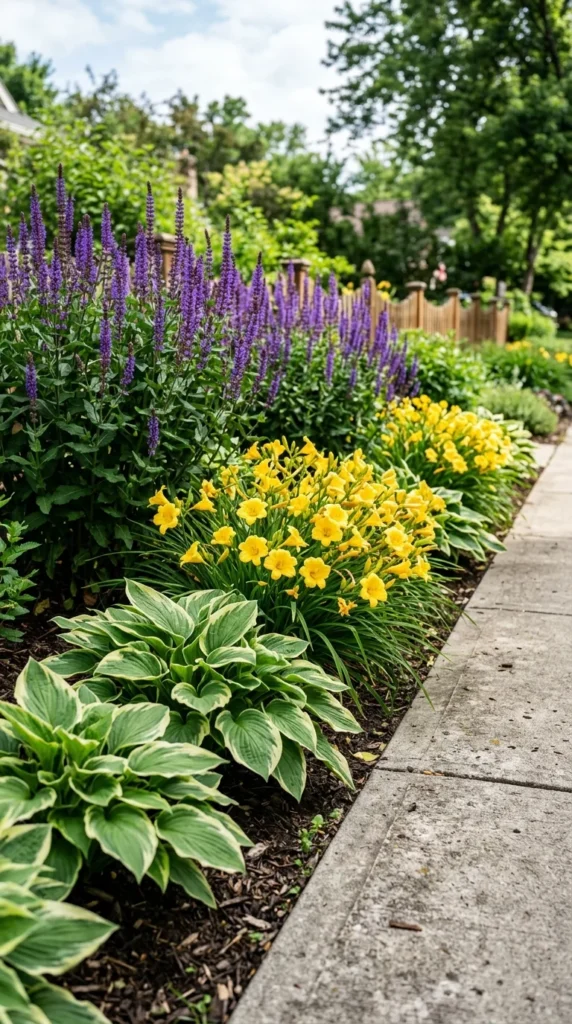
A perennial border is a classic landscaping choice that offers a changing palette of colors throughout the growing season. Unlike annuals, perennials come back every year, making them a cost-effective long-term investment for your sidewalk.
The key to a successful perennial border is layering. Place taller plants, like Delphiniums or Coneflowers, toward the back (away from the sidewalk) and shorter plants, like Coral Bells or Sedum, toward the front. By selecting plants with different bloom times, you can ensure that something is always in flower from early spring through late fall, keeping your home looking vibrant for months on end.
12. Edible Borders
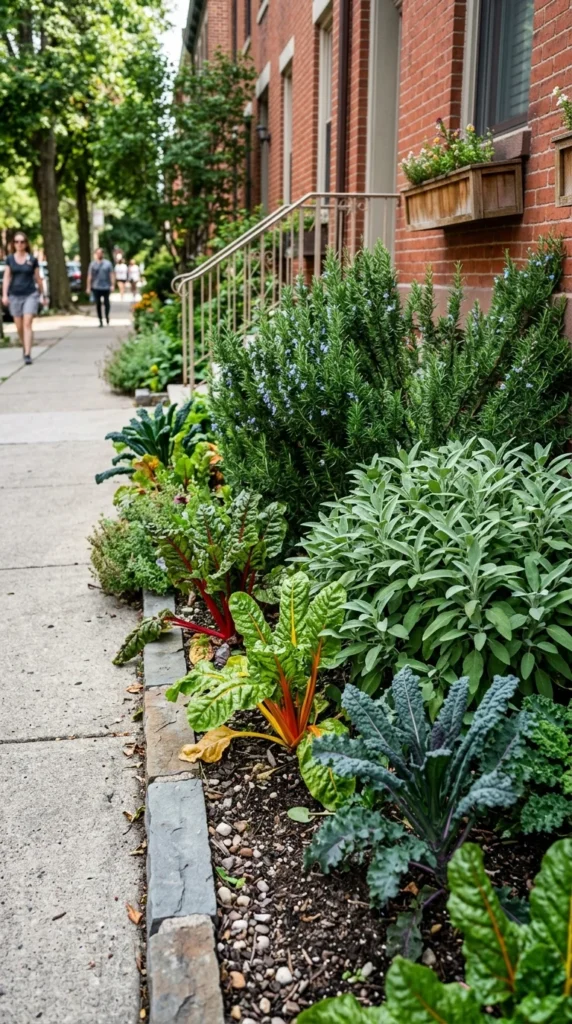
Why not make your sidewalk landscaping work for you? Edible landscaping is a rising trend that combines aesthetics with utility. Many herbs and vegetables are surprisingly beautiful. Rosemary can be pruned into a sturdy hedge, while purple basil and “Bright Lights” Swiss Chard offer stunning colors that rival any ornamental flower.
When planting an edible border near a street, it is important to consider the environment. Avoid using pesticides, and be mindful of exhaust fumes; these plants are often best for their fragrance and beauty, or for harvesting if your street is quiet and low-traffic. Even if you don’t eat them, the unique textures of kale and the silver foliage of sage make for a sophisticated look.
13. Integrated Lighting
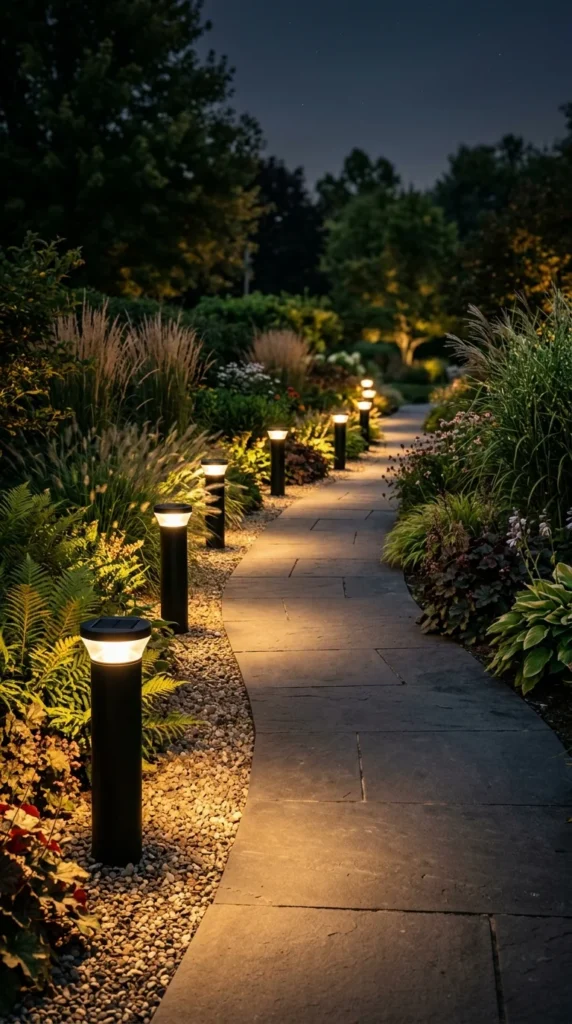
Landscaping shouldn’t disappear when the sun goes down. Integrated lighting is a crucial element for making your home stand out at night while also providing safety for pedestrians. Modern solar lights are easy to install and require no wiring, making them perfect for the sidewalk strip.
Path lights can be used to highlight the texture of ornamental grasses or the colors of your flowers. Up-lighting a small tree or a large decorative boulder creates drama and depth. Choose “warm white” LEDs for a welcoming, high-end feel rather than the harsh blue light often found in cheaper solar options.
14. Modern Pavers
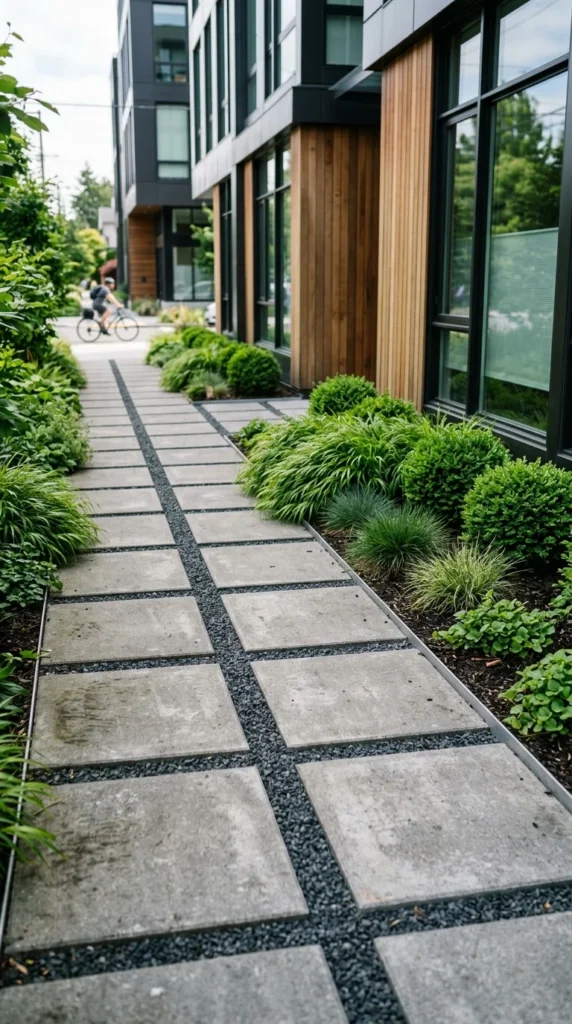
If your home has a modern or mid-century architectural style, consider a geometric approach using pavers and gravel. This “hardscaped” look is incredibly low-maintenance and provides a very high-end, gallery-like feel to the front of your property.
Using dark charcoal gravel as a base makes green plants “pop” and provides a clean backdrop for structural plants like Horsetail or Boxwood globes. This design is also highly permeable, allowing rainwater to soak into the ground rather than running off into the street, which is an environmentally friendly choice for urban areas.
15. Wood Mulch
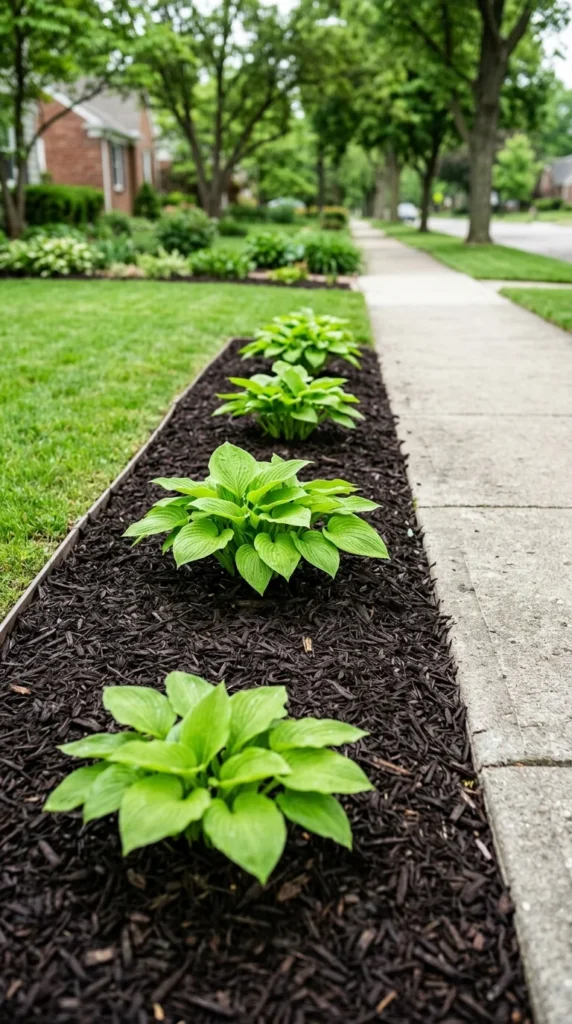
Sometimes, simplicity is the most effective strategy. A clean, well-defined strip of high-quality wood mulch can instantly tidy up a messy sidewalk. Darker mulches, such as “midnight black” or “dark chocolate,” provide a rich contrast against the grey concrete and the green of your lawn.
Mulch serves several practical purposes: it suppresses weeds, retains moisture for any plants you do have, and breaks down over time to improve the soil quality. By adding a crisp edge between the mulch and the grass, you create a professional look that shows you take pride in your home’s appearance. It is the perfect “blank canvas” for a few well-placed ornamental shrubs or a small specimen tree.