
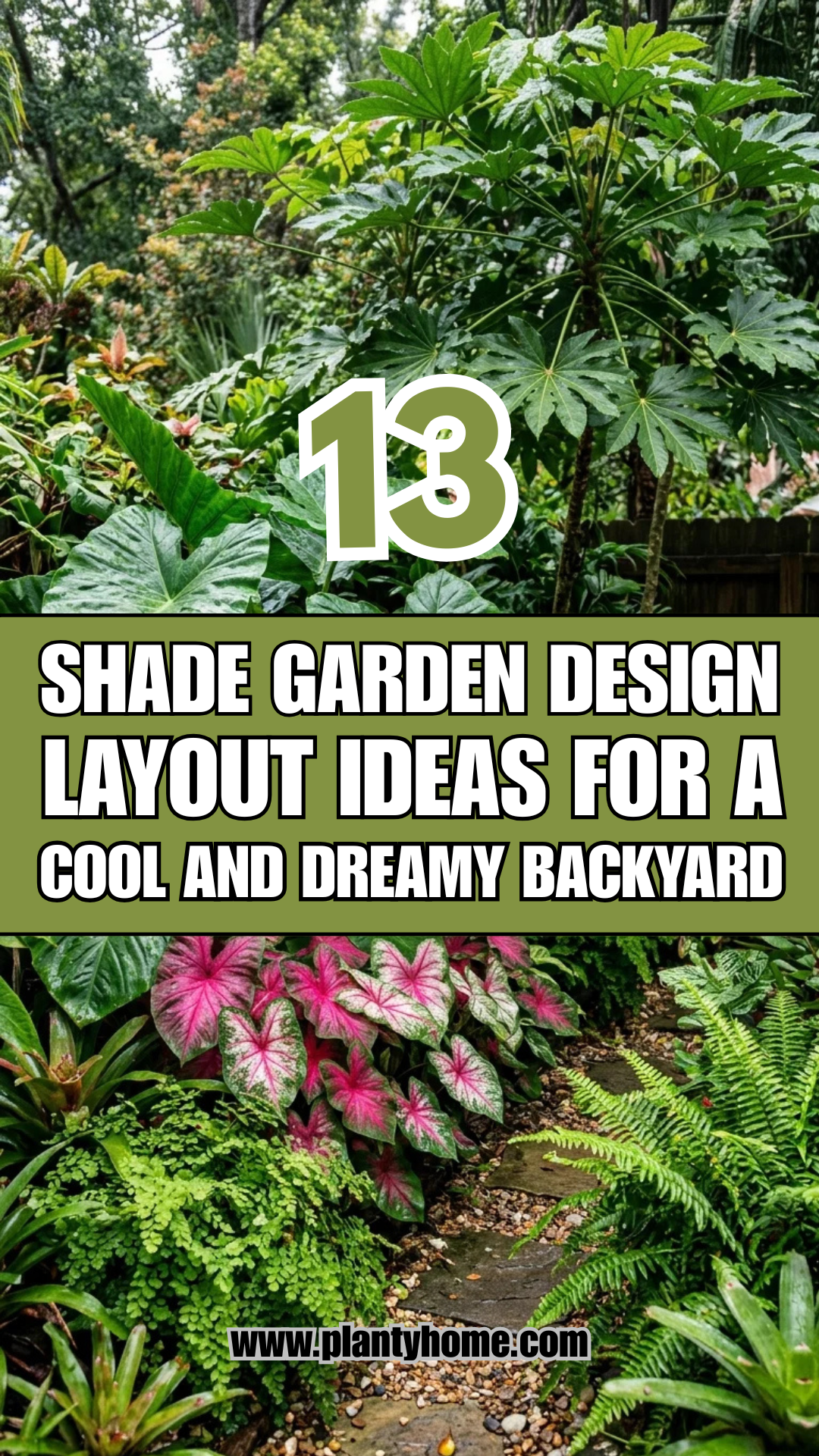
While many gardeners chase the sun, there is a quiet, sophisticated magic to be found in the shadows. A shade garden is more than just a place where grass struggles to grow; it is a sanctuary of cool air, lush textures, and subtle colors. Designing a shade garden requires a shift in perspective, moving away from sun-loving blooms toward the intricate patterns of foliage and the tranquil ambiance of forest-like settings. Whether you have the deep shade of a north-facing wall or the dappled light beneath a mature oak tree, these thirteen layout ideas will help you transform your dim corners into a dreamy outdoor retreat.
1. Woodland Path
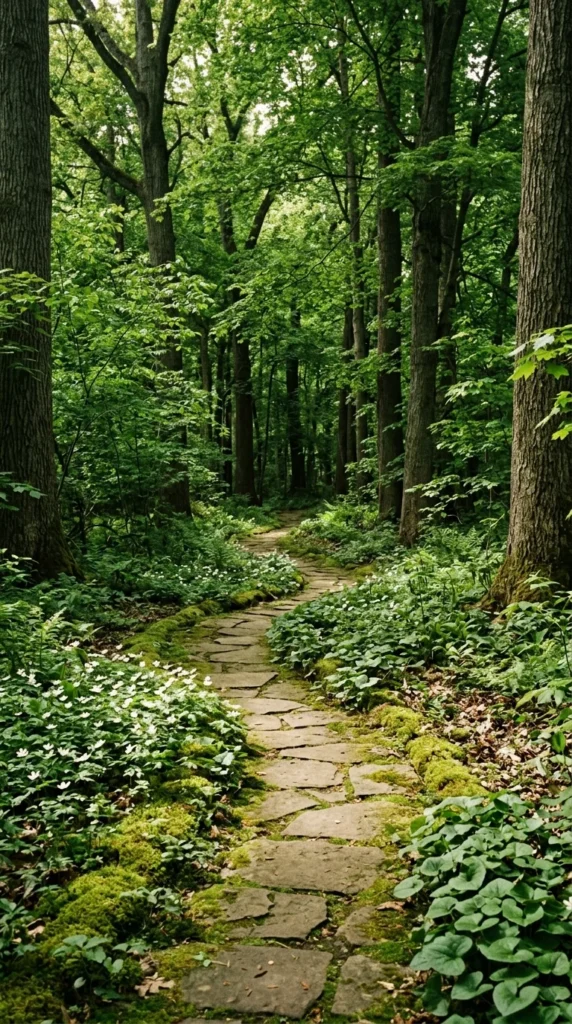
The Woodland Path layout is designed to mimic the natural floor of an old-growth forest. This design prioritizes a sense of discovery and movement. By using organic materials like shredded bark, wood chips, or irregularly shaped flagstones, you create a trail that feels as though it has been there for decades.
To achieve this look, plant in “drifts” rather than straight lines. Allow groundcovers to spill over the edges of your path to soften the transition. Native woodland species are the stars here—think Trilliums, Jack-in-the-Pulpit, and Wild Violets. This layout is particularly effective for long, narrow side yards that receive little direct sunlight, turning a utilitarian space into a journey.
2. Fern Grotto
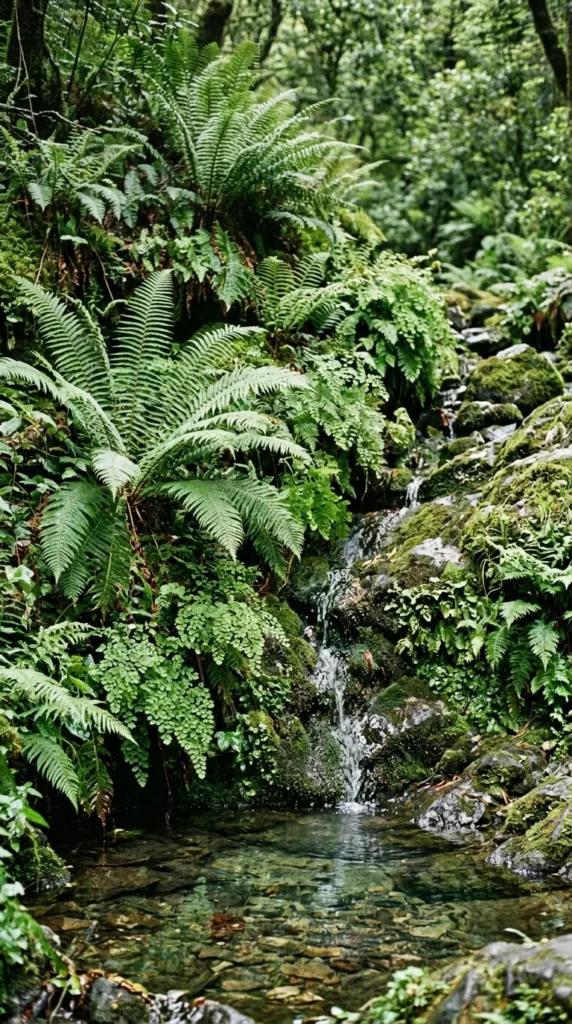
Ferns are the ancient architects of the shade. A Fern Grotto layout focuses on the incredible diversity of frond shapes, sizes, and textures. This design works exceptionally well in areas with higher humidity or naturally damp soil.
By layering different heights—placing tall Ostrich Ferns in the back, mid-sized Autumn Ferns in the center, and delicate Maidenhair Ferns in the foreground—you create a rich, three-dimensional tapestry. To enhance the “grotto” feel, incorporate large boulders and perhaps a small recirculating water feature. The sound of dripping water combined with the feathery texture of the ferns creates an instantly cooling effect for the mind and body.
3. Hosta Haven
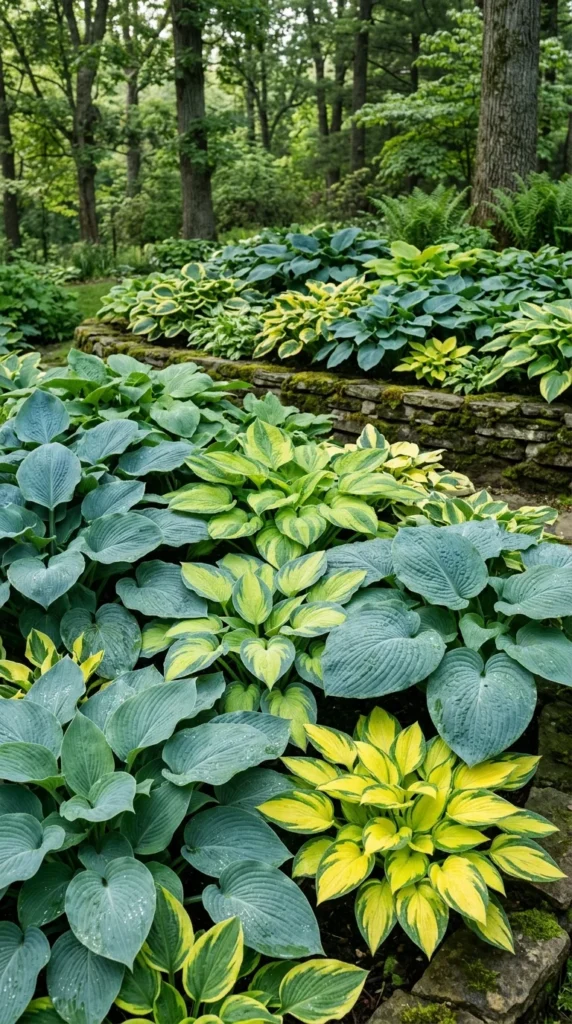
If there is one king of the shade garden, it is the Hosta. A Hosta Haven layout relies on the sheer variety of this genus to create visual interest without needing many flowers. Hostas range from “miniatures” no larger than a teacup to giants that can spread six feet wide.
In this layout, use the foliage color as your primary paint. Place “Sum and Substance” (bright chartreuse) next to “Halcyon” (deep blue-gray) for high contrast. Variegated varieties with white or cream edges can act as “light” in the darkest corners, tricking the eye into seeing bright spots where none exist. This is a low-maintenance, high-impact design that thrives in almost any shaded environment.
4. Japanese Zen
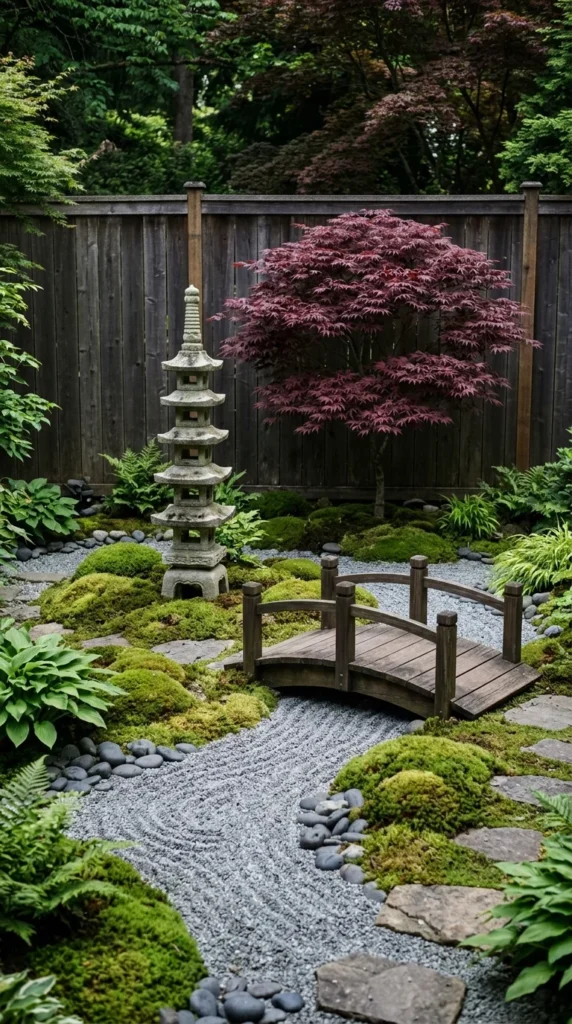
The Japanese Zen layout is about restraint, balance, and symbolism. In a shaded backyard, this style flourishes because many traditional Japanese garden plants, such as Maples, Camellias, and Moss, prefer protection from the harsh afternoon sun.
Create a “dry landscape” (karensansui) using raked gravel to represent water, which stays clean and crisp in the shade. Use evergreen shrubs like Pieris Japonica or Boxwood to provide structure throughout the year. The shade enhances the moss’s growth, which is a staple of Zen aesthetics, providing a velvety green carpet that feels both ancient and peaceful.
5. Moon Garden
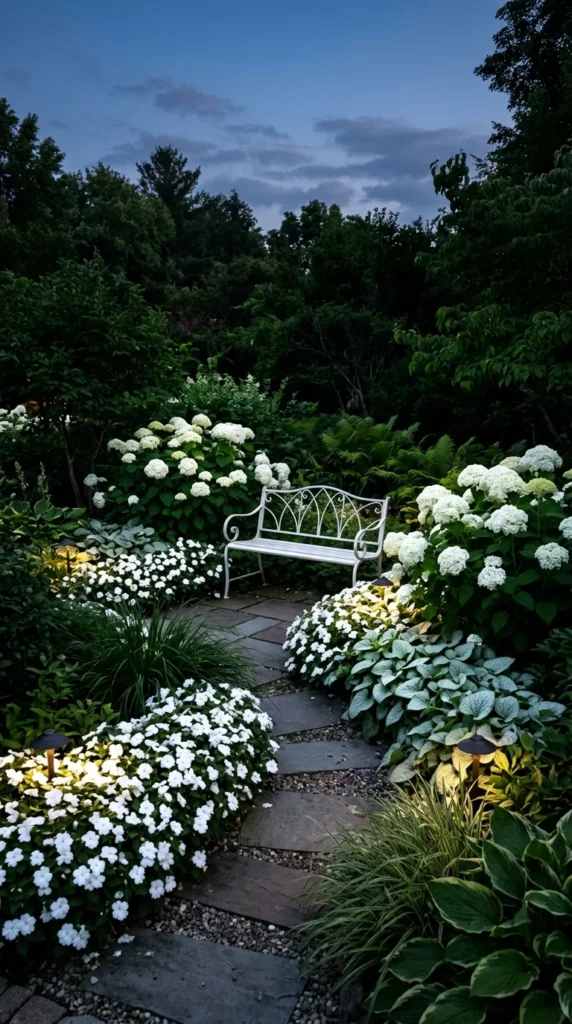
A Moon Garden is specifically designed to be enjoyed at dusk or under moonlight. In a shaded backyard, where the light is already dim, white flowers and silver foliage “pop” with extraordinary luminosity.
The layout should center around plants with white blooms like “Annabelle” Hydrangeas, Lily of the Valley, and white Bleeding Hearts. Complement these with silver-foliaged plants like “Jack Frost” Brunnera or Japanese Painted Ferns. These light-colored elements reflect what little light is available, making the garden feel bright and inviting even as the sun goes down. It is the perfect layout for those who use their backyards primarily for evening relaxation.
6. Tropical Oasis
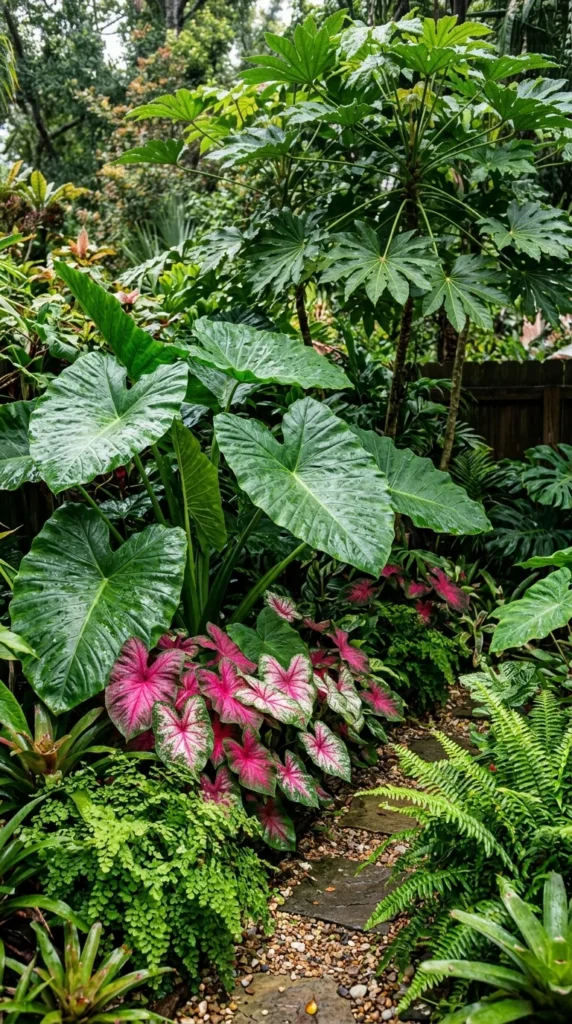
You don’t need full sun to create a tropical vibe. Many of the world’s most dramatic tropical plants grow on the forest floor beneath dense canopies. A Tropical Oasis layout uses “bold foliage” to create a sense of luxury and escape.
Incorporate plants with massive leaves like Elephant Ears or Rex Begonias to add architectural drama. Use Caladiums for splashes of hot pink and neon green that thrive in the shade. This layout is less about delicate flowers and more about the “statement” made by the leaves. Pair these plants with dark-stained wood decking or bamboo fencing to complete the exotic look.
7. Vertical Wall
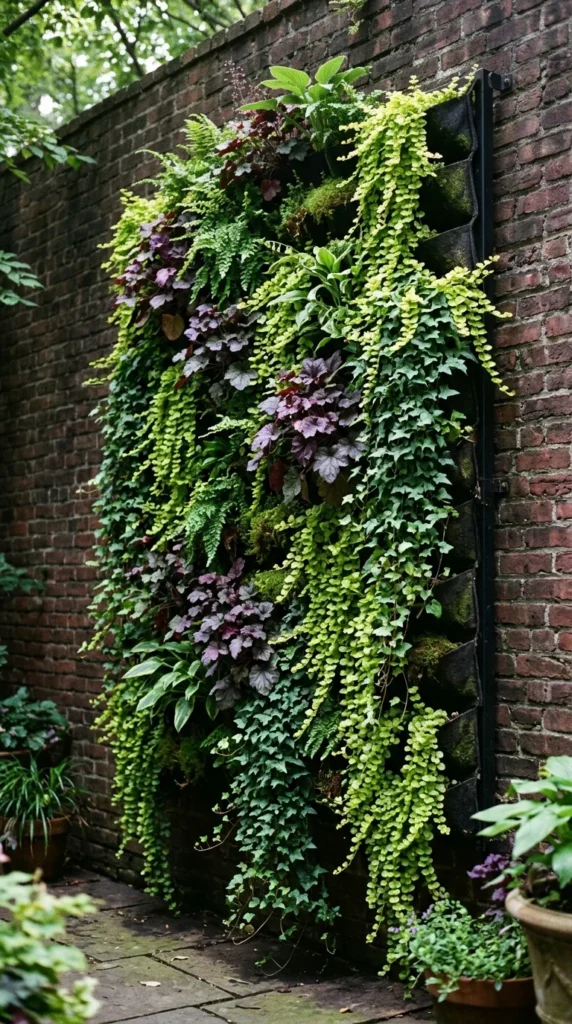
When ground space is limited in a shaded urban backyard, go vertical. A Vertical Living Wall layout allows you to garden on fences, walls, or custom-built structures, turning a flat surface into a lush tapestry.
Shade-loving plants are particularly well-suited for vertical systems because they don’t dry out as quickly as sun-exposed plants. Use Heucheras (Coral Bells) for their incredible range of leaf colors—from lime green to deep obsidian. Mix in trailing plants like Vinca Minor or Variegated Ivy to soften the edges. This layout adds depth to a small space and provides excellent insulation and cooling for the adjacent seating area.
8. Cottage Shade
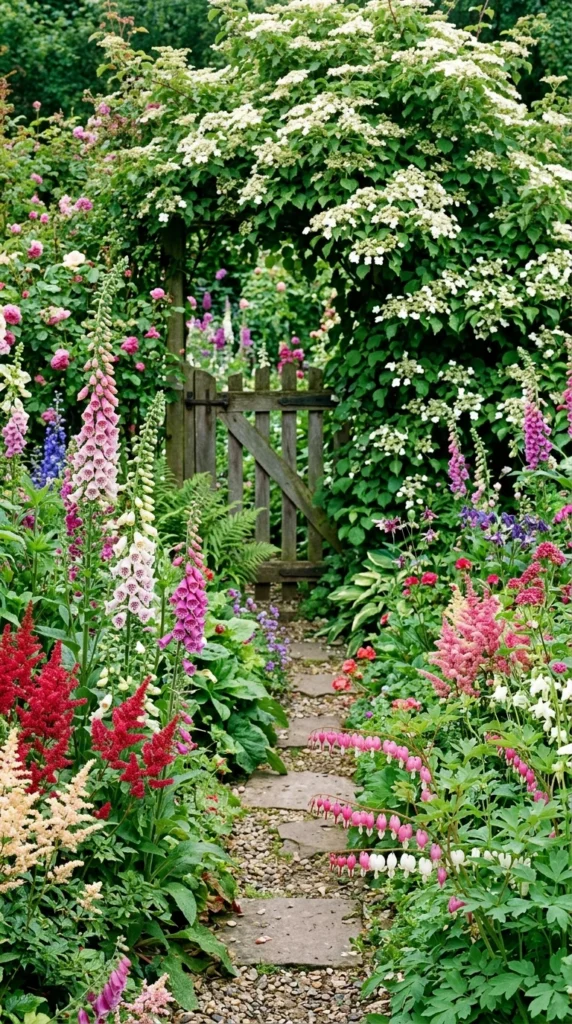
The Cottage Garden style is usually associated with sunny borders, but it can be adapted beautifully for the shade. The key is to maintain the “organized chaos” and abundance that defines the style, using shade-tolerant perennials.
In this layout, use tall, spiky plants like Foxgloves and Cimicifuga (Bugbane) to provide height. Interspersing them with the soft, feathery plumes of Astilbe creates a romantic, airy feel. Clumps of Hellebores (Lenten Roses) can provide early spring color. The Cottage Shade layout is perfect for those who want a garden that feels lived-in, whimsical, and full of floral surprises.
9. Modern Minimalist
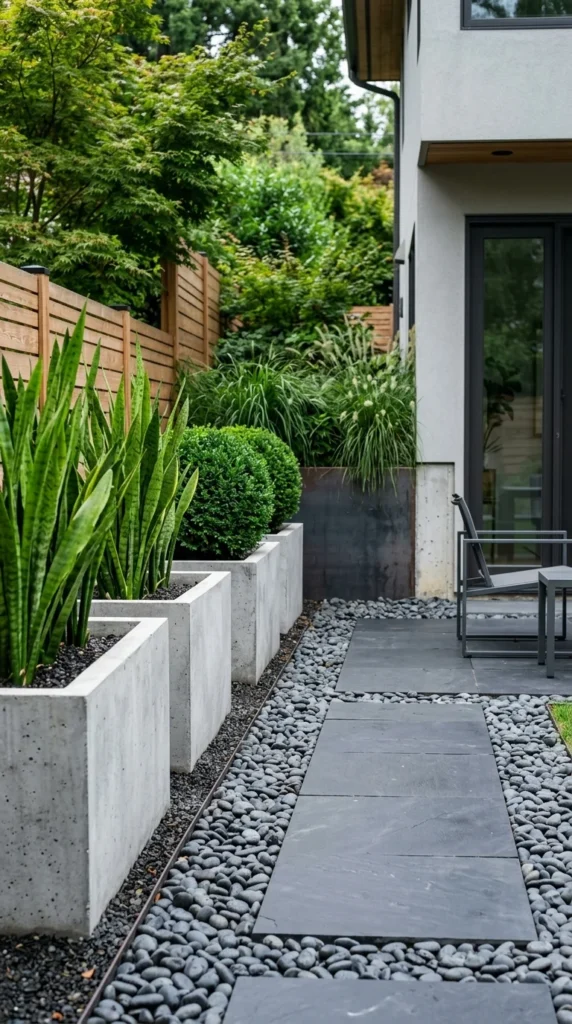
The Modern Minimalist layout treats plants as architectural elements. In the shade, where growth is often slower and more controlled, this style is easy to maintain. Focus on form and silhouette rather than a riot of color.
Use repeat plantings of the same species to create a sense of rhythm. For example, a single row of “All Gold” Hakone Grass creates a striking linear feature against a dark fence. Architectural plants like Fatsia Japonica, with its large star-shaped leaves, can serve as a living sculpture. This design is ideal for homeowners who prefer a clean, uncluttered aesthetic that feels like an extension of their interior design.
10. Moss Carpet
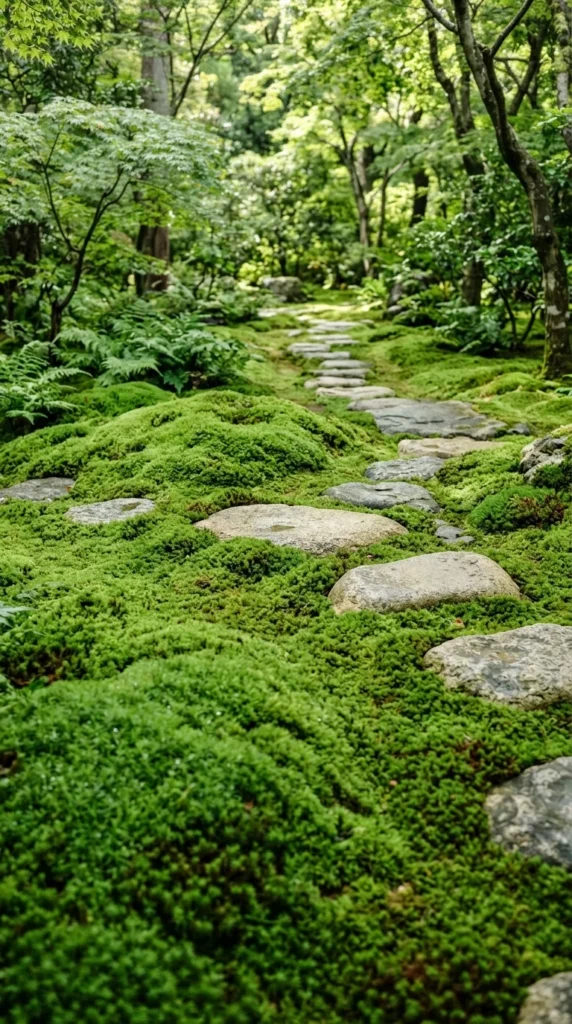
In many shaded backyards, traditional lawn grass is a constant struggle. Instead of fighting nature, embrace it with a Moss Carpet layout. Moss thrives in damp, shaded conditions where grass fails, providing a soft, evergreen floor that never needs mowing.
This layout is incredibly peaceful and tactile. To design it, incorporate “stepping stones” to protect the moss from heavy foot traffic. You can mix different types of moss—such as Sheet Moss and Mood Moss—to create subtle variations in height and texture. A moss garden stays green even in the depths of winter, providing a year-round visual treat that feels like a scene from a fairy tale.
11. Seating Nook
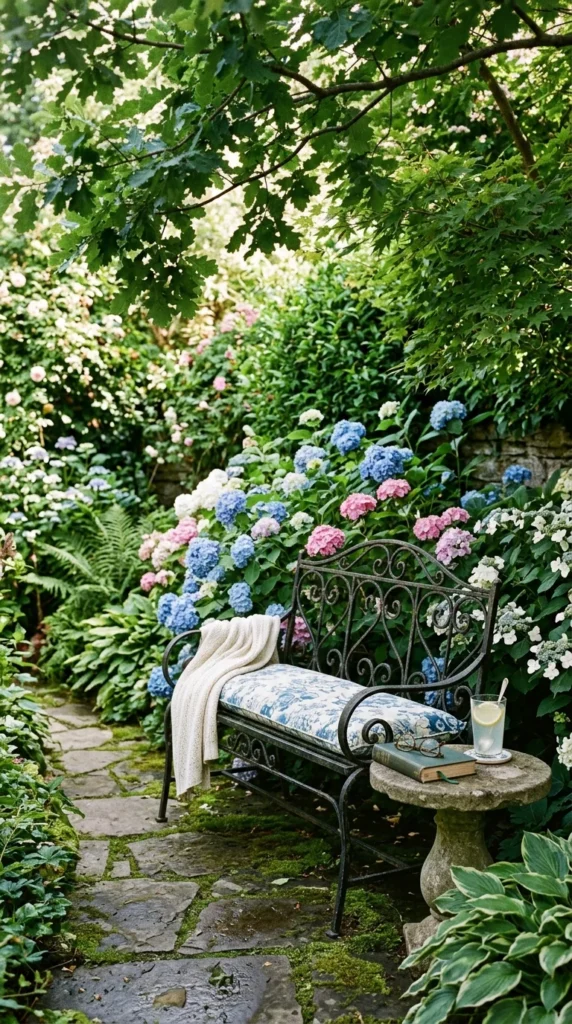
The ultimate goal of a dreamy backyard is often a place to sit and enjoy it. The Seating Nook layout prioritizes human comfort within the garden’s design. By tucking a bench or a small bistro set into the deepest shade, you create a private “outdoor room.”
Surround the seating area with fragrant shade plants to enhance the experience. Sarcococca (Sweet Box) or certain varieties of Hostas have flowers with a heavy, sweet scent that lingers in the still, cool air of a shaded corner. Use overhead elements like a pergola covered in Climbing Hydrangea to create a sense of enclosure and intimacy.
12. Stream Side
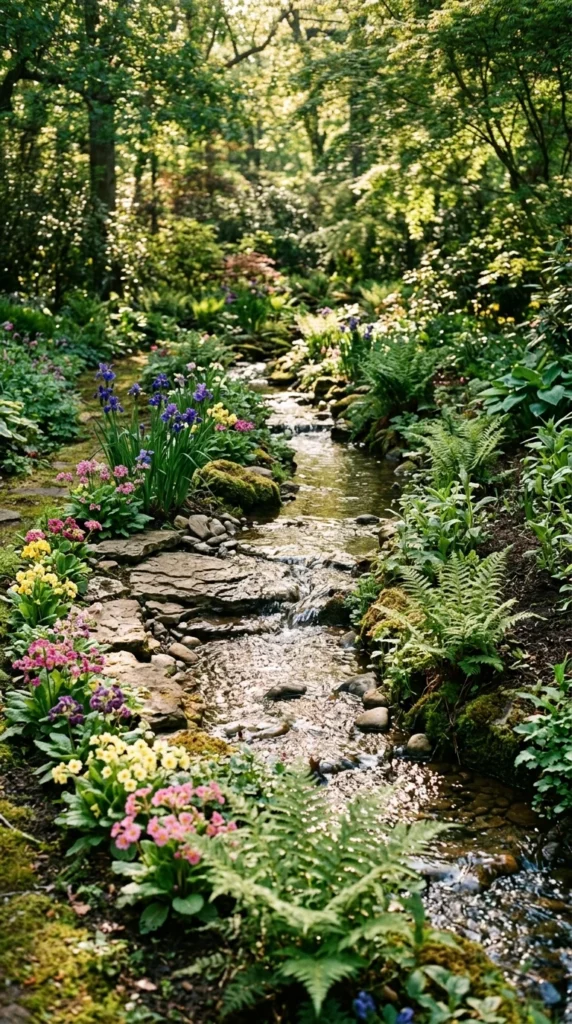
Water features look their best in the shade, where the absence of direct glare allows you to see deep into the water and where algae growth is naturally inhibited. The Stream Side layout uses a linear water feature to connect different parts of the garden.
Plant the “banks” of your stream with moisture-loving, shade-tolerant species. Japanese Primroses provide bursts of tiered color, while Siberian Irises offer elegant vertical blades. The movement of the water adds a dynamic element to the otherwise still shade, and the sound helps to mask neighborhood noise, reinforcing the “dreamy” atmosphere of your backyard.
13. Mixed Border
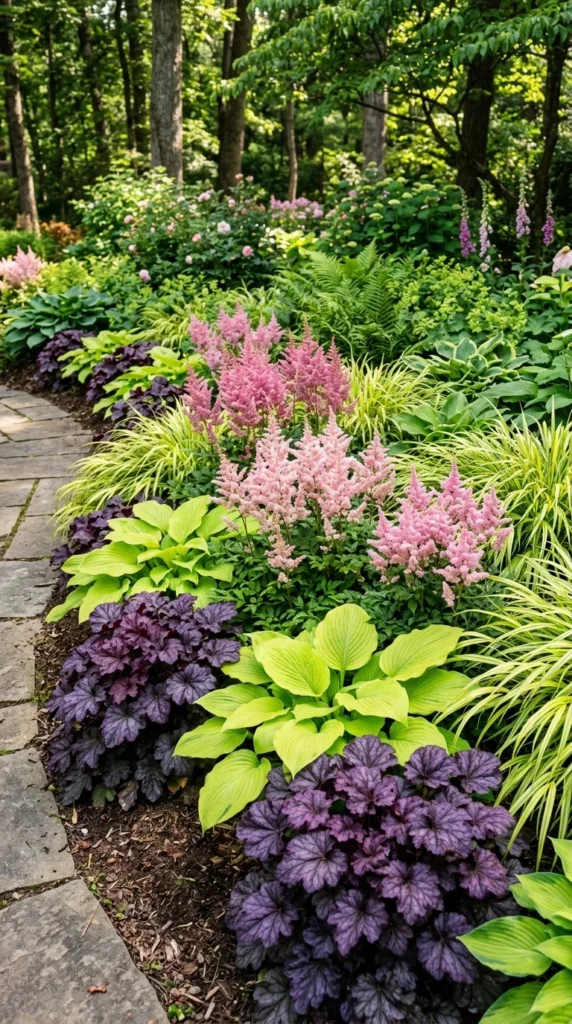
If you can’t decide on a single theme, the Mixed Border layout is the most versatile choice. This design relies on the principles of “layering”—placing the tallest plants at the back and the shortest at the front to create a full, lush wall of greenery.
The secret to a successful shaded mixed border is to vary the leaf shapes. Pair the large, rounded leaves of Berginia (Pigsqueak) with the fine, needle-like foliage of a Yew shrub or the grass-like blades of Carex. By focusing on “texture contrast,” the border remains visually interesting even when nothing is in bloom. This layout is the workhorse of shade design, providing beauty and structure throughout the growing season.