
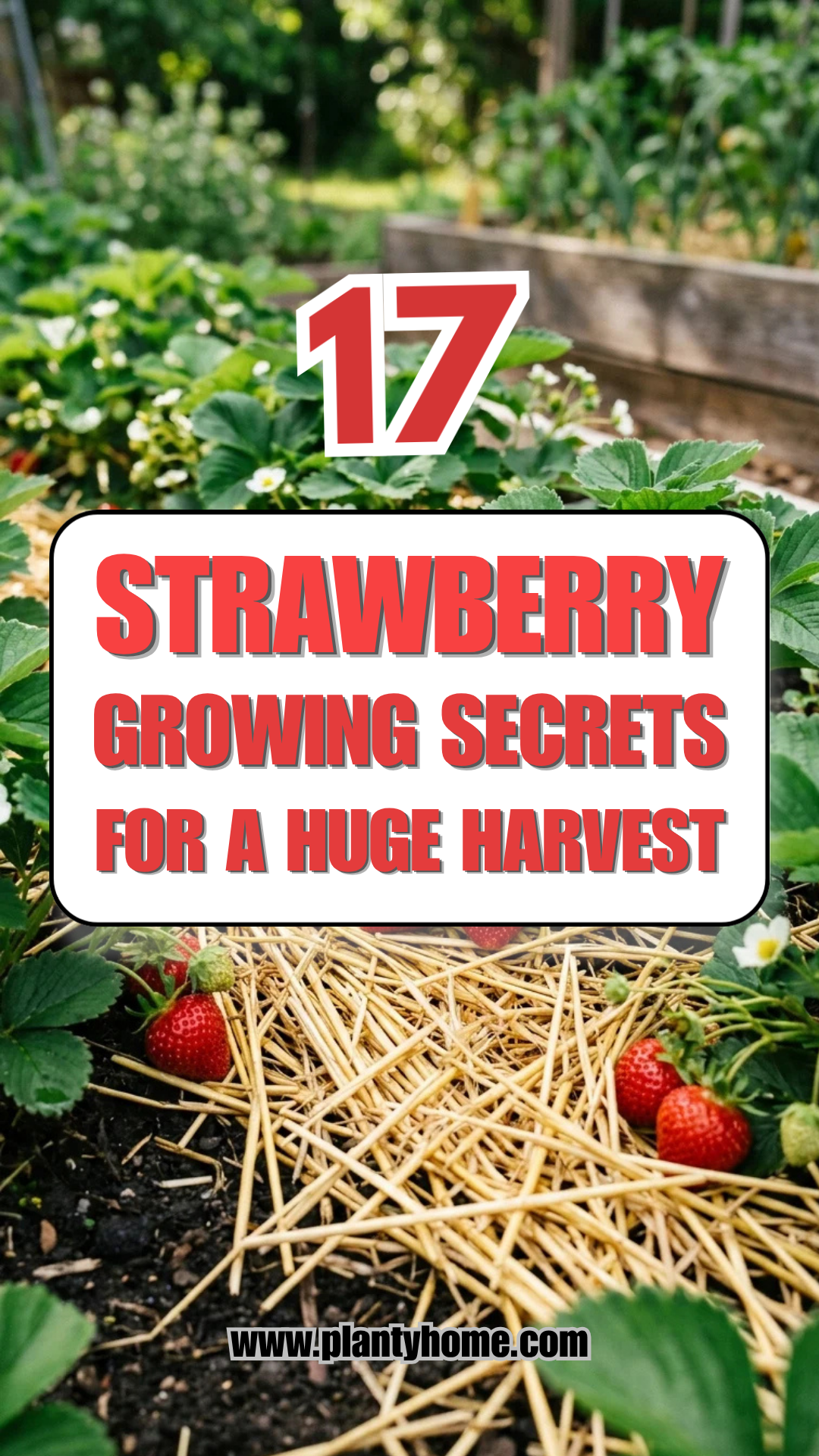
There is nothing quite like the taste of a sun-warmed strawberry picked straight from the vine. Unlike the watery, tart versions found in grocery stores, homegrown strawberries are an explosion of sweetness and juice. However, many gardeners find themselves frustrated by low yields, small berries, or plants that simply refuse to produce.
Achieving a legendary harvest isn’t about luck; it’s about understanding the specific biological needs of these temperate perennials. If you want to move from a handful of berries to overflowing baskets, follow these seventeen professional growing secrets.
1. Variety Selection
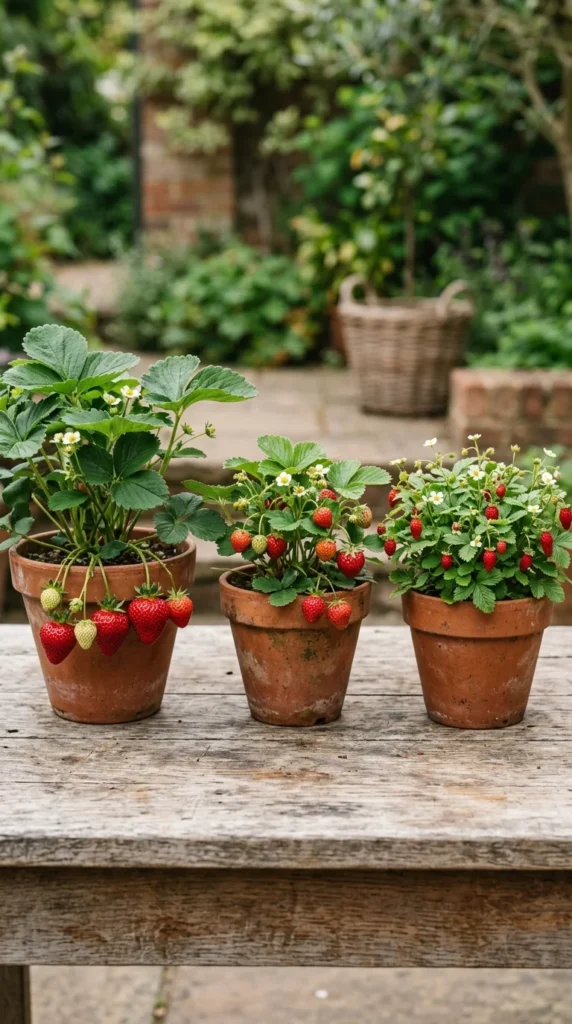
The foundation of a massive harvest begins with choosing the right variety for your climate and goals. June-bearing varieties produce one massive crop over three weeks, making them perfect for jam-makers. Everbearing and Day-Neutral varieties produce smaller crops but provide fruit from late spring until the first frost. For the biggest individual berries, June-bearers are the secret, but for a constant snack, go with Day-Neutrals.
2. Sunlight Maximization
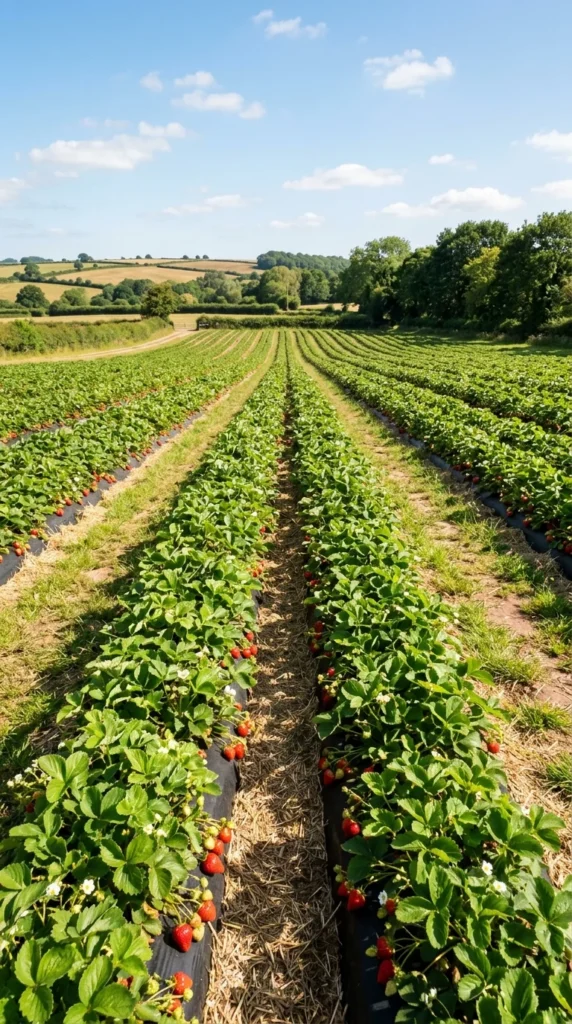
Strawberries are solar-powered sugar factories. To get that deep red color and high brix (sugar) content, your plants need a minimum of eight hours of direct sunlight every day. If they are shaded for even a portion of the afternoon, the fruit will be smaller and more prone to fungal diseases. Position your beds in the sunniest spot of your yard, away from the shadows of tall trees or fences.
3. Soil Acidity
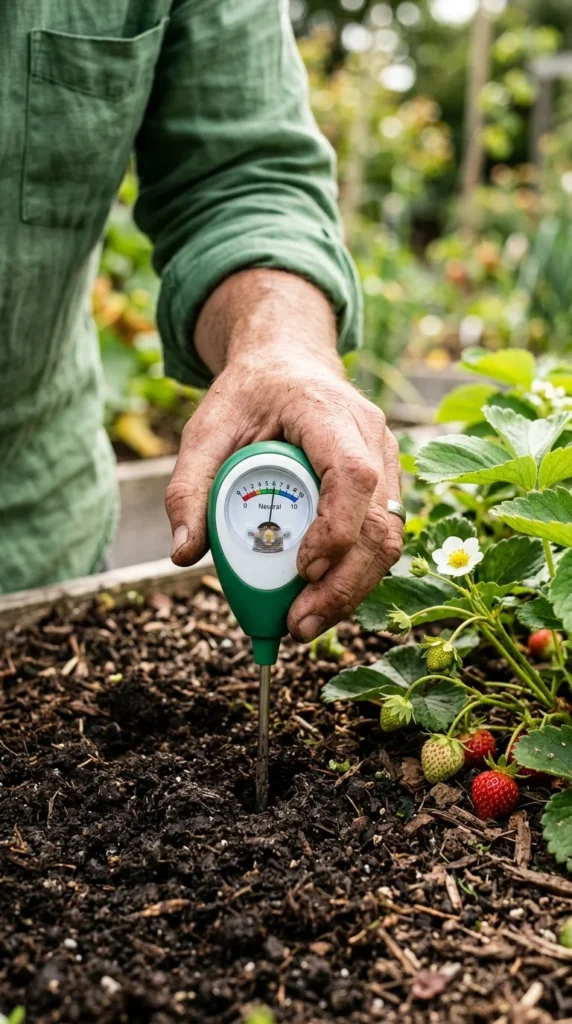
Strawberries are “acid-loving” plants. They thrive in soil with a pH between 5.5 and 6.8. If your soil is too alkaline, the plants will struggle to uptake essential nutrients like iron, leading to yellow leaves and stunted fruit. Amending your soil with elemental sulfur or peat moss a few months before planting can create the perfect acidic environment for a bumper crop.
4. Crown Depth
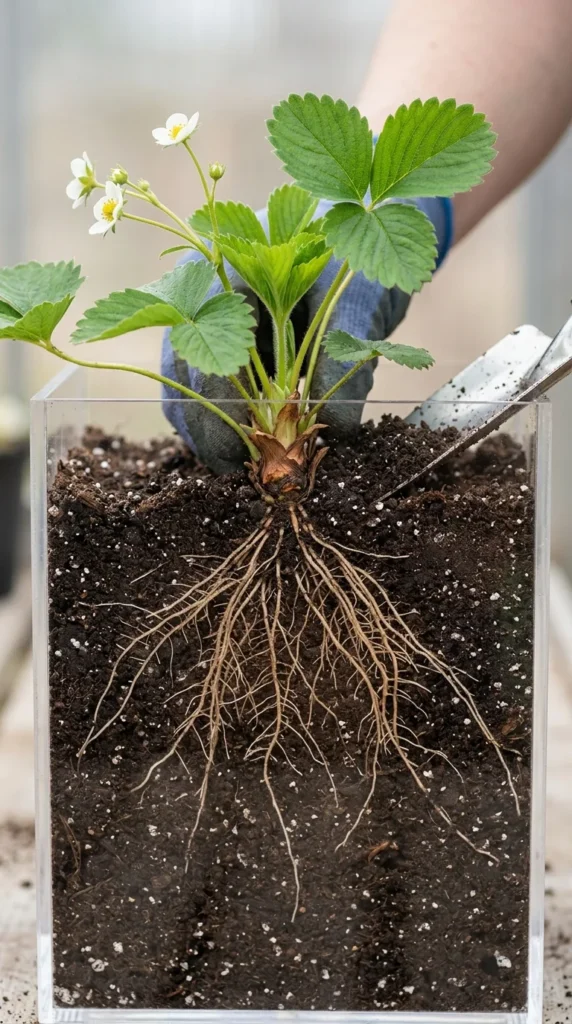
The “crown” is the thick, woody part of the plant where the leaves and roots meet. This is the most critical part of the planting process. If you bury the crown, it will rot and the plant will die. If you plant it too high, the roots will dry out. The secret is to plant so that the midpoint of the crown is exactly level with the soil surface.
5. Blossom Pinching
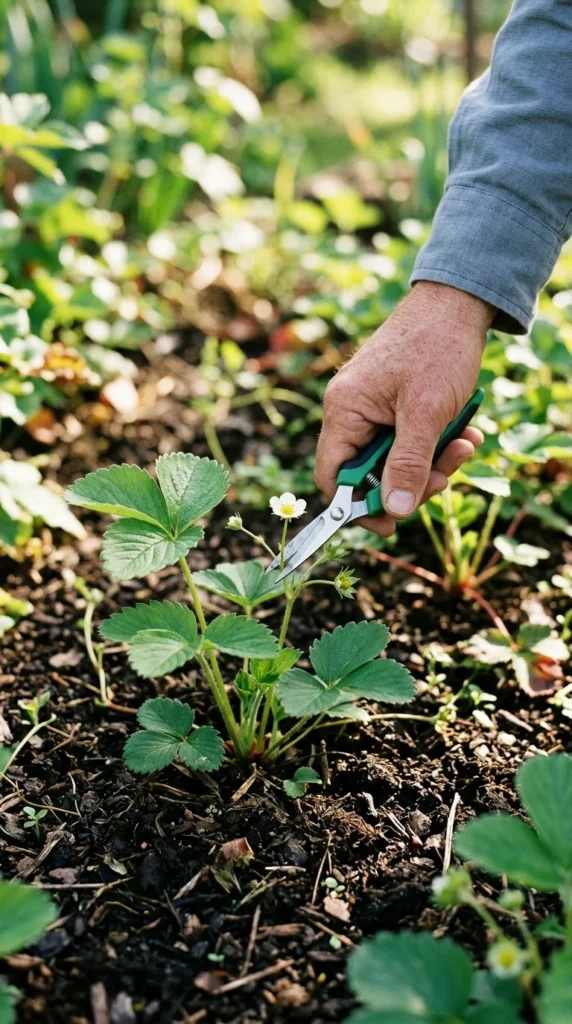
It feels counterintuitive, but for a massive harvest in the long run, you must sacrifice the short term. During the first year of planting June-bearing strawberries, pinch off every single flower that appears. This forces the plant to direct all its energy into developing a massive, healthy root system and a strong crown rather than producing a few mediocre berries. Next year, the harvest will be triple what it would have been.
6. Straw Mulching
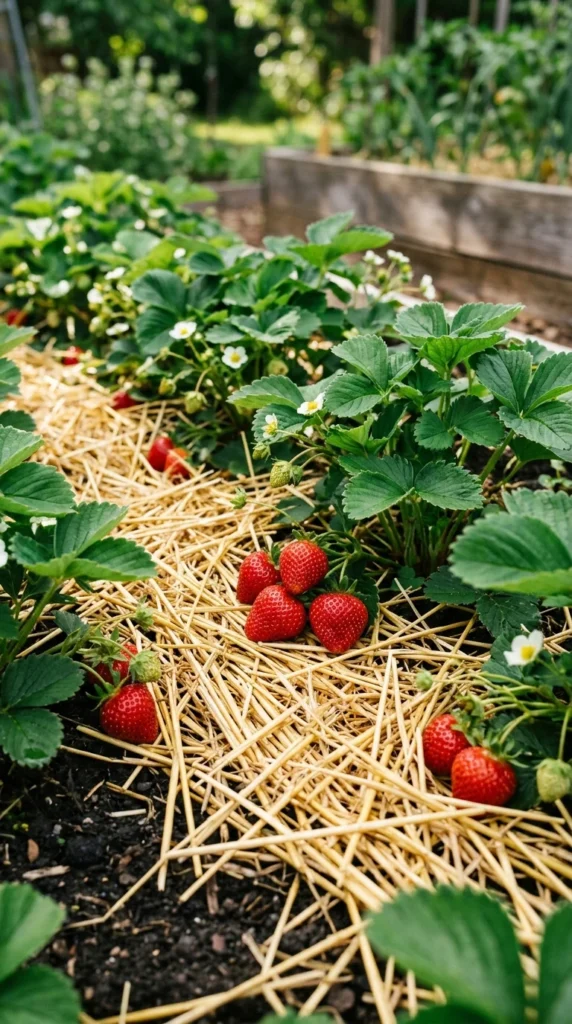
The name “strawberry” likely comes from the practice of mulching with straw. Using a thick layer of clean, weed-free straw keeps the berries off the bare ground. This prevents “ground rot,” keeps the fruit clean, and helps retain soil moisture. Furthermore, it reflects a bit of light back up into the canopy, aiding in ripening.
7. Deep Watering
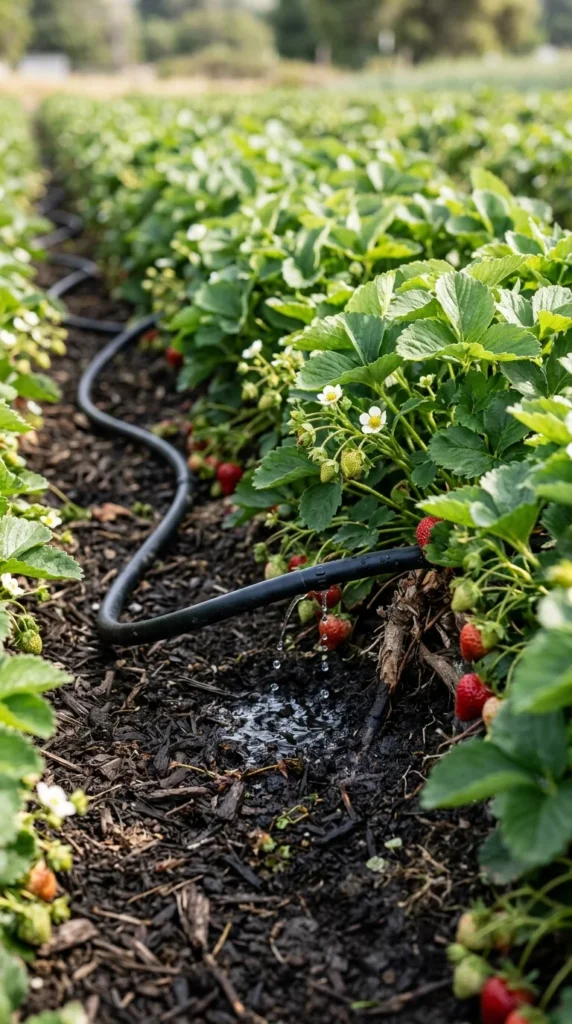
Strawberries have shallow root systems, meaning they dry out quickly. However, overhead watering is an invitation for gray mold (Botrytis). The secret is to use soaker hoses or drip irrigation to provide deep, consistent moisture directly to the roots. Aim for about one to two inches of water per week, especially while the fruit is forming.
8. Nitrogen Timing
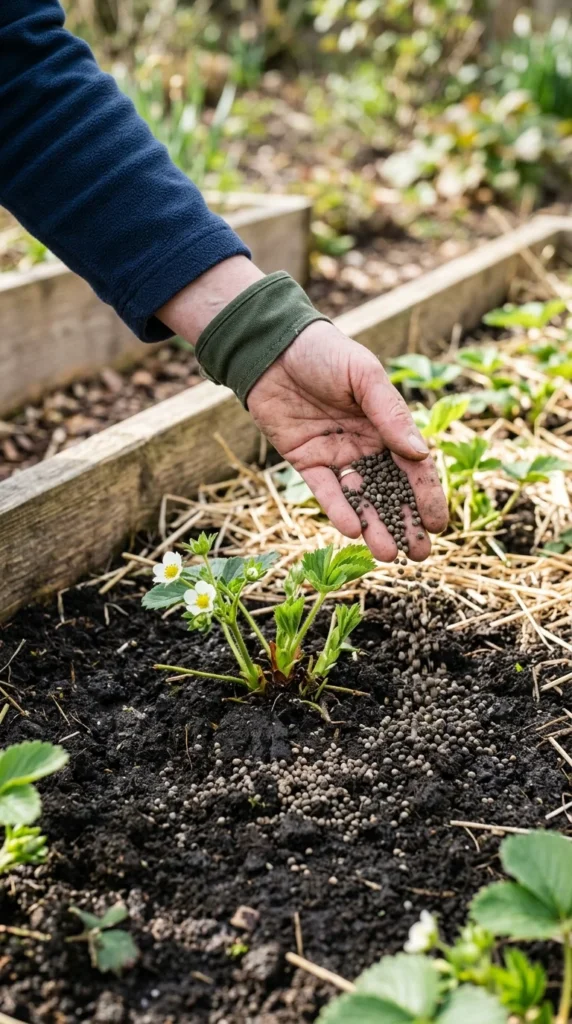
Feeding your strawberries is all about timing. In early spring, a nitrogen-rich organic fertilizer helps build the leafy canopy required for photosynthesis. However, once the plant begins to flower, switch to a fertilizer higher in phosphorus and potassium. Avoid heavy nitrogen late in the season, as this can lead to excessive leaf growth and soft, flavorless berries.
9. Runner Management
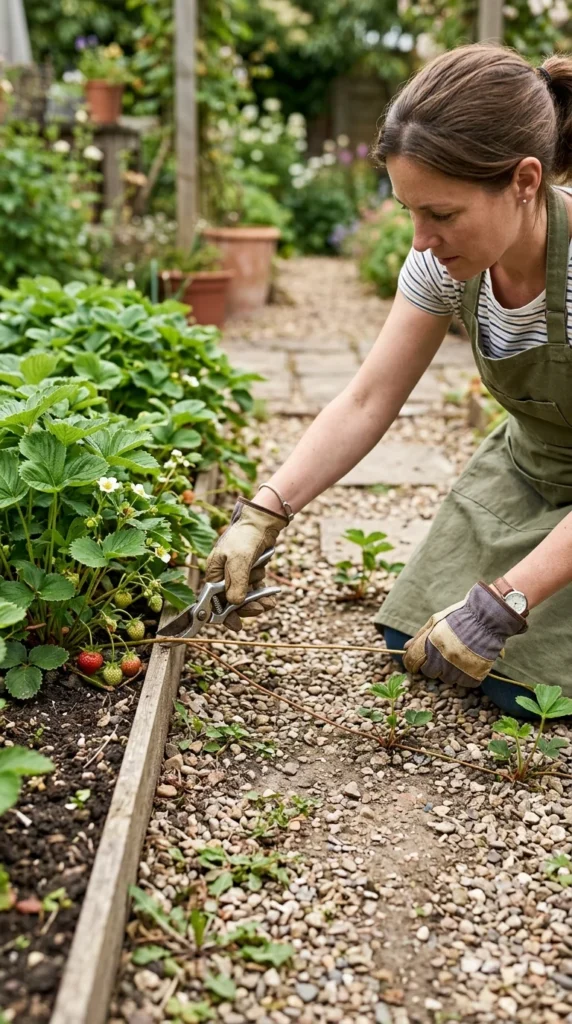
Strawberries naturally want to reproduce by sending out “runners”—long stems that grow new baby plants at the ends. While this is great for expanding your patch, it drains energy away from fruit production. If you want a huge harvest of large berries, snip off most of the runners so the “mother” plant can focus entirely on its fruit.
10. Companion Planting
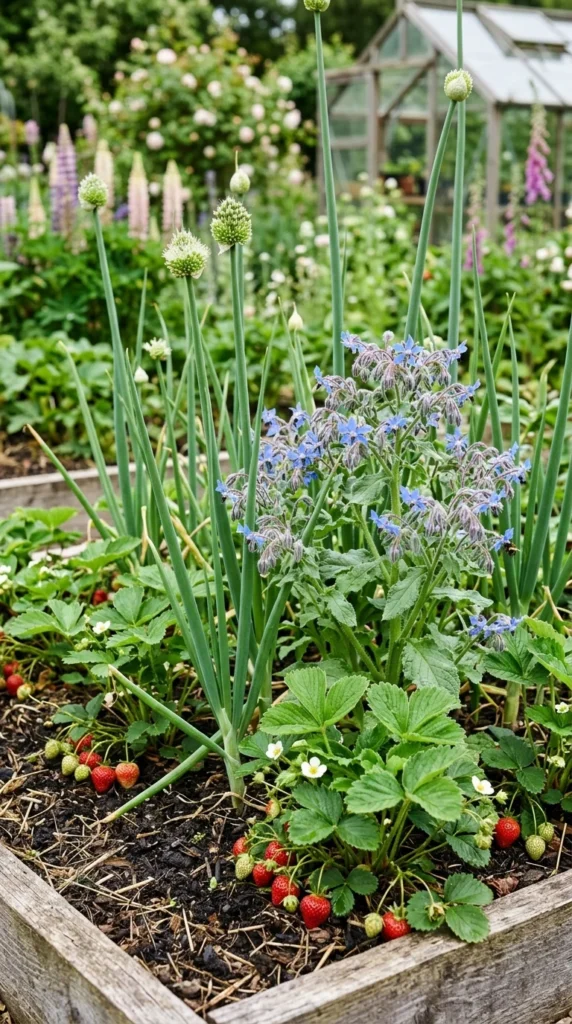
Certain plants make strawberries work harder and stay healthier. Planting garlic or onions among your strawberries can help repel common pests like aphids and spider mites. Borage is another fantastic companion; its blue flowers attract pollinators like crazy, ensuring that every strawberry blossom is fully pollinated and develops into a plump berry.
11. Bird Protection
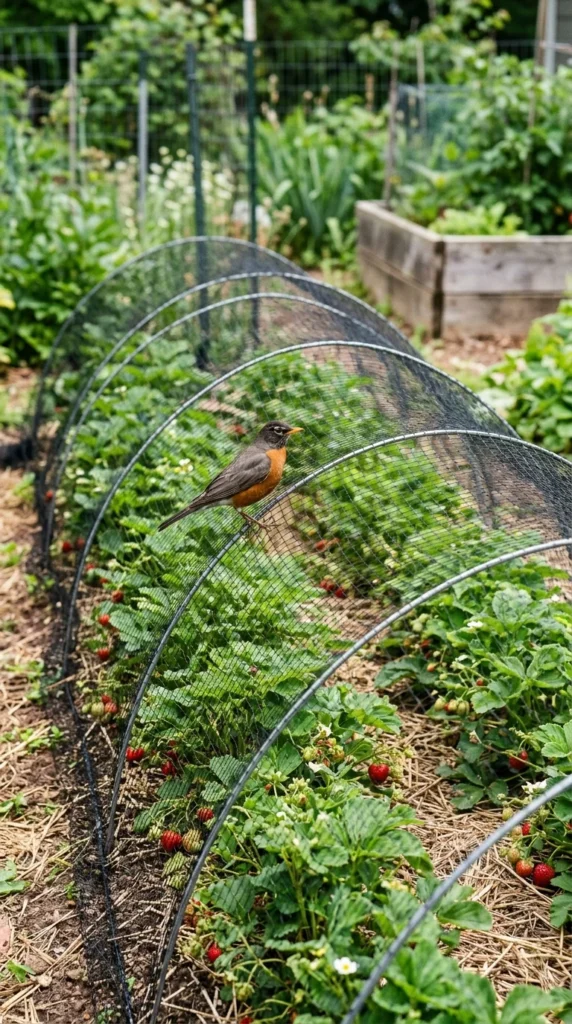
Birds love strawberries just as much as you do. To save your harvest, install bird netting as soon as the berries start to turn pink. A pro tip: paint small stones bright red and place them in the bed before the berries ripen. Birds will peck at the hard stones, get frustrated, and leave the area, ignoring the real berries when they actually appear.
12. Airflow Spacing
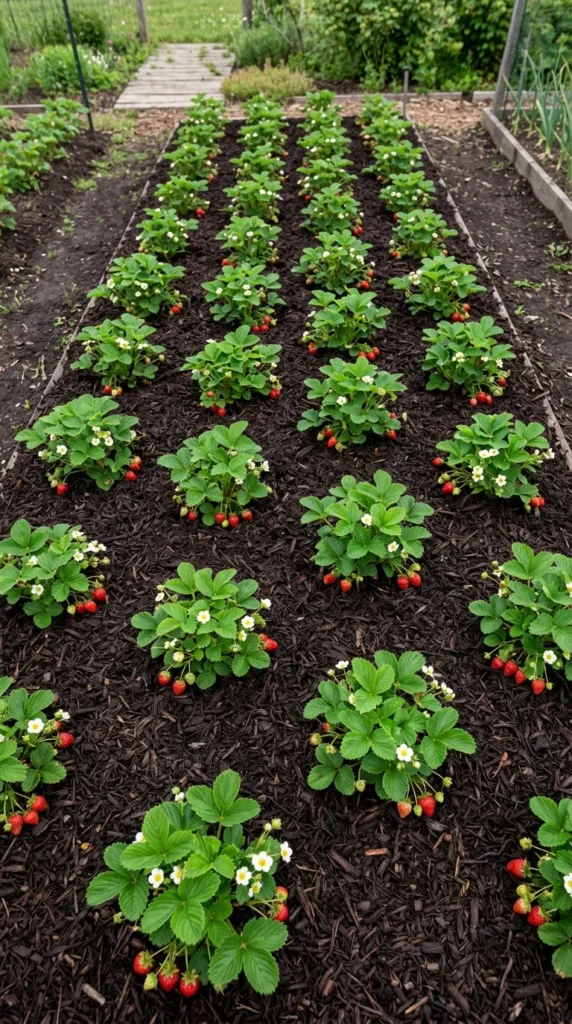
Overcrowding is the enemy of the strawberry. When plants are too close together, humidity gets trapped, leading to powdery mildew and rot. Space your plants at least 12 to 18 inches apart. This allows for maximum airflow and ensures that sunlight can reach the center of every plant, ripening the berries that are hidden under the foliage.
13. Post-Harvest Renovation
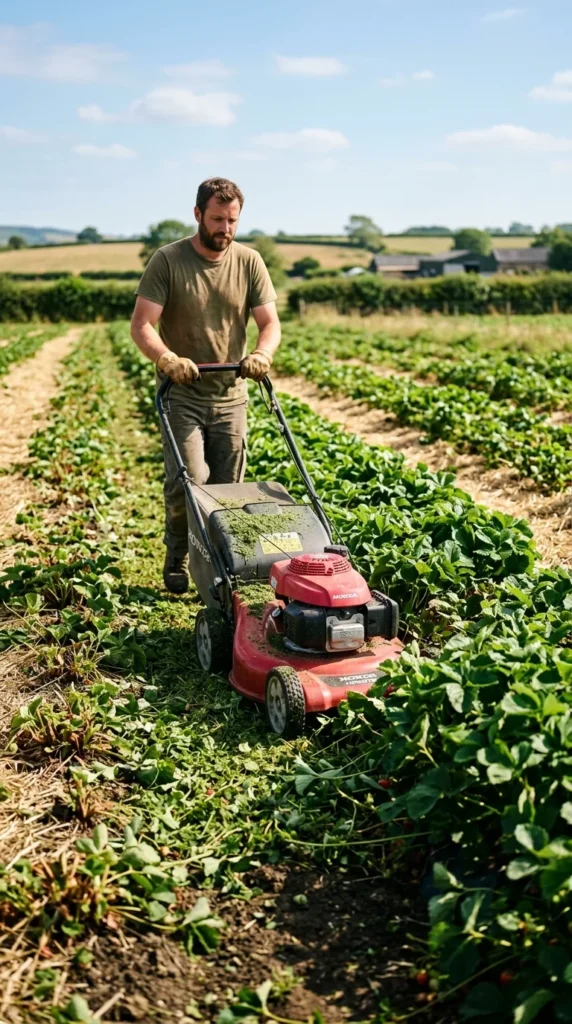
For June-bearing varieties, “renovation” is the secret to a long-lived patch. After the final harvest, mow the foliage down to about two inches above the crowns. This removes old, diseased leaves and encourages the plant to grow fresh, vigorous foliage for the remainder of the summer, which sets the stage for a massive crop the following year.
14. Pine Needle Mulch
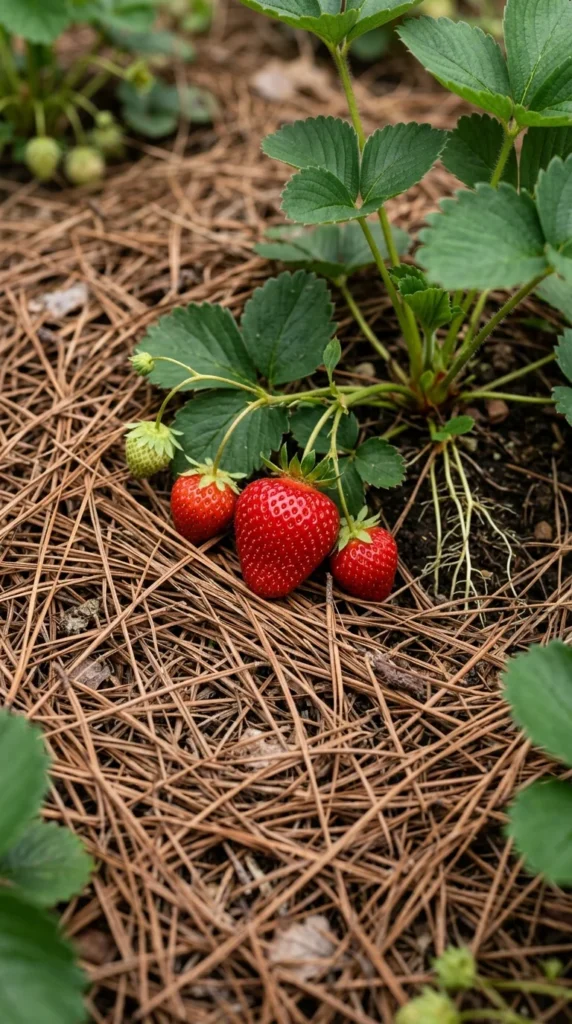
If your soil pH is slightly too high, use pine needles (pine straw) as your mulch. As they break down, they add a slight amount of acidity to the surface of the soil. They also create a prickly barrier that slugs and snails—the primary enemies of the strawberry—find very difficult to cross.
15. Raised Bed Drainage
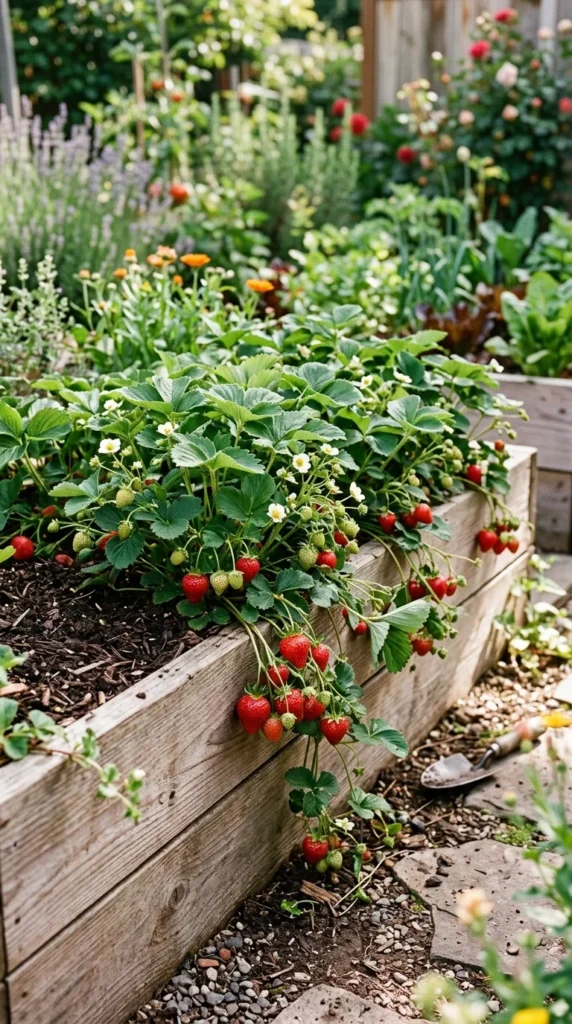
Strawberries hate “wet feet.” If they sit in soggy soil, the roots will quickly rot. Growing them in raised beds or containers allows you to control the drainage perfectly. Use a mix of compost, peat moss, and perlite to ensure the water moves through quickly while still providing the nutrients the plants crave.
16. The Morning Harvest
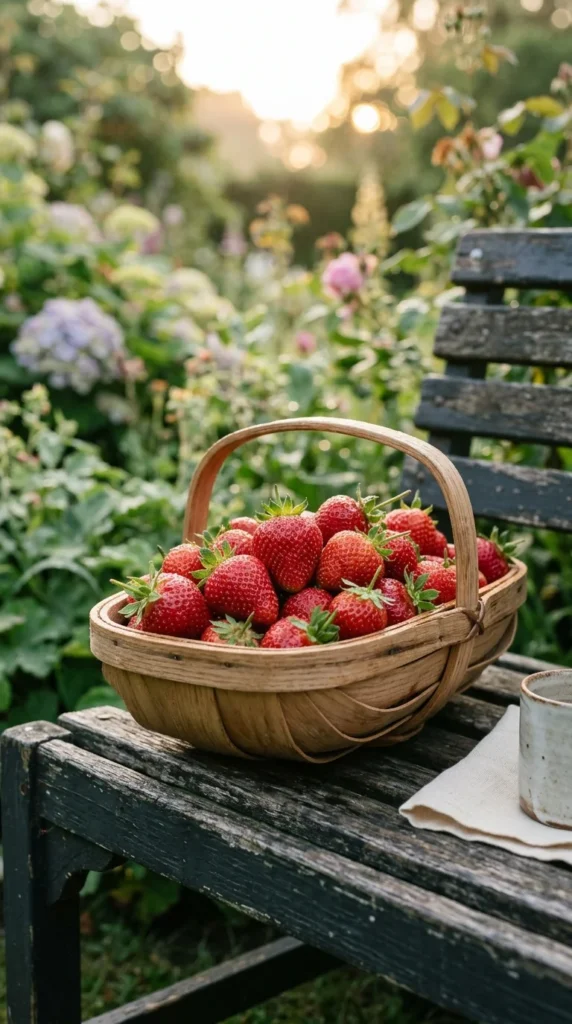
The timing of your harvest affects the shelf life and flavor of the fruit. Pick your berries in the early morning while they are still cool from the night air. Berries picked in the heat of the afternoon are softer, bruise more easily, and will spoil much faster. Once picked, get them into a cool, shaded area immediately.
17. Winter Dormancy
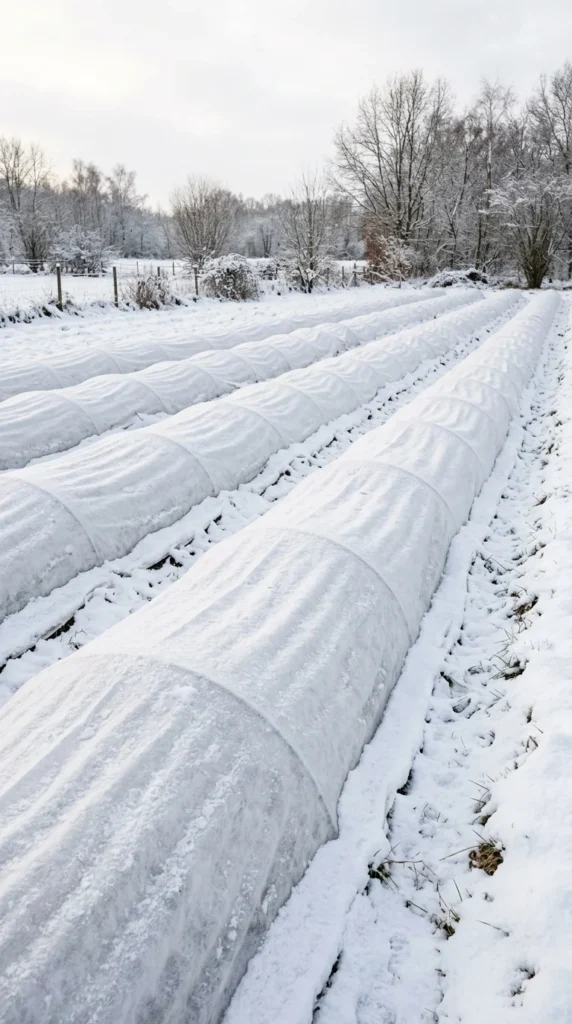
In colder climates, the freezing and thawing of the soil can “heave” strawberry plants out of the ground, exposing the roots to killing frosts. Once the ground has frozen, cover your plants with four to six inches of straw or a heavy frost blanket. This keeps the temperature stable and ensures your plants survive the winter to produce another massive harvest next spring.